TROM Discussions: Democracy and Trade

Uncategorized

We had an interesting discussion in “TROM Discussions” about the following video:

ALEX: For the upcoming discussion on politics/democracy, have a look at this interesting movement in Australia: voteflux.org

TIO: Hey, I’ve read their paper in full. So as I understand they want to move from voting for a political party to voting for specific projects. Also they want to let people trade votes with each other. On top of that, as I understand is like this: government gives each people one vote for one project; they can use or not this vote or they can trade it (but are not allowed to trade for money for example). If I understand all of this correctly, then I see a ton of issues with it. There are so many ways to make this system completely corrupt. I am wondering what is the difference between voting for a political party and voting for a specific project in terms of corruption? Aren’t both as corruptible? Aren’t people already influenced to vote for a particular political party? Couldn’t they influence people to vote for a particular project then?

I like that they mention decisions should be taken by experts (science), but I can see this system being easily corruptible, even scientists are corruptible. I still think that whenever there is a profit motive, it will ruin any system put in place. In other words: you just can’t make the trade-society (system) fair/just through rules, voting, different political parties, etc.

Let me know your thoughts.

ALEX: I’d say that when it comes to abuse of power by a few, the more people participate in democracy, the harder it would be for a few to abuse power because the power gets distributed. The more people that are engaged in developing policies, the less concentrated power is. When people delegate their power to a select few, it gets concentrated and more likely to be abused.

When it comes to corruption, again, I think the more people take part in democratic processes, the more aware they become about what’s going on, the less likely those in power would get away with corruption. The more politically active and aware people, the harder it would be to bribe / coerce everyone, values like honesty, transparency, accountability etc. would be easier to promote and to enforce

I’ve been thinking why I find it hard to accept that trade is the ‘root of all evil’ so to speak. I think it’s just a construct that reflects something deeper. After all, we are social creatures and we trade one way or another – with money, physical objects or with lots of other things like emotions, etc. You can’t eradicate that, it’s nature – we’re basically different elements coming into contact and thus interacting, this usually leads to some exchange. If you wanna abolish trade, you have to abolish all contact. Or perhaps I don’t fully understand what you mean by ‘trade’?

Or do you mean ‘profit’ instead of trade? That would be hard to define because I don’t even believe altruism exists. For example, when we do / give something without getting anything in return, we still get something in return – it could be feeling good about ourselves, it could be fulfilling a need to contribute to our society, to support people in need etc, but we’re still getting something in return in this ‘trade’. You can’t eradicate that.

And how do you define ‘profit’? Getting more than what you gave? That’s easily quantifiable when it comes to money but not so when it comes to other things.

Ultimately, I think it comes down to values. I think even profit (which can basically be compared to ‘growth’) can work fine as long as it’s in line with other values like kindness, sustainability, etc. The problem is that on our planet right now it’s not.

And regarding your q’s on VoteFlux: people voting for projects / issues is much better than voting for a party because once you vote for a party, you have to basically accept that party’s position on ALL the issues / projects and they may differ from yours. You can still delegate your vote (cos voting on every issue / project might be too onerous for people) but you would be delegating to an expert, rather than your elected politician, who is often not an expert and doesn’t often consult experts, or consults those who tell him/her what he/she wants to hear.

Plus, it’s common that a party may even have a specific policy that you agree with and hence vote for them, but politicians have often been known to change their position after being voted in, not to keep their promises, etc. And, most likely, you won’t find a party/politician whose policies/positions perfectly match yours, including new things that come up during the politician’s elected term.

TIO: Ok. But then how is it that currently millions of people are influenced though social media (or other means) to vote for a particular political party? To me that clearly shows that you can indeed influence a lot of people at once (regardless for what). On top of that, regardless of how many people are engaged in political decisions, in the end a few are taking those decisions (from architects to those who sign the contracts, company leaders or whatever) so there will always be weak links in the chain.

Apple was a dickhead many times with the users (slowing down phones intentionally, making their devices very expensive, removing necessary features from their phones, etc.). People got very angry at Apple. They could “vote with their wallet” and boycott Apple. This never ever happened. Is there an example of boycotting working? I think that is one big example of how, although people could “vote” in large numbers (with their wallets) and having in theory an immense power, this never ever happens. Apple knows how to persuade people to still buy their stuff, and also Apple is so powerful and big that it can bribe pretty much anyone. Celebrities, newspapers, TV channels, can all influence opinions in mass. I know when there are online voting campaigns for all sorts of stuff, and they too can are corrupted if there is an interest. People vote for their own interest most of the time anyway, so that combined with them begin also influenced, cannot lead to much progress I think.

That being said, I just cannot see how people voting for projects rather than politicians is not going to be influenced by companies, political parties, campaigns, and such, the same way they are now.

Not to mention that the vast majority of people know near to nothing about any important decision. They are normal workers who spend most of their time working at their job. How are they going to know what decisions are better and which ones are not?

So I still see 2 huge issues with this:

1. any system gets corrupted when the game is to acquire – if I am FIFA and want to host World Cup in Australia and there people vote per project, then I have a huge army of tools to make Australian people vote for us to host it there, and that would entitle building stadiums instead of hospitals and what not. If I am a political party and I want to cut the retirement money by 20% you bet I can convince many that it is a good idea. Again, such things happen today with elections all the time.

2. even if democracies would work 100% and would be non corruptible, relying on the “wisdom of crowds” is a very naive idea in mi own view. Regular people are not experts. Science doesn’t work that way.

And being able to trade your vote….to me that sounds like the perfect loophole to create a huge chain of corruption and cheating. You may give your vote to an expert, but what stops me to give it to a corrupt party when/if they will persuade me to do so? Or a corrupt expert that fools me into giving him my vote?

Maybe this system would be better than what we have now, but I really doubt it. Big companies and political parties have been lying to people and experts for the past 200 years and have been influencing them, so I don’t think they will stop doing that in a participatory democracy or the system you linked to.

I wish it was that simple, but I know too many examples of such ideas that ended up worse than what they replaced, being hijacked for profit by everyone. I just can’t see how you can stop people seeking for profit at any cost.


In regards to trade I think you got it wrong :). Of course we don’t talk about the scenarios you mentioned. When you help someone and get a reward in return like personal satisfaction, that’s just you feeling satisfied with your own action. Nothing to do with trade. You asked for nothing in return. I mean if you ask the other human being to massage you instead, that might be an obvious trade if you don’t help him without that massage :). We are talking about the obvious trades though. Think about money, that’s the biggest representation of trade. You can stop at that if you want. If not, think about any other currency (like cryptocurrencies). These are trades. You won’t get food in this world unless you pay for it. You won’t get medical attention unless you pay for it or are part of a tribe and respect its rules. Or the fact that FB wont let you use their service unless you give them your data – that’s like the massage idea. So if you help someone and feel good about it we can’t call that trade, no more than going to pee and feeling good afterwards and calling that a trade :). One example of an organization that removes the trades (not sure if entirely but that’s besides the point) is Doctors Without Borders. If they go to Syria to provide medical help they ask for nothing in return: no money, no massages, nothing. And they don’t care if you are a terrorist, you are from Syria, Iran, USA, are male or old. That’s a kind of system that I would call “trade free”. I hope it makes more sense now, if now I would be glad to try and explain more ;).


oh and 1 more that i forgot: 3. someone has to propose those projects, so that’s another loophole in the system. companies already bribe politicians to push their agenda (like pushing their projects to make profits), so how can you stop that? someone has to propose building new roads, a new chain of hospitals, or privatizing healthcare. and those who propose can be very easily bribed or have vested interests of all sorts.

ALEX: Ok, hold on, I’m not sure I understand – Doctors Without Borders still have to eat, so how do they get their food unless they grow it themselves? It’s basically indirect trade – they do something ‘for free’ and farmers grow food ‘for free’ but ultimately, the Doctor can benefit from the farmer and the farmer from the Doctor, that’s trade to me. So you’re against direct trade then? You’d like everyone to just do things to benefit others without expecting anything in return?

If that’s so, then how would you have a fair society? It will be impossible for everyone to contribute equally, so you get the old ‘each according to their ability, to each according to their need’, this is good in theory but is flawed in practice – because people rarely make an effort according to their full ability and people’s needs are rarely ‘equal’. So you’ll end up again with a society where some exploit others.

Plus, I still would argue that nobody ever does anything ‘for free’, they do it because they expect others to do it too so that they ultimately benefit from their input, indirectly. Plus, the altruistic system only works if EVERYONE is altruistic, which I don’t expect in practice.

Regarding the ‘wisdom of crowds’, there’s a good book by that name, I recommend it!

Also, I see where you’re getting at with ‘people will still be manipulated by the rich/powerful interest groups’.. ok, yes, that’s a problem, but I think that a participatory democracy or what’s proposed by Flux basically makes it MUCH more expensive and harder to manipulate people. E.g. politicians currently have to manipulate people before every election, they can sort of get away with most things during their term, people have short memories. That’s unless they fuck up so badly that they get voted out because of it. We had this happen with John Howard and his Work Choices policy, which alone got his party voted out.. but that’s rare nowadays, whereas here politicians/lobbyists would have to spend much more effort/money to manipulate people or experts in a more direct democracy. Whatever increases this ‘costs’ for them, in my opinion, is good to achieve some changes.

TIO: Doctors Without Borders are volunteers. They get donations/gifts but do not do the work for that reason, that’s why they are called volunteers. It would be a hell of a job to go to Syria and help others for just eating and getting some support for your deeds. Better stay in France and work in a hospital for those kinds of “benefits”. This is why they are volunteers.

Benefits do not equal trade – benefits can be extracted from trade, but they can exist without trade. I may discover a vaccine that cures cancer, and I do that because I am passionate about it, and that will benefit 1 billion people, but I asked nothing from them, thus there was no trade. Pasteur or Marie Currie worked their entire life on solving problems or discovering, and many have benefited from their work without trading anything to them for that. They just did it for whatever reasons (mostly because they loved doing it), and the benefit came as a result of that.

What I propose is to remove the need for trade. You want food? You should be able to get it without you giving anything in return: money, data, being straight or white (if they ask for such things), etc.. That’s the basic idea that we can expand to other areas. It cannot be 100% perfect at all. This is what I am trying to explain with the current book I am working, but if you think about it I propose nothing new. Many charity organizations are in a sense trade free: they work as volunteers and they rarely discriminate. Meaning they will help poor people regardless of where they are located, or who they are, and they don’t ask these people for money, their data, to sing a song or dress a certain way. Not sure if I make my point go across, but that’s what I am proposing on a global scale. It is a form of volunteering combined with charity combined with non for profit.

Examples of trade free systems:

1. Wikipedia: you use it without giving anything in return. You can edit articles, write, copy them, access them from anywhere.

2. Linux: it is free and open source. You can use it, distribute, edit, share, etc.. They ask you nothing in return.

And examples of trade systems:

1. Everypedia: they may mine your data, they may project ads into your face, they may put their articles behind paywalls. So they are in a trade with you, you can’t access their system for free, as in “trade free”.

2. Windows: you have to pay for it to access, you cannot edit the code or share, and so forth.

I will provide more examples in the current book in more detail, but I am yet to reach that part.


Thanks for the book recommendation, I have heard of it, even saw a documentary based on it. I agree with the wisdom of the crowds idea, but I think it can be best exercised in a trade free society, else the need for profit is going to ruin the “wisdom” part of the crowds. I think yes, people should try such ideas like the one you proposed, but I also think there should be some of us who think bigger than that. Maybe at one point we can become intertwine. Thanks for participating in such discussions Alex.

PABLO: btw, Tio Trom just a small point about the “Doctors without borders” and the general discussion topic. Volunteers actually do receive a “benefit” from their works…and that’s the “good feeling” of helping someone or something in need. That’s a physiological reaction from an action which stimulates the dopamine system of our bodies (as every other action we do) and in that sense its no different from any other “selfish” or “profit based” action (the only thing that changes is the subjective reward in the first case). So in a way you can make a point that is also a way of “trade” (a really indirect one because even if its personal, there is an interaction with an external party involved) in which you exchange your time and skills for a personal gain (although again, with no apparent external benefits for you). Of course, that’s an extreme example and probably you can make an argument whether is it even possible to find a “not selfish action” at all in real life (which I think is almost impossible considering that we all have hidden motives the we’re not even aware about it). And of course, not many people (me included) are going to tell you that altruism is a selfish or a “bad” action. In fact, I think its really easy to argue that is the basic of the development of our human society (trait we share with another social animals like apes and insects, etc) but I wanted to point it out because if you really want to make a point about the possibility of a “no trade system” and use examples of altruistic behaviour (like the ones you pointed out), one of the many things you would have to address is the problem of unfairness of that system, when there are people in the system who are not “altruist” or are even worse (because lets be real, not many people would like to go to Syria to help others). I think that’s the point Alex Shly wanted to make about that. Of course, that’s just an opinion and I may be wrong, but if that’s the case, I don’t think that’s the biggest problem of the “no trade system” at all. But I don’t think my problem with the “no trade system” can be addressed with just a facebook comment (and that’s why I’m not doing it now). I think it goes far beyond that, to the discussion about human nature in general and I don’t think we are even close to resolve that. So, for now I think every single one of your ideas (and mine too) are just that…Ideas with a different rate of “success” depending on economical, social and natural environmental factors (which we obviously dont’ know because we don’t even know what is success). But because they’re just ideas, we all have arguments for why one is better than the other and that’s why we’re here in this group, right?…btw..I support democracy…and I’ll try my best to defend it in tomorrows discussion

TIO: Volunteers are not a different species or a particular group, volunteers are humans and what they get in return for their action is up to them. Who knows what that is….maybe they do it for religious reasons, maybe just because they want to (nothing more than that), maybe because they are selfish and want to do that, and so forth. I work as a volunteer for the past 12 years creating documentaries, books, videos, and so forth. Ask me what I get in return because I can’t tell you. I get nothing. I just do them because I enjoy doing them.

You can’t say the following two actions are the same in the sense of trade: I go to help my friend fix his computer – I ask for nothing, but I feel good about doing that. I go to help my friend fix his computer – I ask for money (or his bike for a ride) or else I won’t do it. You can’t call those personal trades, no more (as I explained to Alex) than going to the bathroom to pee and feel good afterwards and call that a “trade”: you went to the bathroom to pee because it felt good.

Why do people play football with friends? Why parents are good with their children? Why would you watch movies? Why Why Why? Is this all because you are selfish and want something in return? If so, that’s a sad life, but is up to you. As long as you don’t engage in trades with others that’s fine :).

We can imagine a society where most people are volunteers, and thus do not engage in trades, and we rely on them. Today if all volunteers would stop doing their volunteer work our global society would collapse. When there is a natural disaster we rely on volunteers. The Internet as a whole emerged out of volunteers who created (and still create) content for nothing in return. The entire scientific field is based on volunteers who discovered and even experimented on their own (if you want a bucket of examples I can send you). People already rely on Doctors Without Borders or Red Cross. And since we can automate pretty much any job, a sane society (trade-free) would only rely on a few volunteers to run.

Here’s a video we made about the future of education and you’ll see many examples of volunteers in there

A book about motivation and cooperation

A book on volunteering

A book on how to automate pretty much all jobs

In such a system there can’t be unfairness because people are not valued by their contribution.

There is no human nature out there [Link 1; Link 2]- it is only human behavior that is created by the environment. Maybe we should do a discussion on that. My ideas are sourced though :) – that’s a big difference. I don’t just think about these things at night and talk about them. All of our books are sourced and we are here to take in any valid criticism


TASOS: Alex, if by using updated technology, we as a species, can create today an abundant society giving free access for all people’s needs then why we need trade?

Trade as we all know guides to competition-profit-personal enrichment-comparative advantage-conflicts-violence-racism and so on…

Also, why we should try for something better (inside of the current system’s box) instead to demand for the best we definitely can have today?

YOAN: Hi guys!

After reading the conversation I’d like to give my thoughts on a few things :

– I don’t think we always get something back when we do something but it also seems to me that we always do something when we think we’re going to get something back in return. Or to say it differently, it seems to me that we are all fundamentally selfish, and everything we do, we do it for ouselves, thinking that we will benefit from it.

This is of course my thought on a topic where, to my knowledge, Science doesn’t have an answer yet, as it is really hard to create experiments that will give clear answers about this.

That also makes me agree entirely with the environment shaping behaviour, because what is going to give me pleasure, or what is going to motivate me ultimately will be shaped by my environment (Something that Science knows already more about).

– I don’t think we should try to say “trade is this”, or “we can’t say that this is trade”, but I think we should all have the same definition of trade while talking about it, and whatever what we think trade is, for this conversation it can be something different than in our everyday life. What matters is that we all have the same definition while talking about it.

So obviously even peeing and getting satisfaction CAN be considered as a trade by some, but I think on this group we should try to stick with Tio’s definition, as every book is based on this one.


And the problem that we see in our current society is that we live in a trade based system. I don’t know much about “human nature”, but I agree with Alex if he says that we can’t remove trade among humans (if we consider trade as an “exchange” here). According to me, TROM is not fighting against trade, it is fighting against the need for trade, and maybe the “trade mentality ” of the people that make them feel like they need to exchange things. TROM is not trying to create a society where trade is bad… If we reach a society like what TROM proposes (or let’s say a RBE, sorry it’s just more simple to write :p) and you give me something, I won’t be like “oh sorry I can’t give you anything now because trade is bad” :p.

The difference is the need for trade.

if you give me something and I give you something, this is not seen as a problem, but if I give you something only because you gave me something, then that’s a problem.

I wrote that from my phone, it’s a mess, sorry, but I don’t feel like improving it, I didn’t plan to spend so much time on this haha

I hope it makes a bit of sense.

Maybe I just talked bullshit, but my point is : agree on your definitions before you start wasting time :p

it’s not about who has the right definition, but what definition do we choose to keep going in our conversation

TIO: Yes Yoann you put it very well. The reason I say “trade or the need for trade leads to problems” is because there are trades without money. I am saying the same thing everyone said for the past hundreds of years: “money is the problem”. I only go a step forward to include more systems similar to money like cryptocurrencies, data trade, etc. I will explain this in the current book I am working on in detail. When there is a trade or a need for trade it means some have something that others want or need and they can’t get it without. Is that simple. An imbalance that creates issues.

We can’t go as nuts :) as to include things like: “I help you because inside I feel well about that” and call that trade. That is absurd. If you do that with any idea you will lose your mind :)). It’s like saying democracy is about voting what music people should listen to, or voting when we should pee. Of course no one goes to those lengths and crazy edges. ;)

If in a saner society where we have most of the stuff we need or want, I come to you and say: “Please give me some cookies” and you say “Only if you give me a massage” then that’s an issue because it means I can’t get cookies if I won’t give you a massage. That’s a trade. Maybe I can accept to give you a massage and you will give me cookies, and everything will be fine, we are both happy, but it is a very slippery slope. It means there aren’t enough cookies for us all and it also means this gives you the power to abuse me. Maybe next time you ask me for some weird shit, who knows. That’s all.

Therefore, eliminated this virus “trade” that makes people do shitty stuff, and you indirectly will create a society based on abundance, something like the venus project talks about. Same idea, different paths.

SASHA: I would like to add a personal example here to demonstrate the benefits of a trade free system-

To survive on planet Earth, I have to work for money- I have to trade my time, energy and skills to get money, with which I can then buy the stuff that I need. I do this for a short period of time and then live and travel on my savings for as long as possible (then I repeat again). I hate those moments when I have to work for money. There have been many of those months where I was unhappy and unsatisfied. Earlier in my life I would be confused in these moments- what was I doing? What was the point of this? -I didn’t have a good understanding of our environment (the system we live in). When I was forced to work and study subjects I cared nothing about, I became depressed. I remember an ex-boyfriend telling me that I was unhappy because I was thinking too much about myself. I realized that that was true, and I wanted to help others and thought that that might help me in return, but I wasn’t able to do that without fixing my own problems first. So when you’re forced to trade your skills and energy for money, by doing a task that you don’t enjoy, this can very likely lead you down a slippery slope that would hinder your ability to help others. Why don’t more people volunteer? They’re too busy trying to survive in this system, or trying to fix their own problems (which are a consequence of this system).

So now I’m in this time period of my life where I’m just living off of my savings. I saved money the last time I worked and now I don’t have to waste my time trading my skills to get the stuff I need to survive with (until I run out of $ again). Basically, my needs are covered- like what would be the case in a trade-free world. So now I can do what I want!

This- having my needs covered- plus education (understanding my environment)- has brought real happiness and satisfaction to my life. I’m so stoked to be alive right now! I can’t sleep well at night because I can’t wait for the next day to start! I wish I didn’t have to sleep! :D I get up every morning with excitement. And now, what do I want to do with all of this free time that I have? I want to help others! I don’t need to concentrate on myself anymore, now I can work on something much greater!

I didn’t start my blog to get money or some extra personal satisfaction. I’m already satisfied, really. I’m genuinely writing it because I hope that it can help people. Same reason I help with TROM and TVP. Same reason I would help a friend if they were hurt. This is not trade- definitely not the kind of trade that we’re talking about in TROM.

To put it short, we could progress and help each other so much more if we weren’t forced to trade our skills and energy for our needs.

TIO: Well said! :) – If we weren’t forced to trade our energy and skills for our needs, we would share our energy and skills to help others, to improve society, ourselves, and so forth.

Don’t trade your energy and skills, share them ;)

You Sasha can and are able to inspire others to game the game, like you do. So thank you for being you!

SASHA: Thanks Tio, I can definitely say the same thing back to you- thank you for being you :) You’re my biggest inspiration for what I’m doing now, I hope you know that

And you see how that can be a positive spiral- people helping others- this inspiring others to help other others :), rather than people competing and wasting their energy on trying to survive and simply improve their own lives.


From TROM Discussions :)
Being a Responsible Adult

Uncategorized

I get comments from time to time, from people that tell me I should “grow up,” be an “adult,” live a “real life,” be responsible, etc.

If you’re one of those people who think that I’m not responsible because I travel a lot and I don’t want to have a career for money or a child, or whatever else makes you a “real adult,” I think that you should think twice about what it is that you are being so responsible about.

In my blog, I never imply that everybody needs to live like me. I understand that not everybody can live like me, nor does everybody want to live like me. In fact, I think the majority of people would be scared shitless to live like me. I started my blog because so many people complained to me about their lives, and told me that they wished they could live like me, but that they couldn’t because they didn’t have enough money. I saw it as important to explain to them that it really wasn’t the money that stopped them from traveling, it was their mentality. I figured out that one of the biggest differences between my mentality and that of a “normal” person is precisely this idea of “being responsible” and having a career.

I’ve never had a “real job” in my life. The only jobs I’ve had were ones that almost anybody can do- cleaning houses, babysitting, waitressing, bartending, working in coffee shops, ice cream shops, delis, whatever. I’ve never worked one consistent job for more than 7 months. Probably about half of the jobs I’ve had were “illegal” and I was paid under minimum wage. Yet I’ve managed to travel all over the world for over 10 years and have basically done everything that I have wanted to do in life. So really, it’s not the money.

Please tell me, how does settling down and becoming a full time slave of the system really make you responsible? Yes, there are some great jobs that contribute to society- doctors, scientists, teachers, and more- you can say that you are responsible because you help people. Good! And if you enjoy doing this, that’s awesome, keep at it! Again, I’m not telling everyone to live like me.

However, since the entire system we live in is based on the consumption of an infinite amount of resources, yet we live on a planet of limited resources, I don’t see it as responsible of me to spend the majority of my precious time on Earth working at some kind of career that just exists to keep the system going. That’s what most jobs today are. In fact, most of these jobs can already be replaced through automation. Here’s a fantastic book that describes this in detail:

Think about it, people don’t generally say that an accountant or a lawyer is irresponsible or not “adult,” yet when it comes to a girl who works as a waitress on Hawaii for 4 months and then travels around the world with no job for one year- that’s totally irresponsible, right?! Why? Cuz I’m not contributing to society, right? I’m kinda taking advantage of it here :D

But think about what it really is that I’d be contributing to… Why would it be responsible of me to contribute more to an unsustainable system?

I quit my last waitressing job in March 2017, so I haven’t really worked in 14 months. I spent the last year without being the least bit concerned about having to work for money. This allowed me to have lots of free time. What did I do with my free time? Well I traveled, but I also spent a lot of time studying (and experiencing) how our world works; examining problems, talking to people and learning about solutions to these problems.
Most “responsible” people with “real” “adult” lives have no time to learn about the world’s problems, let alone about solutions to these problems! That’s why many people don’t even understand that there are problems on Planet Earth; and most of them certainly don’t know about realistic solutions! You know how hard it is just to get people to read a book? No one has time to read a fucking book, they’re too busy working and being responsible adults!

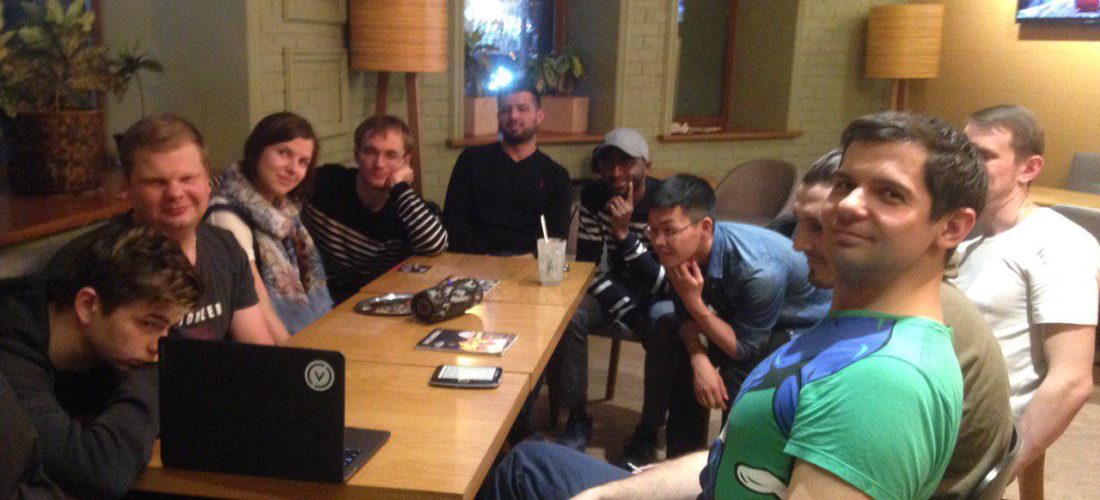
In my last TROM discussion in Irkutsk, I asked everyone in our meet up what they did for work and what they would do if they had $5,000,000,000. The first half of the table went straight to quitting their jobs and doing something good for society-investing into scientific research, education, healthcare, childcare, etc. Then one guy flipped the switch and got everybody onto the idea that $5,000,000,000 was not enough to secure yourself, so first you would have to invest this money- to make sure you could get more of it in the future, and once it was invested and your future was secured, then you would be able to put money into good deeds- and actually, then you would have more than you started with, so you could contribute even more money to good deeds!

I found this interesting. The reason I choose $5billion was because I thought the sum was large enough to get the picture of money off the table. But apparently it wasn’t enough, and those who were still concerned about their future, still prioritized making money over doing good deeds. I think that the guy who first mentioned this is not more selfish or an asshole compared to the guy who would invest the whole $5billion into aging research, this guy was simply thinking logically about securing his own future in our world. The aging scientist might end up dead broke in the end, who knows.

So it’s important to understand that people will prioritize their own safety and security before they prioritize doing good deeds for others, which is completely logical. The sad thing is that in the system we live in today, this means that we often prioritize making money over doing good deeds.

In the monetary system, to have a secure future, you must have a constant inflow of money. But no one can have a perpetual inflow of money without working for this. So if your priority is to have a safe and secure future, then it’s logical that your priority is to make money. Because in the monetary system, money= security.

That’s why people see having a career as being responsible. They are responsible adults who are doing what they can to make sure that they can have a decent future on our planet. People may say that I am not a “responsible adult” because I haven’t established a secure way to make money for myself. And they are scared of living like me precisely because of this idea- that a constant income means a secure present and future.

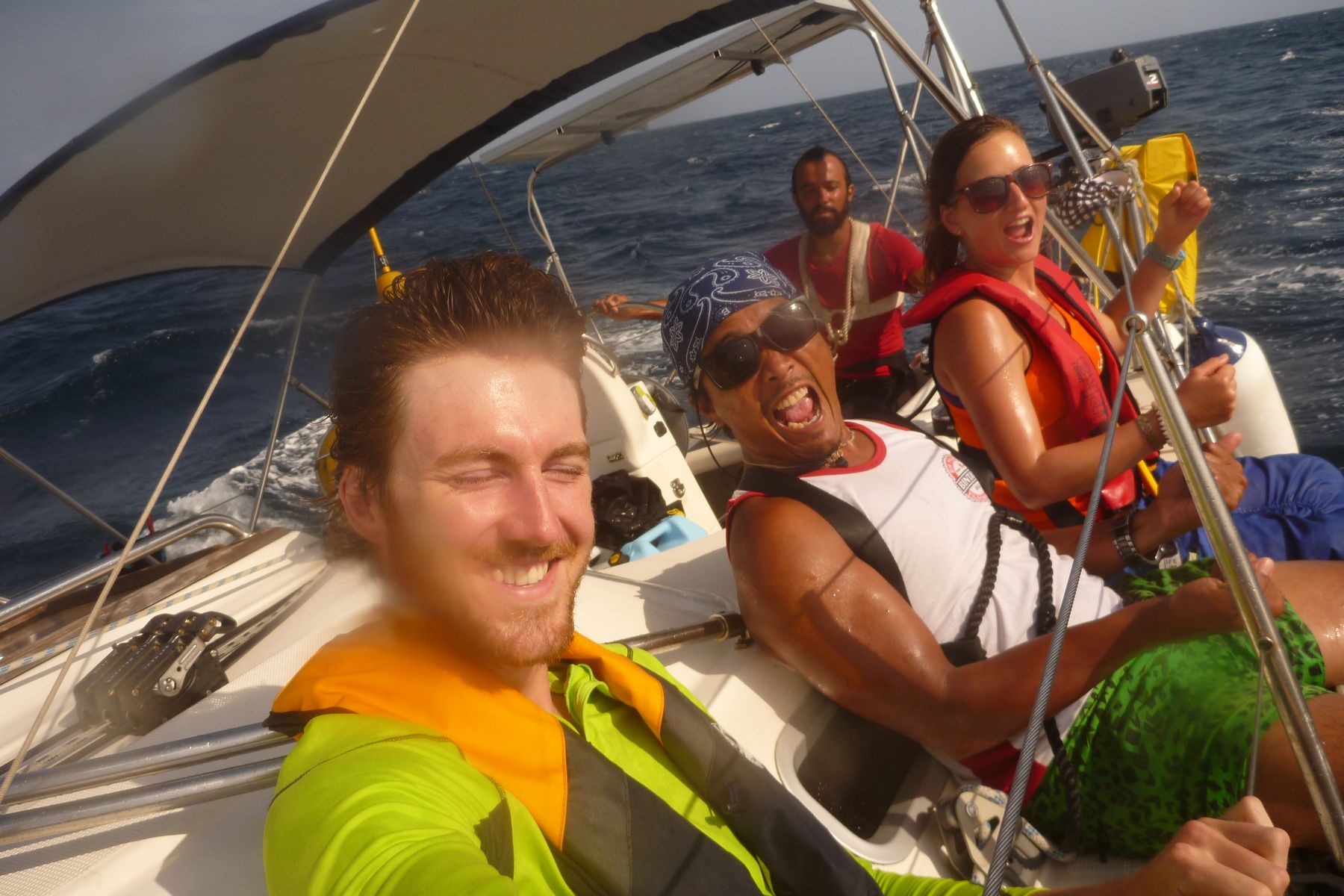
However, I don’t think like this. I think that if I were to live in one place with one consistent job that I depended on, I would be more vulnerable to disasters (like an economic collapse or a stress-related disease). Now, at least, I have friends all over the world, I have many little traits and ‘talents,’ I know what life is like in different places, and I know that I can pick up and leave any time I want. I also don’t need much psychologically, I’m comfortable living out of my backpack and tying up my hammock in a stranger’s backyard. If shit really hits the fan, I might search for a yacht to hop on and sail away to a tropical island. I would feel confident doing this because I have had experience sailing. How did I get this experience? It was just offered to me. How? Because the people that know me, know that I’ve never had a “real job” in my life, so if they offer for me to say, crew a boat from the Caribbean to New Zealand, they know that there’s actually a high probability of me saying, “fuck yeah!”

I didn’t make it all the way to NZ that time but I did learn a little bit about sailing :)

So maybe you can see that my idea of security is a bit different from the average person’s. Also, the average person’s idea of security is not tied to my idea of “being responsible” on Planet Earth.

The people in my café meeting all seem to want to do a lot more good deeds than they have the ability to do in the “real world.” So it seems that people do want to help each other and make a better world on our planet, but our system limits our ability to do so.

I mean, how do billionaires today stay billionaires? Their first priority must be to figure out a way to keep earning more money, not to help other people.

So long as we live in a monetary system, where we need to work for money to secure our own safety and future, we will prioritize working for money over doing good deeds, regardless of how much we really want to help each other. I am no exemption by the way; when I run out of money, I also put all of my energy into earning money to “secure my future” for a limited amount of time. There would have been no other way for me to save $20,000 in 7 months working as a waitress. I had to make work my #1 priority. I had to put everything else to the side and concentrate just on making money for 7 months, so that I could spend the next 2 years with no job. I hate those months when I have to play the job game. I would much rather spend my time writing this blog for free, or doing something else that helps people. Working for money is such a waste of time and energy, and does very little to contribute to society. But it’s something that we all must do if we want to survive in this trade-based society.

Oh and how about this tio named Tio? (The one behind TROM) His parents told him to be a “responsible adult” and get a “real job.” Instead, he spent years doing research, writing books and making a 14-hour long documentary that describes our world, our problems, and realistic solutions to these problems. He started this project in very uncomfortable conditions- on a bunk bed in a crammed apartment with an overheating computer, sometimes on a freezing cold balcony in the middle of winter, while his parents bugged him about being responsible and getting a “real job.” Had he listened to his parents about how to be “responsible” on Planet Earth, he would not have had enough free time to research how our world works and create the amazing free sources on TROMsite.com. By the way, he also cleans houses from time to time when he needs money. So please do donate to TROM if you can and if you find it useful, so that Tio can continue to write new material and not clean houses.

One more point. If you have children, I completely agree that you need to spend a lot of time taking care of them and raising them to be decent adults.

But I don’t have children! If you think it’s irresponsible of me to not want children, you should consider the fact that we are already 7.44 BILLION people on Earth, and again, that we live in a chaotic system that’s based on the consumption of an infinite amount of resources! Take some time and study what we are actually doing on the planet and then think about how responsible it really is to have a child right now. Click here for more on this topic.

To conclude my rant, the monetary system not only creates a situation in which people must prioritize making money over doing good deeds (because that’s what’s necessary for them to secure their lives), but it also makes them so busy just trying to survive, that they have no time to research global problems and realistic solutions. Imagine if we lived in a world without the need to spend so much time and energy on securing our own futures. Imagine how many good deeds people could do for one another.

Read this to learn more about this direction.

P.S. This is not meant to be a personal attack on anyone, all I would like for people to do is think a little deeper ;)

TROM Discussions: Education

Uncategorized

I renamed my English club, “Better Than Your Average Conversation in Irkutsk”  :D

About a dozen people showed up to our discussion last night, including 4 new guys that had never heard of the Venus Project, TROM or the ideas behind a resource based economy. Most people were Russian, but there was also one guy from Tajikistan, one from Uzbekistan and one from Nigeria. Awesome mix of very friendly people :)  Most of them found my discussion club because I posted it as an event on couchsurfing.com

Last night we watched and discussed this TROM video on the educational system:

Almost everyone in our meeting agreed that today’s educational system is outdated and inadequate in most countries across the globe. Apparently in Tajikistan, kids get overloaded with subjects to the point that they can’t focus and take in any useful information from school. Sound familiar to anyone? :)

Another problem in Tajikistan is that the minimum salary is about $50/month, but it takes about $150/month to survive there. That’s why so many Tajiks come to Russia to work crappy jobs for pennies, just like Latino Americans do in the US.

What an unfair world we live in. You’re born on planet Earth. You didn’t choose where you were born, but if you happen to come out of a woman living in a poor Tajik village, you are brought up with circumstances that give you very few options for survival, let alone for a decent living. You get a crappy education because that’s all that’s available to you, maybe you’ll drop out of school to help your family survive. You struggle with work because you are not educated well; you get paid a minimum salary for hard labor, and this is not enough for you to survive. So you illegally immigrate to a richer country, where you earn a few more pennies for survival, and maybe send some of these pennies back home. You’re treated like shit and spat on because you have a crappy job, your culture is different, you’re still not educated and you may not know the local language. Is this really your fault? Do you deserve to be treated like this?

Tell me, what does it take to get people to wake up and at least try to understand each other?

I mentioned last night that one major issue with education is that the current system doesn’t teach kids how to bridge differences or understand each other.

But there’s a reason for this: “If you educate people to think, you can’t control them. So you’re educated not to think in school. You’re programmed to uphold existing institutions” -Jacque Fresco

They want patriot sheeple! Maybe that’s why our educational system sucks.


Notes from our online discussion:

The current educational system is inadequate for the fast changing (and chaotic) environment that we currently live in.

First of all, school generally bores the hell out of kids. Nowadays kids live in such a fast-paced rapidly changing environment, with tons of information coming at them from all angles, yet they are forced to sit in a classroom and listen to boring lectures that prepare them to pass tests. They are mostly taught to follow by rules and memorize facts, rather than to question everything and use critical thinking and the scientific method to arrive at decisions. In general, learning can be a lot more interactive and should not focus on passing tests or memorizing facts. It is more important to know how to find and analyze facts than it is to have these facts memorized. There are already many organizations, institutions, and even countries that are improving the methods used in education. Finland is a great example:

This is interesting as well: “Philosophy for Children”- teaching kids how to think, rather than what to think. I haven’t delved too deeply into this organization yet, but you can check it out if you wish :).

Another very important point is that children (well, actually, all people) need to learn about what is actually relevant- how the world works. How global and international institutions, global politics, business, etc., affect your local life. Where do you get your clothes from? How does the dairy industry work? Where do people get their values? How can you communicate properly with others? Where do the minerals in your gadgets come from? How are these gadgets assembled, marketed and brought to you? Why do you have to work to get these gadgets? What is money? Where does it come from? Planned obsolescence, deforestation, climate change, the collapse of ecosystems across the globe- this is clearly all relevant since human beings do depend on the Earth for survival. Some schools and universities are starting to put together “international and global studies” courses that attempt to analyze the current global environment, however, I have yet to see a school or university offer a course on a resource based economy. If it exists, please let me know :). If not, let’s make it happen guys!

Education is key for our future.

For anyone interested in discussing these topics, you can join our online chats.

Hitch a Podushka

Uncategorized

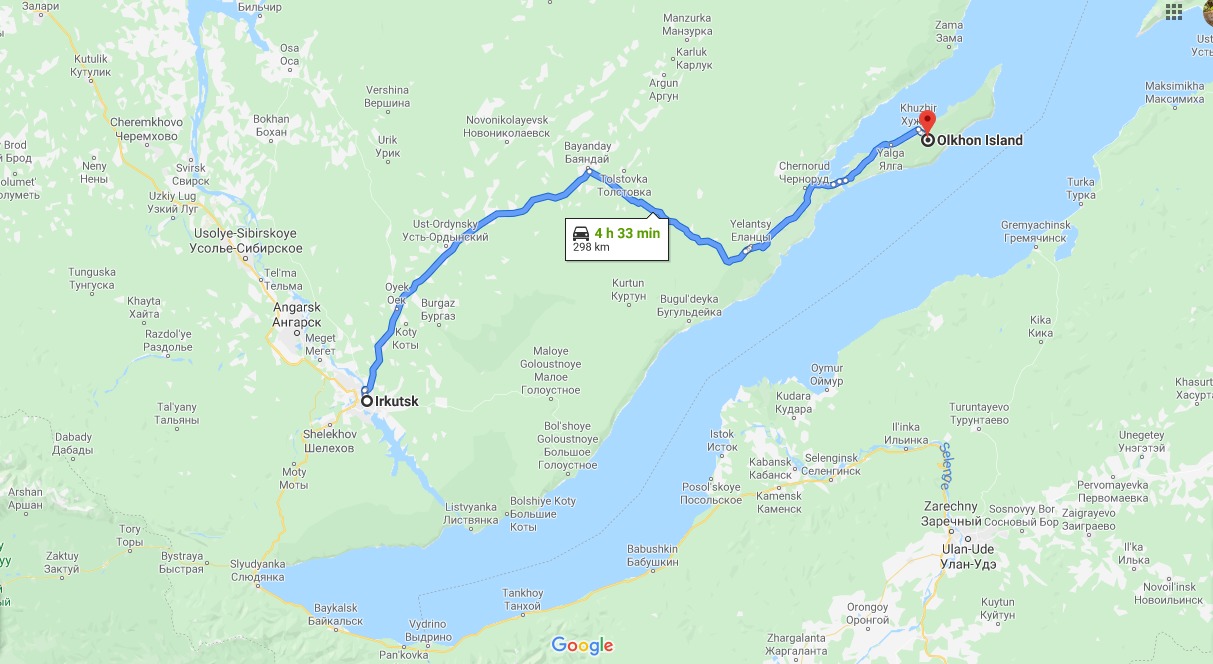
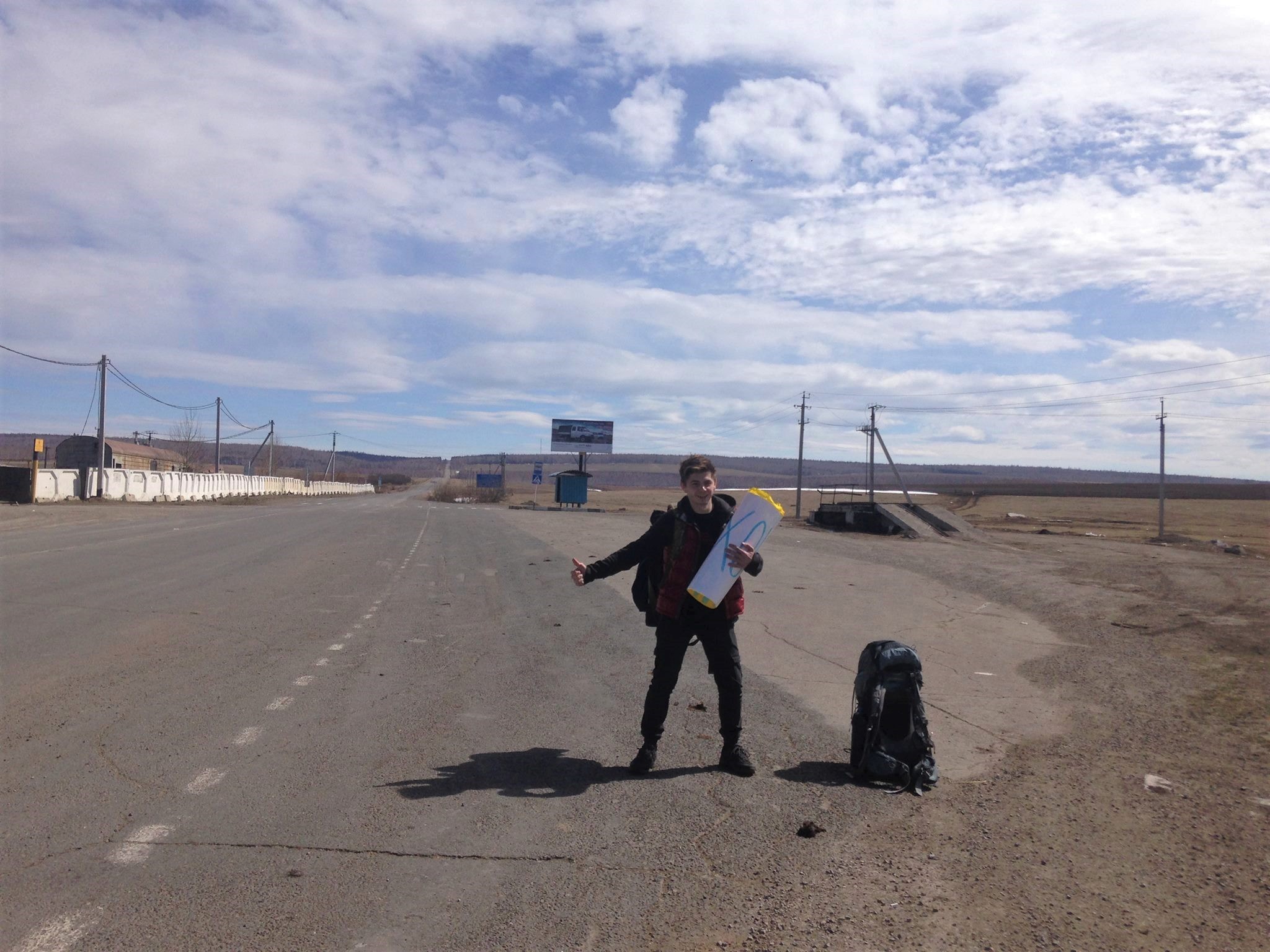
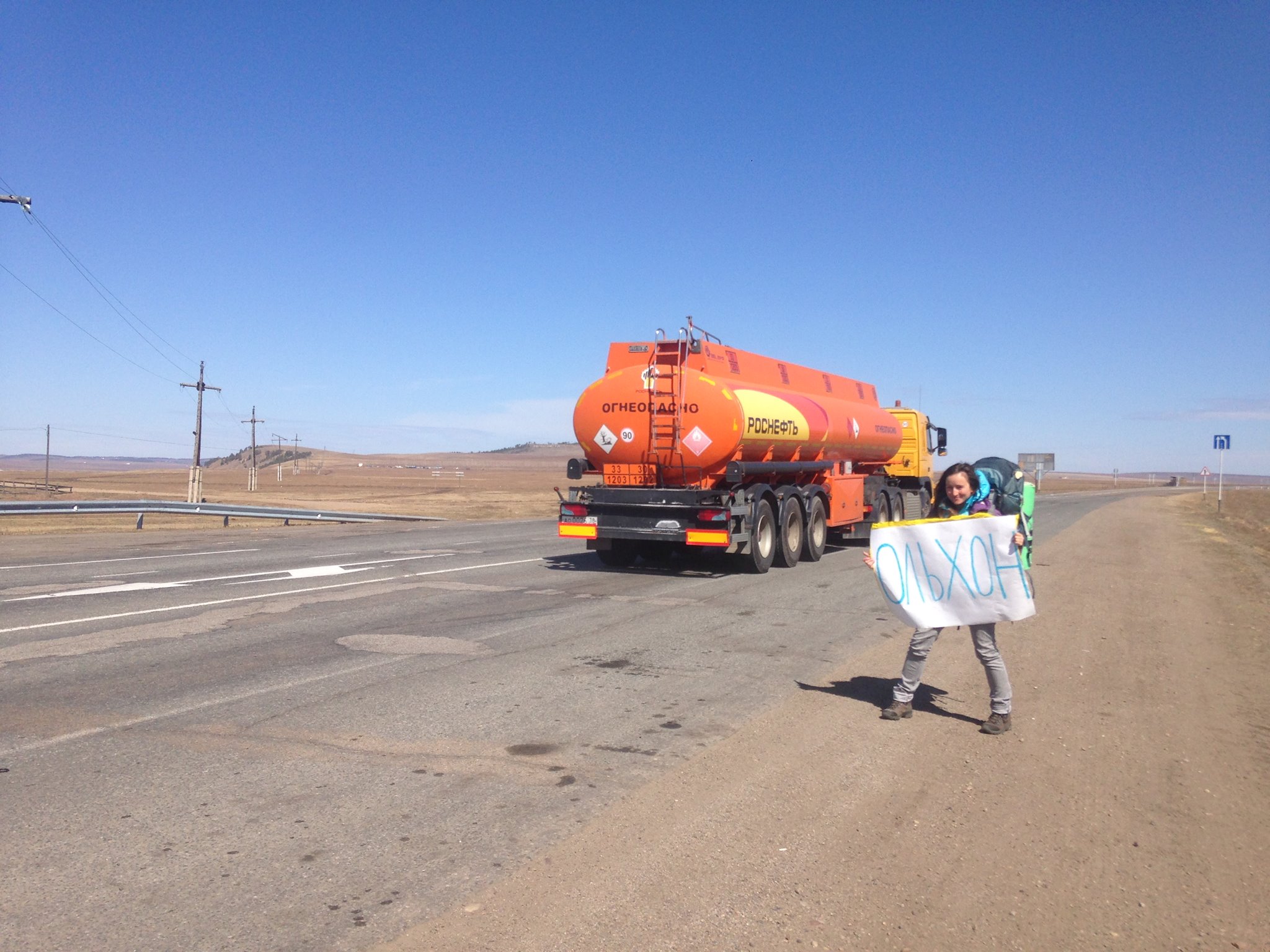
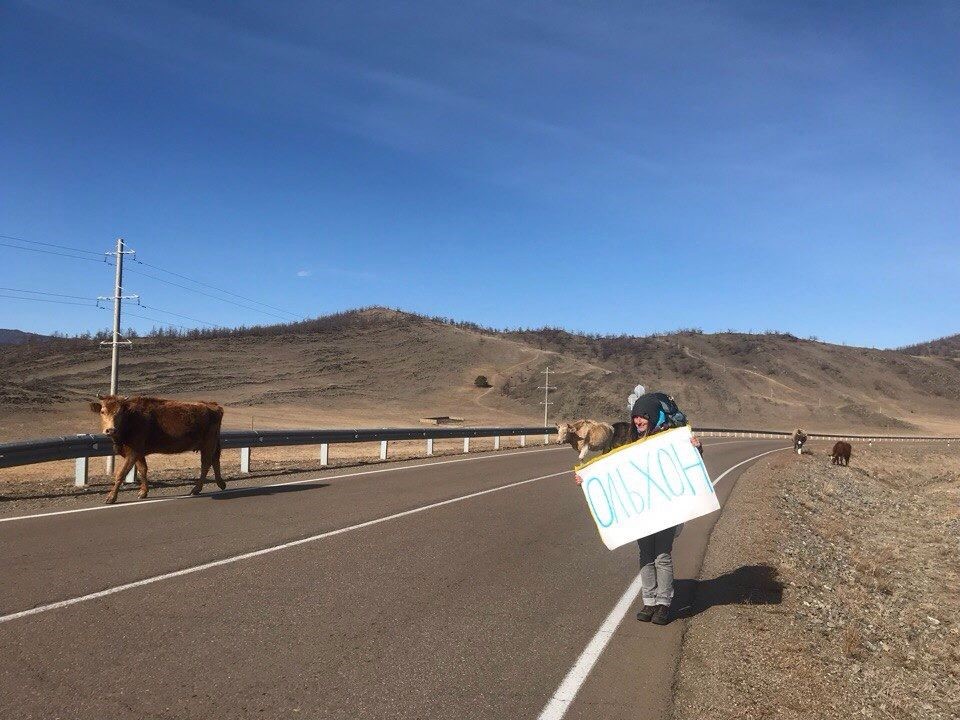
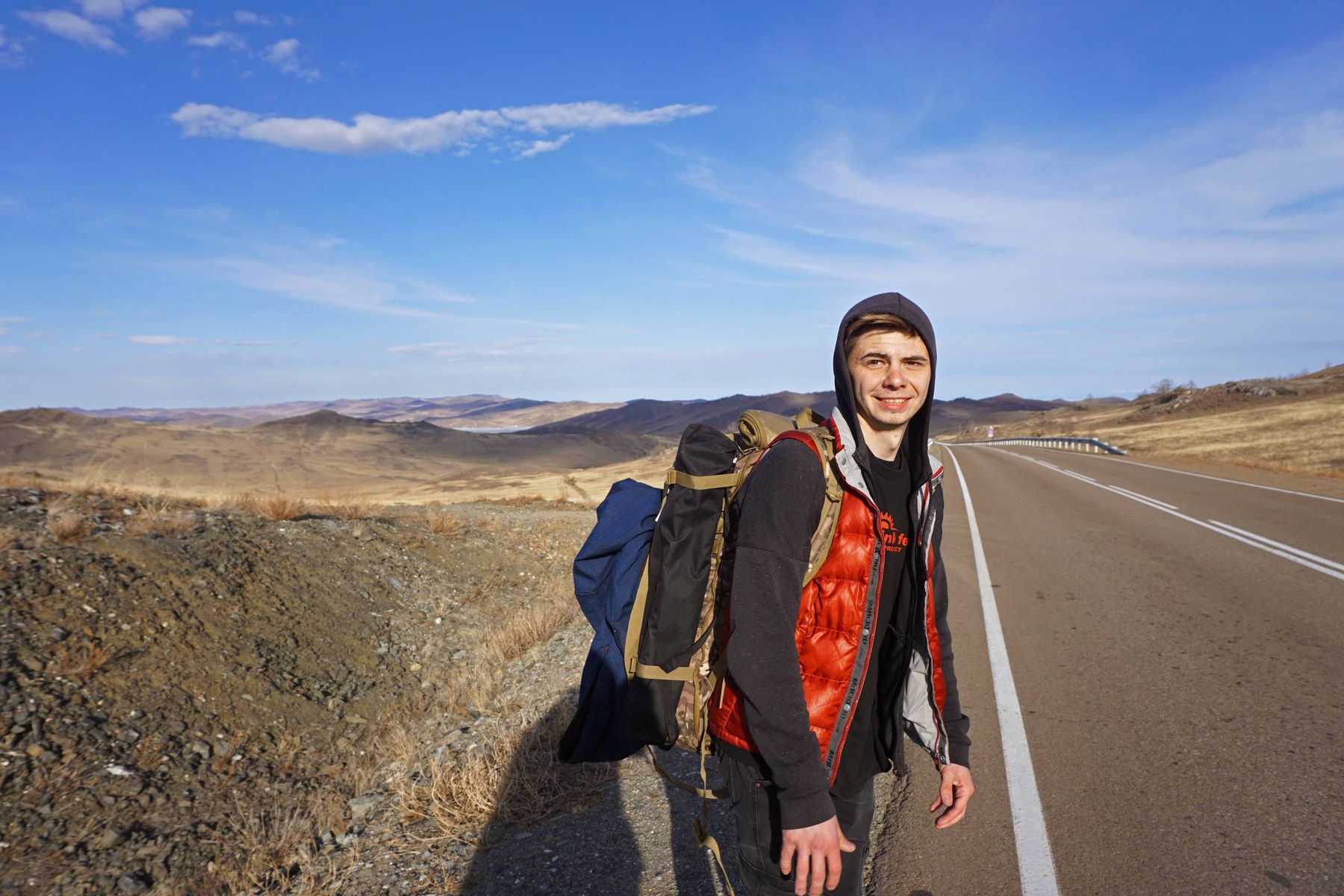
Since Maks, the couchsurfer who’s hitching across Russia with only $100, was crashing my couch for a few days, I thought I should use this opportunity to explore Olkhon Island for free. I’ve hitchhiked in many different countries before, but never in Russia. I’m still not sure if I would hitch in Russia alone, but with another person- no problemo ;).

So this was the plan: hitch to the island (about 300km)- camp- hike – film some video clips- camp- hitch back.

I borrowed a tent and an extra sleeping bag from my friend Dima, who assured me that we would not freeze to death during these brisky April nights. Then I bought some oats, nuts, berries, bread, canned fish, and 4 liters of water (less than $15 worth of stuff). We set off for the road at 11am last Tuesday.

We took a bus to the other side of Irkutsk, then caught 4 lifts to Harat’s Pub- a strange place about 6 km from where the ferry takes off to the island. Harat’s is an “Irish pub” chain you can find in Russia. Here, it’s considered to be kind of “classy,” cool and out of the ordinary. To me, it’s just the same as any other dirty old Irish pub you find anywhere in the western world. So that’s why I think it’s strange. It’s expensive and looks very out of place in a small Russian village :D.  Nevertheless, this one made great pozy (local Siberian dumplings) and a good borsch. I was tempted to get a Guinness but resisted this temptation thinking back to this blog and my current “barely-employed” situation.

We finished the dumplings and set off for the road again. It was about 5pm, there were no cars in sight, but we were close enough now that we could walk to the island.

The people we hitched rides with told us that the official ice road had been closed for about a month and most of them weren’t sure if the ice was thick enough to safely walk over, but one man assured us that it would be no problem.

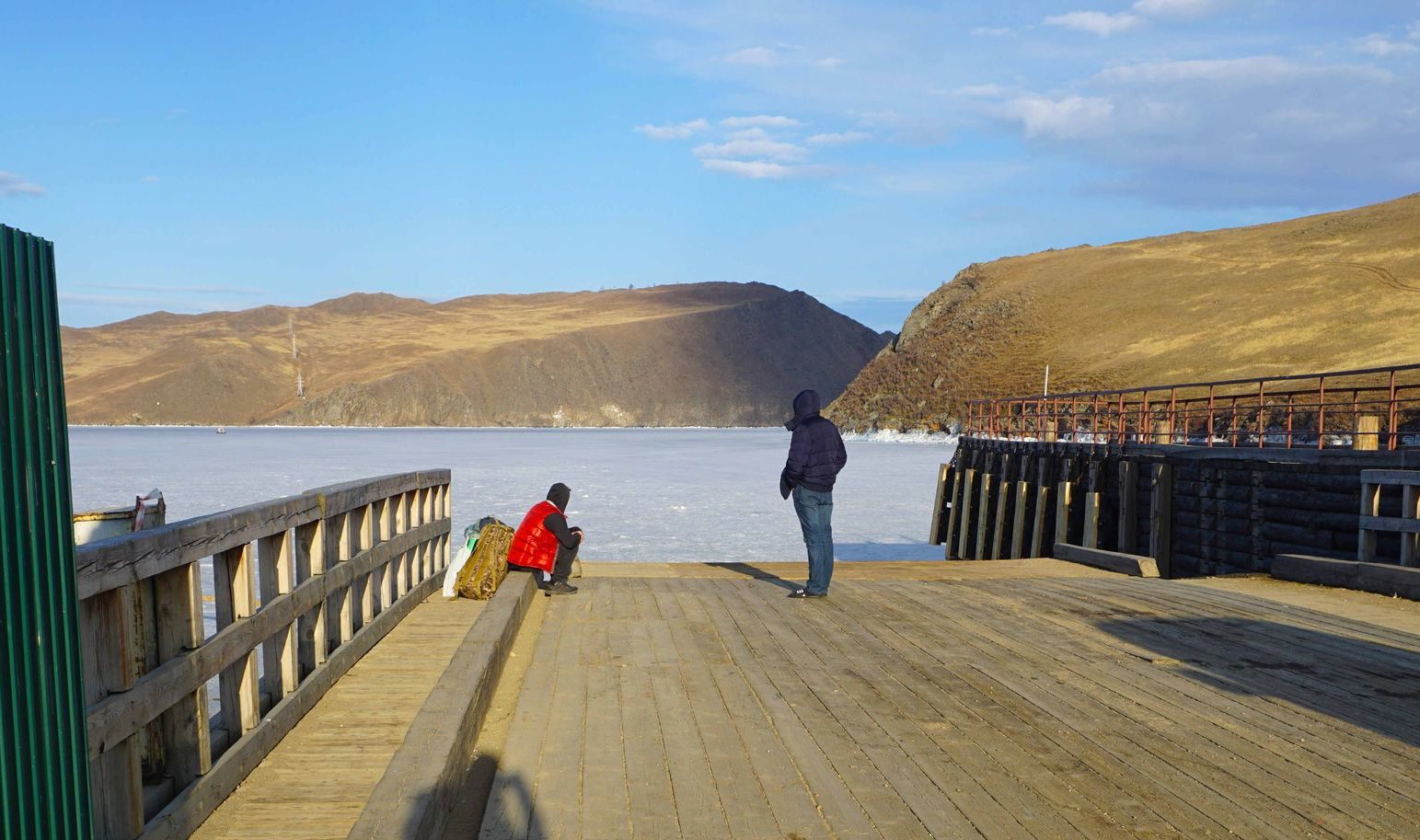
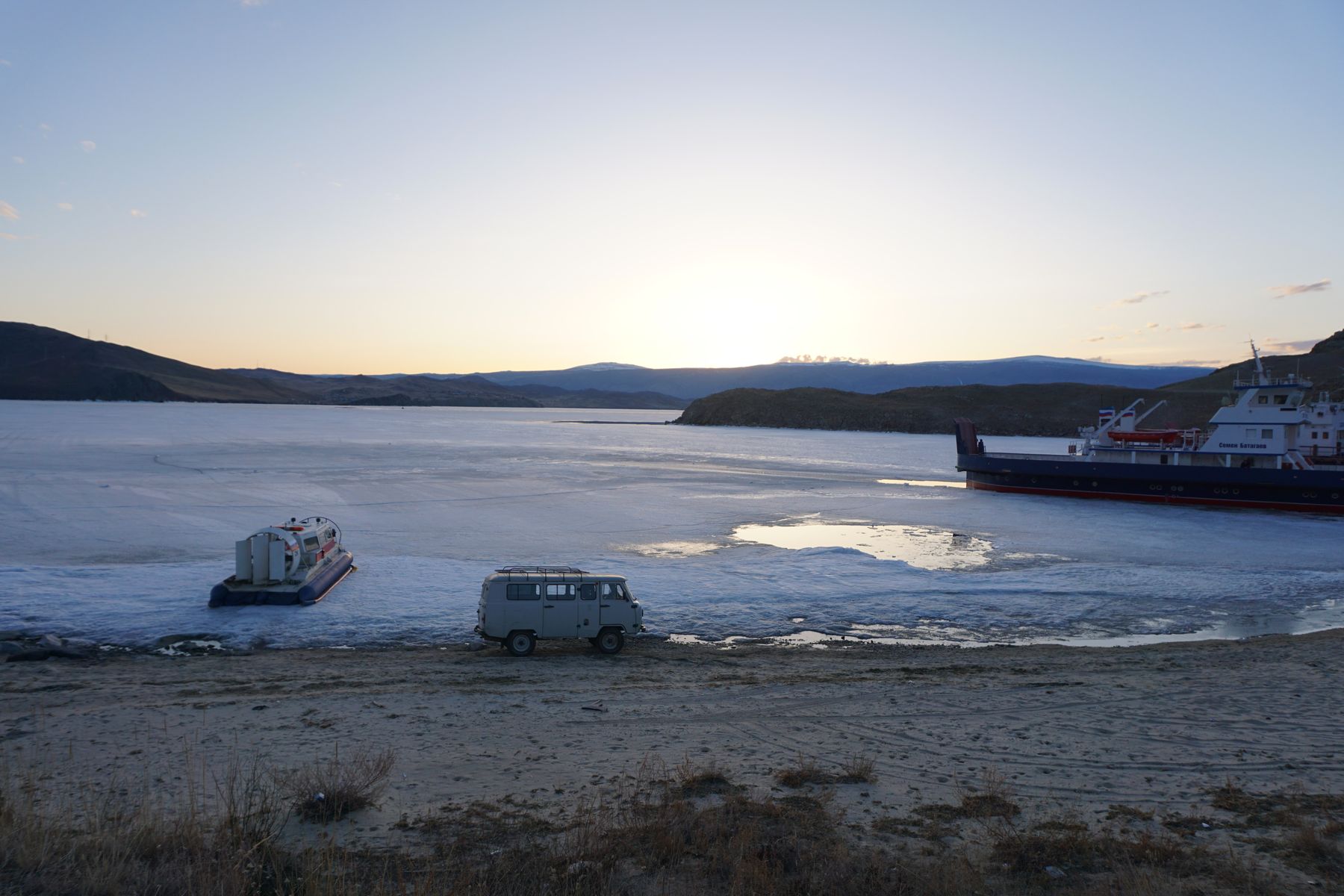
We walked down the road for 3-4 km then caught another lift to the dock. Looking out at the lake, we were still uncertain about whether we should walk to the island or not.

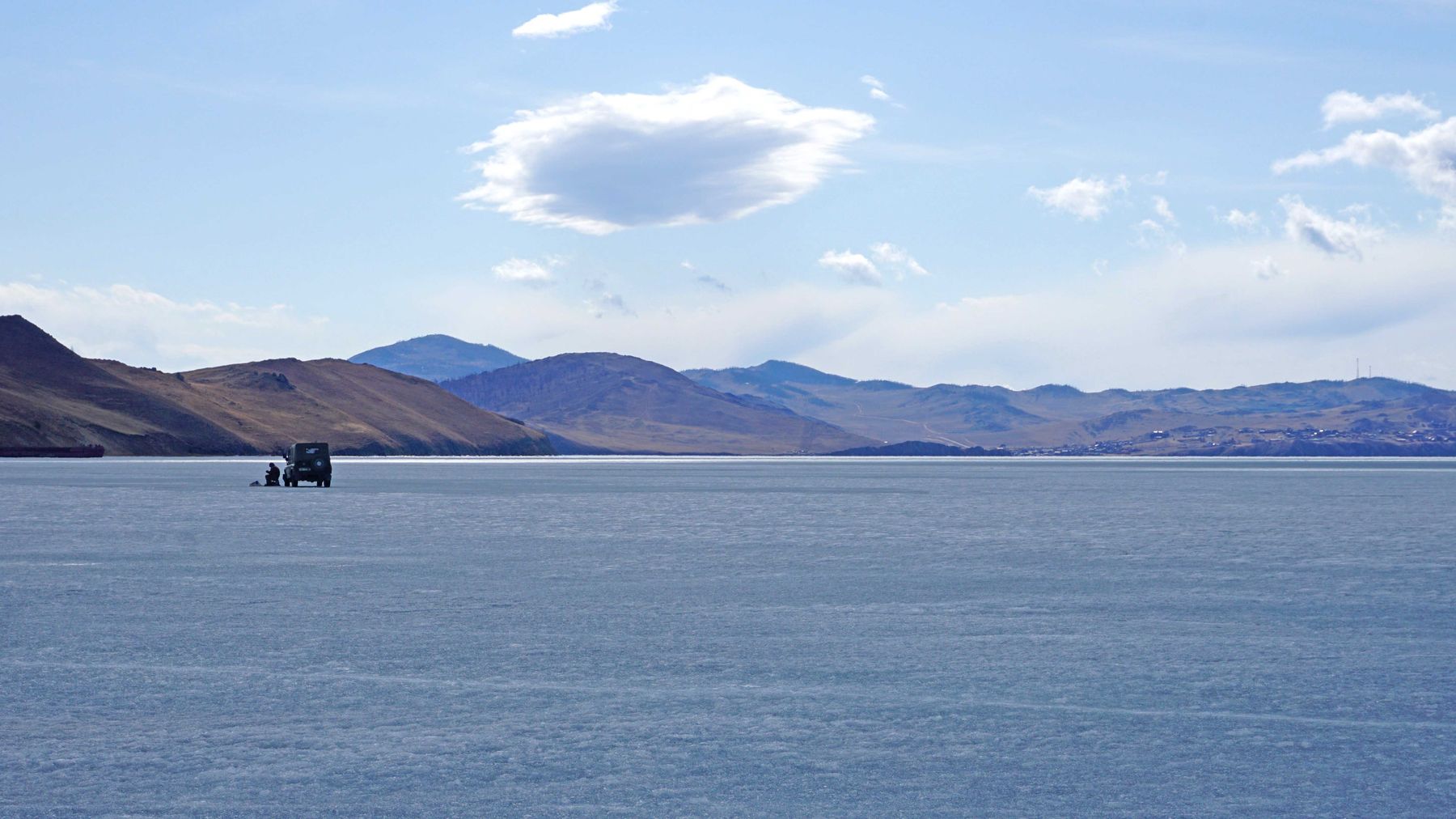
As we contemplated, a local fisherman gave us a big spiel about how falling into the frozen lake was no big deal. He told us that his record for falling in the lake was 11 times in one spring. He said that if you fall in, you should just turn around and climb back up where you came in, then take off all your clothes and put on dry ones. No biggie.

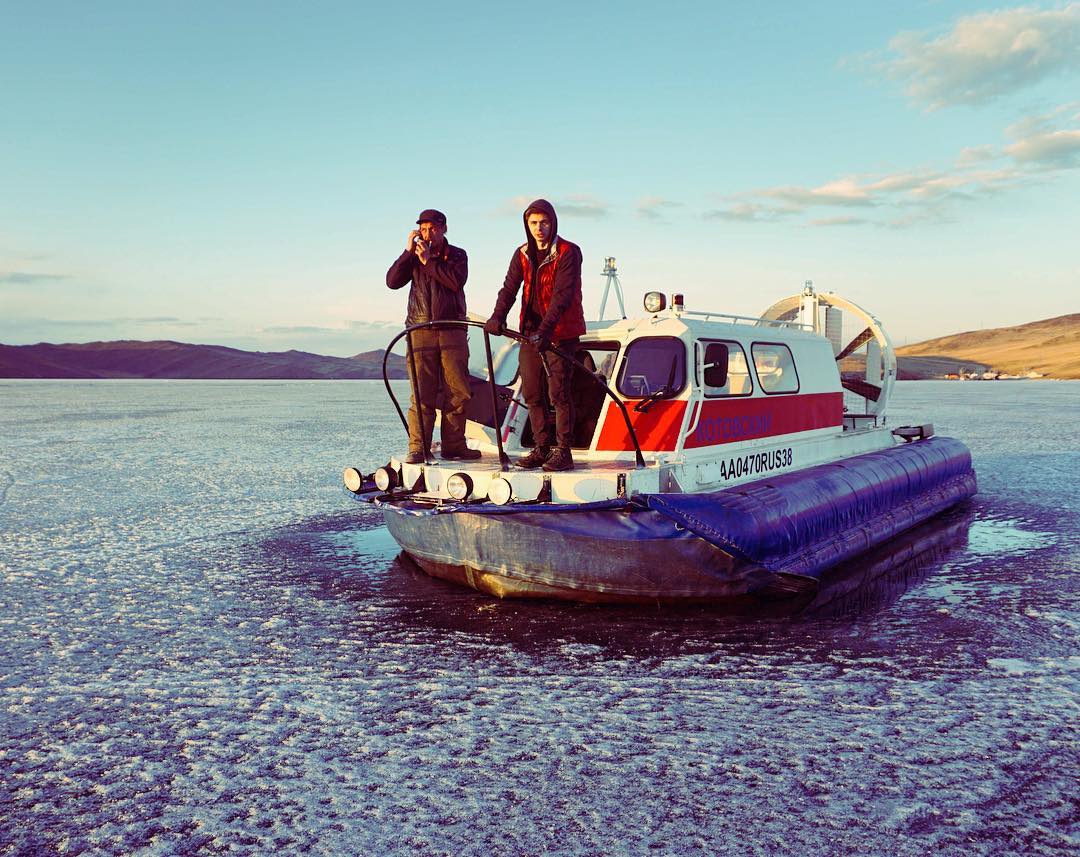
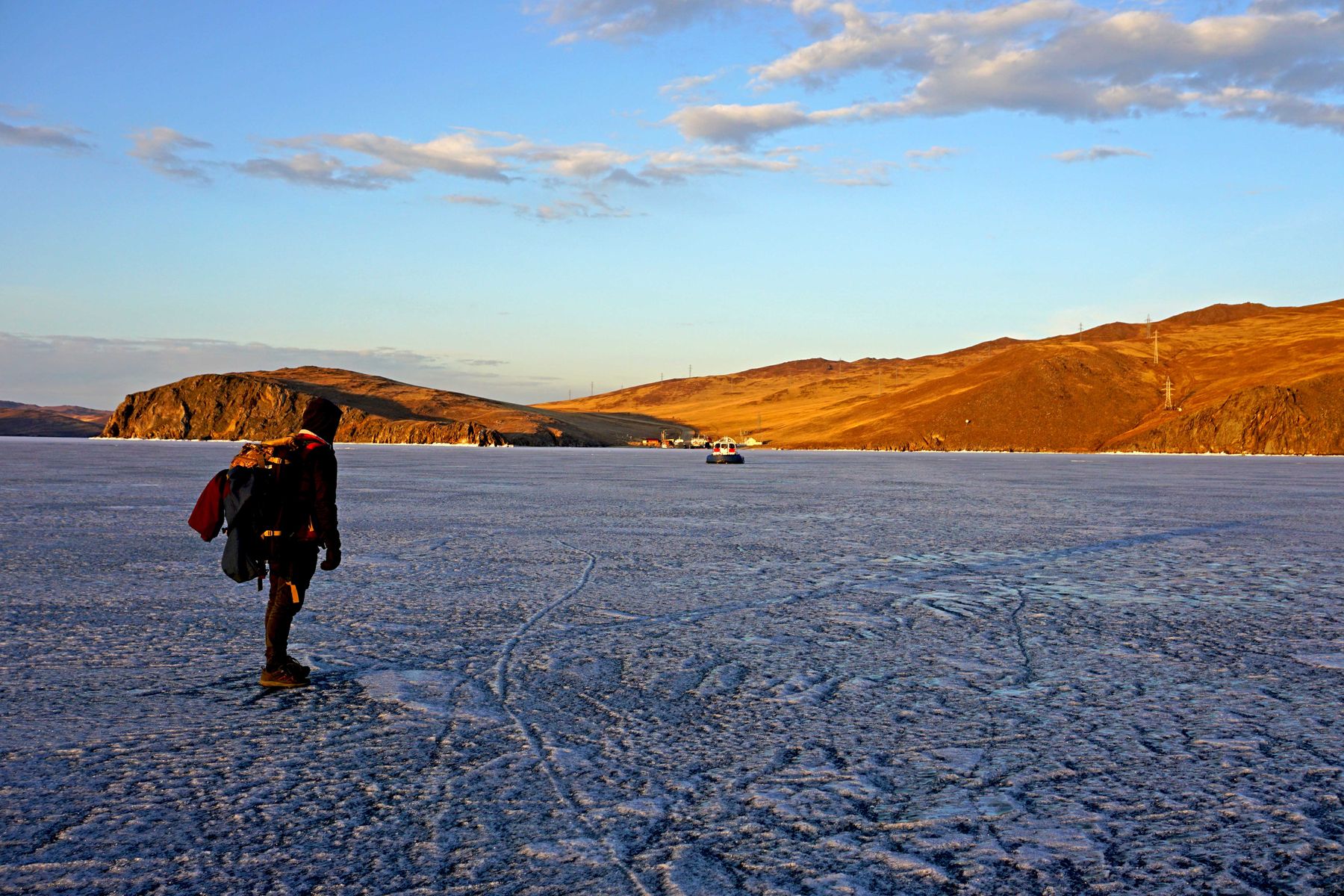
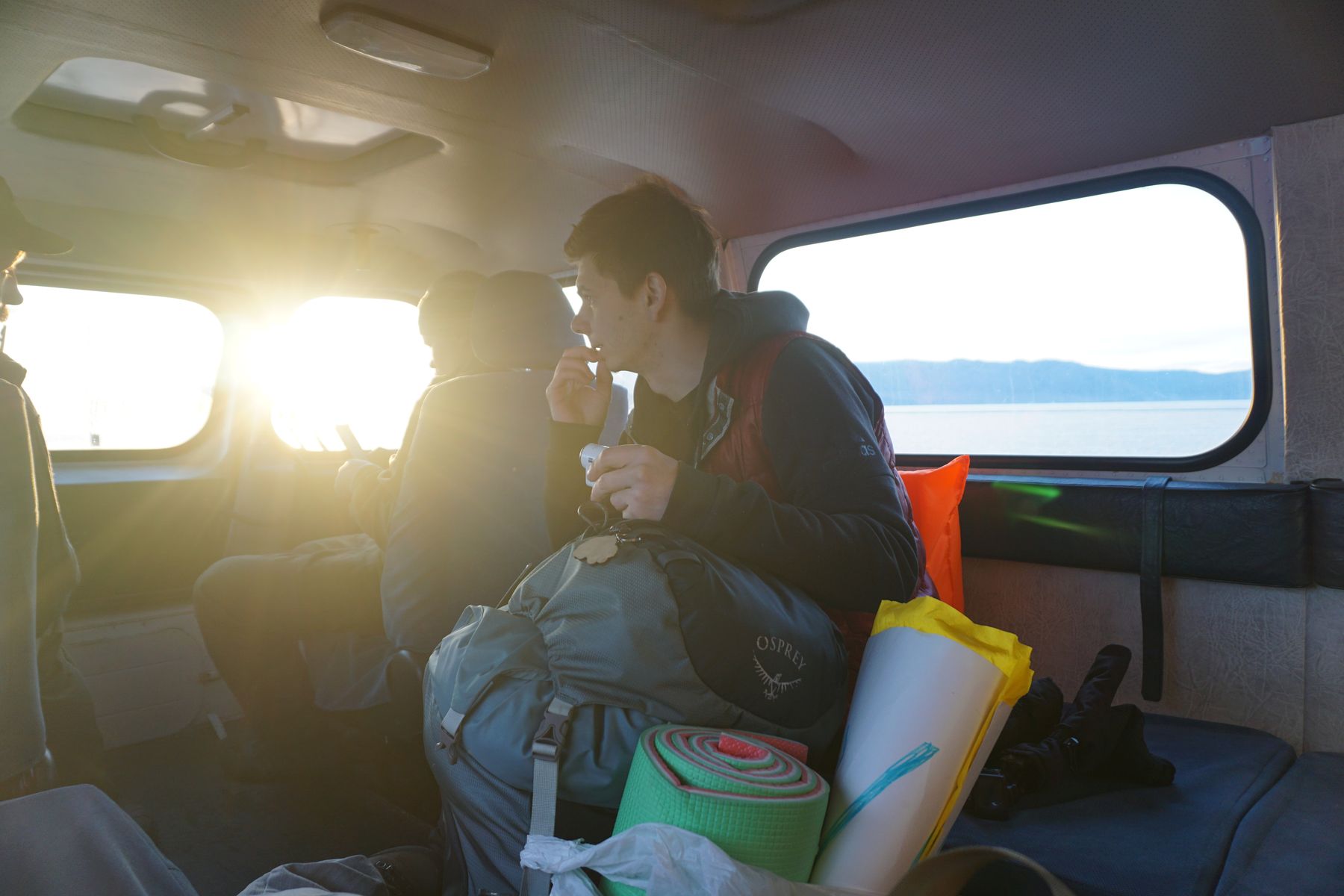
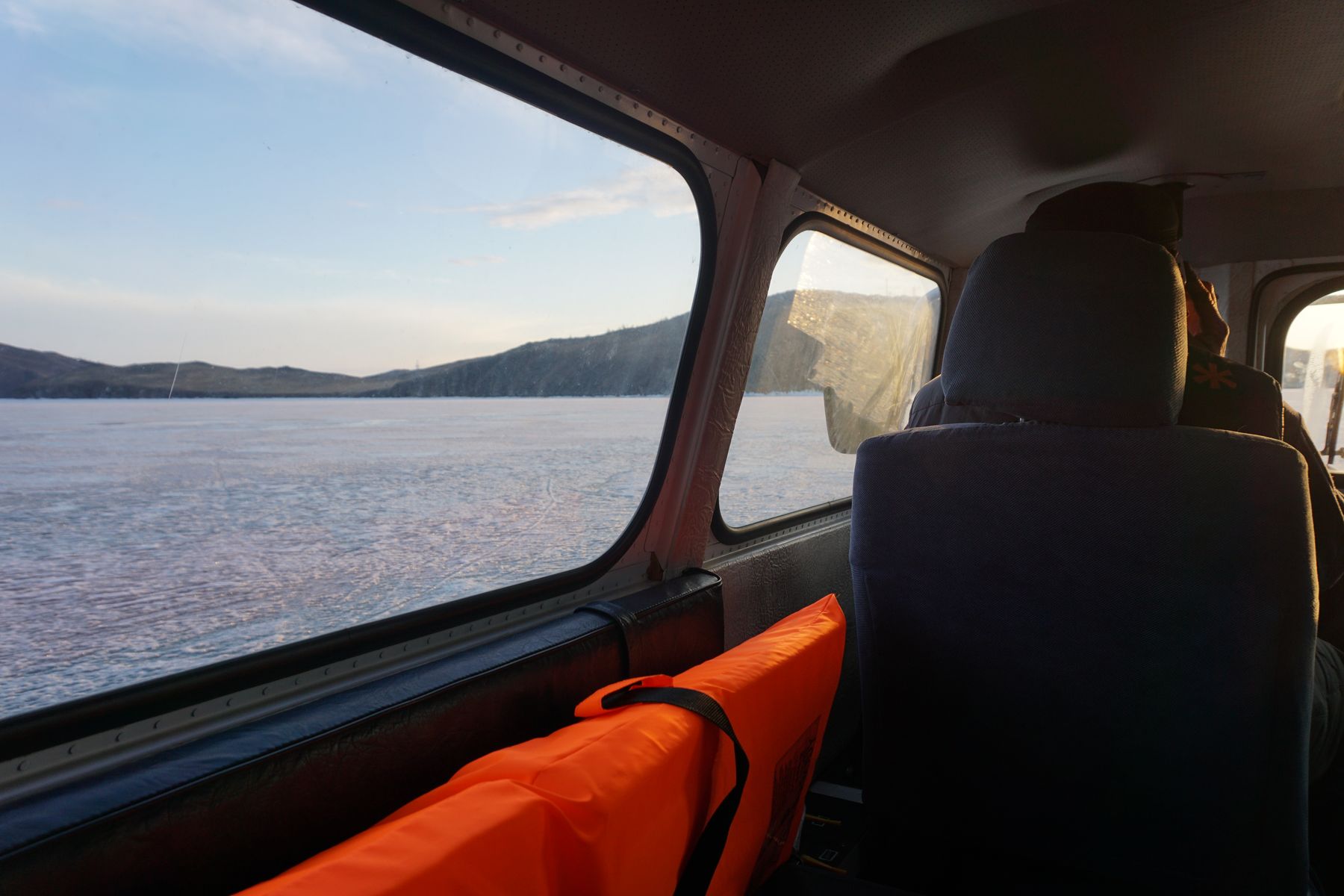
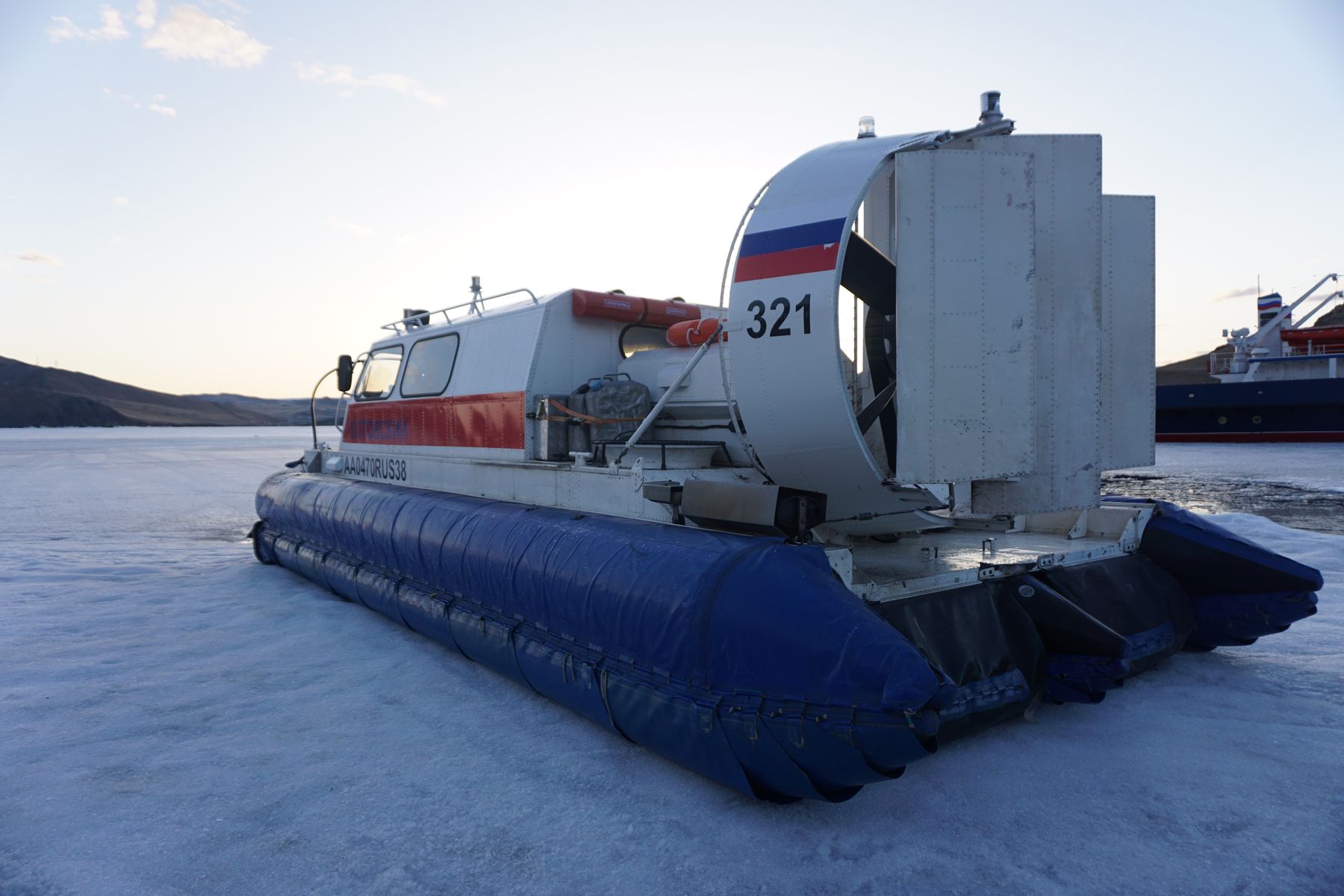
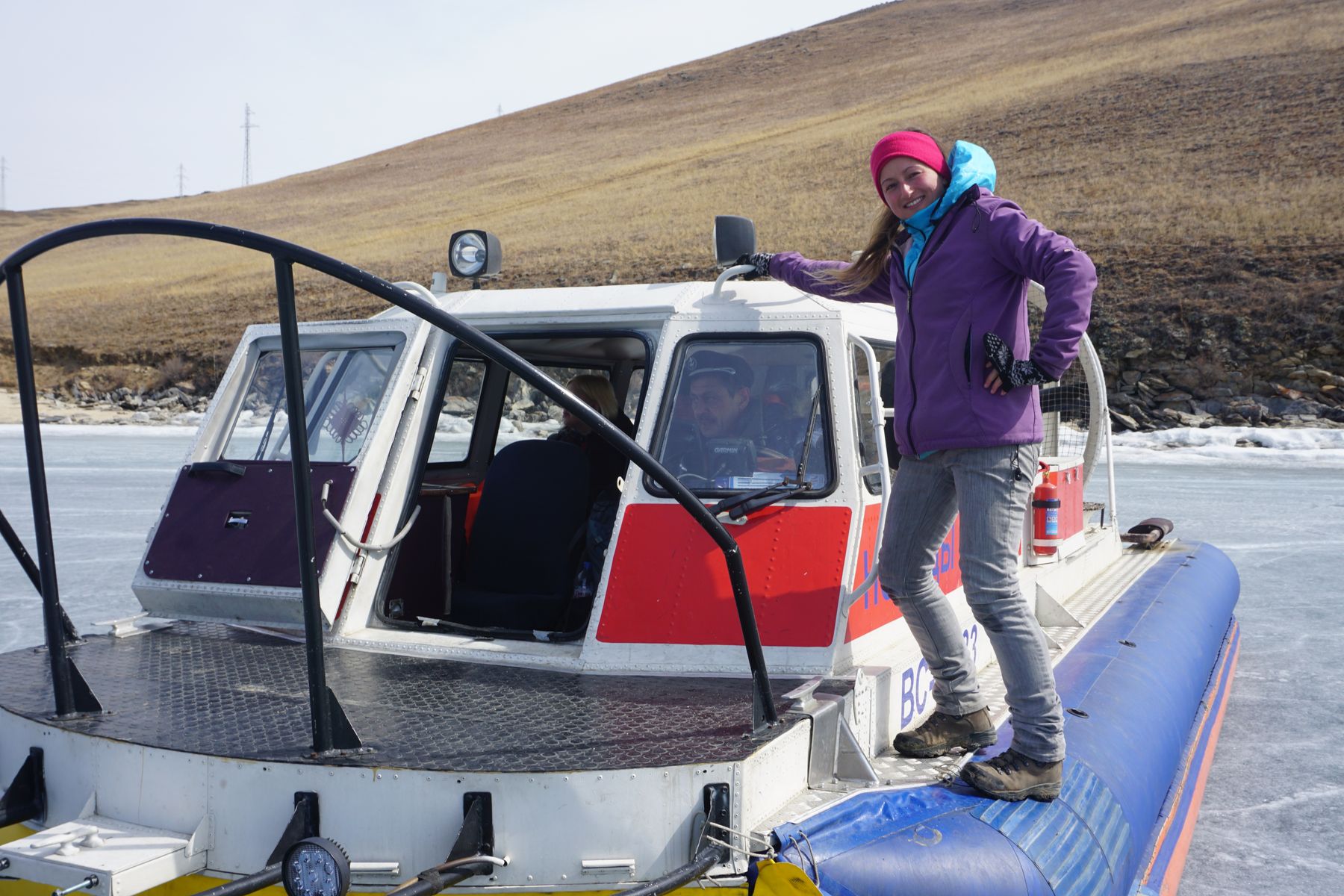
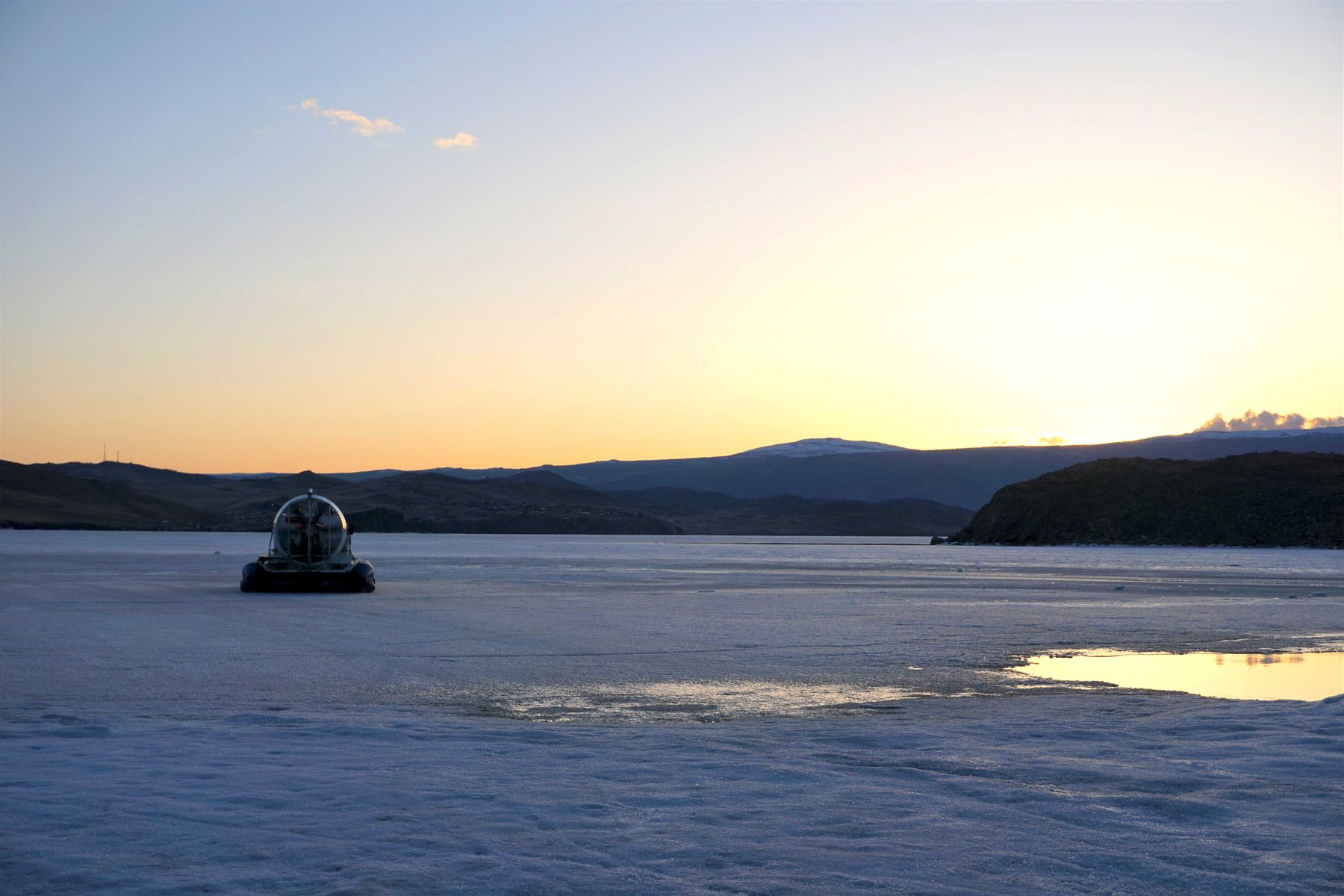
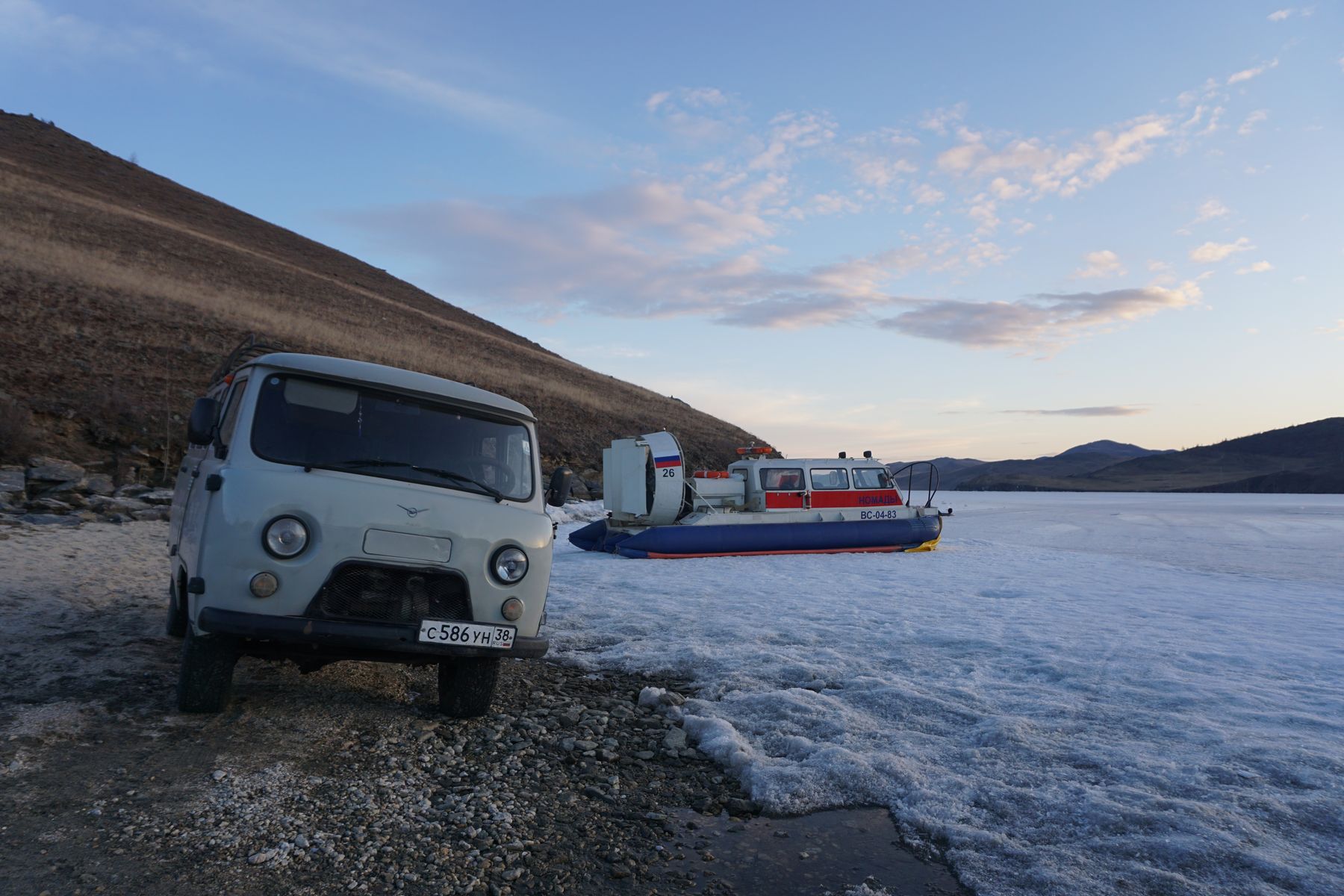
Oh and by the way, there are no ferries in April. Right now, the only way to get to Olkhon Island is by a fascinating apparatus called a “podushka,” which translates to “pillow” (or hovercraft :)). It basically is a big rubber pillow that glides across the ice. If the ice breaks, it swims on the water.

A ride on the podushka costs 350 rubles ($5) but we decided to save some money and take the little risk by walking over the ice. We thought that maybe we could hitch a free ride on the podushka if we tried to stop it somewhere further down the ice road.

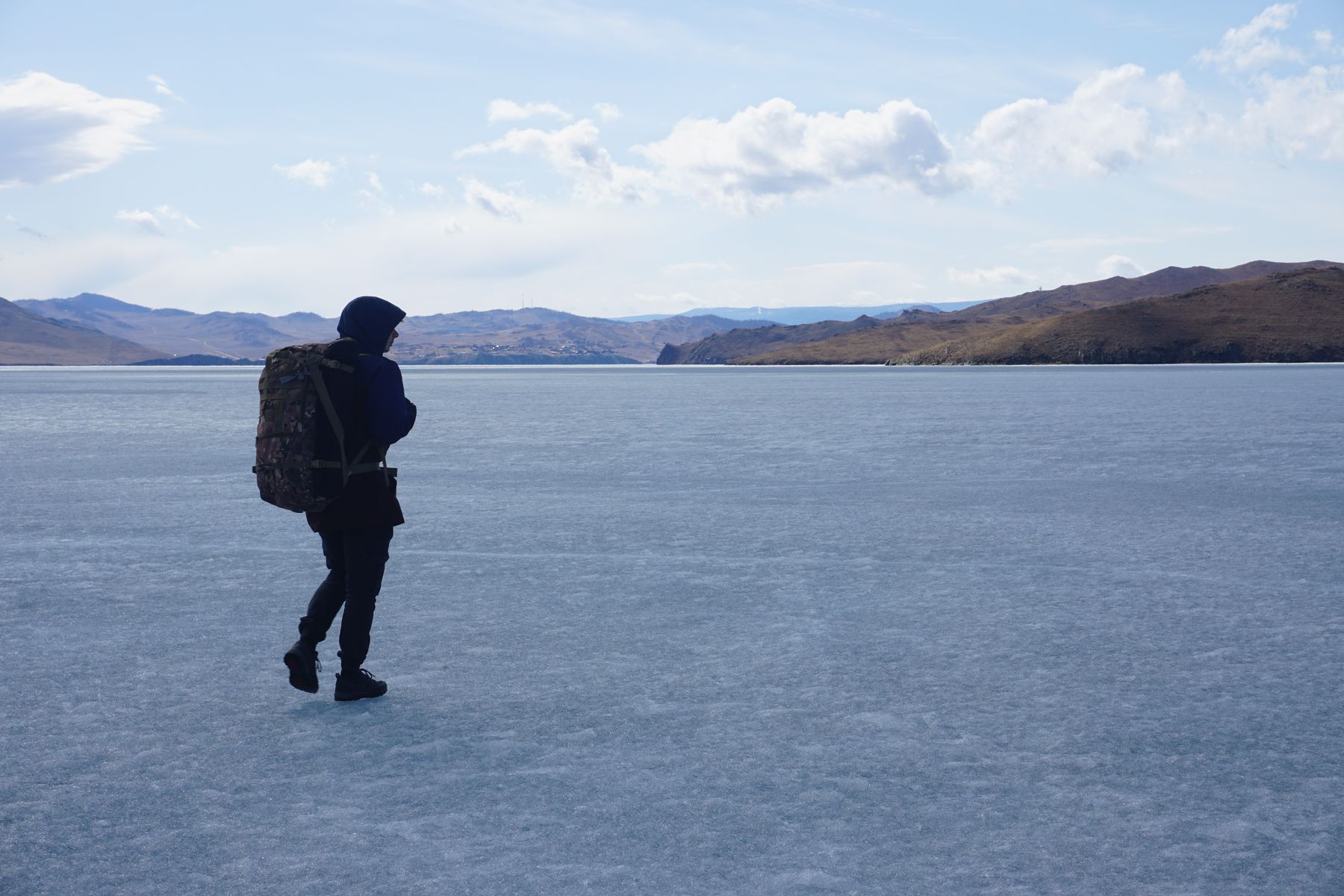
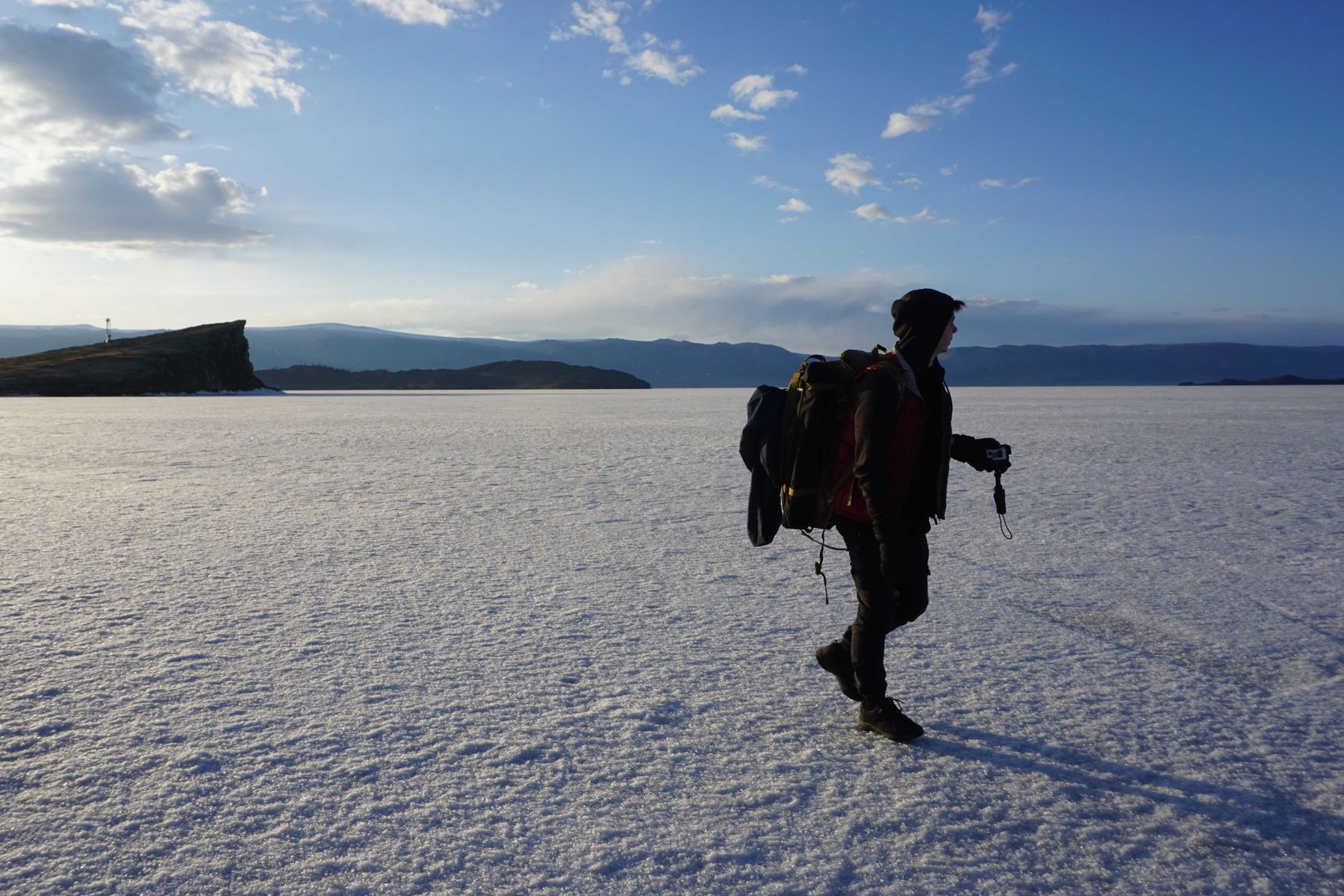
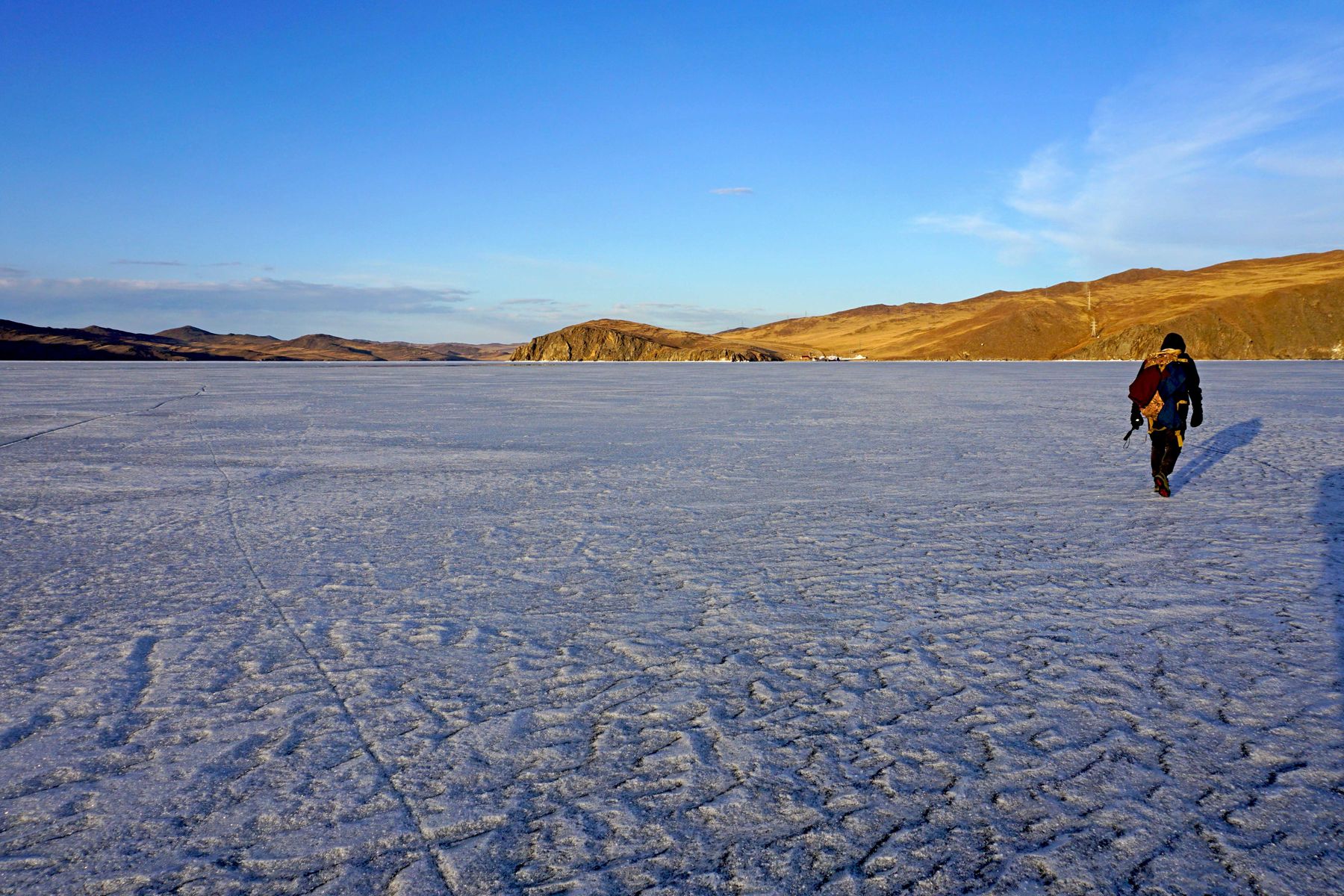
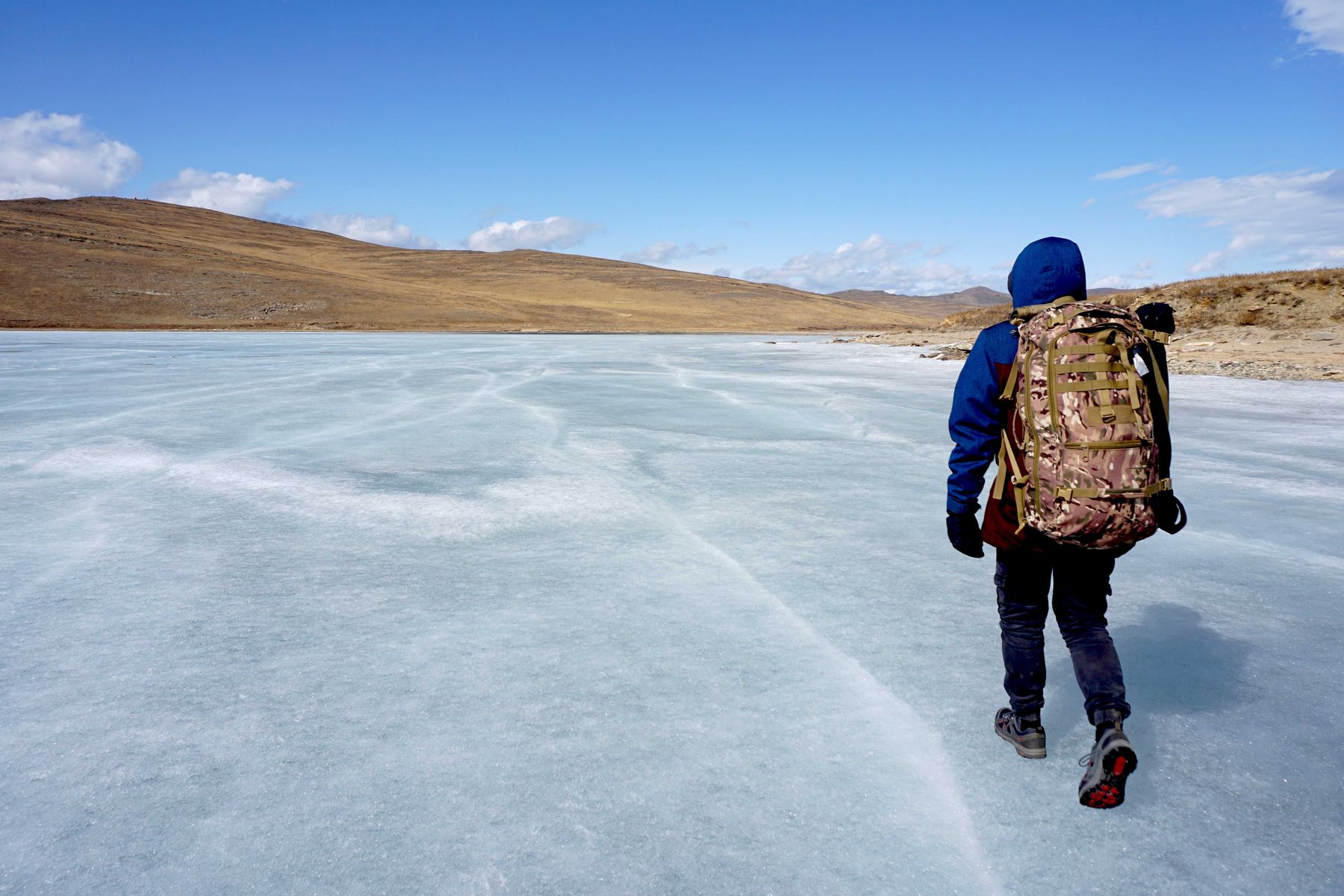
The ice was thick and sturdy at the start. Maks walked in front, I followed.

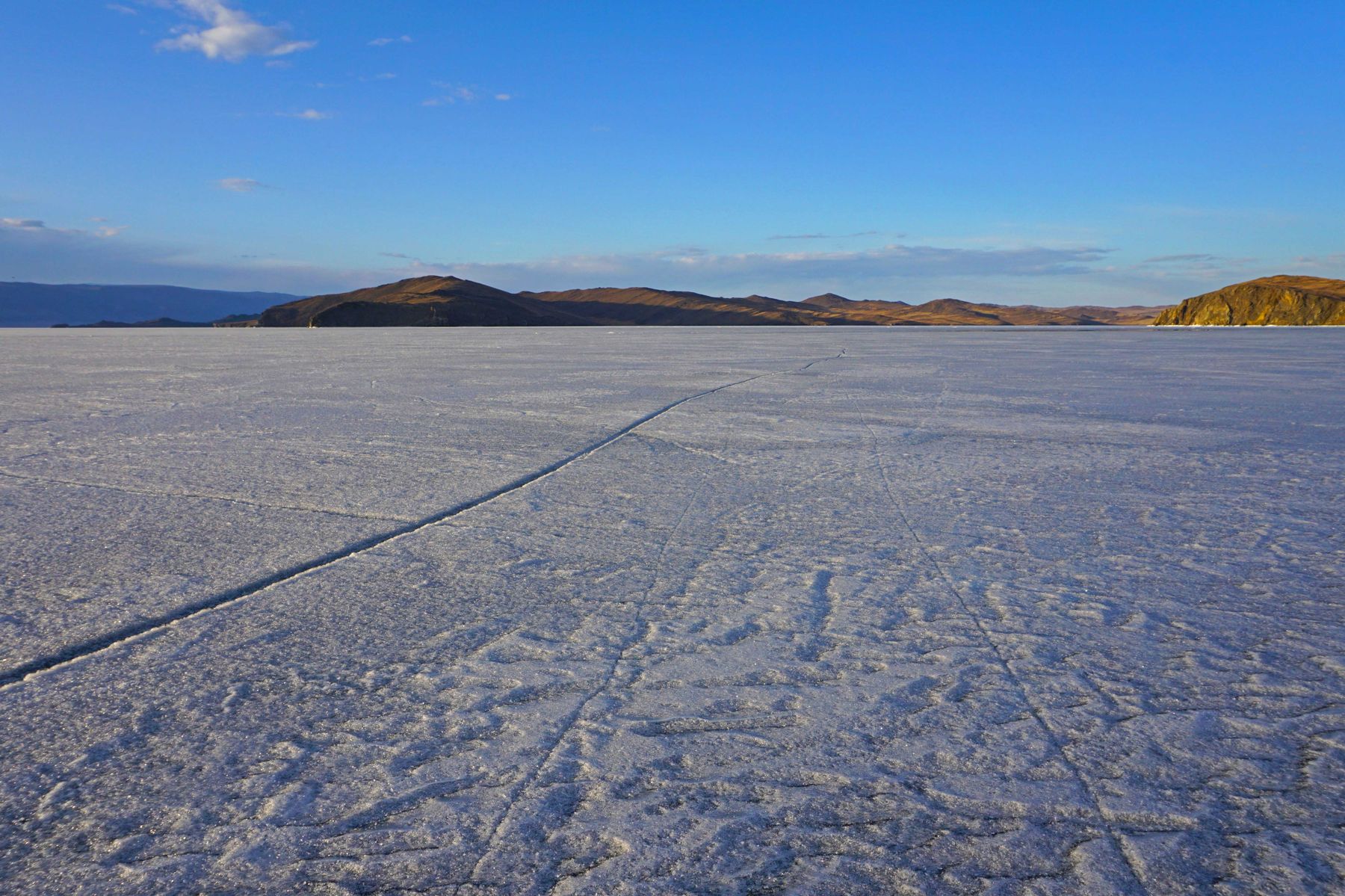
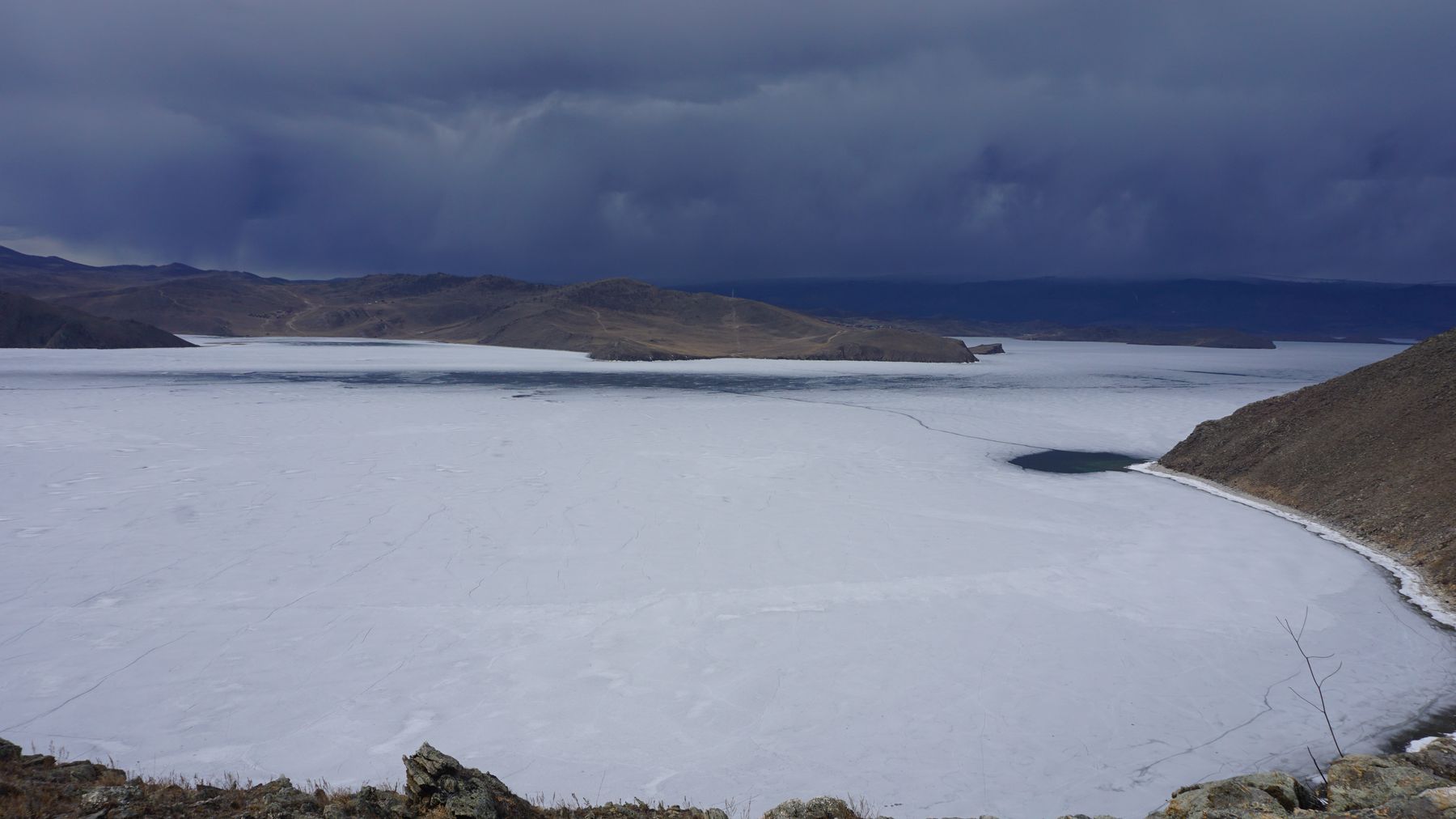
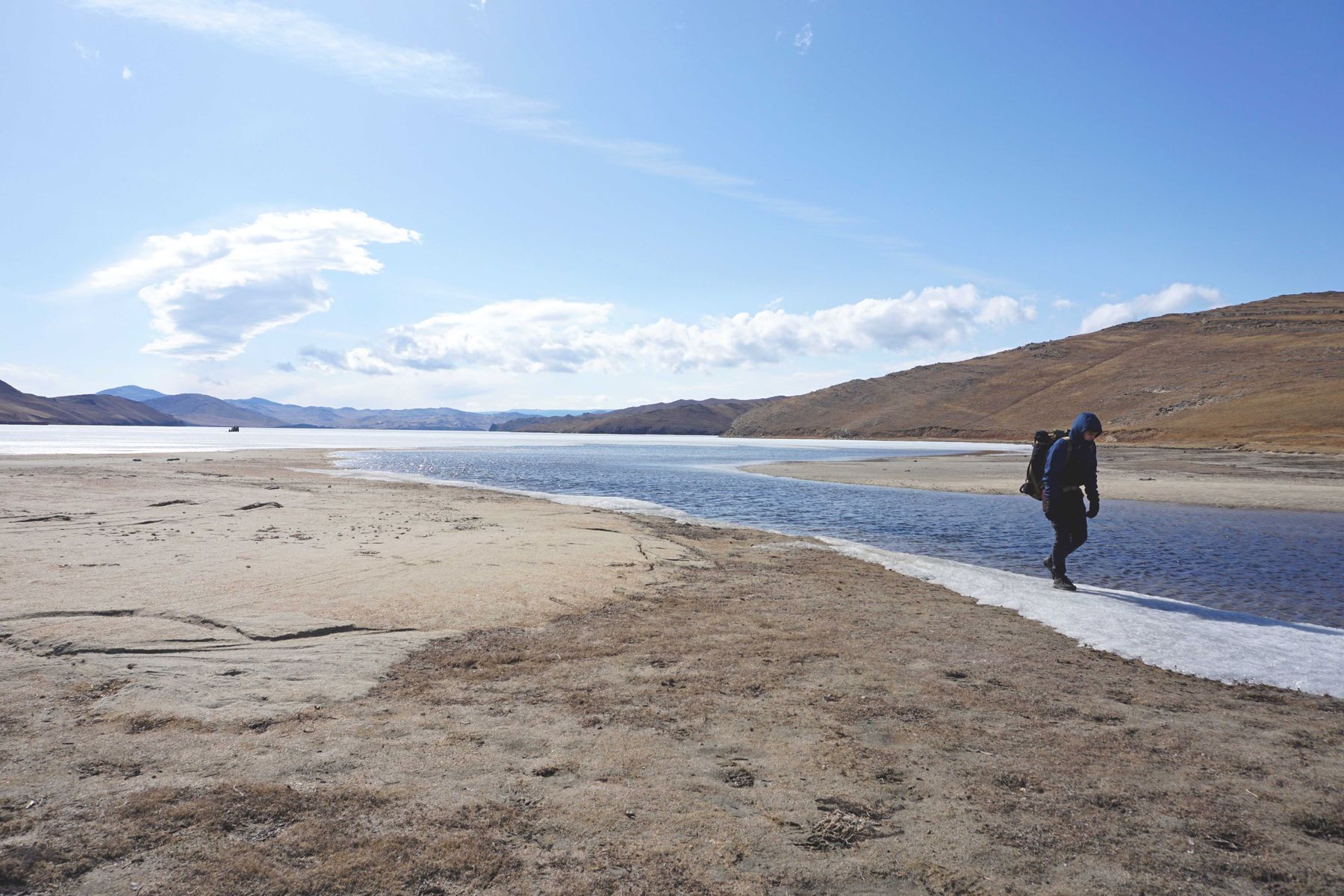
The further we walked, the more confidence we lost. About half way to the island, the ice started cracking underneath our feet. The sound wasn’t the same big drum n bass “boom” that I had heard when we hiked on Lake Baikal in March, this time it was more of a crackle, accompanied by the sound of swishing water. A bit unsettling.

We noticed a big “puddle” of open water far off the the left of us. Then I looked ahead at Maks and all of the sudden saw the ice bending beneath his body. Each step he took caused the ice to move up and down like a wave.

Crackling and bending- not the best conditions for hiking on top of the world’s deepest lake.

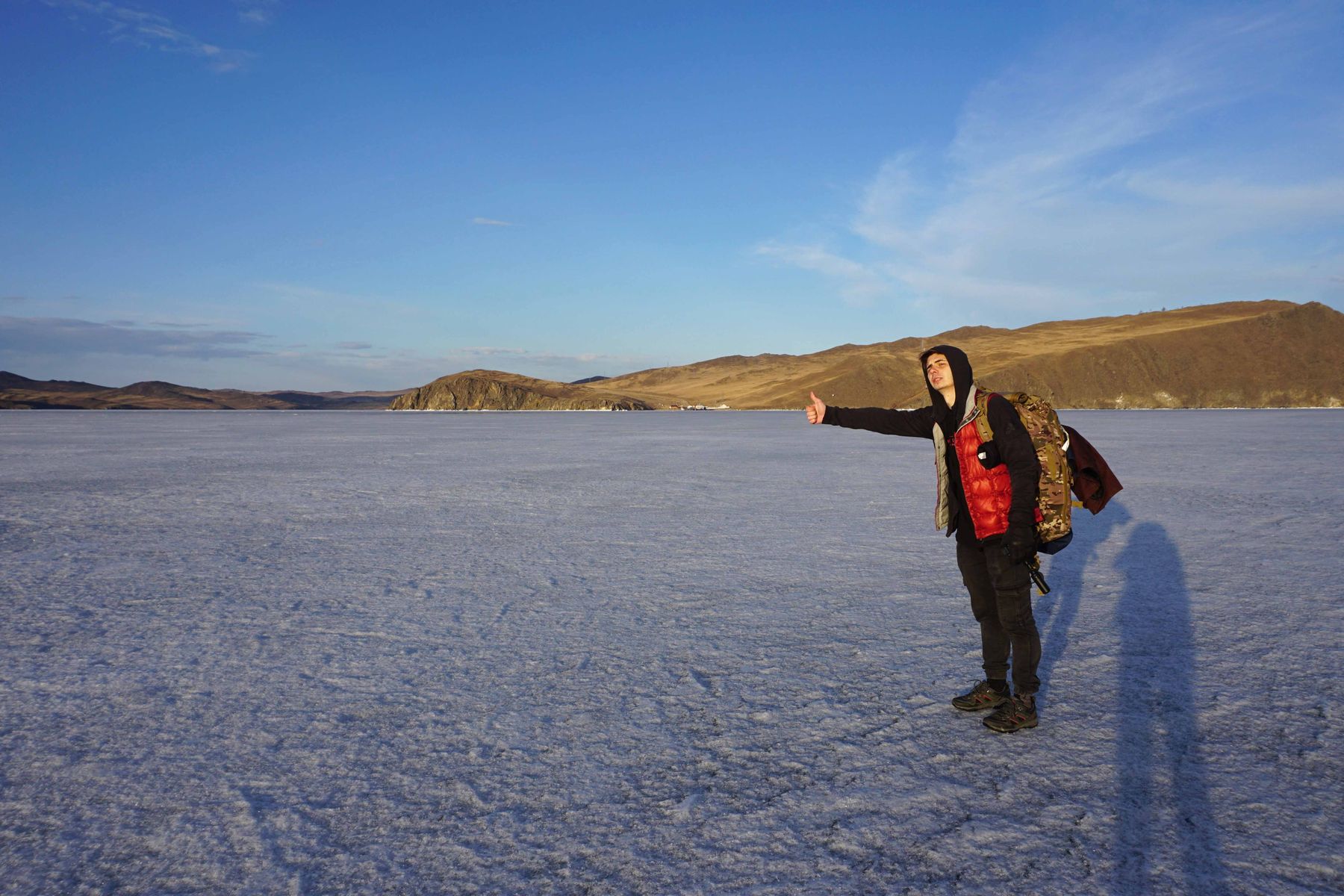
I was just about to suggest turning around when the podushka came racing towards us! I was overjoyed that we were going to be saved by the podushka! I told Maks to stick out his thumb to make sure we got a ride on it (and to take a picture :D). He seemed a bit agitated and said something like, “this is not the time for games.” I didn’t get what he was so worried about until I noticed that the podushka was creating massive ice waves as it raced directly at us at an extremely fast speed. So now we had 2 things to worry about:

1. Being run over by the podushka.

2. Drowning/ freezing to death in Lake Baikal as a result of the podushka breaking the ice beneath our feet.

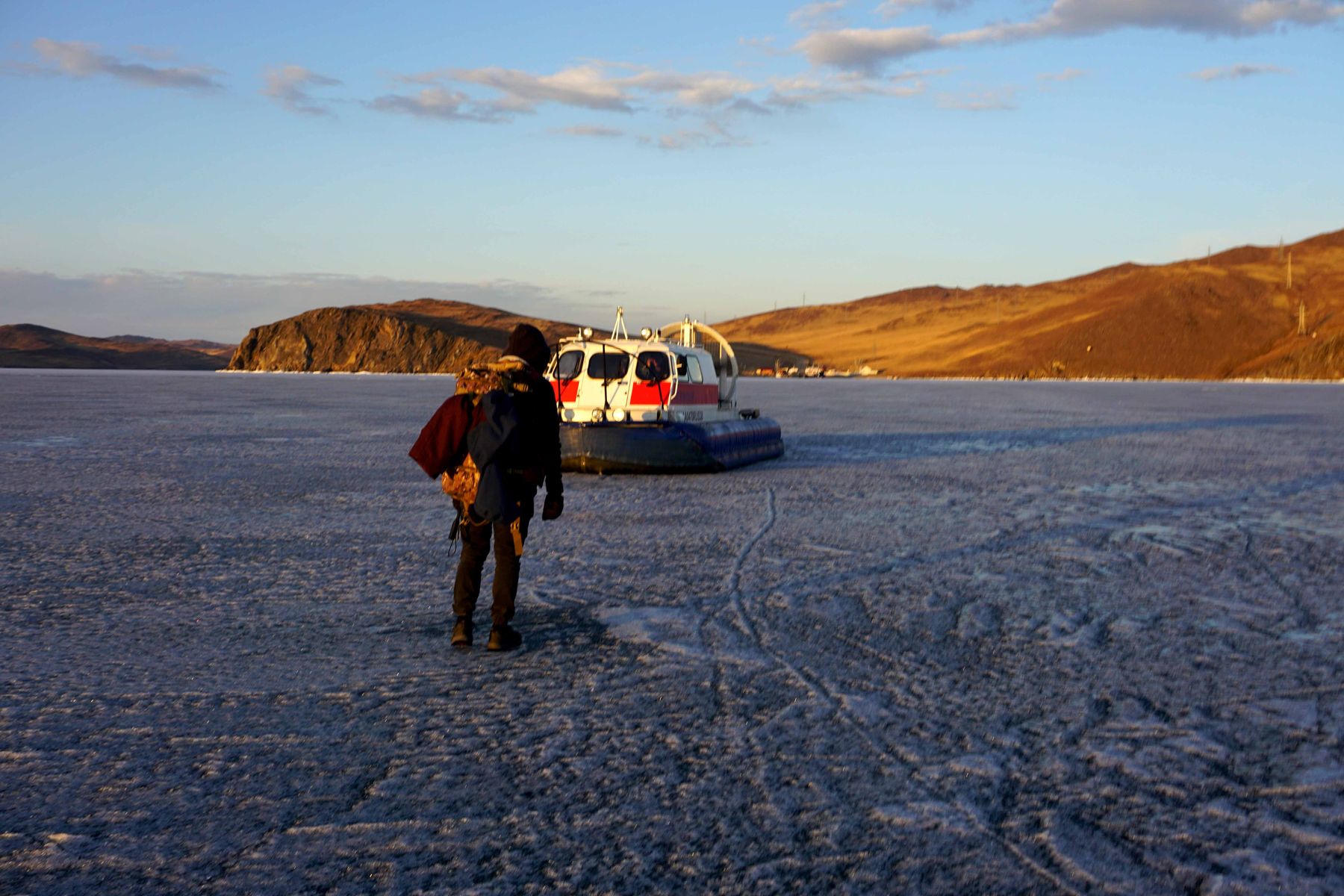
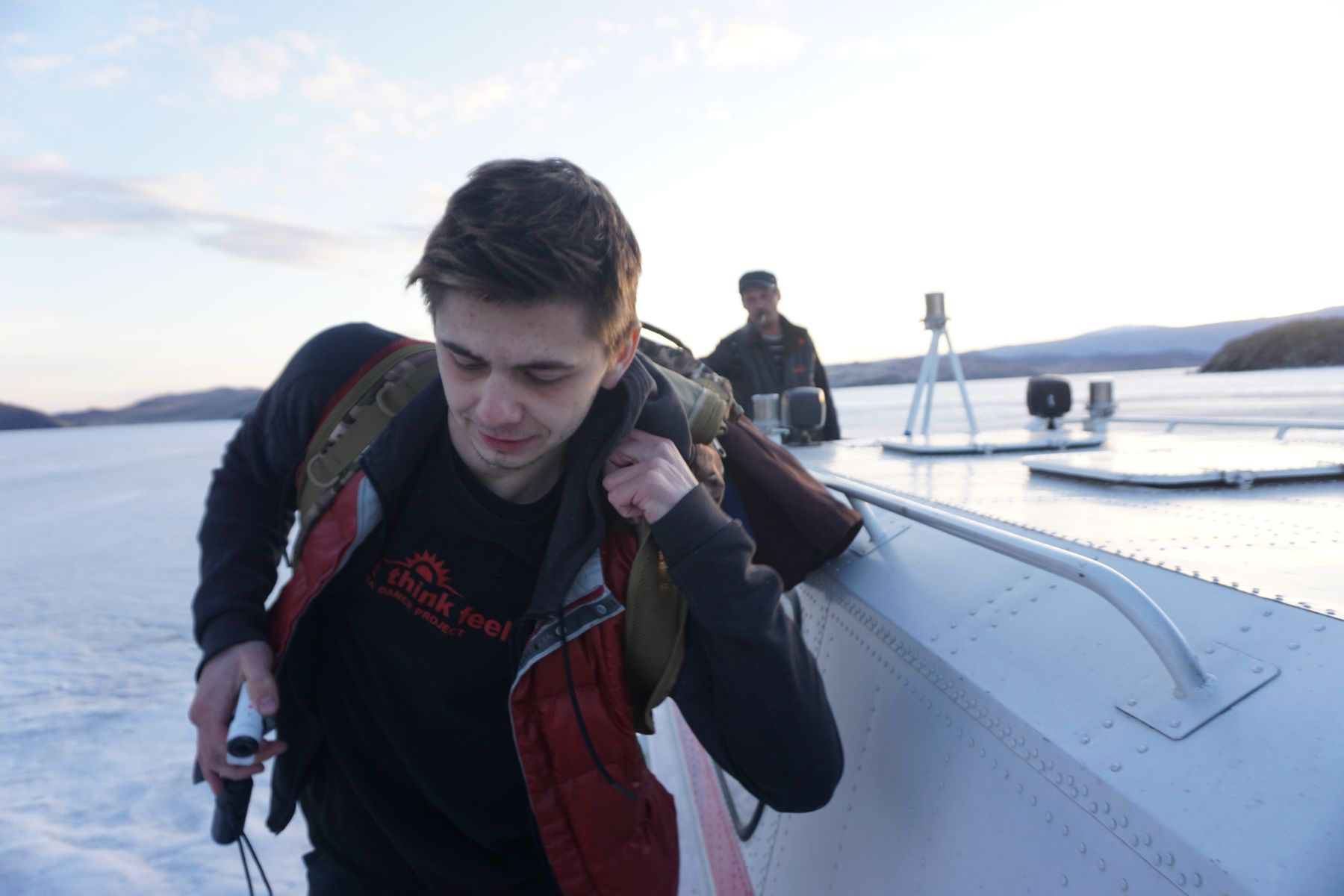
Luckily, the podushka driver noticed us, stopped, and let us on as he shook his head in disapproval. When the podushka stopped, it created a massive “puddle” of water all around it. It was scary to think about the depth of that puddle.

The driver didn’t ask us for any money, so now we actually can say that we hitched a ride on the podushka :D

Success!!!

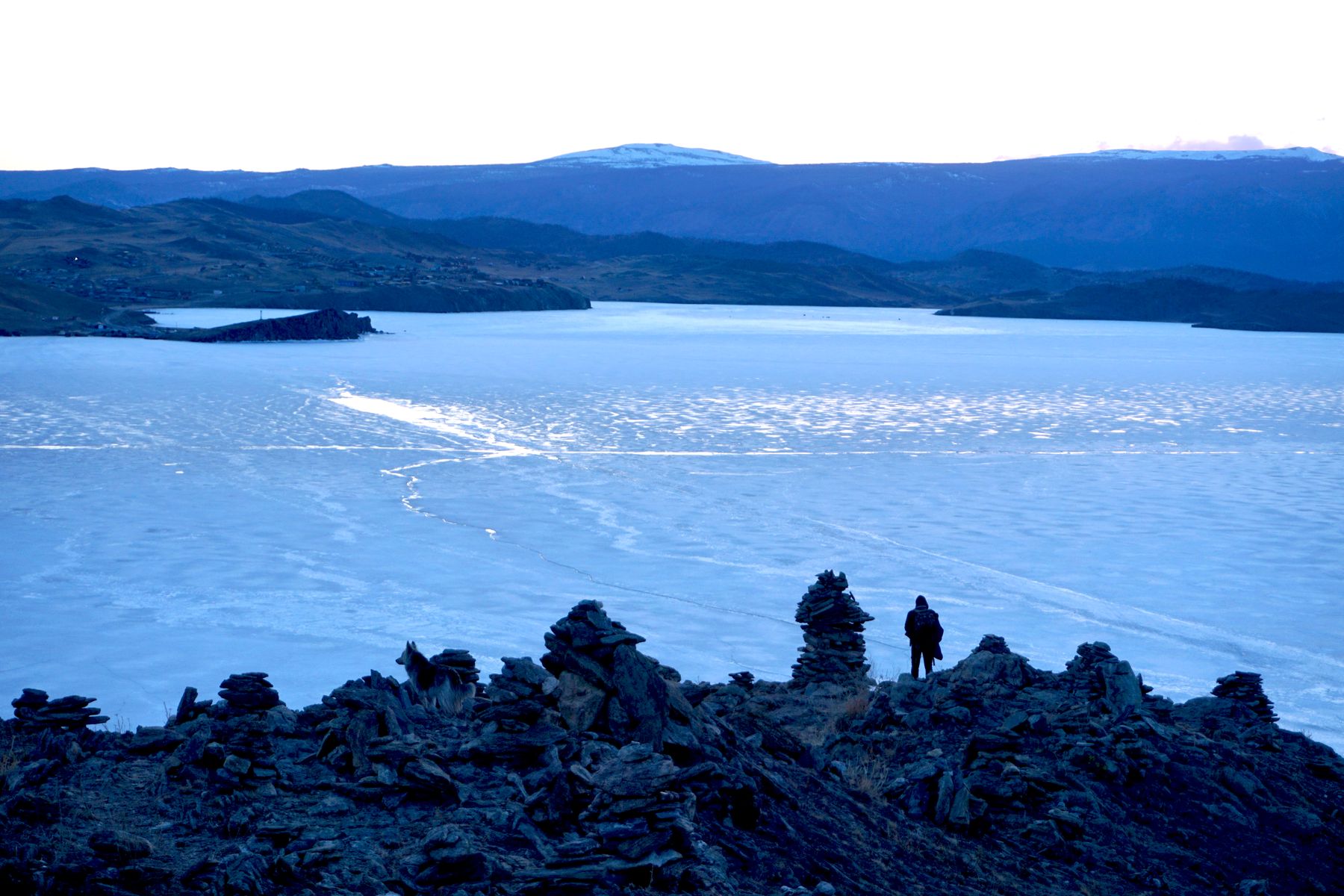
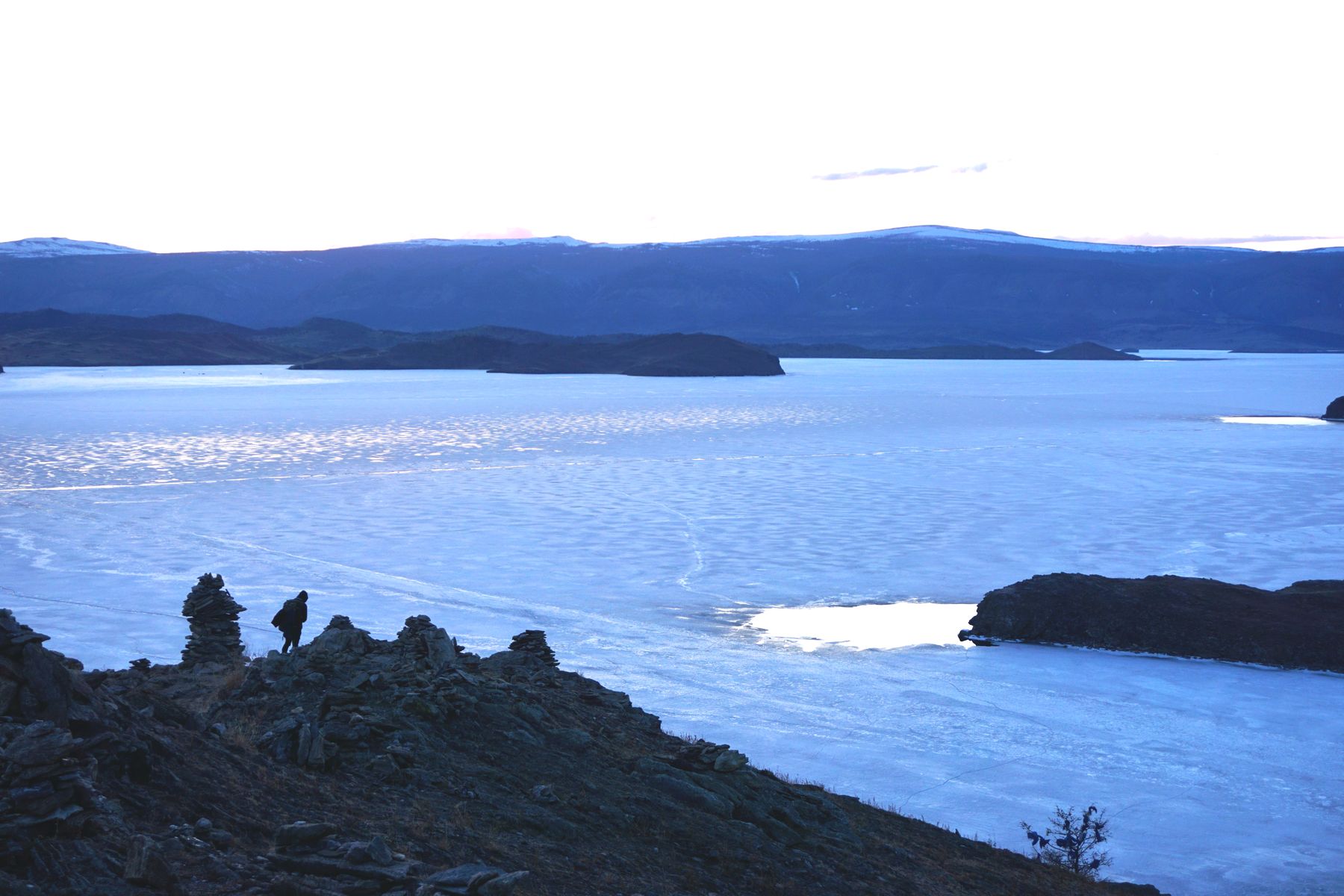
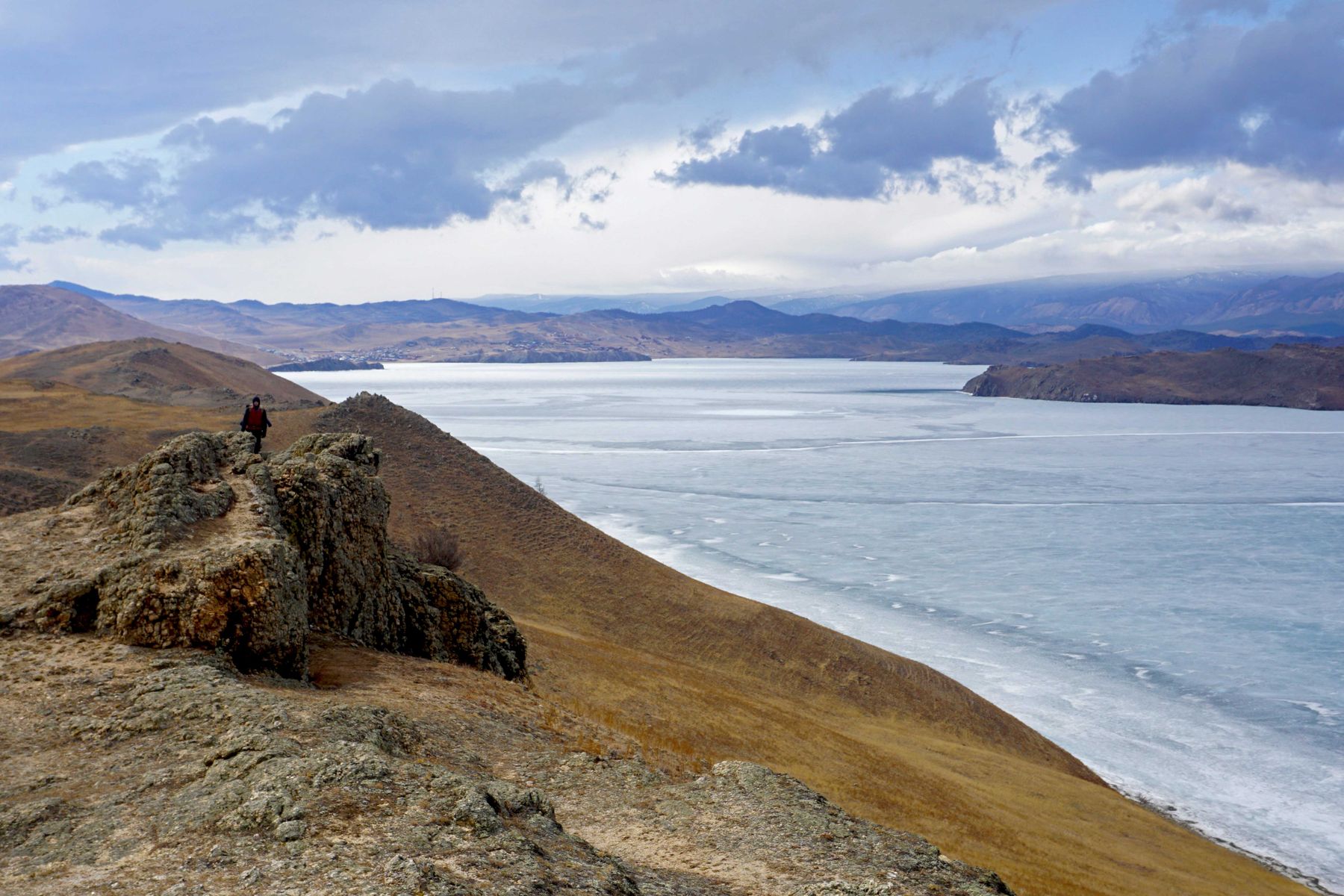
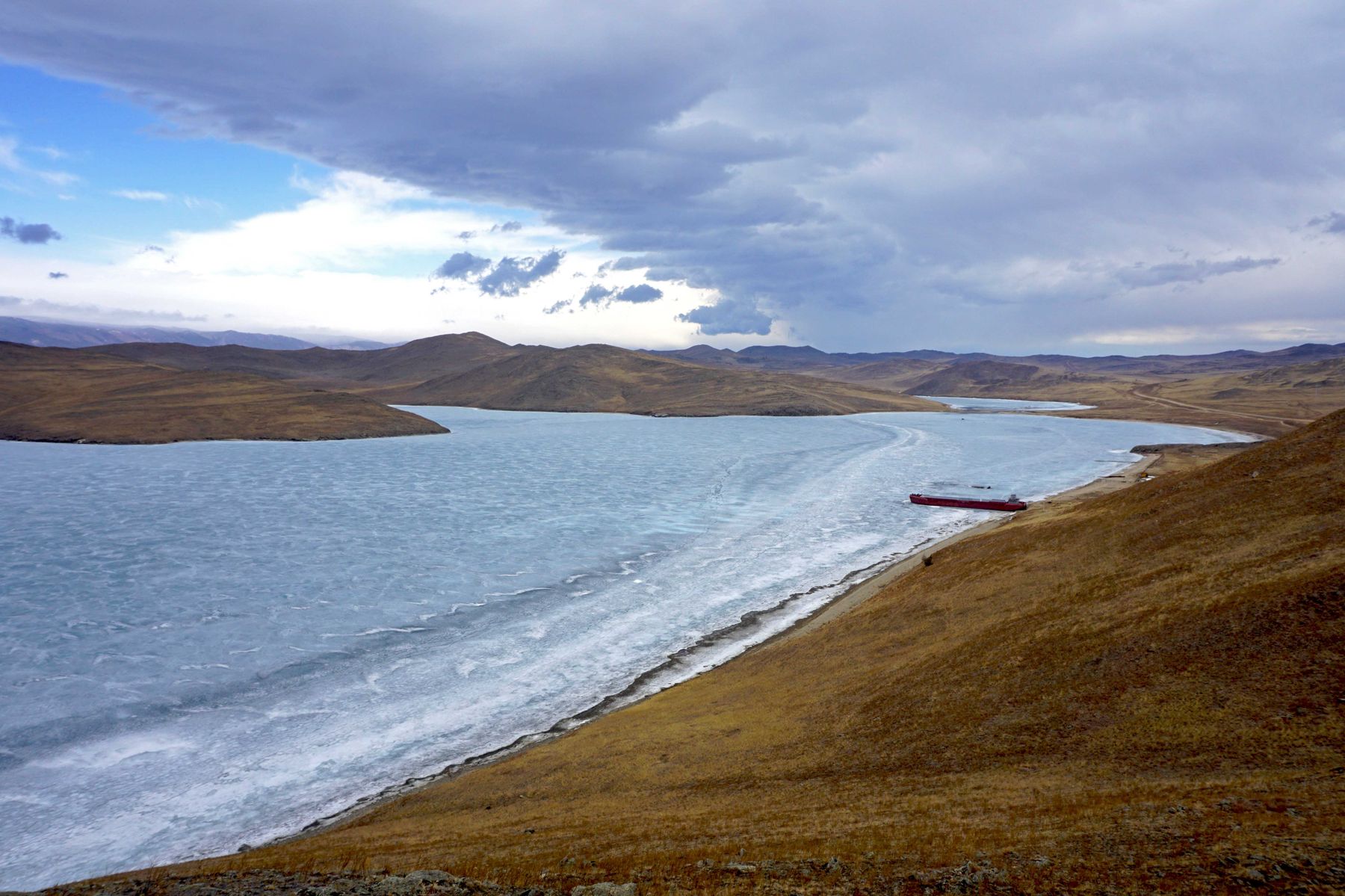
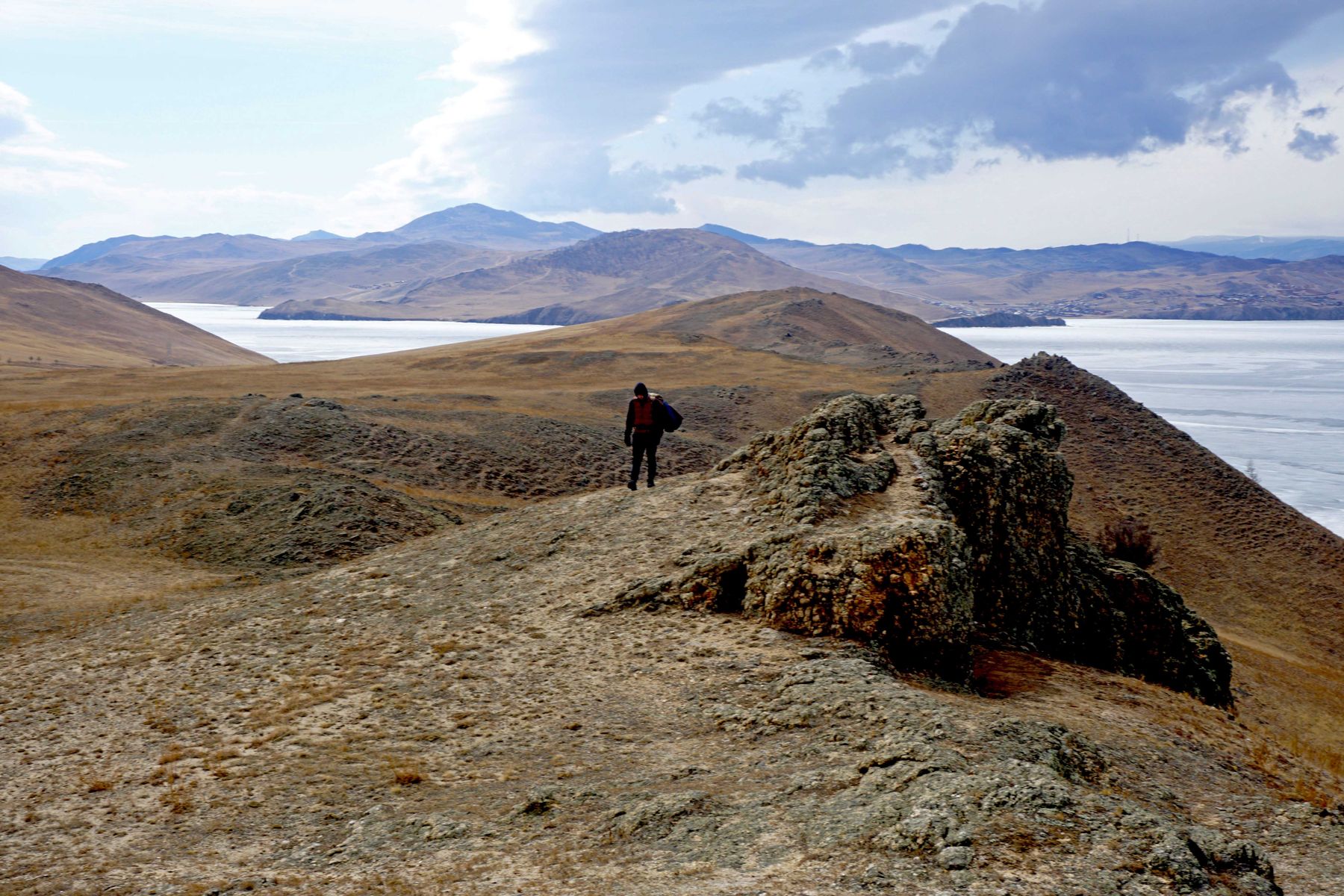
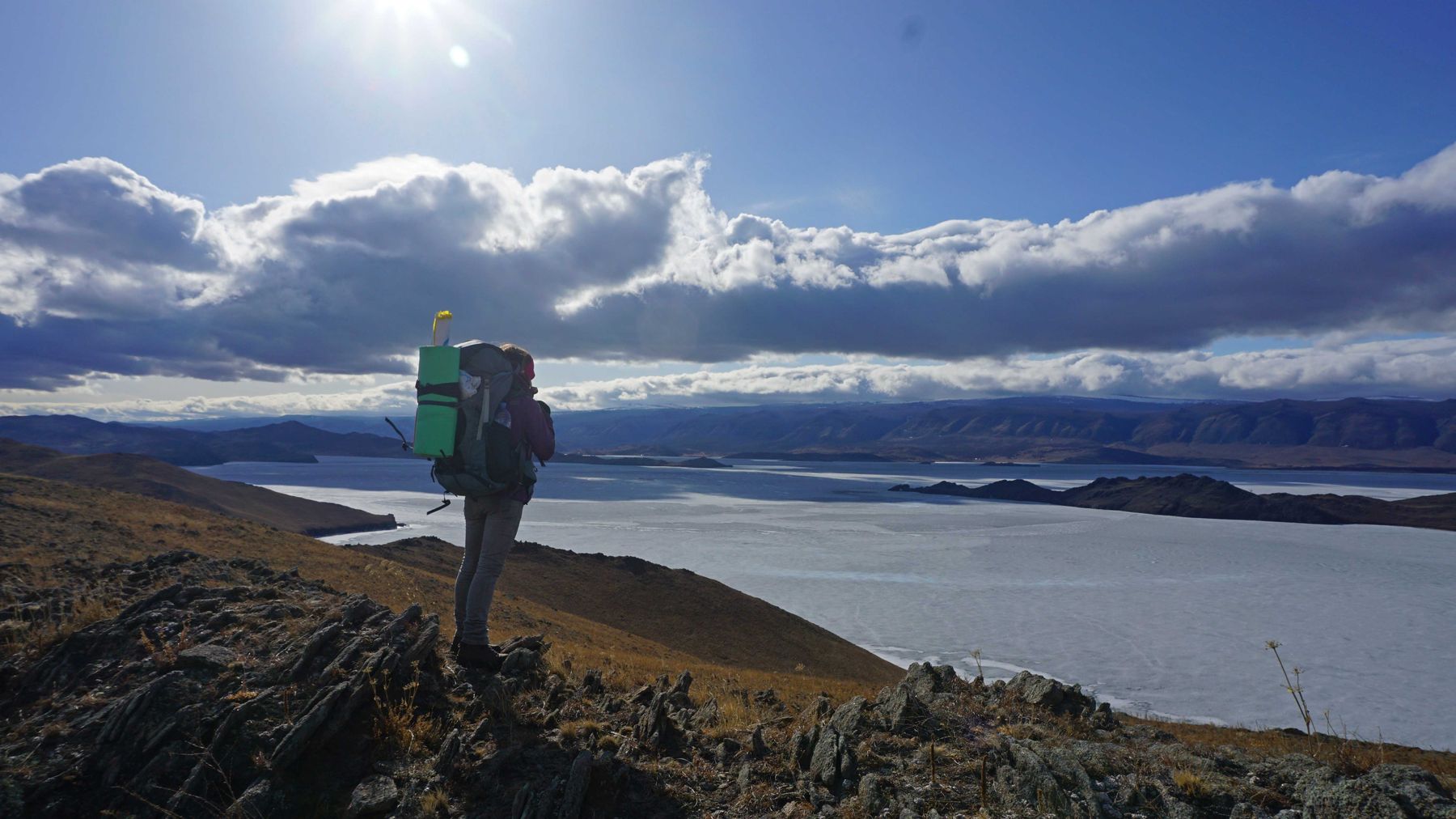
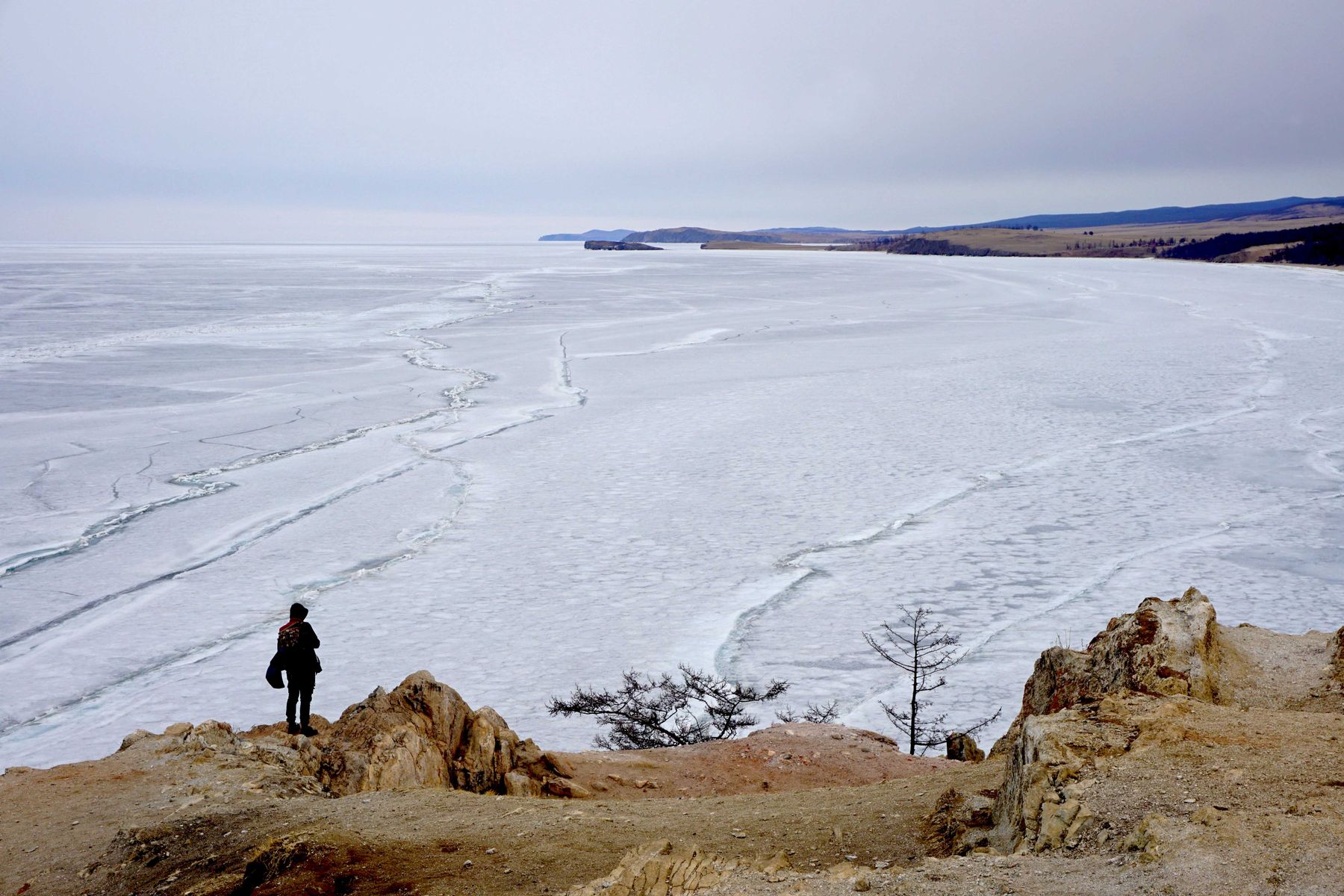
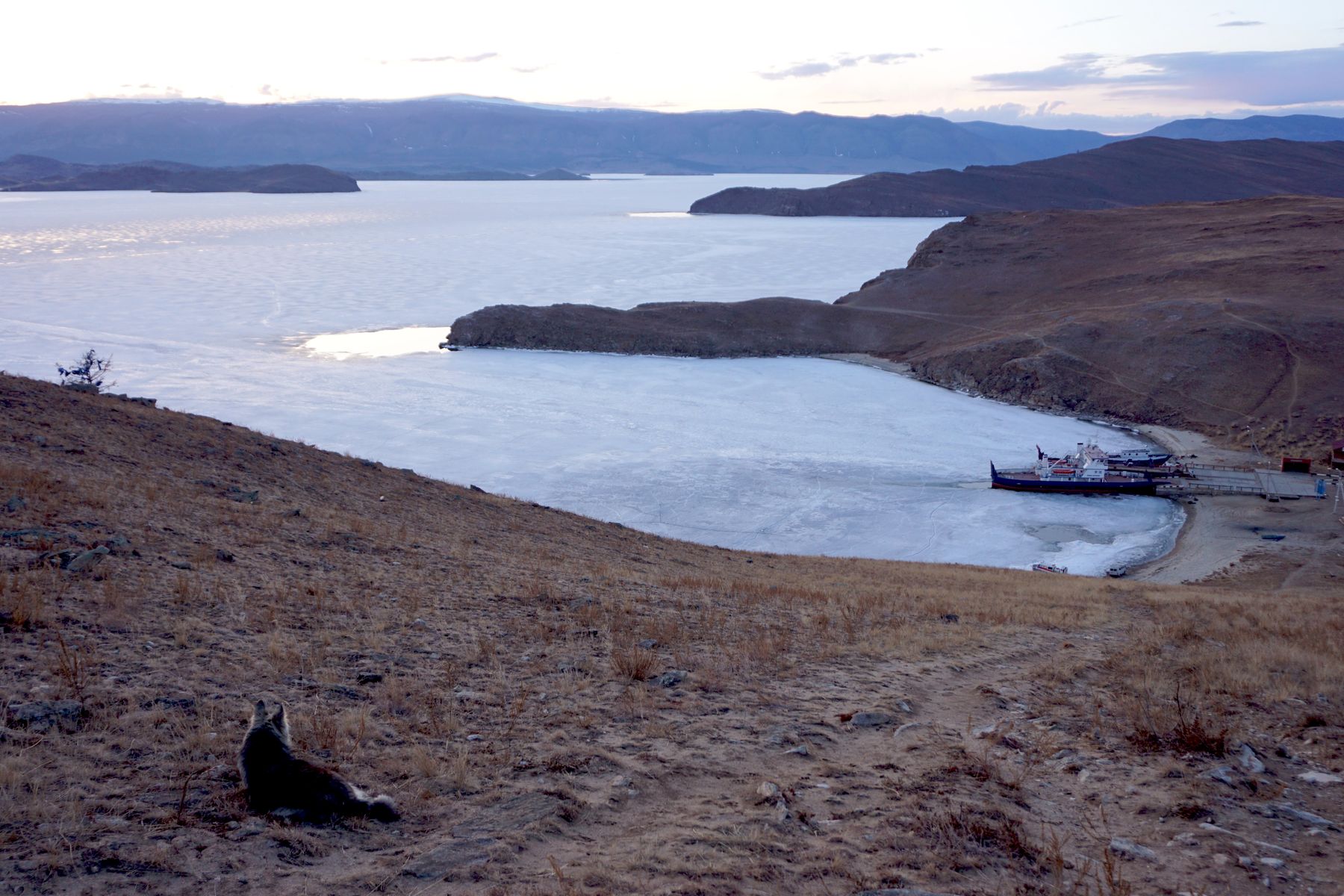
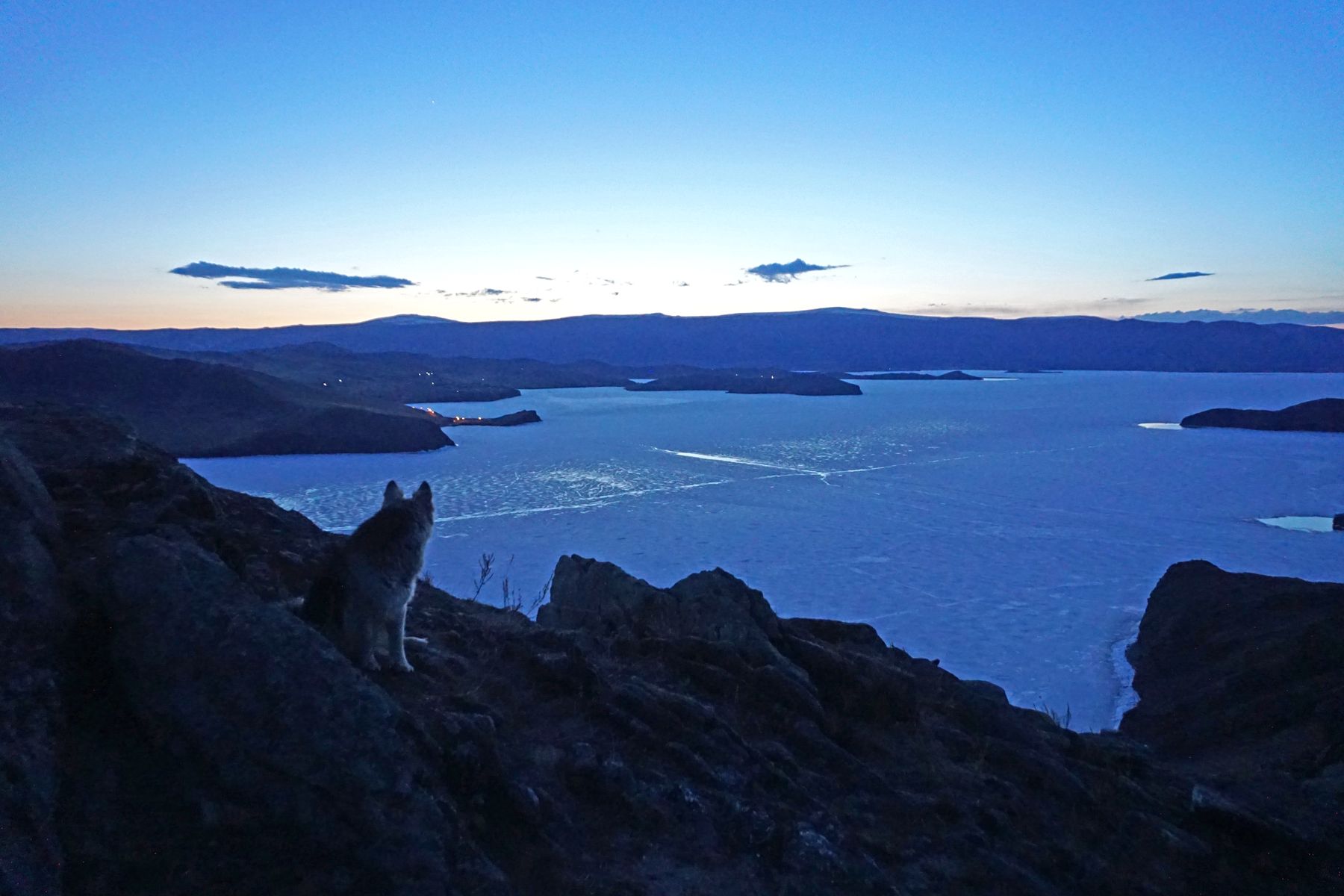
When we got across to Olkhon Island, we stepped off the podushka and climbed to the south-eastern most point of the island. I knew there was a beach we could camp on from looking at a map, but couldn’t resist climbing to the top of the rocky cliffside before searching for it. The view was incredible.

The sun went down soon after we finished climbing the southern ridge. We ended up searching for the way down to the beach in the dark, on a very steep and rocky slope. The stupid(ist) part may have been that we both forget flashlights. We did have light from our smartphones… until the batteries died.

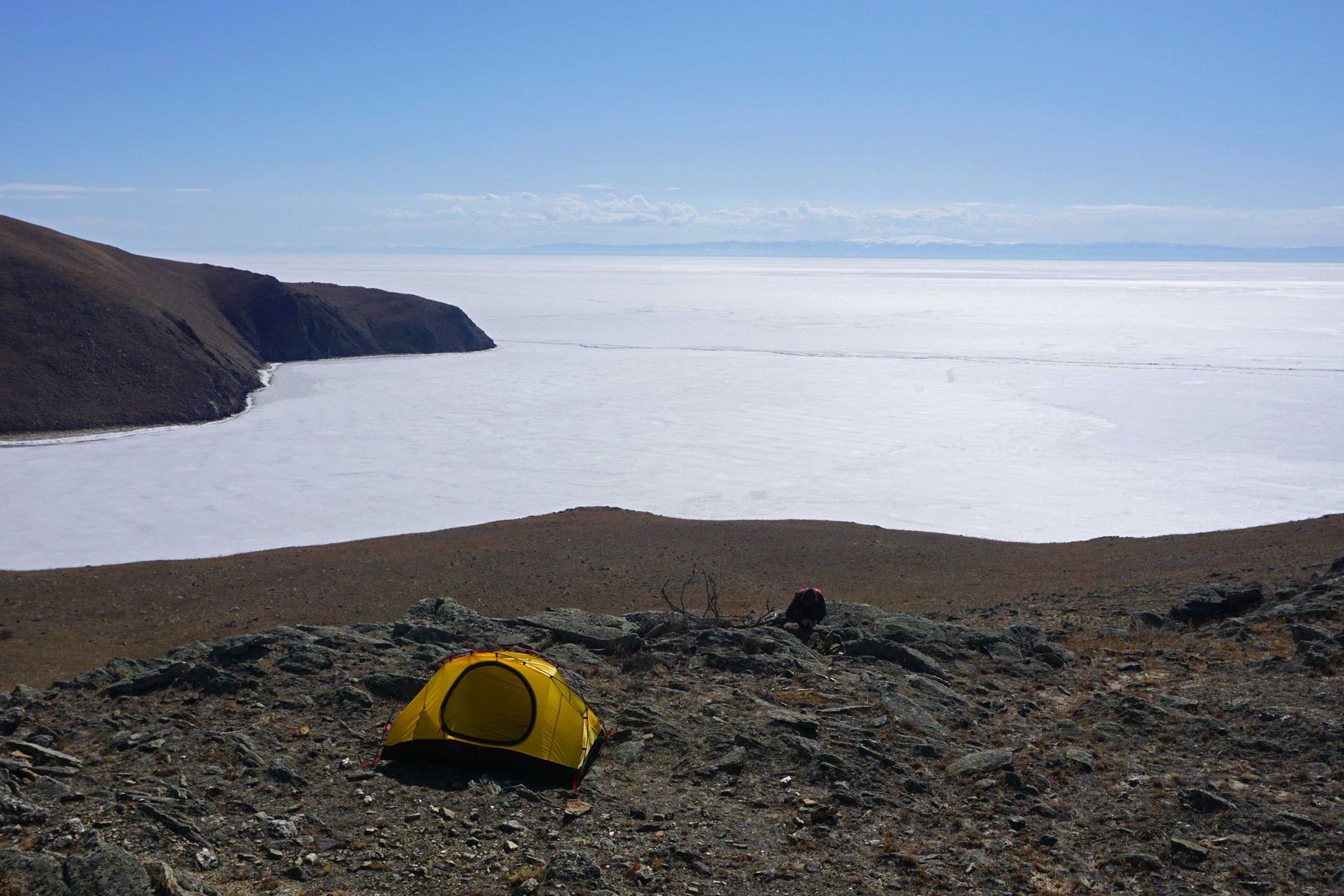
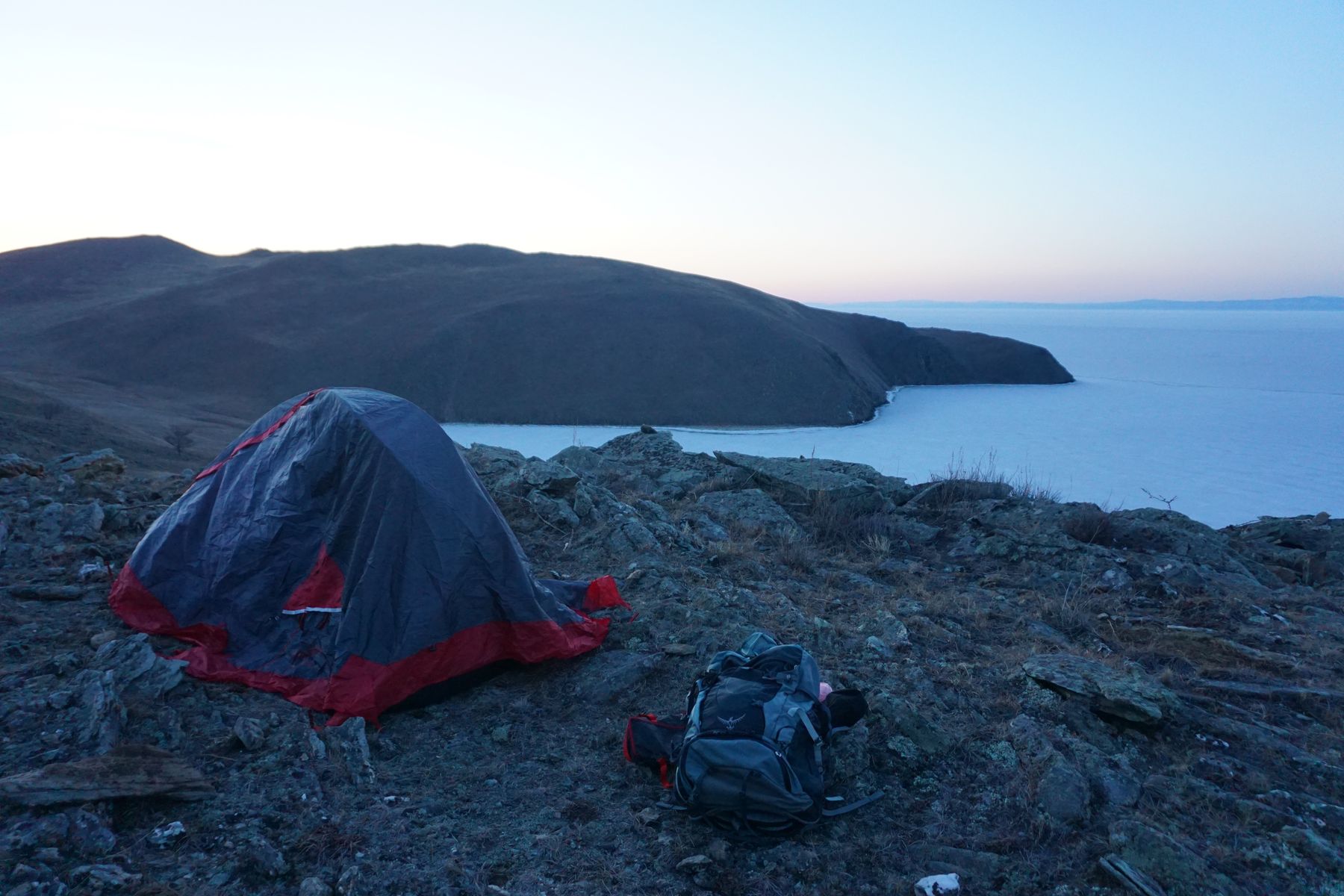
We climbed around under starlight for an hour or so until we found a fairly flat surface on top of the hillside. We decided to sleep there for the night and give up on beach camping. I set up the tent in complete darkness while Maks looked for firewood.

The tent was an easy set up (except for the top cover.. I kind of gave up on it and tied it whichever way I could :)).  The fire was lit with the last flame of our lighter. That was pretty lucky since it was about 3 degrees at night. We warmed up by the fire, ate a can of fish and some bread for dinner, then admired the stars and the shadows of rolling hills on the edges of Baikal’s icy surface.

Our equipment held up well. It was cold and windy outside, but fairly warm inside the tent.

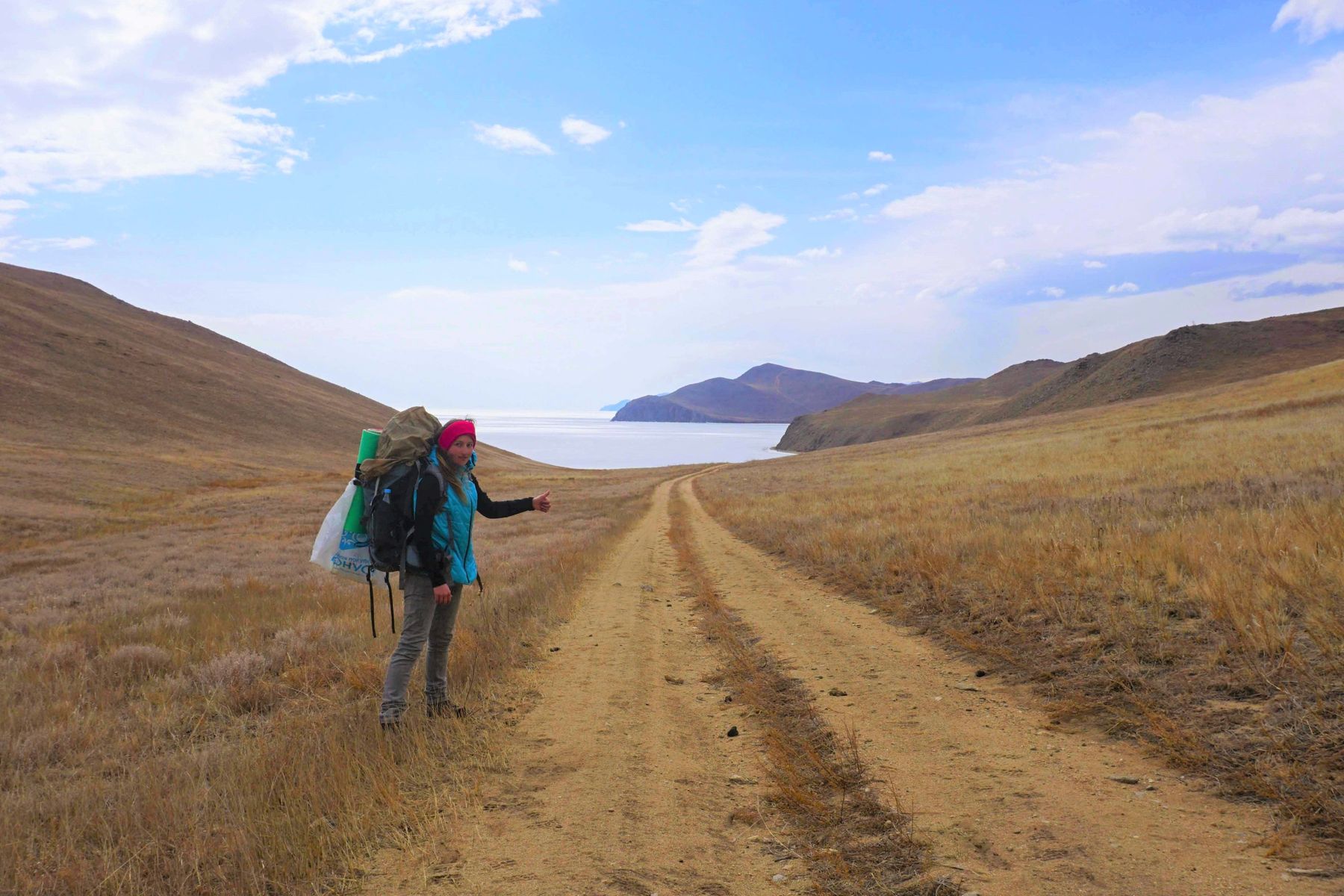
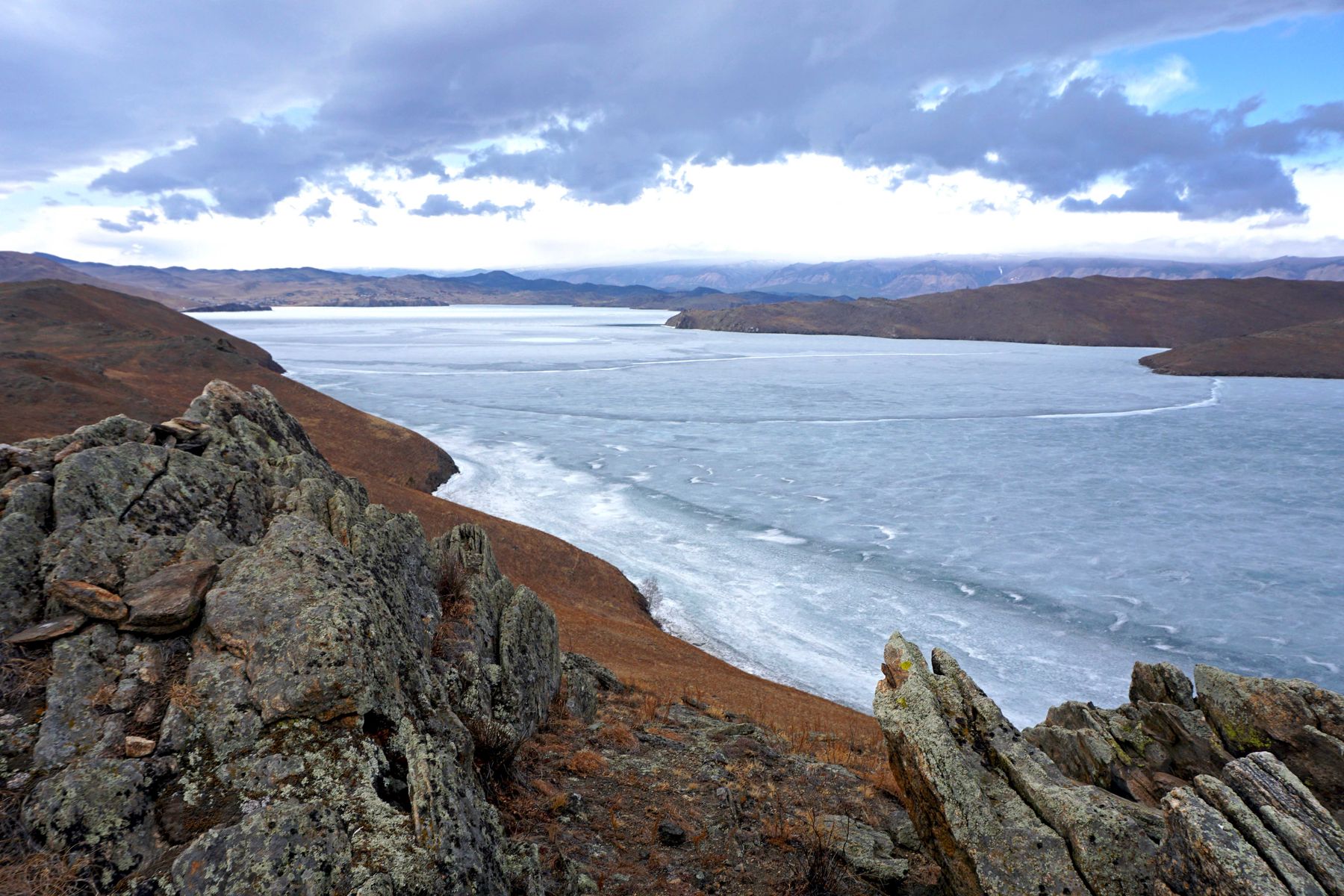
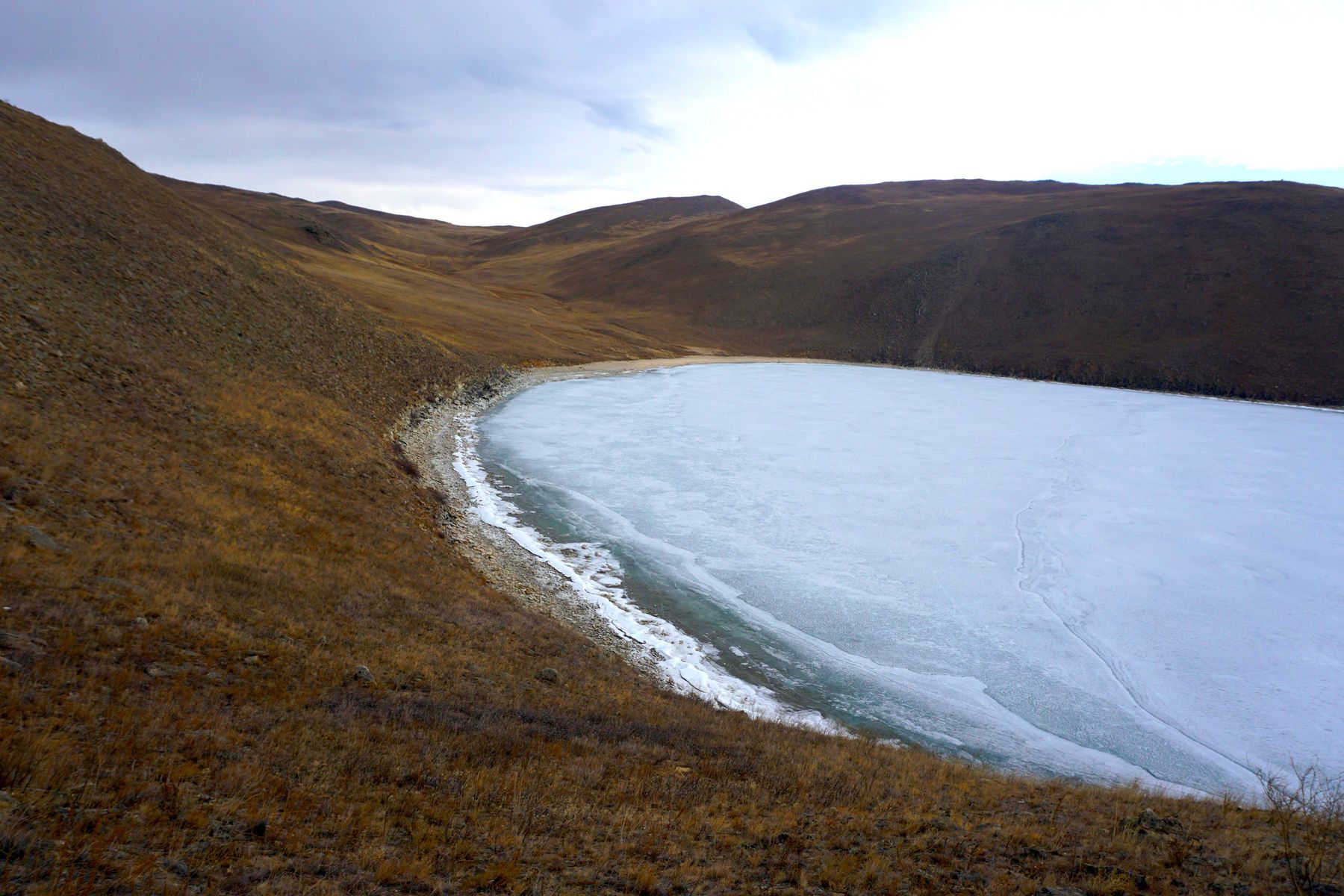
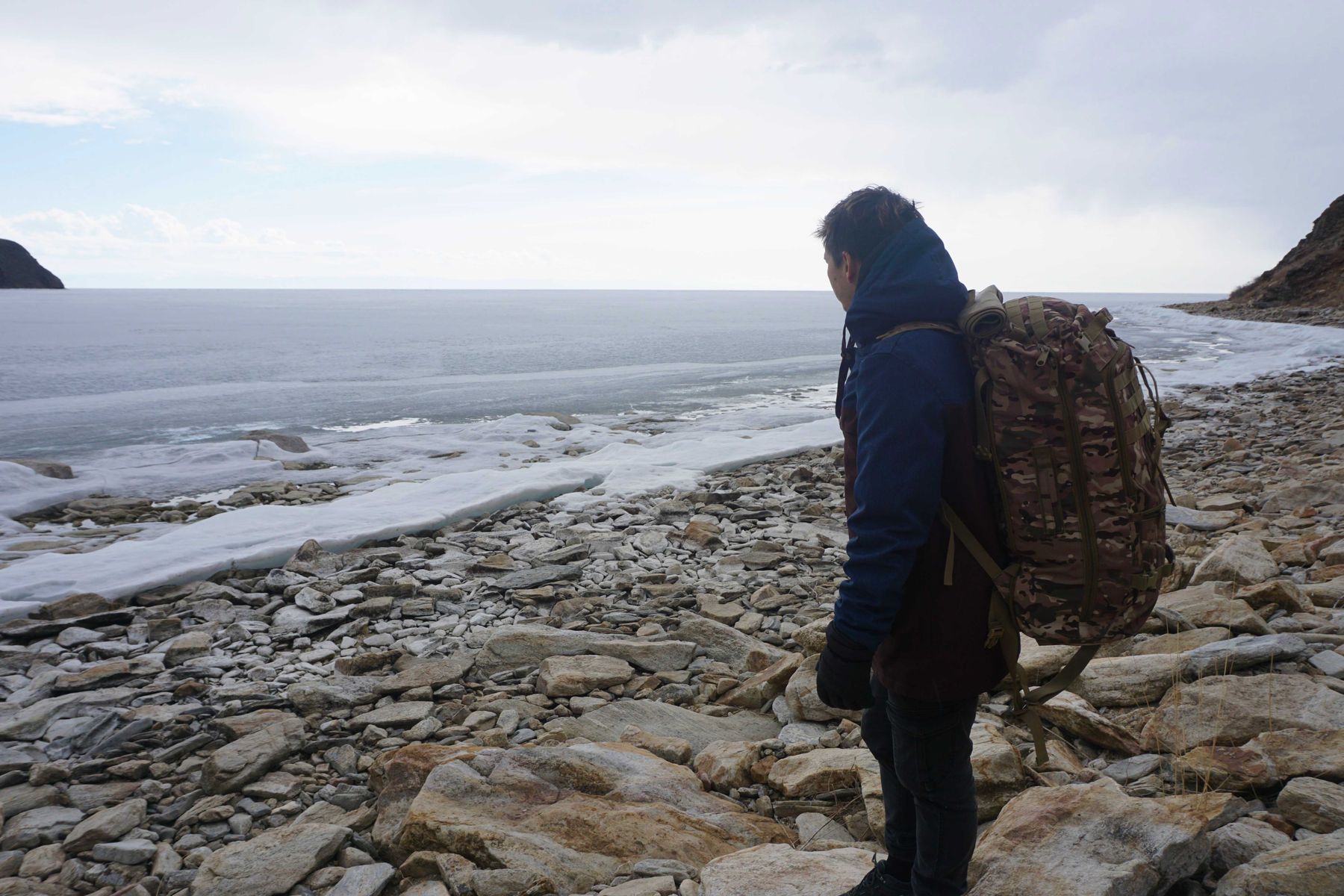
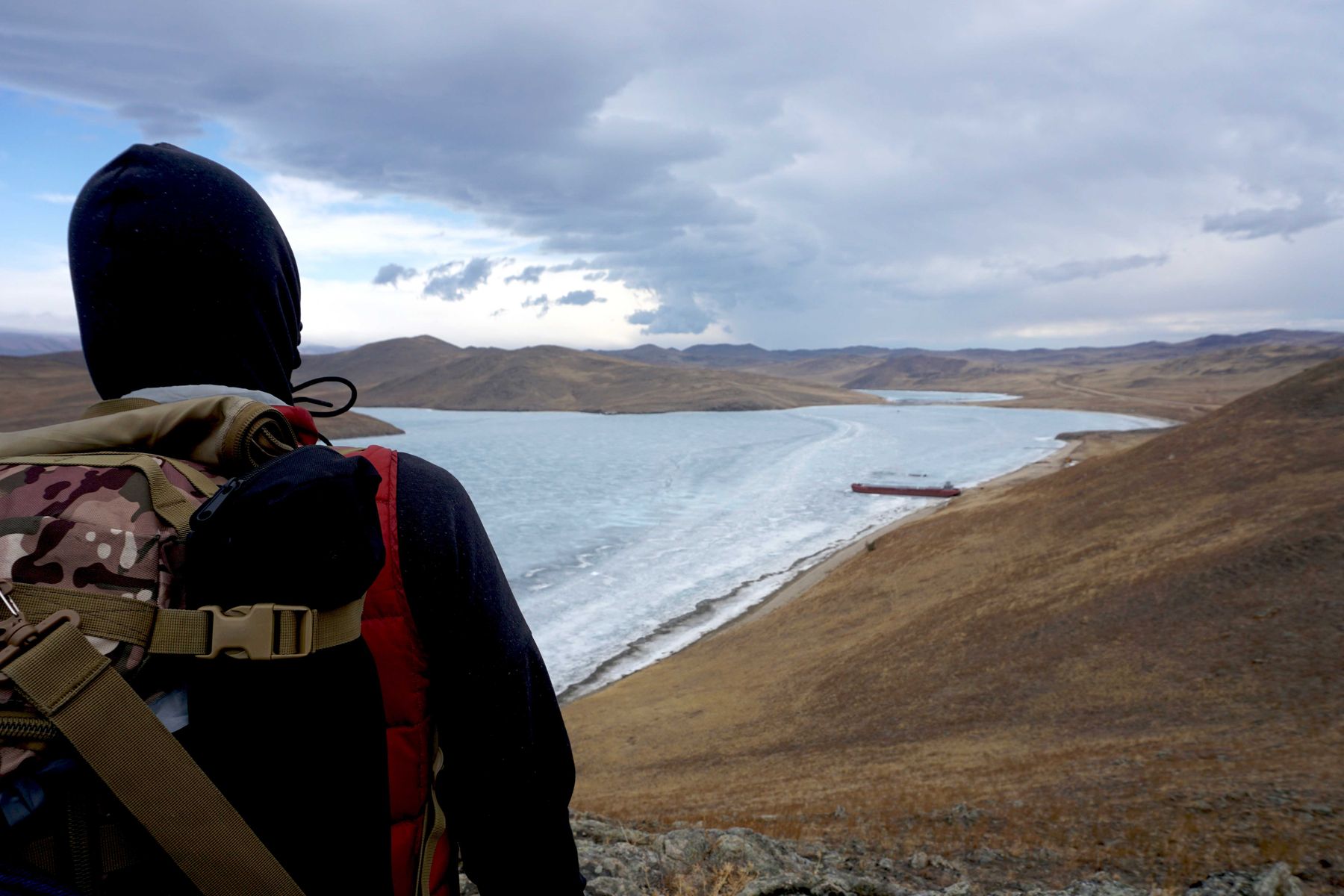
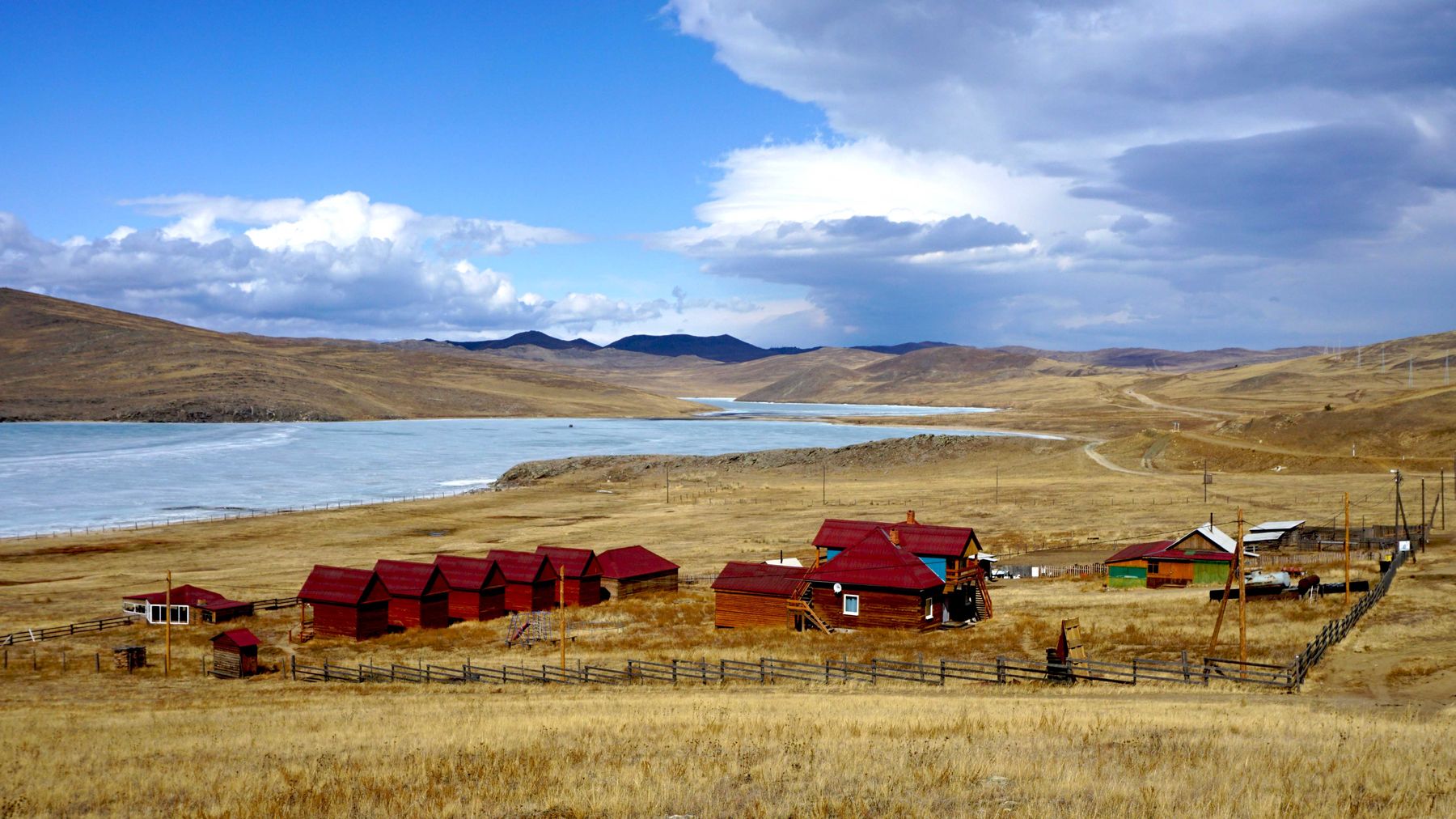
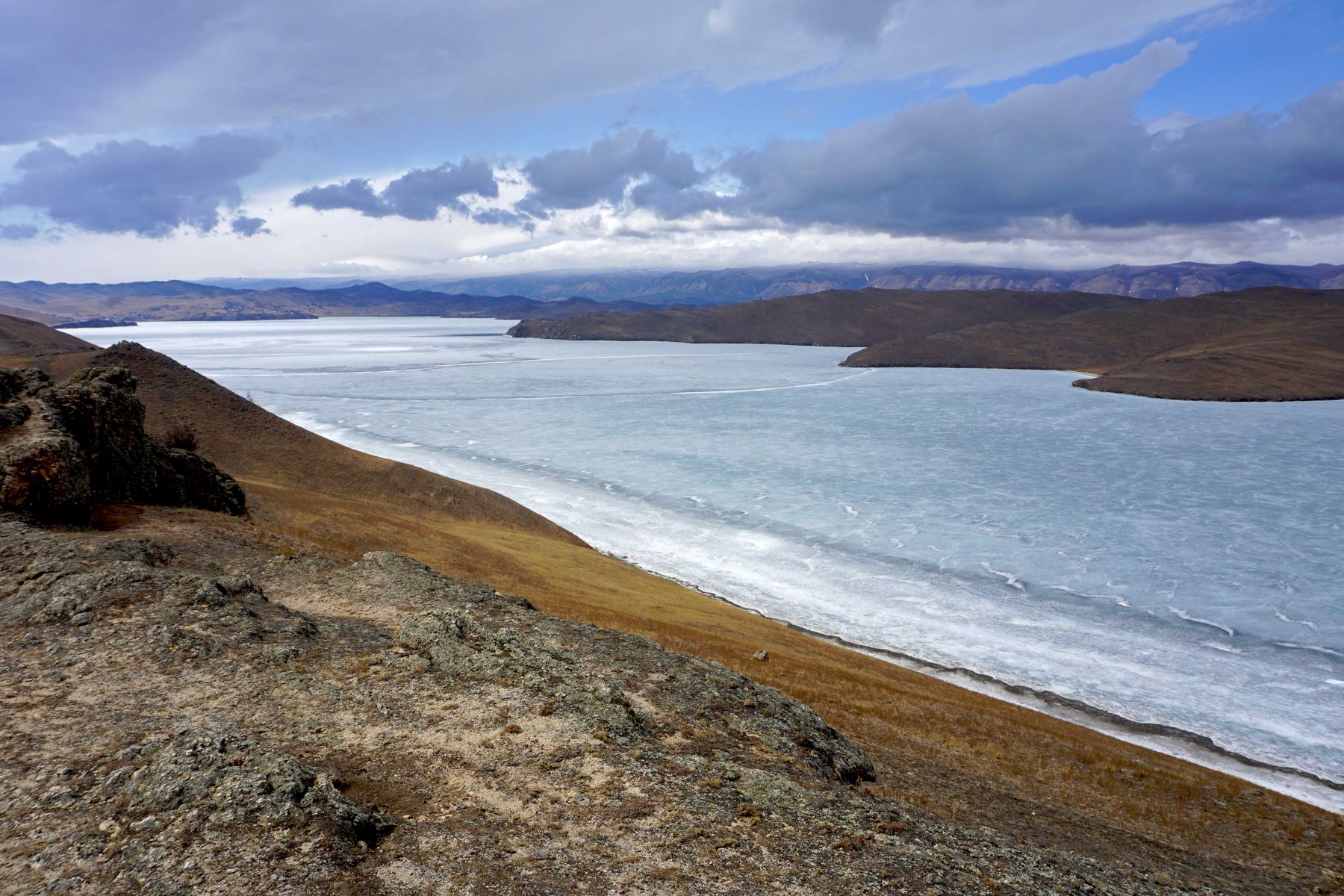
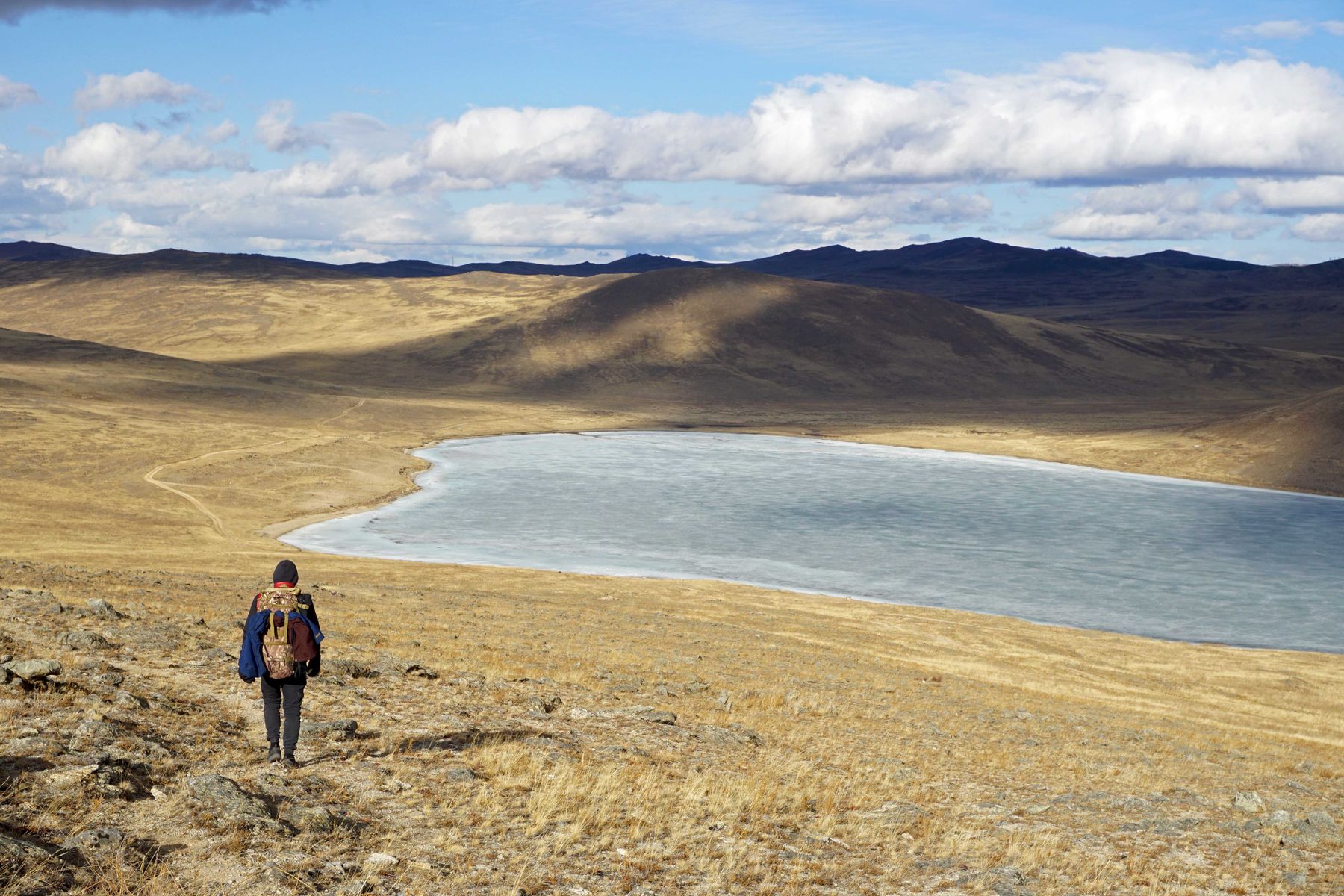
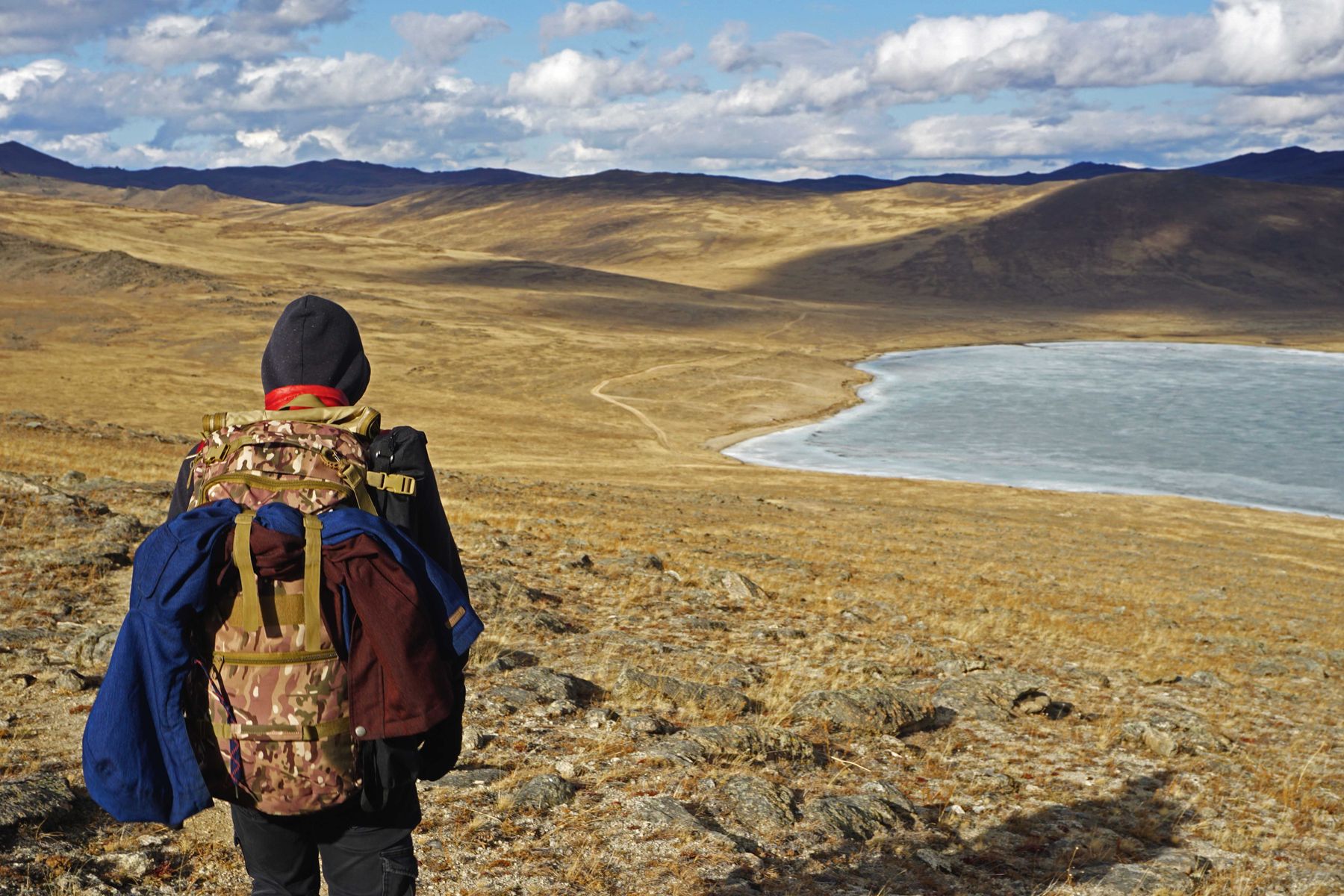
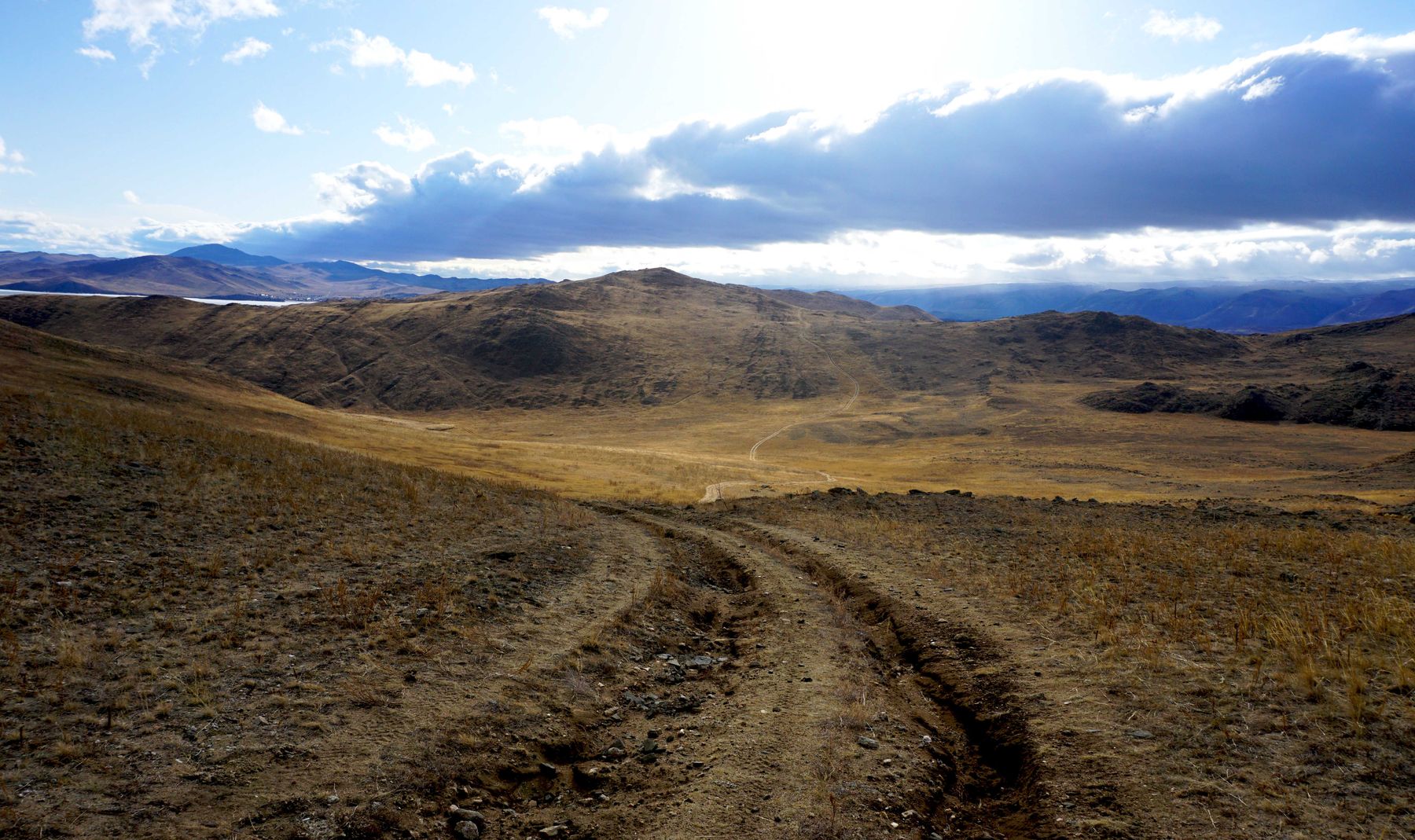
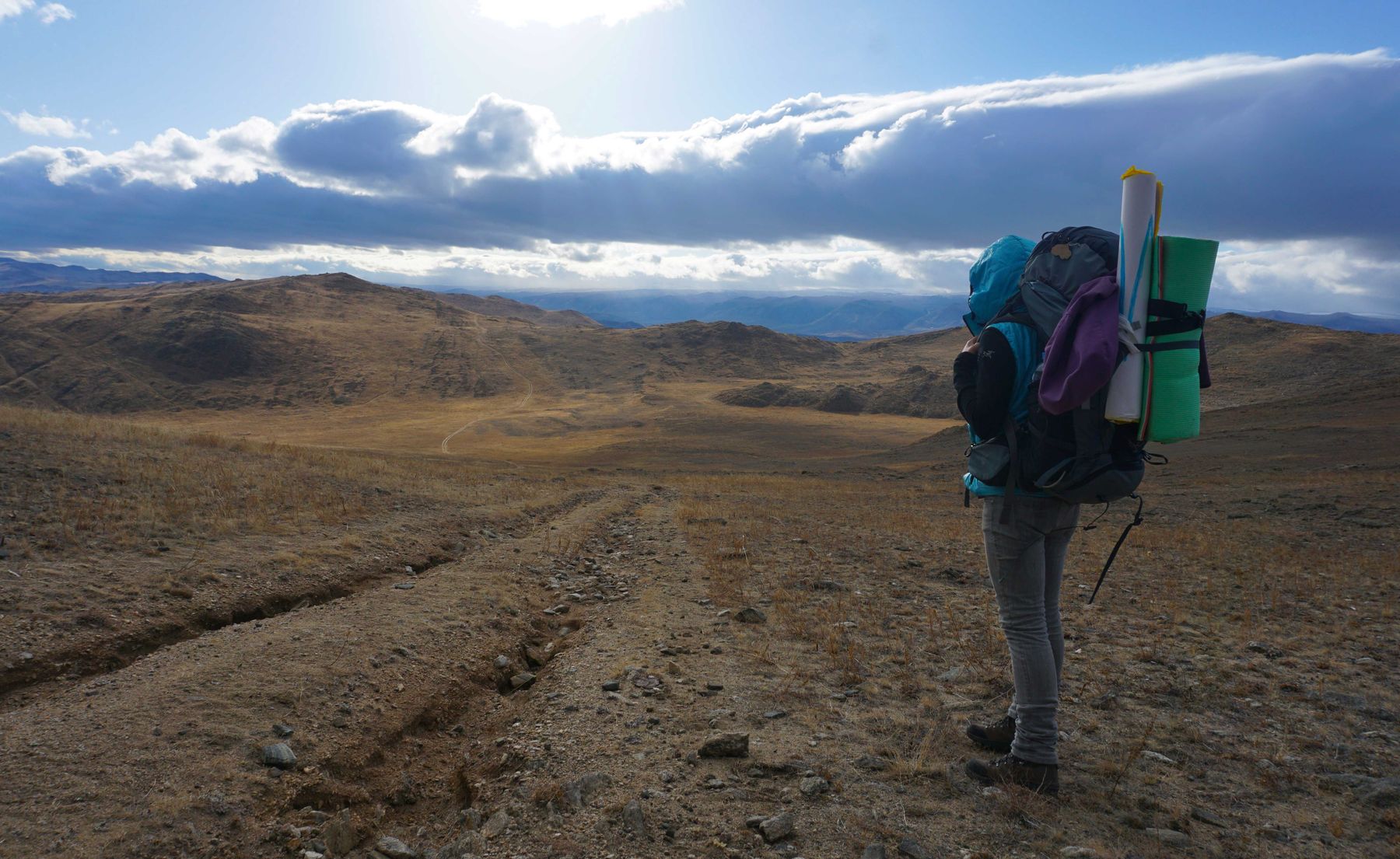
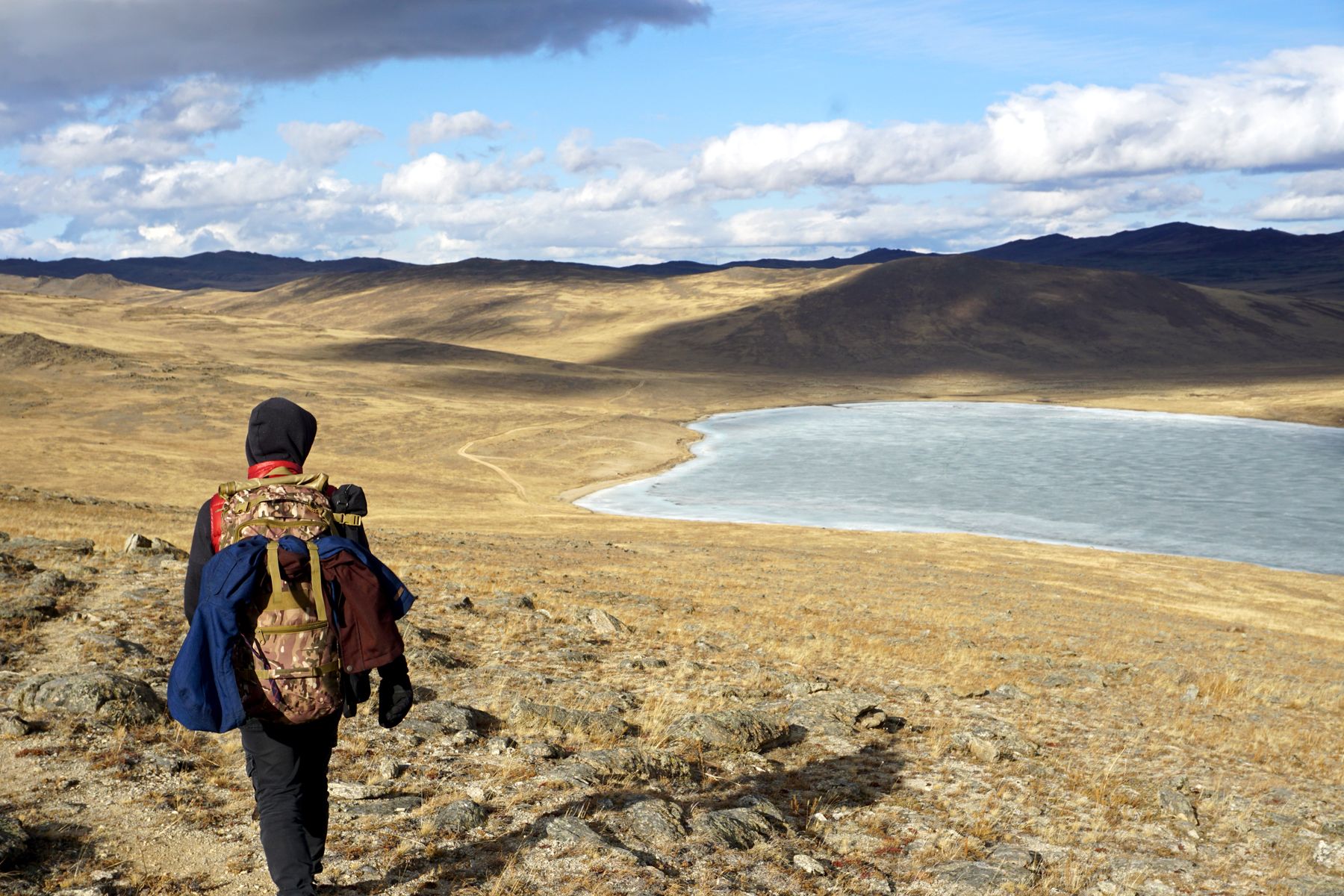
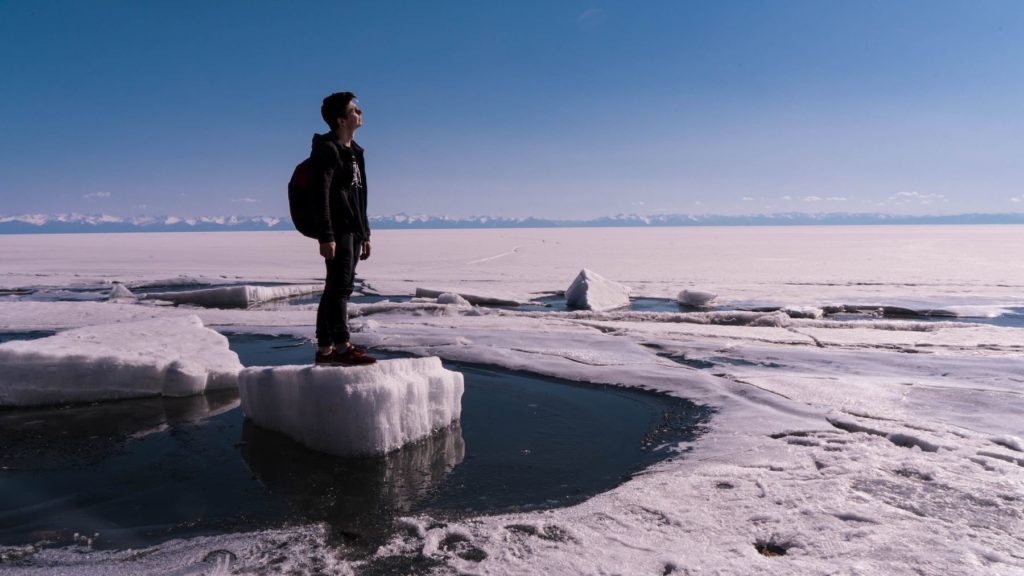
In the morning, we had no more lighter fluid to start a fire, so we settled for muesli mixed with cold water. After breakfast we got up and walked down to the beach, up a dirt road, then off the beaten path. We walked through tall dried up grass for 5 or 6 hours; up and down yellow hills, over thick frozen crystal bays and to the most precious views of Lake Baikal.

I just love it off the beaten path.

Maks wasn’t having it though. He was bothered by the strong wind and wanted to head to Olkhon’s village, Khuzhir. I convinced him to hike a bit longer.

At around 17:00 we noticed the first tick. It was red and brown, stripy, about 5mm long. Maks flung it off his pants. We started heading back to the dirt road and noticed two more. One on Maks’ jacket, one on my backpack. It took us an hour or so to reach the main road, during which time we flung another 3 or 4 ticks off our clothes. Once we reached the road we thoroughly checked ourselves for ticks and discovered another 4 or 5. Luckily none of them had bitten us.

We walked for another hour or two before the first car came into sight. Luckily it picked us up. The driver told us it was a bad idea to walk around those grassy hills, “plenty of ticks over there! Plenty!”

The sun set as we reached Khuzhir. It got a bit chilly in the dark and the only restaurant I knew of that had an indoor bathroom was closed. Every other place I knew of had outhouses- not the best place to get undressed to check for ticks. We tried for a popular hotel called Nikita’s. We told the guy at reception the whole story and he was nice enough to let us use his indoor bathroom.

We seemed to be clear of ticks at that point, so I was ready to go down to the beach in Khuzhir to camp one more night. But since the thought of ticks was still lingering, I thought I had to at least give Maks the option of sleeping indoors. I knew a nice babushka with a couple of dorm rooms for 500 rubles (~$8) / night each. Maks was relieved at the thought of taking a shower and not having to camp, so we called up Babushka Nina and arrived at her doorstep in less than a half hour.

Nina greeted us warmly and even brought us some homemade bread, a bowl of delicious pickled bell peppers and a pot of borsch! She remembered me from last time I was in Khuzhir :) We washed up, ate the food and laughed at ourselves. Then Maks told me that this was his first time –ever– camping!

That was something I did not expect from a long distance hitch-hiker! ‘Wow,’ I thought, ‘I should really learn to take it easy on people. The poor guy… first time ever camping- in Siberia, in April, with a crazy motherf**** like me! He’ll probably never want to camp again!’

Thank goodness for Babushka Nina, at least :).

We slept well. Woke up around 10:00, packed our bags and headed for Shamanka Rock. On our way out, I thanked and said goodbye to Nina, and gave her 1000 rubles for the room. After we walked out on the road, Nina came running back towards us, and then firmly handed me back 500 rubles.

What a kind person :).

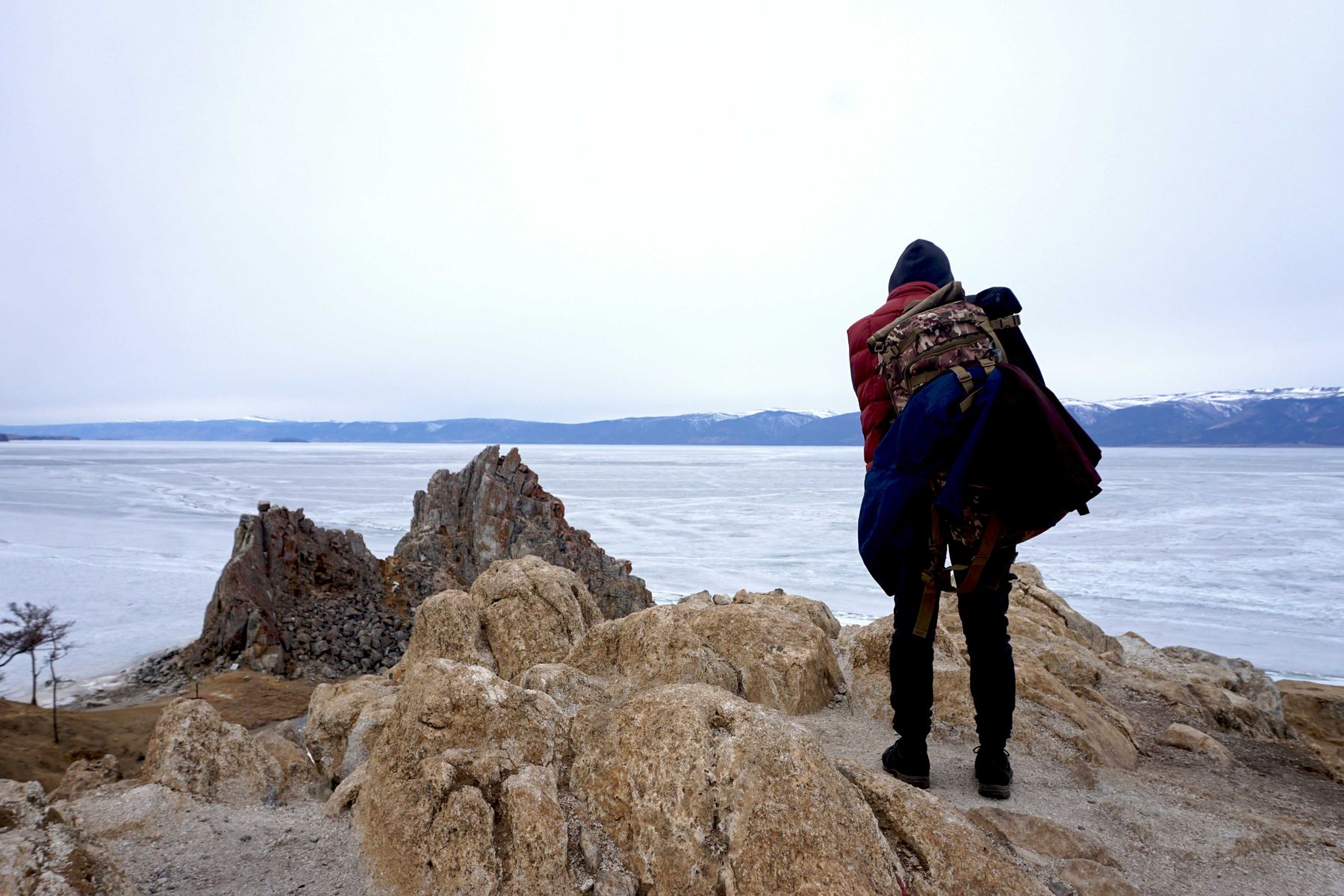
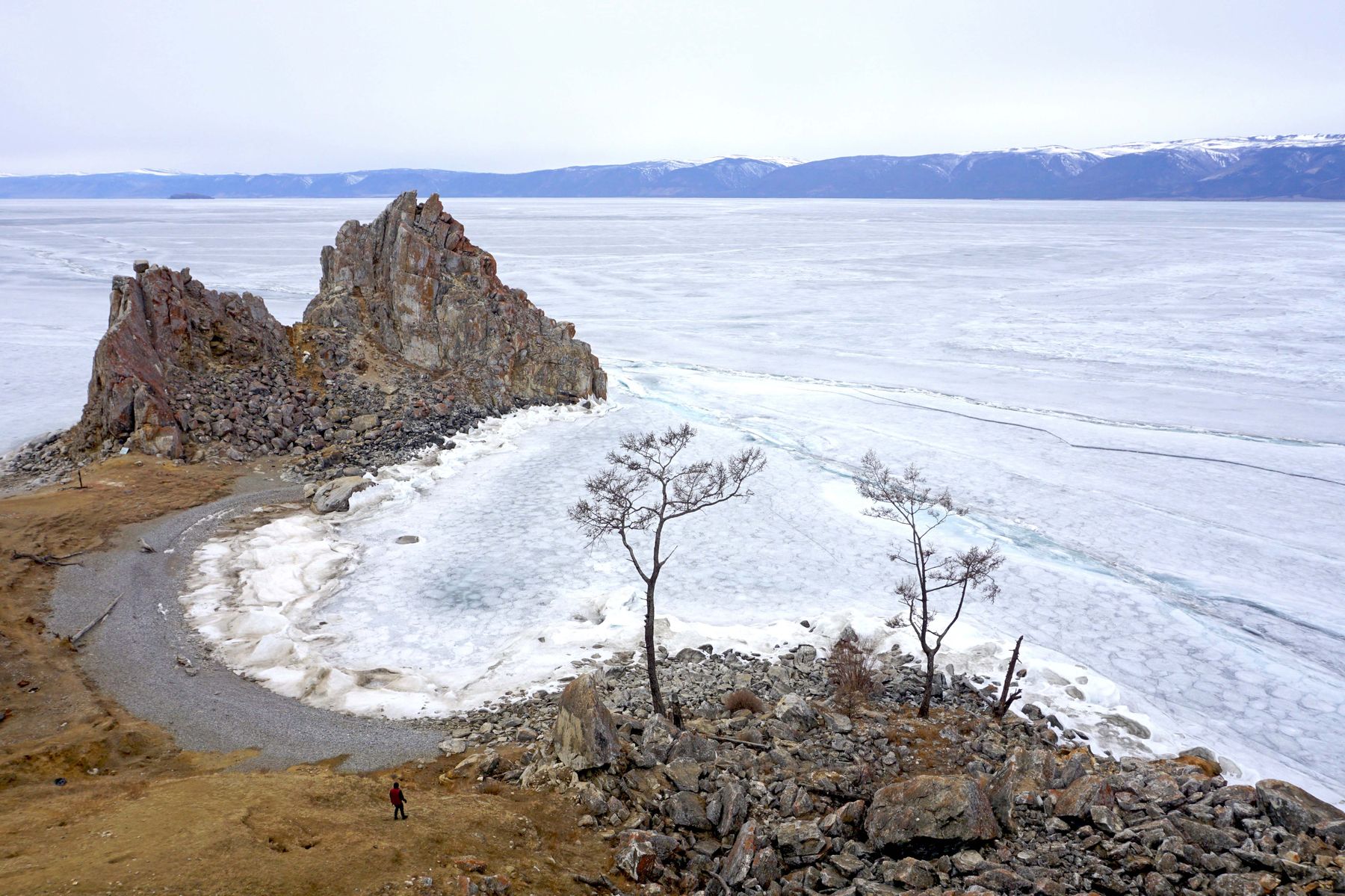
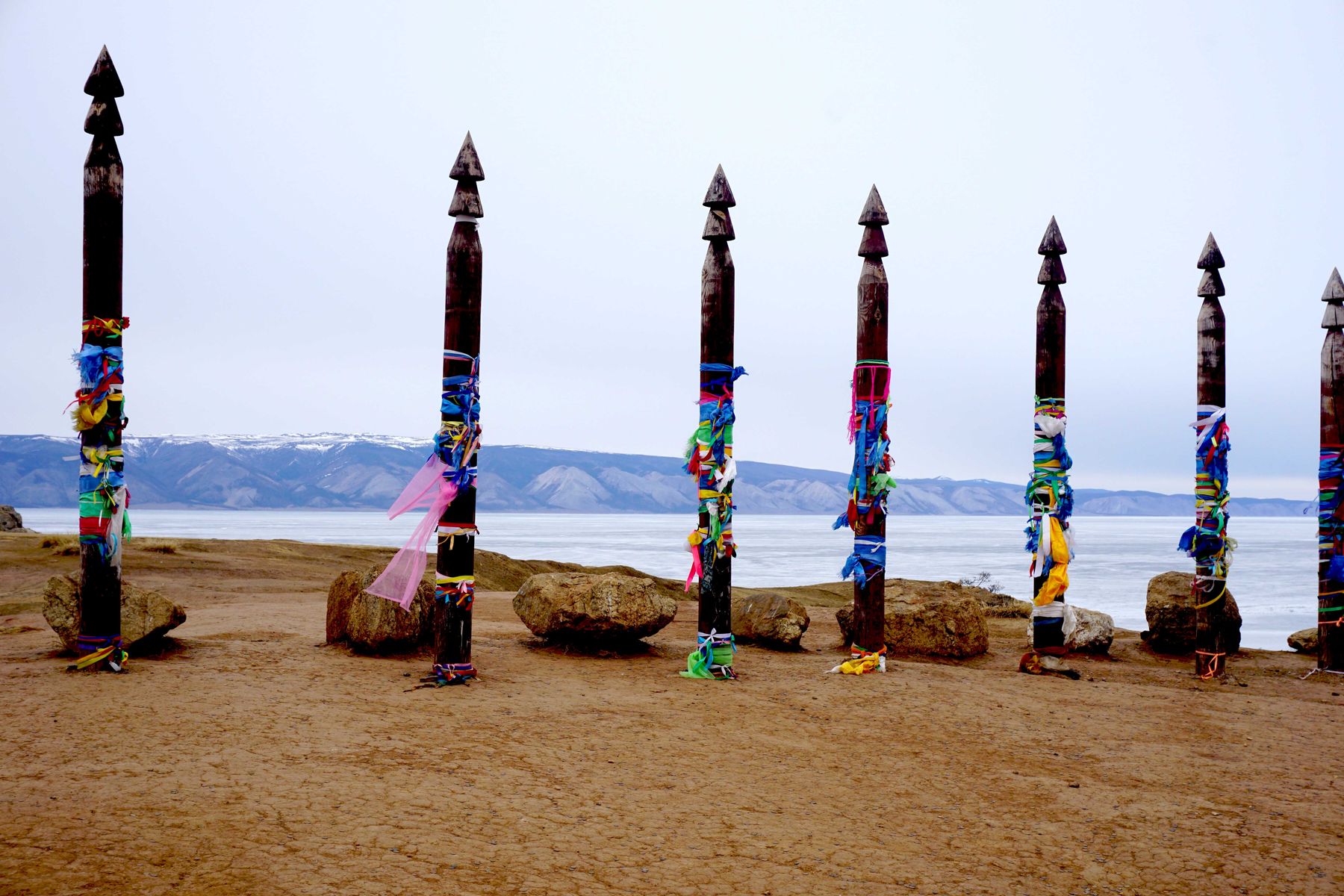
Shamanka was as amazing as always. Just so incredibly beautiful. We stood on the cliffside and overlooked meter thick cracks that ran parallel with the shoreline for several kilometers.  I think Maks was revived there. He said that he had seen videos of this place before but had no idea that this was here on Olkhon Island. He seemed a bit touched by the majesty of the ancient rock, the cliffs and the distant lookout over the lake.

Perhaps the journey to get to Samanka played a role. It’s one thing if you pay for a tour where you’re driven to pretty places, you step out of the tour bus for a few moments and take some photos of the nice view. But you get an entirely different feeling from such a place when you’ve gone through a great journey to get there. All the people you meet along the way- the Buryat locals who threw coins out of the window of their truck for luck, the friendly bus driver who gave us a free lift, the fisherman who fell through Baikal’s ice 11 times in one spring, the toothless podushka driver who happens to be a photographer; Nina. All of these people play a role in your life.

So hitching is not only valuable for saving money. The true value of hitchhiking lies in the experiences, moments and relationships you stumble upon along your journey. You get one ride to bond with an absolute stranger, a person you would most likely never socialize with given a different situation. You never know what you can learn from such people.

And the adventure- big rolling waves of crackling ice, stumbling on black rocky cliffsides, sleeping on the ground by a fire. The stars! The hills, the grass, the frozen lake, the ticks! Okay we could have gone without the ticks, but we’re safe from them now :).

The point is, your prize is much more valuable when you’ve worked to get it.

After Shamanka, we walked for about a half hour, then hitched 2 rides to the podushka. The podushka driver recognized us and gave us a free lift to the other side of the lake. Then we walked for another 20 minutes or so and hitched a lift with a minibus all the way back to Irkutsk.

The entire trip to Olkhon Island (food, transport, accommodation, everything)- cost about 1000 rubles each (about 16USD).

So that’s how you travel around the world with almost no money ;)

(Except you should always bring a flashlight and lighter, and maybe think twice before crossing a frozen lake) :D.

Oh and one more thing! This was the video we were filming:

TROM Discussion: Money

Uncategorized

Last Friday, we talked about these two clips in my English Club:   1   2

The first one is just an introduction to the next part of the TROM documentary, which is all about analyzing the monetary system. The second one is Yuval Noah Harari’s Ted talk, “Why Humans Run the World,” which is one of my favorites :). Harari also has a book called “Sapiens” that I can recommend.

Check it out for yourself.

One important point Harari makes is that money is valuable only because we all believe in it. Money is not an objective reality. It’s just something we created to help us control the trade of goods and services, but it really only exists because of our imagination.

I have a friend who didn’t come face to face with money until he was past his teenage years. He grew up in the jungles of Papua New Guinea and the Torres Strait Islands, shooting animals and picking fruit when he was hungry, collecting water when he was thirsty. He had a very hard time trying to fit into society when he eventually came to Australia. Imagine how difficult it was for him to grasp the concept that you have to do some kind of job to get some paper with which you can then go to a store to buy food that’s already caught, killed and prepared for you. For him, this was a whole new horizon to imagination.

I’ll tell you more about Manu later :)

I think that if you understand that money’s not an objective reality, this can give you more freedom to play with life. I try to explain through my blog that the reason I travel so much is really because I don’t have much money (because I don’t work very often :)).

The guys that came to my meeting mentioned that I had a huge advantage over them because I have a US passport. Which is true, I know that I can’t make a third of the money that I made working in a restaurant in the US, by doing the same thing in Russia. Plus, I don’t need visas for a lot of countries. But that doesn’t mean that that’s the end of the deal! Right now, I’m hosting an awesome couchsurfer who’s hitchhiking across Russia- from Moscow to Khabarovsk- with only about 6,000 rubles. That’s about $100. Since he only has a Russian passport, has no job, and not much money, but is traveling across the biggest country in the world- he kind of proved my point way better than I could myself :). And elaborated on the topic.

When the other guys asked him what he did for money, he just replied with, “that’s not important. When I need money, I find a way to get it. That’s all.”

So we can’t escape the money game completely, but if we understand that money’s not that important (and that it only exists because of our imagination), we can think of our way of life as a little game. We can follow the general rules, but we don’t have to get trapped in the game. We don’t have to revolve our entire lives around money. We can just get some money and manage it well enough to do what we want in life. That’s all.

Again, check out this book :)

We’re having an online talk about the same topics on Monday at 13:00UTC. I will put a link to the online chat on my Facebook page. Anyone is welcome to join.

One Slip

Uncategorized

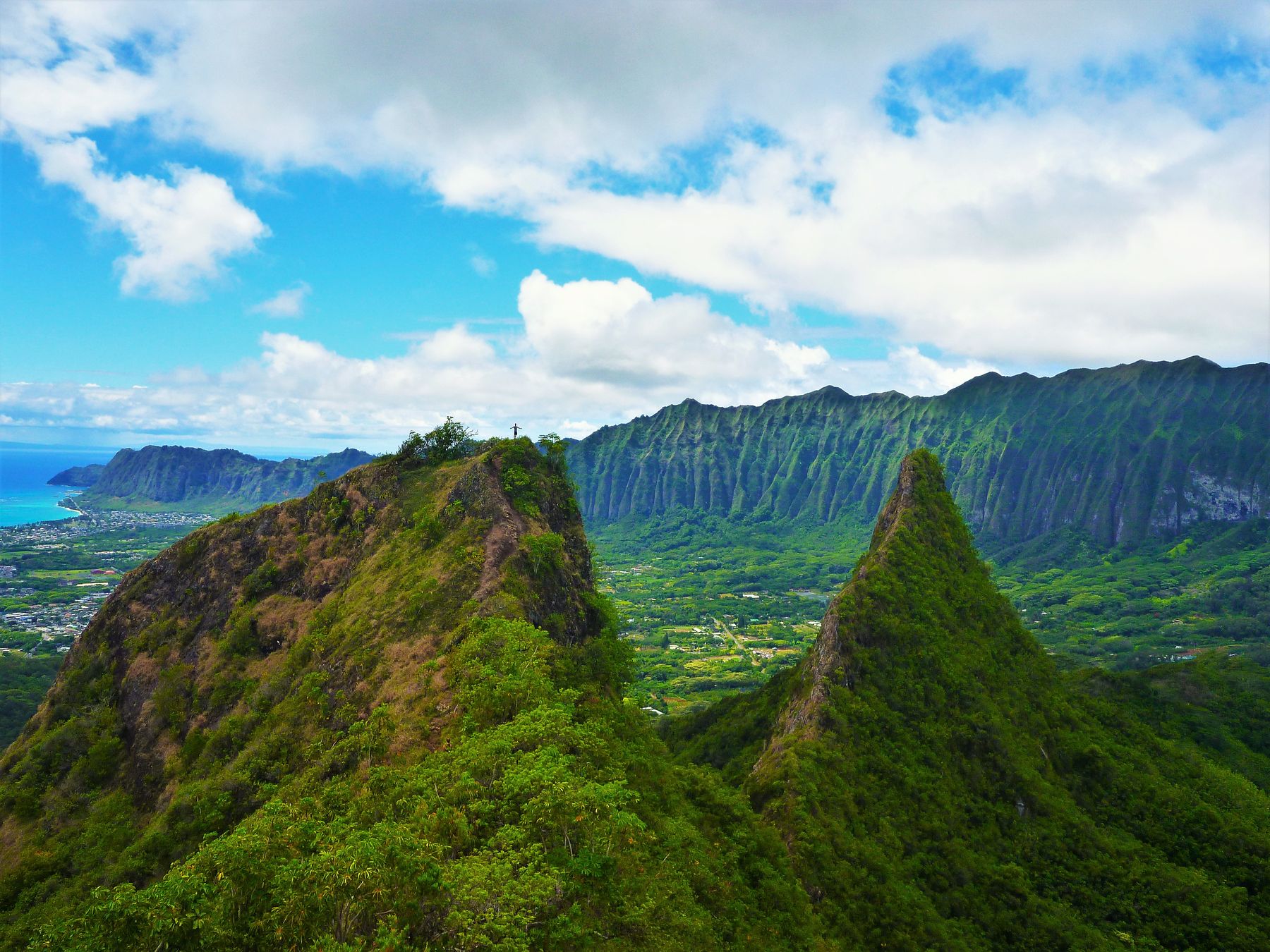
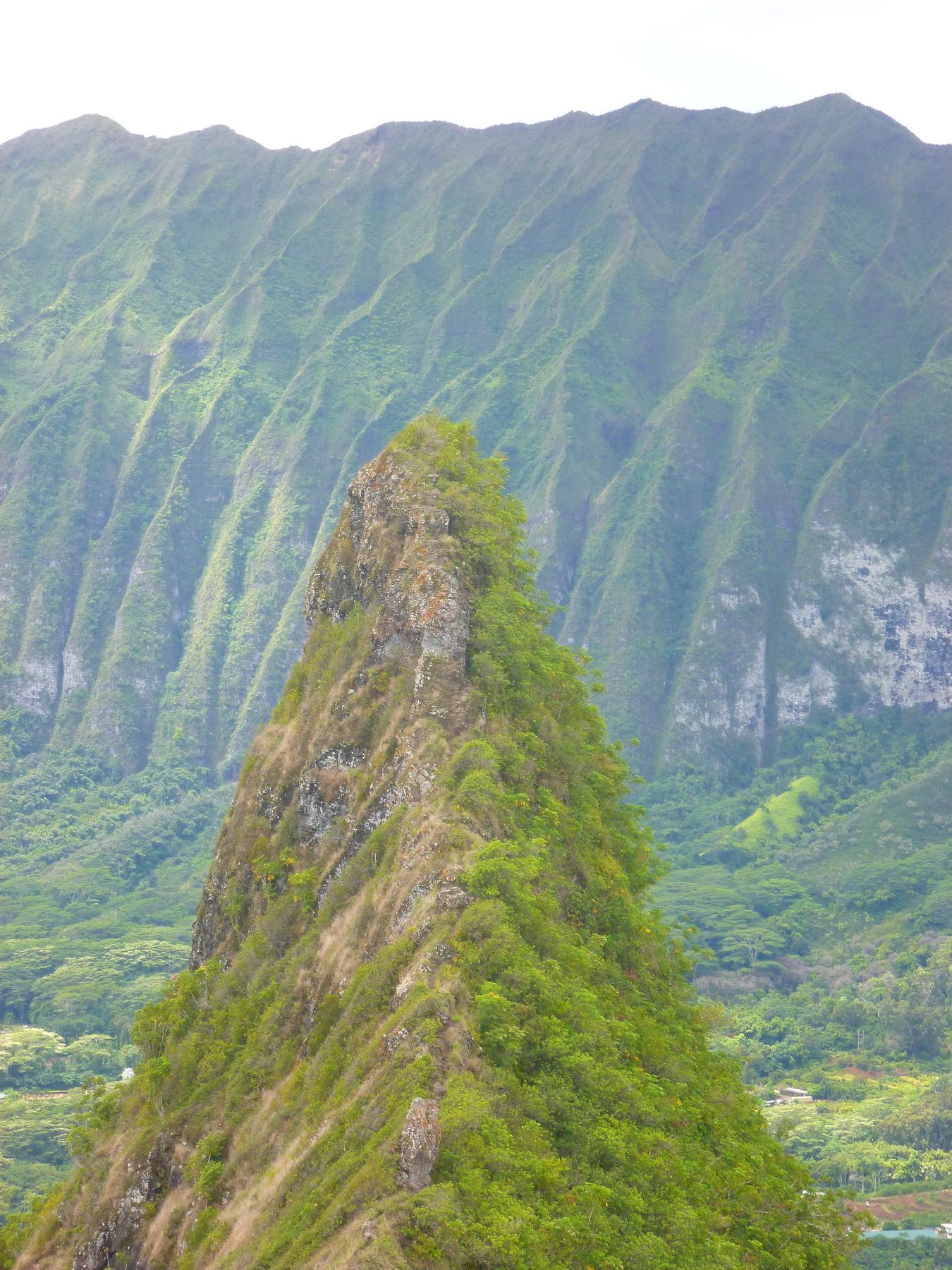
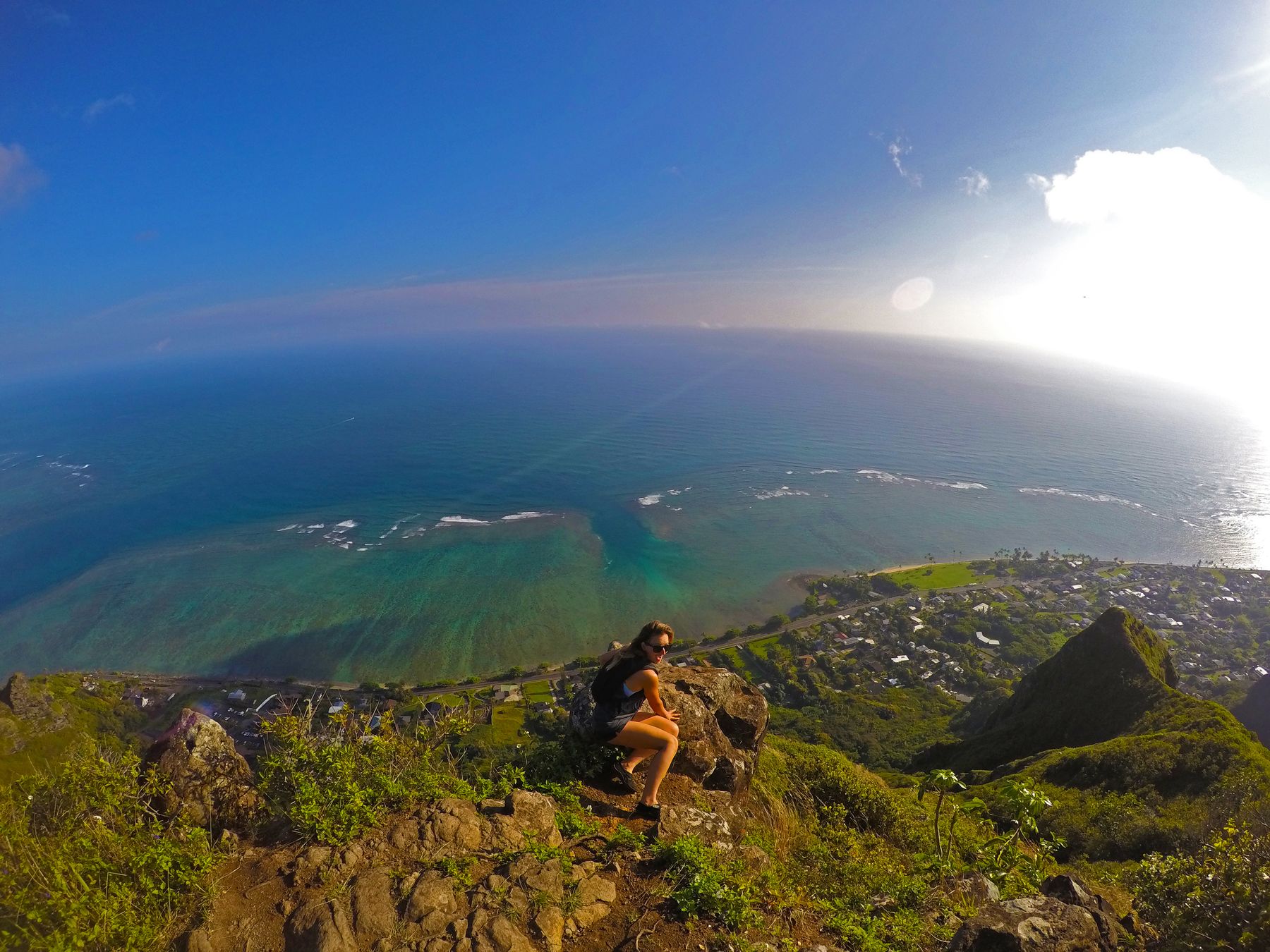
I’m a bit late, but today I found out that a friend I worked with on Hawaii fell 400 ft from the top of the Olomana mountainside- one of my favorite hikes on Oahu. He walked off the trail to fetch back his friend’s hat, which had blown away. Then he slipped on mud and fell to his death.

He was a really beautiful person, only 24 years old, kind, genuine, hardworking, and just had the best smile :)

At least it was a quick death (I hope). You’re here, and all of the sudden you’re not. Your death is not sad for your own self because you’re no longer conscious- you can’t feel sadness. It’s sad for everyone that loved you. It’s sad that you can no longer contribute to their lives. My deepest sympathy goes out to Nate’s family and friends.

Such an unexpected death from an experienced hiker reminds me to watch my step. I feel very lucky to still be alive after all the stupid stuff I’ve done in life. Some of the “illegal” treks I’ve hiked were much more dangerous than the Olomana Trail.

I won’t stop living on the edge when the edge is astounding, but I will think twice about where I put my feet. My fellow hiking guide, Dima, once scolded me for running back to the train station to find my mittens 5 minutes before our train departed. He said, “I hate stupid moments like this. You’re so concerned about your mittens that you’re not careful while you run. What if you get hit by a car because you’re rushing for those mittens? For what? 300 rubles?”

It’s true. Your life is not worth a pair of mittens, a hat, a Ferrari, a 5-bedroom mansion, or any other “thing”.

And don’t forget this quote: “When you buy something, you’re not paying money for it. You’re paying with the hours of life you had to spend earning that money” -Jose Mujica

Don’t forget that life can slip at any moment. So, what do you live for?

TROM Discussion: Environment

Uncategorized

We had an awesome meet up with my new English club on Friday night :) We watched and discussed this TROM video:

This video does a fabulous job in demonstrating how ridiculous and primitive our culture is. It also demonstrates why it’s difficult for us to see our own culture as primitive and ridiculous :) We have been brought up to believe that the way we live is normal. -So how can normal be ridiculous? And primitive? But we have iPhones! :D
How can consumerism not be ridiculous when you live in a system based on the consumption of an infinite amount of resources, yet your survival as a species depends on the finite resources that exist on our planet?

So many people tell me that they wish they could travel like me, but they can’t because they don’t have enough money. I’ll tell you over and over again that it’s not the money that’s the problem, it’s the mindset. “Consumerism” is one of the key factors in the difference between the mindset of a traveler and that of a “normal” person. See this page for more on this topic.

I think the most important thing to take away from this TROM video, however, is the fact that a person’s environment is what determines that person’s beliefs and behaviors. Genes do play some role in determining “who you are” but it is primarily your environment that determines how and what you think, and how you behave. Your environment causes you to become a racist, a Nazi, a Buddhist, a swimmer, whatever. Some people may be genetically more fit to swim well, they can become a champion if they practice swimming! But if they never get in the water, they’ll never be a good swimmer. Some people are more prone to alcoholism, but if they never drink alcohol, they will never be an alcoholic. Some people may be more prone to aggression, but if they grow up in a nice family where most of their needs are provided, they will have no reason to become a psycho-killer. You might have qualities that make you a great leader- but its your environment that determines whether you become a great leader of Nazi Germany or a great leader of a pacifist peace walk.

Genes have no mechanism for judging “good and bad” in fact, there is no such thing as “good” or “bad,” there is just behavior. Check out this awesome ebook :)
And this lecture on behavior:

I think this bit’s important (28:29):

First, we all think we know and understand behavior. I have a PhD in psychology. I have 3 degrees in psychology. I’ve published experimental work with nonhumans, with kids, with adults. I’ve written theoretical articles in a variety of different journals, I published 3 books, I’m invited to talk all over the world. I’m not bragging, I’m telling you that, when I am in a conversation with somebody about human behavior and they ask my opinion, it is an educated opinion. They frequently go, “well, I don’t agree with you.” Or, “that’s your opinion.”

Now imagine if I were an astrophysicist, and someone asked me about the recent discovery of gravitational waves predicted by Einstein’s theory. And I told them and they said “Oh well that’s cool, that’s your opinion, I don’t think that’s what really happened.” Nobody would do that. But, when you’re an expert on human behavior, ‘everybody’s equal’. Everybody’s a psychologist. I’m sure you all know this. I don’t even have to tell people what I do, to hear about this. Why is that? Because nobody pretends to be an expert in chemistry, physics or biology.  We all pretend to be experts in, maybe the thing that’s more complicated. First, we all behave. We seem to have intimate and personal knowledge of our own behavior. If you ask somebody why he or she did something, she can sort of introspect and look at what she was thinking or whatever and tell you that. Also, we’ve been told things about behavior ever since we could talk. The culture teaches us through our parents, about behavior. One of those things is that we have free will. We’ve been told that we are responsible for our own behavior and can make our own decisions. Obviously, since I’m telling you this, it means I disagree. Behavior science is a natural science, just like chemistry, physics and biology…

-Schlinger. Listen to the lecture for more!


Fresco-

So, having an understanding that behavior is caused by our environment has BIG implications! You see, it’s not humans themselves that are the cause of environmental degradation, poverty, war, etc. etc., it is their behavior. But their behavior is caused by their environment!

So long as we live in an environment where we are forced to compete for scarce (or artificially scarce) resources, we will not be able to solve the majority of the big problems in our world. -Because this environment causes the bad behaviors, which cause the big problems. In order to solve such problems, we have to deal with their root cause, not just the symptoms (symptoms meaning war, inequality, pollution, etc. etc).

This little book explains in very simple terms that this root cause is, in fact, trade –

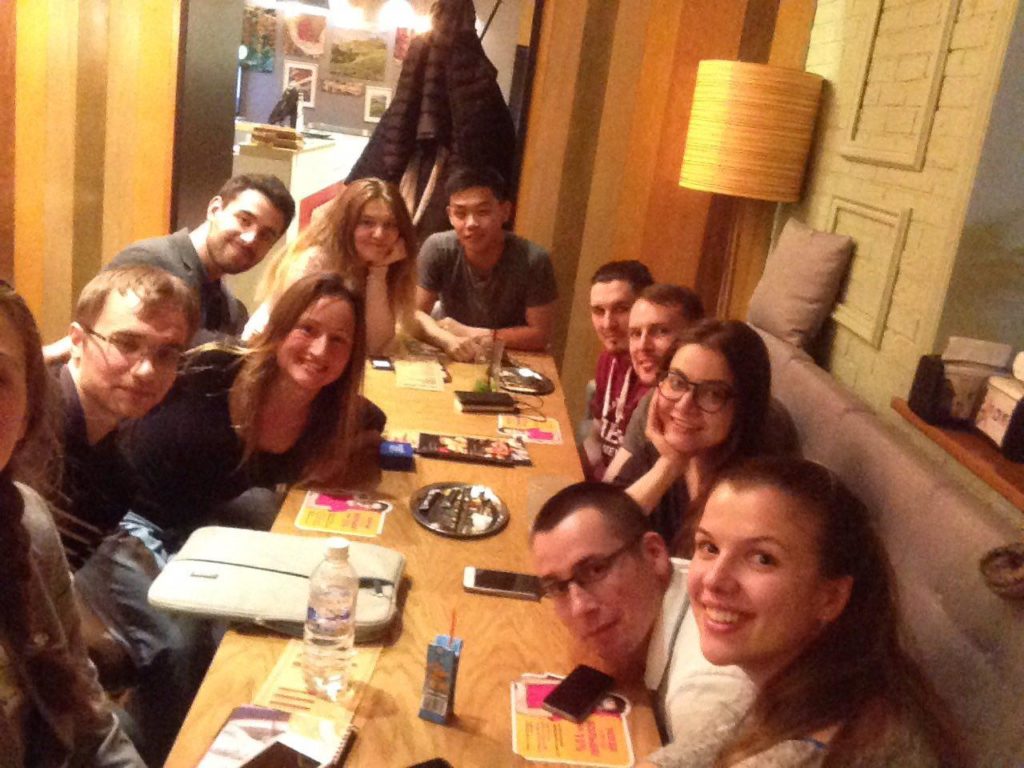
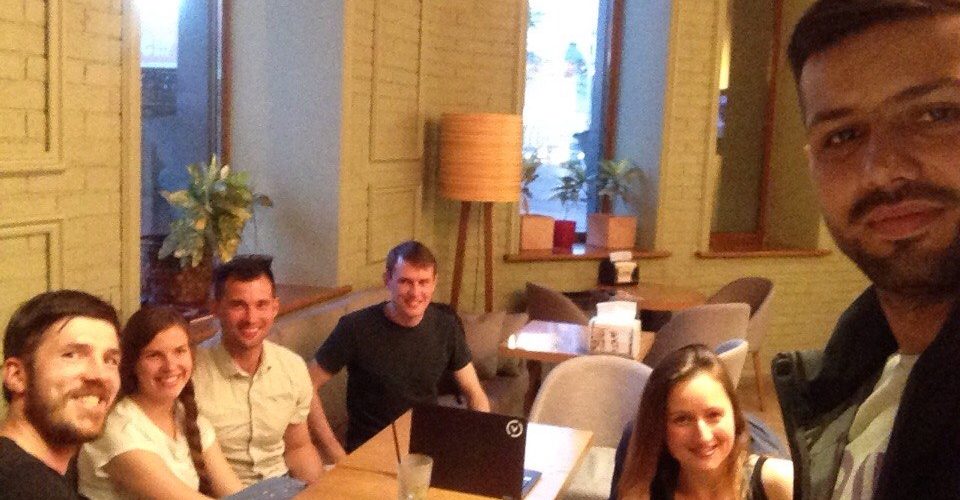
Picture of our discussion group :)
* I will start having these same sessions online about one week from now. Anybody is welcome to join. Please see our TROM Discussions page for details.

ICE DIVING!

Uncategorized

Today marks one year since the last time I quit the “job game” and I still have a bit under half of my savings left. That means if I play it right, I can live on Earth for one more year and do what I want before I have to worry about fleeing to some rich country in search for more money.

I will celebrate this day by sharing my ice diving experience with you :)
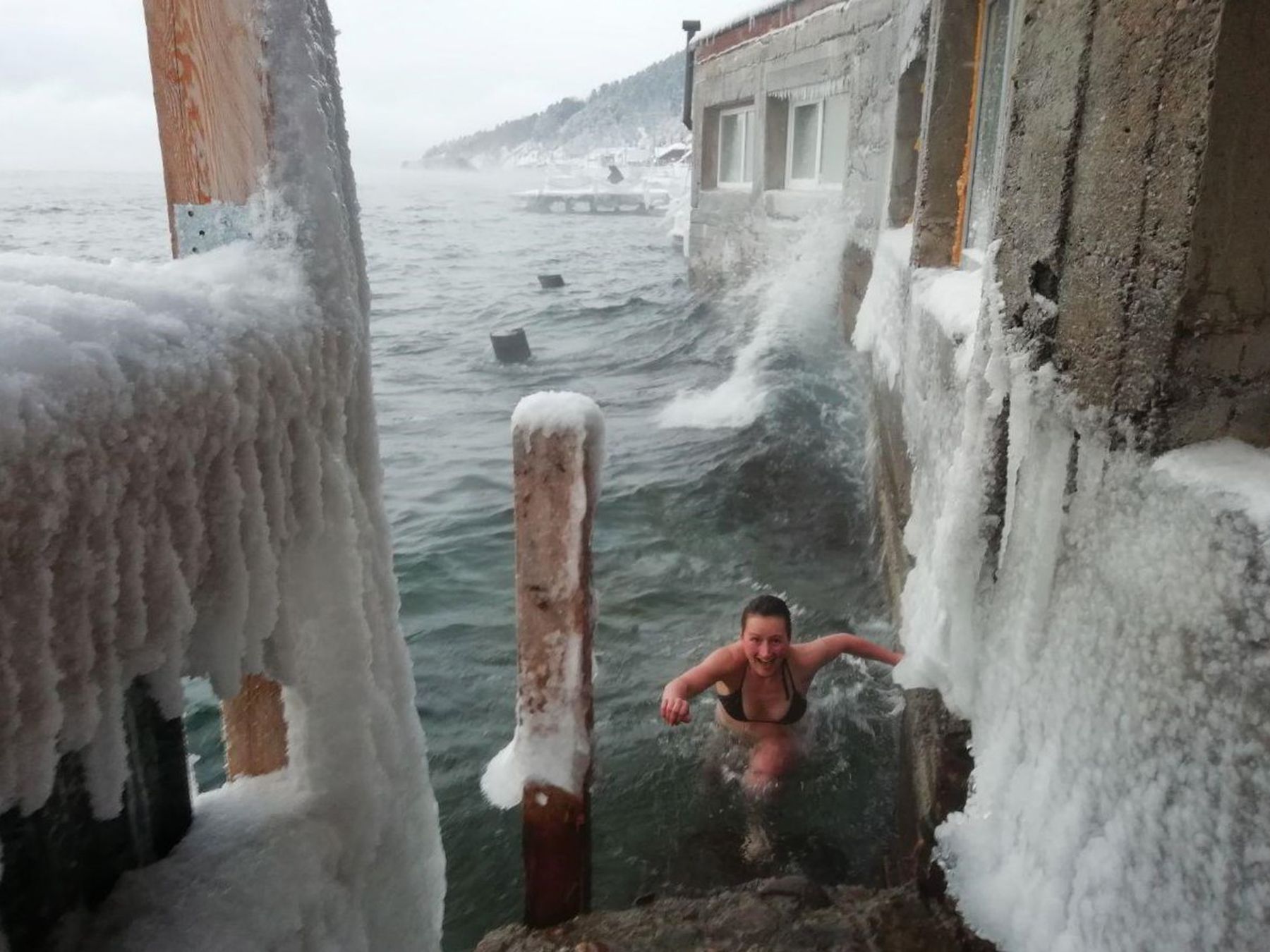
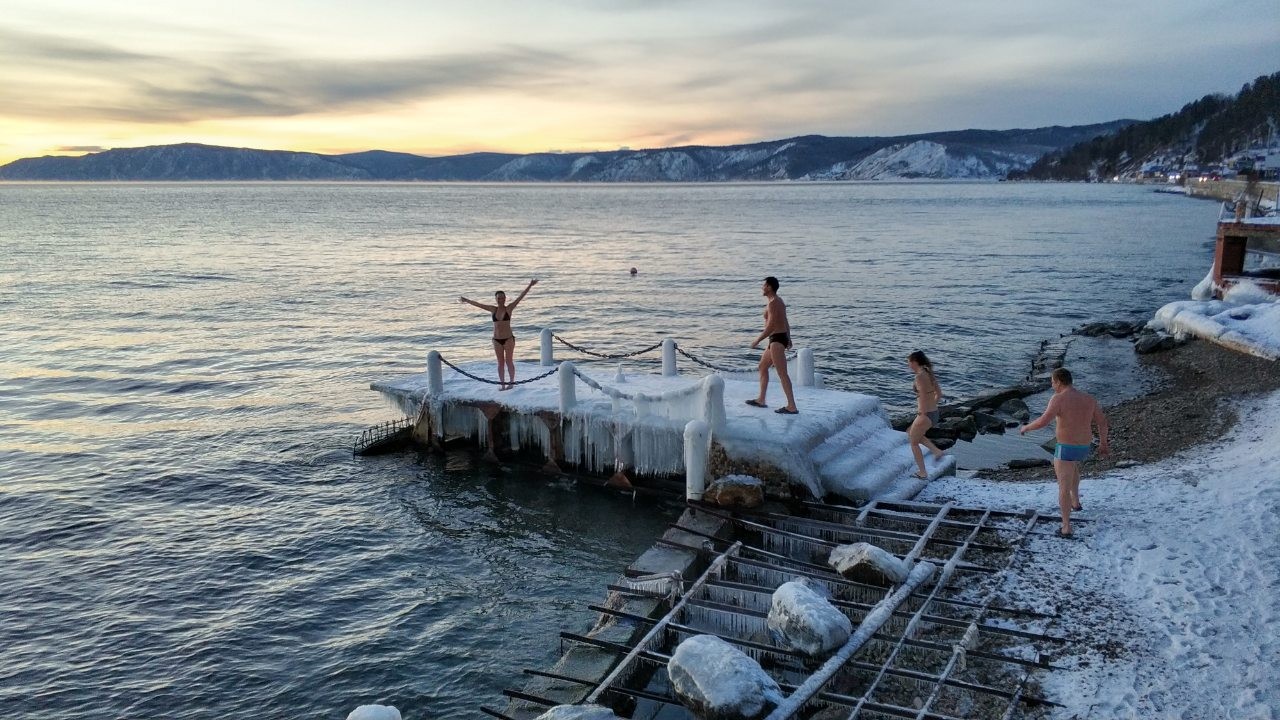
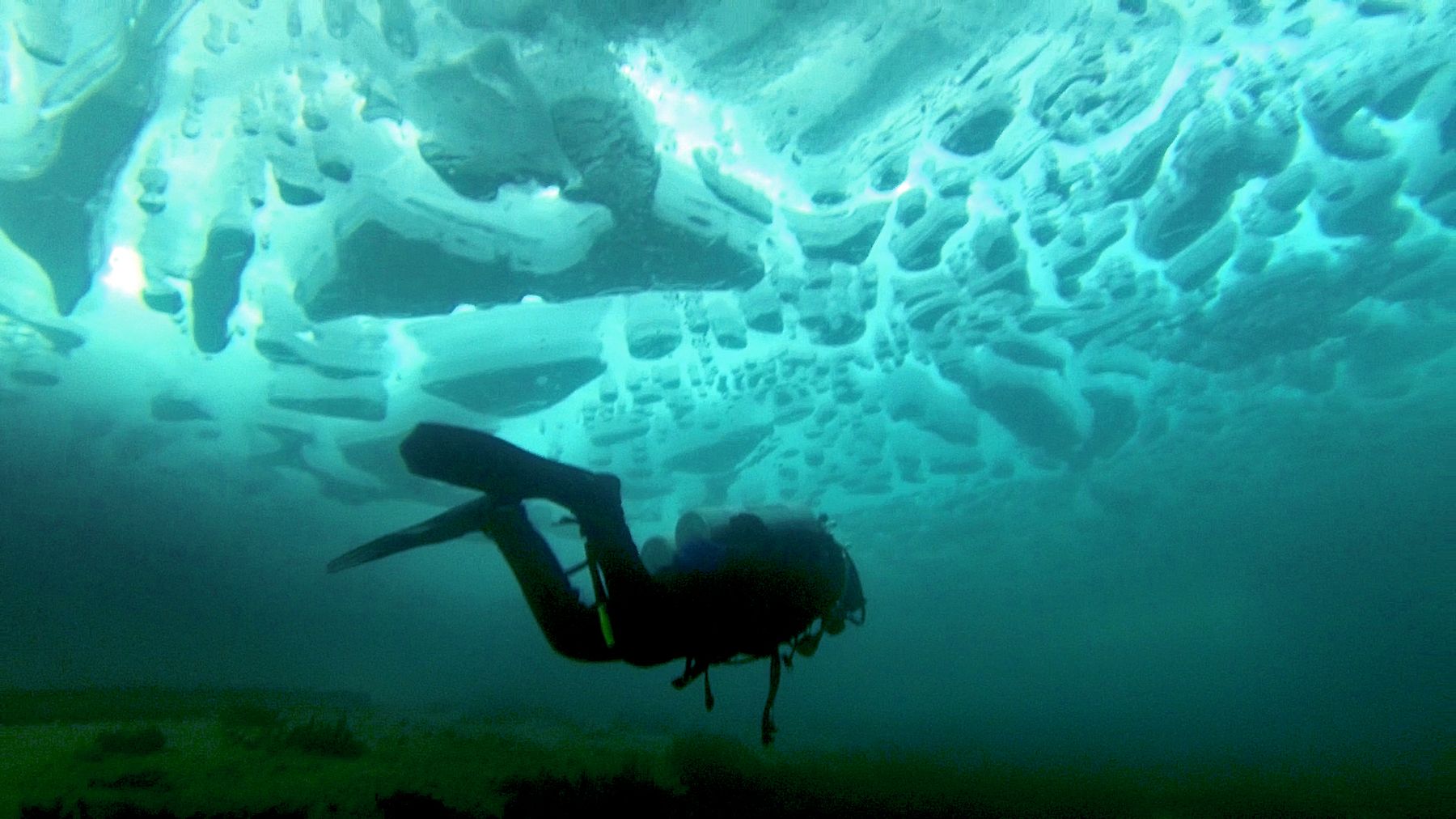
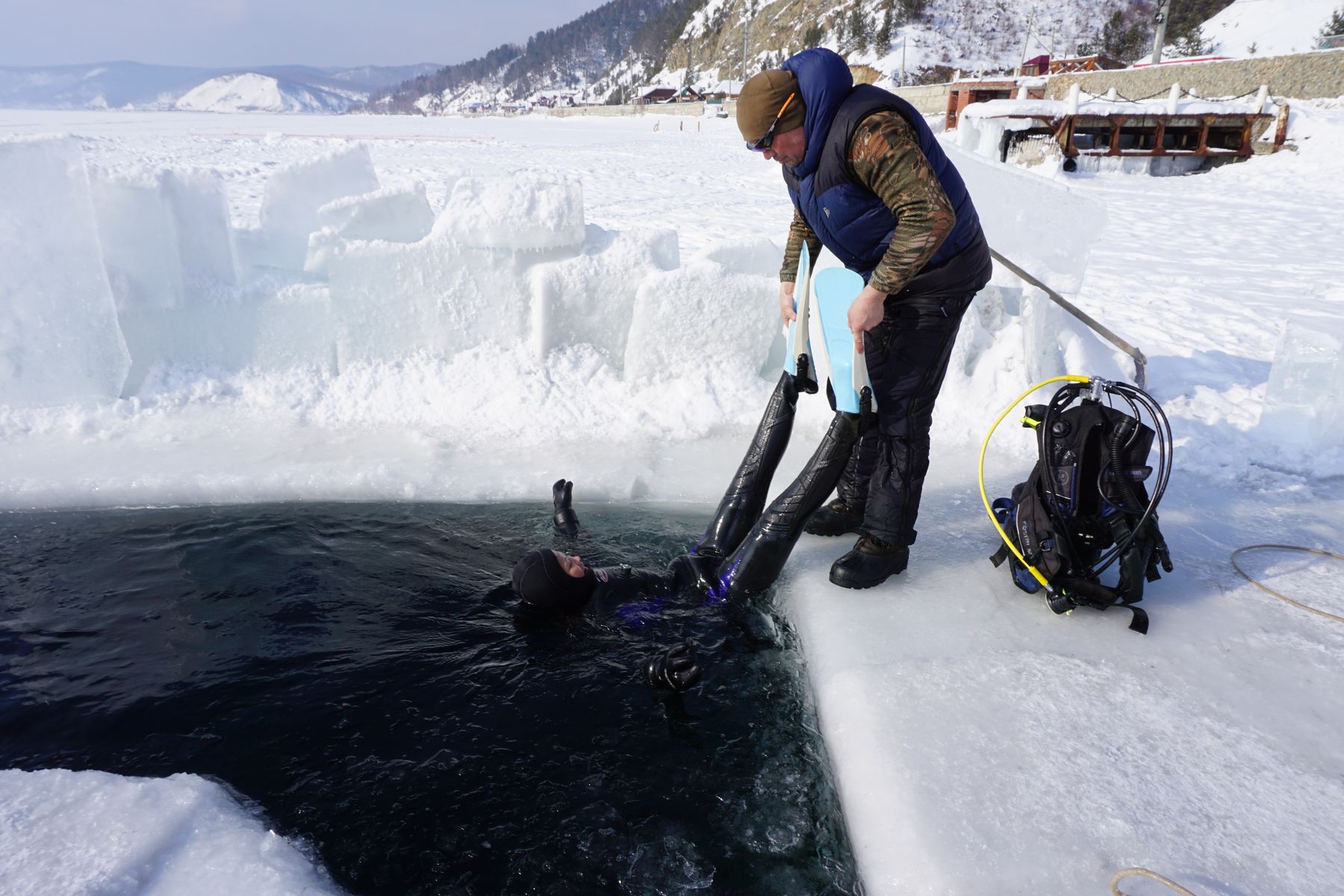
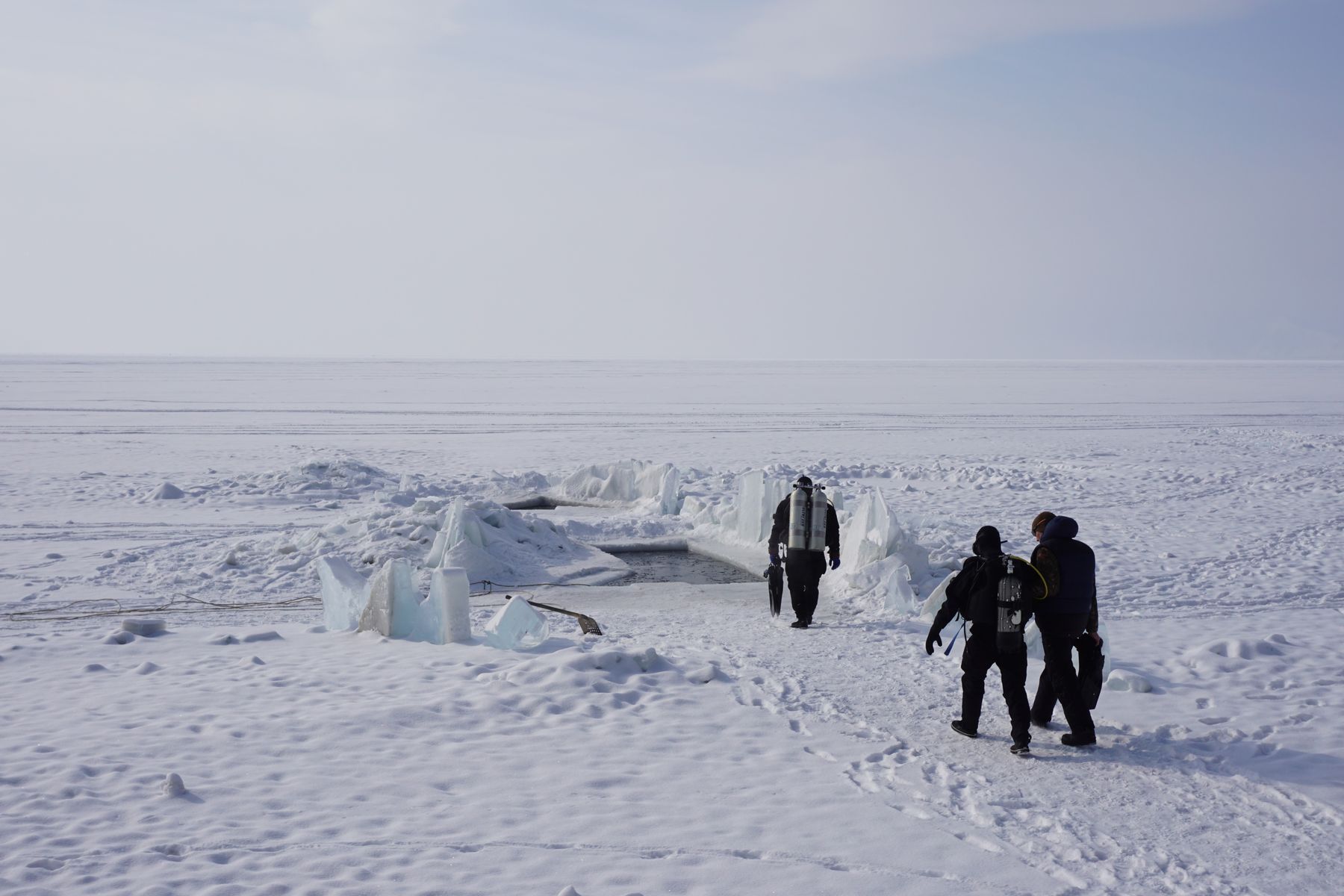
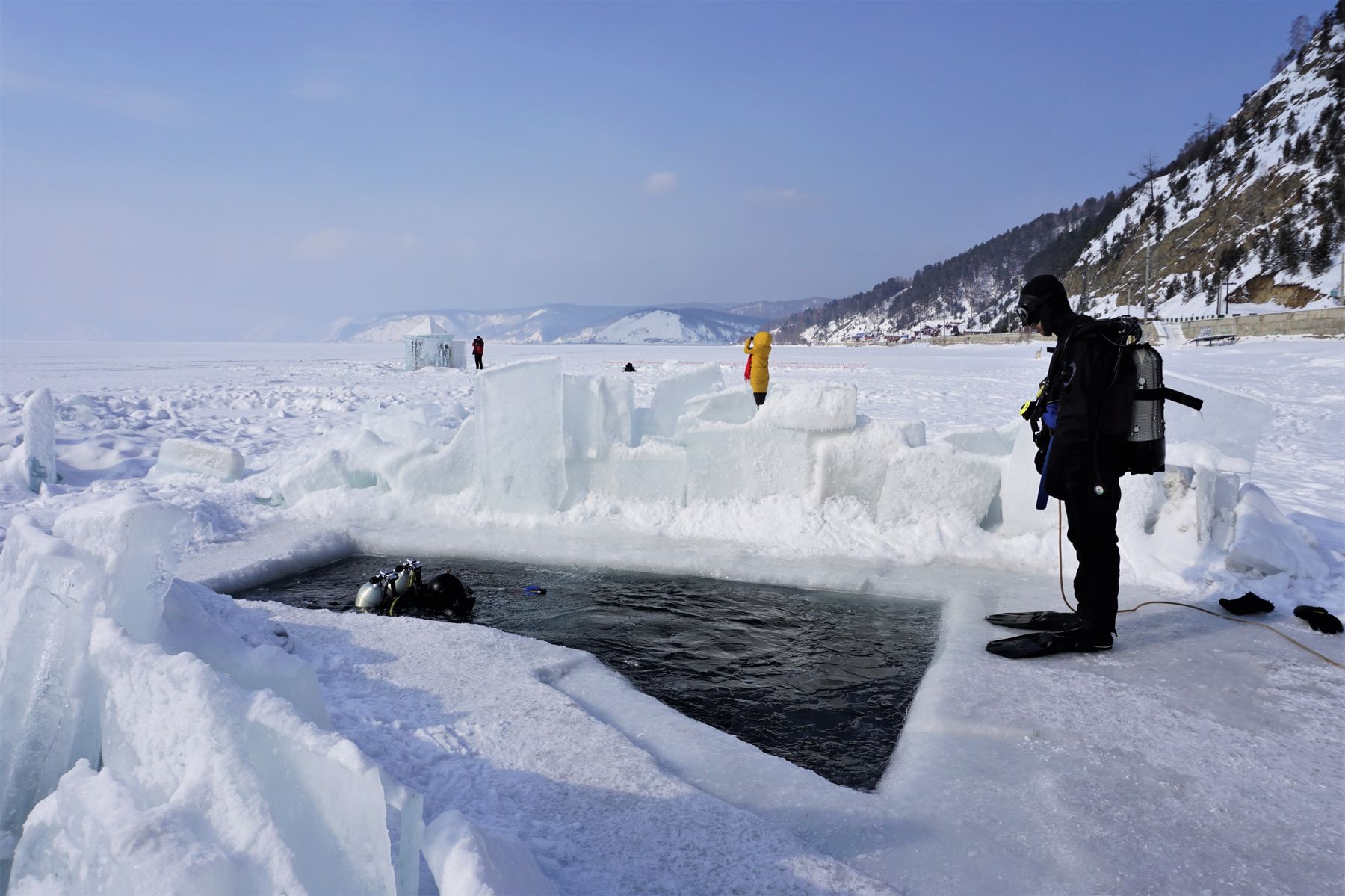
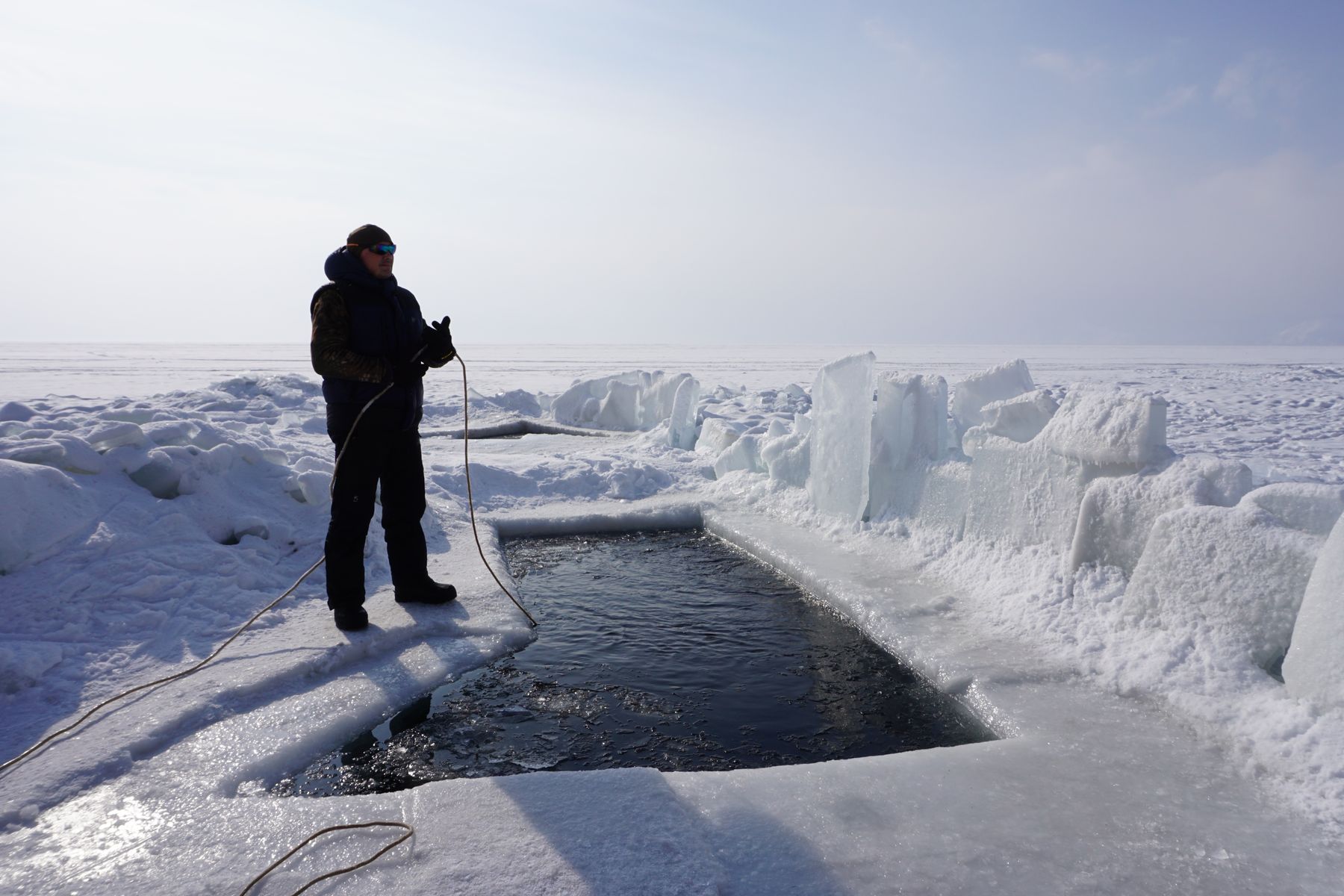
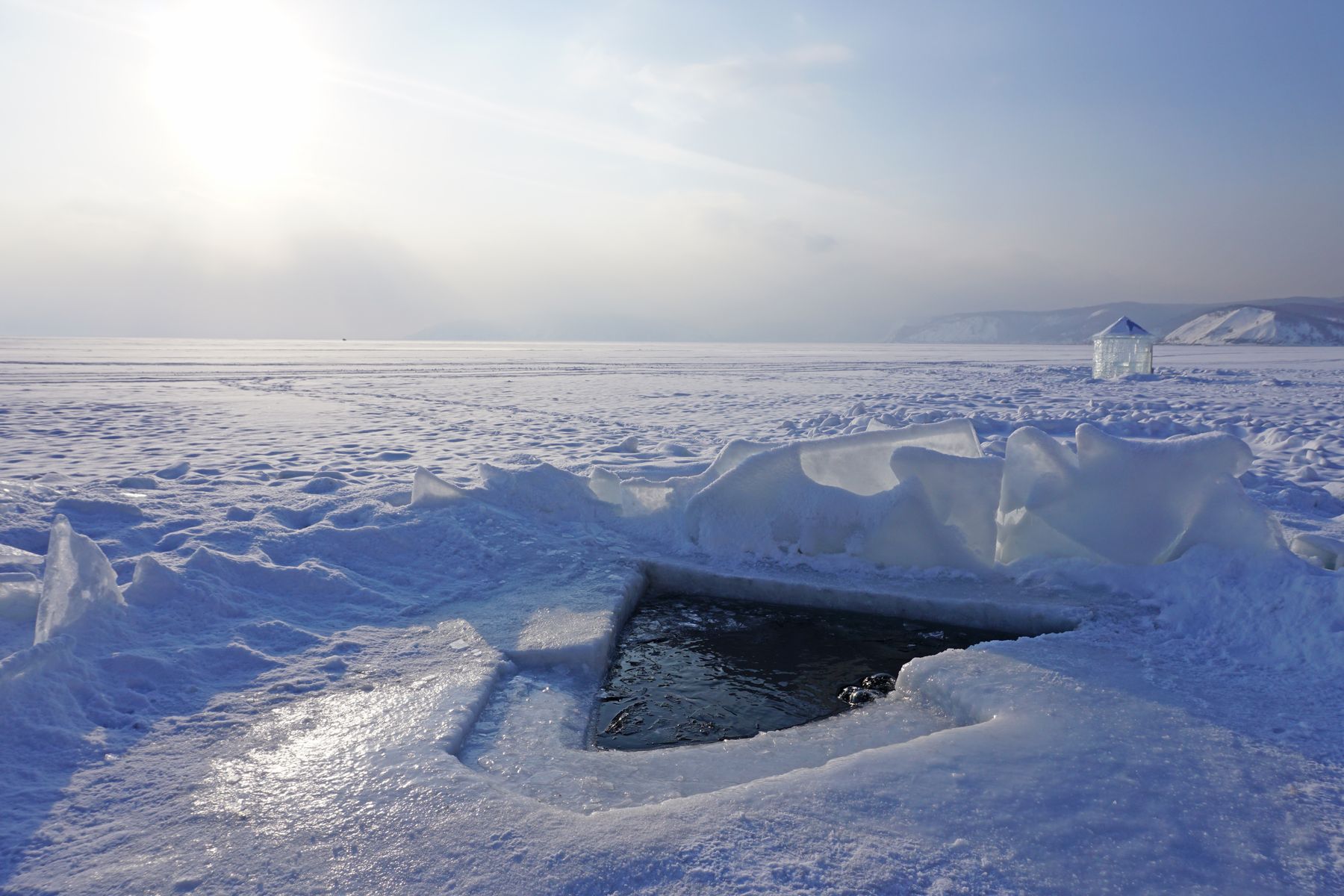
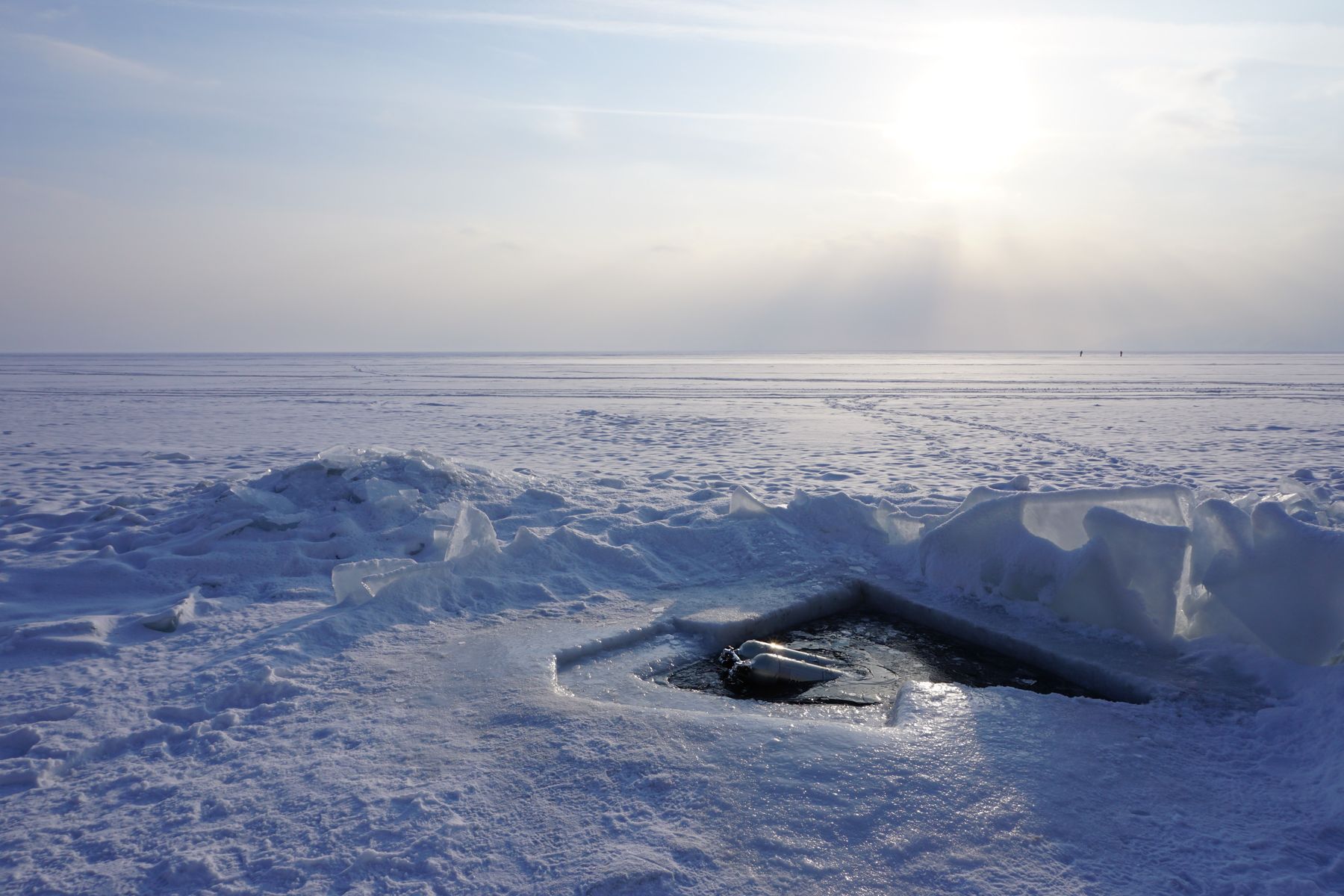
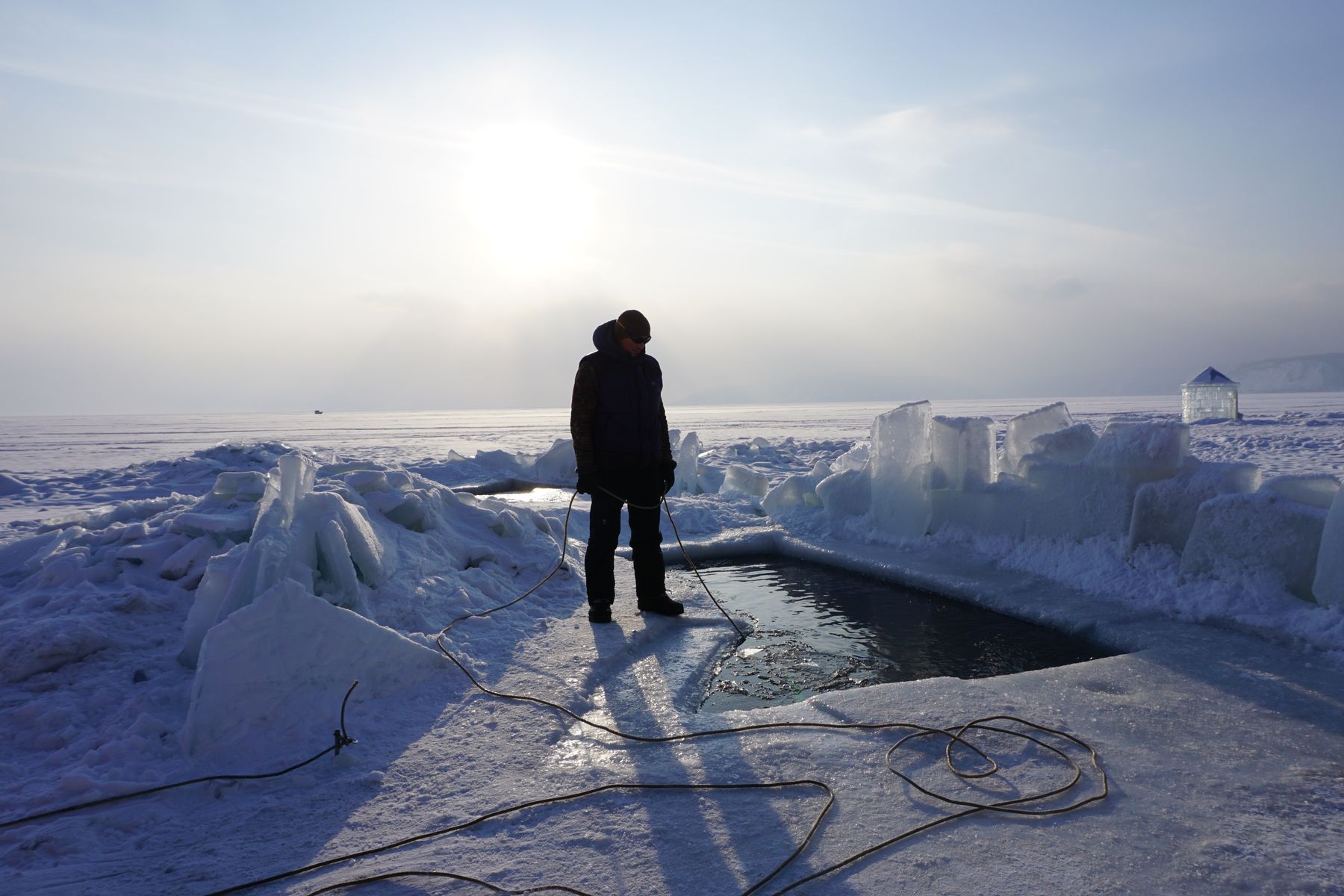
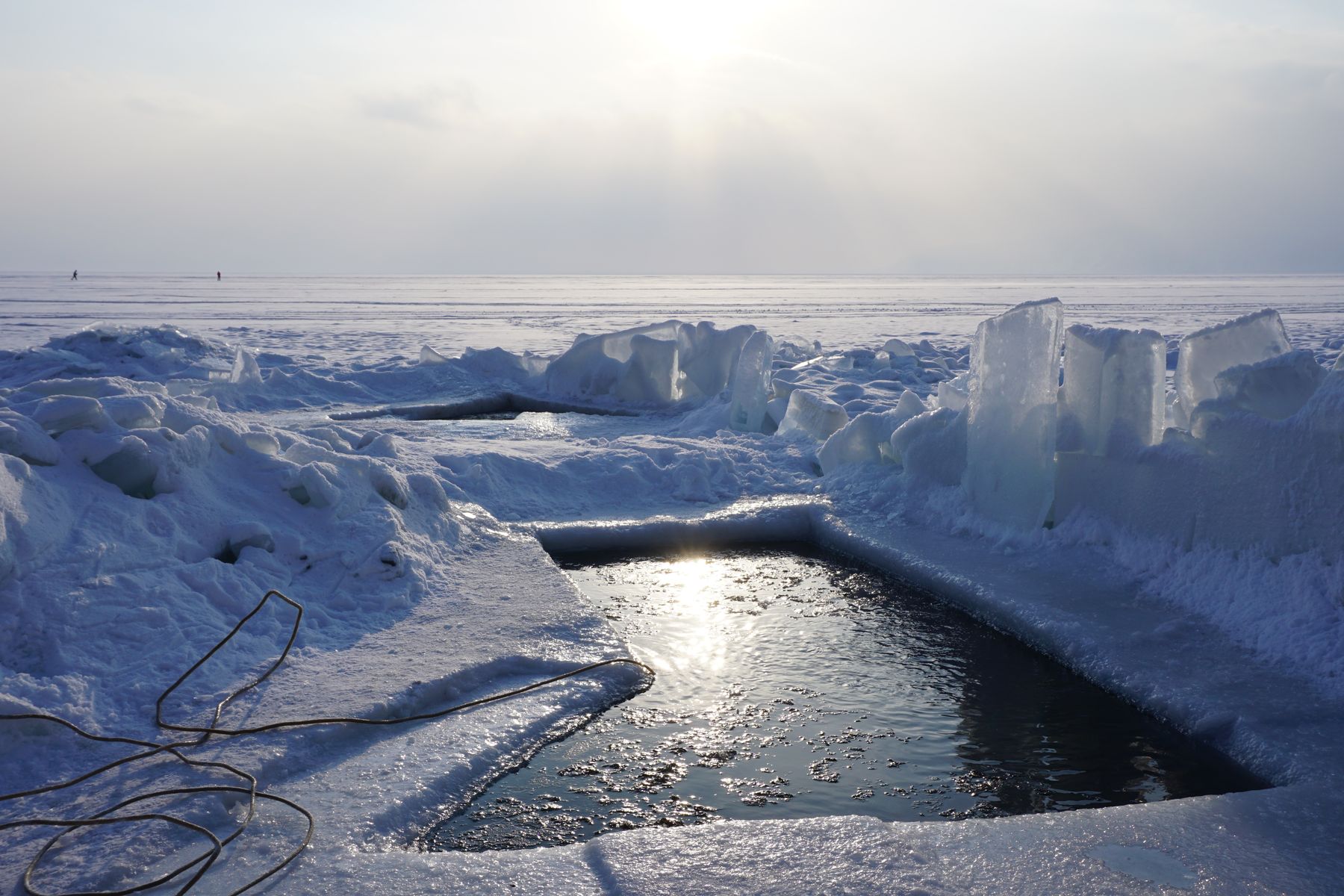
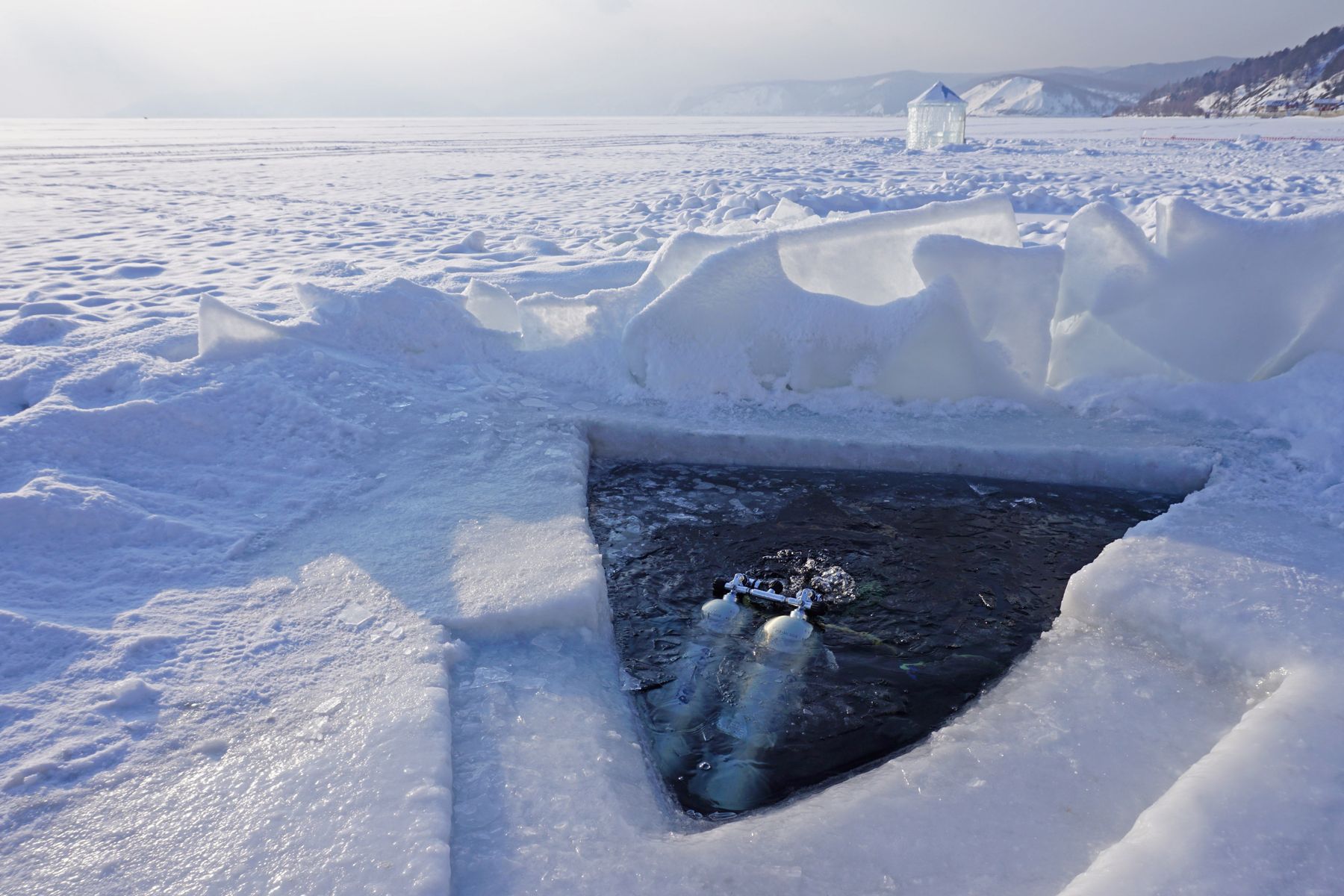
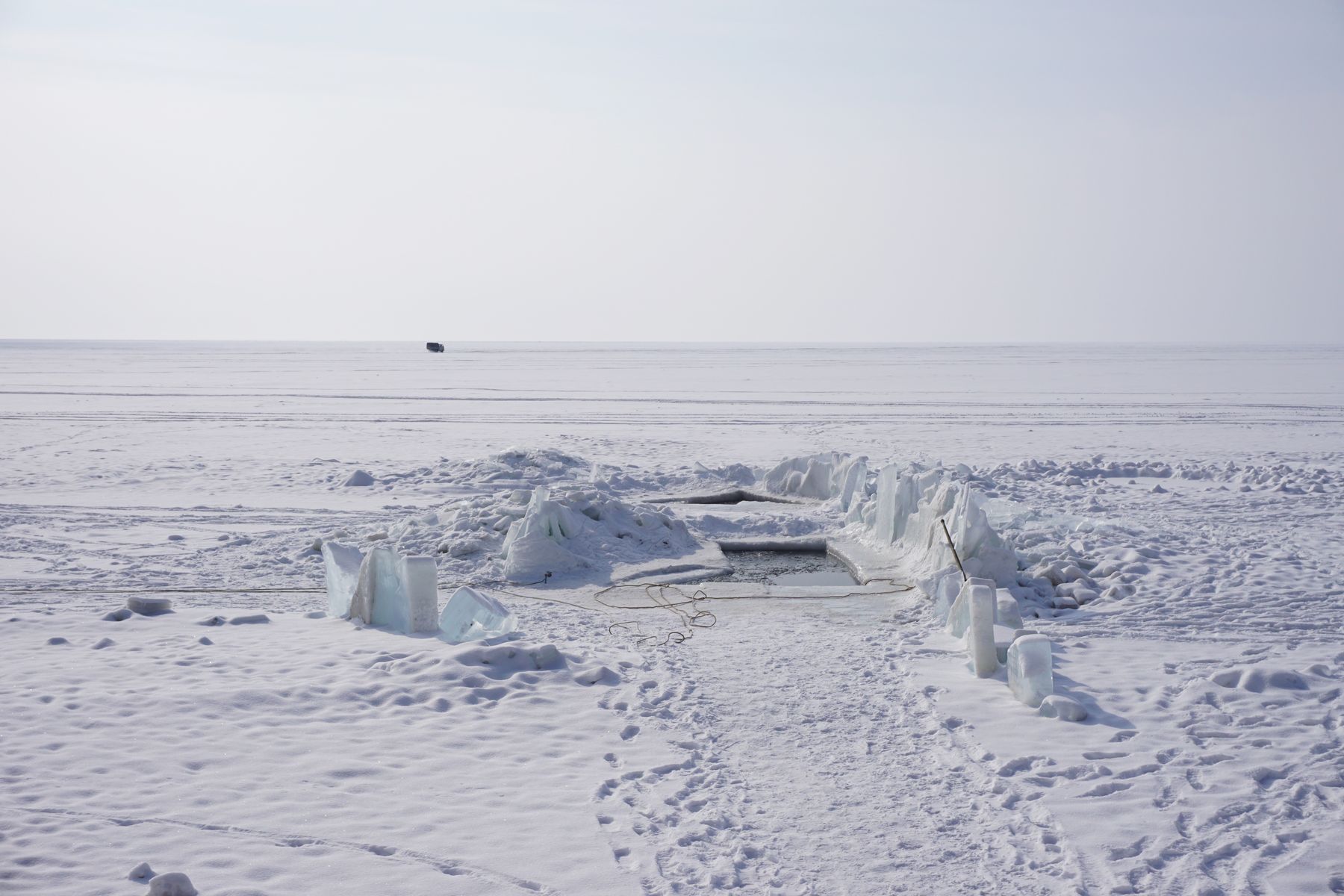
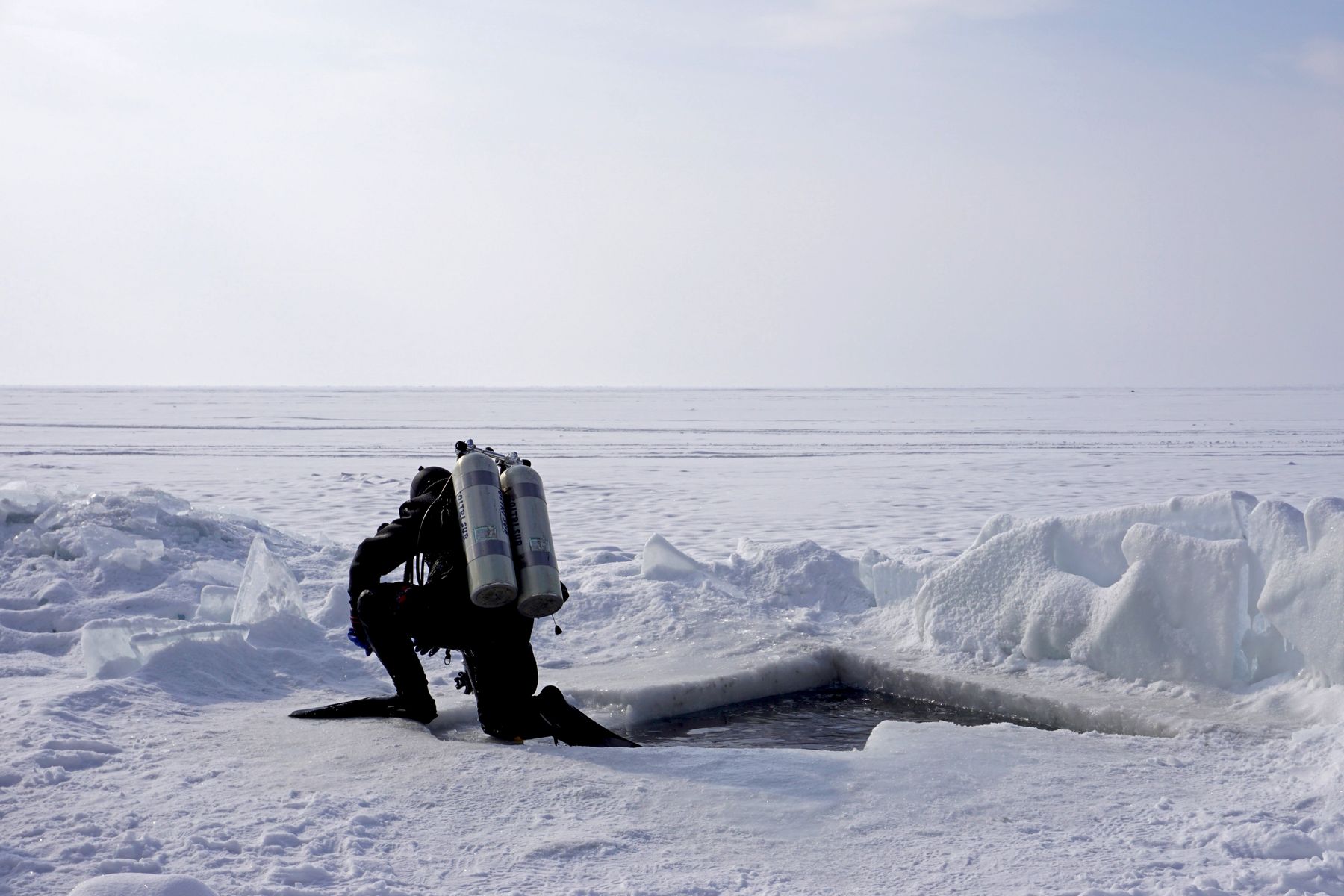
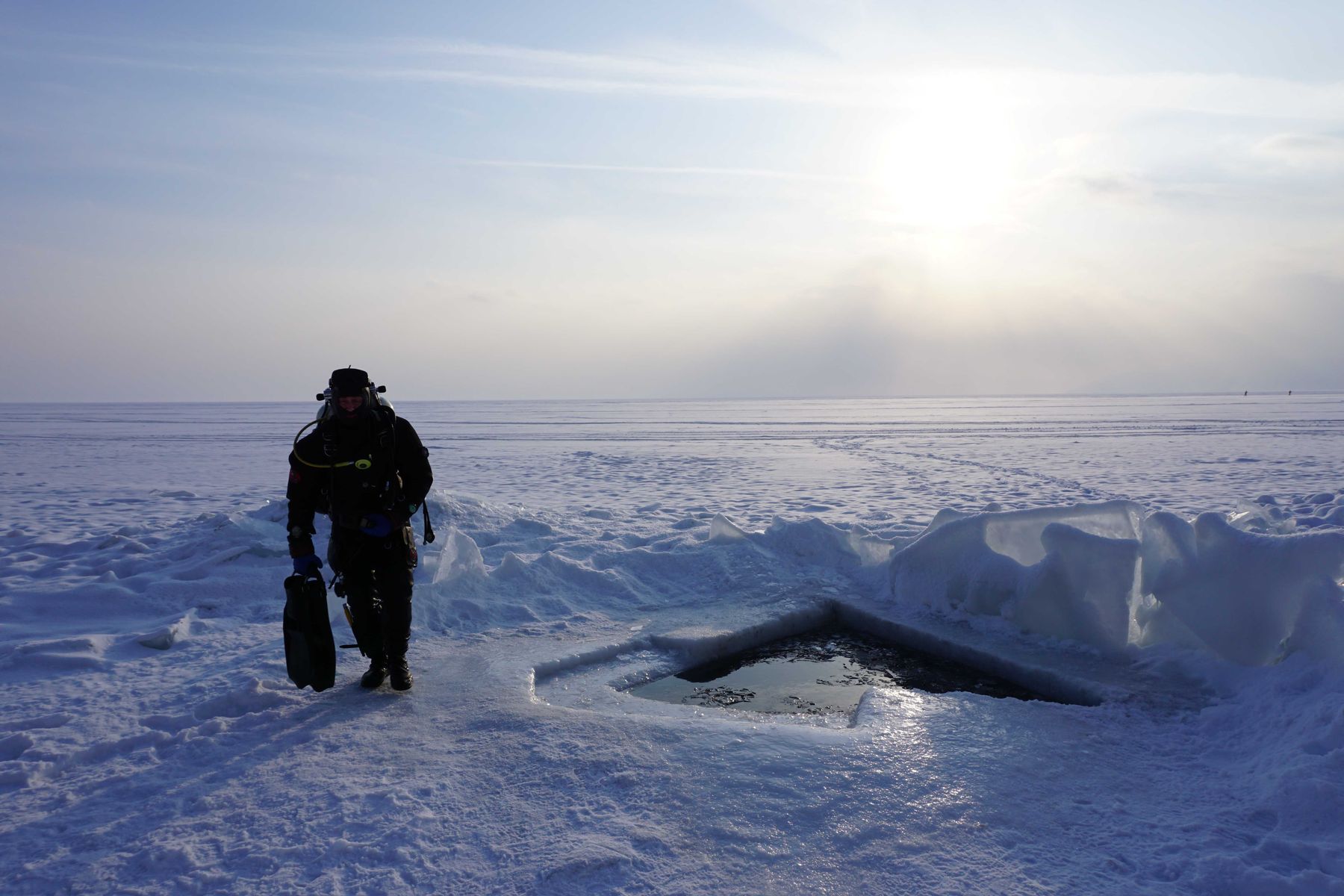
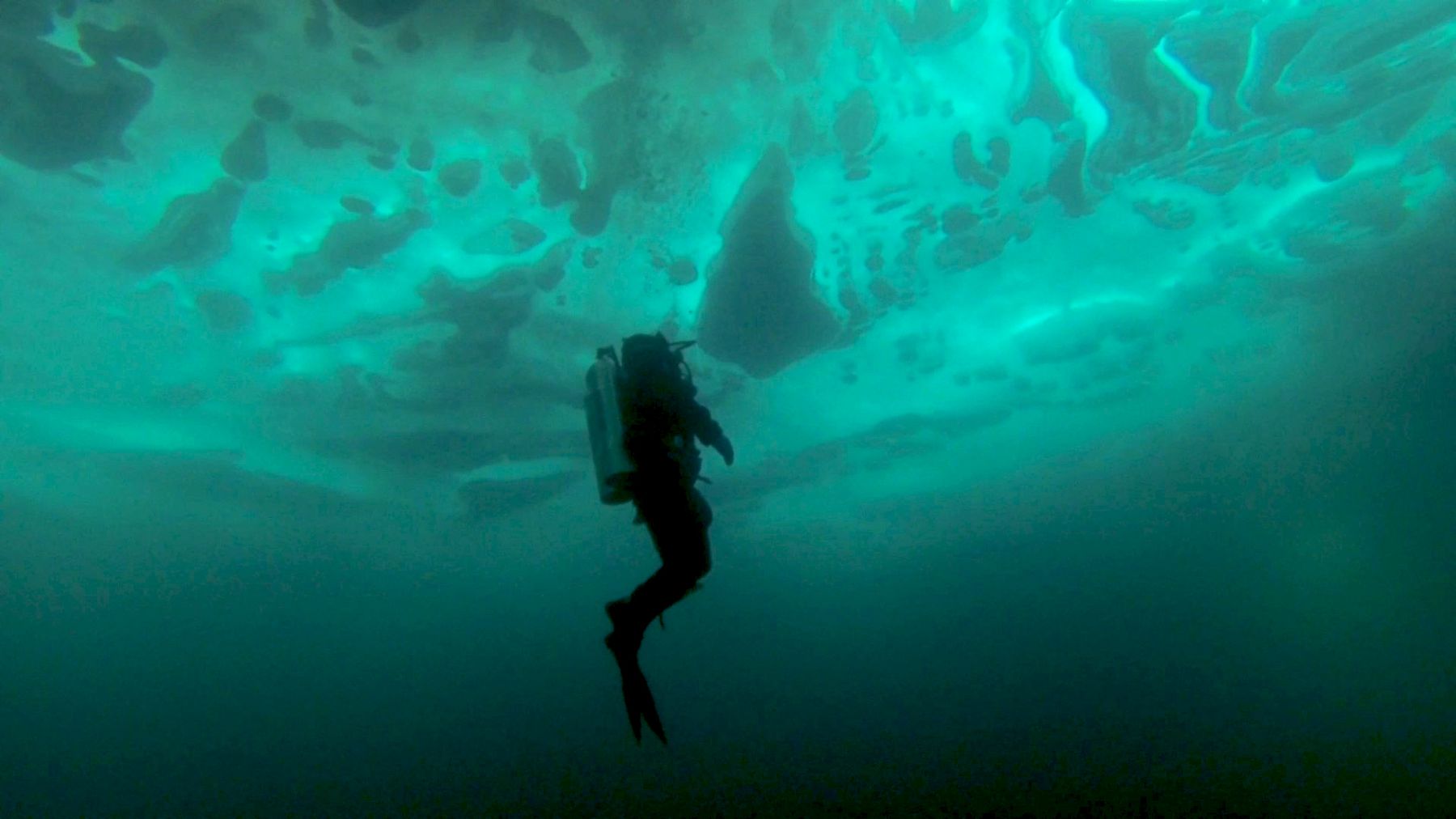
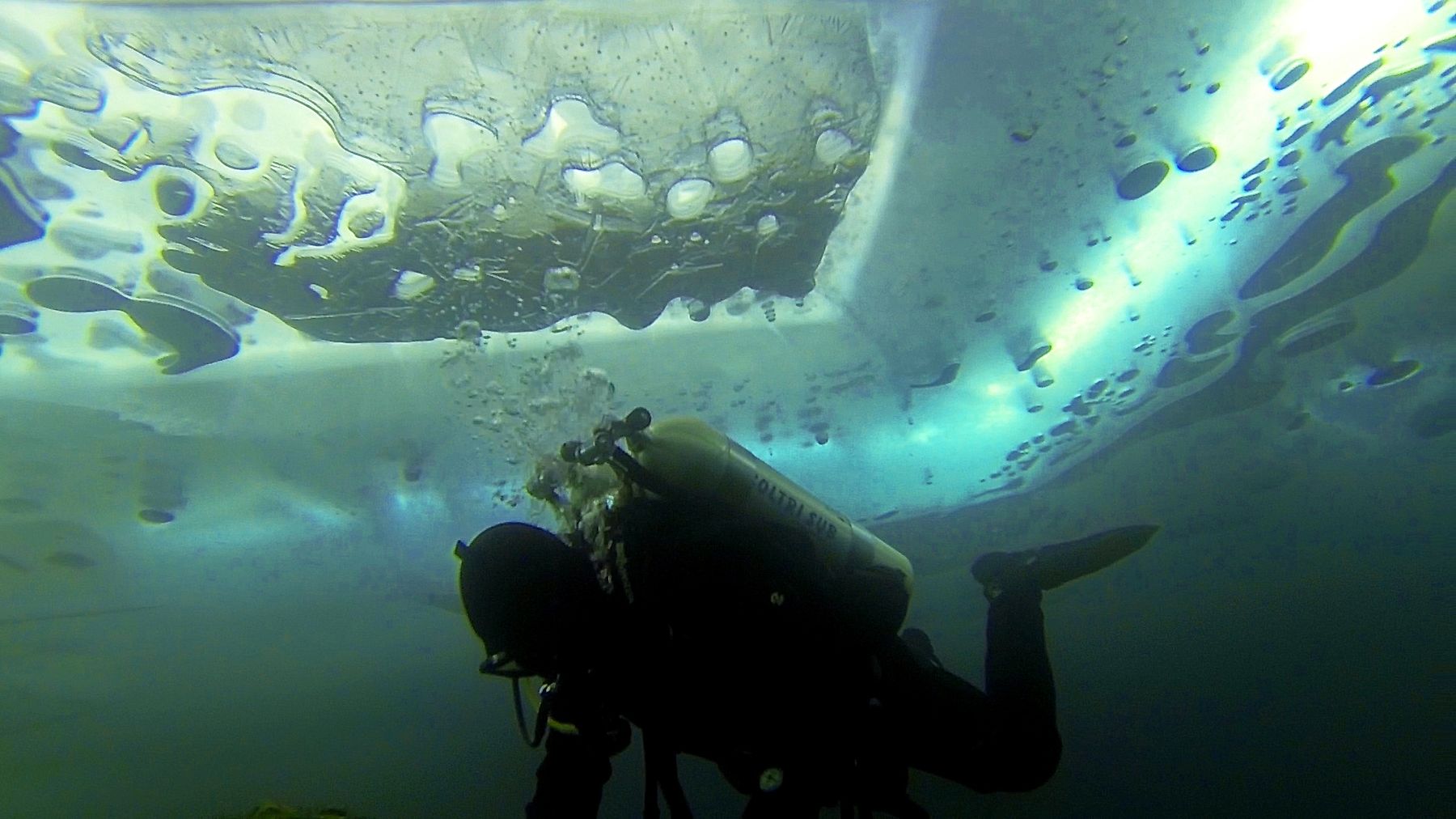
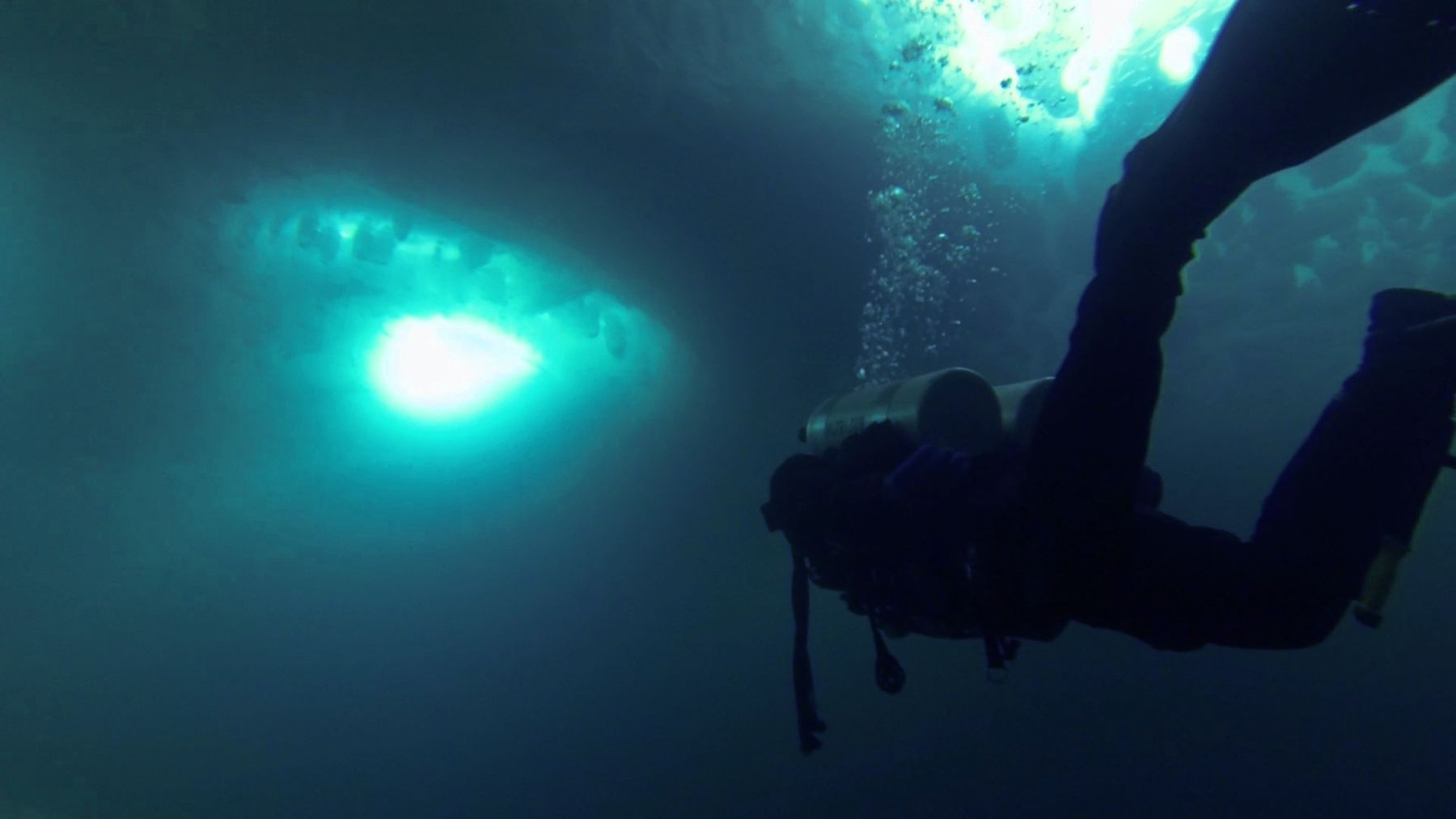
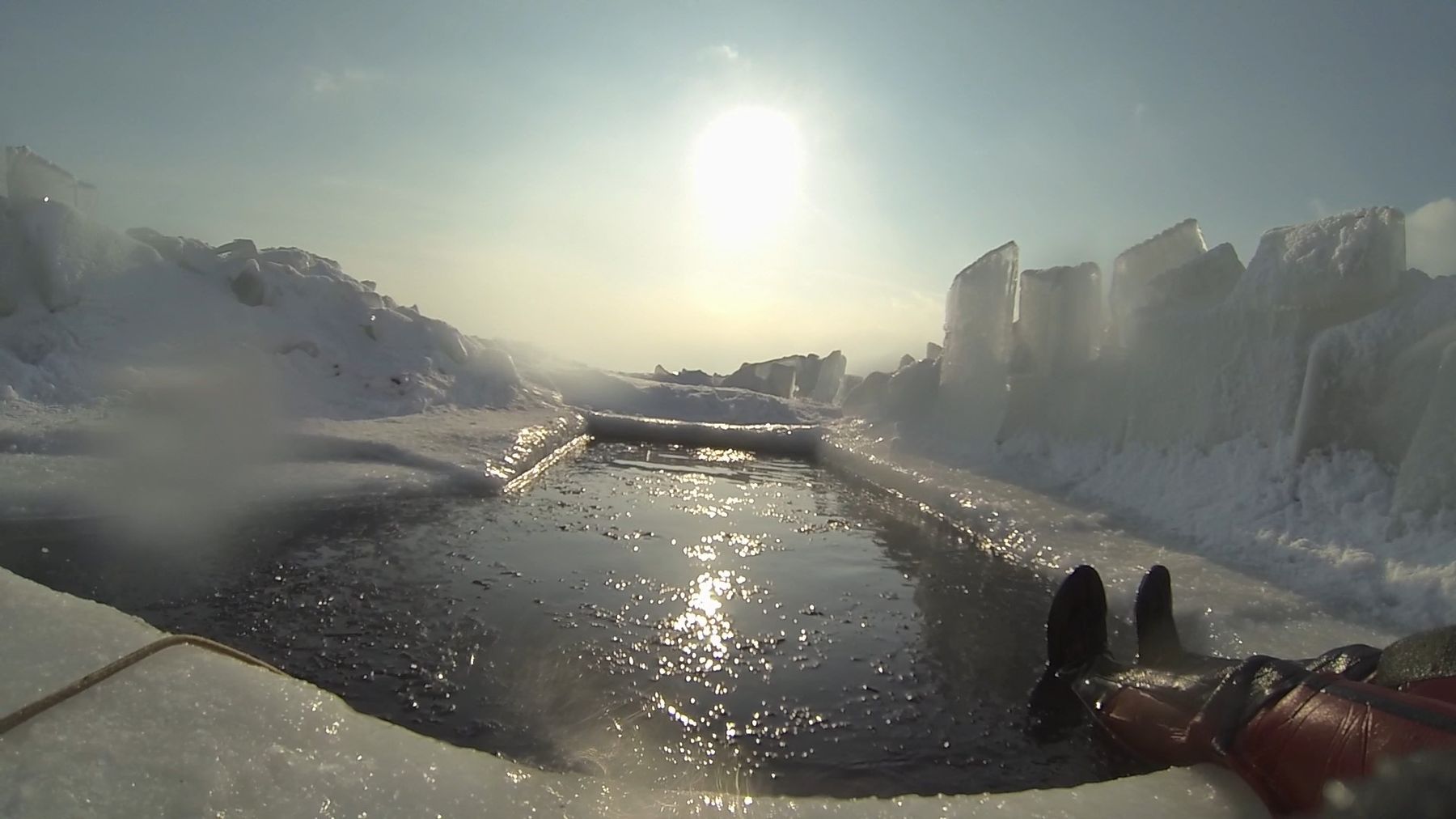
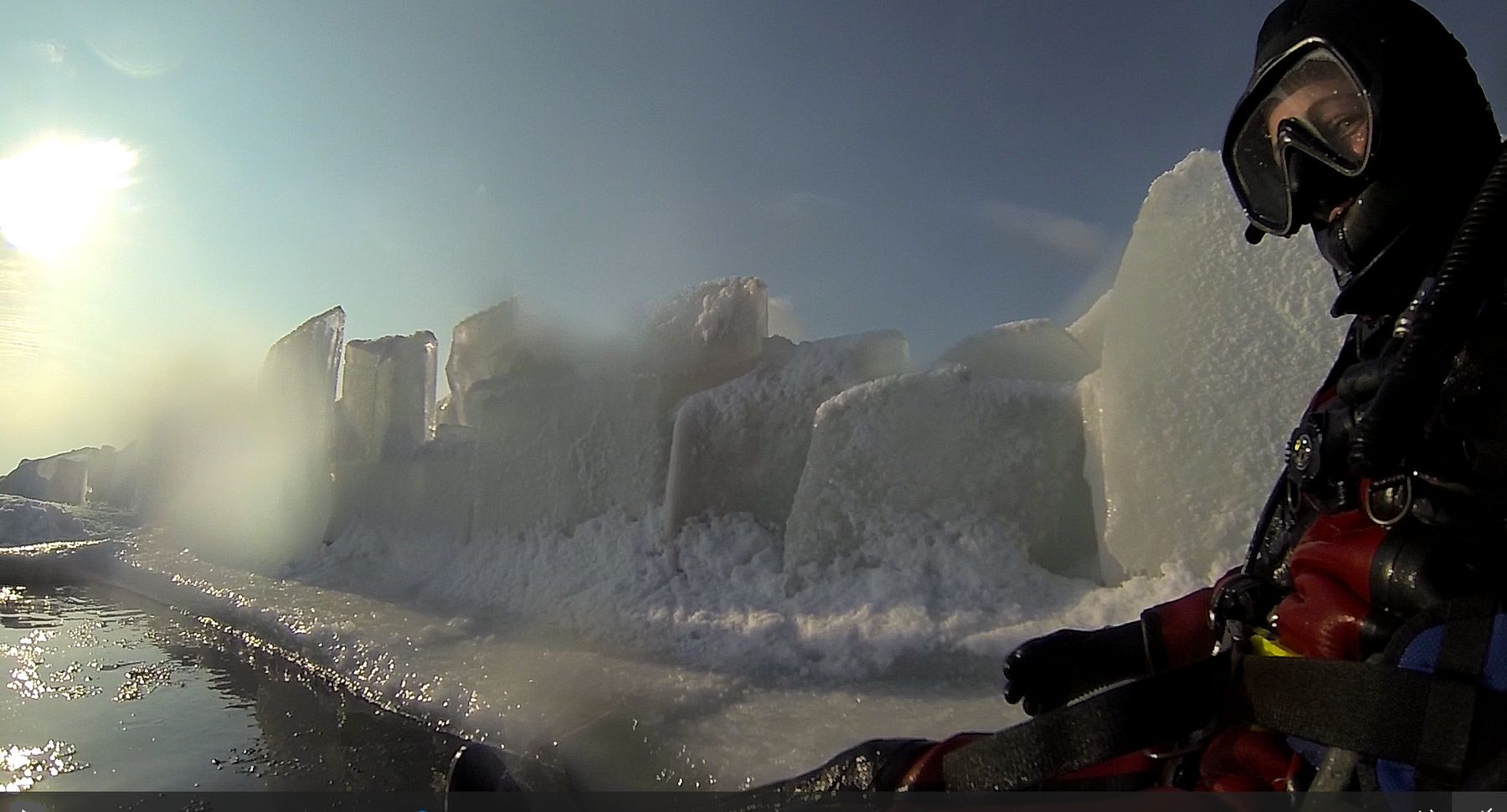
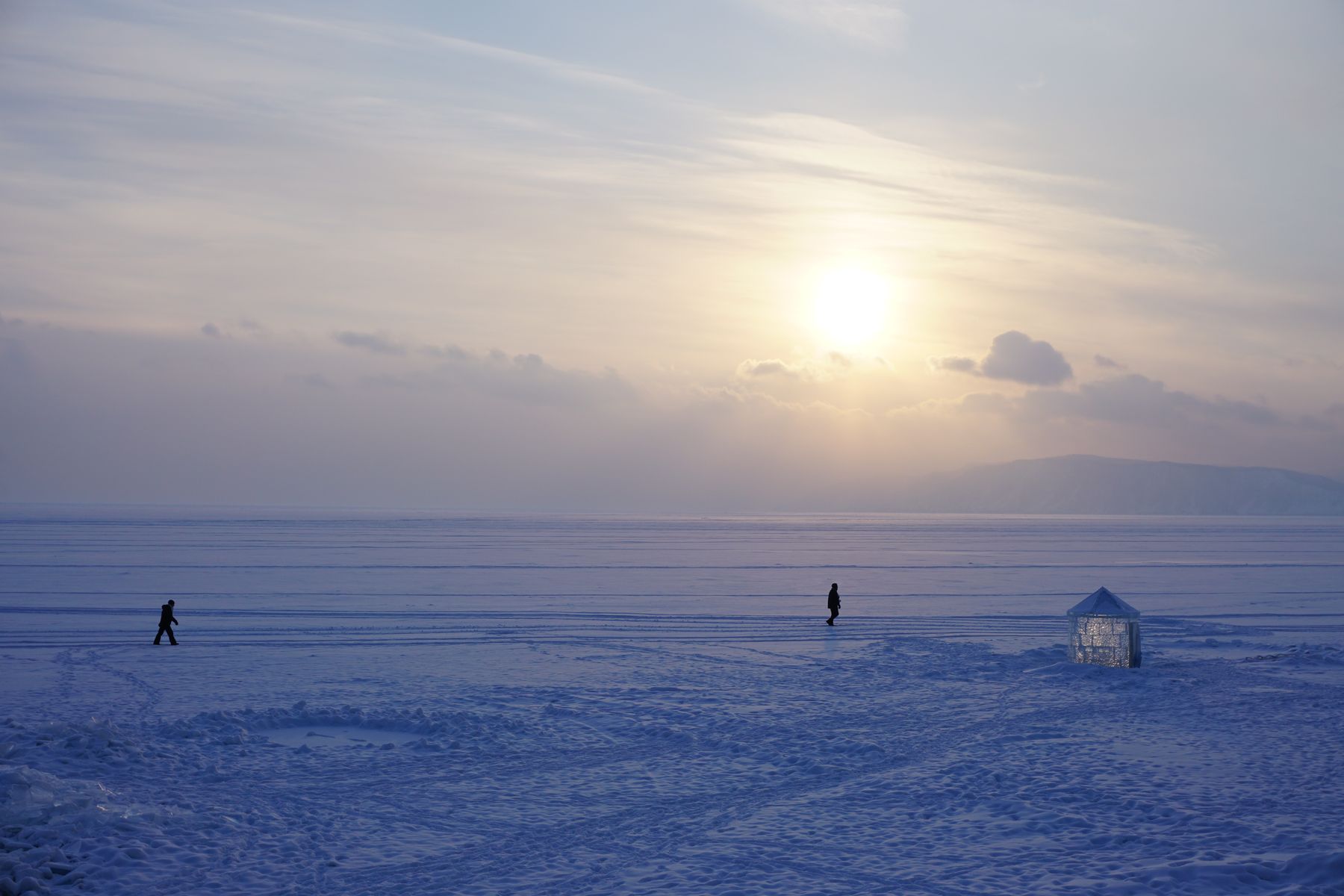
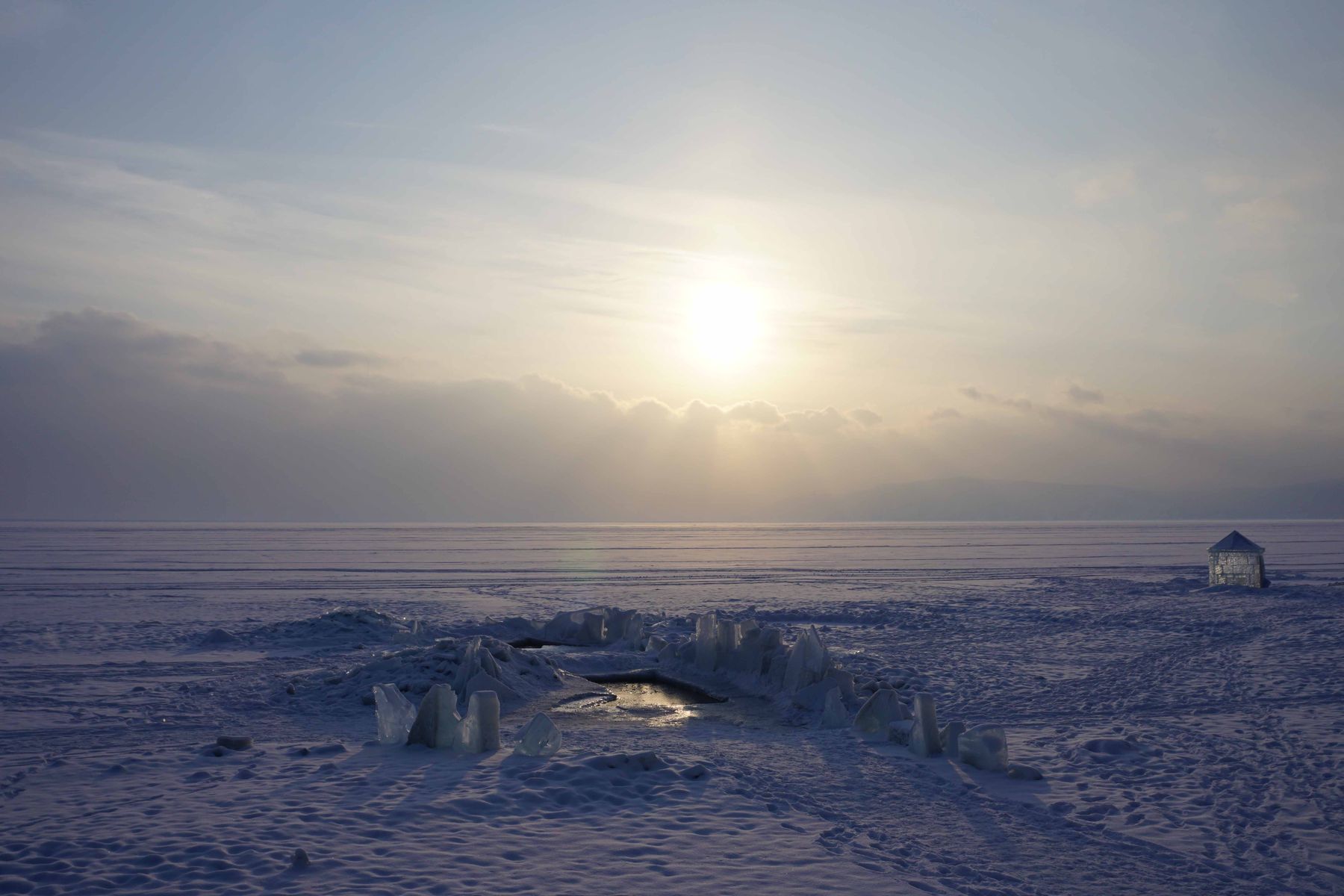
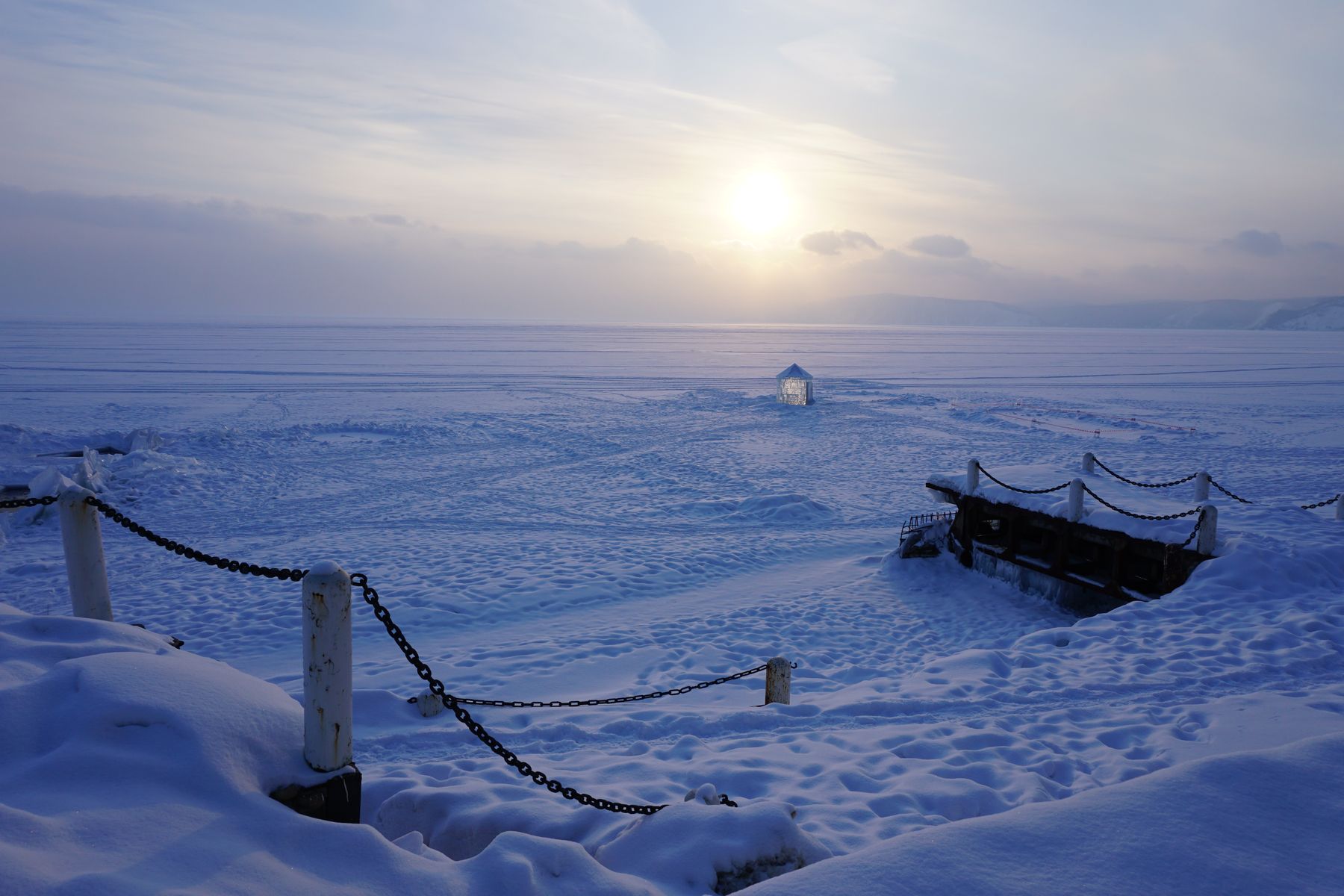
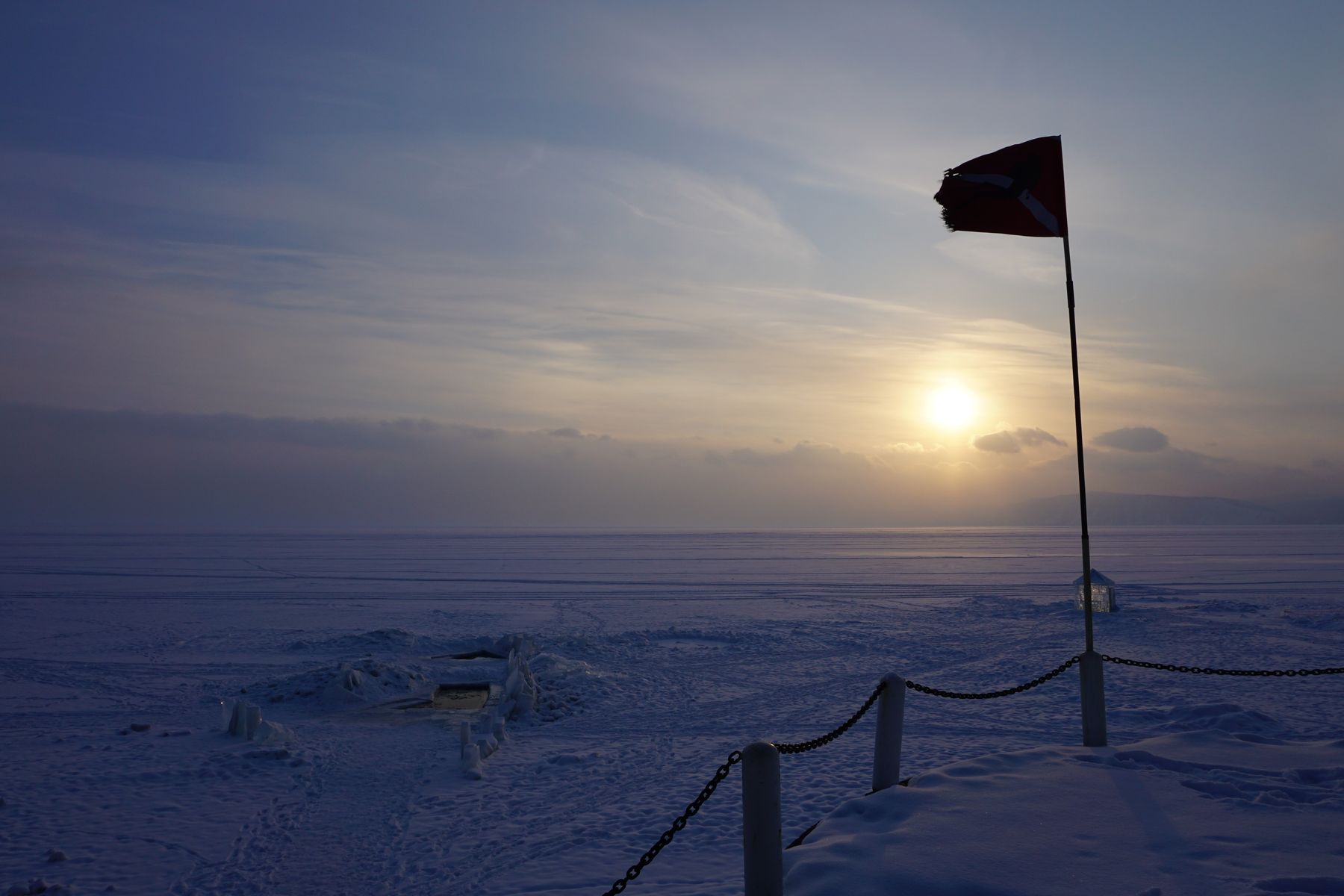
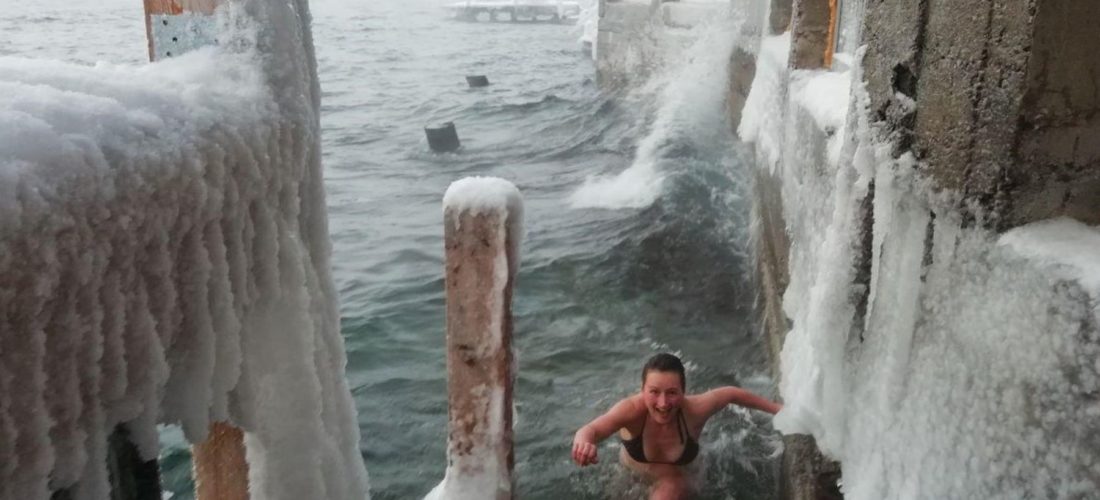
The main reason I decided to stay in Siberia for a little while was to see Lake Baikal in all of its magnificent beauty.  So what better way to see it than under its own ice? :D

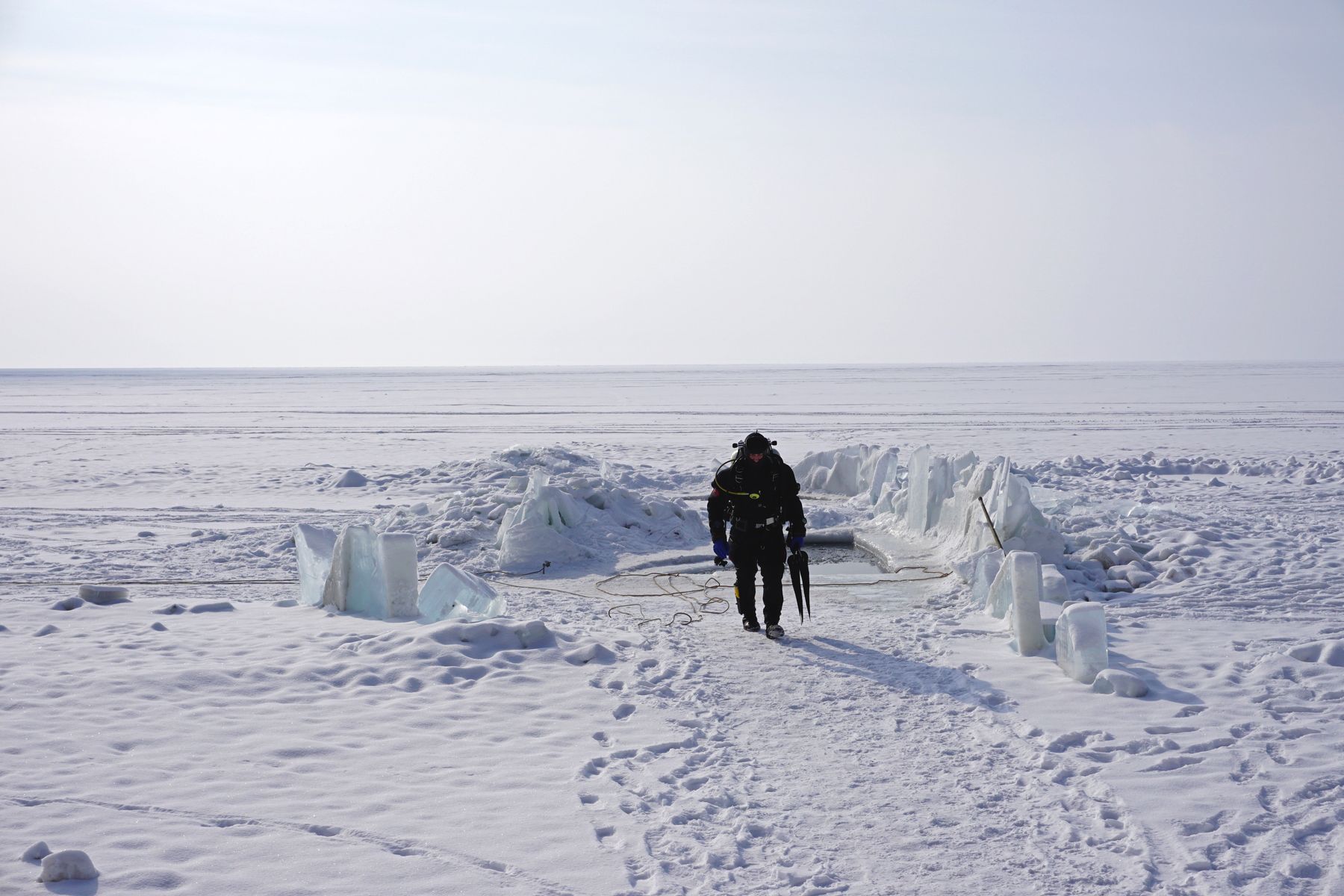
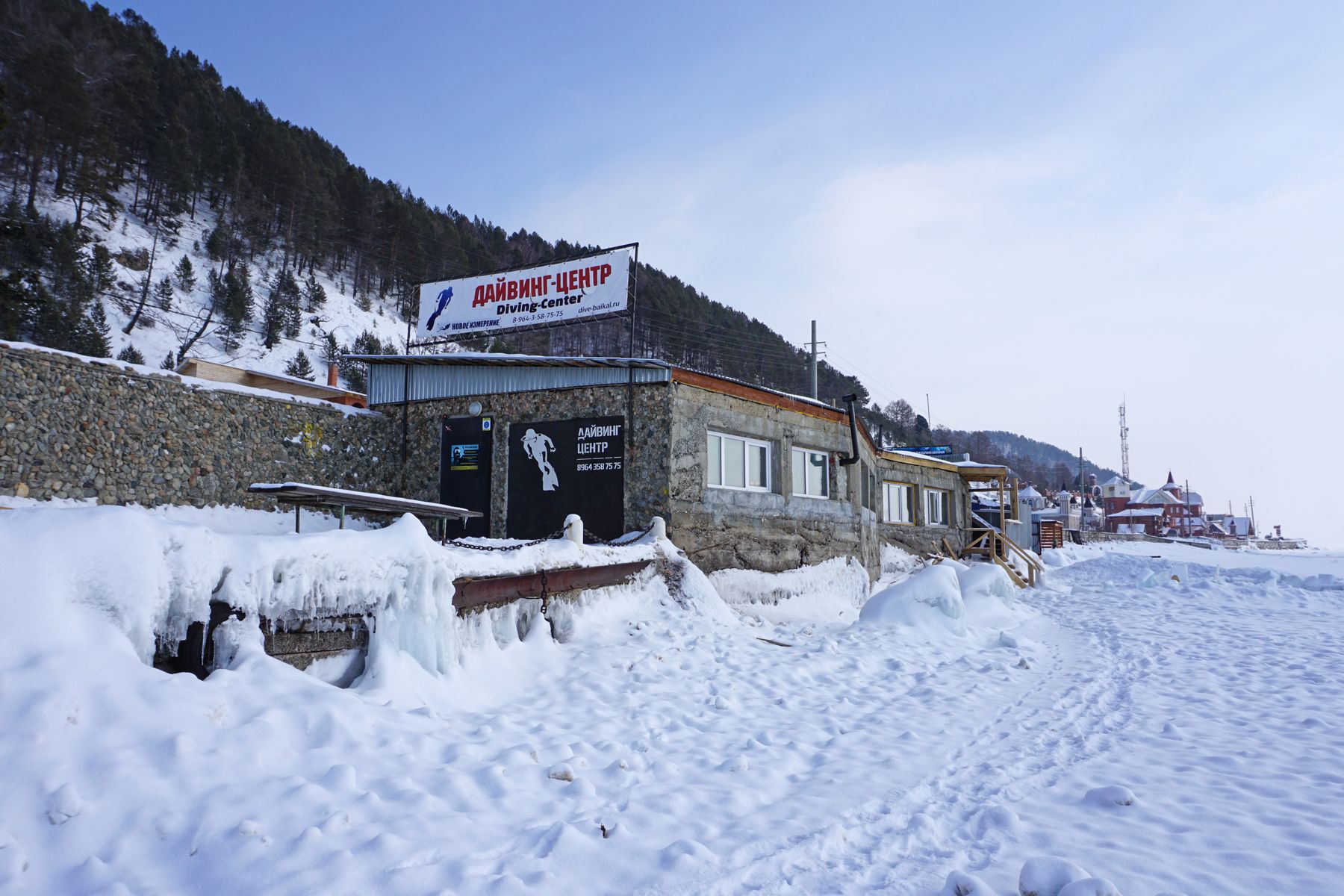
Since I speak Russian, it wasn’t hard to find the best price for an ice dive. The price was 6,000 rubles (about $100) but they gave me a discount (-1000 rub) maybe because I’m a divemaster, or maybe because I’m a “kinda local.”
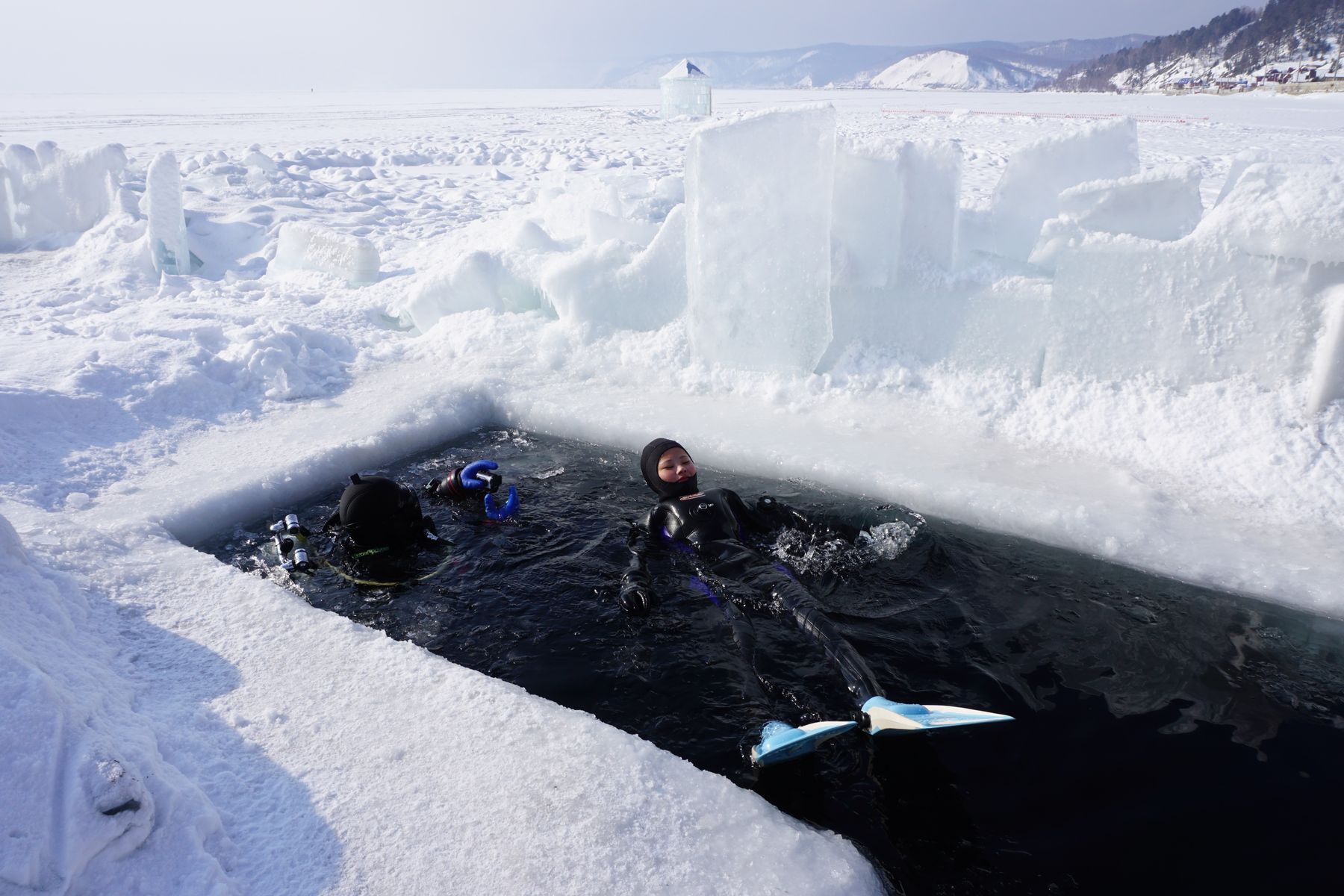
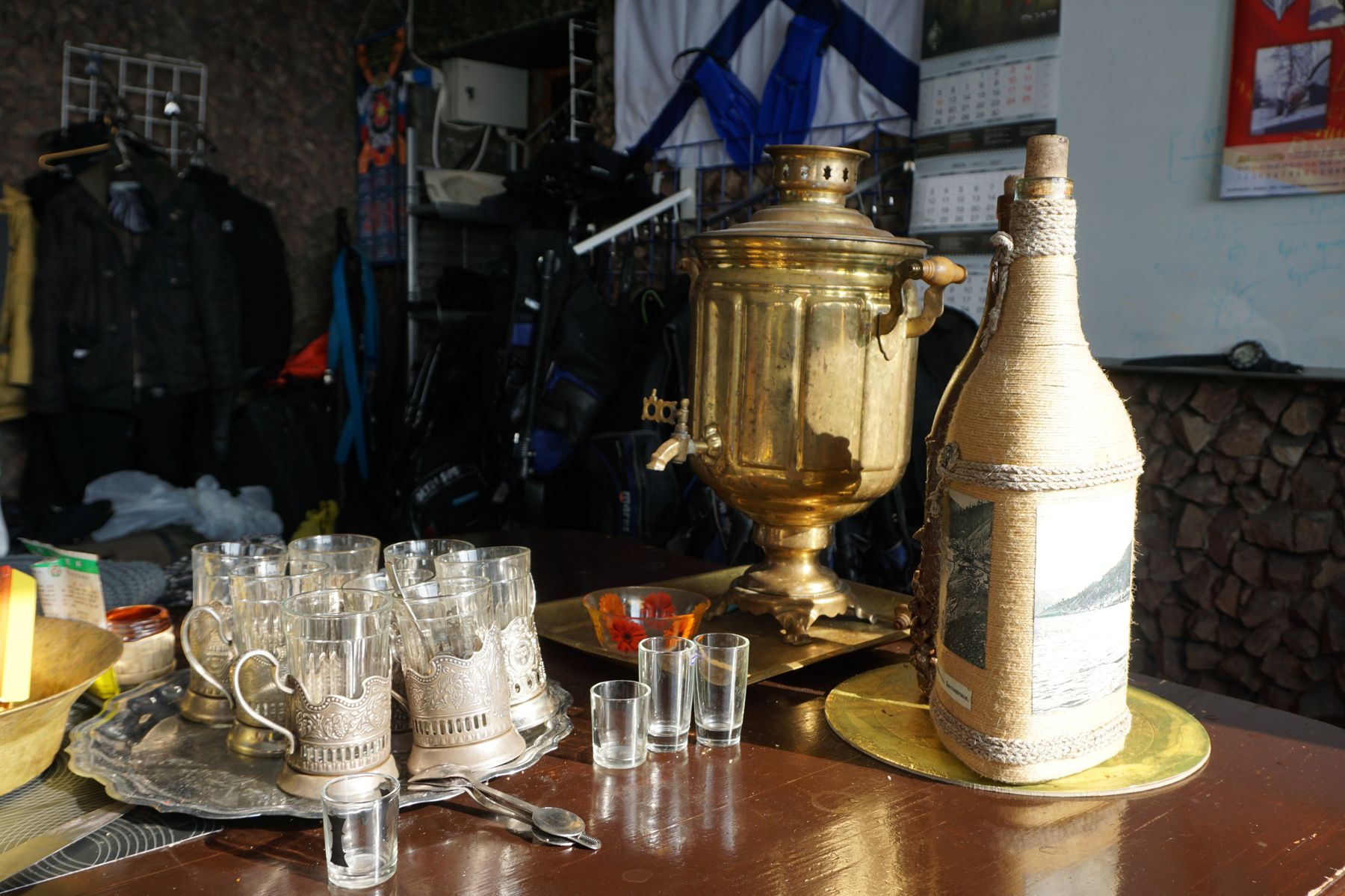
Discount, shot of vodka, and a ride back to the city with the instructors. Great to be a “local” everywhere you go :).

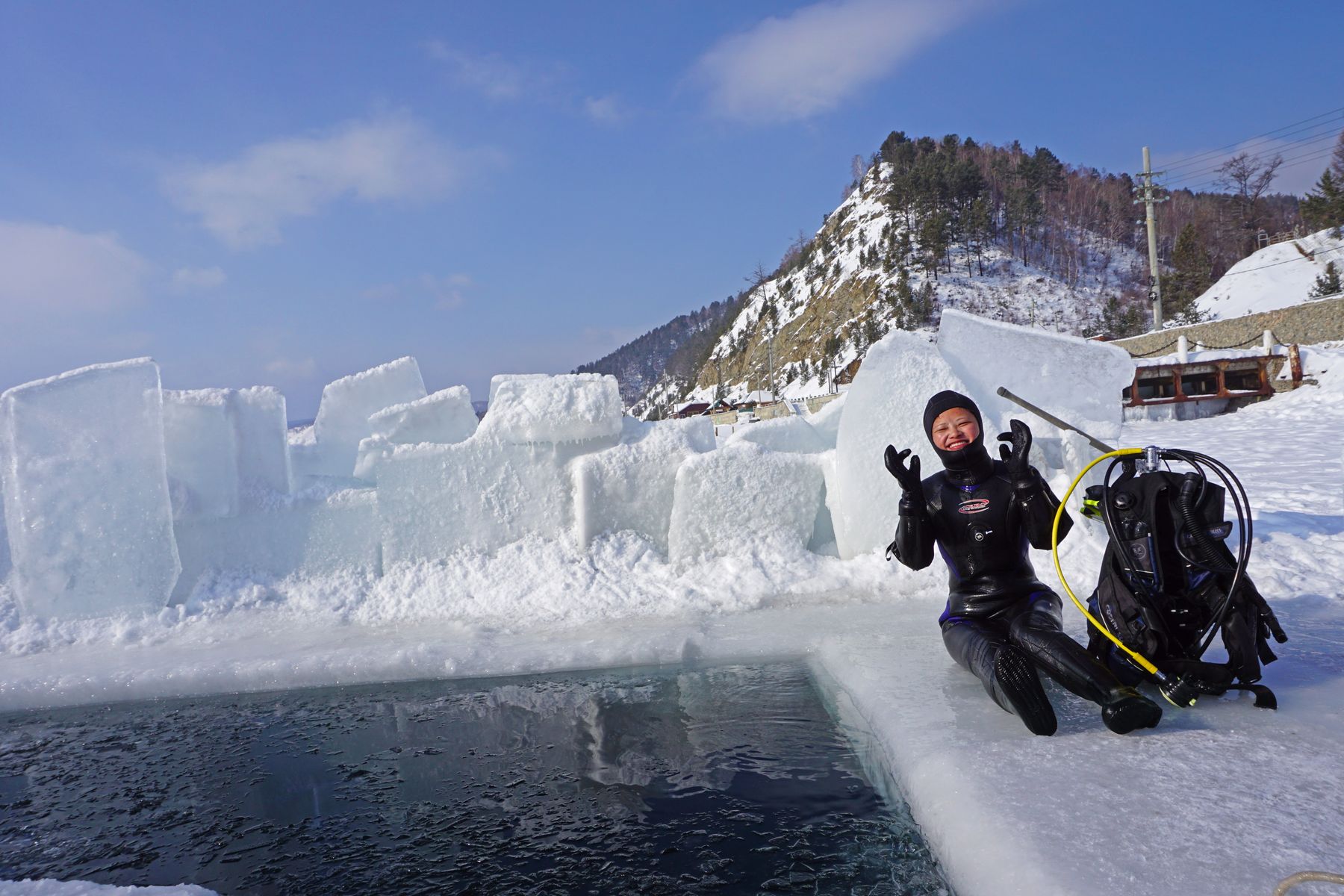
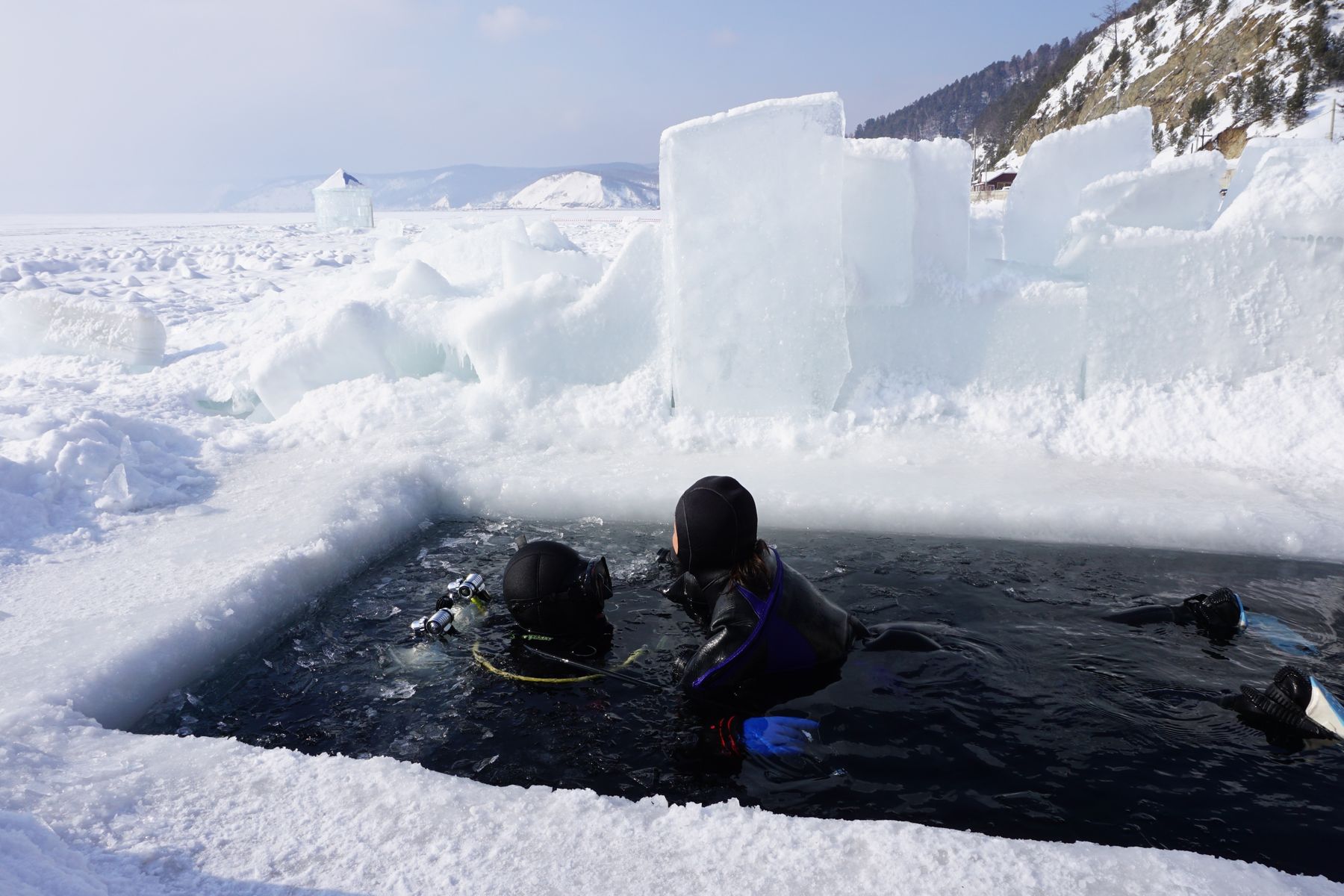
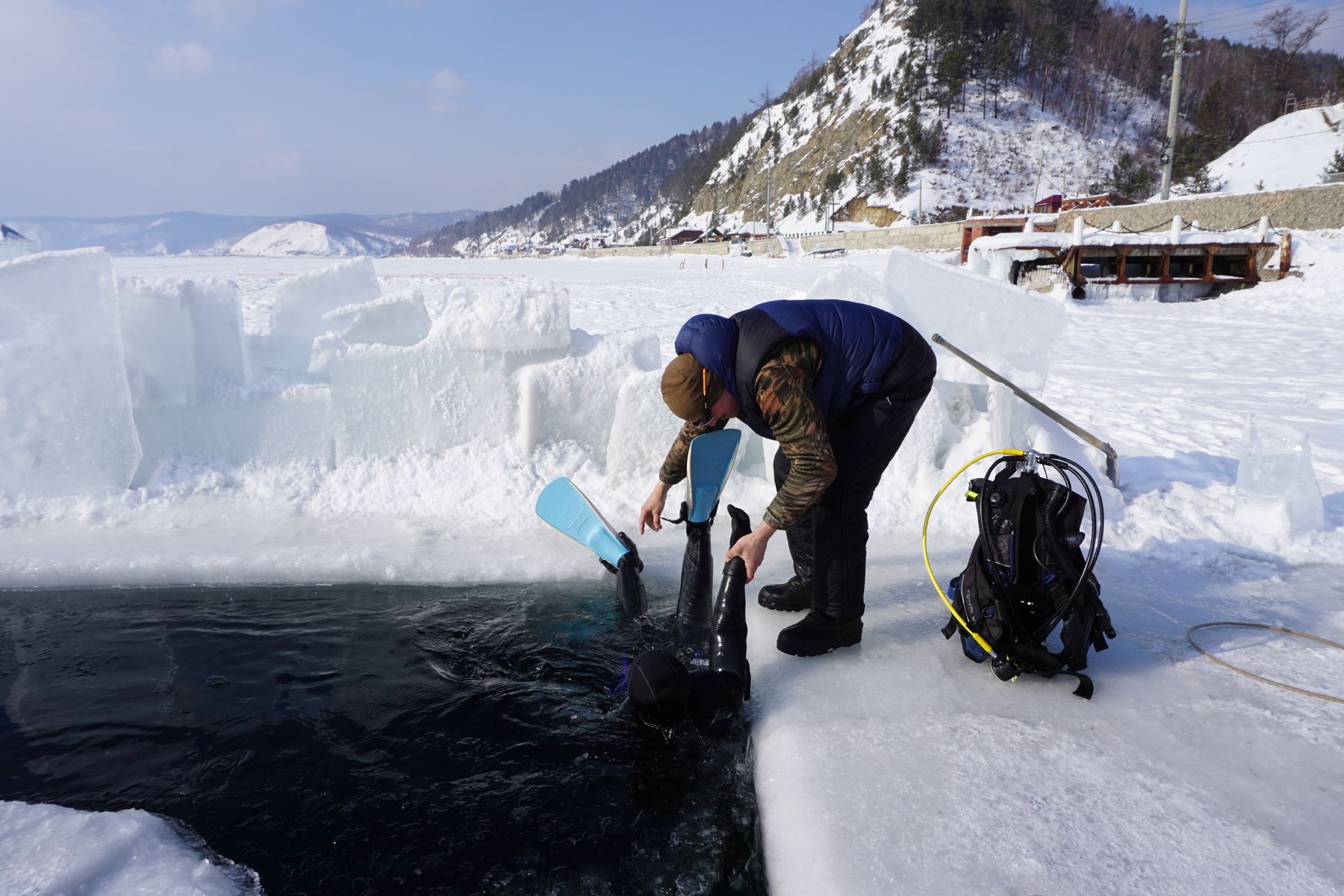
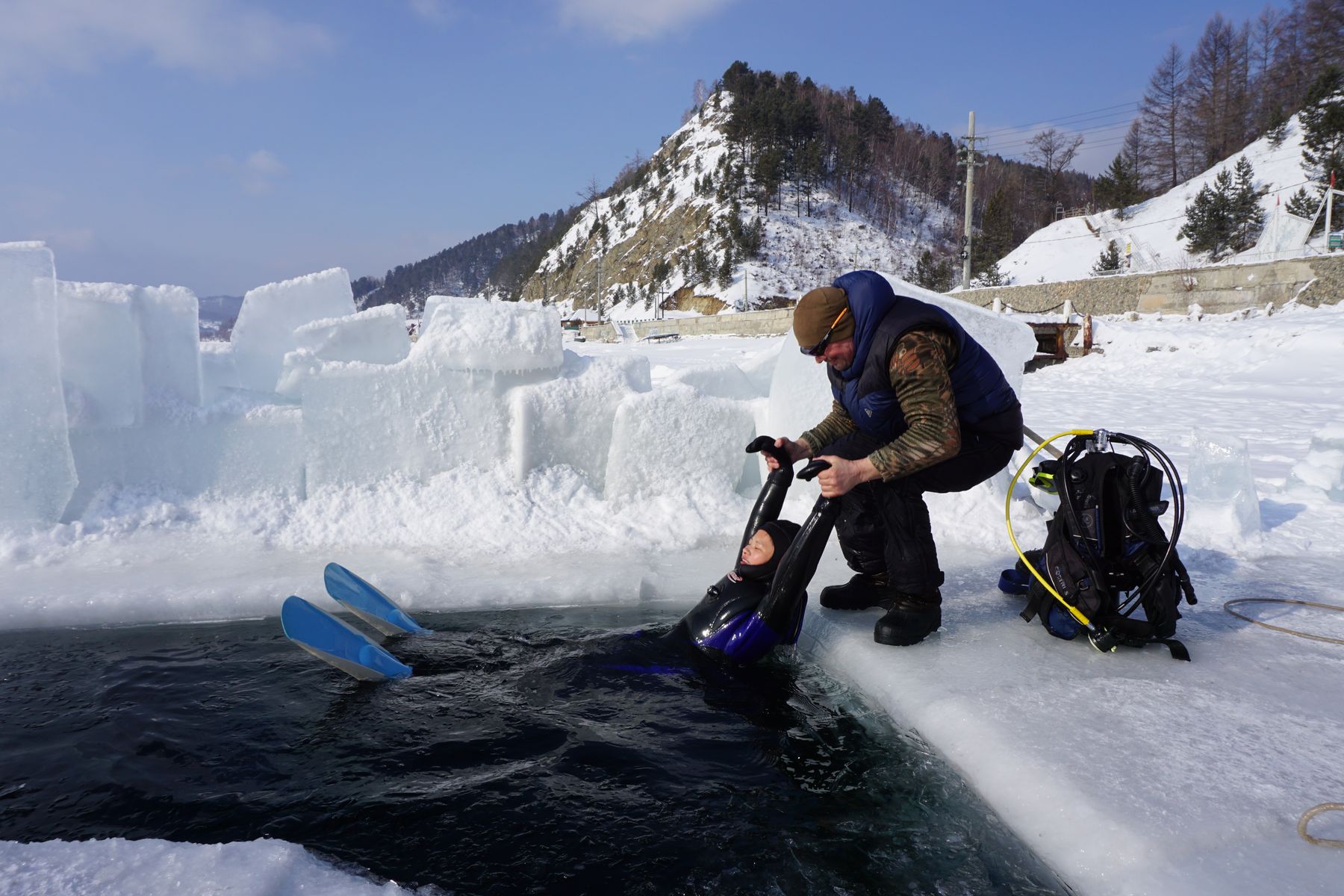
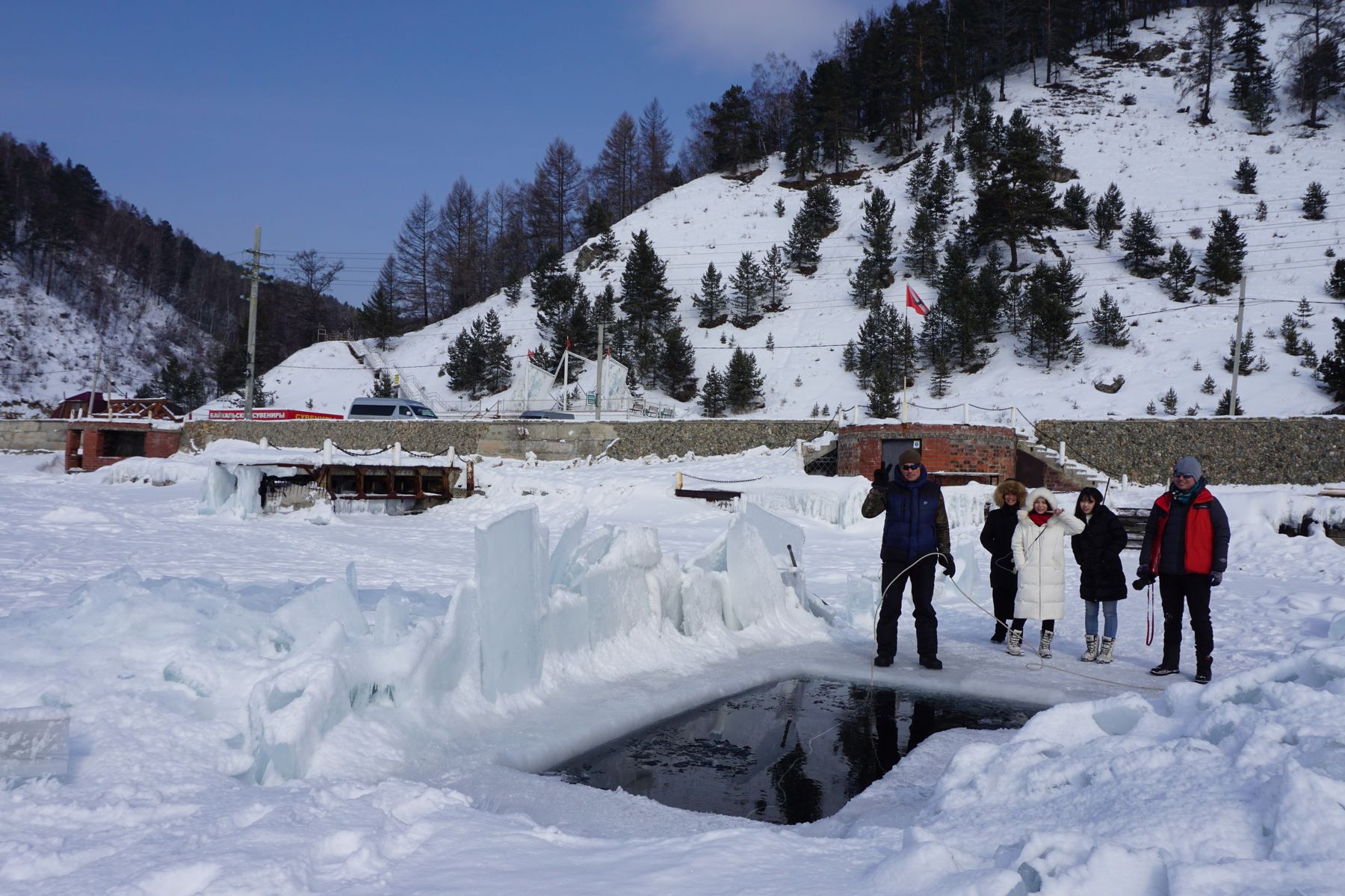
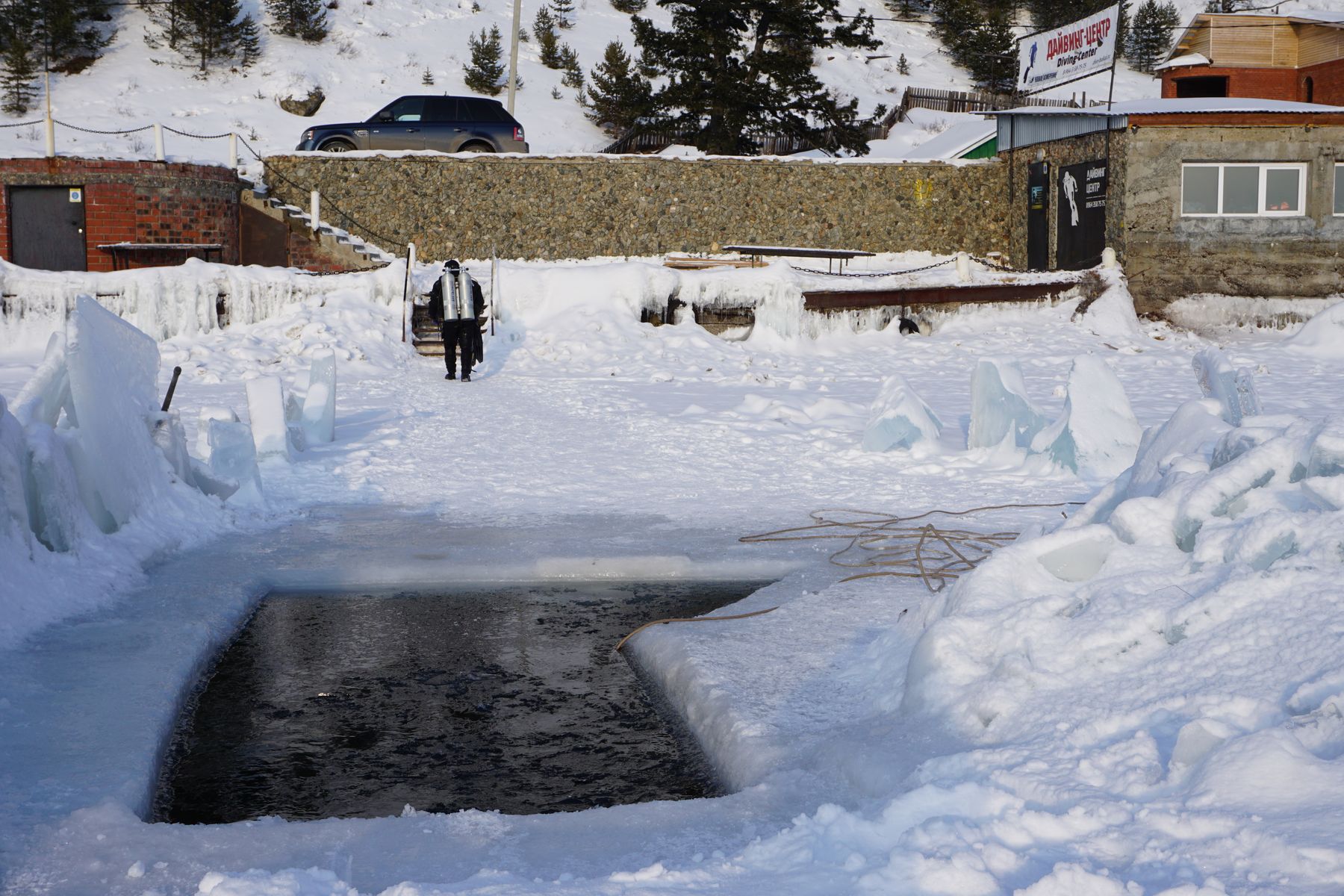
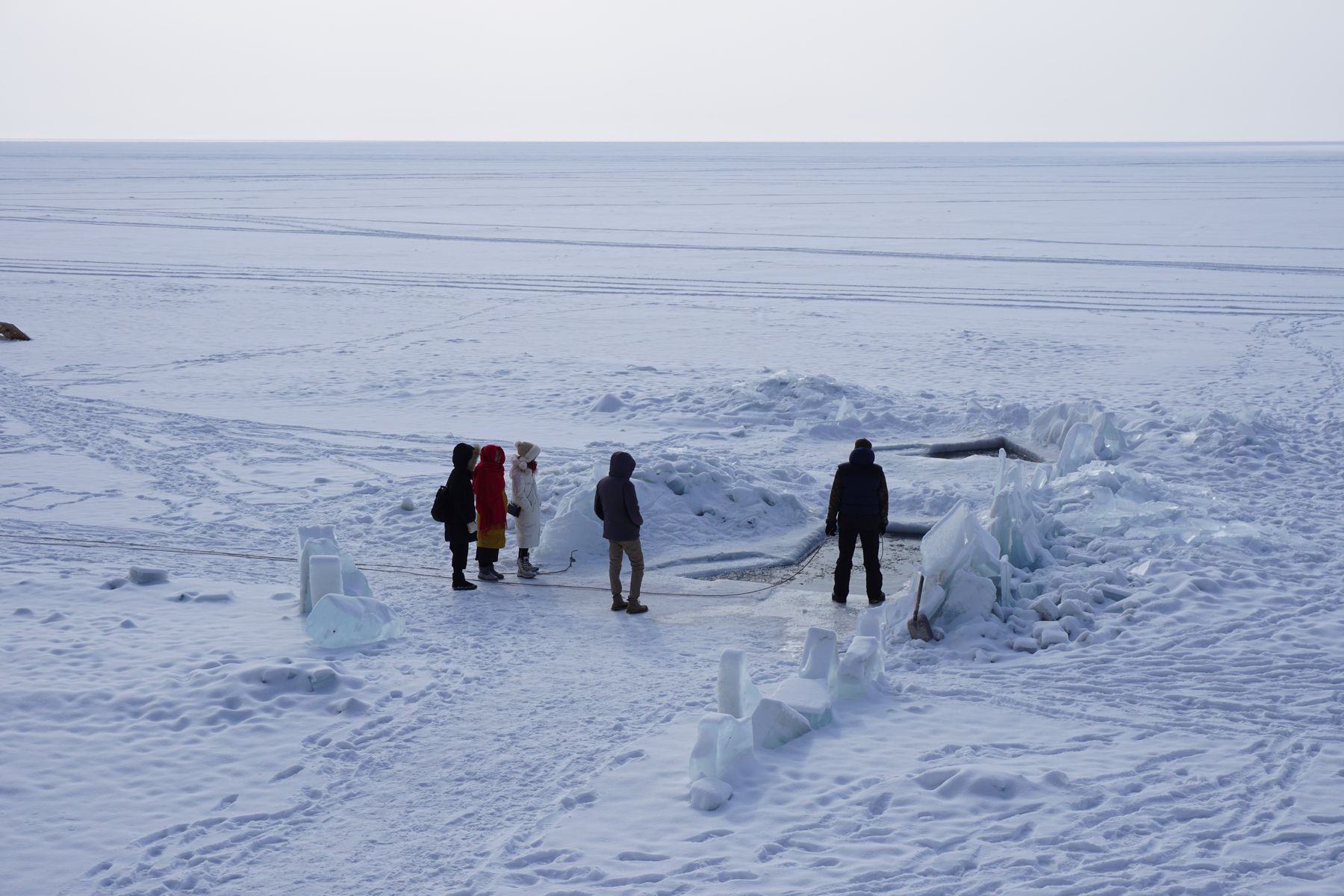
I arrived 40 minutes late because I am… small Sasha… so I had to wait for 3 Chinese people to do intro dives. I had no idea that that could even be a “thing”… diving for your first time ever, under ice! Not sure how many international dive rules that breaks but the Chinese tourists sure were stoked about it. The intro-divers basically just circled around the ice hole one-on-one with an instructor for 10-15 minutes and then were dragged out and forced to drink vodka.

Love mother Russia.

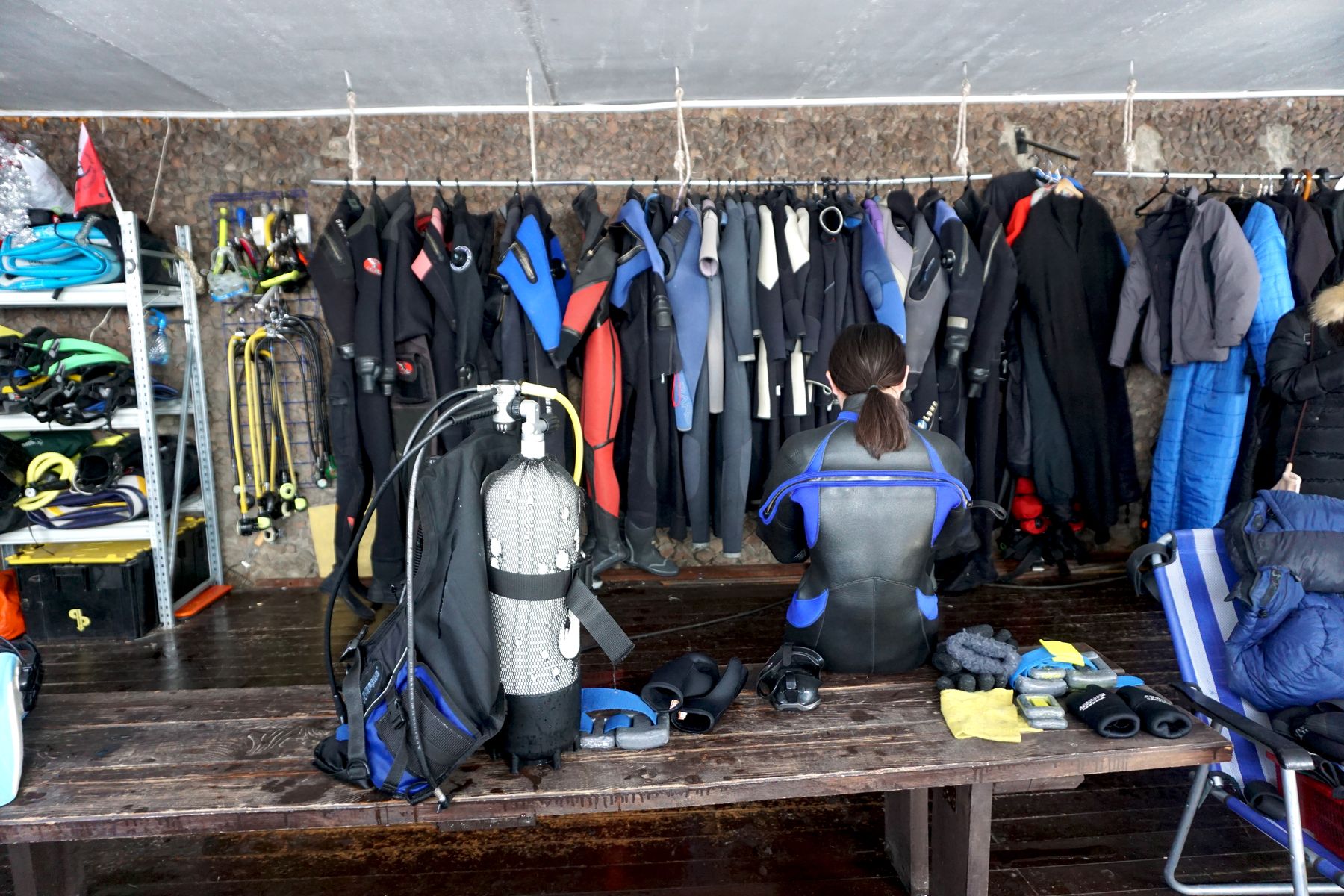
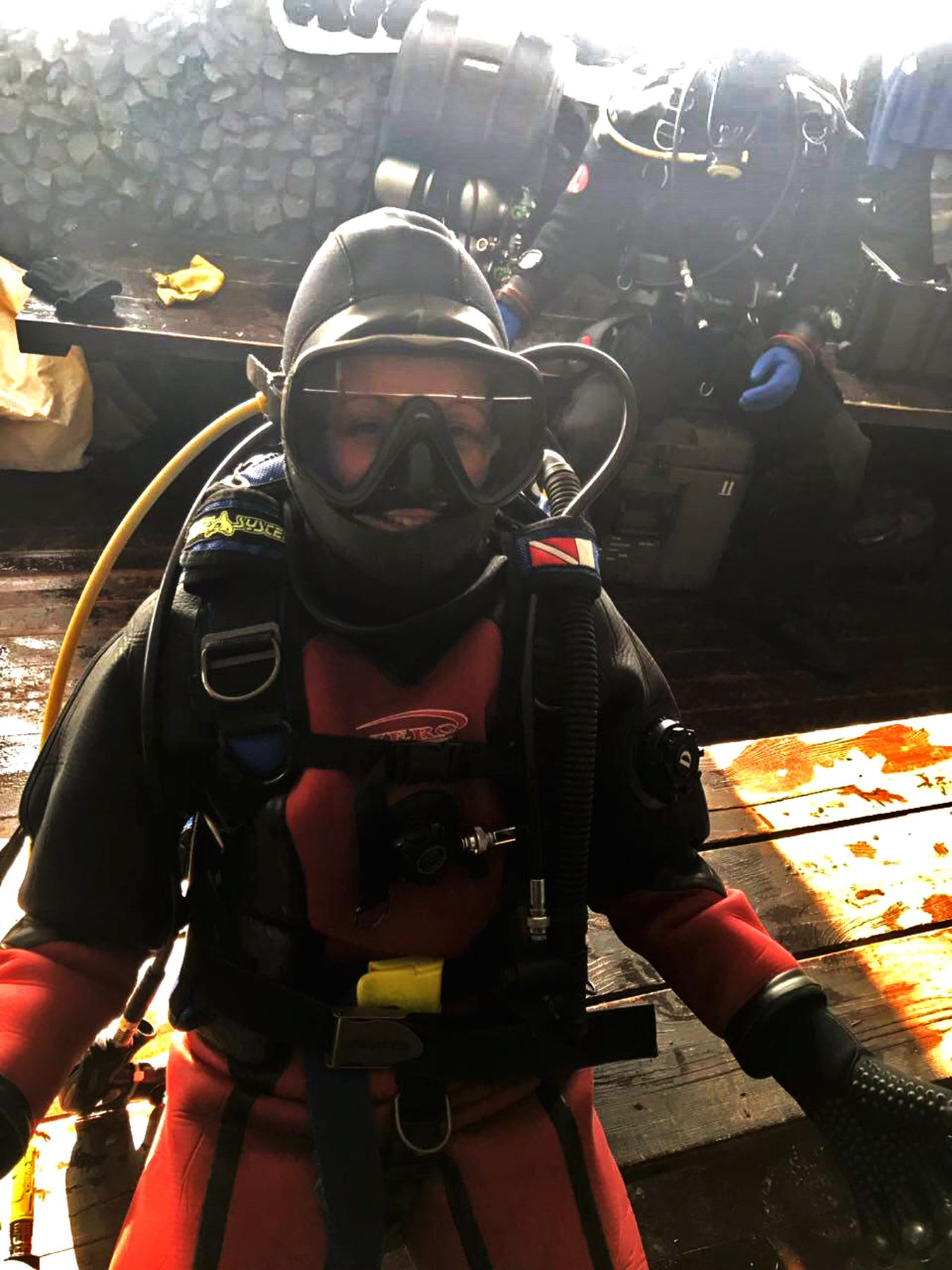
I set up my equipment and tested the gear. The alternate air source (2nd breathing tube in case your primary one fails) didn’t work properly. I told them and they just said, “you don’t need that one, don’t you know that?” :D Then they said something about the regulators malfunctioning in cold conditions.

I thought, “Geeze, lucky I went through some pretty intense training back on Gili T when I did my divemaster internship, hopefully I can remember everything under ice.”

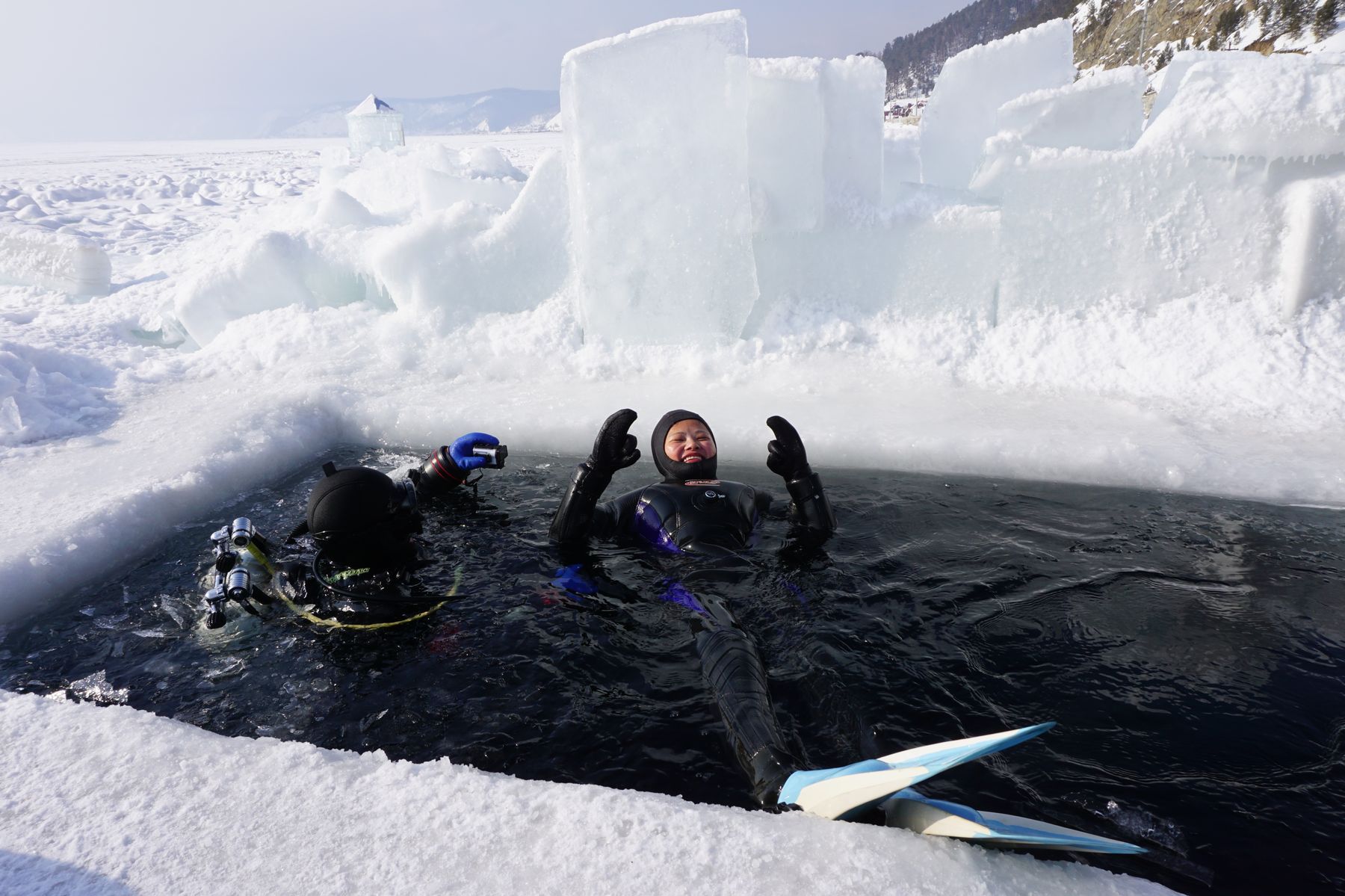
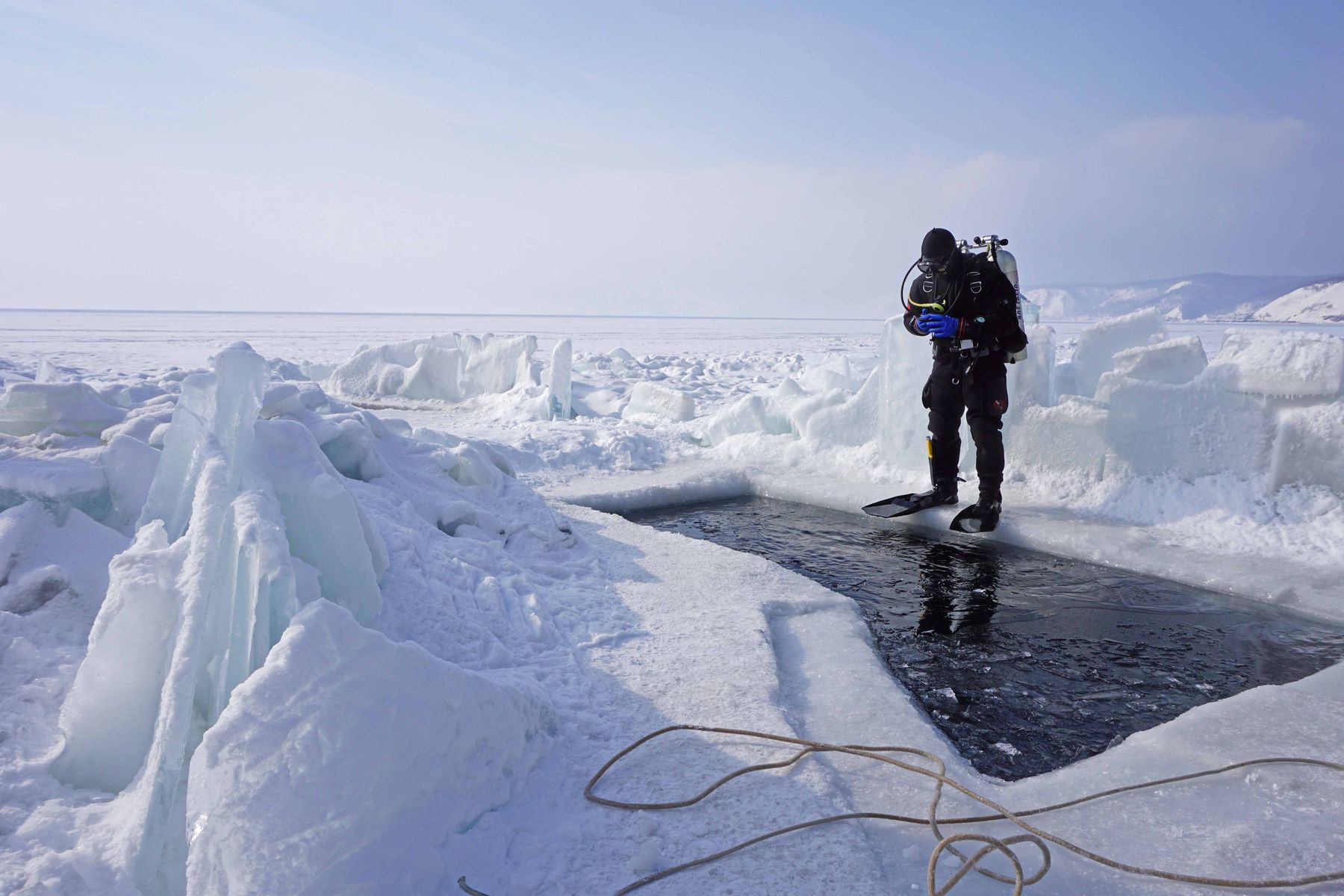
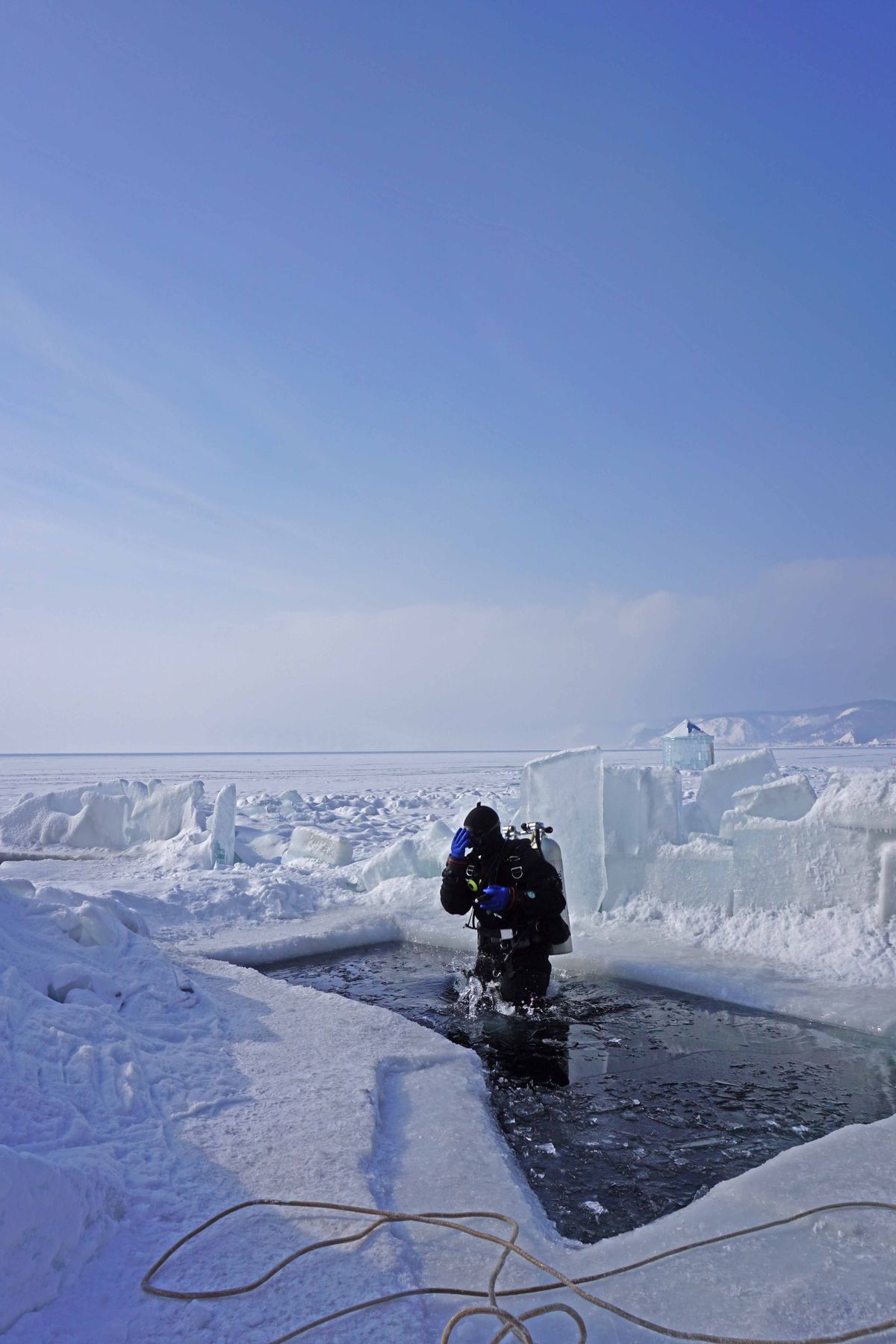
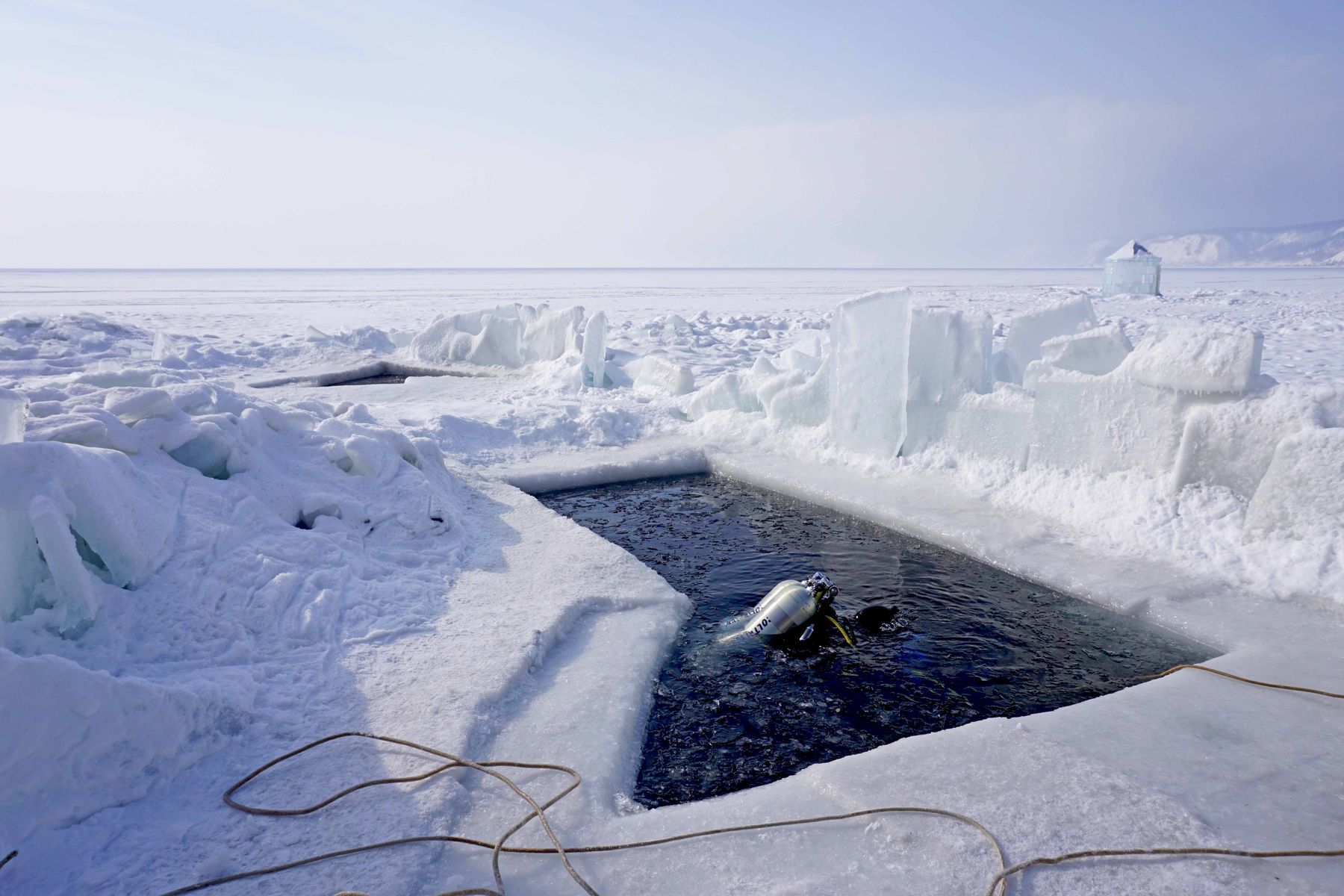
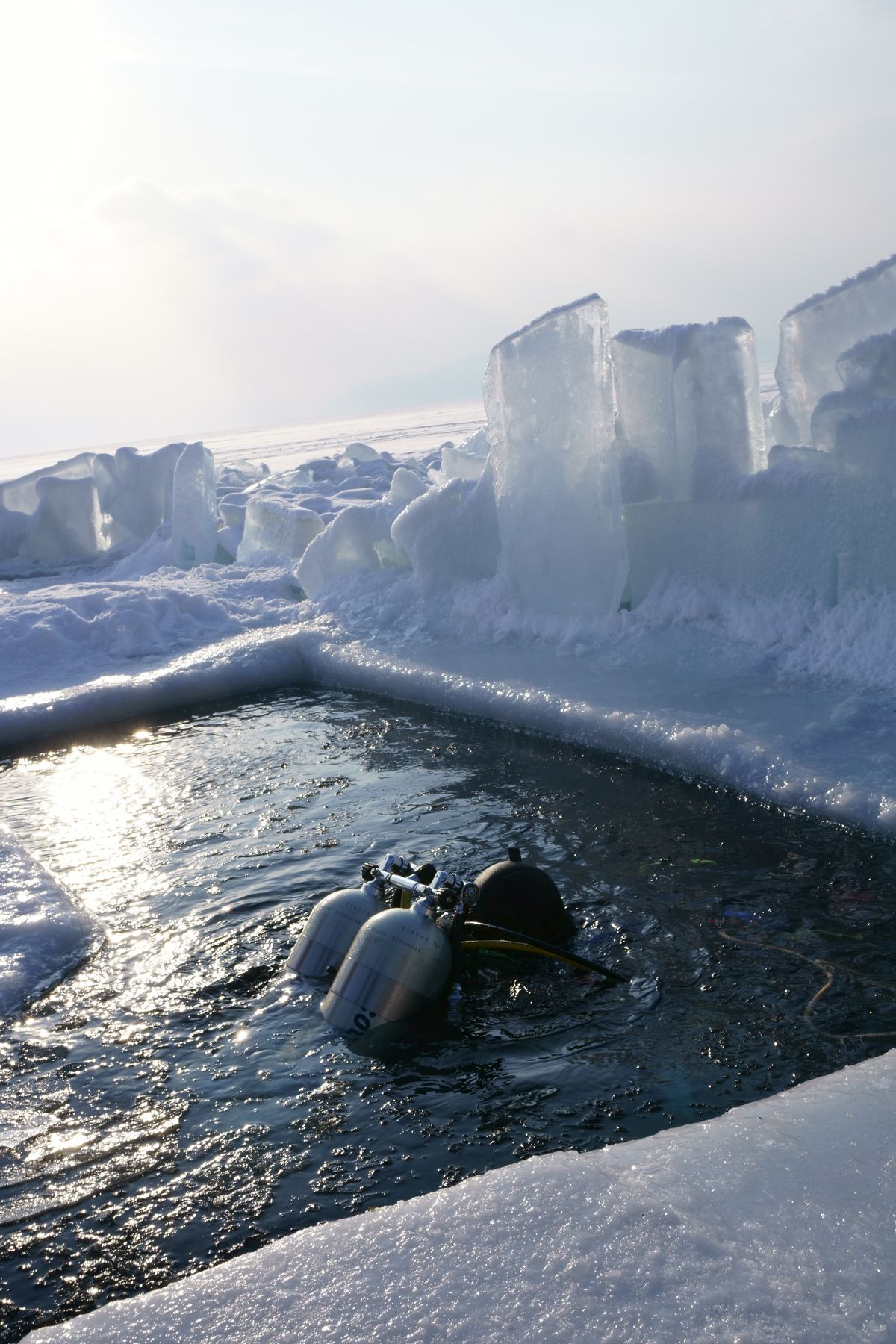
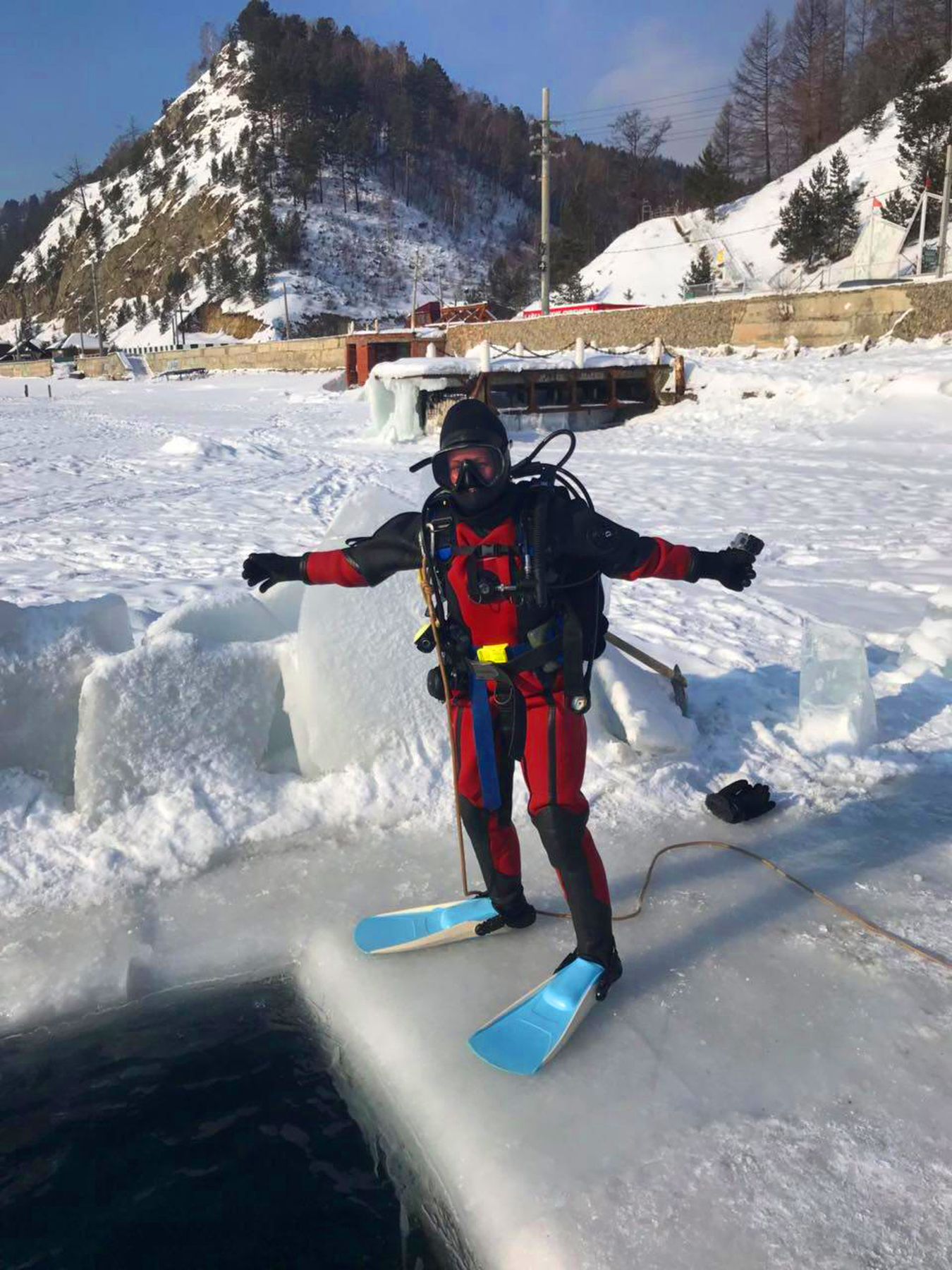
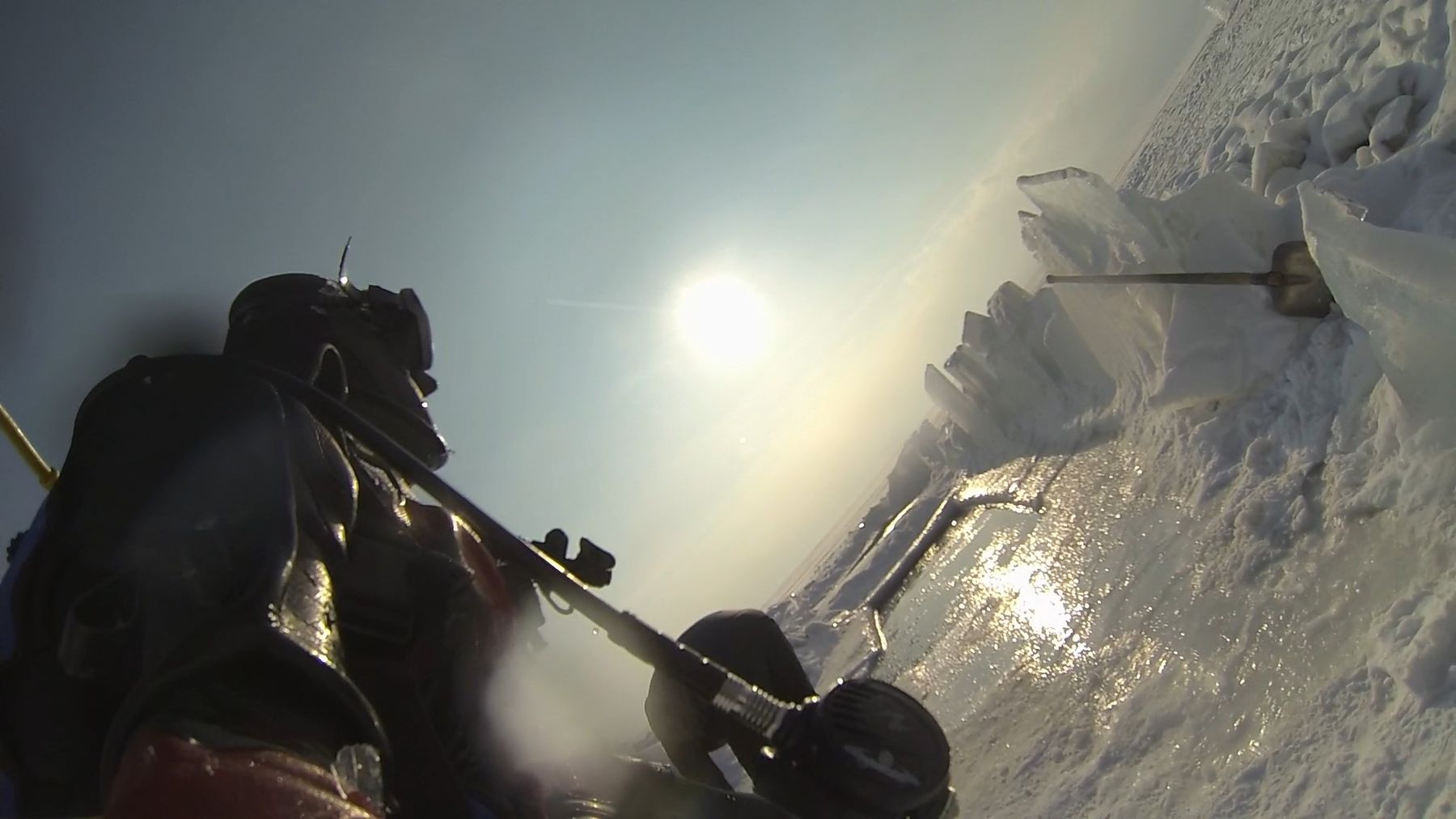
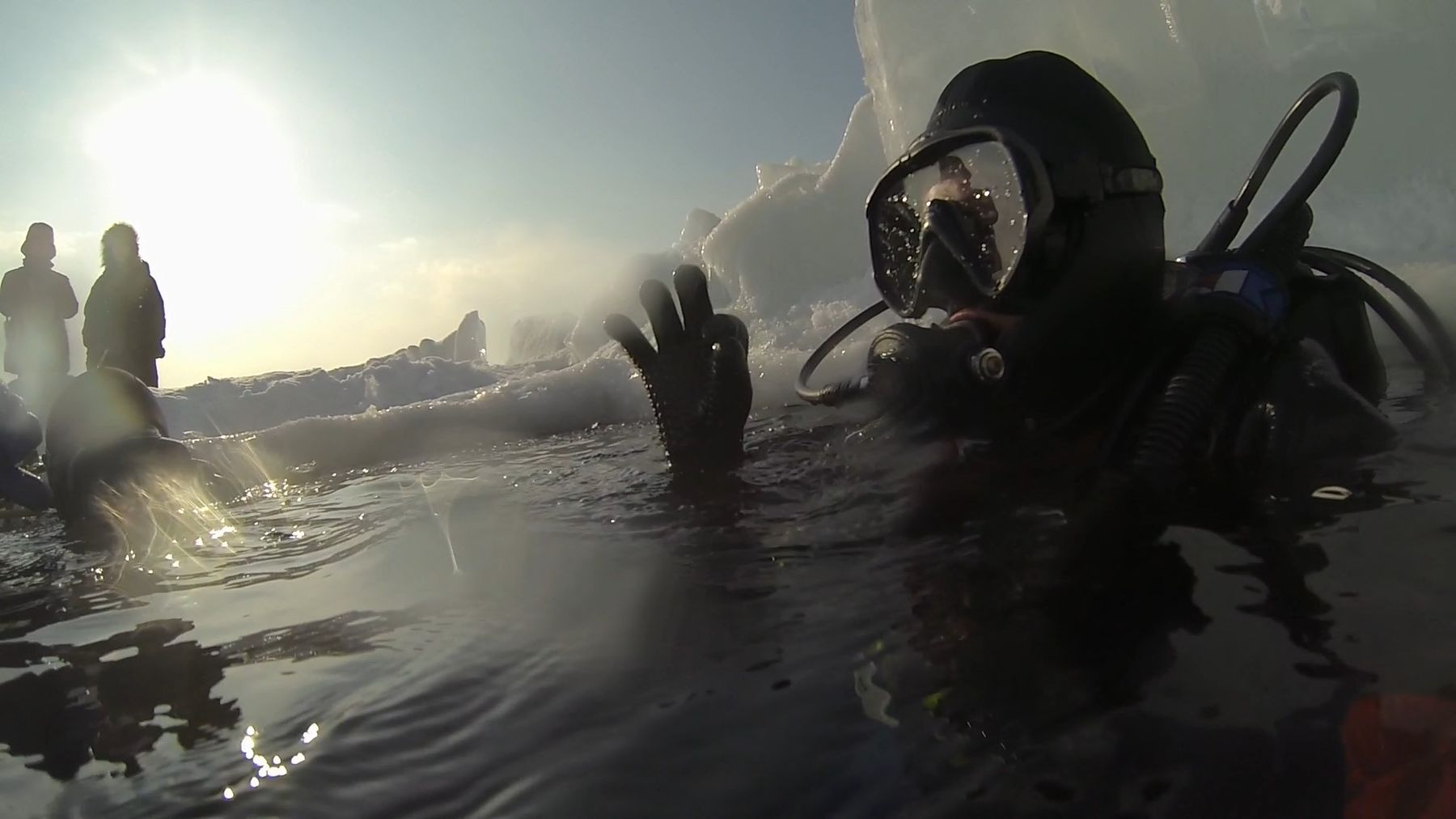
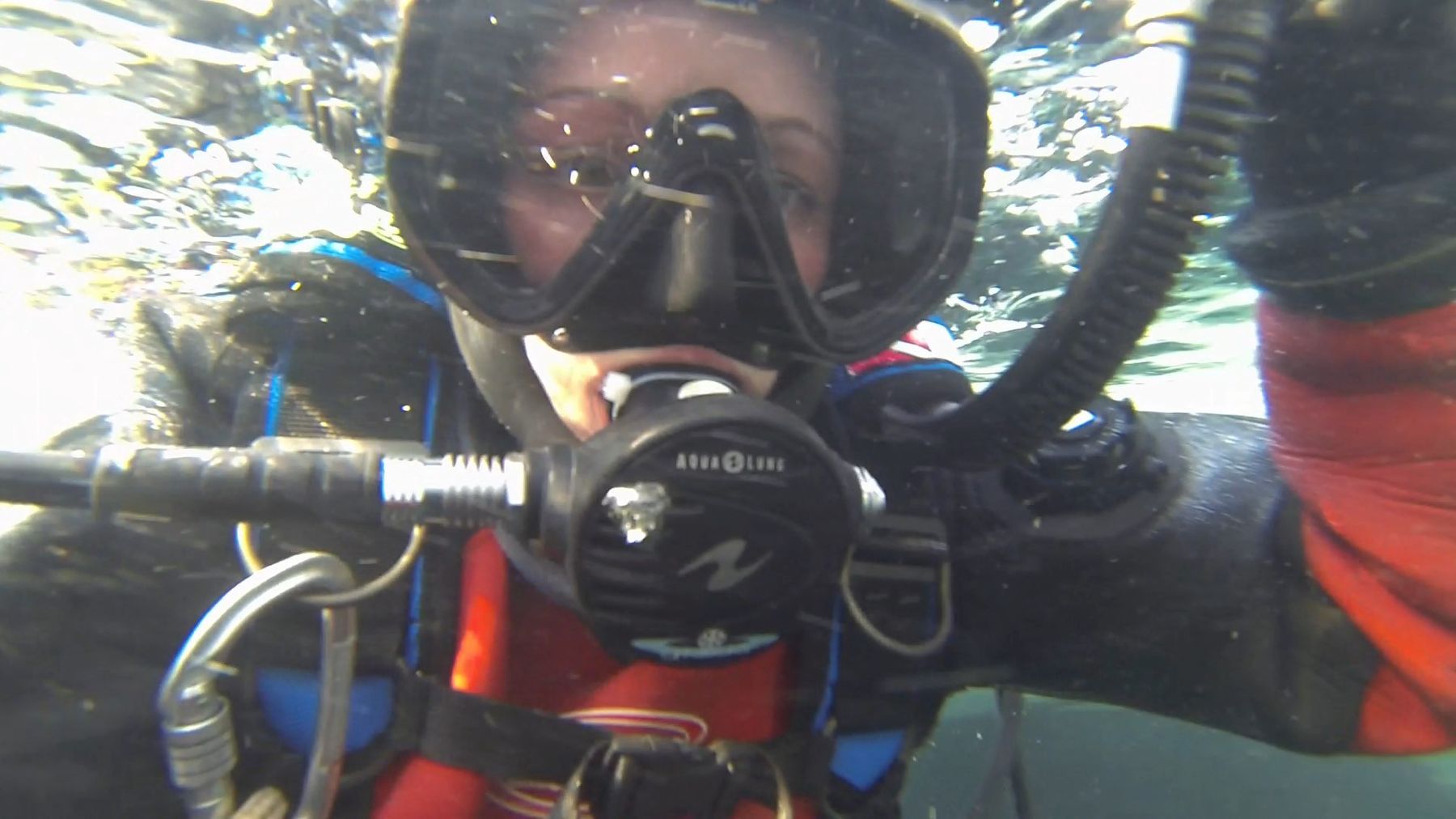
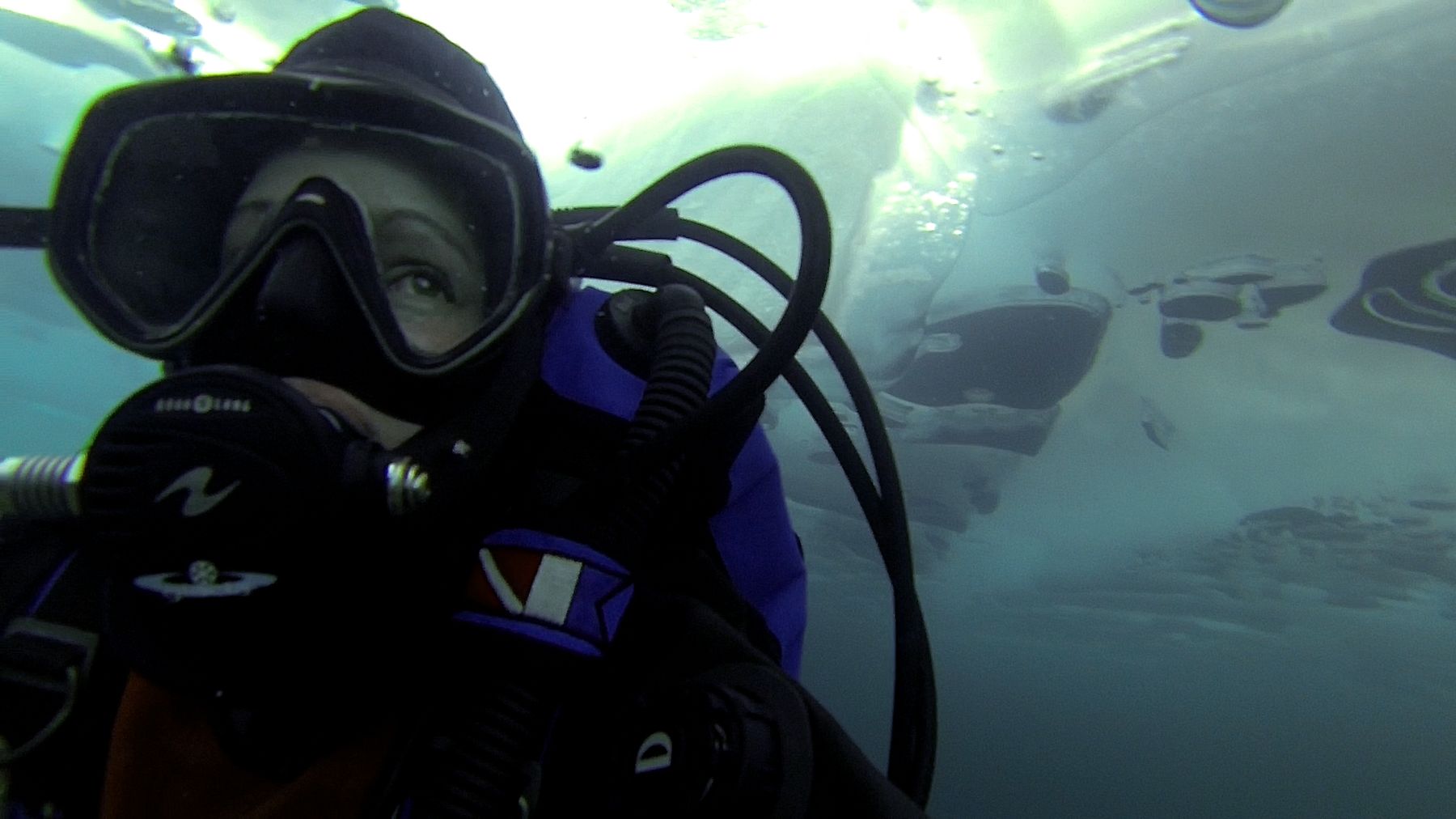
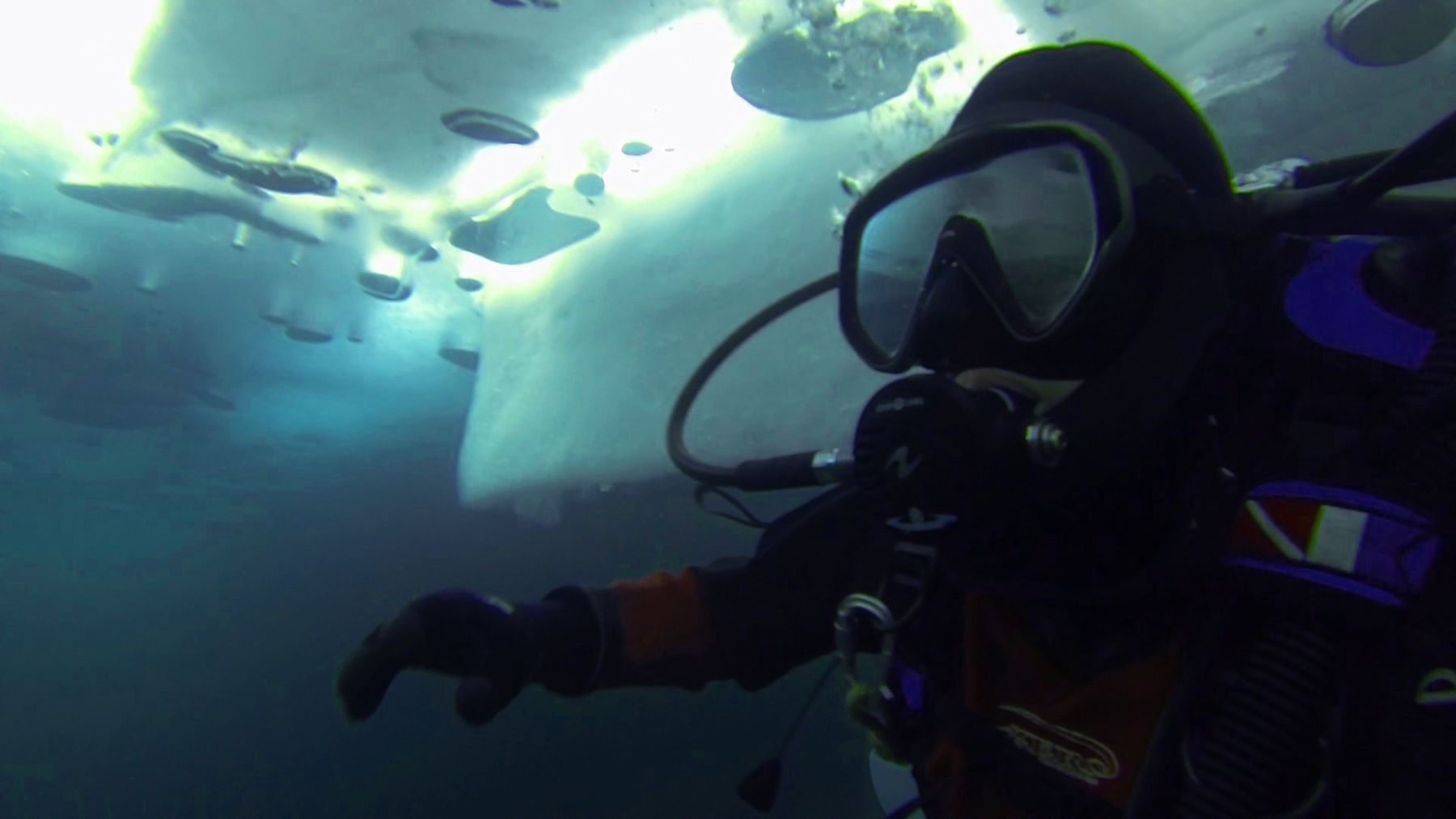
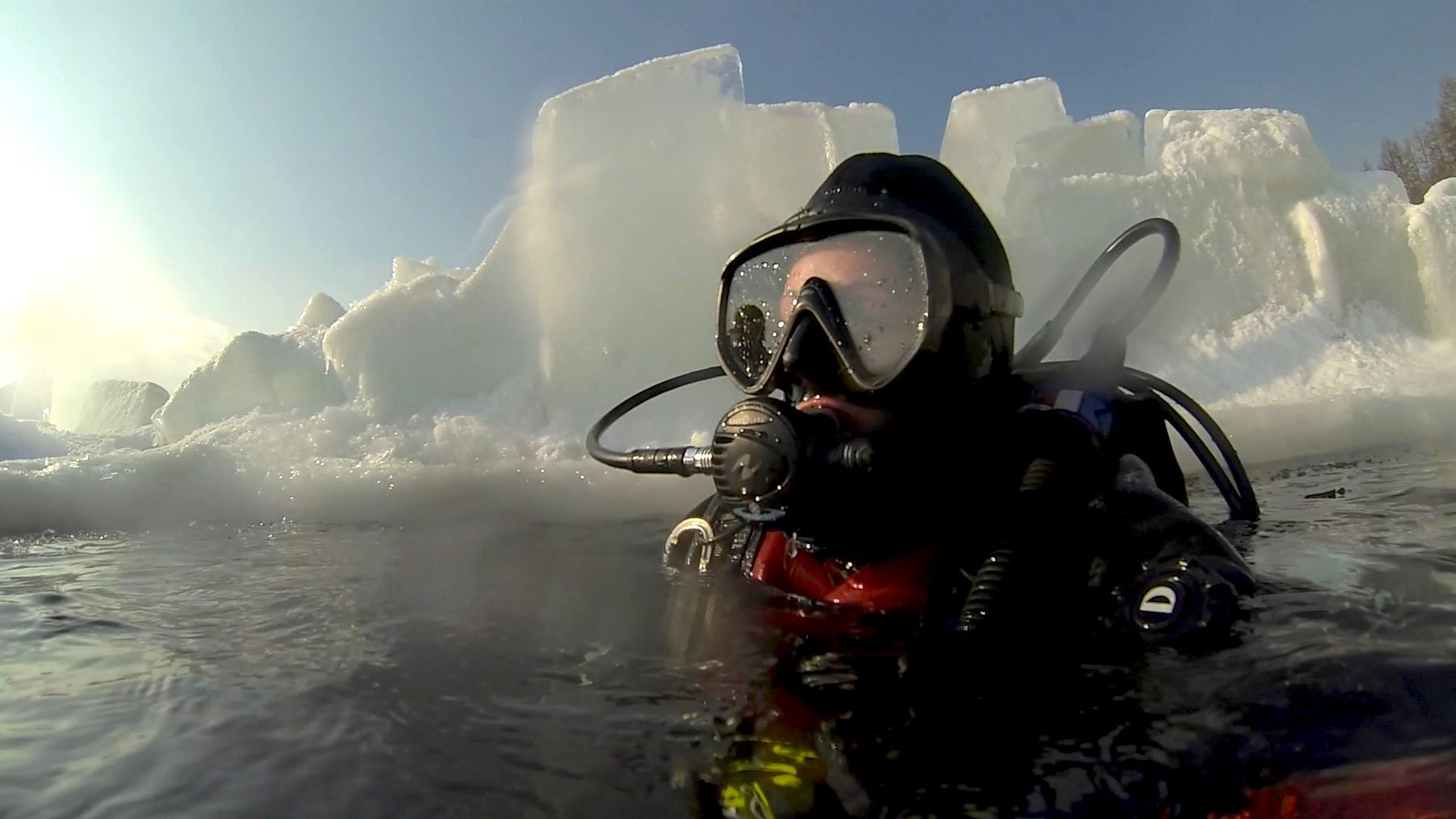
The water temperature was 0.8°C, air temp was -13°C. Dry suit held up well this time. Last time I dove with these guys in October it leaked and I was freezing, although the water was 4°. This time my dive mask leaked a little because I was smiling too much, but I was too excited to feel the cold water swishing around my head and leaking into my ears. Regretting that a bit right now. Strong advice: don’t smile while ice diving!  :D

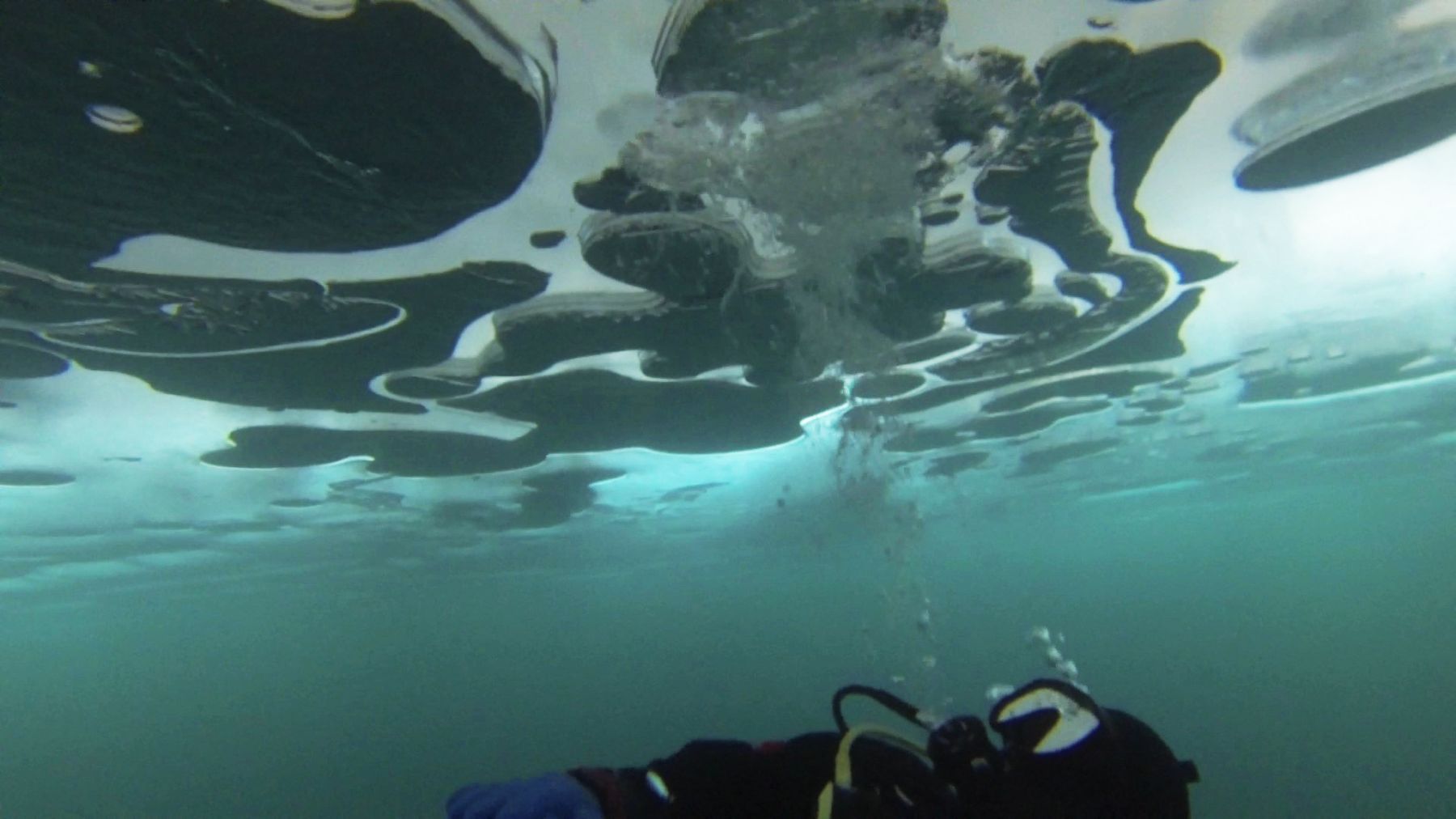
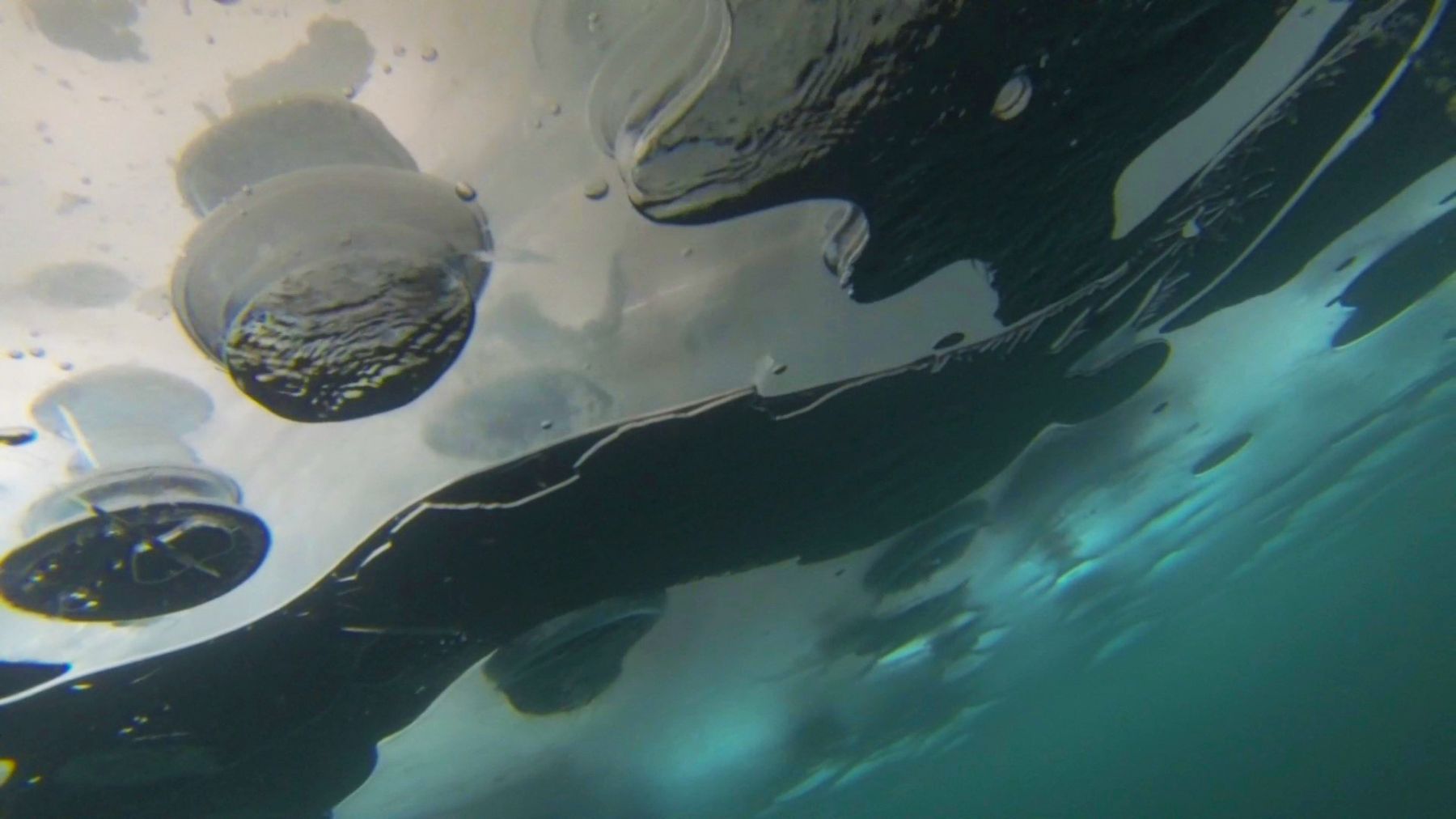
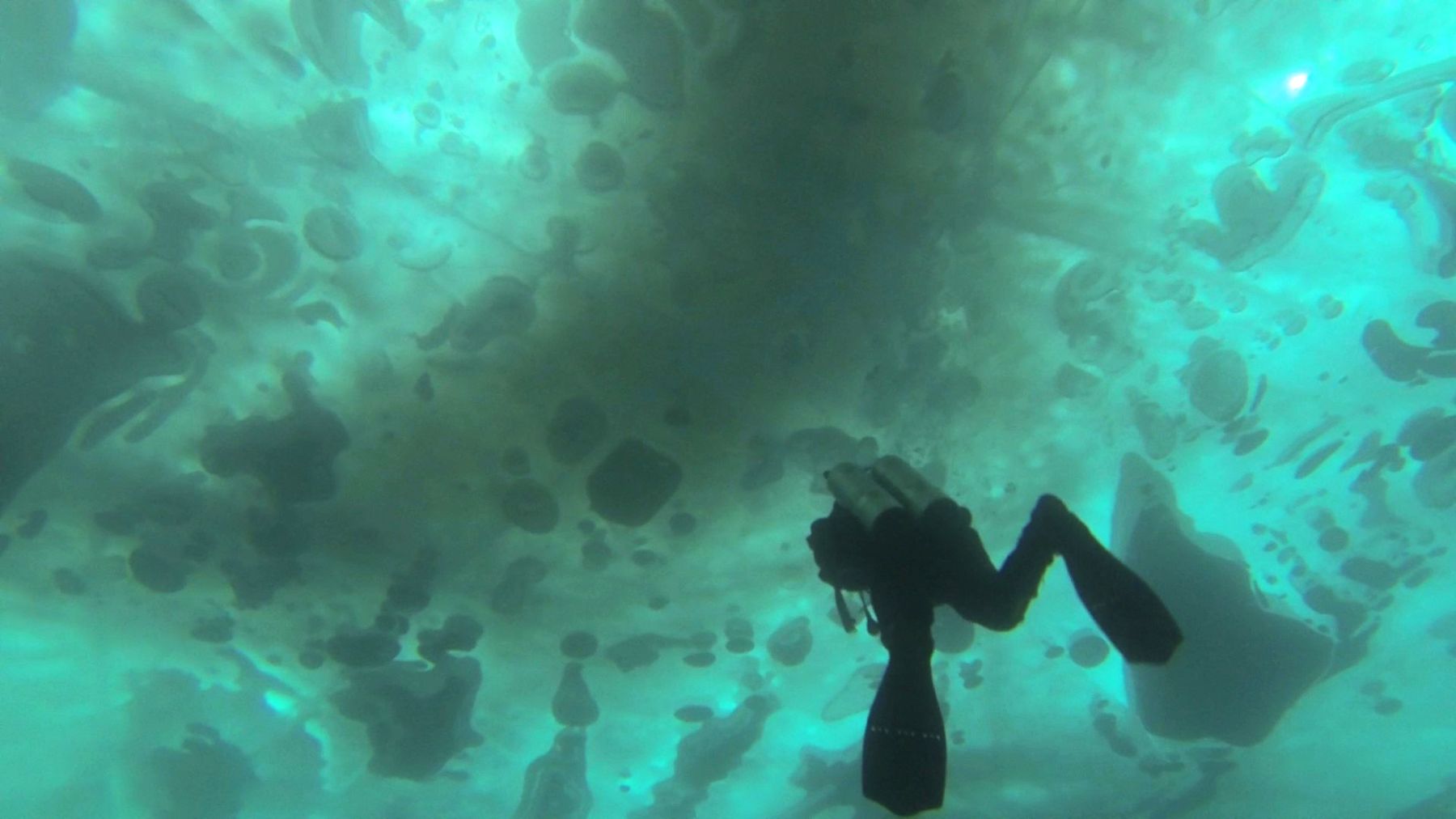
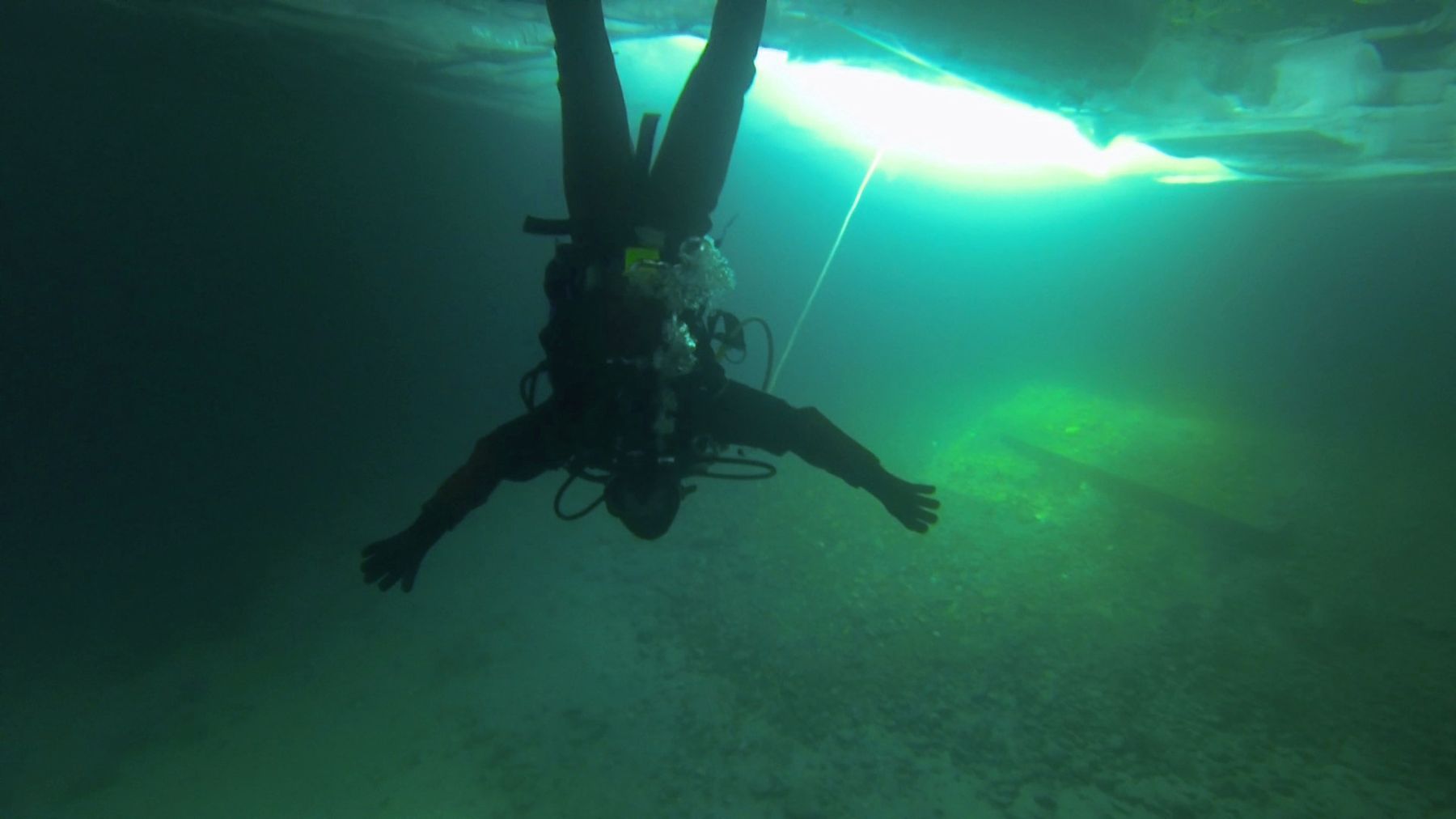
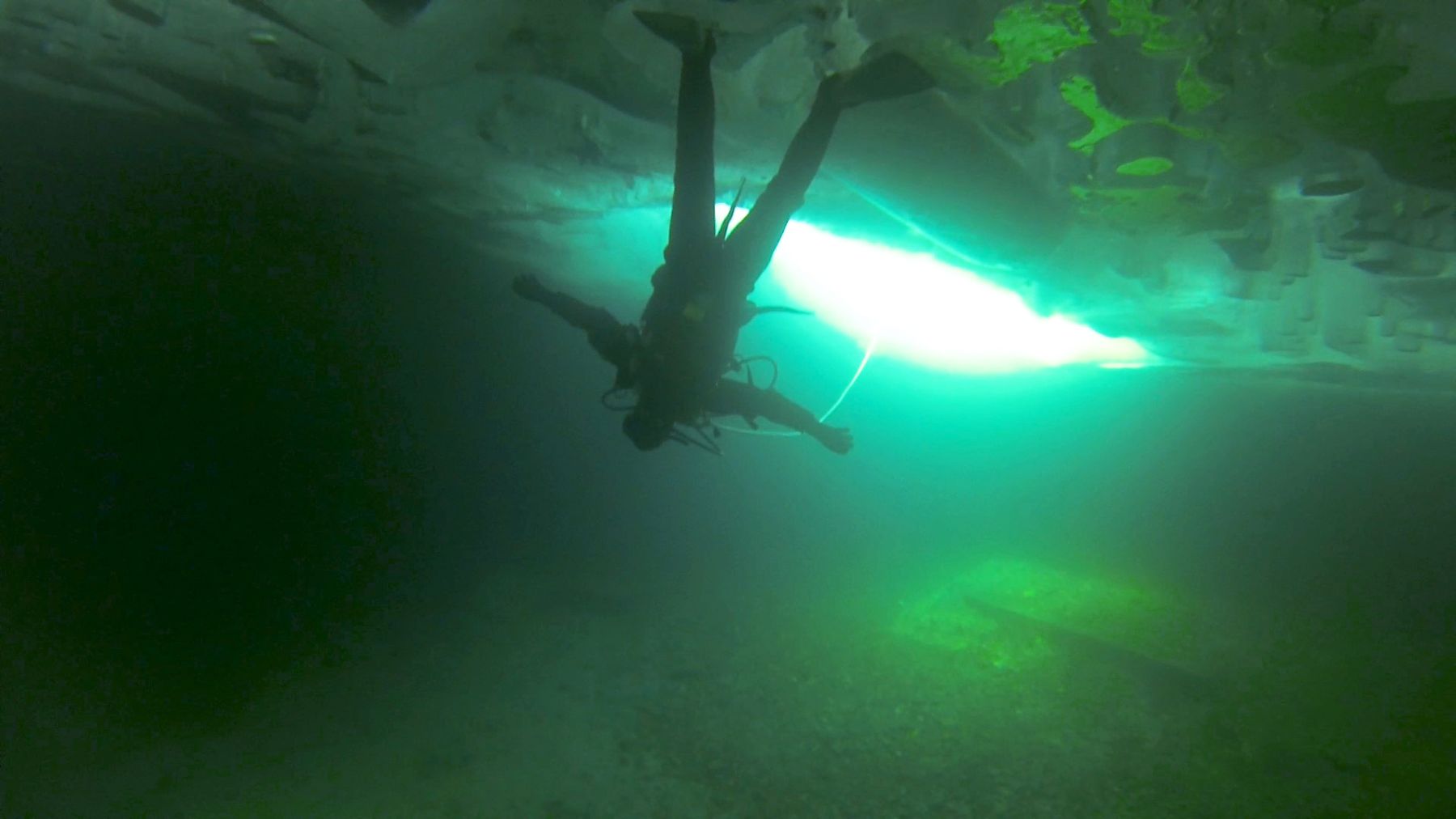
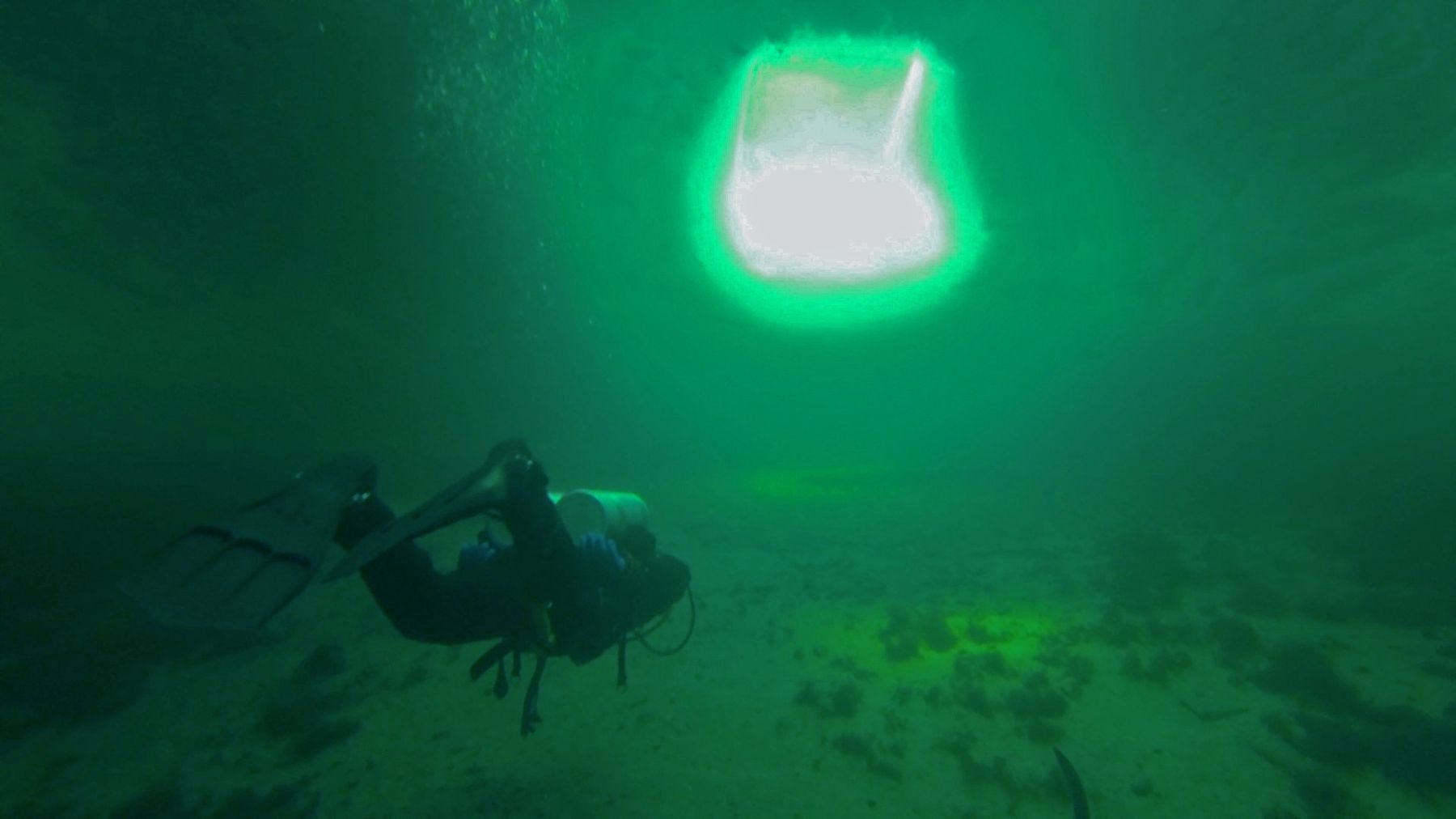
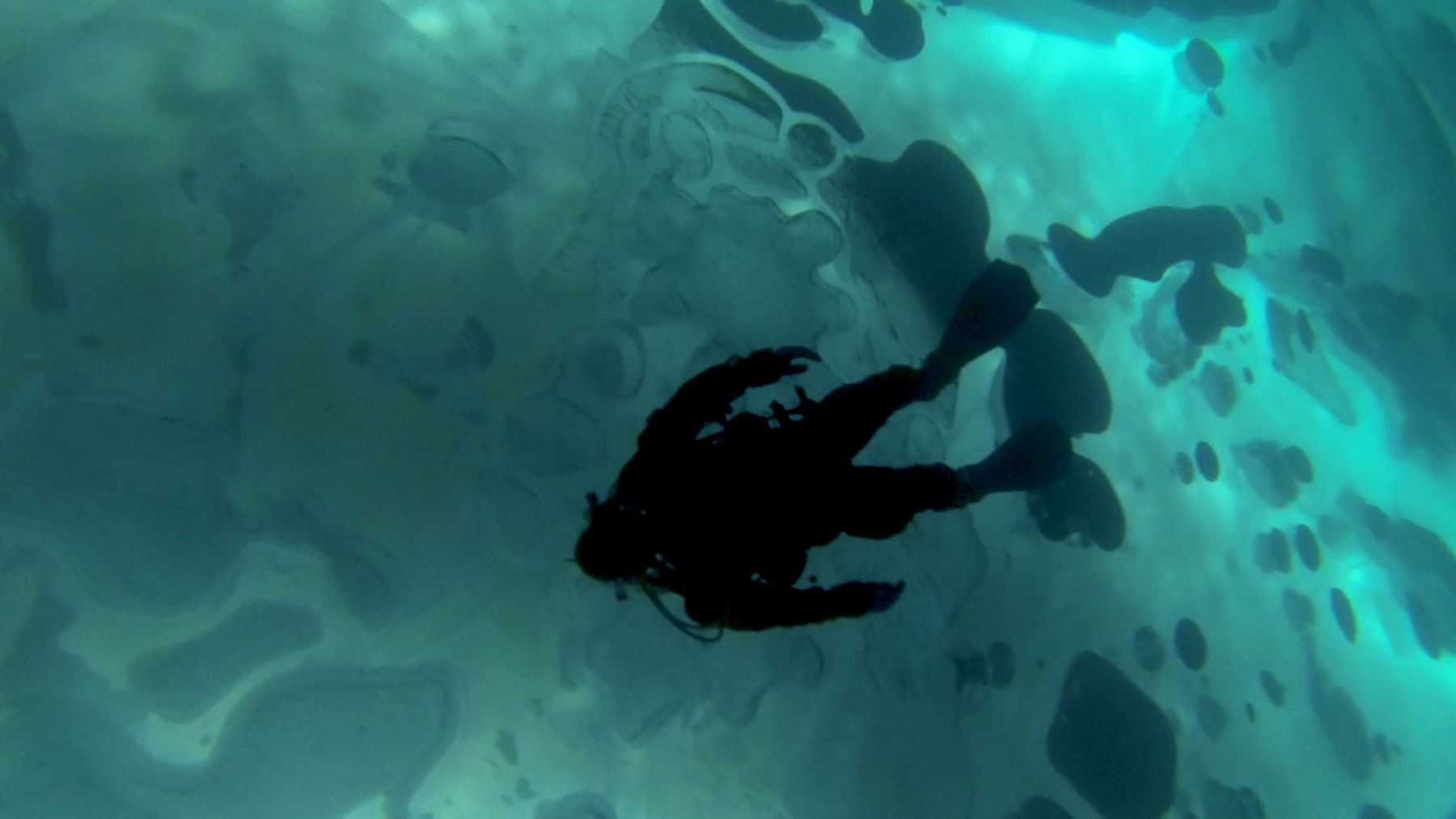
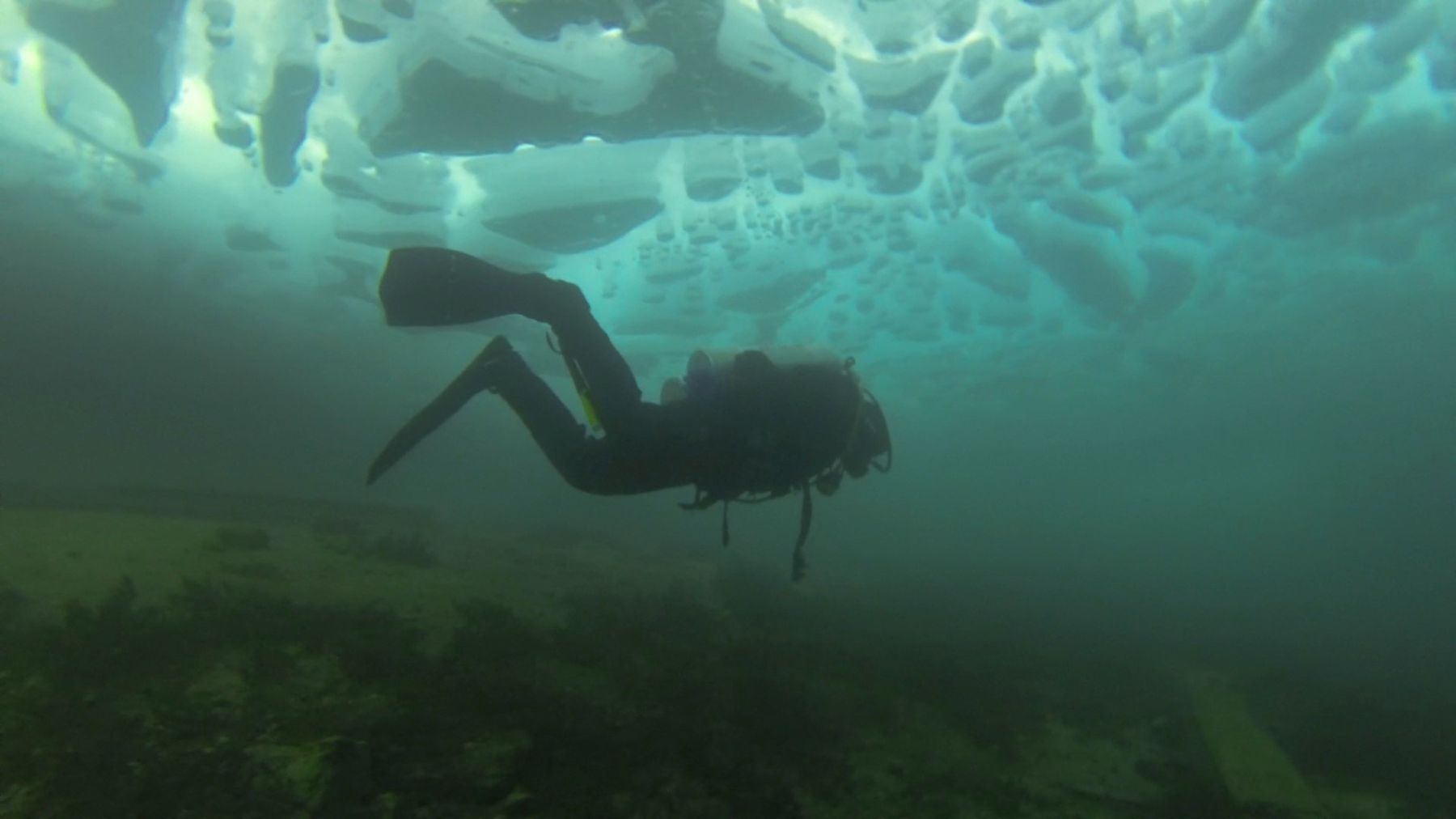
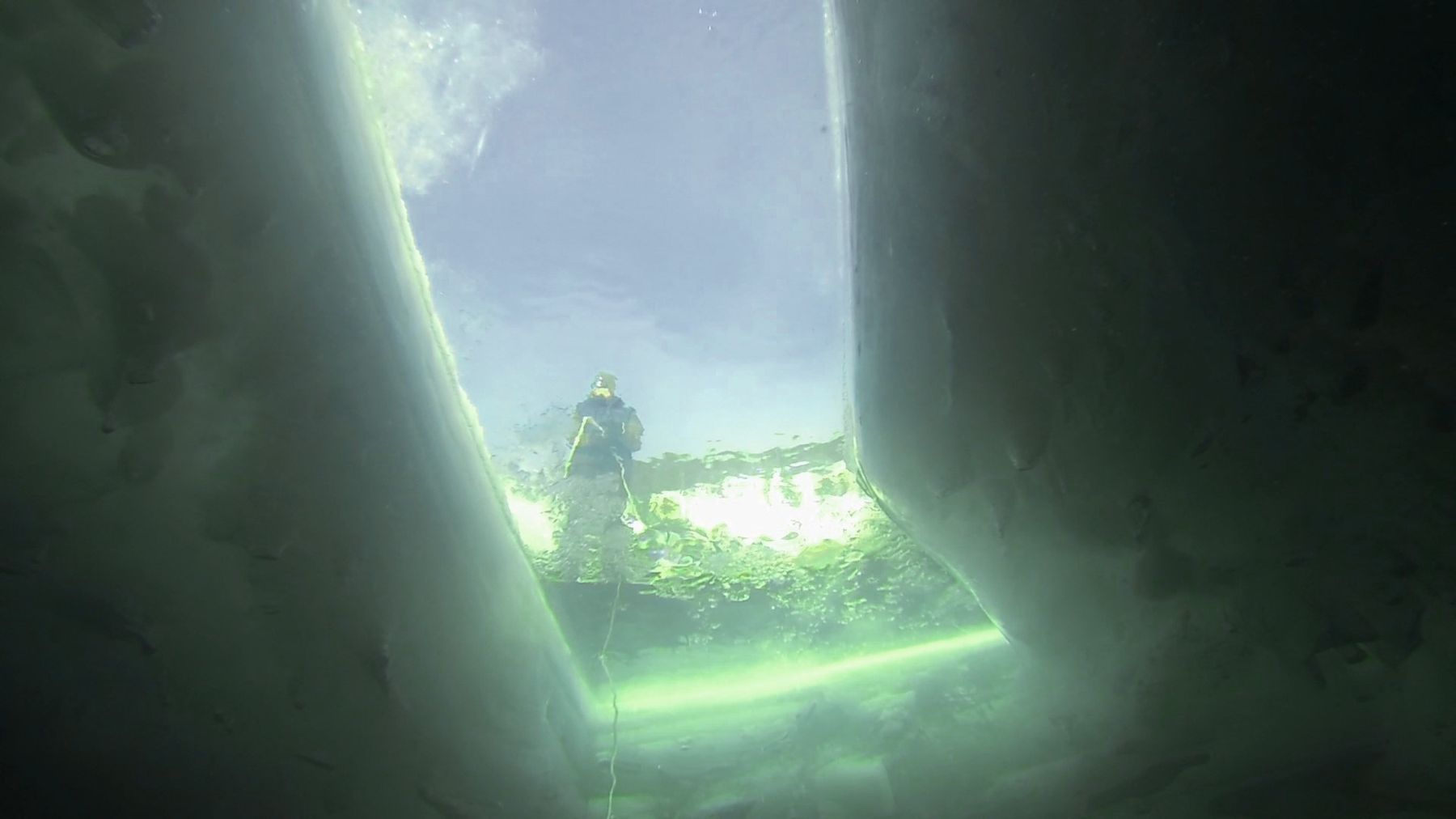
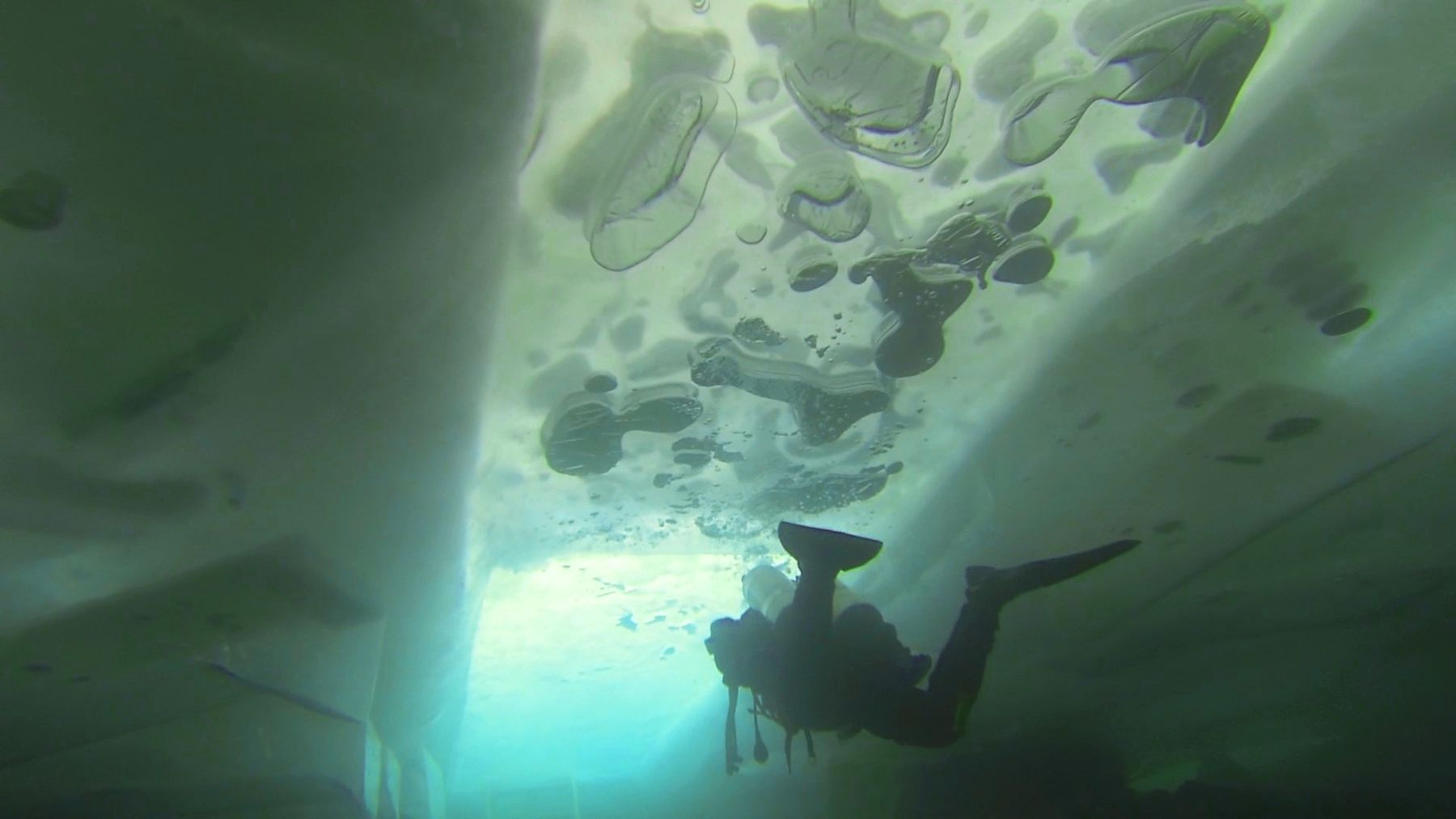
The ice was about a meter thick, pretty smooth and covered in big bubbles of air from scuba divers. I was surprised how much light seeped through the snow-covered ice. The visibility was pretty clear but the only life we saw was a school of tiny fish and some small yellow shrimp crawling on the ground.

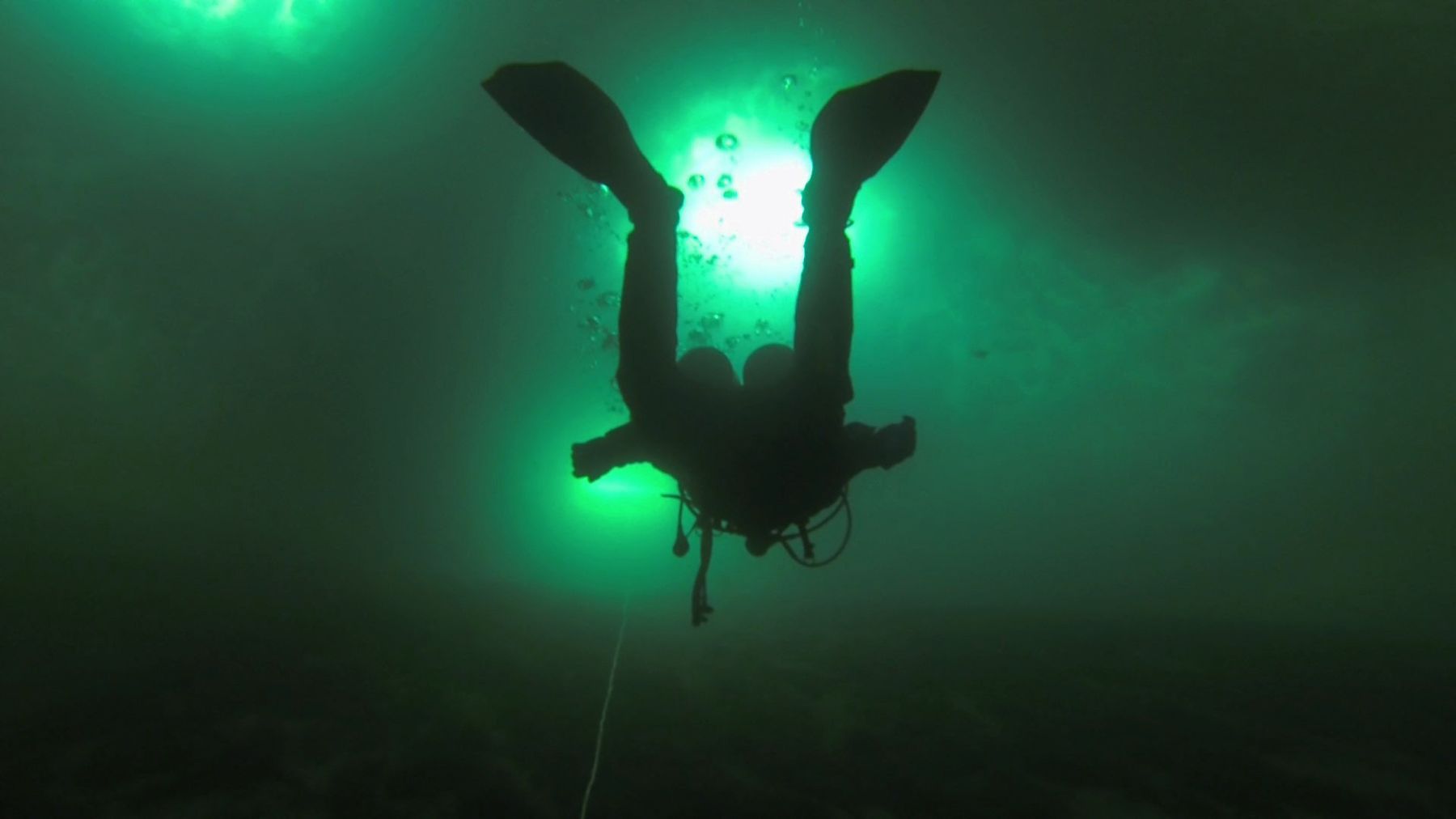
I’ve never taken a dry suite course, but while we were underwater, my instructor showed me how to blow up my suite so that air flows to your feet and you can “stand” upside down on top of the ice.
I got this on video, don’t worry ;).

I will share the videos with you later!

You Will Never Be Free

Uncategorized

I hate to break it to you, but you will never be free. Freedom and free will are two bullshit concepts fed to you by a system of modern day slavery.

If you don’t believe me then ask yourself, what is freedom, exactly? What does it mean to be free?

You’re free, so you can do what you want? What if you want to shoot the guy next door? Are you free to do that? How about to fly a helicopter- are you free to fly a helicopter? Or get the kind of healthcare and education that you would like to get? Is everybody free to go to the university that they would like to attend?

You’re free to a limited extent. Your environment defines that extent. Your freedom is limited by laws, infrastructure, available resources, money and more. In the world we live in today, you have as much freedom as your dollar can buy.

What you might not realize, however, is that the biggest restriction to your freedom may just be your own mentality! Which is also not in your control if you really think about it.

Where do you get your mentality from? It doesn’t just spring out of nowhere. You had no control over where you were born or who raised you, yet the people that raised you brought you up to have a particular mentality, value system and way of living. If you are born in Korea, you would adapt the value system of a Korean person. If you are born in a poor African village, you would behave like someone who was born in a poor African village. You wouldn’t have the choice to behave like a rich Swedish kid because your environment didn’t expose you to the factors that would cause you to behave like a rich Swedish kid. This fact continues into adulthood. A poor African adult cannot behave like a rich Swedish adult without exposure to an environment that causes him to behave that way.

You get it? You cannot exceed your environment.

Think about events, behavior and free will from a mechanistic point of view. A house does not fall down during an earth quake. The movement of the ground causes instability in the material that make up the walls of the building, causing it to loosen up. Gravity causes the loosened material to fall to the ground.

A baby does not just cry. Something bothers the baby and causes it to have a reaction in the brain which causes the baby to cry.

A KKK member does not just kill a black man. The environment that he was raised in causes him to become racist, join the KKK, and go after black people.

People often tell me that they wish they could travel like me, but then come up with a million excuses about why they can’t. If they talk to me for long enough they usually understand that what’s really stopping them is not money or whatever other excuse they came up with, but their own mentality. This is not anybody’s fault, because as I explained earlier, you are a product of your own environment and you do not have free will. Most “normal people” are brought up in an environment that teaches them that they have to finish school, go to university, get a job, get married, buy a house, have kids, then retire. They think that they need a consistent full-time job because that’s what they’ve been conditioned to believe they need to survive. Traveling the way that I do is scary to many people because it is difficult for “normal people” to change their mentality and let go of these beliefs.

If freedom existed then having no job would not be scary to anybody. If free will existed then people would not be afraid to break away from societal pressures and expectations.

I know that I don’t have free will. Every choice that I make in life is a direct result of my influences, my environment and everything else in my surroundings.  The plus side to all of this is that that you can use this understanding to benefit yourself by exposing yourself to an environment that will influence you in a positive way.

I like to travel so that I can expose myself to a variety of very different environments. This allows me to expand my horizons to be influenced by many different factors. Although my “freedom” is still highly restricted by what my few dollars can buy, the “freedom” of my mentality is continuously expanding as I study new material and expose myself to new environments; and that’s worth a million bucks ;)