Day 6: Camping in a Snowstorm

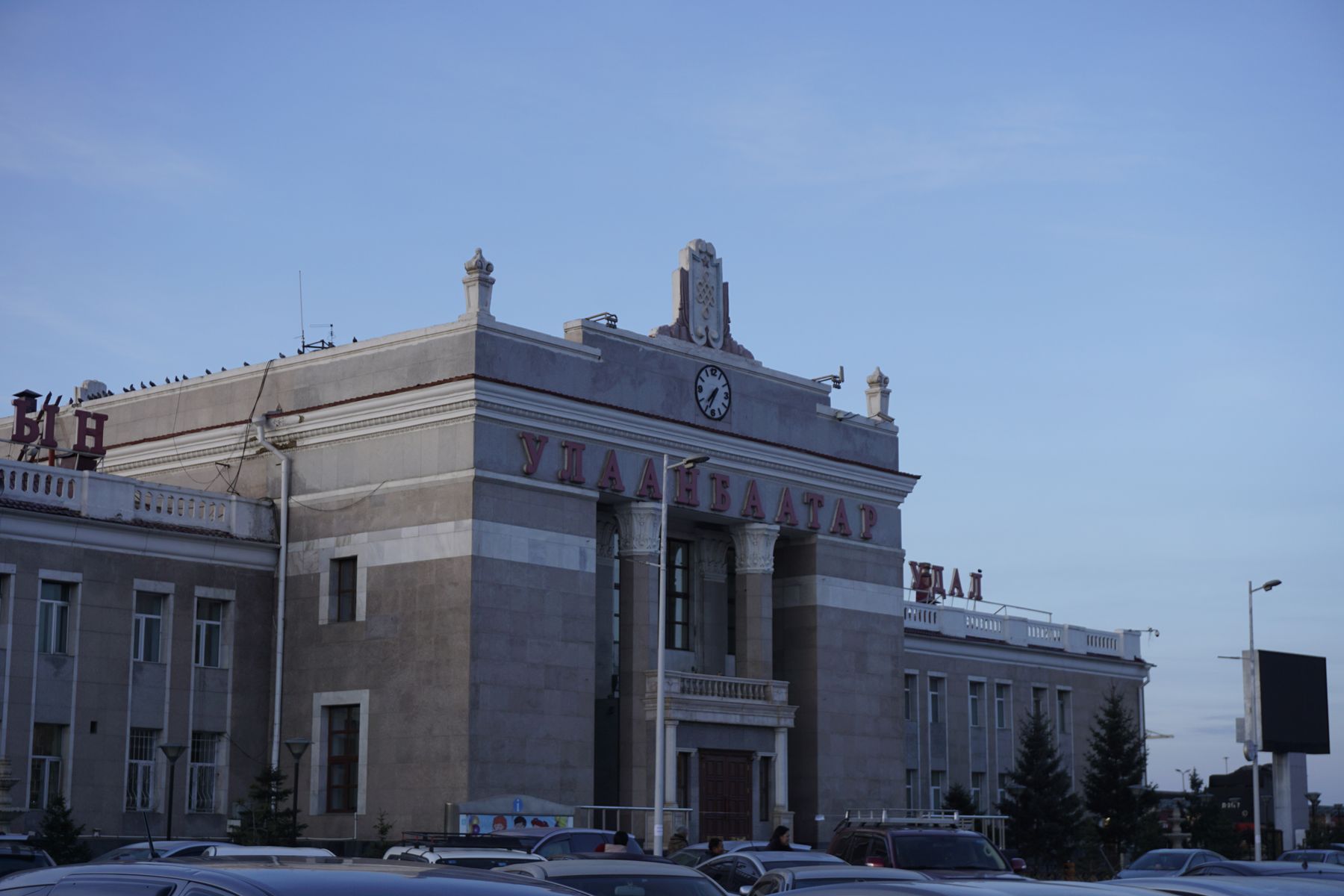
Mongolia

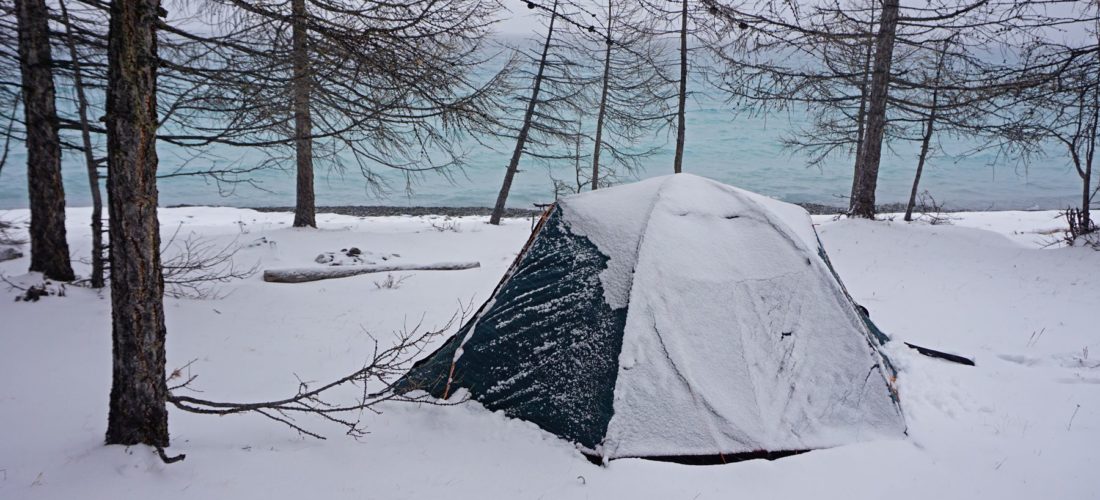
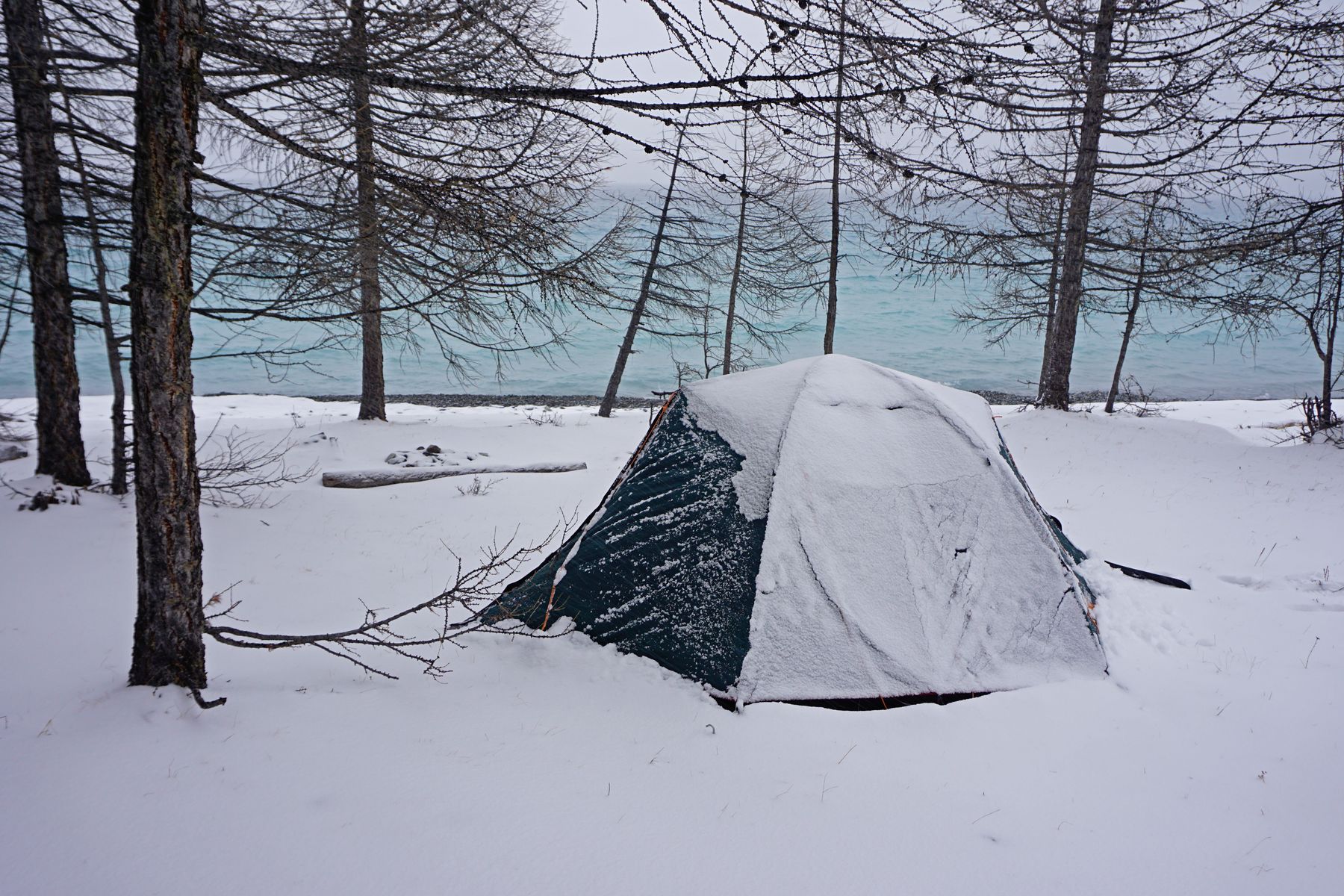
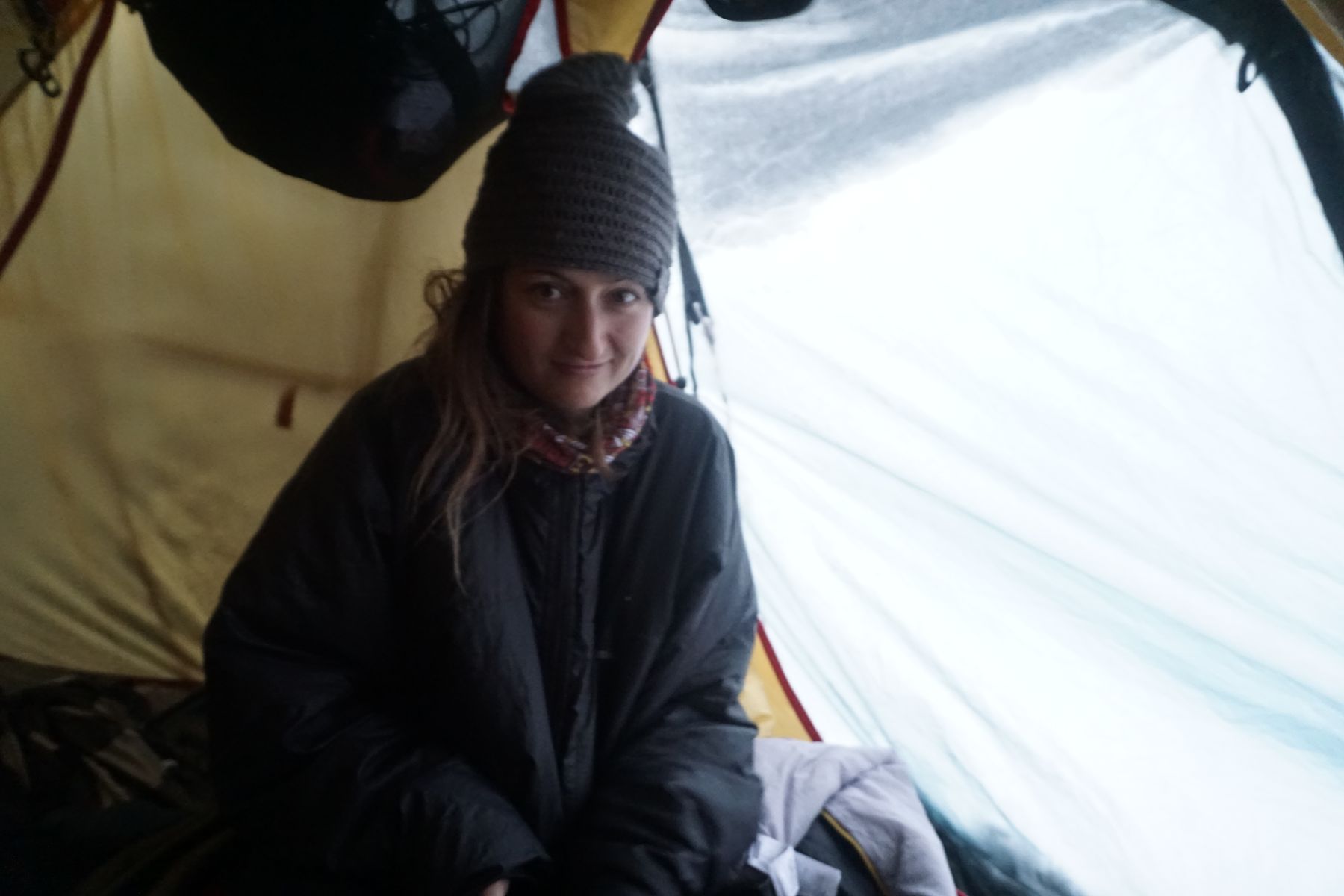
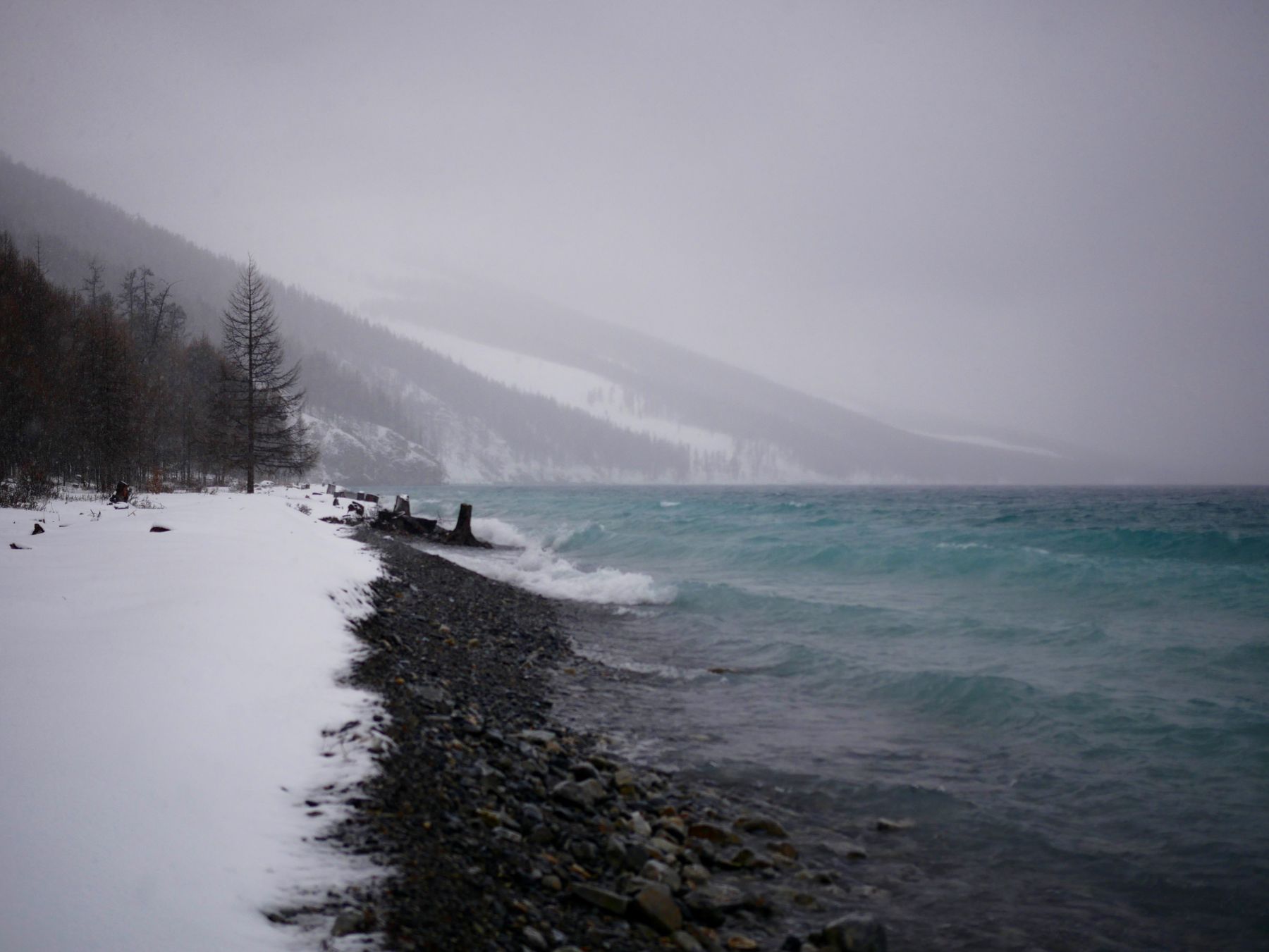
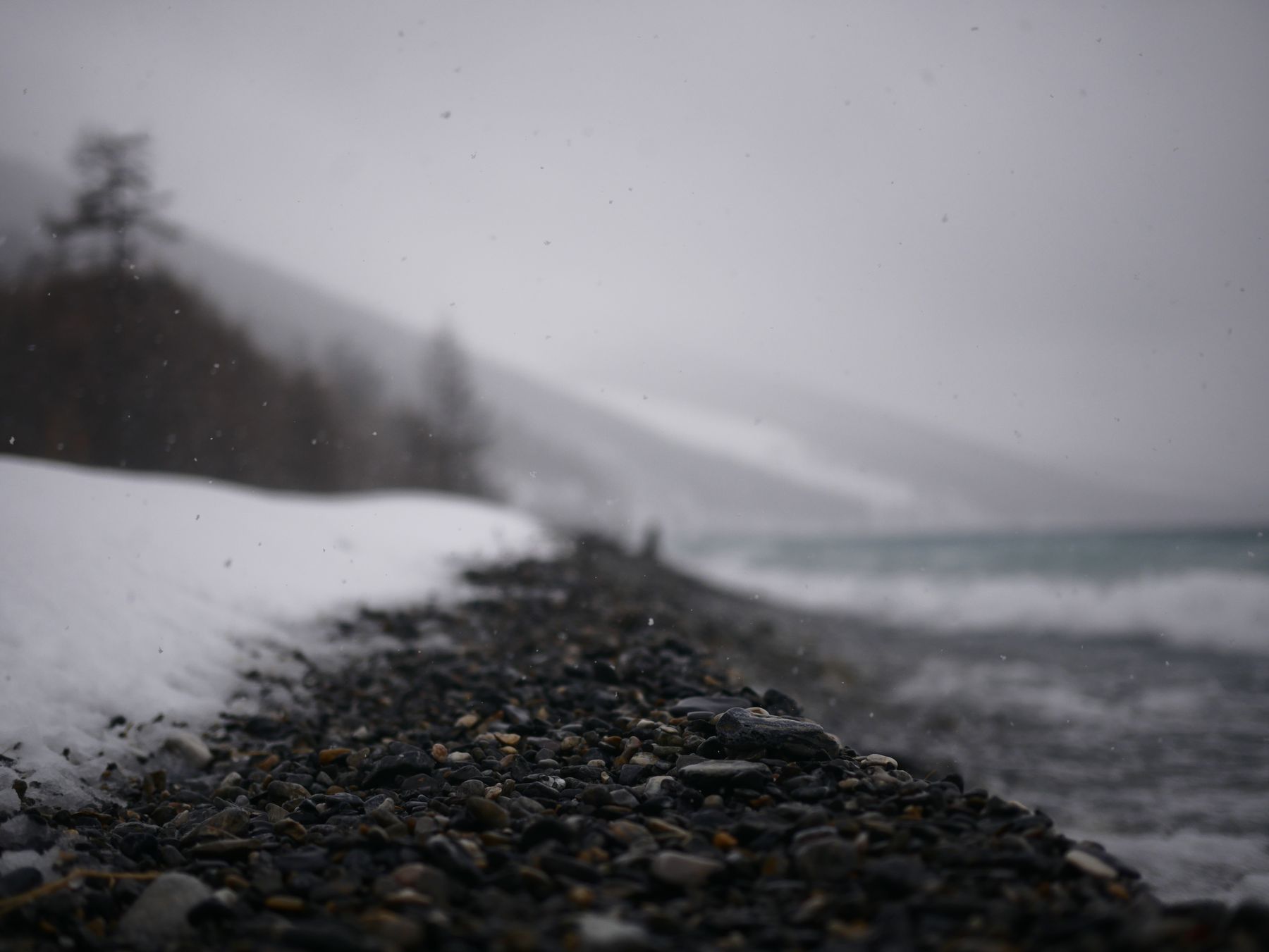
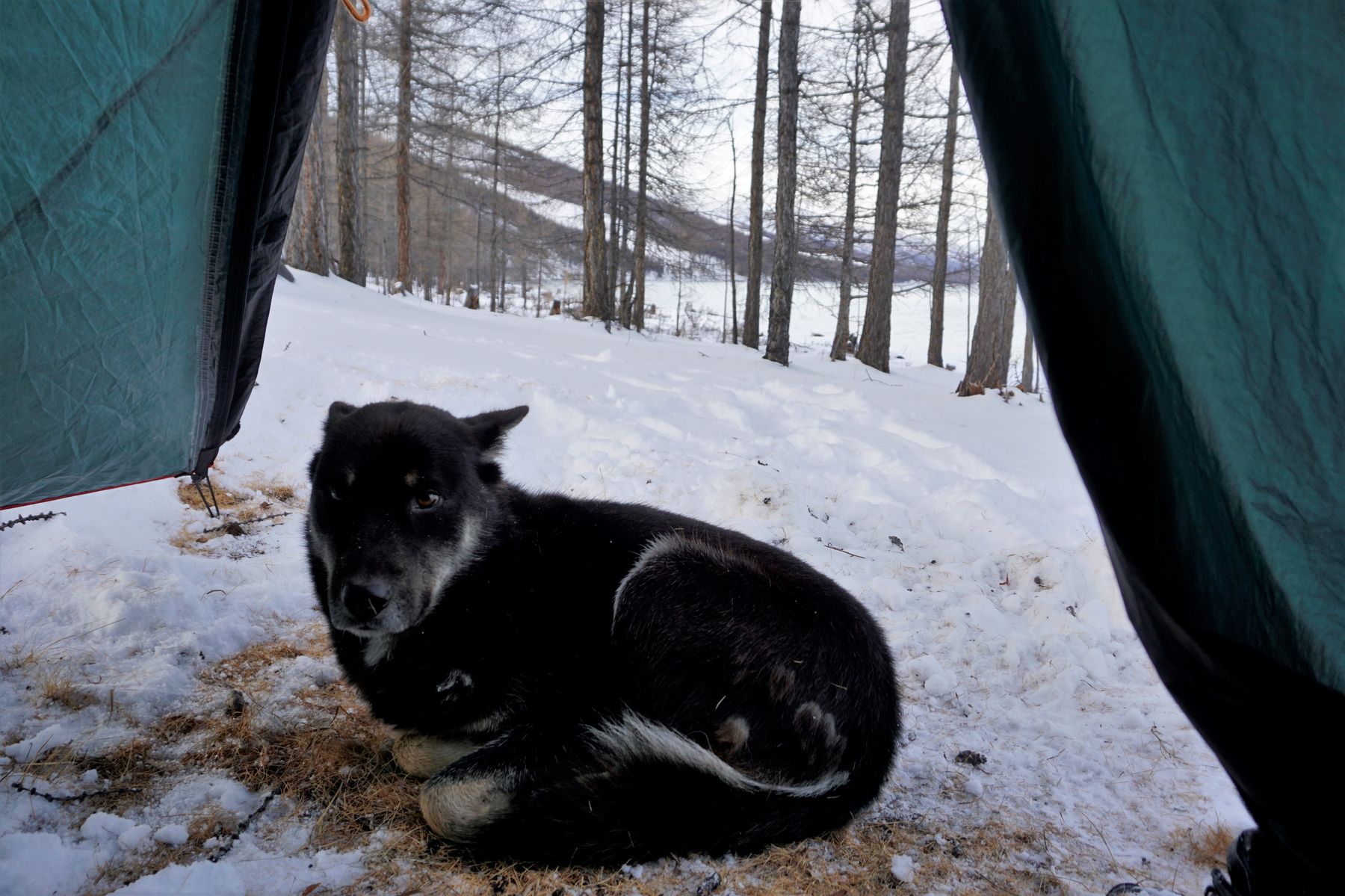
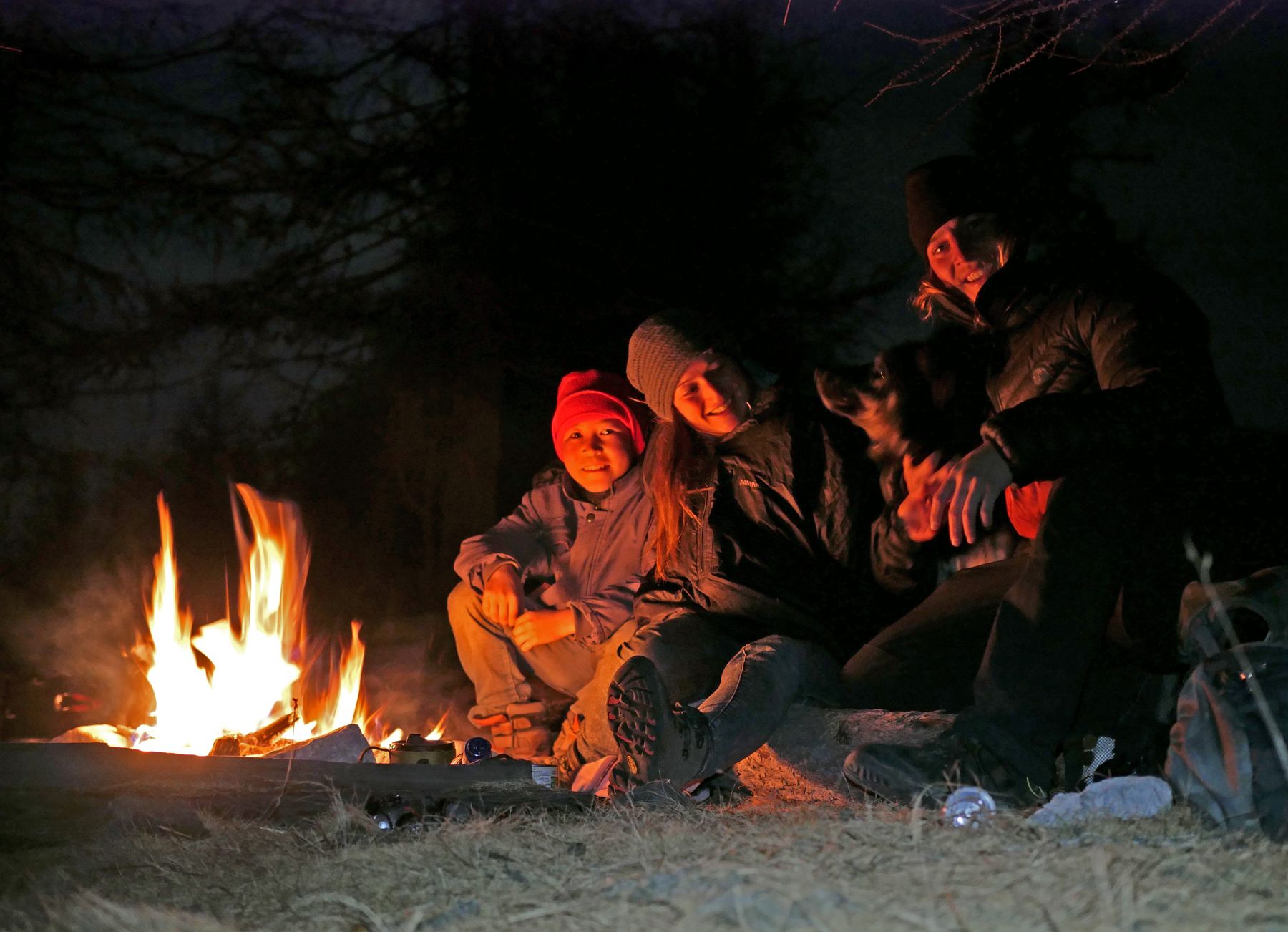
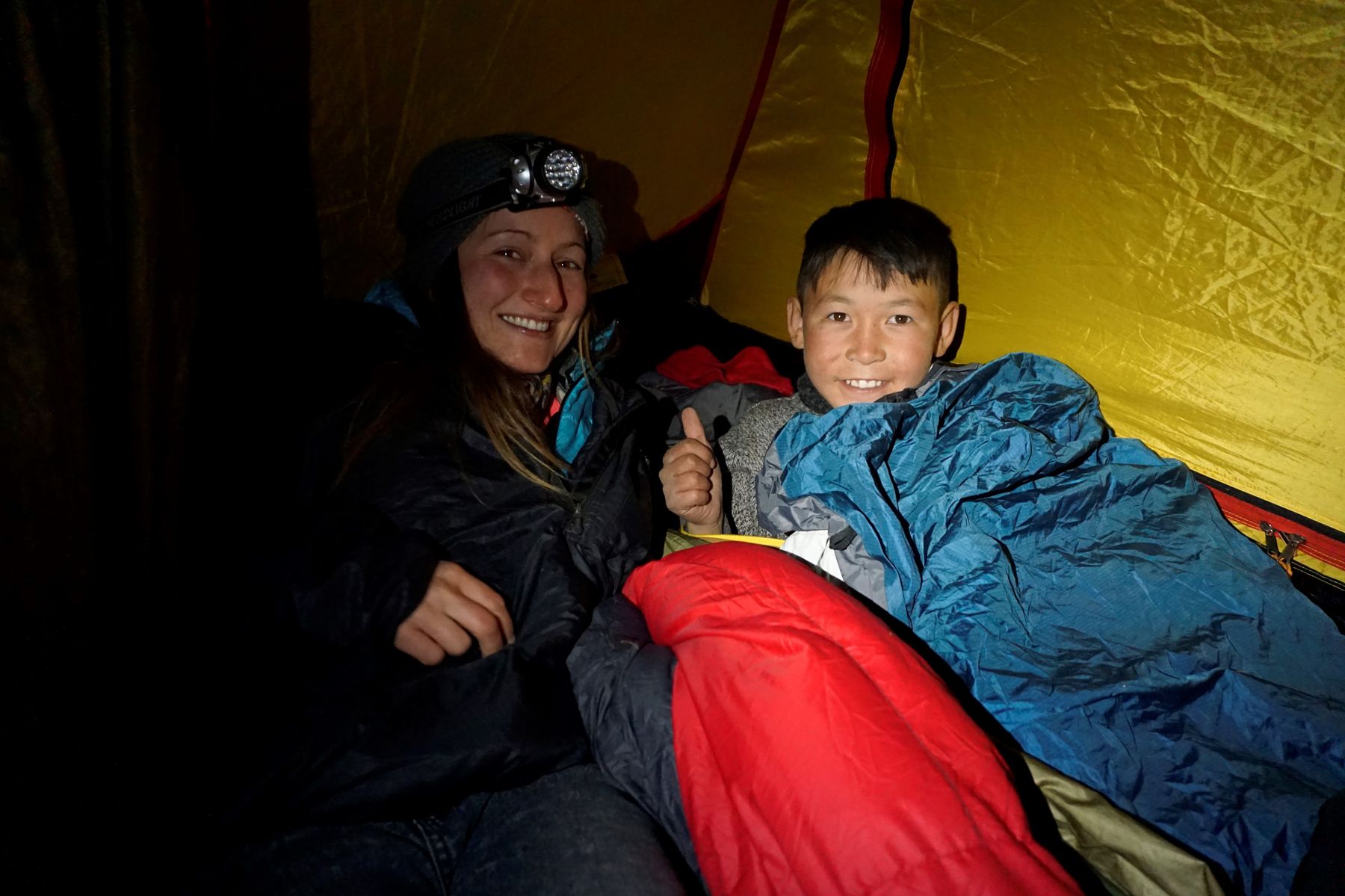
A huge storm came in right after Thunder left. We laid in the tent listening to the sound of the wild wind, the rain, hail, snow, and huge waves crashing on the Khovsgol shore. The waves were so powerful that it was almost frightening, I never imagined that a lake could sound like that! I felt like I was back on the North Shore of Hawaii, not in northern Mongolia.

I also got sick that night. Rolled around the tent for hours, feeling nauseous and wanting to throw up. It must have been the fermented horse milk.

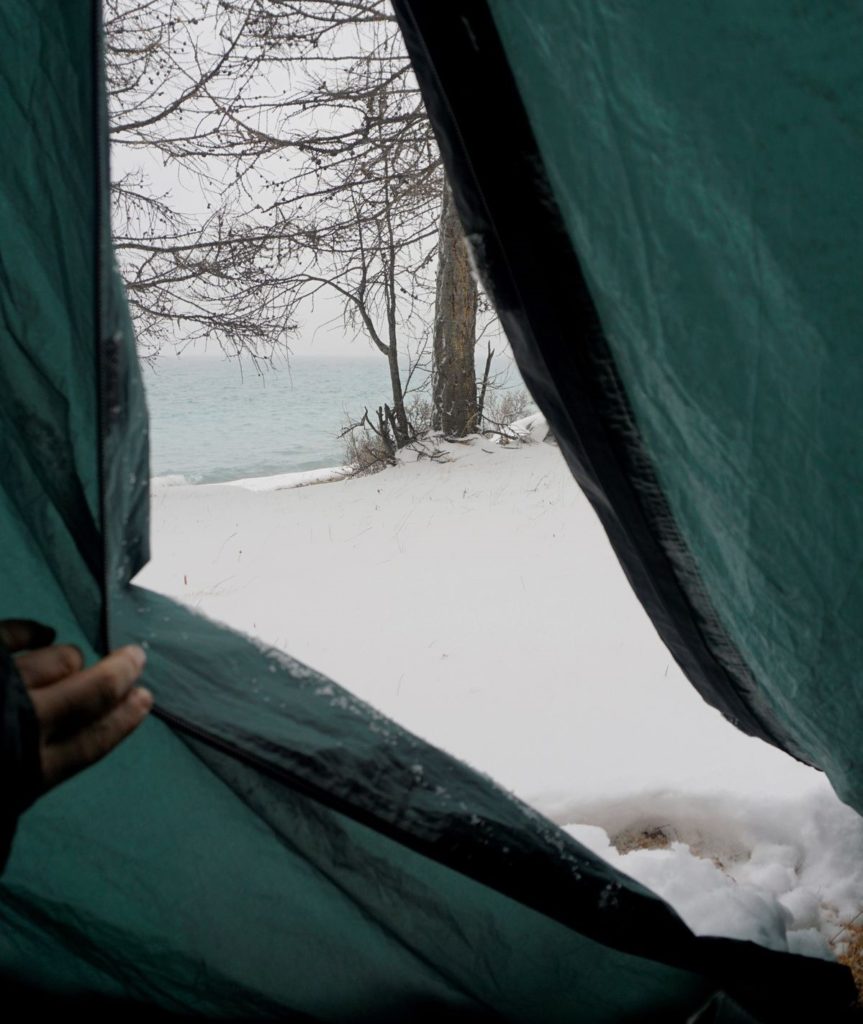
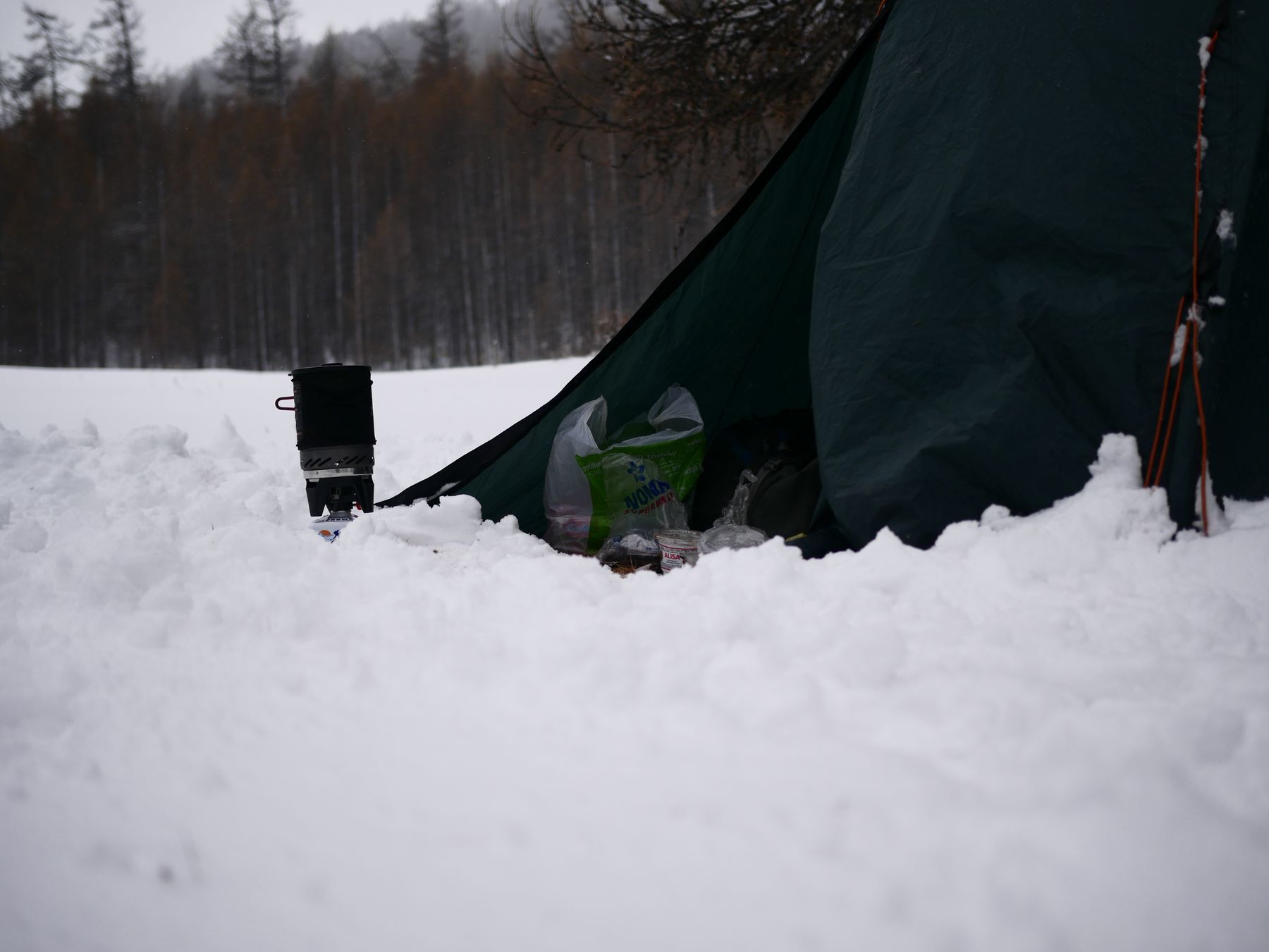
In the morning, there was about 15 cm of snow outside. It was still windy and stormy.

Perfect day to spend under a big puffy sleeping bag :)

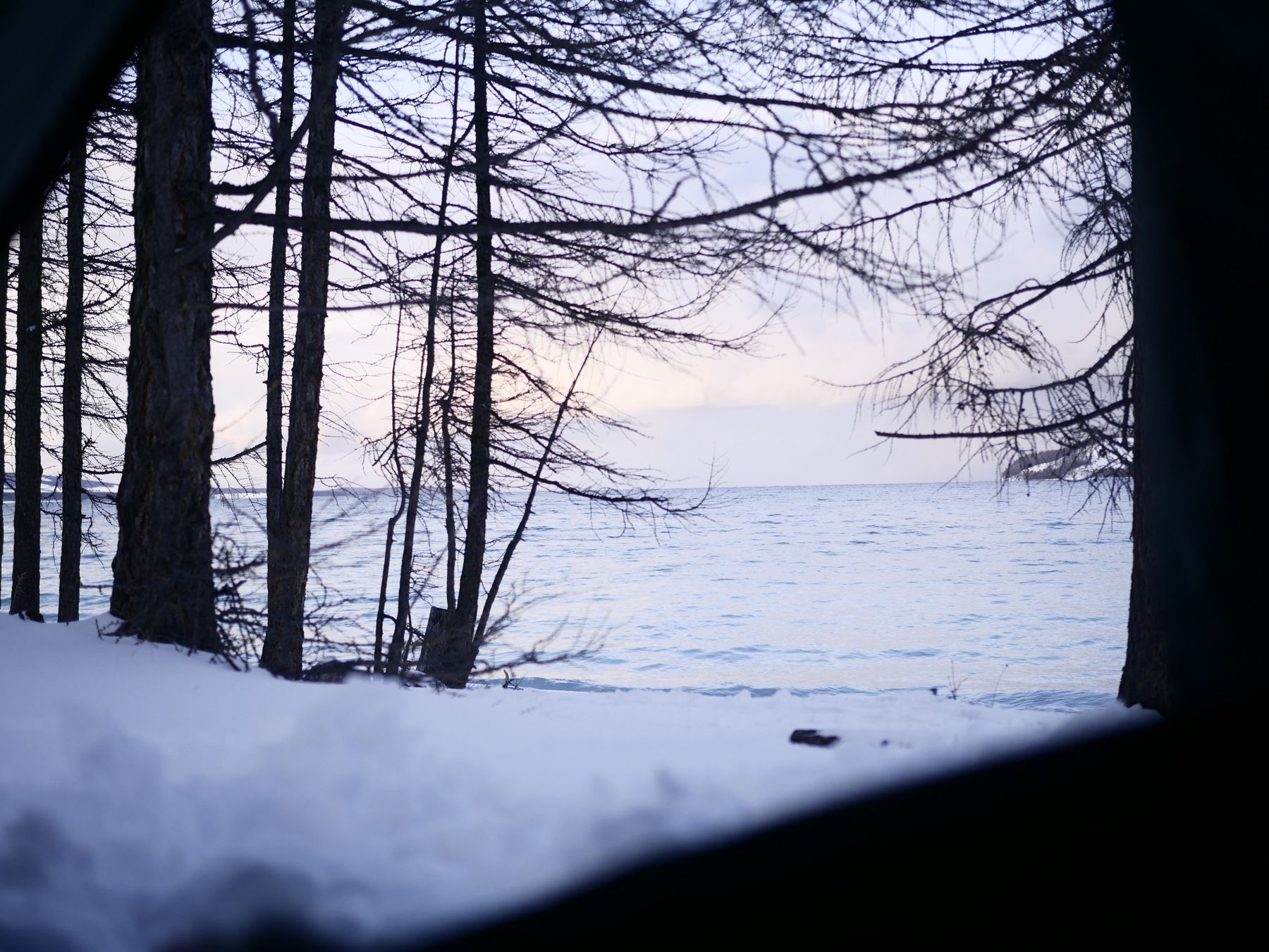
Khovsgol photos by Felix (he takes way better photos than me :D):

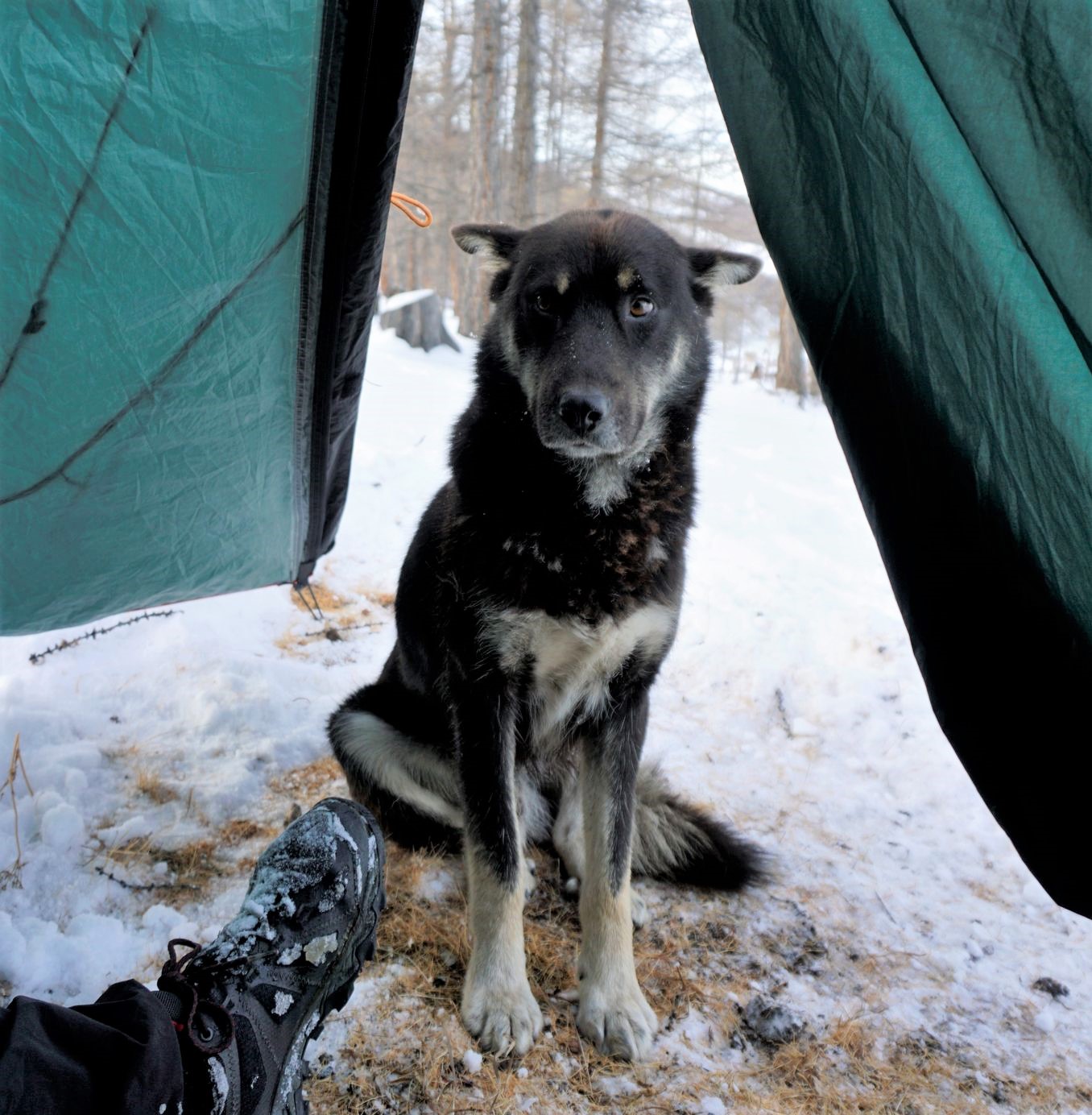
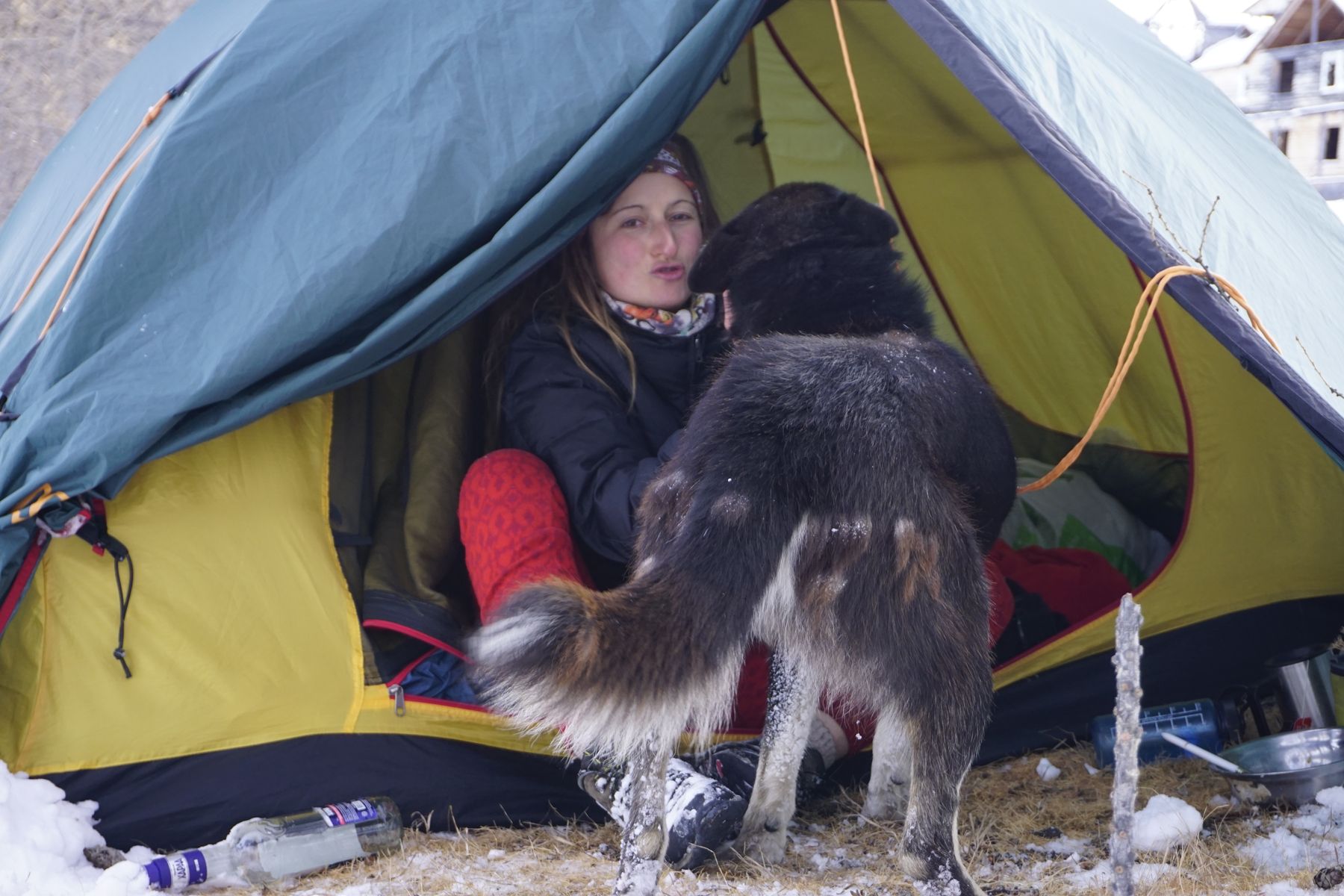
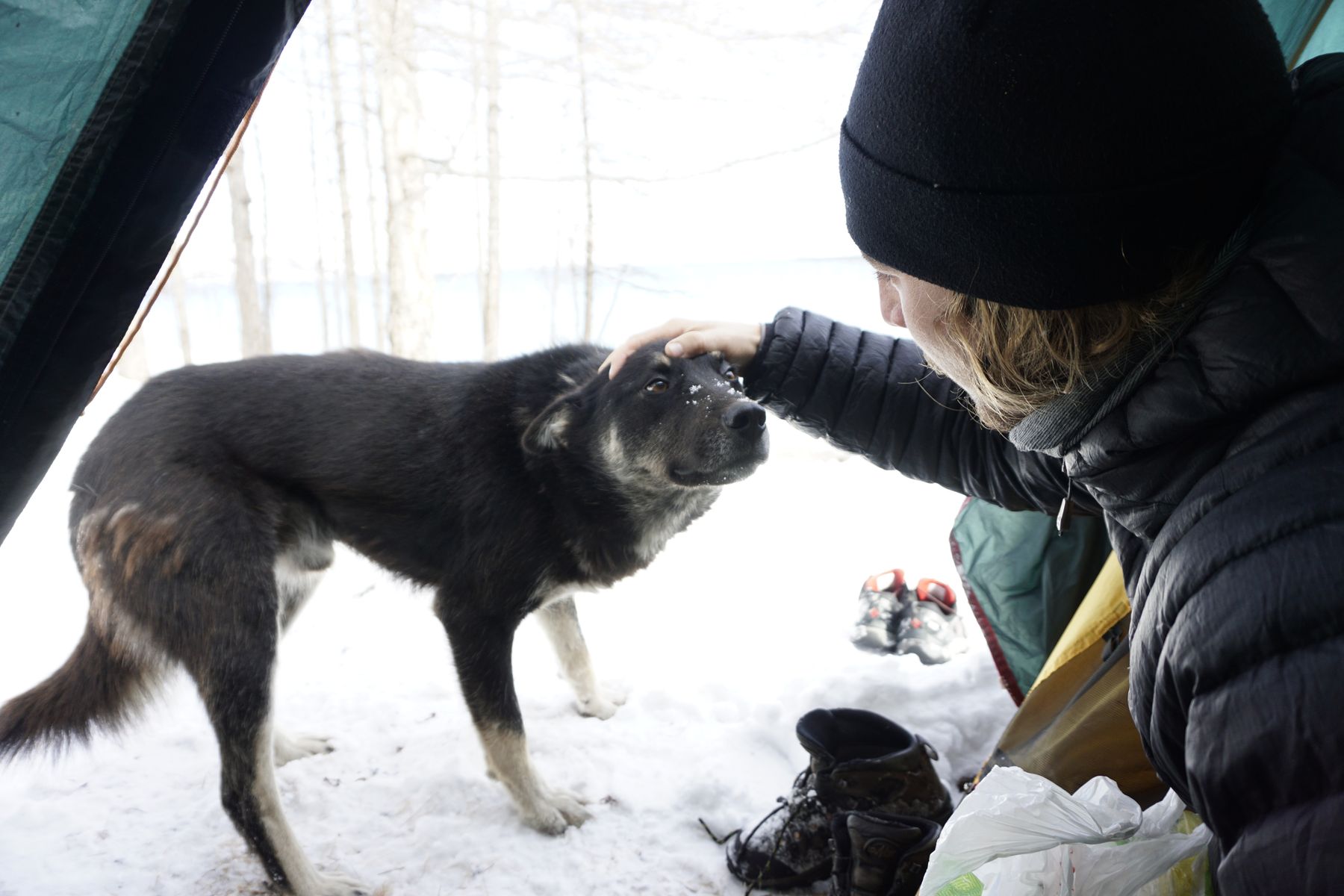
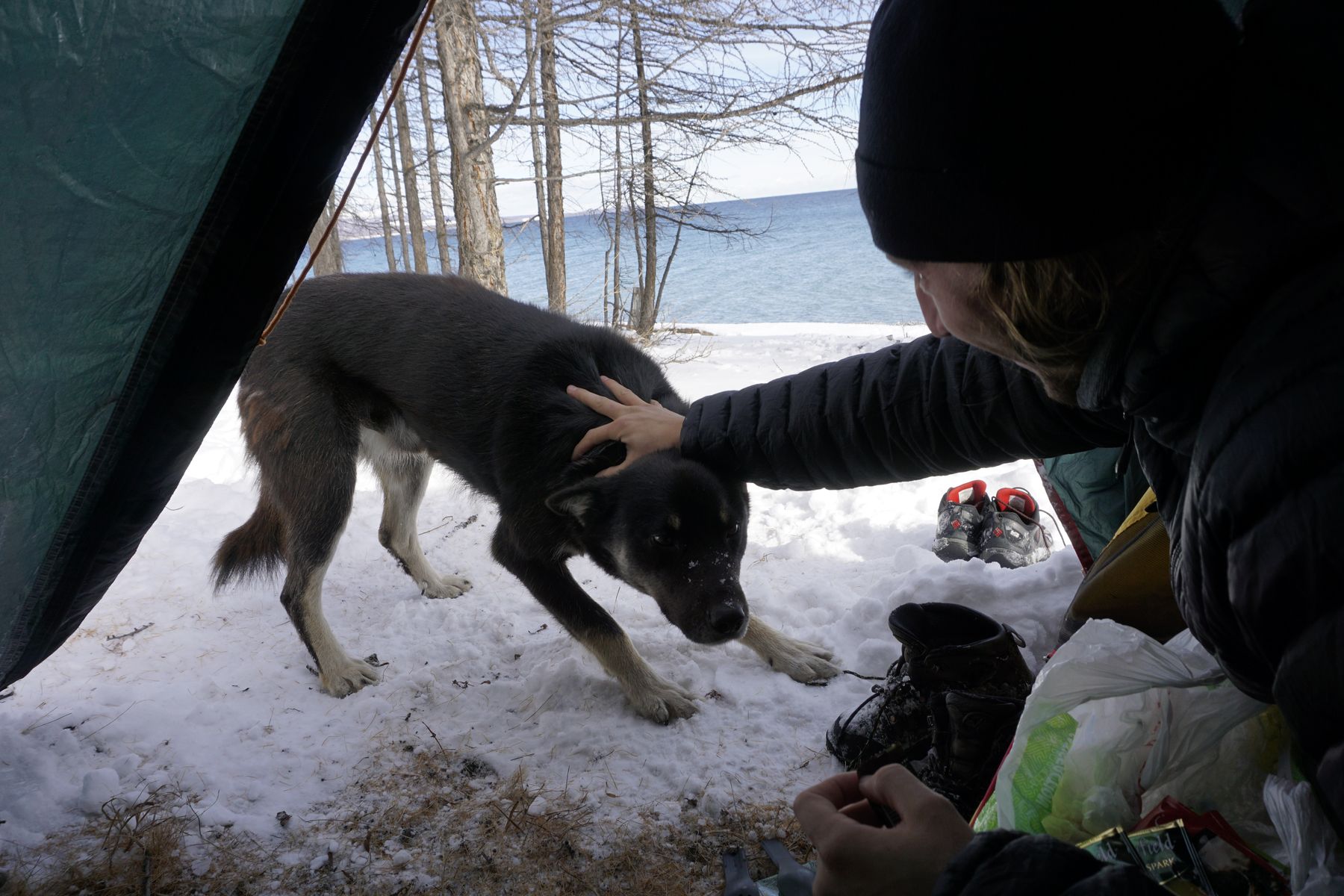
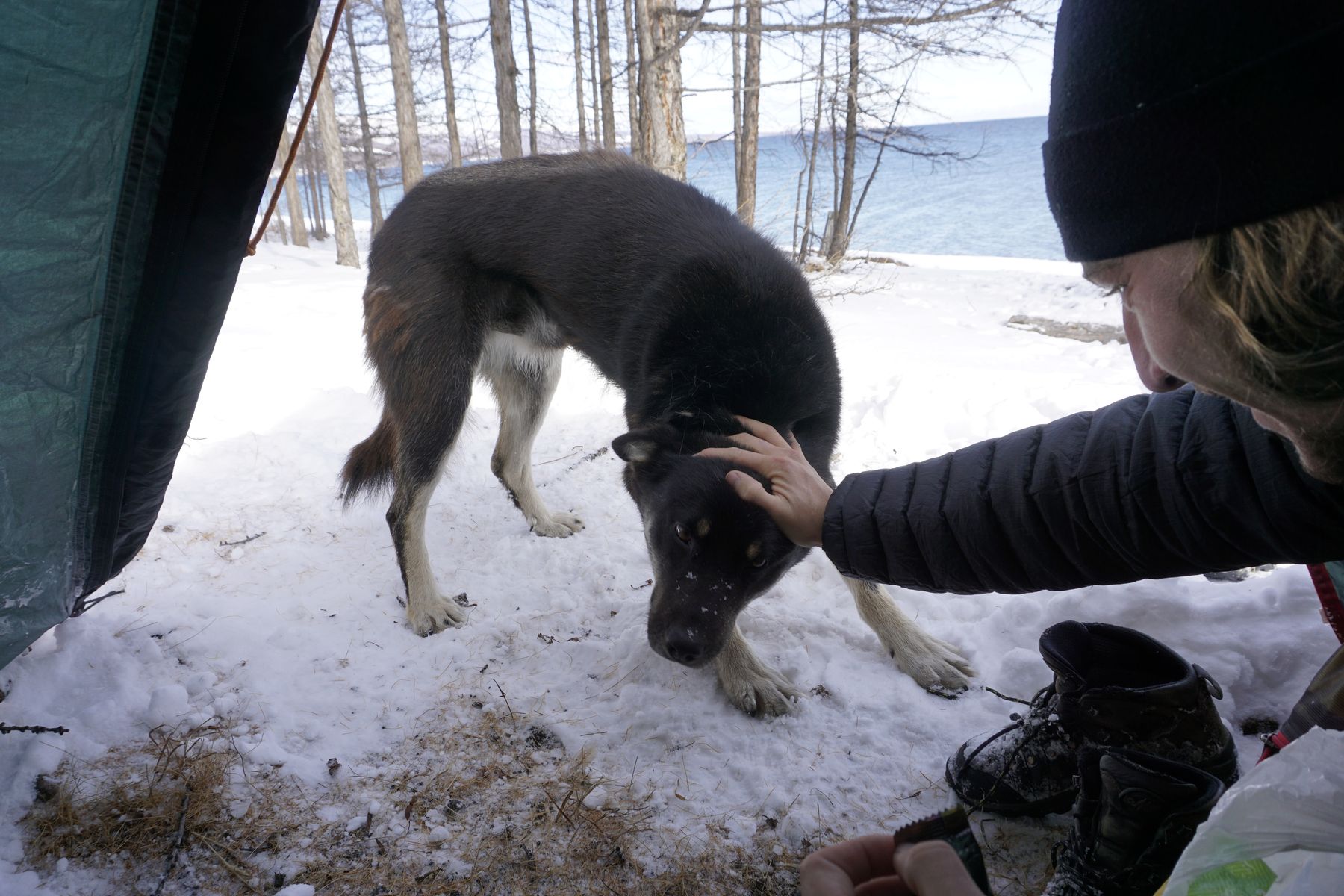
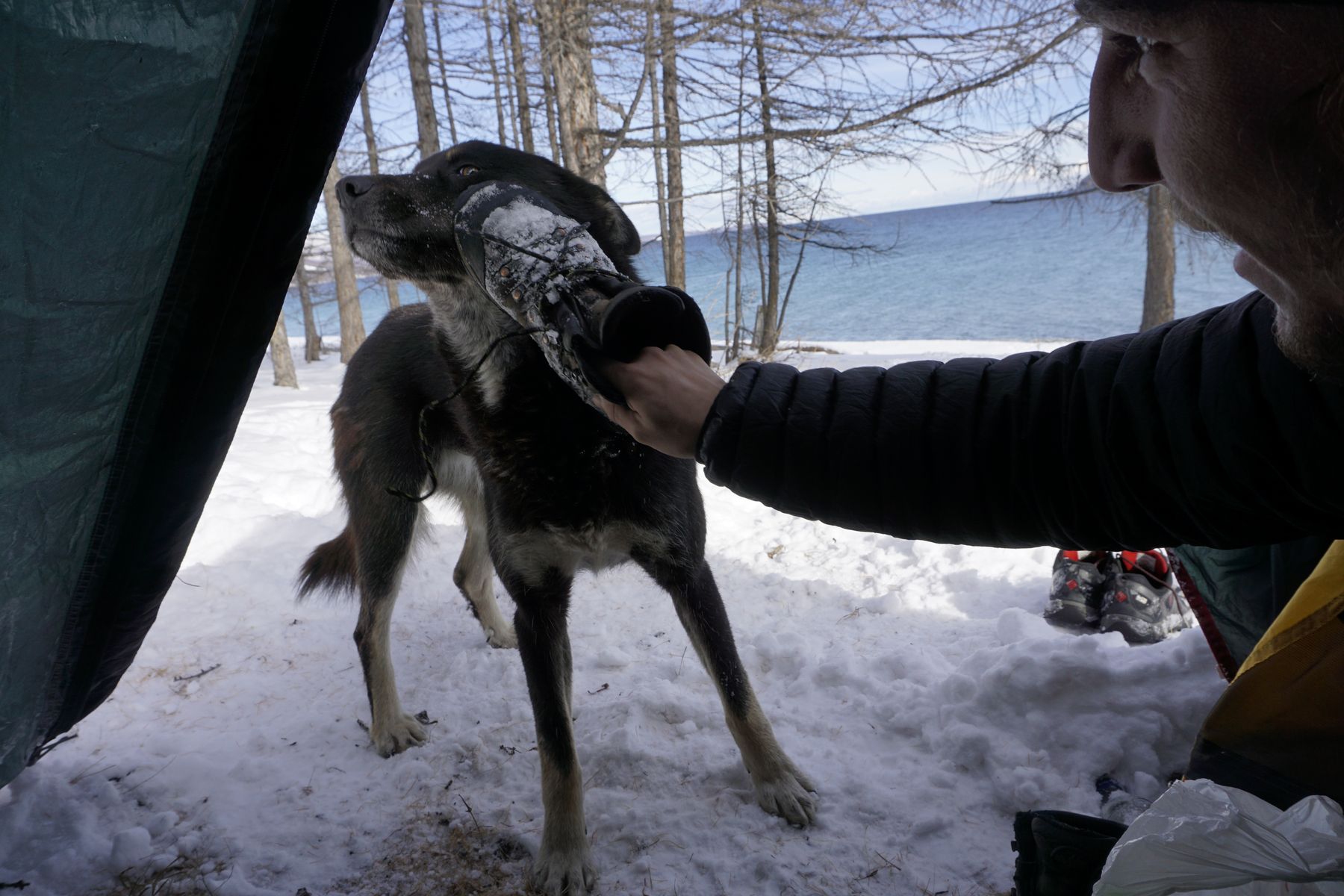
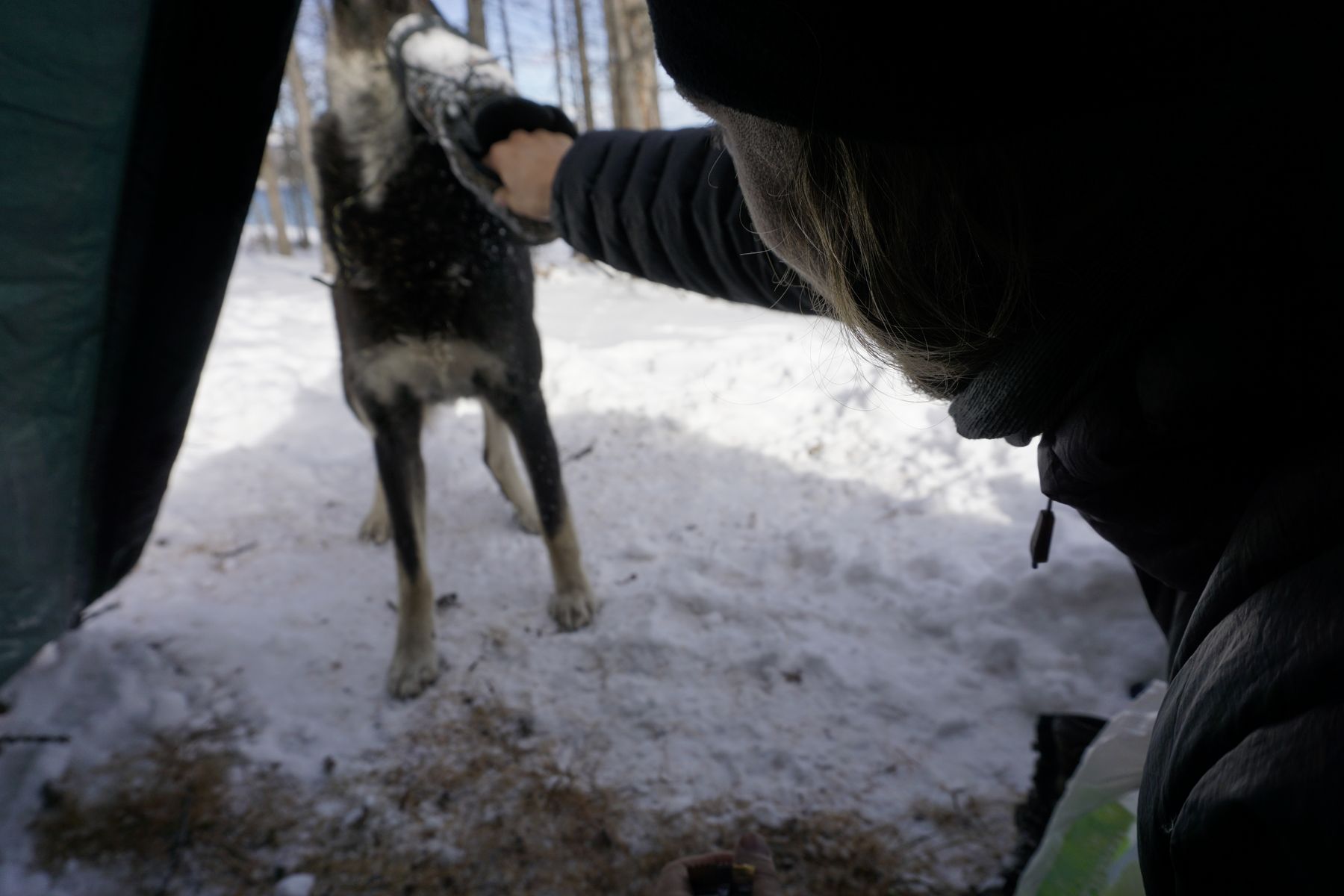
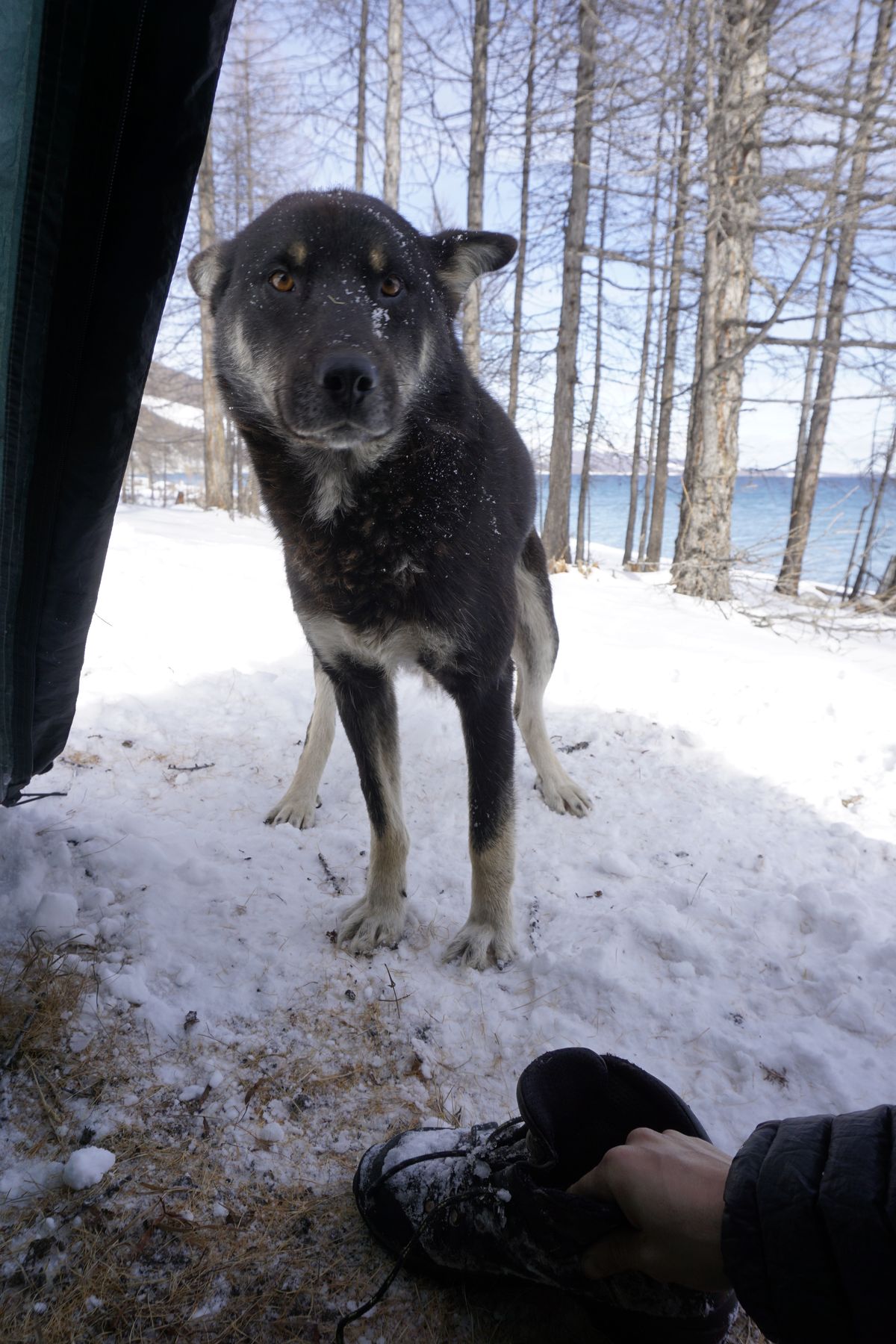
Oh and do you remember Mushi Pushi?! Actually, Mushi Pushi left during the snowstorm, but when we went on a little walk around the lake, another dog decided to tag along with us… So we named him “Mushi Pushi II”. He stayed with us for 2 or 3 days, even though we never even fed him (we didn’t have enough food for him :( ).

Total expenses of day 6 in Mongolia: $0.

Accommodation: tent
Food: cooked

Day 5: Camping with Thunder

Mongolia

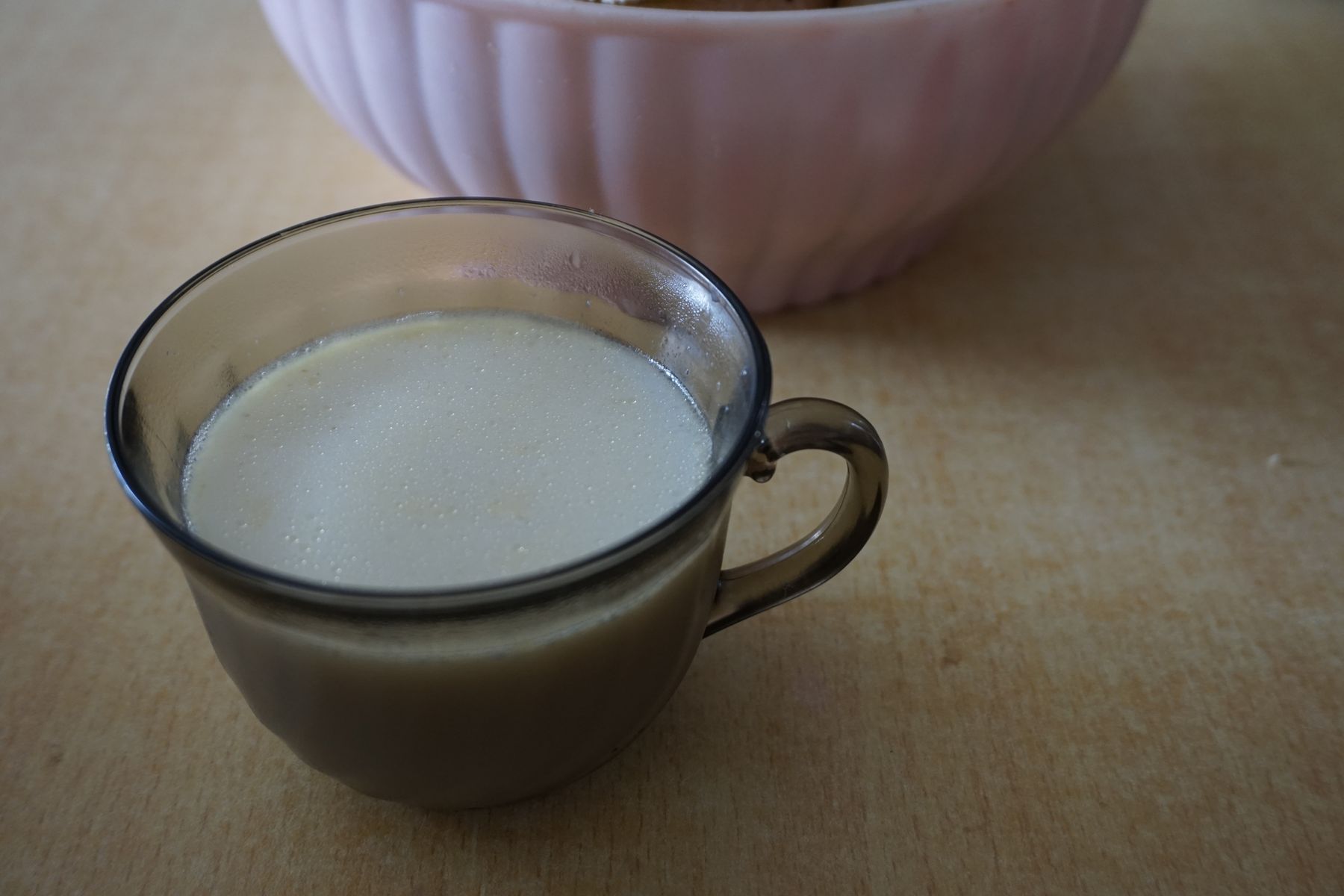
We woke up to the sound of uncle’s 12-year-old son chugging down fermented horse milk. He must have drunk half a liter of that stuff in the time that it took us to get out of bed. The horse milk has about the same amount of alcohol as beer does, so it was no surprise that this 12-year-old looked a bit cross-eyed and red in the face. At least it was a Saturday :D

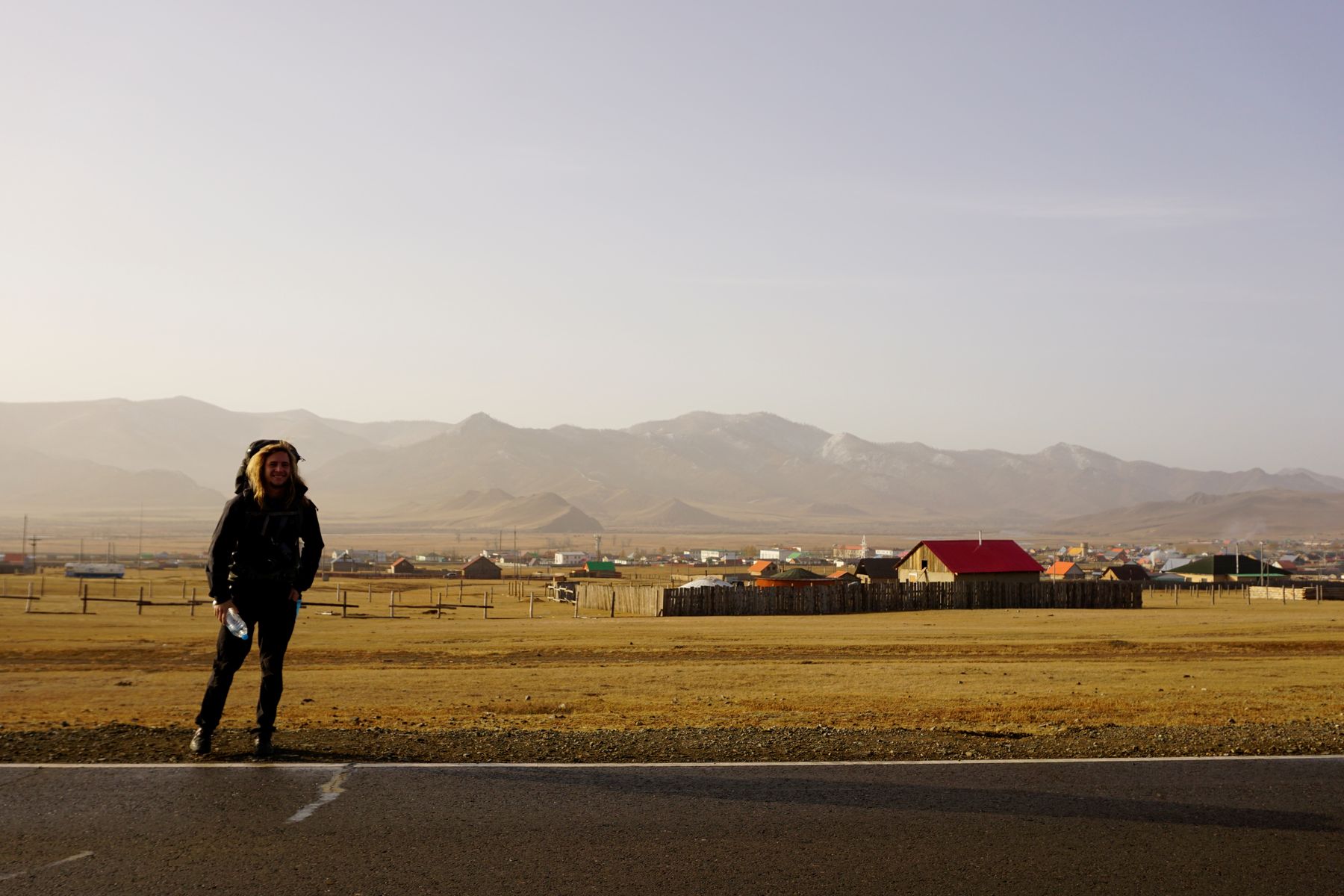
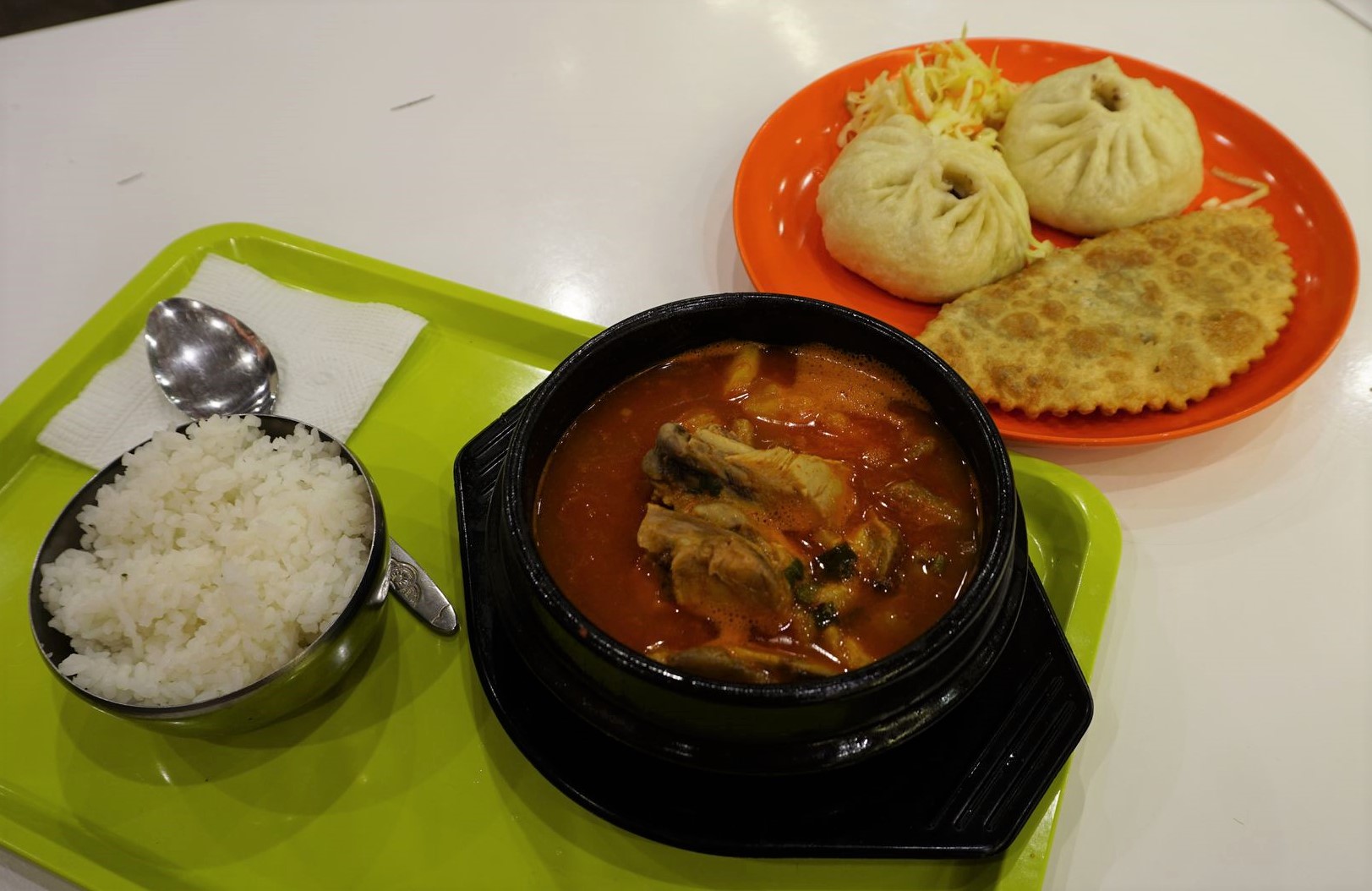
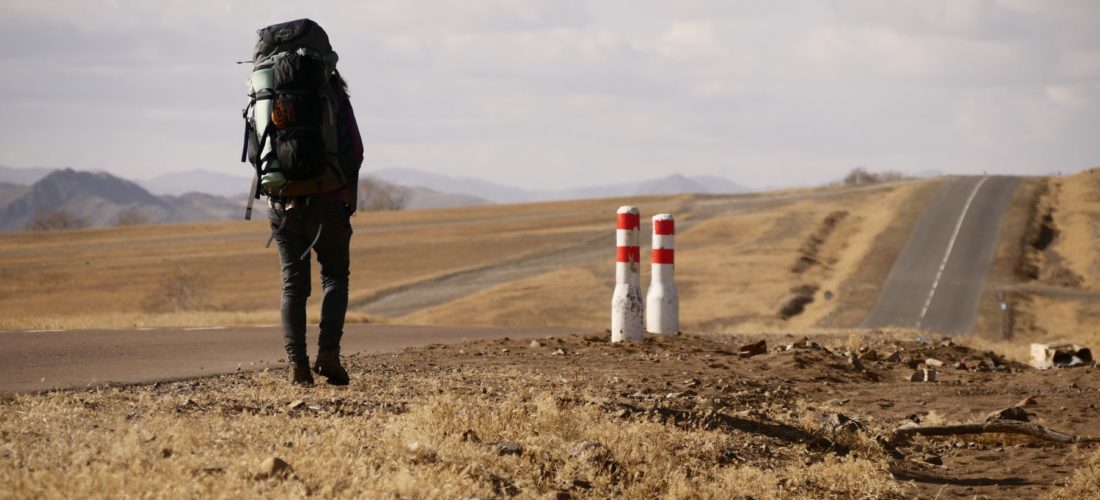
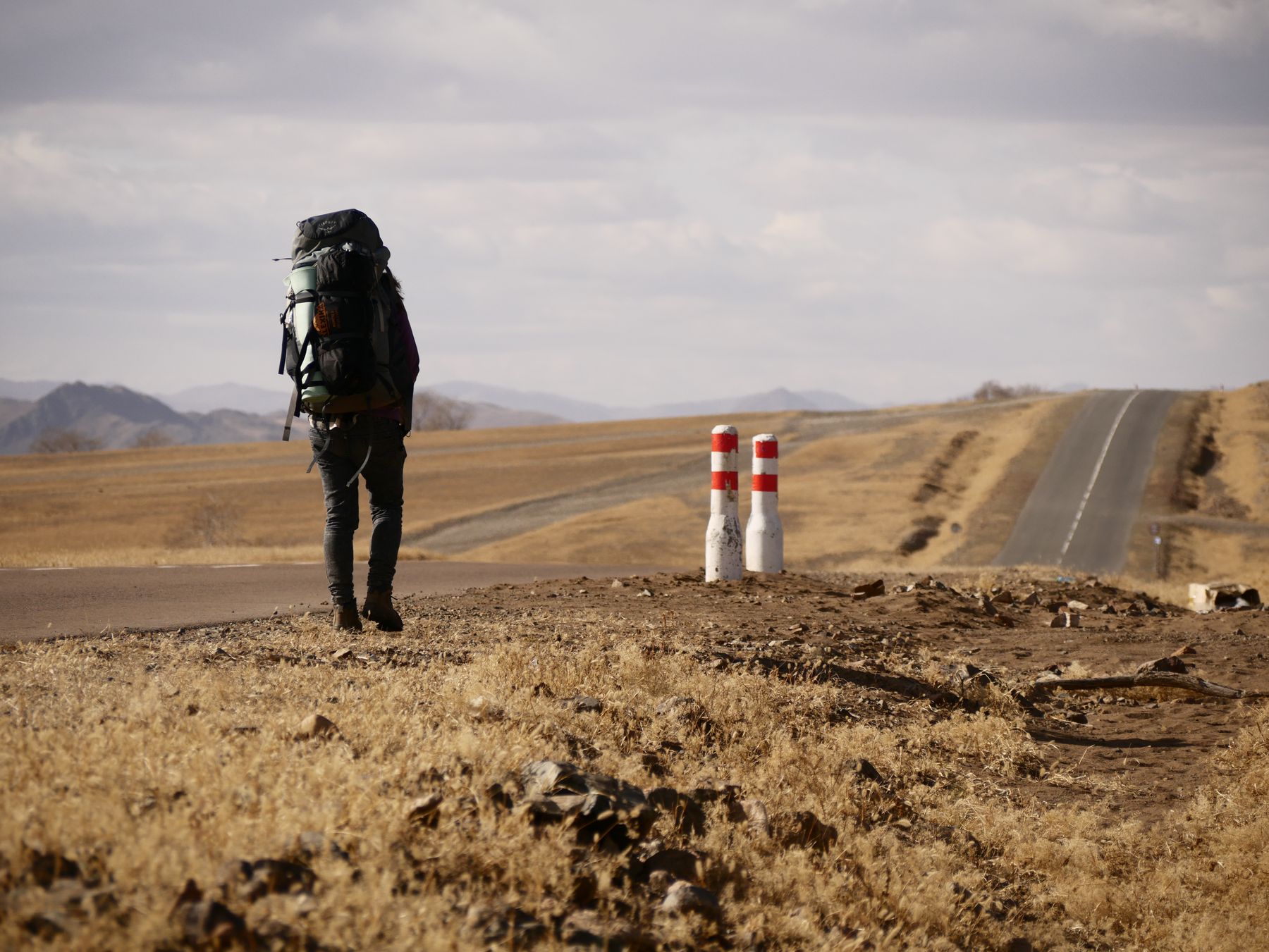
We hit the road at around 10:00. It took us about a half hour to get our first lift, which brought us an hour and a half in the right direction, to a village called Ikh Uul. The driver dropped us off outside of a truck-stop cafe. The place was buffet-style, so we could finally somewhat understand what we were ordering. The choices were basically: meat and eggs, meat and fat, or meat soup. We chose meat and eggs. It was massive and tasted pretty good! ($1.50 each).

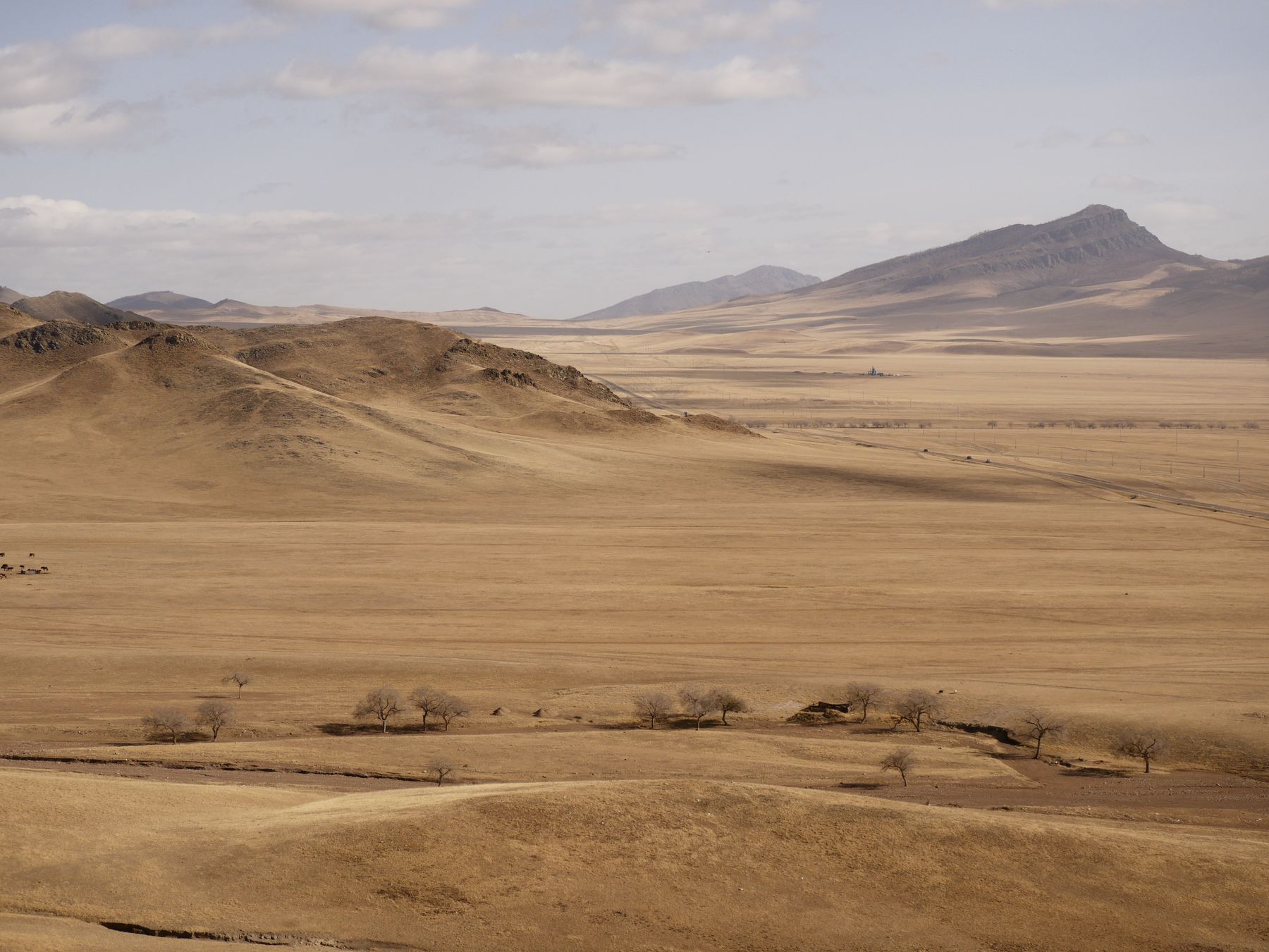
After breakfast, we walked up a little hill to get a nice view of the landscape, then got back to hitching.

Our next ride was with 2 Ulaanbaatar guys. The driver knew English and said that they were going to Khovsgol Lake, which is actually where we wanted to go! (Moron was just on the way:)). We got to stop in Moron anyway, because the driver stopped there for lunch and invited us to join.

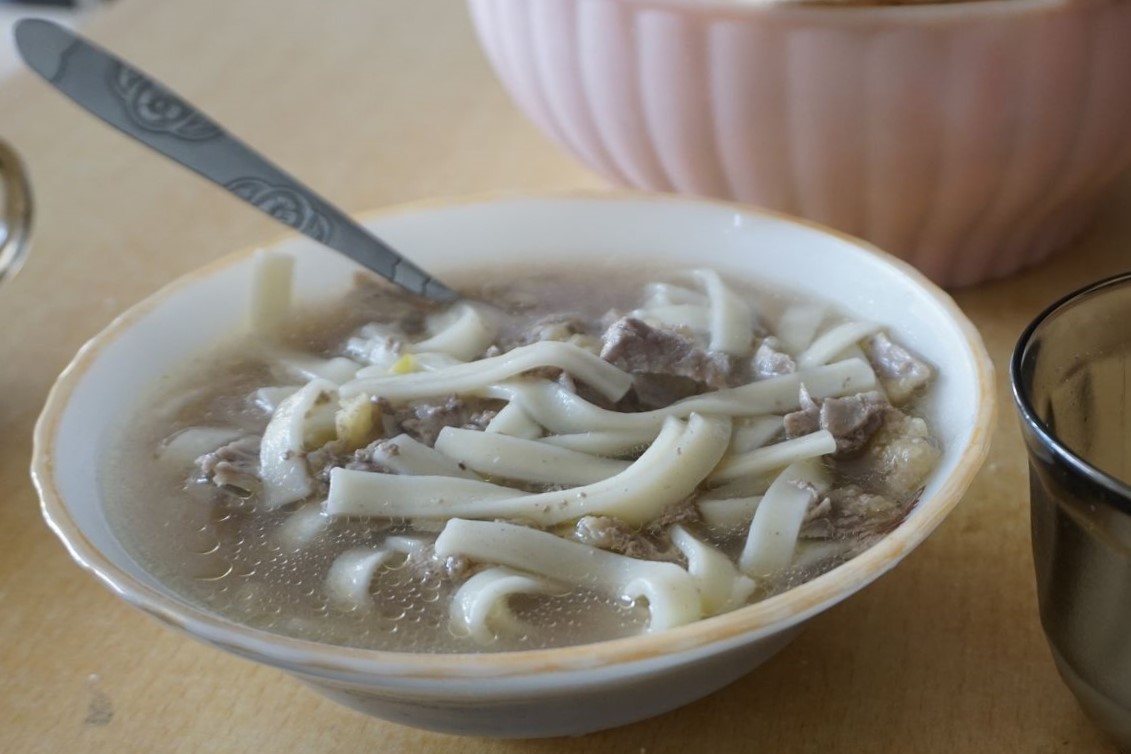
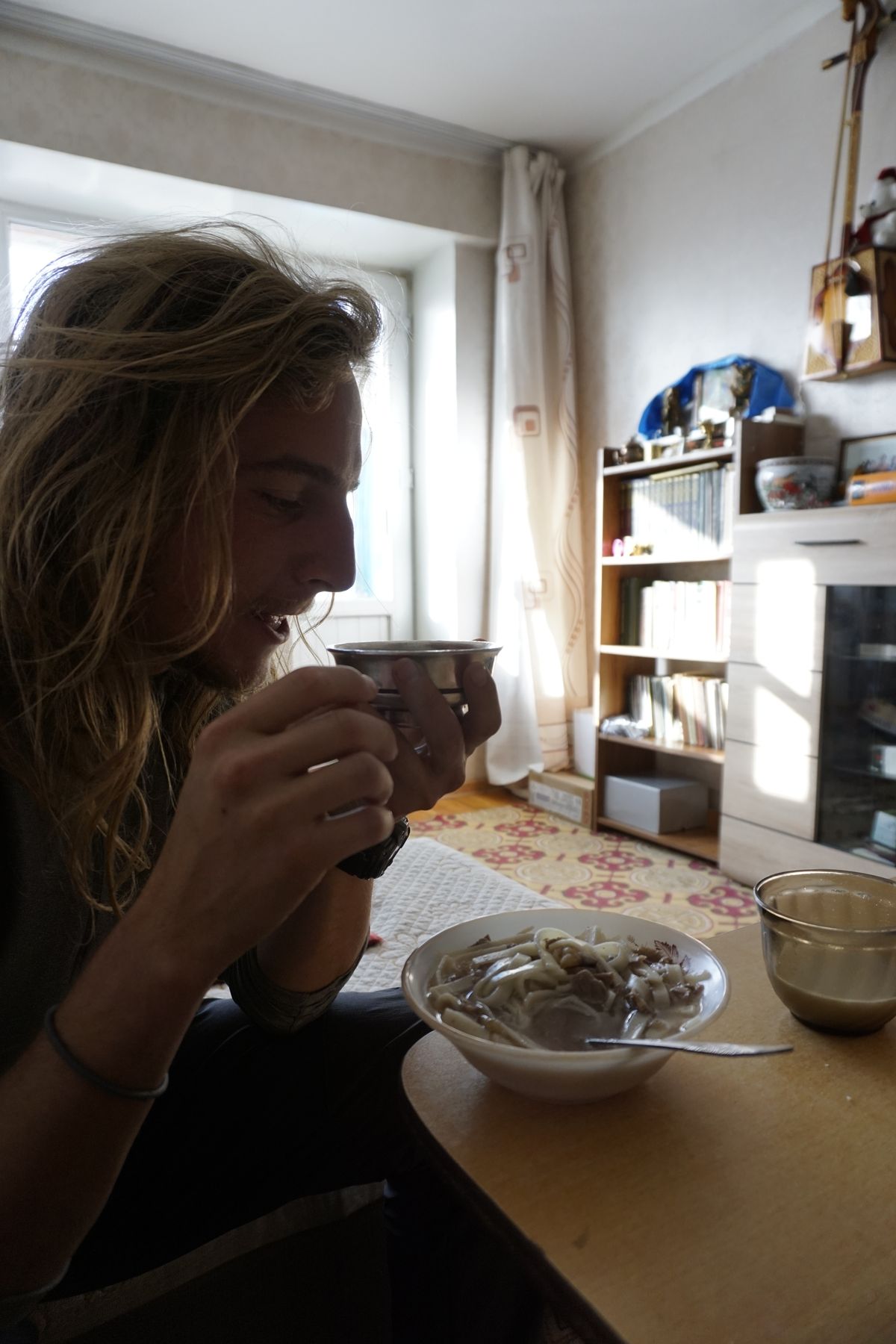
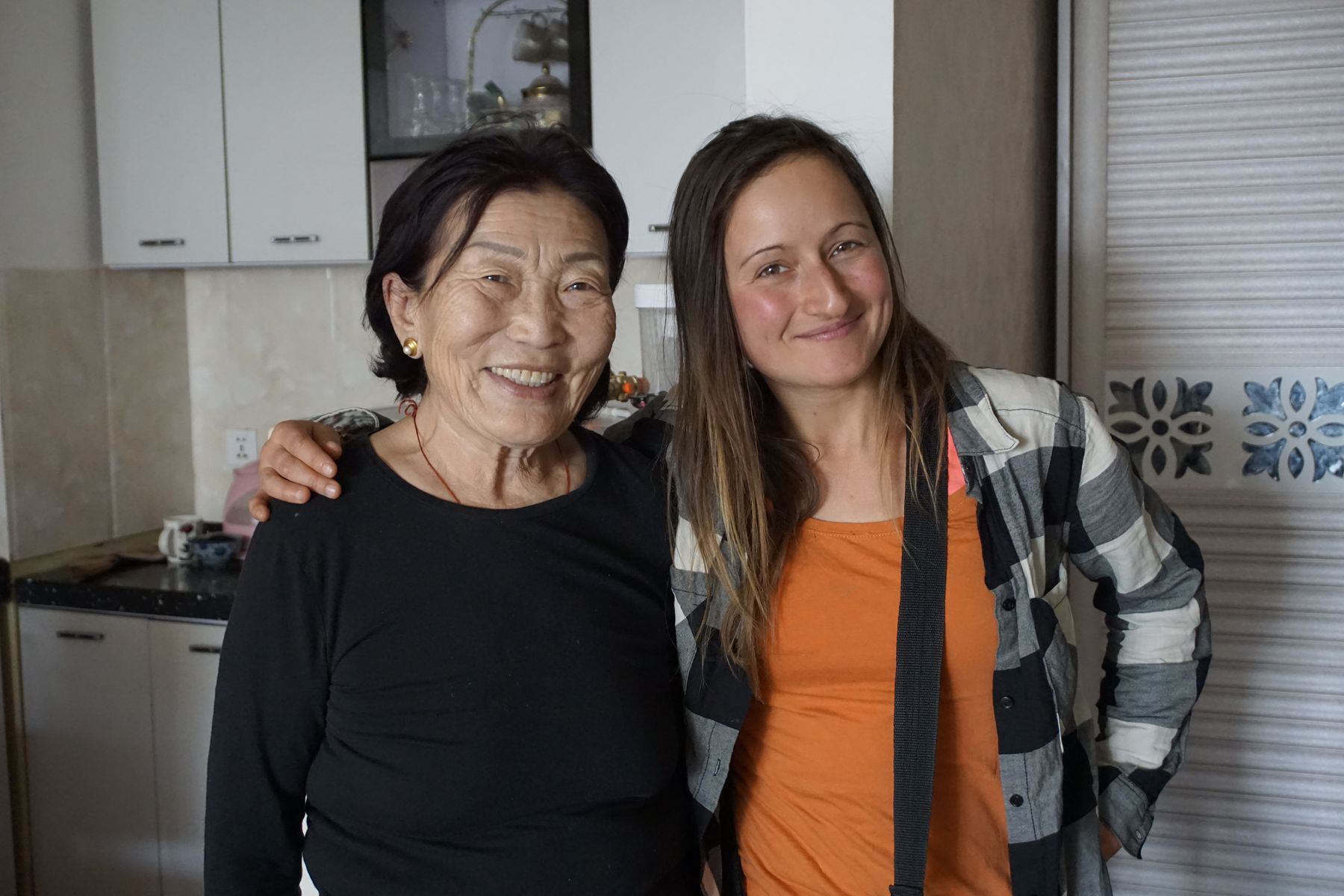
We had lunch at his great-aunt’s apartment, which was similar to an old apartment that you would find in Russia. His great-aunt treated us with (surprise) salty milk tea, white bread and butter, and Mongolian noodles with sheep meat. It was exactly the same dish that uncle gave us the night before, but it was much tastier. She also gave us some kind of home-made Mongolian alcohol, which apparently was also made from milk. As you may have guessed, it tasted like a cow’s ass :) But, again, it was a very nice gesture coming from a stranger.

We drove another hour or so before the guys dropped us off by Khovsgol Lake. From the lake, the plan was to walk up the NW road until it ended, then up the trail until we found a nice camping spot. A kid and dog joined us for the walk. The kid said he was 12 although he looked more like 9 or 10. We couldn’t pronounce his name so we just named him “Thunder” :) And the dog we named “Mushi Pushi”.

It took us a couple of hours to find a camping spot away from the resort/ fake yurt area, but both Thunder and Mushi Pushi stayed with us the whole time. Thunder was super keen on camping, as soon as we found the spot, he helped us set up our tent and made a nice fire pit. We cooked some extra food for our new family :) Mushi Pushi didn’t really like buckwheats, but Thunder made him eat it. Thunder didn’t speak much English, but gestured that he wanted to sleep in the tent. We asked him several times about his parents, but he didn’t seem to want to go home. Since it was already dark and cold, we made some space for him in our tent. Mushi Pushi slept outside.
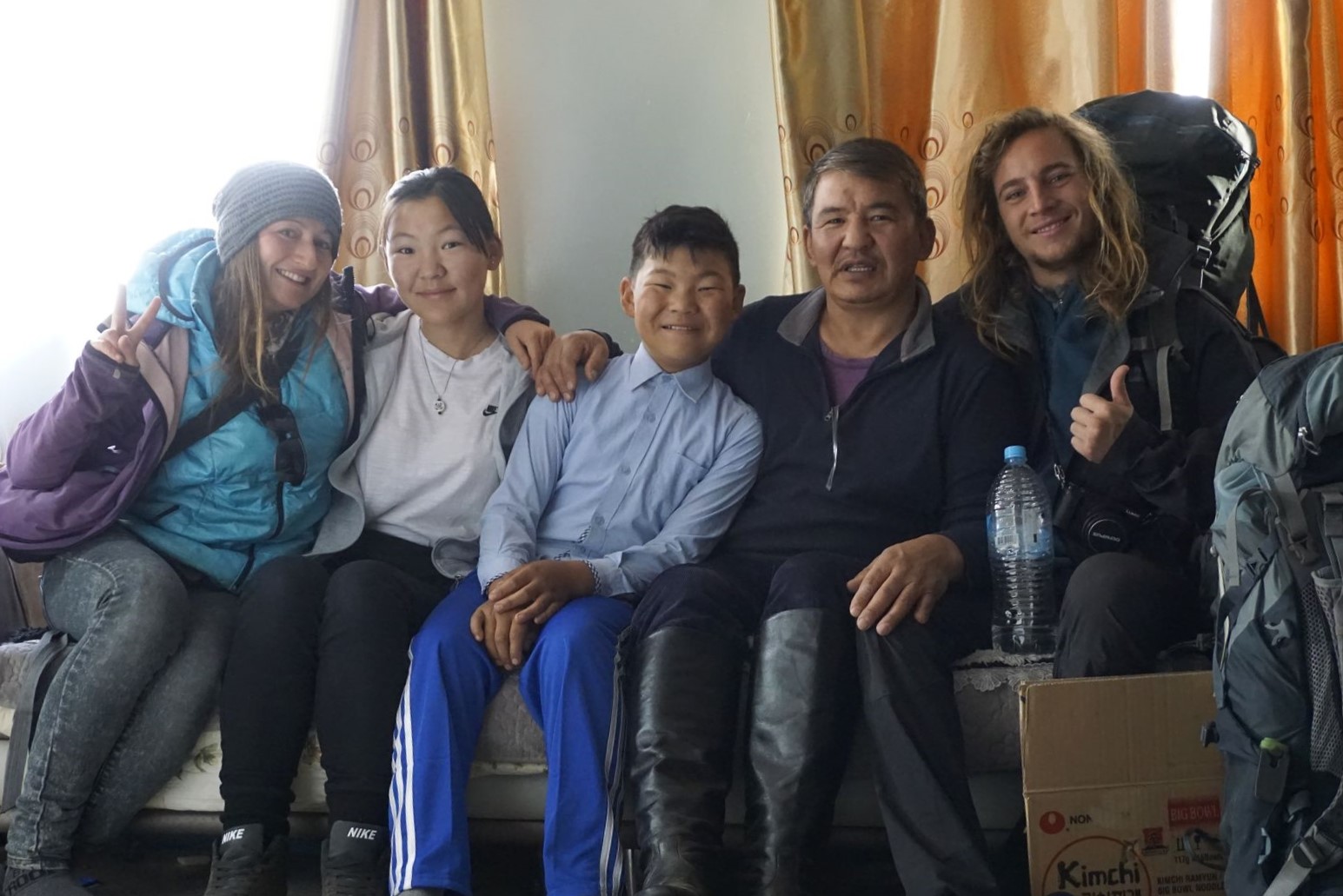
At 1:30am, a strange voice woke us up. It was a man calling somebody. He came to our tent, saying something in Mongolian. It scared me at first, but when we opened up, the man didn’t look drunk or threatening. He repeated the word “baby” and gestured that he was looking for someone. At first, we were like, “no, we don’t have a baby…” Hmm, but we do have a kid! :D Sure enough, he was looking for Thunder. We showed him the kid and this man was soo happy with relief. He was very thankful that his son was okay, and pointed to himself saying “papa”, and to the woman behind him saying “mama”. We all laughed and went back to sleep after Thunder left.

Total expenses of day 5:
$1.50 -truck stop cafe

Accommodation: tent
Food: truck stop, auntie’s apartment, cooked.

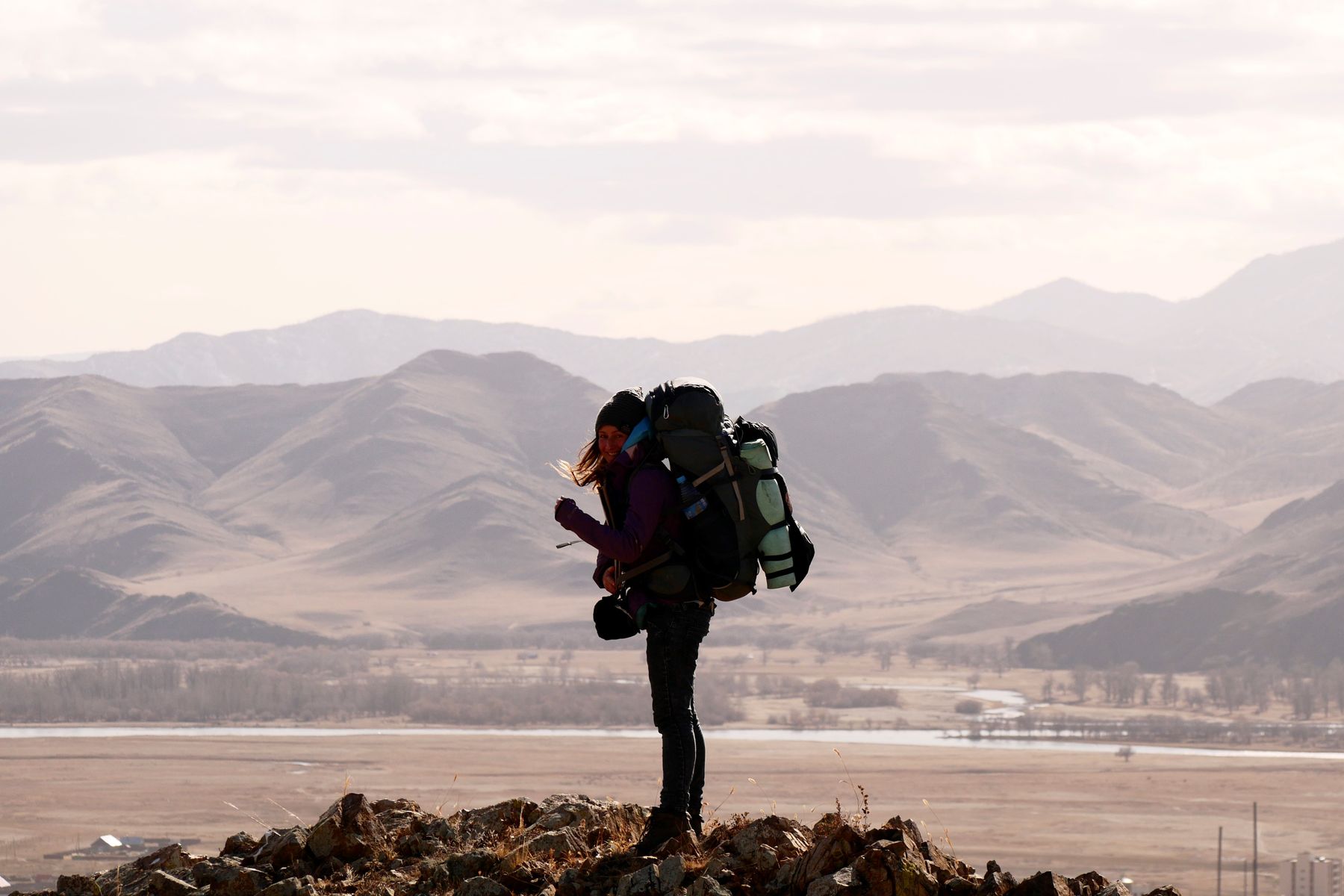
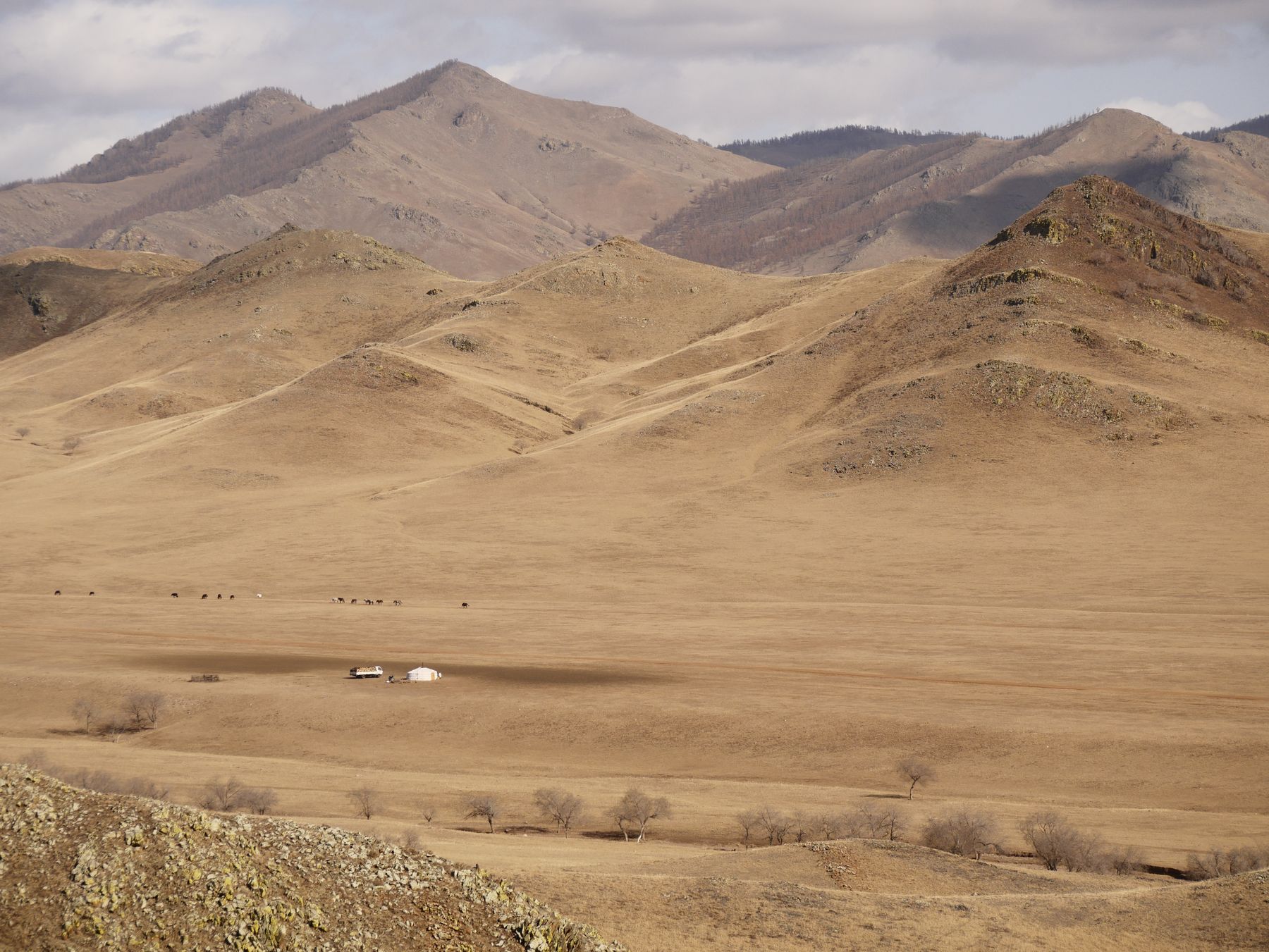
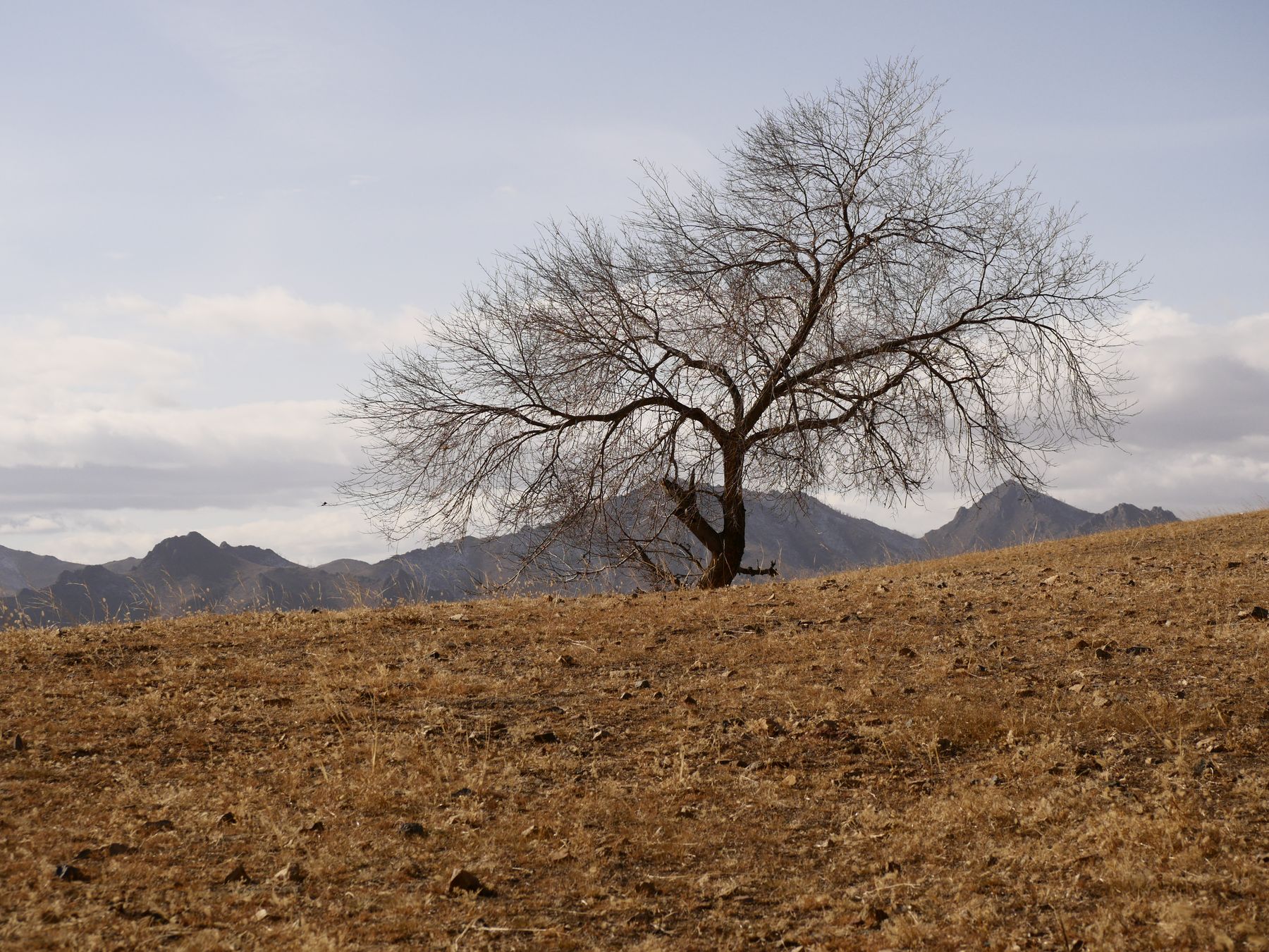
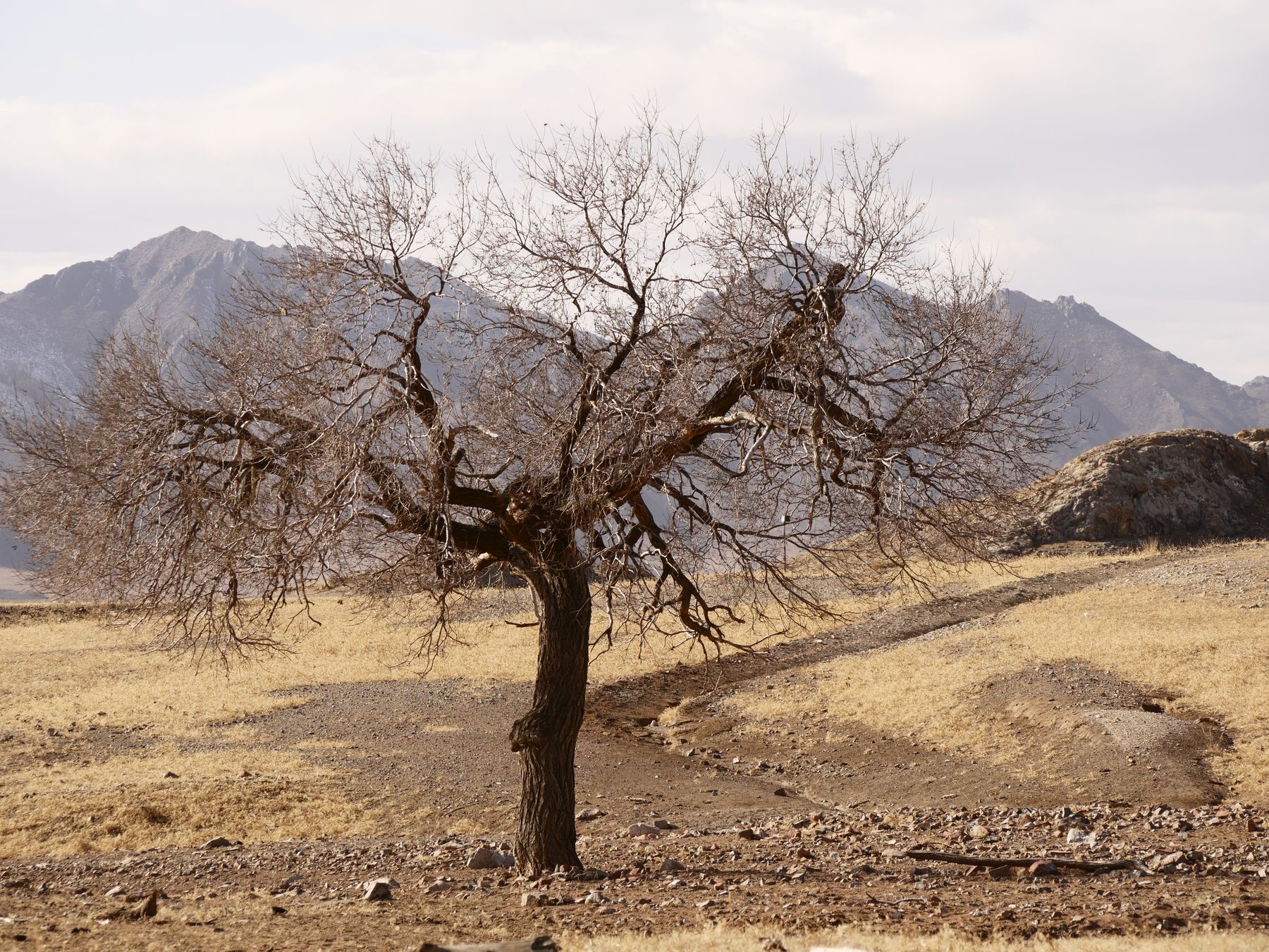
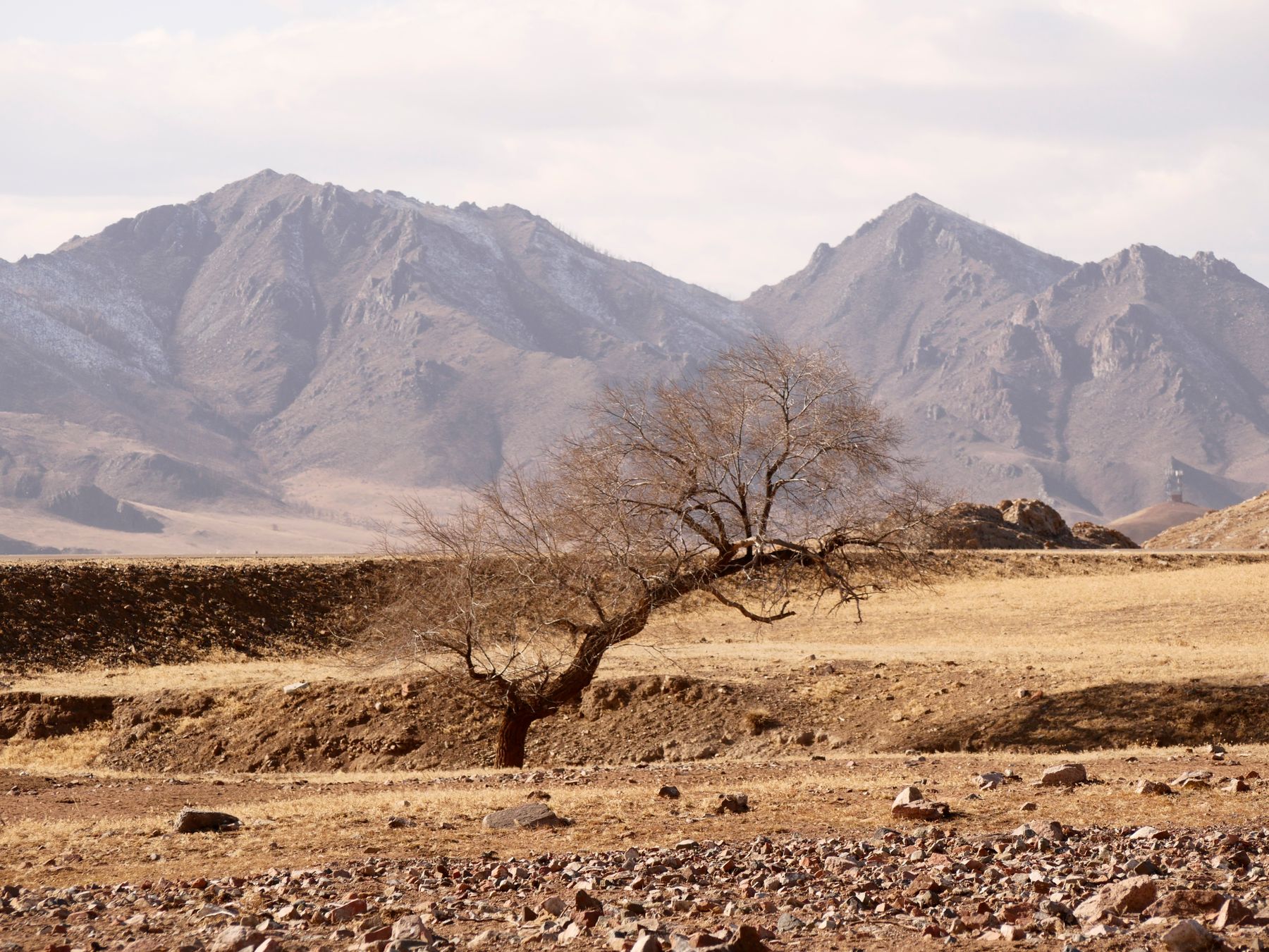
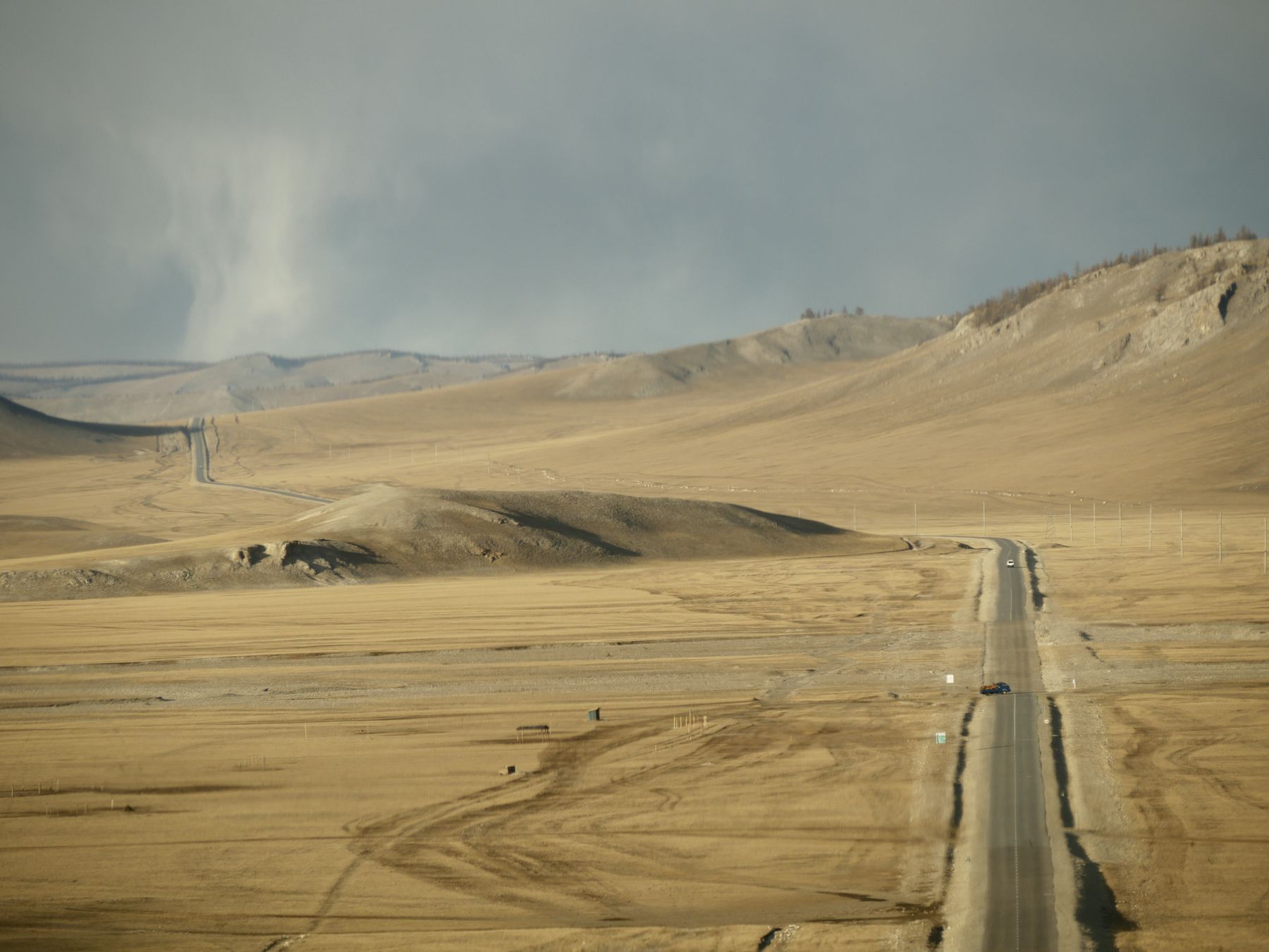
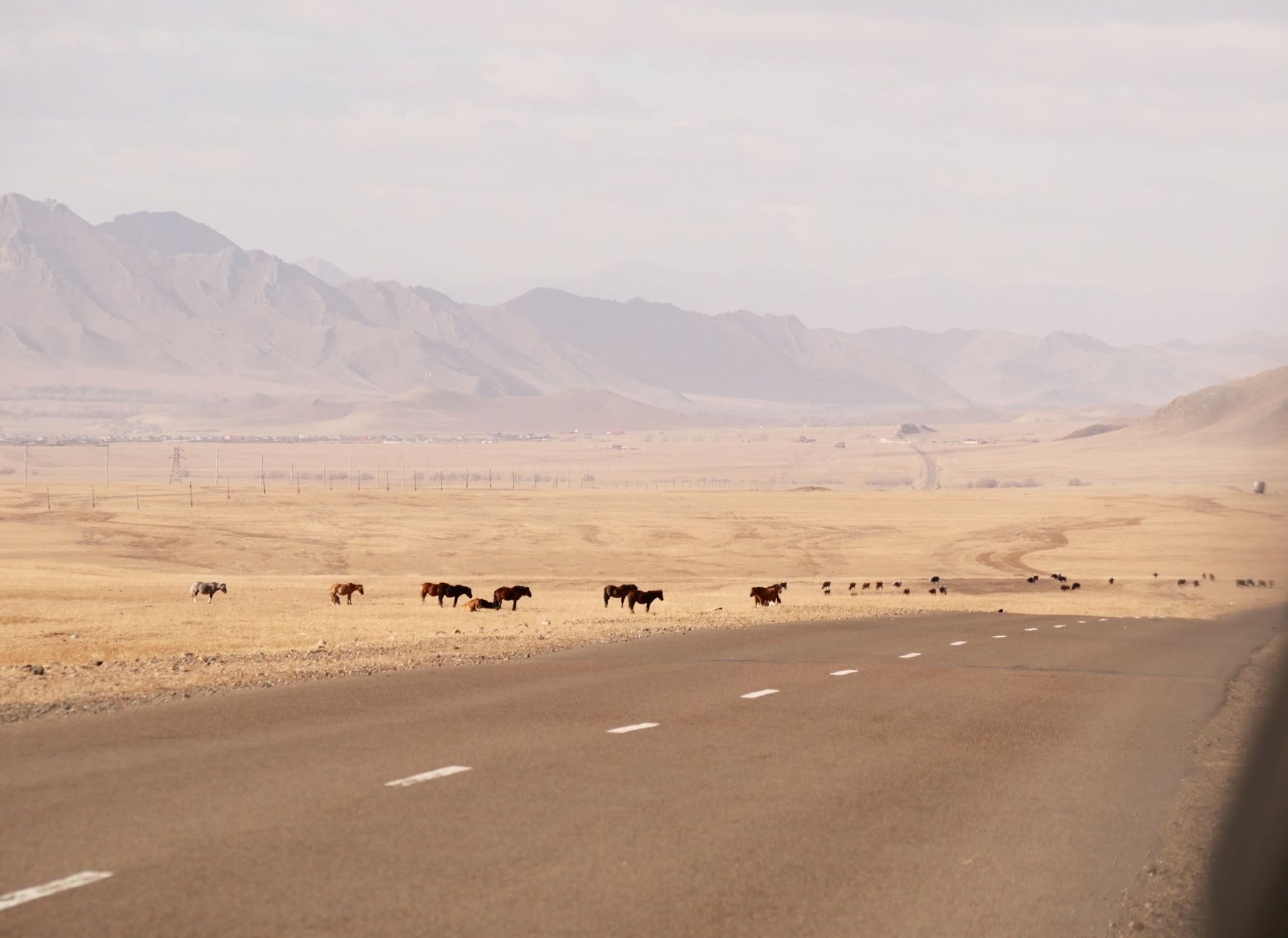
More Ikh Uul landscape shots by Felix:

Day 4: Hitching to Moron

Mongolia

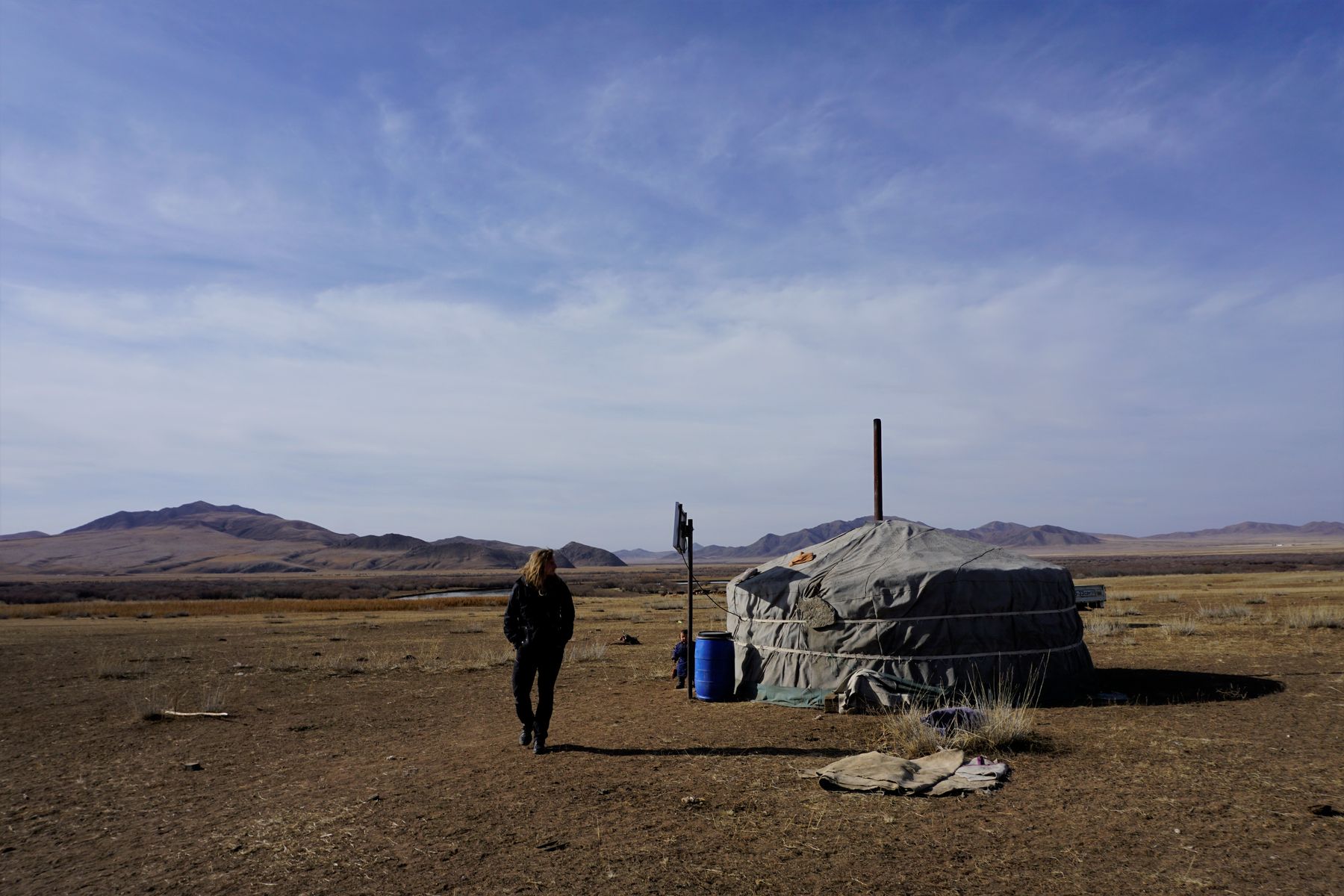
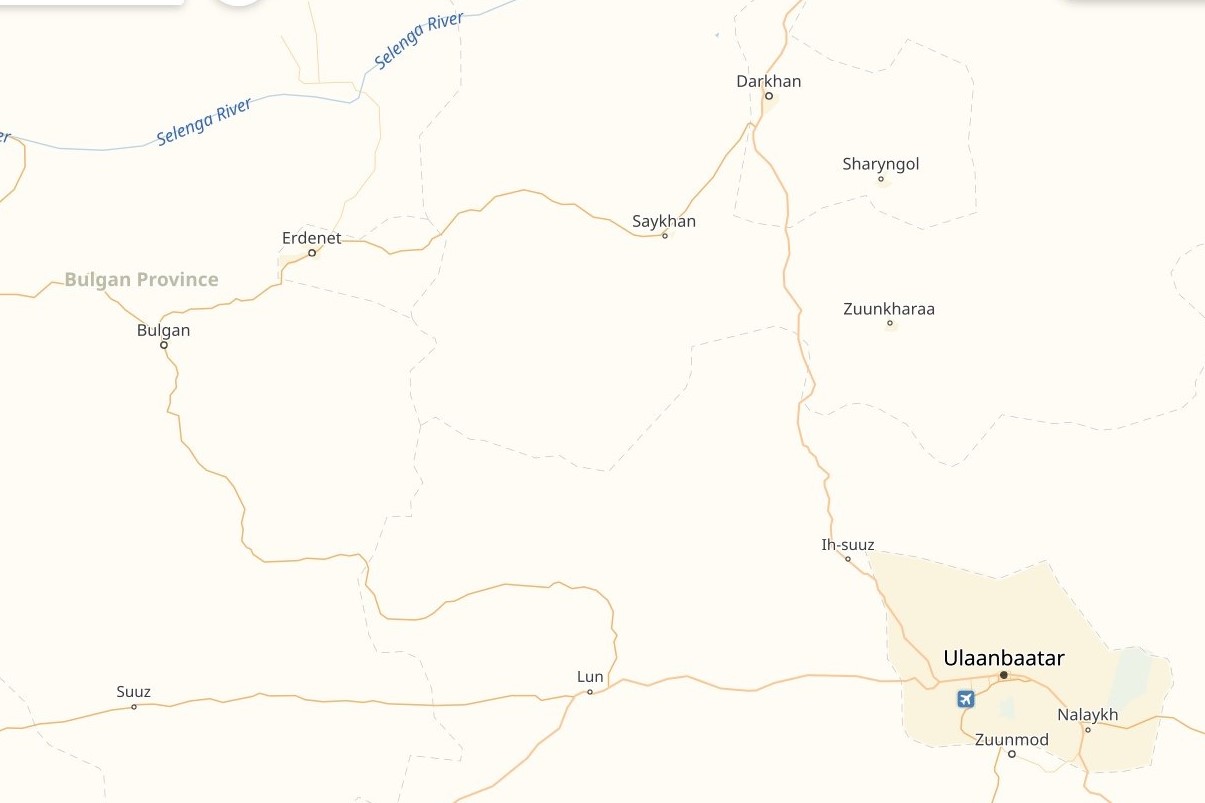
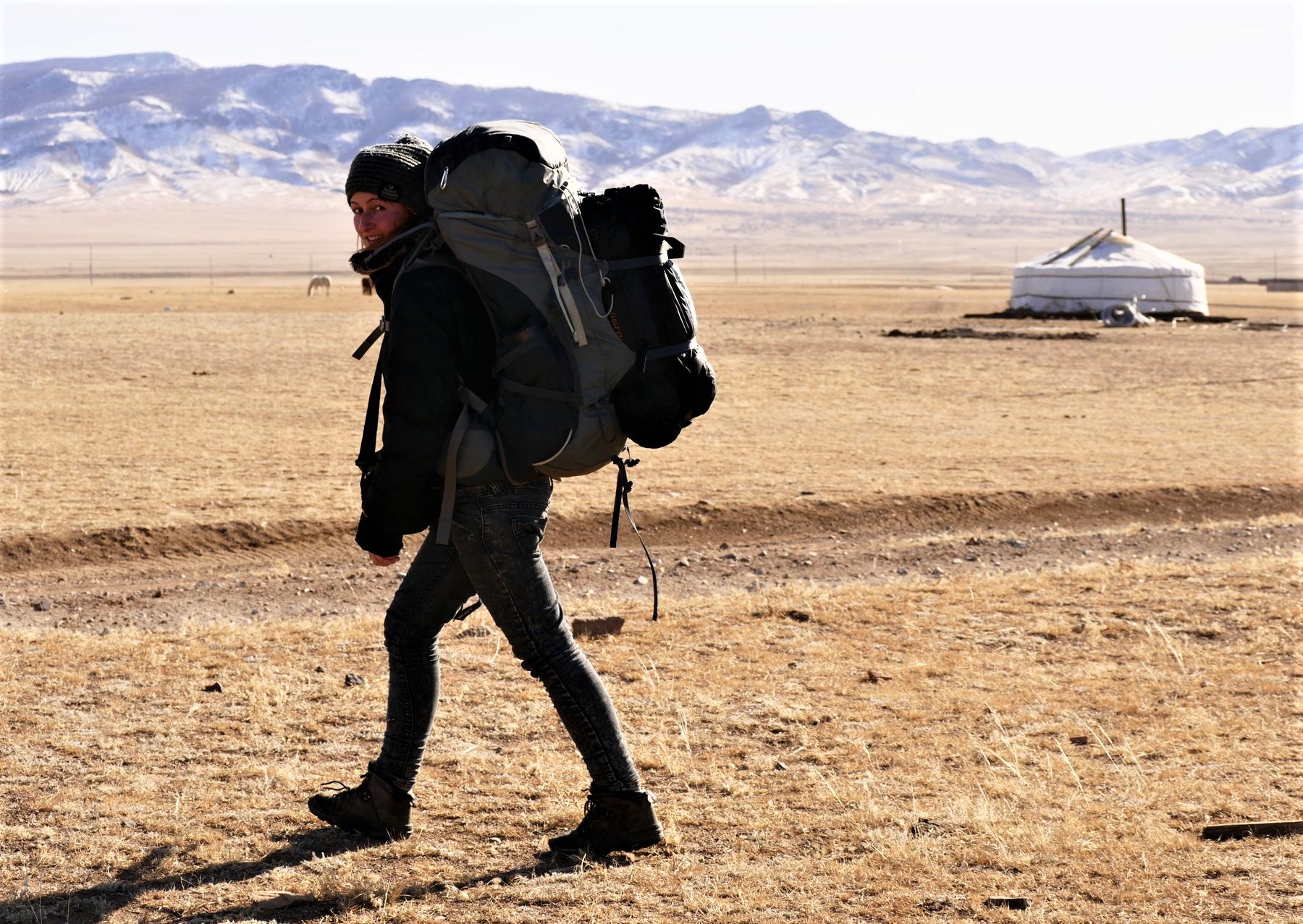
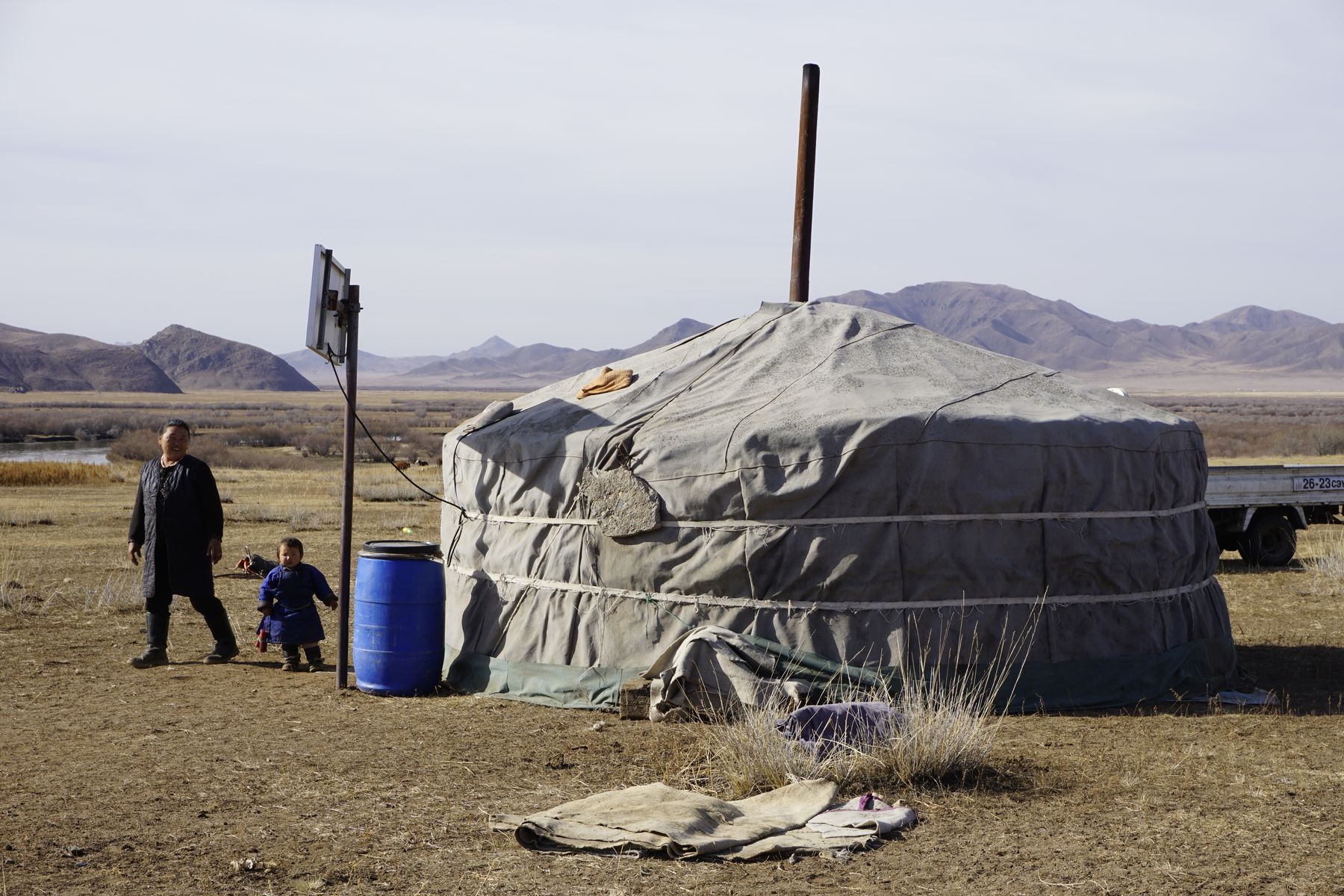
We stepped out of our tent (somewhere in Mongolia) when it was sunny and warm outside. Made rice porridge on the gas burner and took off for the road by midday. The first ride we caught was with two older men who didn’t speak a word of English or Russian, but seemed quite humble and nice. The fun thing about hitchhiking is that you never really know exactly where you will go (especially if you don’t speak the language) :D After an hour or so of driving, the driver made a left onto a dirt road and brought us to a yurt. This was awesome- exactly what I was hoping for! A real yurt! Not a bs one made for tourists, but a real one :D

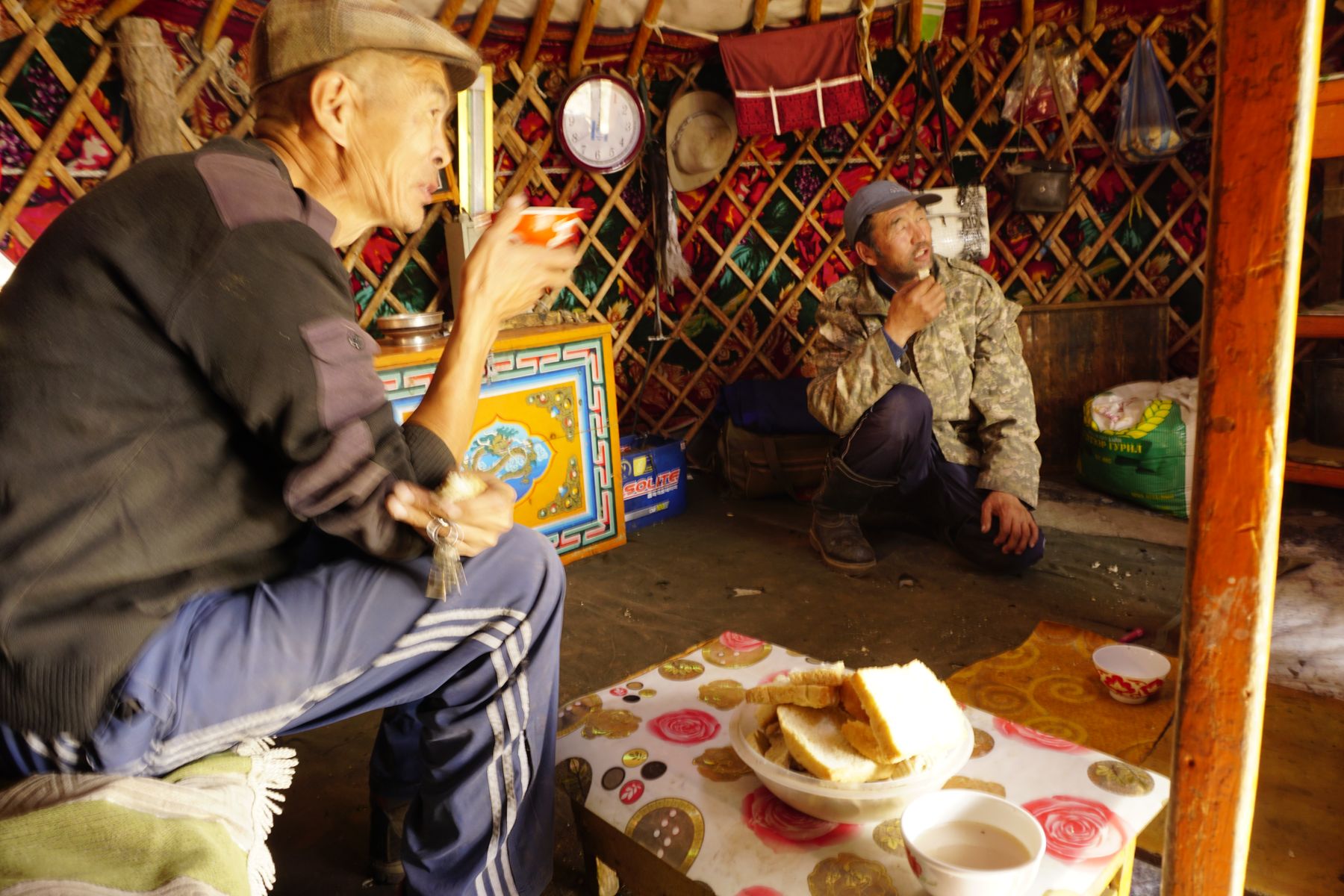
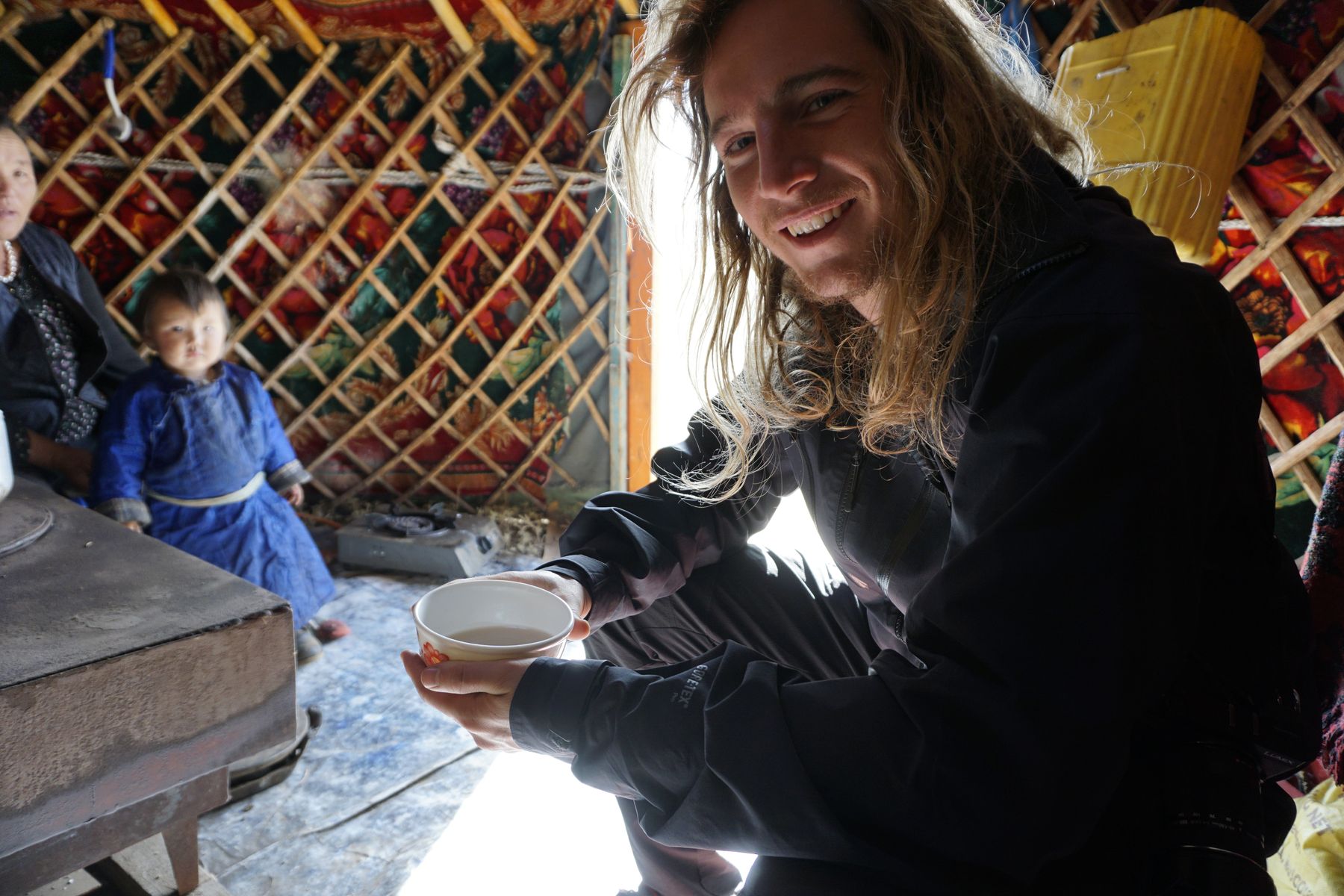
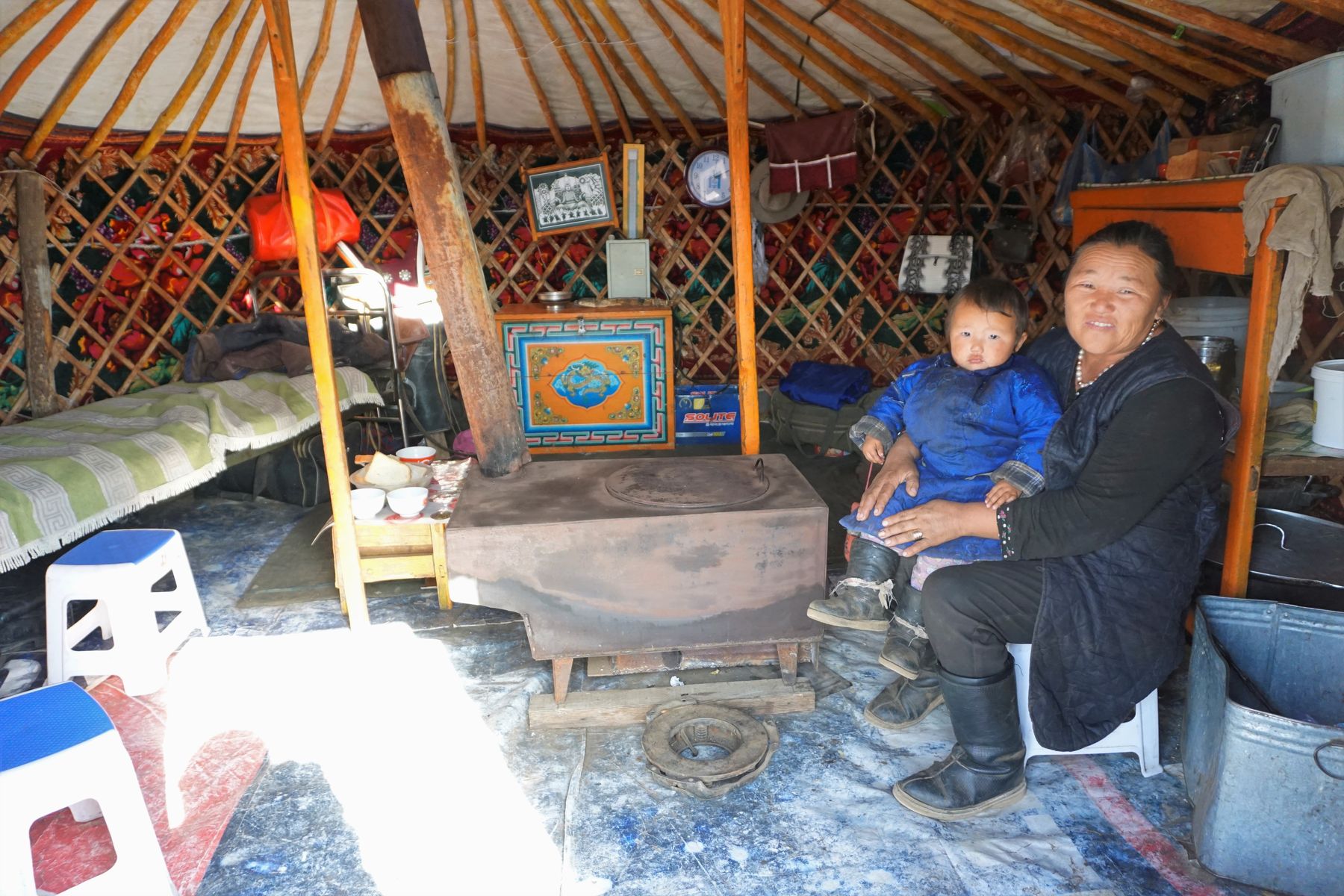
Inside the yurt was a woman and a very cute 2-year-old in a traditional Mongolian coat. The woman treated us with disgusting salty milk tea, white bread, and what we thought were rock-hard fermented horse milk cookies. They were cheese curds, apparently, and they tasted worse than the tea. It was great :). We tried to communicate a bit using a translator and the few Russian words that she knew, but communication didn’t go far beyond “Canada” (Felix is from Canada), “Russia”, and figuring out that the child was a girl.

It was clear that they were nomadic sheep herders and quite poor. You could see the ground (the earth) in some places inside the yurt, and the “walls” looked pretty thin. Inside the yurt was one small bed, a stove, one cabinet, and a few decorative items. It must be hard to keep a place like that warm when it gets down to -45 in winter.

After we finished the tea, the two men drove back onto the main road and dropped us off at the next village.

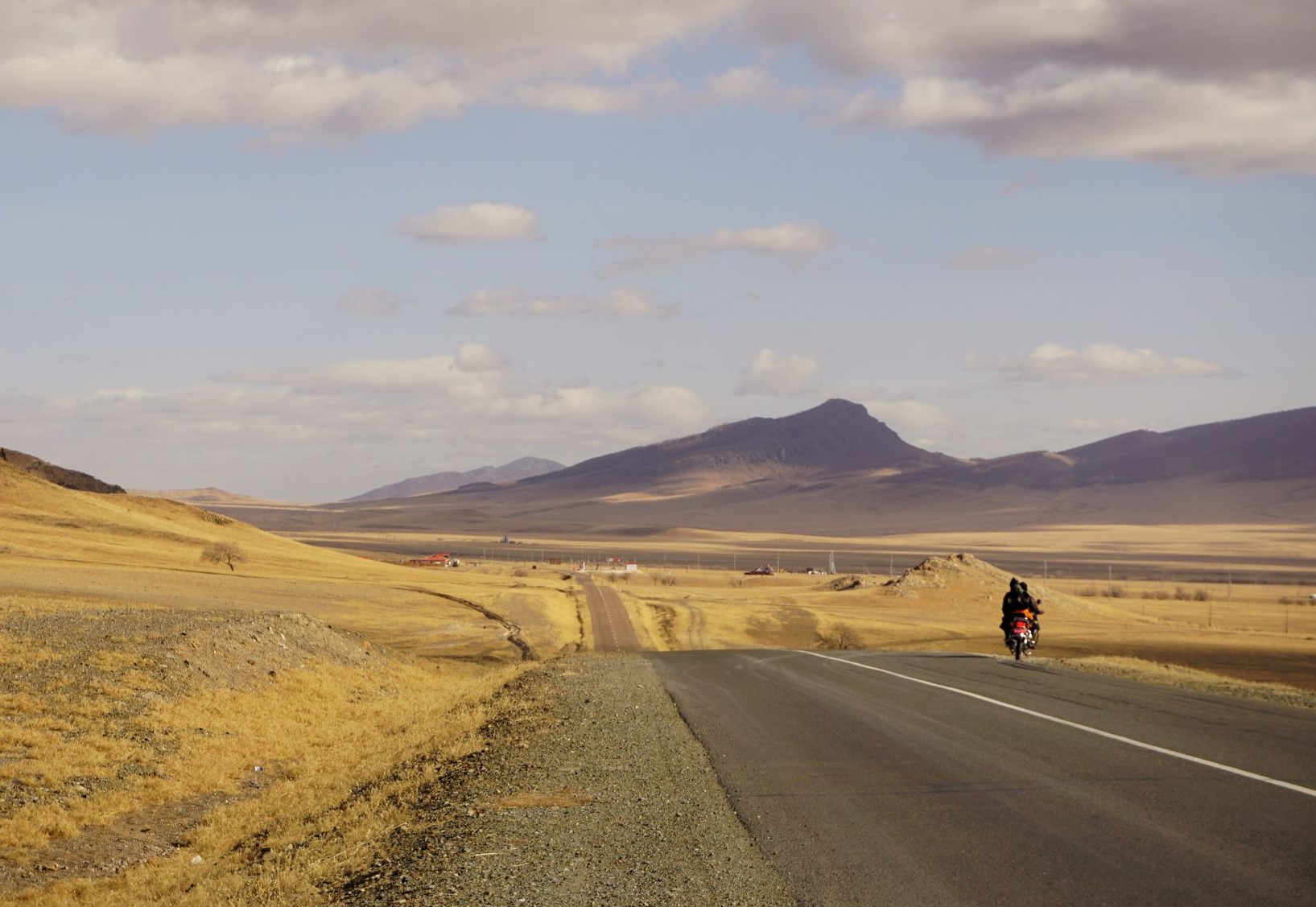
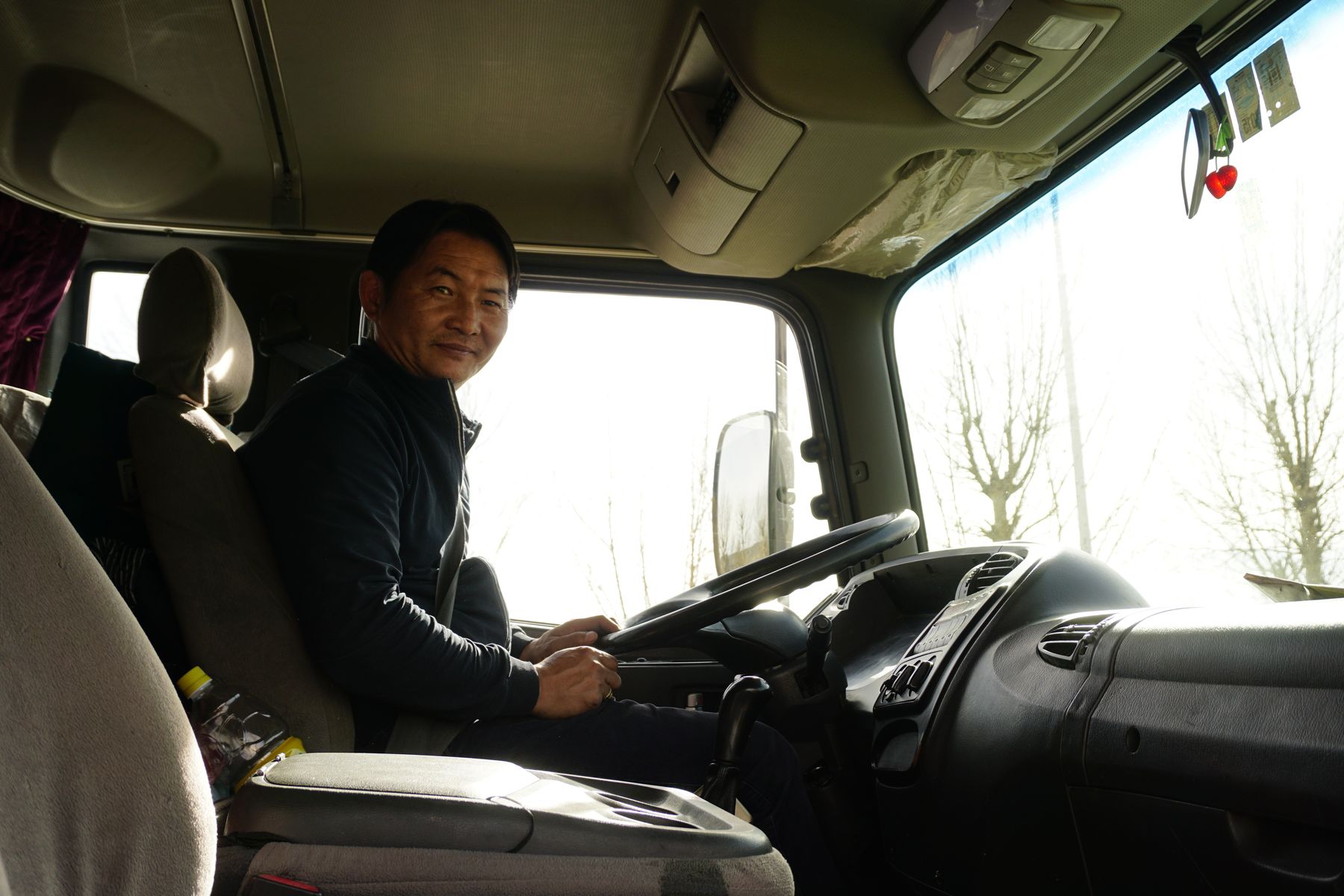
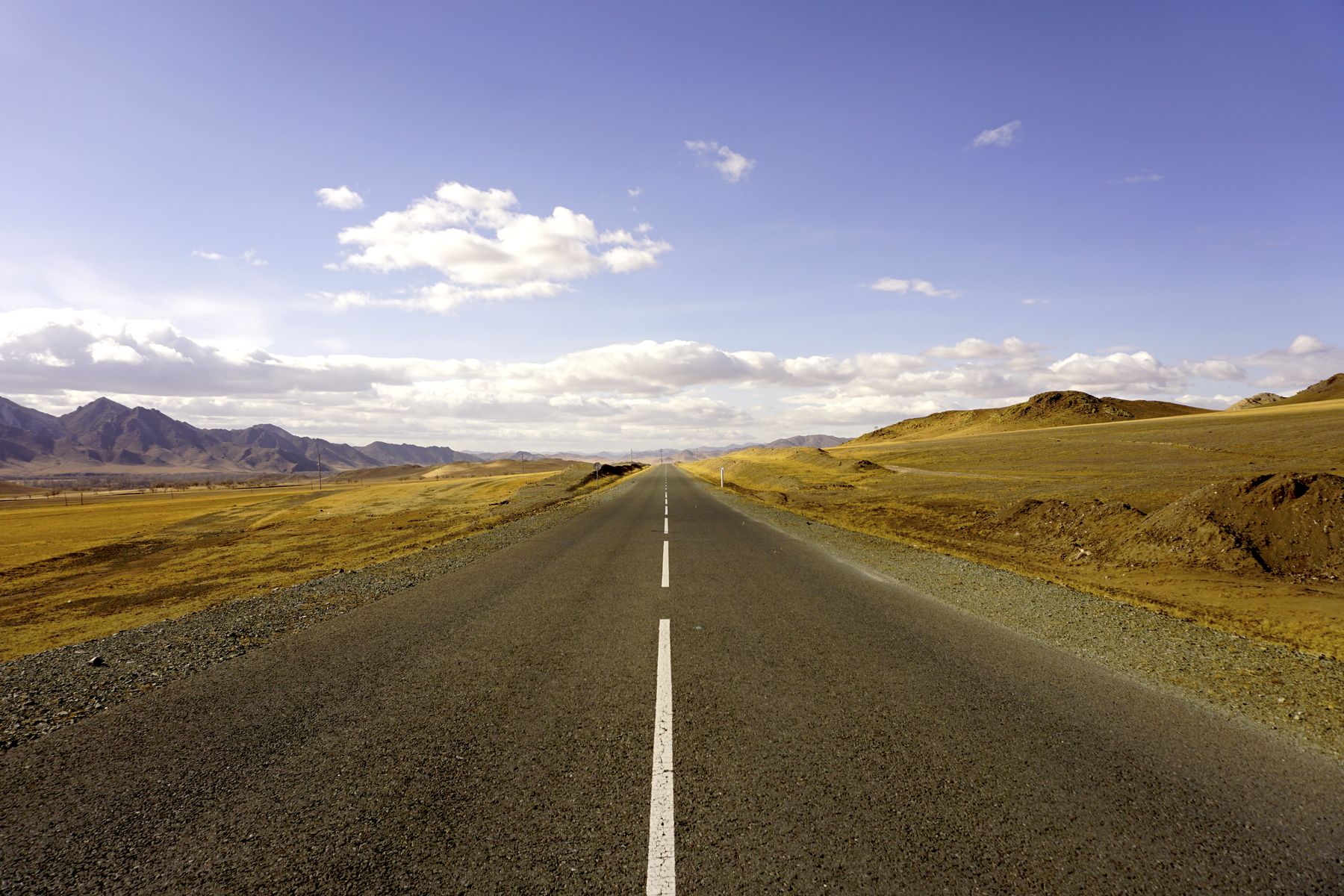
We stuck out our thumbs and caught another ride within 5 minutes, this time with a truck. This was better than watching any movie, as the Mongolian scenery was getting more and more spectacular by the minute. Big wide-open fields sprinkled with sheep and goat herds, yellow naked mountains in the distance, rivers weaving in and out of the side of the road, spotted with creepy looking dried out trees. I didn’t want it to end!

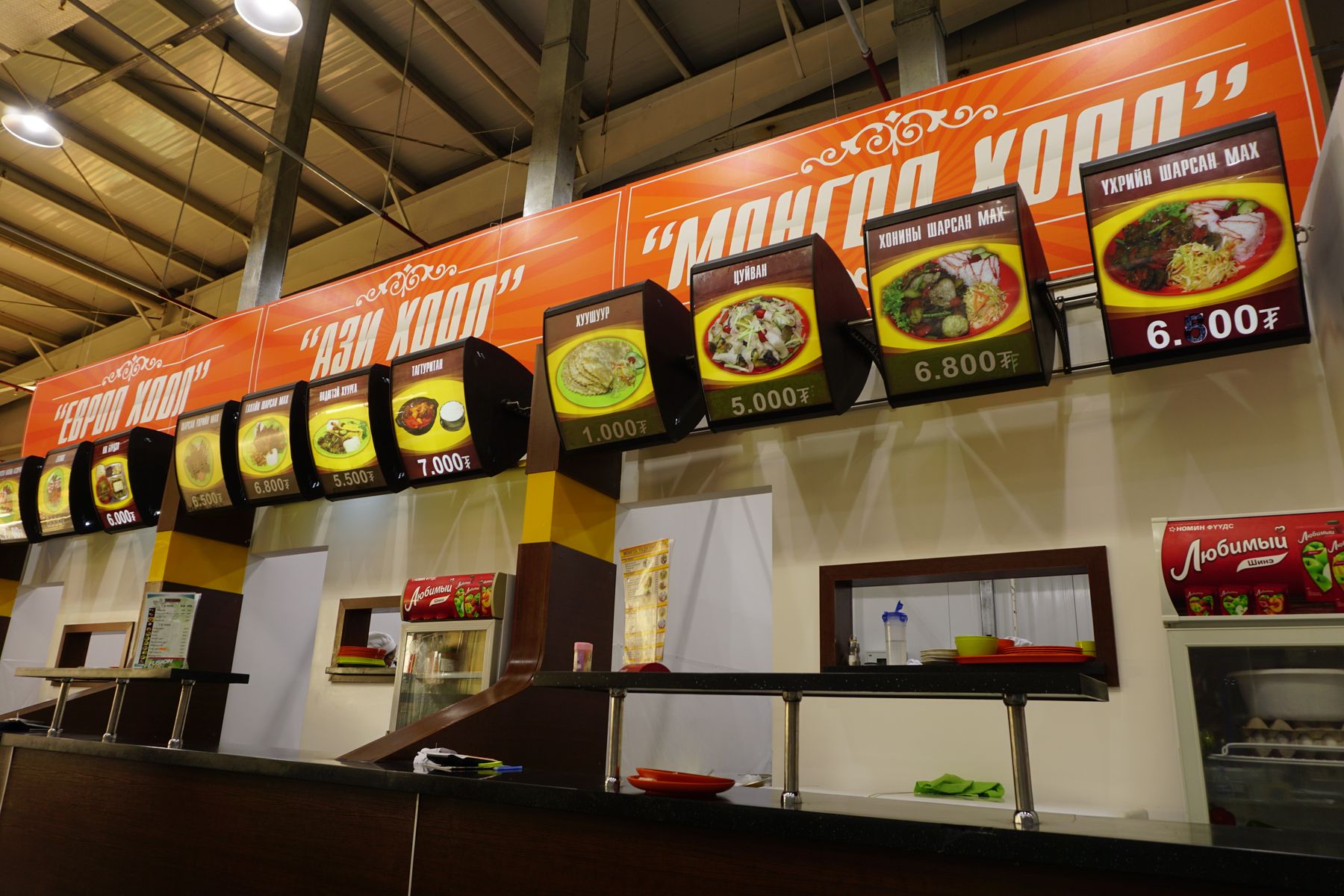
The truck driver dropped us off in a dirty little town called Erdenet, near a Costco-like shop. We ordered some random food from a Mongolian fast food joint inside that Costco place ($2) and bought some more groceries ($5). See, if you’re not picky with what you eat, money can go a long way. Plus, you get to try some interesting stuff :D

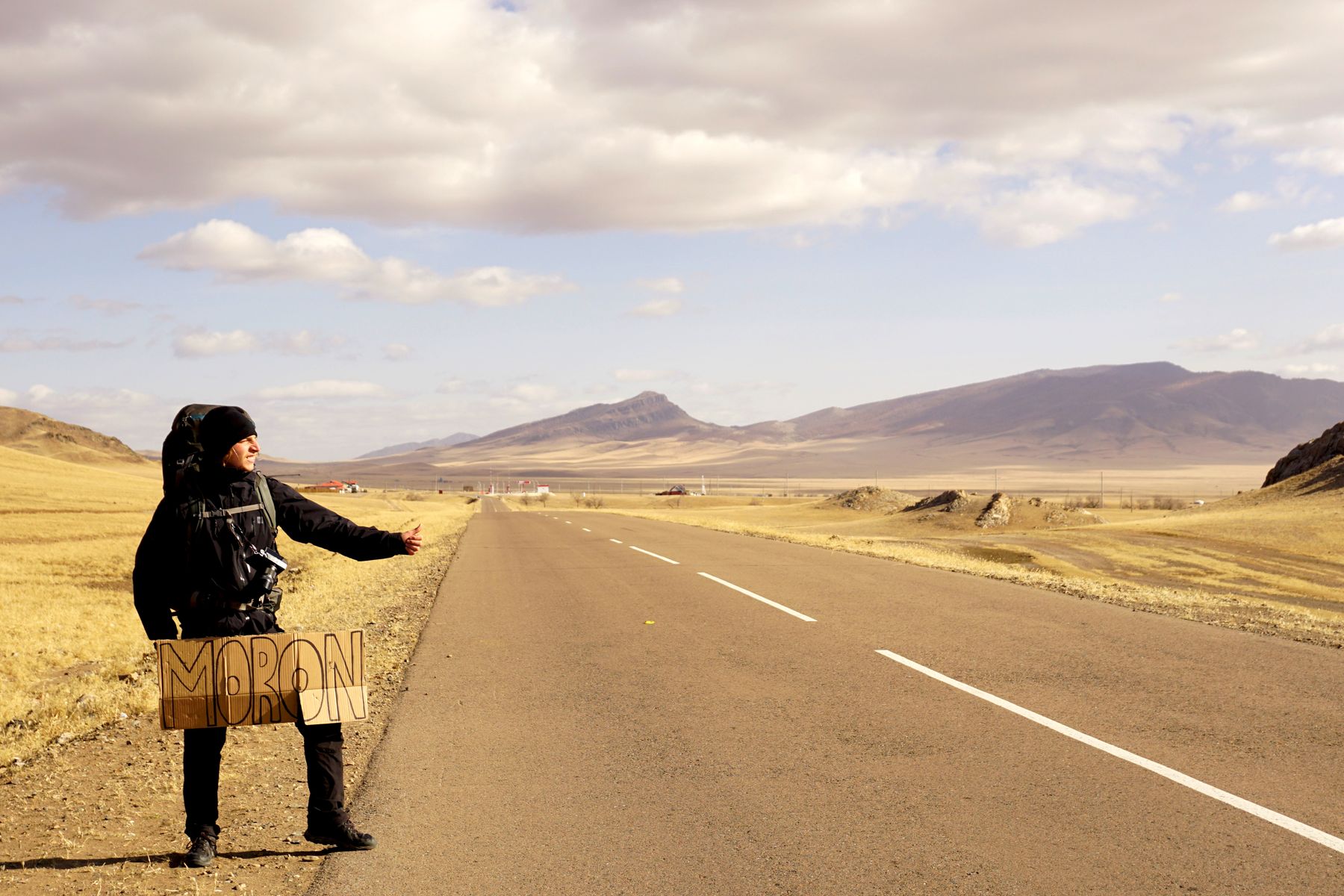
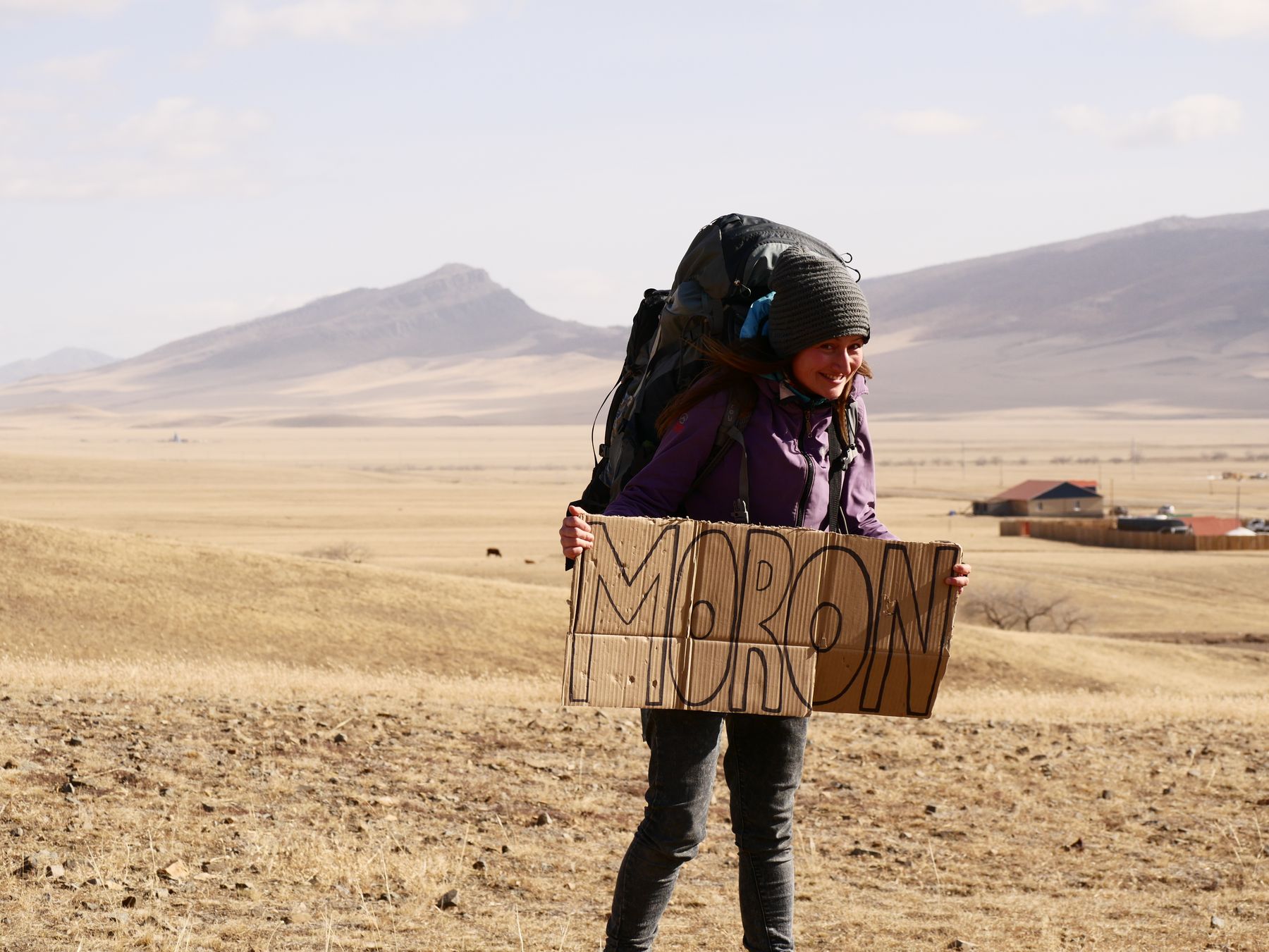
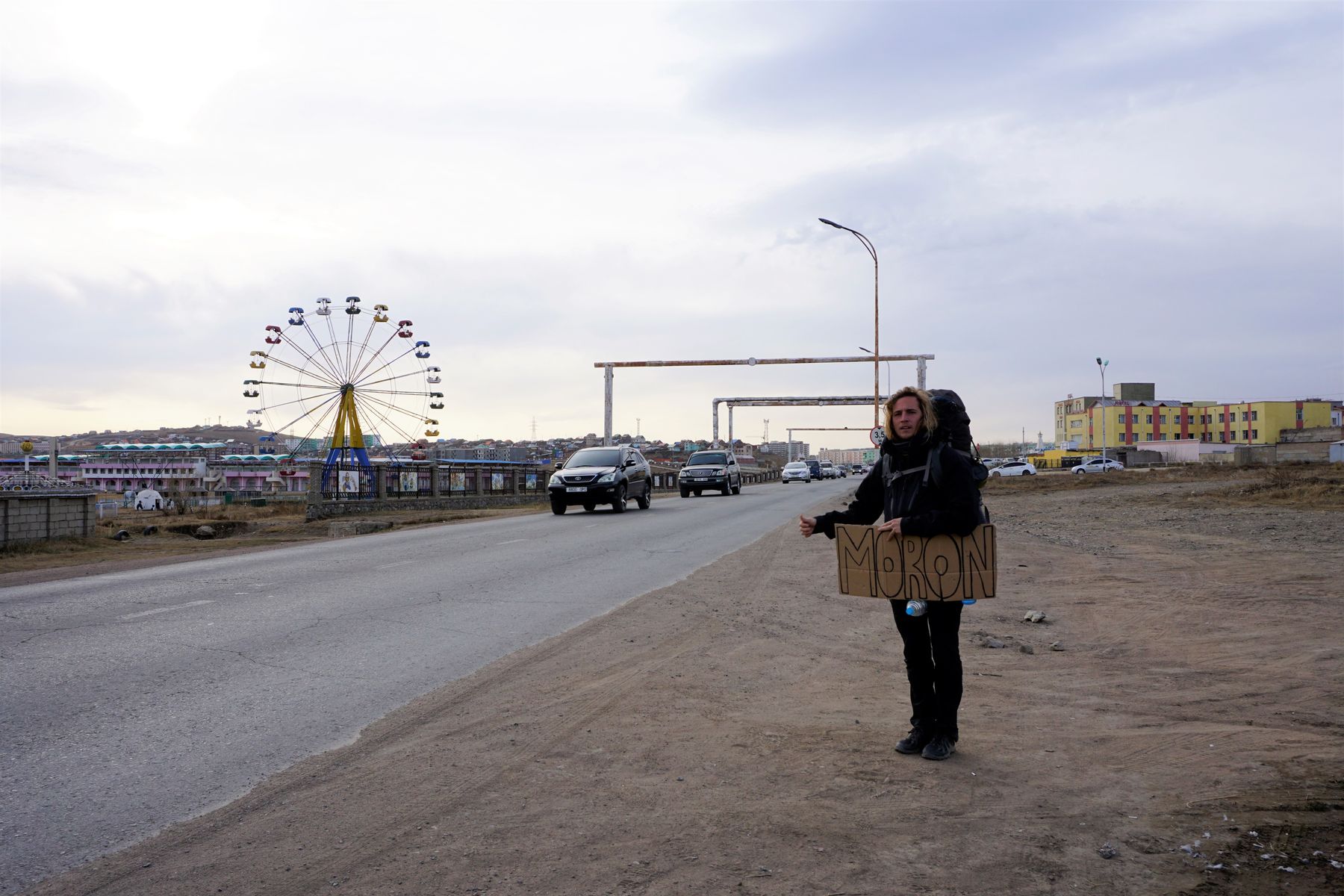
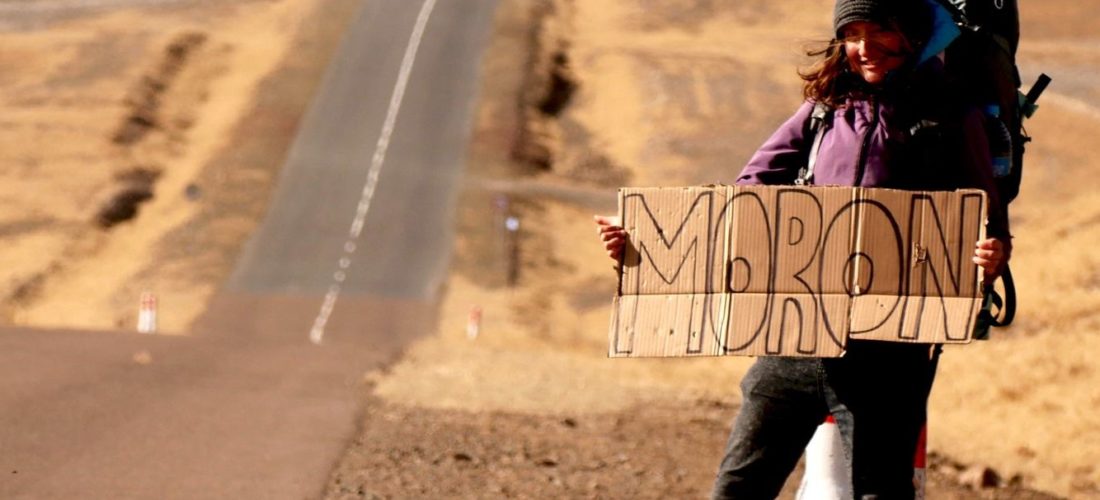
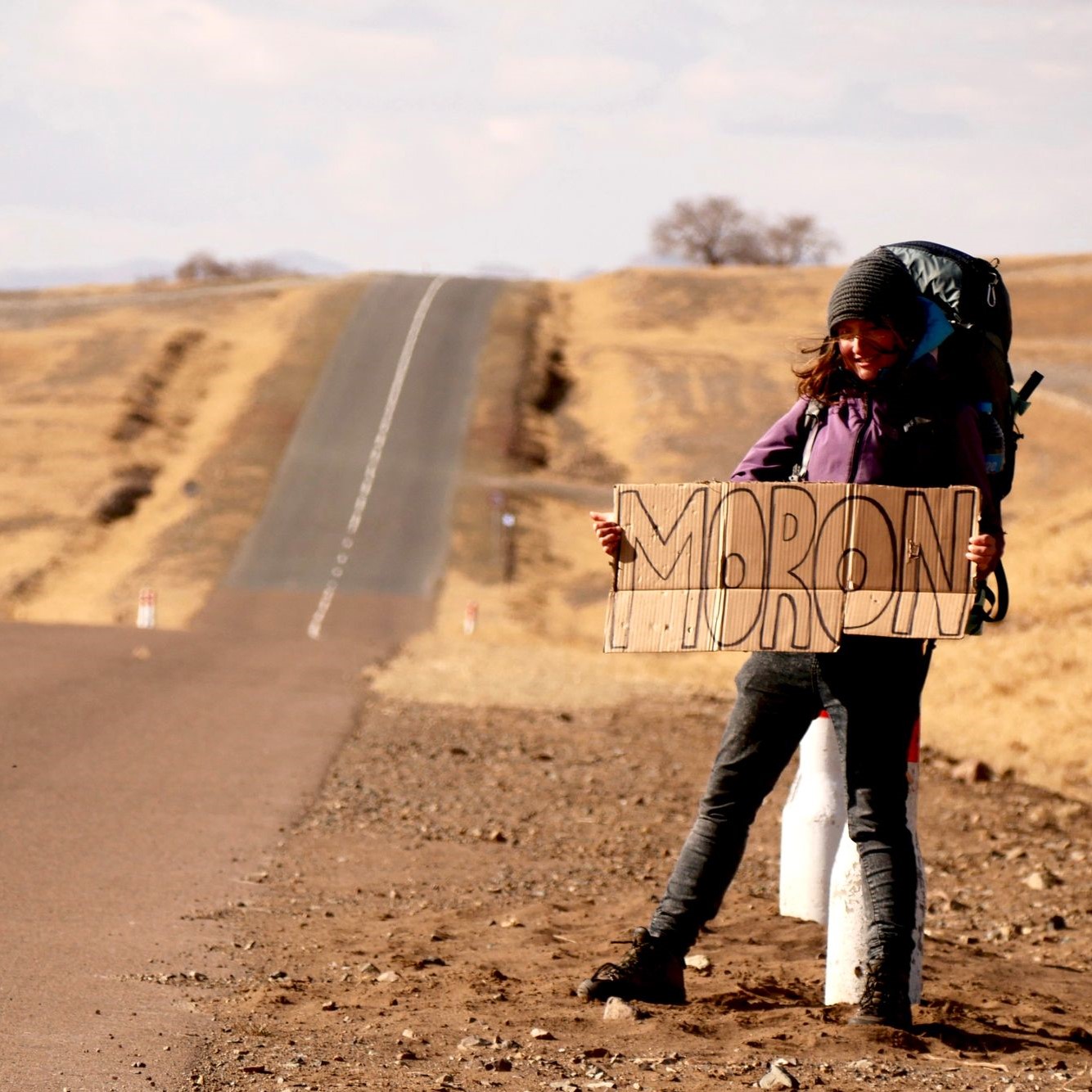
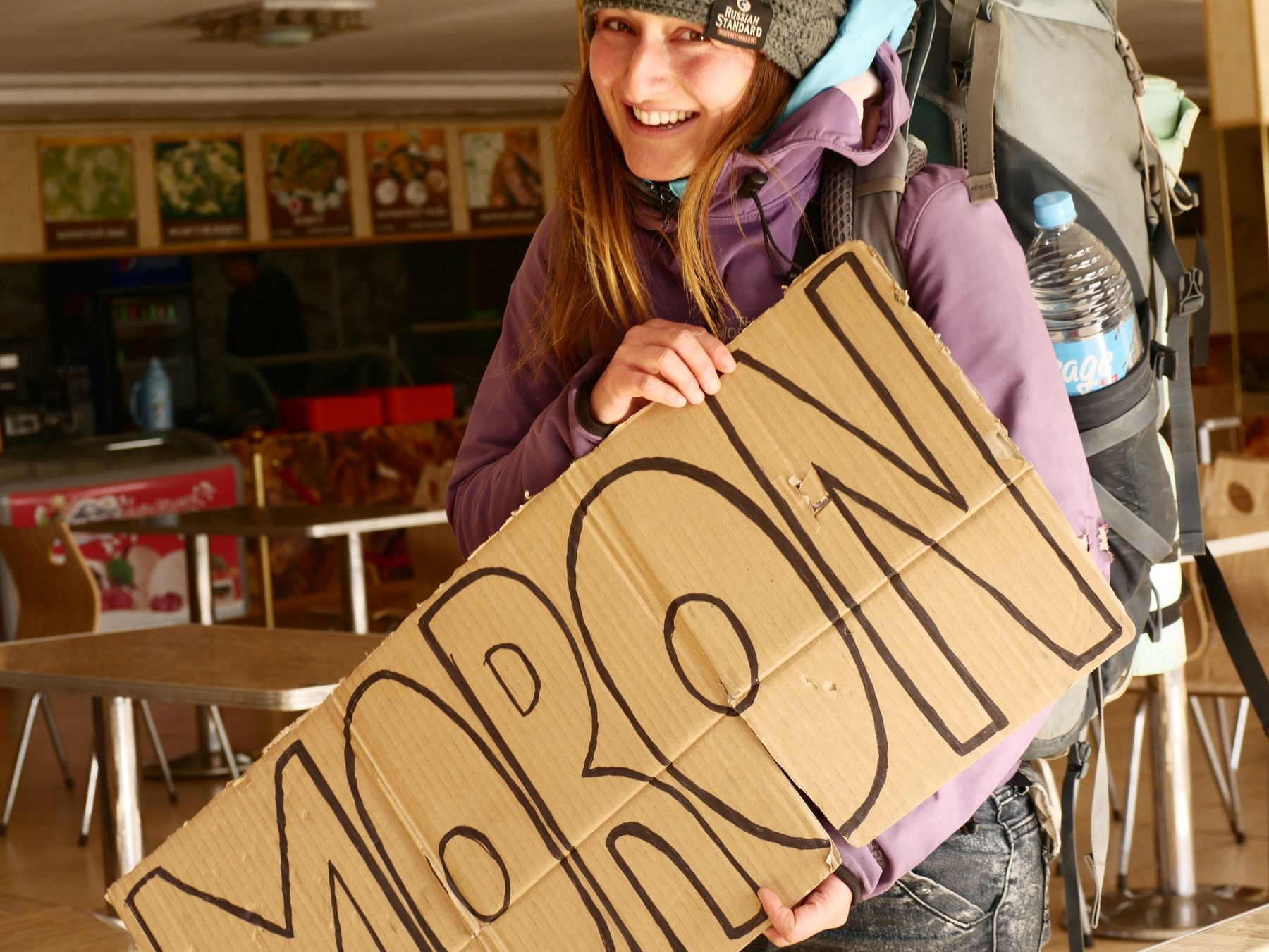
We walked through Erdenet for about a half hour before we both felt like we were suffocating from dust, then took out the “Moron” sign to hitch another lift.

We didn’t even wait 10 minutes before a guy from Ulaanbaatar stopped to pick us up. This guy knew English quite well and laughed about us being Morons :D. He was nice to talk to, we spent more than 2 hours in his car, talking about global problems and things like how cockroach-like humans are. This guy used to be a scientist but hated his job; he quit only a few years ago to follow his real passion, which is “shooting moving targets”. It gave me a little fright when he first said that. Slim chance that he’ll want to practice on real people, right? :D

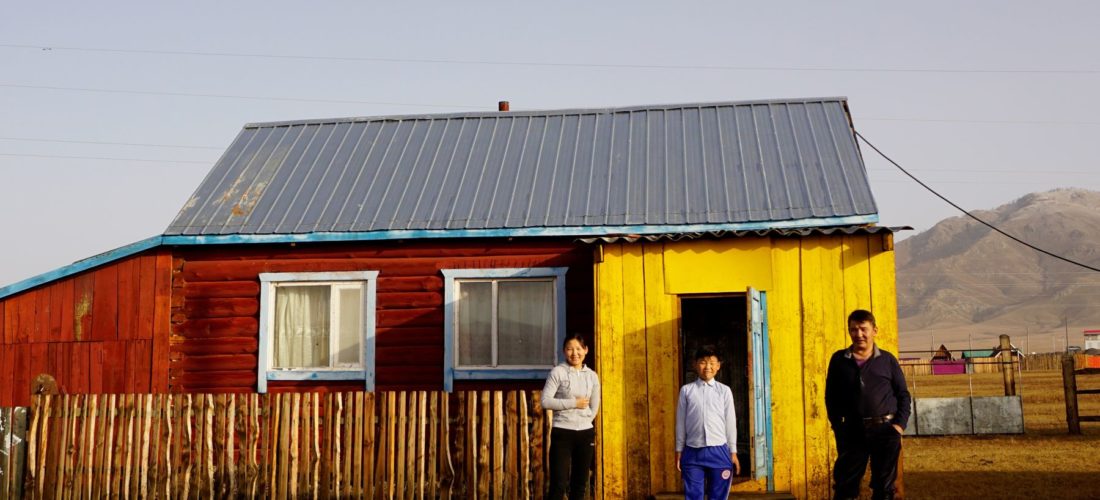
It was getting dark as he was driving, and it seemed like he didn’t want to leave us in the middle of nowhere in the dark. So he called his brother-in-law and asked if we could stay with him, in a village called Khutag-Undur. The driver dropped us off and didn’t spend the night there himself, but his brother-in-law and his kids were extremely nice.

Now just imagine this conversation happening in a “normal” family in the US, Canada, or any other western country:
Brother: “I picked up 2 foreign hitchhikers, they don’t speak English. Can I drop them off at your house so they can spend the night there?”
How would your uncle respond to that question? :)
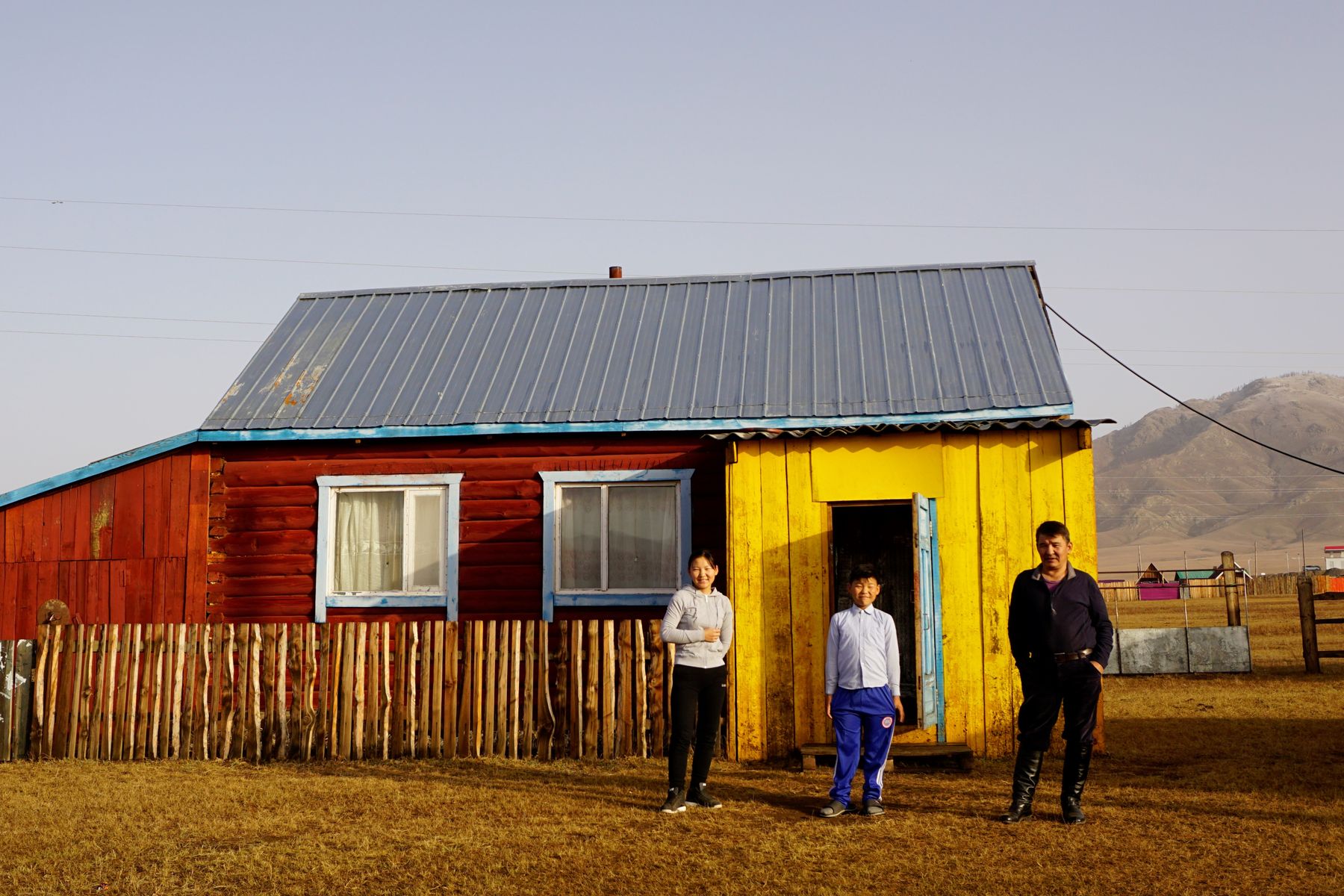
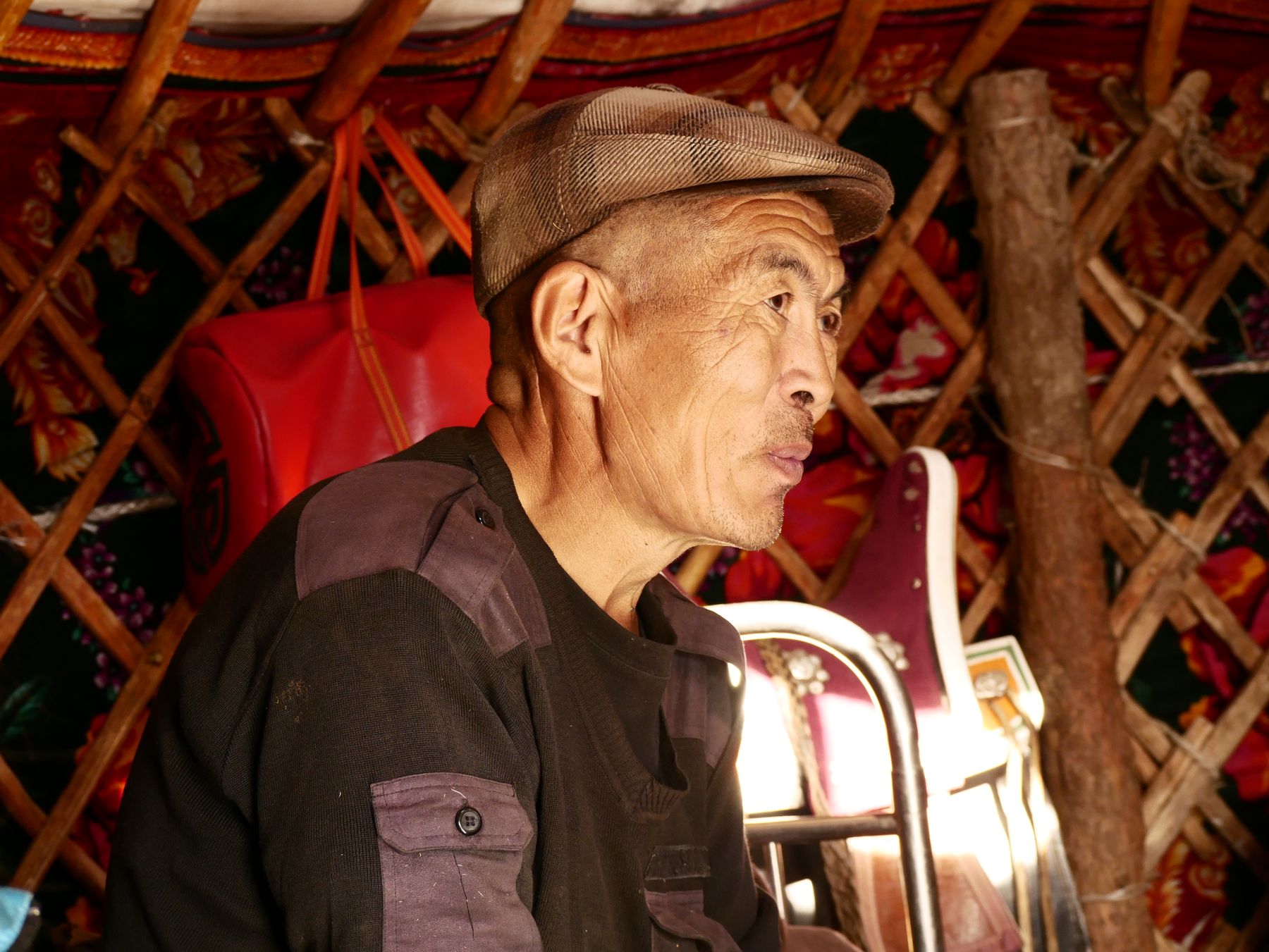
We can’t remember any Mongolian names because they’re so freaken hard to pronounce, so we’ll just call this guy uncle :). Uncle was very nice and funny to try to communicate with. He knew a little bit of Russian, mostly nouns, so we mainly just stuck to that.

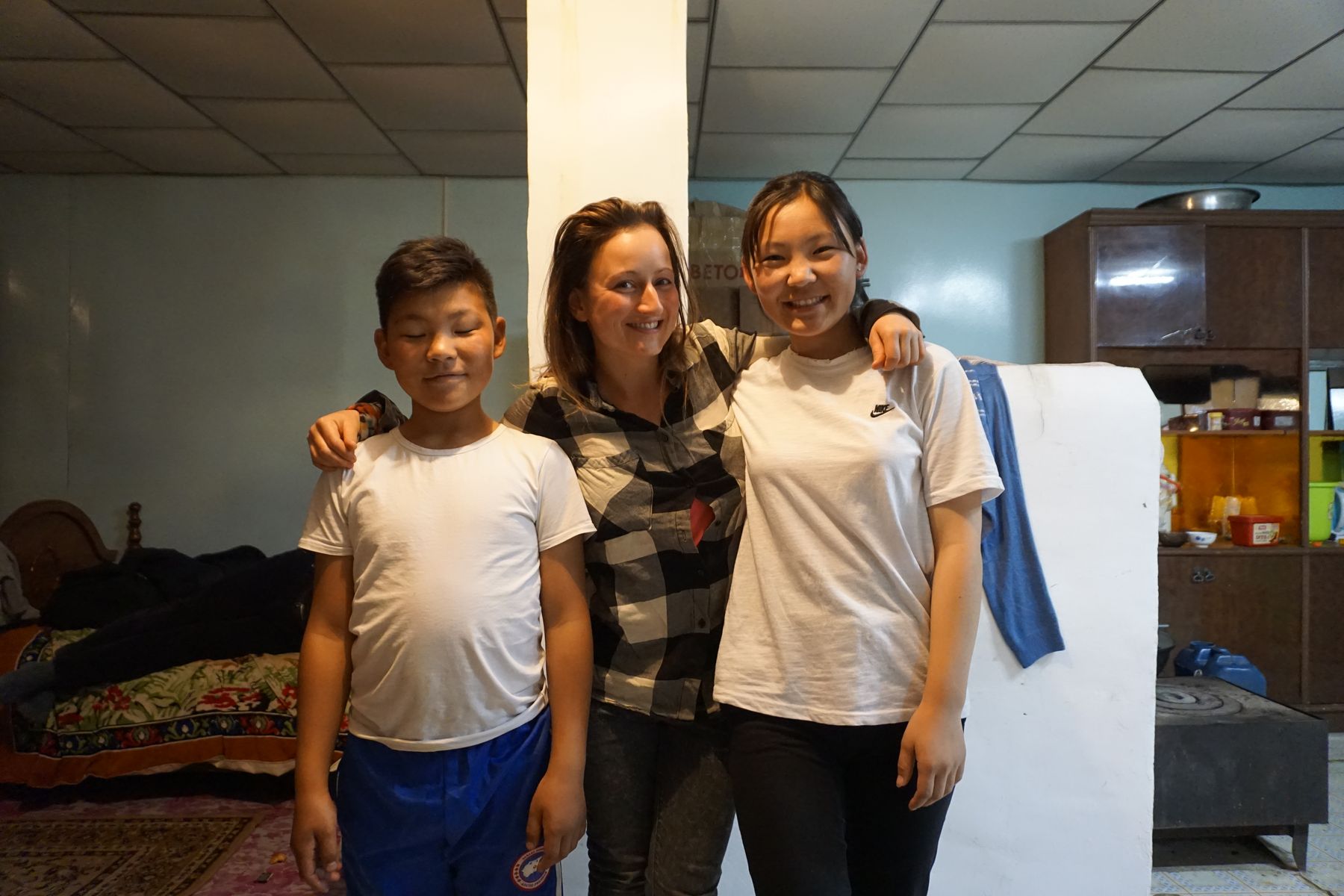
He gave us Mongolian noodles with sheep and fermented horse milk that night. It was all pretty disgusting but a really nice treat coming from a stranger. The fermented horse milk is apparently alcoholic, like 4-7%, and tasted a bit like kafir or ayran. We were a bit surprised at how the uncle’s 12-year-old son was chugging it down glass by glass :D.

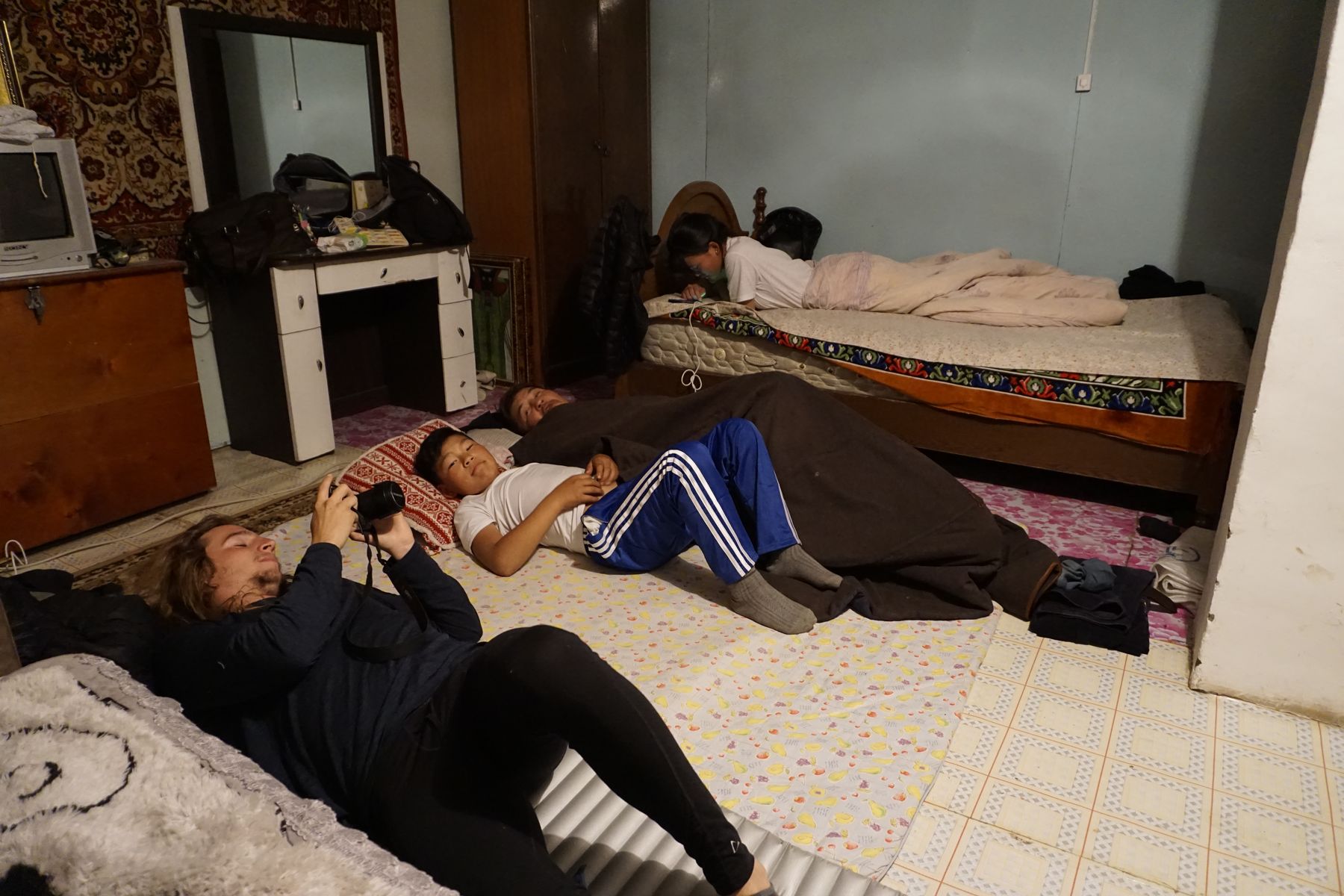
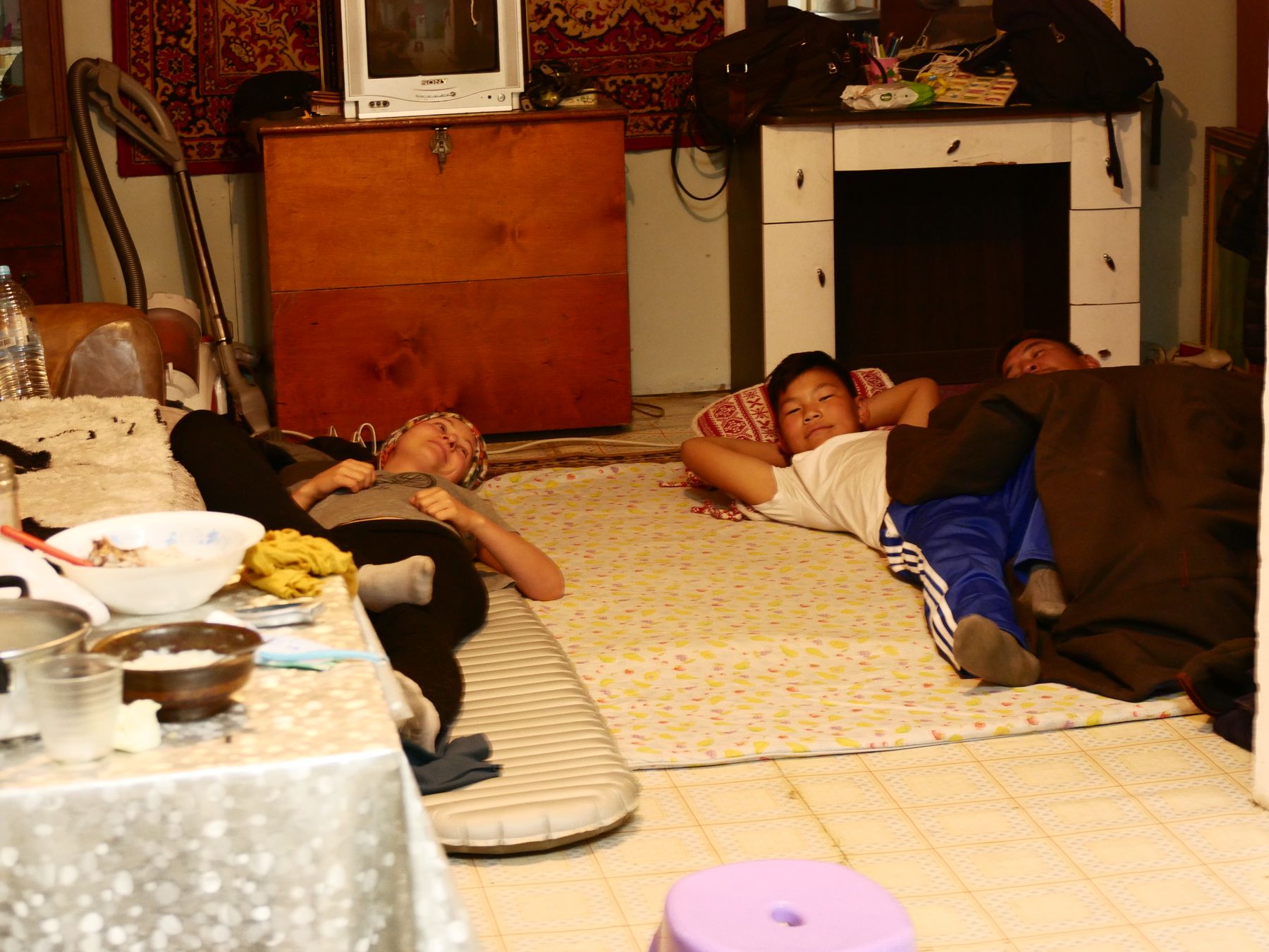
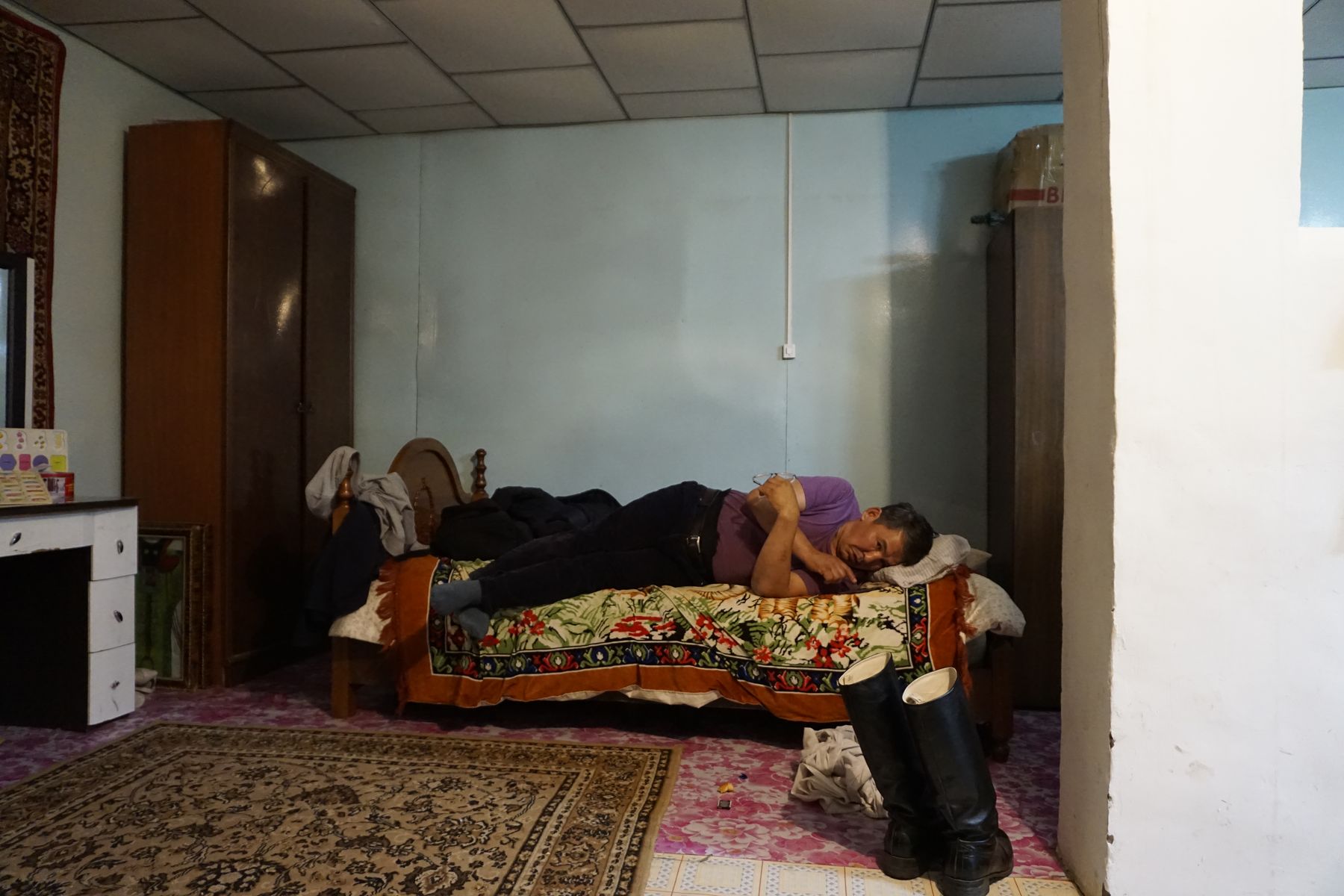
The three men (uncle, Felix and uncle’s son) slept on the floor, while the daughter and I slept on the two sofas. The entire house was just one small room.

Total expenses for Day 4:

$2 Fast food cafe + $5 groceries from Costco-like shop =$7

Accommodation: uncle’s house
Food: cooked + yurt + local fast food + uncle’s treat

Days 2-3: Hitching to Moron

Mongolia

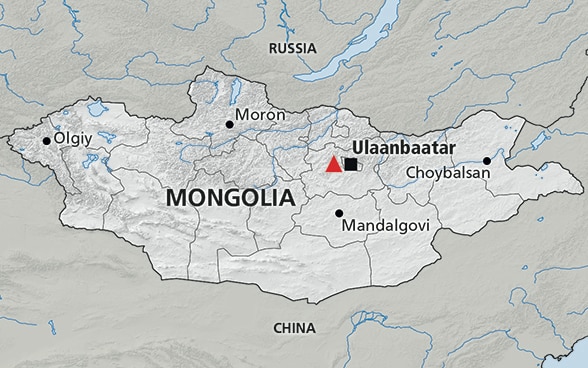
We found out that there was a town called Moron in Mongolia :D So of course, we had to check it out.

Flying there sounded a little dangerous.

So we decided to hitch :D

First we prepared by making a nice sign while we were still in Ulaanbaatar.

Then we stocked up on some food from the supermarket (buckwheats, oats, noodles, nuts, dried fruit, water ($5 each)), and bought a bus ticket from Ulaanbaatar to Darkhan. Hitchhiking out of a big city is always a huge hassle, so since the bus to Darkhan was only about $5 and took us more than 3 hours in the right direction, we thought we would save ourselves the hassle.

We took the city bus from Ulaanbaatar center to the Dragon Bus Station and caught the 1pm bus to Darkhan (this bus goes every hour). We asked the bus driver to stop a few km before Darkhan, where the main road intersected with the road that goes northwest, towards Moron. There are only about 4 roads in Mongolia so it’s not too hard to find your way around :D.

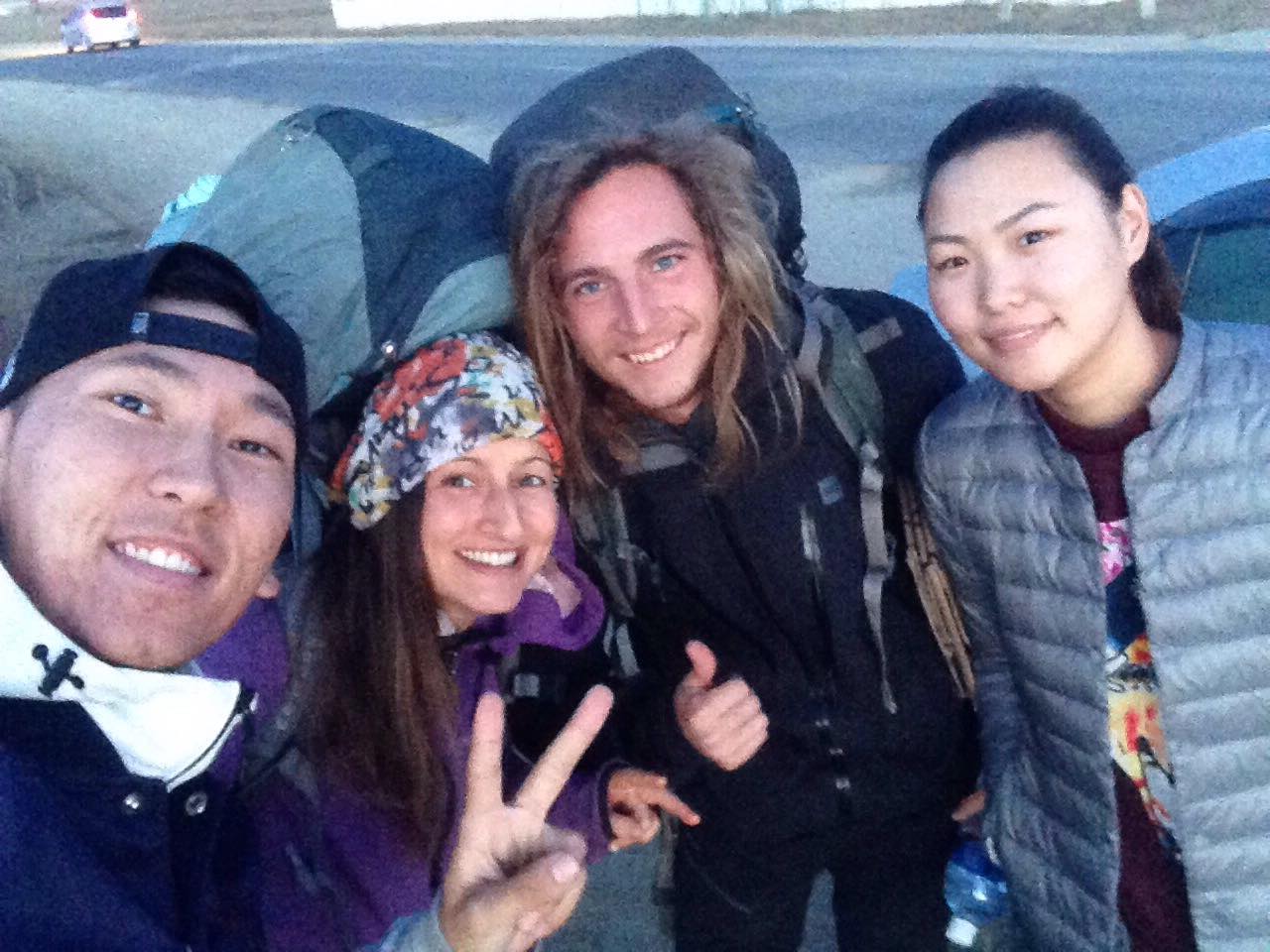
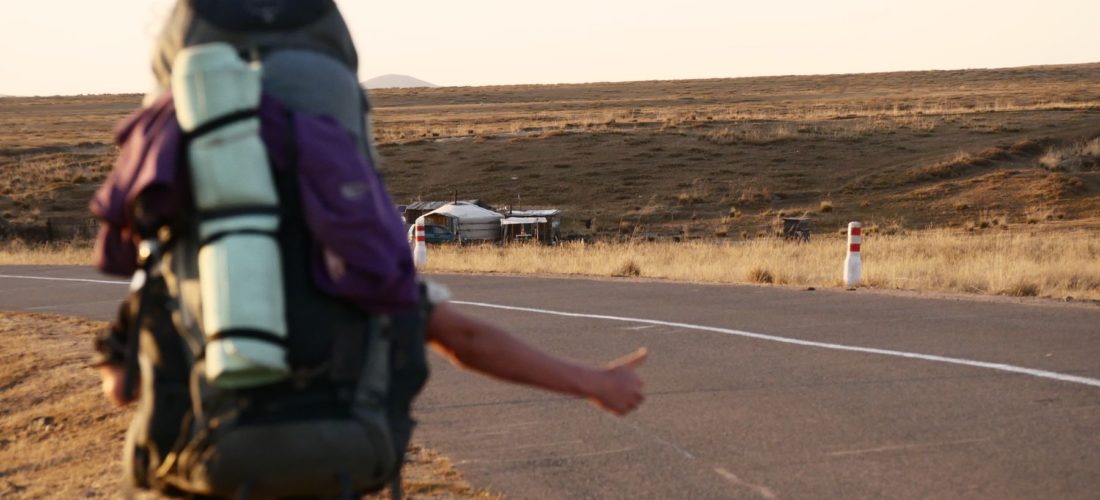
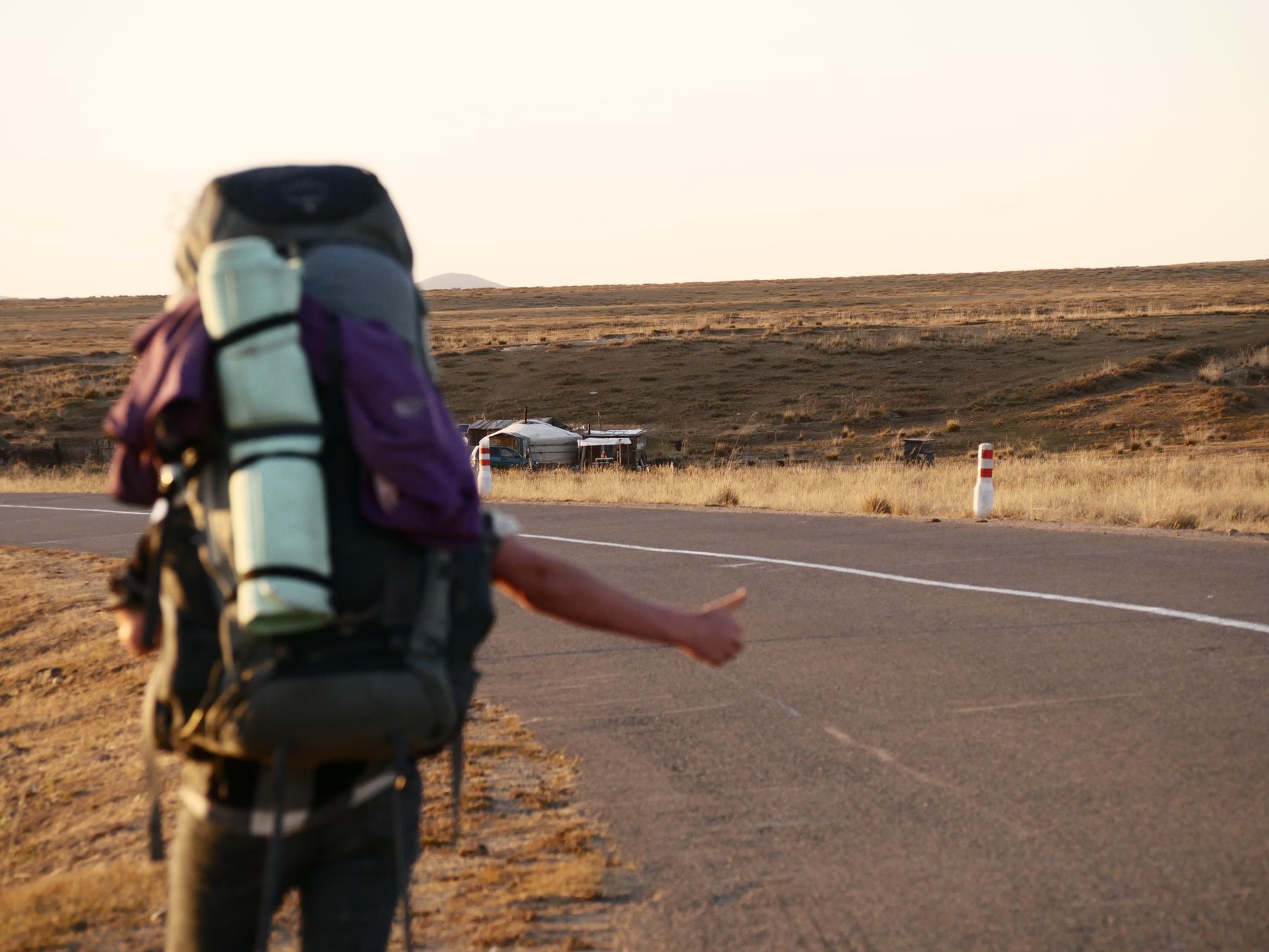
We walked down that road for about a half hour without trying to hitchhike, and then a car stopped and a young local guy offered us a lift. We didn’t even have our thumbs out :) He was very nice, knew a tiny bit of English and loved Russian rap. He told us that his girlfriend was beautiful and that she liked to take selfies. When we got out of his car in a village called Khutul, his girlfriend was waiting for us to take a selfie :).
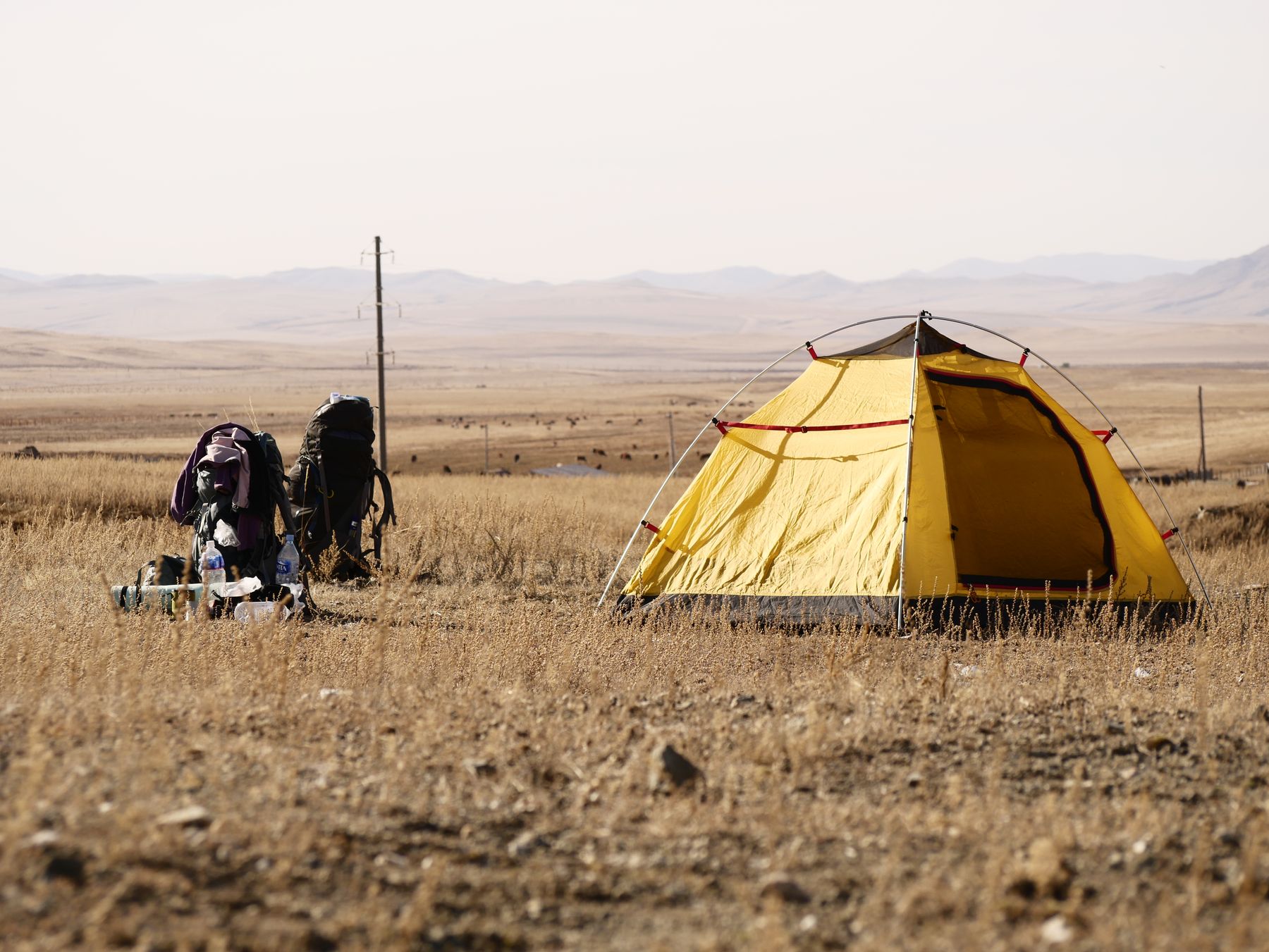
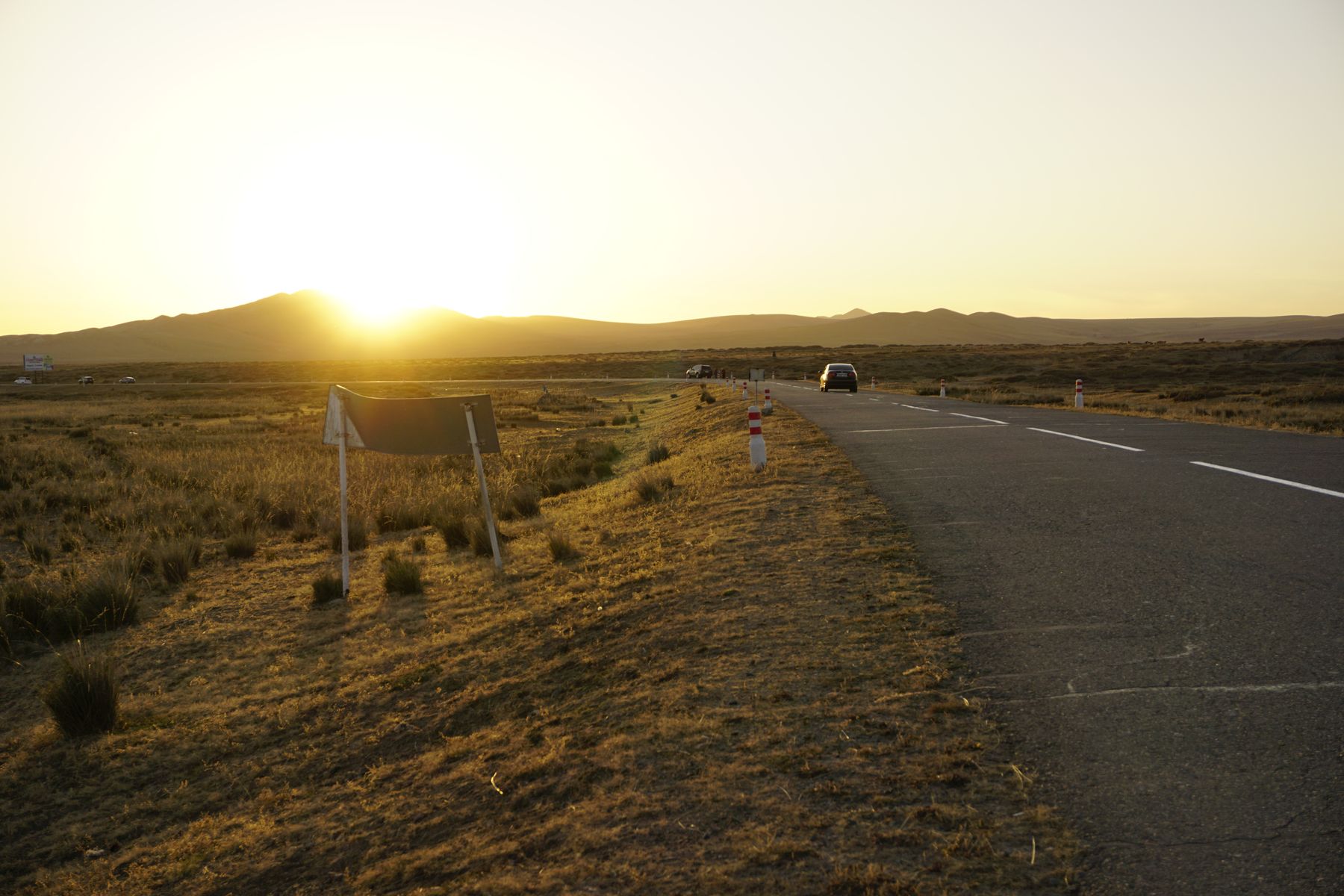
After the selfie, we walked down the road for a little, but since it was already getting dark, we decided to find a spot for our tent and forget about hitching further. We walked past Khutul (which didn’t take long) and then walked off the side of the road for 50 meters or so, behind some small sandy hills and pitched the tent there. The cool thing about Mongolia is that it’s almost all nomad’s land (and there’s a lot of open land), so you can basically pitch up a tent anywhere and you don’t have to worry about people bothering you about it.
We cooked buckwheat on a gas burner and rested up for the next day of hitching to Moron.

Total expenses: $5 groceries + $5 bus= $10
Accommodation: tent
Food: cooked


(Photos by Felix)

Is hitchhiking dangerous?

Mongolia

Someone recently asked me if I think that hitchhiking might be dangerous, especially for a woman.

This is my reply: there are risks to hitchhiking of course, but I honestly think that the biggest risk is getting into a car accident. And that, of course, is the risk you take any time you step into any car, whether you’re hitchhiking or not. See this book on transportation:

I think the risk of say, getting raped, murdered or robbed is quite low- but that also depends on what country or area you’re in. As a woman, I personally wouldn’t hitchhike alone in most Muslim countries or many developing countries, and after this incident (my last blog) I didn’t want to hitch alone in Mongolia. But having said that, there are also some really wonderful things about hitchhiking that you rarely hear about, like the kindness that strangers share with you and the variety of interesting people you get to connect with. I will try to demonstrate all of this in my upcoming blogs :)


(Photo by Felix)

Day 1: Irkutsk to Ulaanbaatar…on a budget

Mongolia

Let me back it up just a little bit and explain my frame of thought in regards to money and traveling.

My current budget in Irkutsk is roughly $200/month. That’s how much money I spend on everything except rent (rent is about $275/month). Yeah, Russia’s cheap, I know, that’s why I’m here.

I wasn’t sure how cheap or expensive Mongolia would be, but I figured if I hitch, camp, and cook food, I could keep close to that monthly budget. So, in other words, there was no reason not to go to Mongolia. Normally, when I take off somewhere, I move out of wherever I am living and just go one-way. This would have been the cheapest way because rather than wasting that $275 of rent money, I could have spent it on something useful in Mongolia. However, the decision to go to Mongolia was a last minute one so I didn’t have time to move out of my apartment.

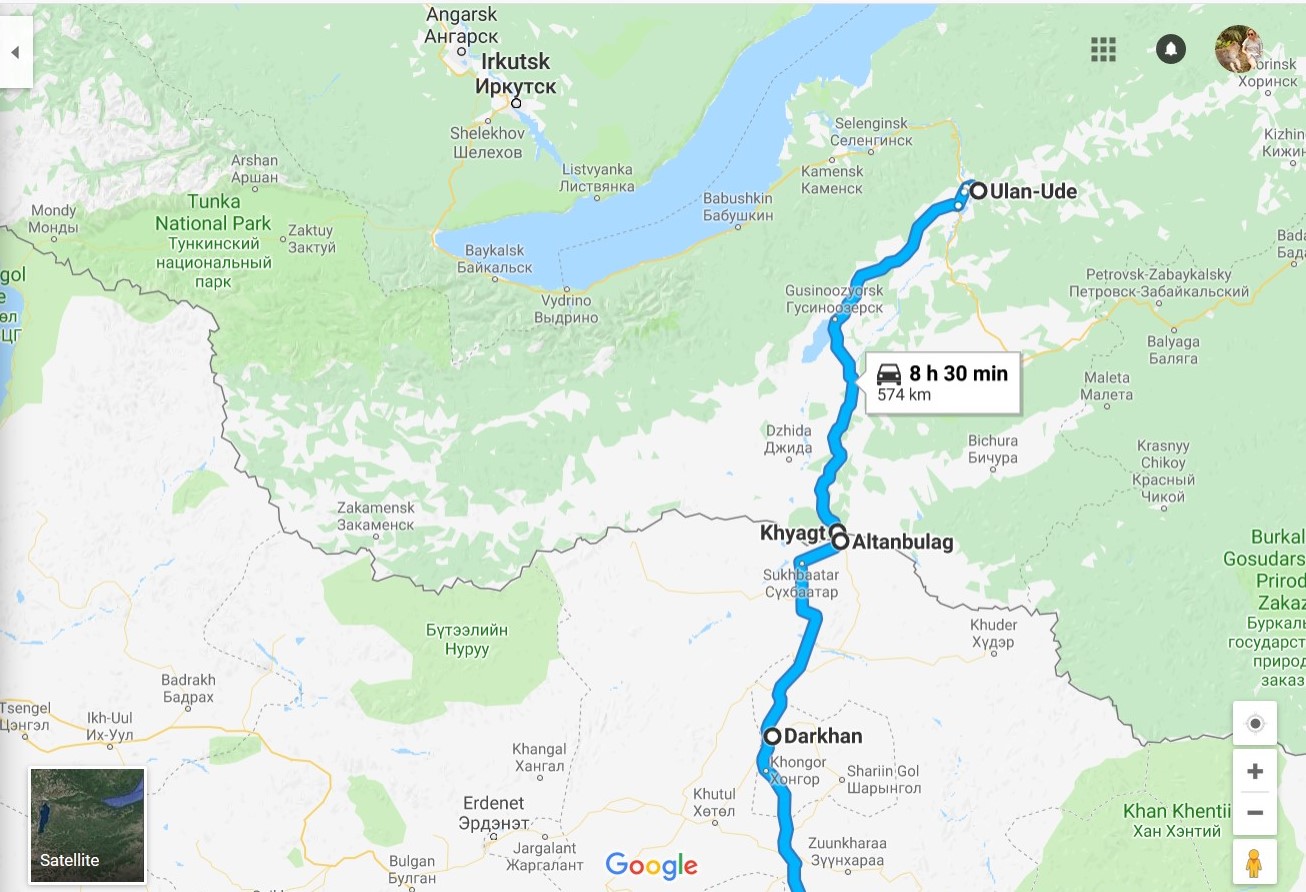
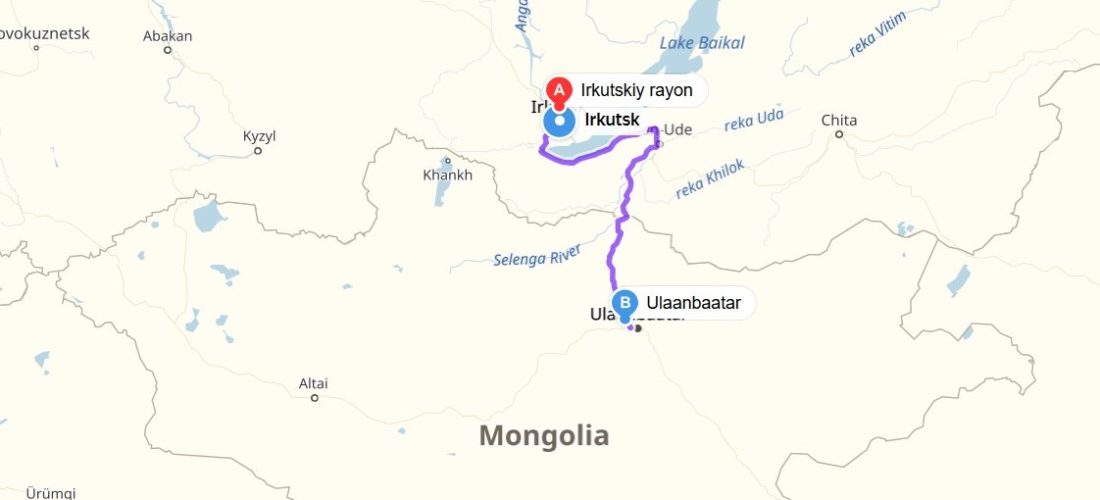
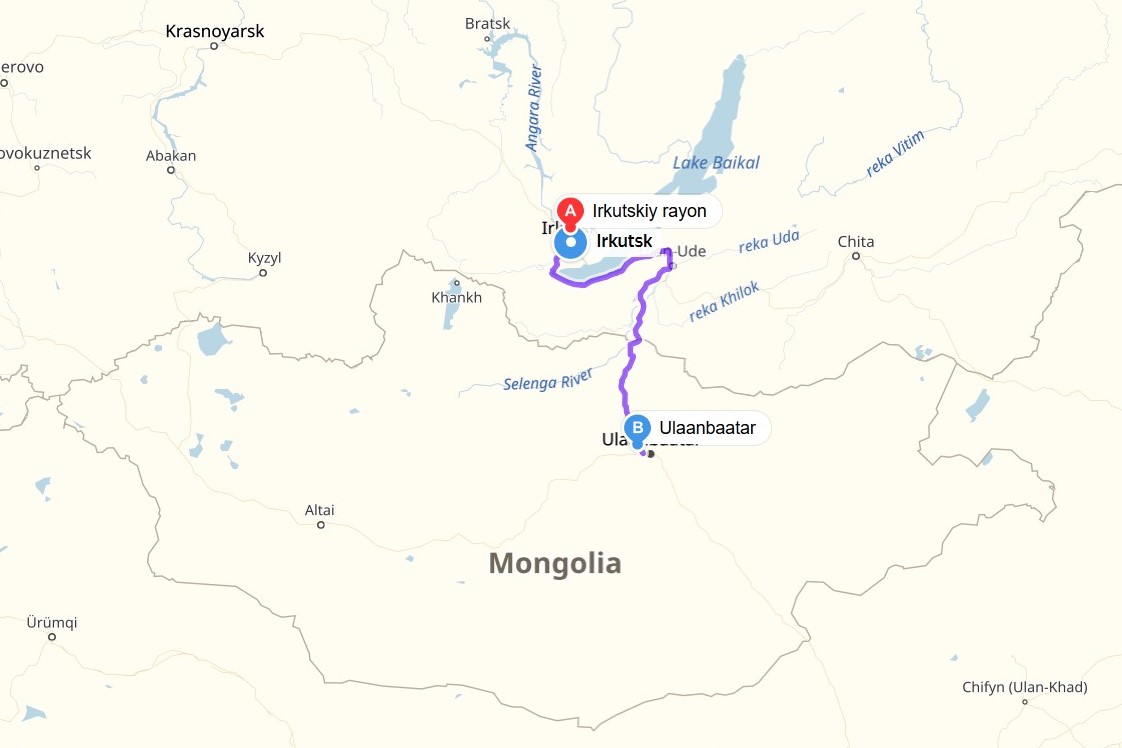
Train tickets from Irkutsk to Mongolia are expensive (over $100) and so are flights, so I did it this way: I took an overnight train from Irkutsk to Ulan Ude (about 650rubles ($10)), left at 9pm and arrived in Ulan Ude around 5:30am.

I sat in a cafe for a half hour or so, then walked to the bus station (less than 2 km away), where minibuses go to a town called Kyakhta (Кяхта, or Khyagt), which is close to the Mongolian border. The minibus costs 430 rubles. I tried to hitch from the Kyakhta ‘city center’ to the border, which is a few more km away, and ended up giving some guy 100 rubles to drive me there. I probably could have walked :)️. You can’t cross the border by foot, so you have to ask to catch a ride with someone. A few people said they would take me across for 200 rubles, and then a big bus came along and I hopped in there. The bus driver didn’t ask for any money :)

It turned out that that bus costs 1800rubles to get from Ulan Ude to Ulaanbaatar. I probably could have offered the driver some money to take me all the way to Ulaanbaatar, but I decided to try to hitch a ride instead.

The first ride I got was with a lady, her mother, and her baby; she was nice and knew about 3 words in Russian. She dropped me off somewhere between Altanbulag and Darkhan.

I stuck my thumb out and waited for about two minutes before another car stopped. This time it was a lady who spoke English, her husband, and kid. She first asked for 10,000tugrik (about $4) to take me from wherever I was to Darkhan (about an hour drive). I had no Mongolian cash at all so I declined her offer. Then she said 5,000, but I still had no money.. So she ended up giving me a free lift :) She was super nice, exchanged contact details with me and even offered for me to visit her home on my way back to Russia.

The lady dropped me off in Darkhan, where a big fat Mongolian guy picked me up. He didn’t speak a word of English or Russian but seemed very nice. He taught me how to say hello and thank you in Mongolian, then dropped me off about a half hour down the road.

I waited for another two minutes before one young guy in a little work truck picked me up. He didn’t know a word of English or Russian either, and all I knew in Mongolian was hello and thank you :).

This guy was quiet at first, but then started speaking to me more and more, even though I clearly didn’t understand anything he was saying. He mimed that I should take a nap. I tried my hardest not to fall asleep, even though I was tired. He started to creep me out. Gave me some kind of white liquid to drink. I kindly said no. The closer we got to Ulaanbaatar, the more talkative he became. I talked back to him in English and Russian, even though he clearly didn’t understand a word I was saying either.

I started to get the gist when he pointed at himself and me, and repeated the word “hotel”, also pointing at a hotel. It was an awkward situation and creeped me out to the point of me thinking out escape and ‘how to beat the shit out of him’ situations ️. Once we got close to Ulaanbaatar, he was really insisting on something and kept on repeating himself, as if I would somehow magically understand Mongolian if I heard the same thing over and over enough times.

I hopped out of his truck about 12 km from the city center, on a crowded street close to an atm and a bus station. Caught the bus for 500tugrik (19cents) to the center and met Felix in a hostel at about 9pm.

Altogether I spent about $18 on getting from Irkutsk to Ulaanbaatar. If I had taken a train from Irkutsk to Ulan Ude and then a bus all the way to Ulaanbaatar, it would have cost about $40 (rather than the $100+ you would spend on a train or flight).

That night I spent $8 on a hostel and another $2 on food.

So total cost of day 1 and 1000km: $28

Hitchhiking Mongolia

Mongolia

Why did I go to Mongolia? And why in October-November?

Well I was actually planning to spend all of autumn inside my cozy apartment in Siberia, writing stories, working on my website and helping with TROM. I was so determined to do this that I told myself that I would not host anymore couchsurfers; that is something that I love to do (share my place for free with other travelers), but since I live in a studio apartment, it can get quite distracting. However, I forgot to change my hosting status, and at the end of September I got a request from a French-Canadian guy who is traveling for over a year and claimed that we had a lot in common. The message included in his request was quite long and personal, and included the words, “just downloaded the TROM book for reading in the transsiberian, seems like a really interested read! And your blog is now on my Favorite panel on my computer!”

So it was pretty hard to say no to Felix :).

I accepted his request and said that he could sleep on the floor or in my hammock for a couple of days.

He came, made me poutine (French-Canadian fries with cheese and gravy), joined my meet ups, played guitar, and had great conversations with me. It turned out that he wasn’t bs-ing, we really did have a lot in common and he really did start reading the TROM book, and had a lot of questions about it. We ended up getting along so well that a couple of days turned into about 3 weeks and when he left for Mongolia, I decided to join him.

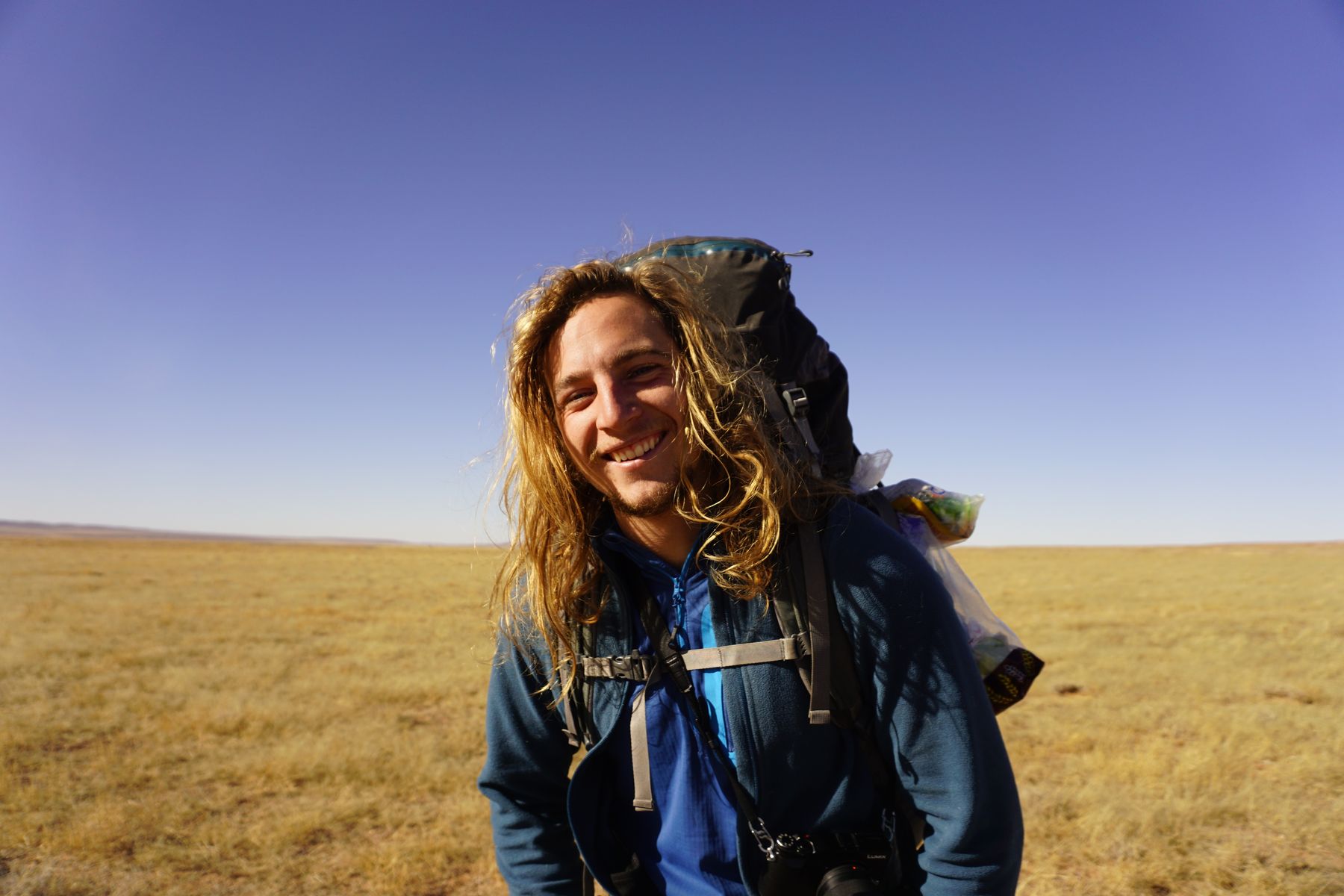
I figured, life’s short and Mongolia’s not always right around the corner, so it’s best not to miss this opportunity. You see, I would probably never fly to Mongolia from some far-away place, but since I currently live in Irkutsk (just north of Mongolia), it’s worthwhile for me to go there now. It’s close, cheap, and easy. Plus, Felix is the kind of super nice and friendly guy that you just know good things will happen to, so traveling with him will be easy. And he’s a real traveler, meaning he has no specific plans, little money, he’s happy to hitchhike, couchsurf, camp and eat almost anything :). Like he said, we have a lot in common ;).

Since I don’t really have a job, besides the hiking gig, it wasn’t too hard to just pick up and go. I borrowed a tent from a friend, told my hiking friends that I was taking off, packed up all my warmest clothes and got a train ticket from Irkutsk to Ulan Ude.

Due to some visa issues, Felix arrived in Mongolia about a week before I did, so I ended up making my way from Irkutsk to Ulanbaatar alone.

I took a $10 overnight train from Irkutsk to Ulan Ude, a $6 minibus from Ulan Ude to the Mongolian border, crossed the border and then started hitching south.

#introducemyself to Steemit

Uncategorized

I haven’t posted here in a little while because I’ve been backpacking through Mongolia. I’m going to share that experience with you shortly.

I’ve also decided to post all of my new blogs on Steemit. The thing about Steemit is that the content has to be posted there first, before it’s posted anywhere else on the internet. And then you can somehow earn cryptocurrency. I don’t really understand how it works hehe but I like that people on there actually read and engage with each other. The first thing I should have done on Steemit was make an introductory post. Unfortunately, I didn’t know that before, so this will be my 7th Steemit post. Better late than never, right?!

Here it is!:
https://steemit.com/introduceyourself/@smallsasha/traveled-for-11-years-now-i-sit-and-write-for-you

If I can make some kind of money from this platform that would be great, since I’m pretty much gonna be foocked in 6 months or so, when I run out of money and will be forced to find a useless job somewhere to continue to live on Earth. So if you’re on Steemit, please check out my blogs :)

Sailing Is Not Just for Rich People

Uncategorized

The topic for my last TROM discussion was meant to be ‘money,’ with a focus on how money is a fictional reality (i.e. the money system works only because we all use imagination), but I accidentally spent the first hour of our meet up telling everyone stories about my sailing adventures in New Zealand and the Caribbean :D.

You see, I used to think that sailing was just for rich people until I lived on a yacht myself and met all kinds of people that sailed around the world with almost no money :).

Here’s how it happened: I was studying at Sydney Uni when I was 22 and wanted to snowboard in New Zealand for my winter break in June/July. I didn’t have that much money so I searched for people to stay with for free on couchsurfing. I came across a very interesting profile of a Brazilian guy who worked in Wanaka as a skydiver. I didn’t know any skydivers back then, nor had I tried skydiving, so I was really excited to meet this person. Unfortunately, he wrote back saying that he was in Aruba all winter and wouldn’t be back until October. But he also wrote that he read my profile and would love to meet me because there aren’t a whole lot of “us” in this world. Then he invited me to sail around the North Island of New Zealand in his little yacht at the end of October for a couple of months.

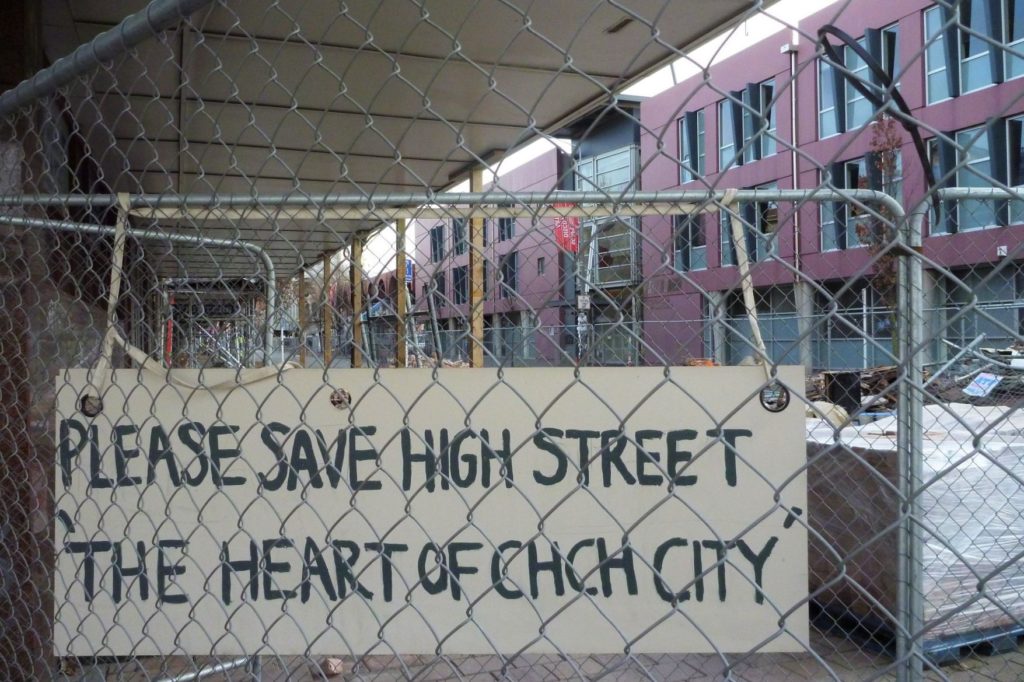
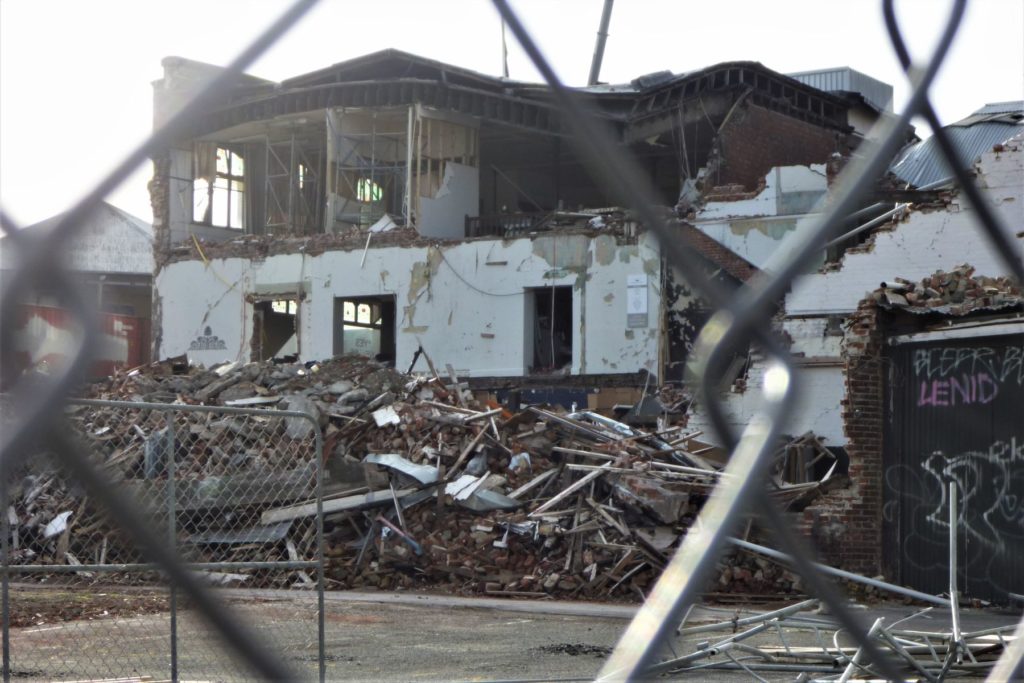
I thought it over. Flew to New Zealand. Snowboarded and hitched all around the South Island, met a bunch of nomadic travelers and skibums, and admired New Zealand’s dramatic beauty. I also visited Christchurch and saw the aftermath of the devastating earthquake (this was 2011) and talked to many people that had been affected by this disaster.

When I flew back to Australia, I decided that opportunities like this don’t come around very often, so I have to accept this sailing trip. I dropped out of university for the third time. Wrote a long letter to my mother, promising her to come back and finish one year later. Then I worked every day and every night for one month (in 3 Wise Monkey’s Pub, Sydney), saved as much money as possible, caught a ride with an aboriginal friend to Alice Springs, hitched to Darwin, then caught the cheapest flight I could find out of Australia the day before my visa expired. Then I had 2 months to exist somewhere on Earth before I could fly to New Zealand (because of more visa bullcrap). So I spent two months “existing” in Indonesia on a budget of $10/day and traveled from Bali to the eastern-most tip of Nusa Tenggara and back by myself.

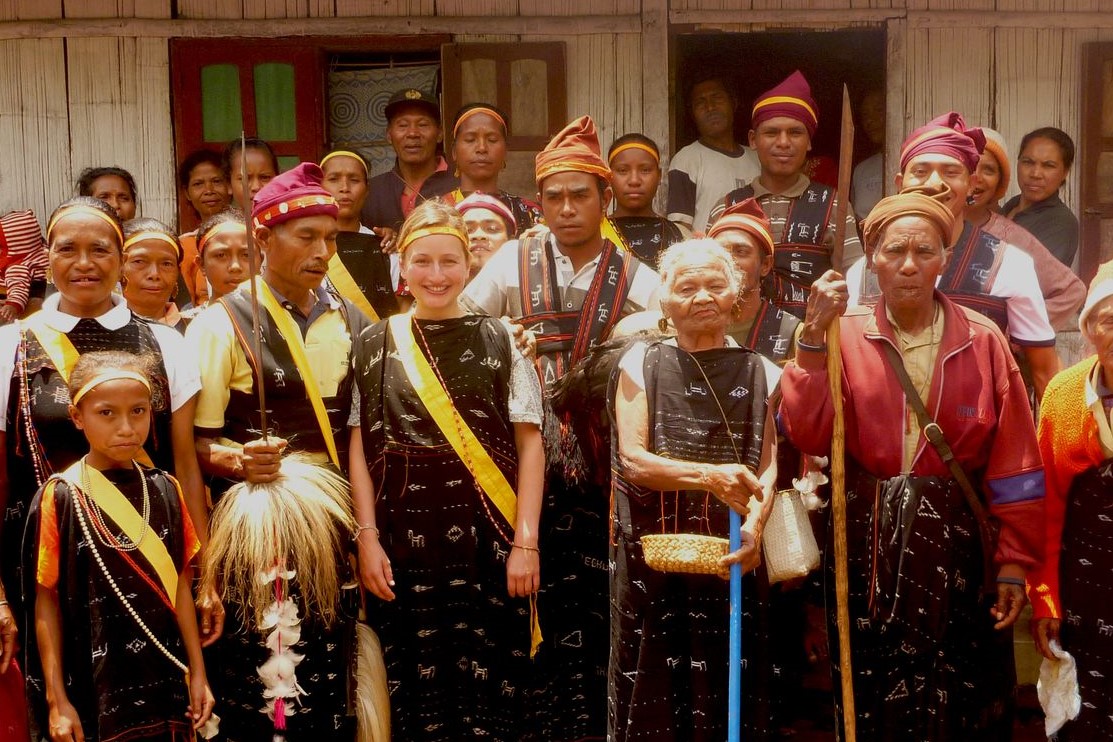
Here’s a picture of me in East Nusa Tenggara :). (but that story’s for another time :)).

I flew into Auckland at the end of October and hitched a ride to Tauranga, NZ. There, I finally met Enzo- the crazy Brazilian skydiving sailor. Interesting fellow he was, around 30 years old, tall, brown hair, somewhat attractive. He was extremely interesting to talk to and gave me a bunch of books to read. One was “A Culture of Make Believe” by Derrick Jensen- brilliant and shocking book which exposes the horrors of our make-believe culture while exploring the relationship between hate/exploitation/destruction and economics. Enzo said I had to read this book if I wanted to stay on his yacht :).

Another book he gave me was “Maiden Voyage” by Tania Aebi- really interesting true story about a girl who took off on a sailboat in the 1980’s (before GPS) when she was 18-years-old, and spent two and a half years sailing around the world by herself. These two books changed the course of my life just a little bit.

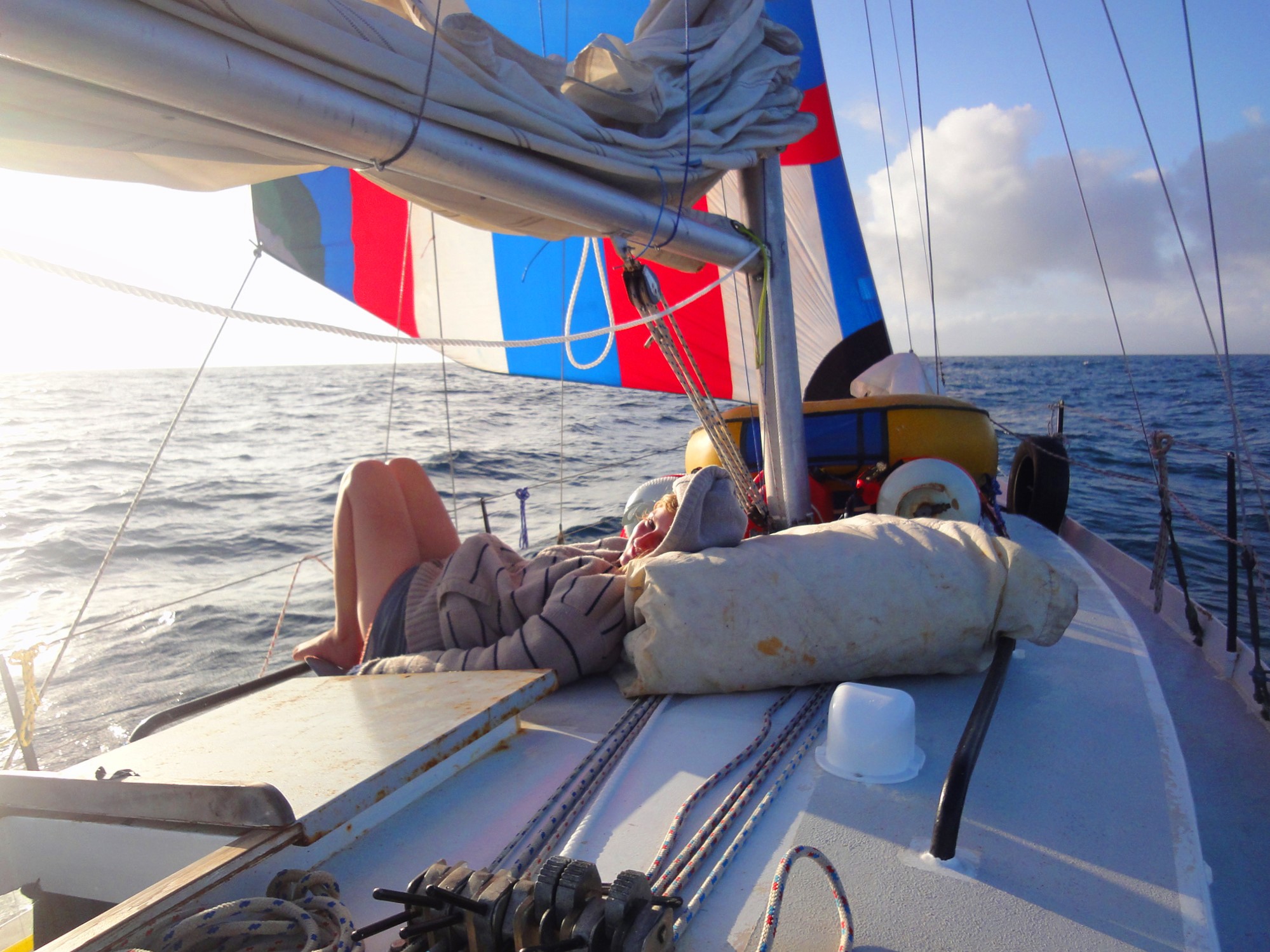
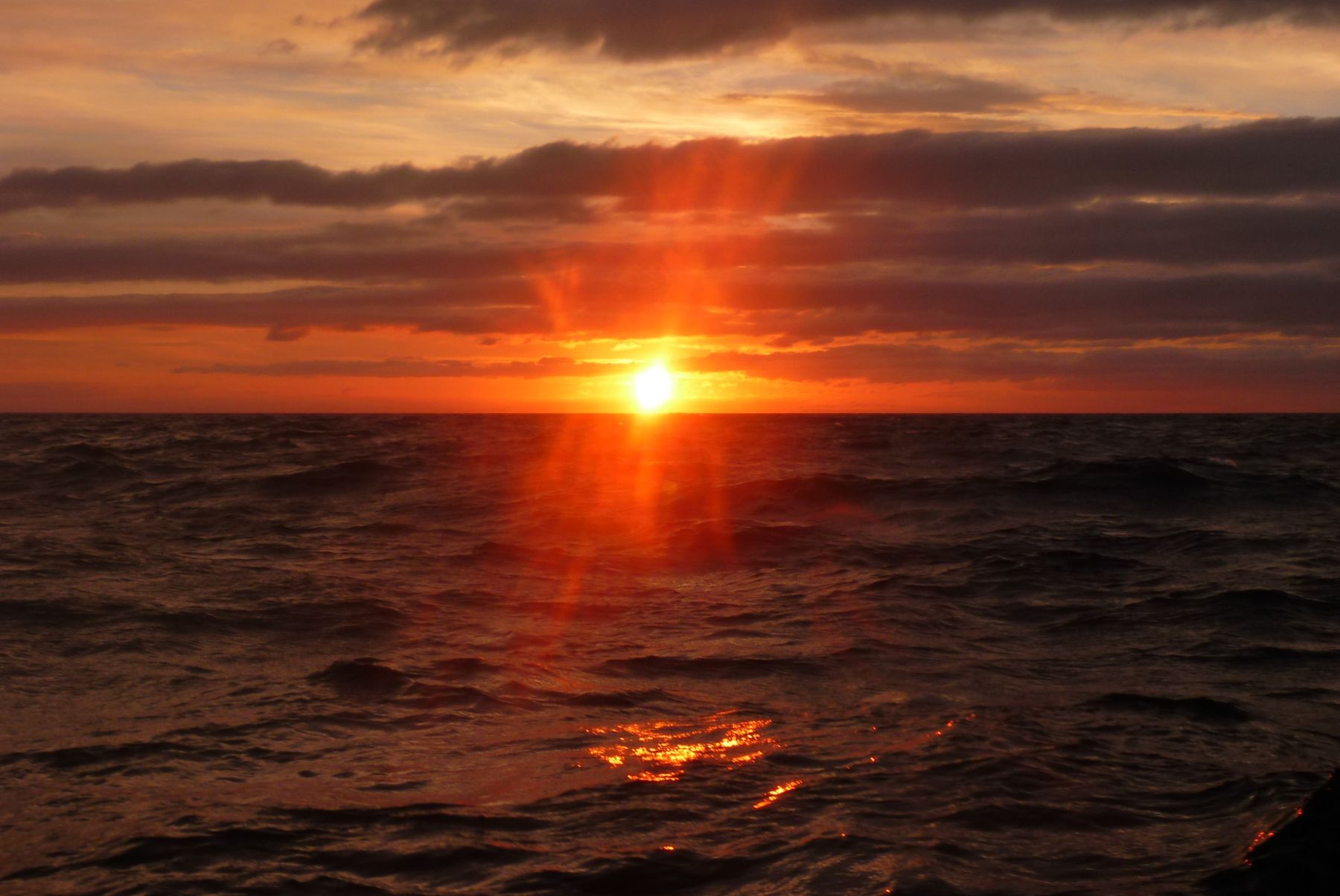
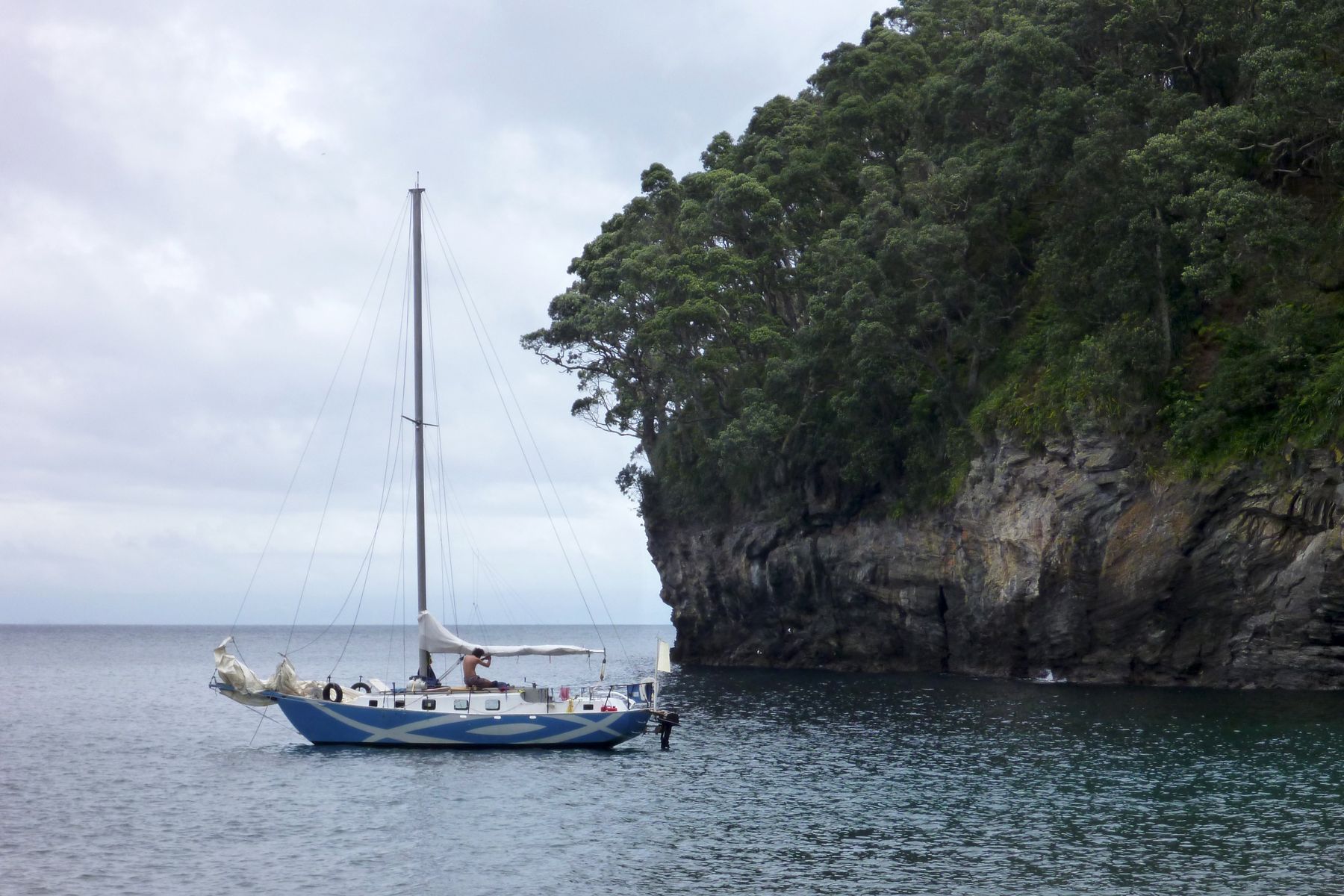
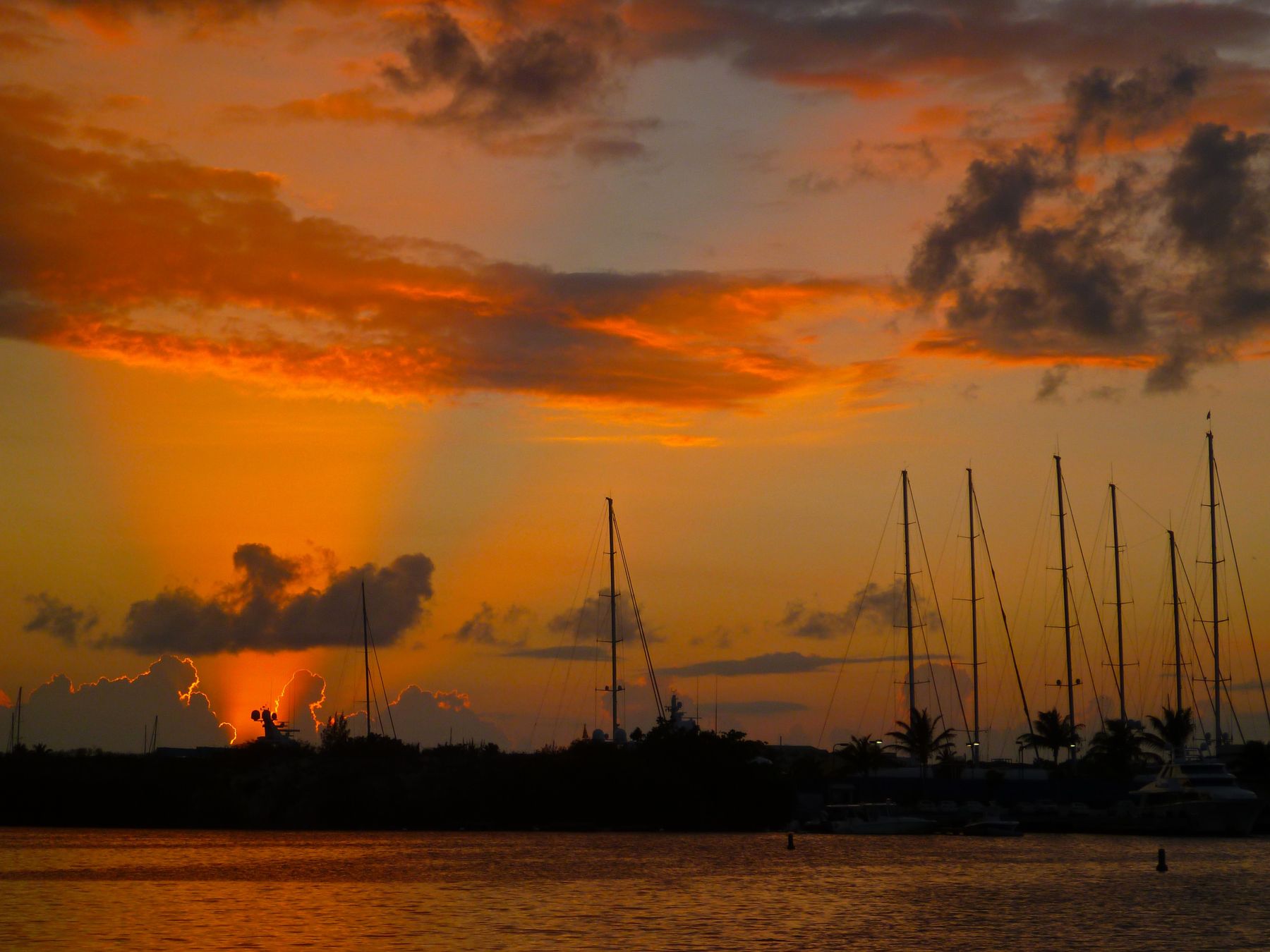
So we worked on Enzo’s boat for a couple of weeks, then took off on our first sailing trip- to Mayor Island, just off the coast of Tauranga. We left in the afternoon, sailed past the sunset and into a brilliant starlit night.

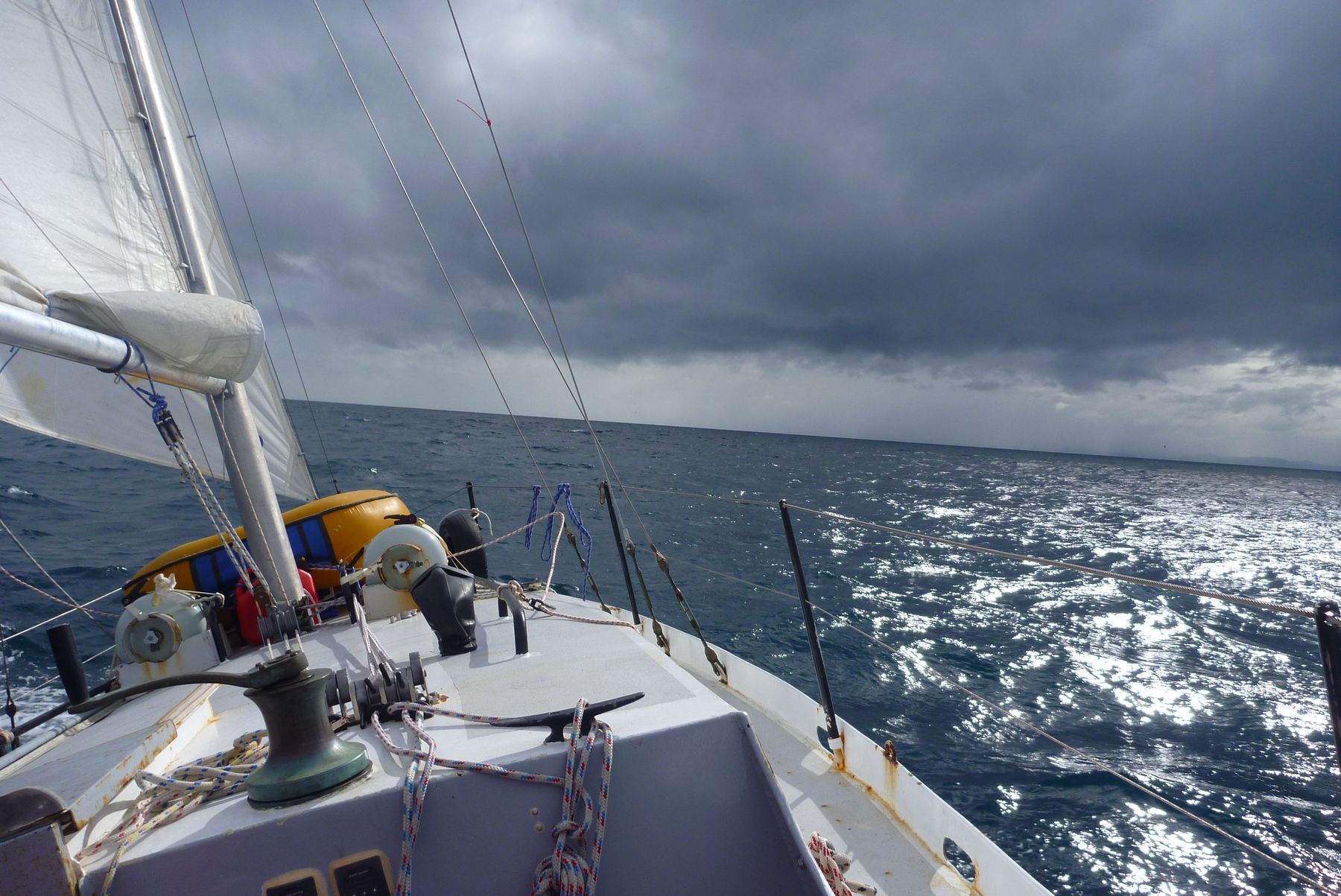
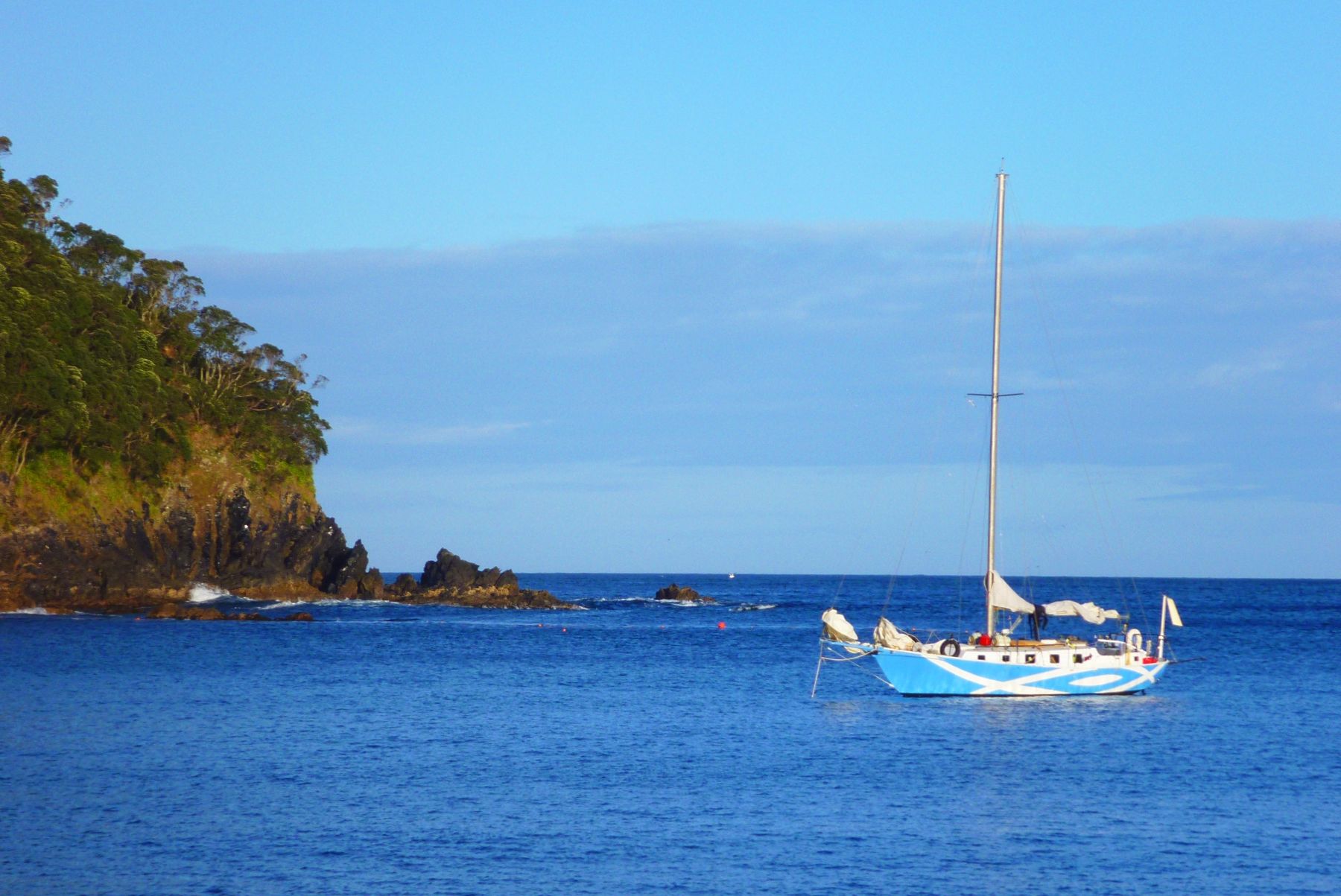
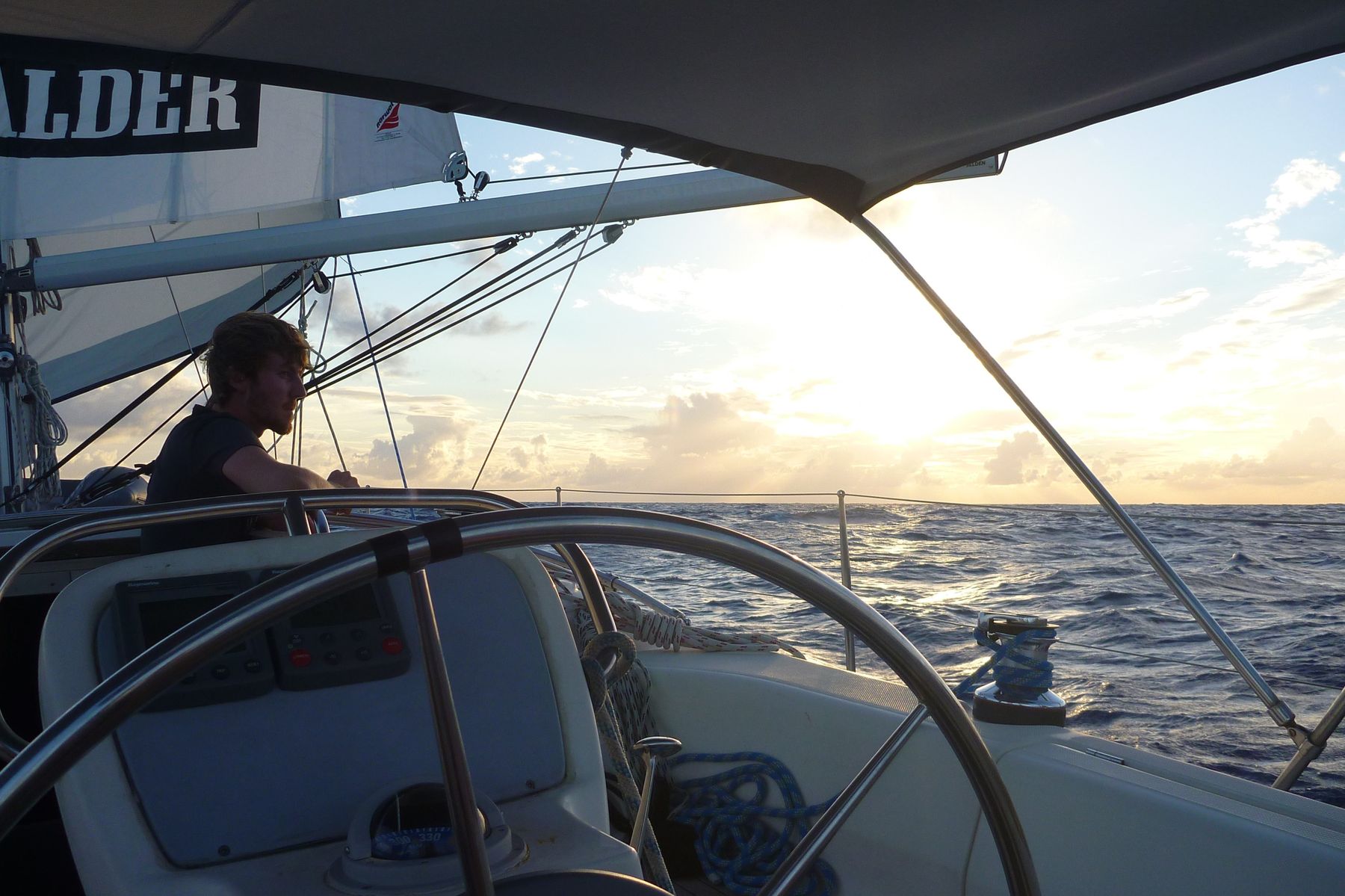
There was a big swell that night, about 3 meters or so. Enzo’s 37’ steel yacht crashed into these icy cold waves with immense power. I was absolutely terrified, yet incredibly excited. The sound of the wind, the sound of the sails getting hampered and turned, the waves- crashing against the hull, weaving, swirling, disappearing into the dark obis. Reappearing again, crashing.

Down below it was the worst. I had no idea that you would hear such sounds inside of a sailboat- the sound of crashing waves was maximized tenfold, as if the boat was getting beaten down by the ocean. There were vicious clanking sounds from the steel hull, as if some giant was hitting the boat with a hammer. It sounded like the boat was going to fall apart at any moment! I couldn’t be down below for more than 10 seconds. You couldn’t stand down there as the boat rocked you from side to side, back to front. And I felt this intense heaviness as soon as I stepped down below, as if the mass of my body had suddenly doubled, and the mass of my head had tripled.

On the deck it was calmer- ride the boat up the wave, roll it down the wave, then crash into the next wave. Ride the next wave up again, down again, crash again. Stay in the cockpit and hold on, if you fall out, you’re dead within 30 minutes.

Each crash was spectacular. There was bioluminescent phytoplankton in the water- plankton that light up like stars when agitated. So every time the boat crashed into a giant wave, the little plankton appeared like a galaxy on our deck, then rolled down and vanished like shooting stars. I was mesmerized by this sight- stars above, stars below, the wind, the elements, the waves, the ocean. This is what life should be about! Not learning how to make some business plan in university!

I remember this moment perfectly because I fell deeply in love right there and then. Not with Enzo :), but with sailing, and with life.

When the waves got stronger, Enzo made me go down below and sleep. I was absolutely terrified down there, but that heaviness pinned my body to the bed and knocked me out cold and fast.

I woke up a few hours later to the sound of calm waves and easy rocking. We were anchored.

Enzo took my hand and said he wanted to show me something. We went onto the deck, the night was calm and dark, I could see a halfmoon bay and black mountains in the distance.

Then he asked, “do you believe in magic?”

I replied, “sure” :).

And he took a stick and crashed it along the water. The ocean lit up like the Milky Way.

In the morning, I stuck my head out of the hatch. Felt the cool wind hit my face. I smelled salt, dirt and lush vegetation.

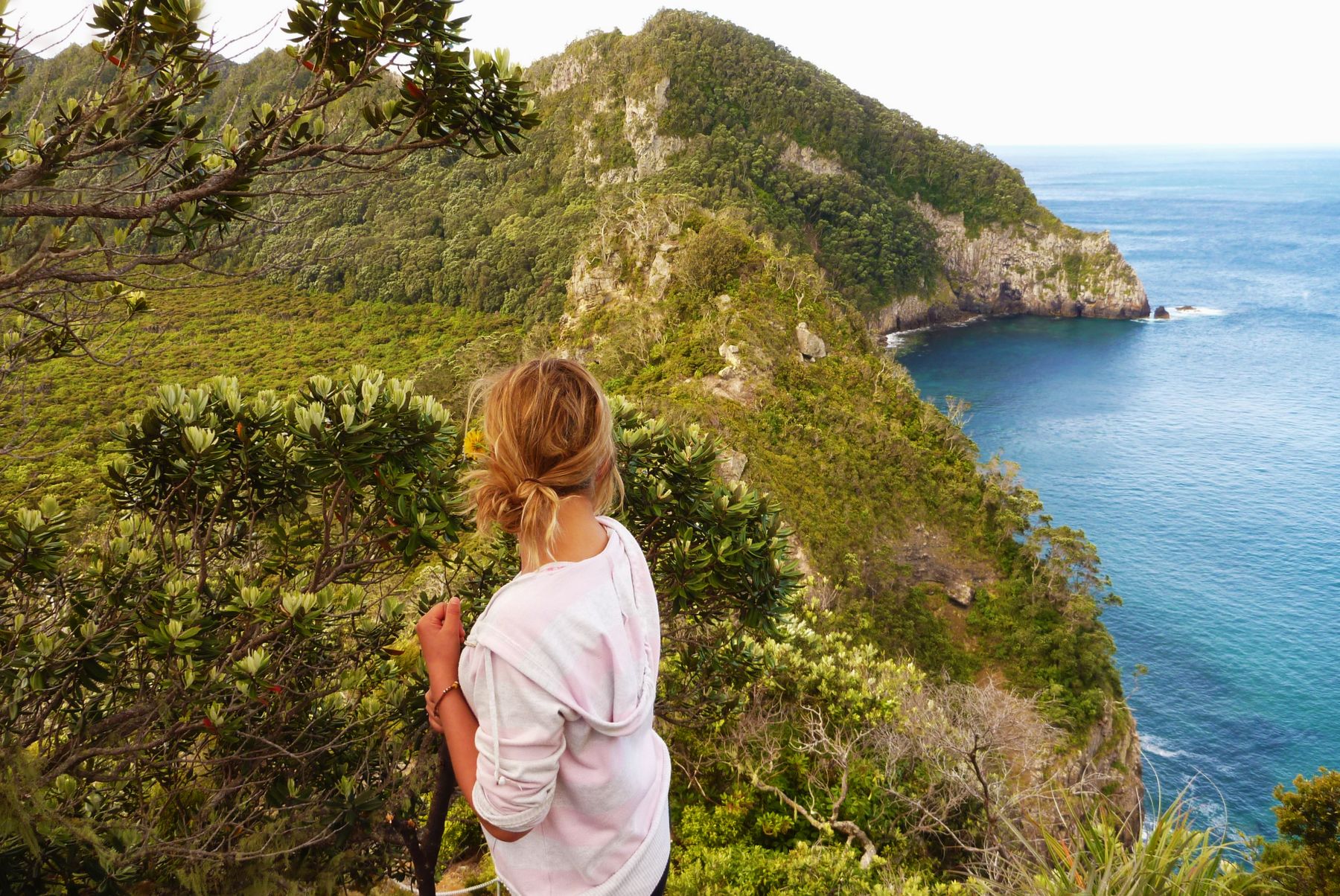
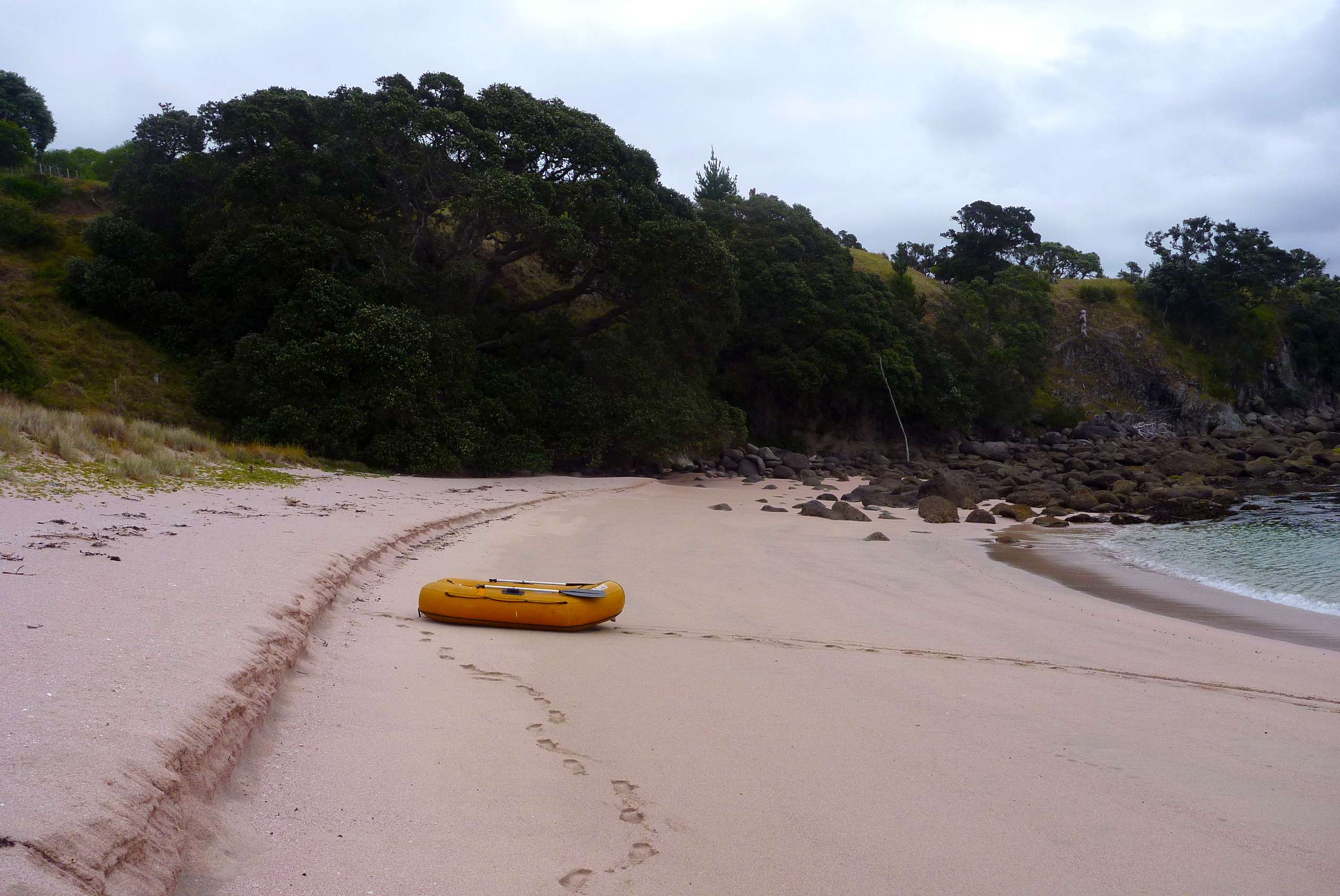
I heard birds diving into the water, and the sound of small waves crashing on sand. I looked ahead and saw a perfect bay. No people, no other boat in sight. Just a deep dark green forest of interwoven trees and vines reaching out towards the crystal blue water. We had breakfast then took the dinghy to shore and explored the rolling hills and fantastic views of New Zealand.

We did this for about two months, sailing to different islands and back to Tauranga from time to time. Being in Tauranga was great too, since we lived in Enzo’s yacht and talked to many other people who lived in their yachts as well. That was when I figured out that sailing was not at all ‘just for rich people.’ In fact, it seemed like everyone in that harbor was dead broke!

Our neighbor Dave, one of the nicest little Kiwi guys I’ve ever met, barely had a penny to his name, but he lived for sailing. He dreamed of sailing to Antarctica and around the world one day. He lived on his boat year-round and worked odd jobs to pay for food and boat maintenance.

I also talked to many old people, sailors that had been all around the world. And I decided that if I ever grow up, I’d like to be just like them :).

You see, real traveling is not about ticking off a list or taking selfies in pretty places, it’s about the people you meet. And trust me, you’ll never meet these kinds of people in the lobby of a Marriott.

At the end of December, I flew to New York and Enzo went back to skydiving on the South Island.

New Year’s Day, 2012, I get an email from Enzo saying that he’s in the hospital and paralyzed from the hips down.

Later that year, I visited him in NZ and he was already planning to participate in the Paralympics.

Two years later, he invited me to sail a boat halfway across the world (from St. Maarten to NZ) and film a documentary. I met him and two other friends in the Caribbean in spring of 2014. We spent a few weeks fixing up the boat, then sailed a bit around St. Maarten, then across the Caribbean Sea to Aruba. Long story short, I got kicked off the boat in Aruba :). Then Enzo sailed to Panama with another friend. That friend left there. Then Enzo sailed from Panama to New Zealand by himself.

We are no longer friends, but despite that, he is quite an inspirational person.

So, none of those adventures took all that much money. Both times sailing, I pretty much only paid for food. Plane tickets are probably the most expensive thing, but you can get around that as well if you have ‘open time.’ Here’s how- 1. Hitch hike 2. Hitch a boat :D.

You see, it’s difficult to sail a yacht by yourself- you have to constantly keep watch to make sure you don’t hit anything. So when people go on long journeys (like across an ocean or sea), they usually need crew. There are many captains who don’t have much money and don’t want to pay to hire experienced crew, so they will look for random people that can help them keep watch. -That’s basically the main thing they need, just for someone to stay on deck and make sure there are no boats in the way while they sleep. There are websites, such as findacrew.net where captains will post where they’re going and what kind of crew they need/for how long/etc.

Sailing experience helps if you’re looking for a boat ride, but it’s not always necessary. Also, be careful before signing up for a long journey (especially if you’re a girl) because there are a lot of crazy captains out there. Get to know the captain face to face before you decide to cross an ocean with him or her.

Before leaving for my second sailing adventure (which was meant to last 8-9 months and go halfway around the world) I did three things: 1. I took a beginner sailing course 2. I saved about $3,000 (AUD) 3. I read a few books written by people who survived on a dinghy or liferaft for several weeks or months after their boat had been capsized in the ocean. I figured, if shit really hits the fan, it doesn’t matter how well I know how to sail, what I would really need to know is how to survive.

Enzo recommended three books:

1. “Adrift: 76 days lost at sea” by Steven Callahan. Amazing story of a man who survived in a liferaft in the Atlantic Ocean by himself for 76 days. He almost died several times as he got caught in storms, attacked by sharks, was constantly on the verge of dying from dehydration, and had to fix his deflating liferaft to save himself from drowning.

2. “Survive the Savage Sea” by Dougal Robertson. Six people- husband, wife, three kids, plus a crew member survived in a liferaft and dinghy for 37 days in the Pacific Ocean in the 1970’s.

3. “117 days adrift” by Maurice and Maralyn Bailey. Wife and husband survived in their liferaft for 117 days in the Pacific Ocean, catching fish, seabirds and turtles by hand and with safety pins to stay alive.


These are all true stories written by the survivors. I think these books impacted me far beyond what I had expected. Aside from learning that you have to have a very strong will to survive being lost at sea (and also be a lucky motherfucker), I learned about reality. You see, in a situation like that, nothing matters but survival. What do you need to survive? -Drinking water, food, flotation device. All three books described the devastating times when they had but 3 drops of water to drink in a single day, and those times when they managed to collect a large amount of water. All three described how rich they felt when they had a lot of water. All three described that the fish’s eyeball was the best part of the fish :) because it holds the most water. Water is all you need! (Okay plus some food and a flotation device).


You can extend this to your own reality. Think about it! If all these people can survive in the ocean for months with almost nothing at all, surely you can survive on land!! I think this is why I’m not afraid to never have a “real job” and in general to have “no security” (no income, no health insurance, no home, no home-base, no car, no retirement plan, nothing really- I love it! :D). I am on land! Not in the ocean! And on land I don’t even need a flotation device! I just need food and water (ok plus shelter and clothes here in Siberia), but the rest is just extra.

I think that most people today are so caught up in our culture of make believe that they have completely lost touch with reality. To understand reality, you have to try to understand your existence in relationship to the Earth and the Universe. Who are you? Just a little human who needs food and water to live. That’s all.

The Game of Trade

Uncategorized

Last week in my “better than your average conversation in Irkutsk” meet up, we watched the following video on ownership and social status:

I was pretty stoked that after watching the video and having a short discussion, everyone seemed to agree that this idea of owning something exists only in our imagination. You don’t really own anything. The only reason you think you own something is because you believe you own it and everybody else believes that too. But imagine telling an alien that this house is yours because you have a piece of paper that proves it’s yours. Surely the alien would tell you that your piece of paper means nothing :P. When you die, all the stuff you’ve acquired will remain on Earth and there is no cosmic law that can prove that you own anything.

One very important question from a newcomer: why is this important?

It’s important because this belief in ownership is at the core of the game that we all play here on planet Earth. Take a look at this book to understand what I’m talking about.

    • We believe we own things (we all use imagination)
    • Because of this we try to acquire things- phones, clothes, houses, cars, money etc.
    • In order to acquire things, we need to play the TRADE game
      • I trade my time/effort/skills (work) for money
      • I trade money for food/cars/house/etc.
      • There are many other types of trades- using money is just the most common way of trading. See “the origin of most problems” book above to learn about other kinds of trades
    • In order for this whole thing to work, businesses engage in trades
      • Example:
        • Farmer trades time and labor for money
        • Result: cotton
        • H&M needs cotton. H&M trades money for cotton
        • Cotton is transported to a factory
        • Factory workers trade time and labor for money
        • Result: shirts
        • H&M trades money for advertisement
        • Advertising agency employee trades time and skills for money
        • Result: ads to sell more shirts
        • H&M trades shirts for money
        • People trade money for shirts
      • Doesn’t sound all that bad, right? Jobs! Stuff to do! And that’s just business as usual, right? …But here’s a list of crap that comes out as a side effect of such a trade (and mind you, if you look deeply into any trade, you will very likely find some list of crap)-

These are all problems that are very real and I’m sure you are well aware of them. If not, I’ve included a short list of documentaries to watch about such crap that exists in our world (below**).

I am sure that there are some companies that try to minimize the crap they create, but mostly, when a company is driven by profit (when its primary aim is to acquire as much money as possible) you will see loads of crap.

So think about the bigger picture. The world as a whole. Almost every person on the planet plays this trade game. The trade game is dominated by big businesses*. The aim of the game is to acquire as much as possible- the purpose of business is to gain profit. The side effects are the crap we see in the world: inequality, poverty, pollution, environmental degradation, overconsumption, slavery, war, corruption, and much much more.

Random person: “Ok maybe I get it… But that’s just the way our world works, what could we possibly do about it?”

-Well first, understand the core problem: the trade game. Understanding is very important. Most people do not understand that trade itself is the problem.

Then we can work towards understanding (or creating) a solution. But don’t expect the solution to be quick and simple. You cannot find an easy answer to such a complicated problem, as the solution will require significant restructuring of both infrastructure (the society) and values (human mind)


See these books to learn more.

*Actually, the entire world is basically owned by about 175 monopolies (from food to entertainment, to clothes, housing, healthcare, everything!). Tio made a search engine dedicated specifically to exposing just how big these giants really are. You can use it to look up almost any brand/artist/movie/company/etc. and see who it’s owned by. Check it out: www.tromsite.com/tbf/


**Documentaries recommended by Tio:

The Men Who Made Us Spend -to understand how this notion of “spending” got into our society and how easy people are to manipulate.

Merchants of Doubt -perhaps the best documentary that showcases how science can be corrupted. very mind opening.

Human Footprint -very interesting to see how much a human consumes in their lifetime.

The Traffickers -8 captivating parts that show in detail how there is a black market for basically everything.

Exodus part one and part two -millions of poor people migrating because of poverty. 2 parts, 4 hours. Very interesting.

Machines -it is hard to believe this documentary was filmed in 2018, it looks like it’s from 1918. Unique documentary showcasing slavery in India. Very sad.

Life in A Globalized World -how people are becoming depressed because of our lifestyle: jobs, buy, ads, jobs, buy, ads…

Dark Side of the Tea Trade -workers in India living in poverty and exposed to highly toxic pesticides working for tea companies (some “fair trade”).

Sweatshop: Deadly Fashion -working like slaves for H&M (second biggest clothing company in the world).

Britain’s Modern Slave Trade -workers being enslaved in the UK.

Complicitworkers in China getting sick from working in factories producing iphones.

The Dark Side Of Chocolate enslaved children in the chocolate industry.

The Rich, The Poor and The Trash -documentary about people who work with and live off of trash.

The True Cost -enslaving workers in the fashion industry and overall about the fashion industry.

Poverty and Profit- the Business of Development Aid -this documentary analyses the political background behind public-private partnerships in development aid.

7-Eleven: The Price of Convenience -working like slaves for 7-eleven (largest supermarket chain in the world).

Slaving Away -working like slaves in the “fruit and vegetable” industry.

Sex Slavery – slaves in the sex industry.

Behind Closed Doors – maids being enslaved.

Migrant Dreams: Canada’s Broken Promise -workers exploited in Canada.

Trafficked in America -workers enslaved in US.

Myanmar’s Youngest Maids -maids exploited.

Apple’s Broken Promises -more apple slaves.

See more here!

And have a nice day :)