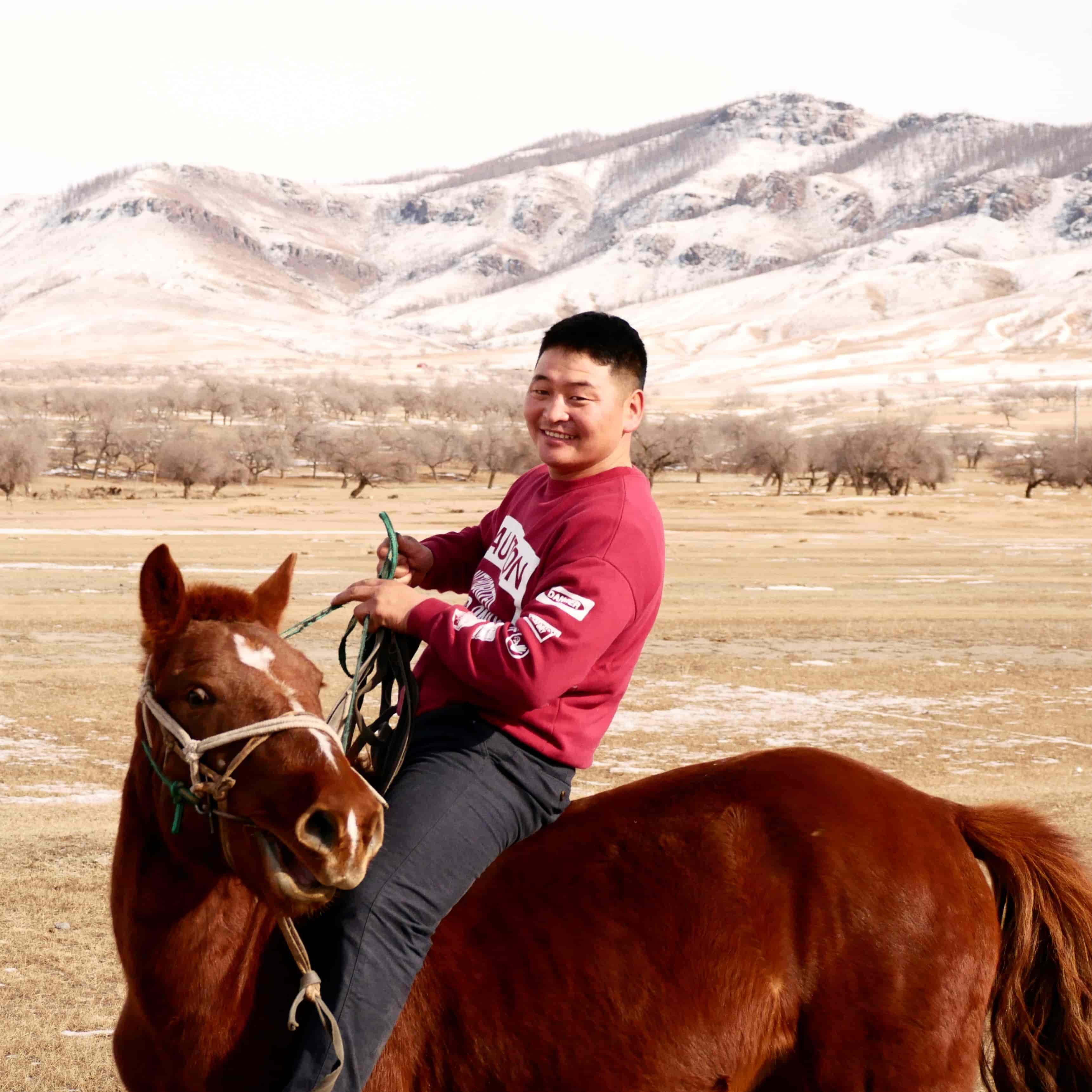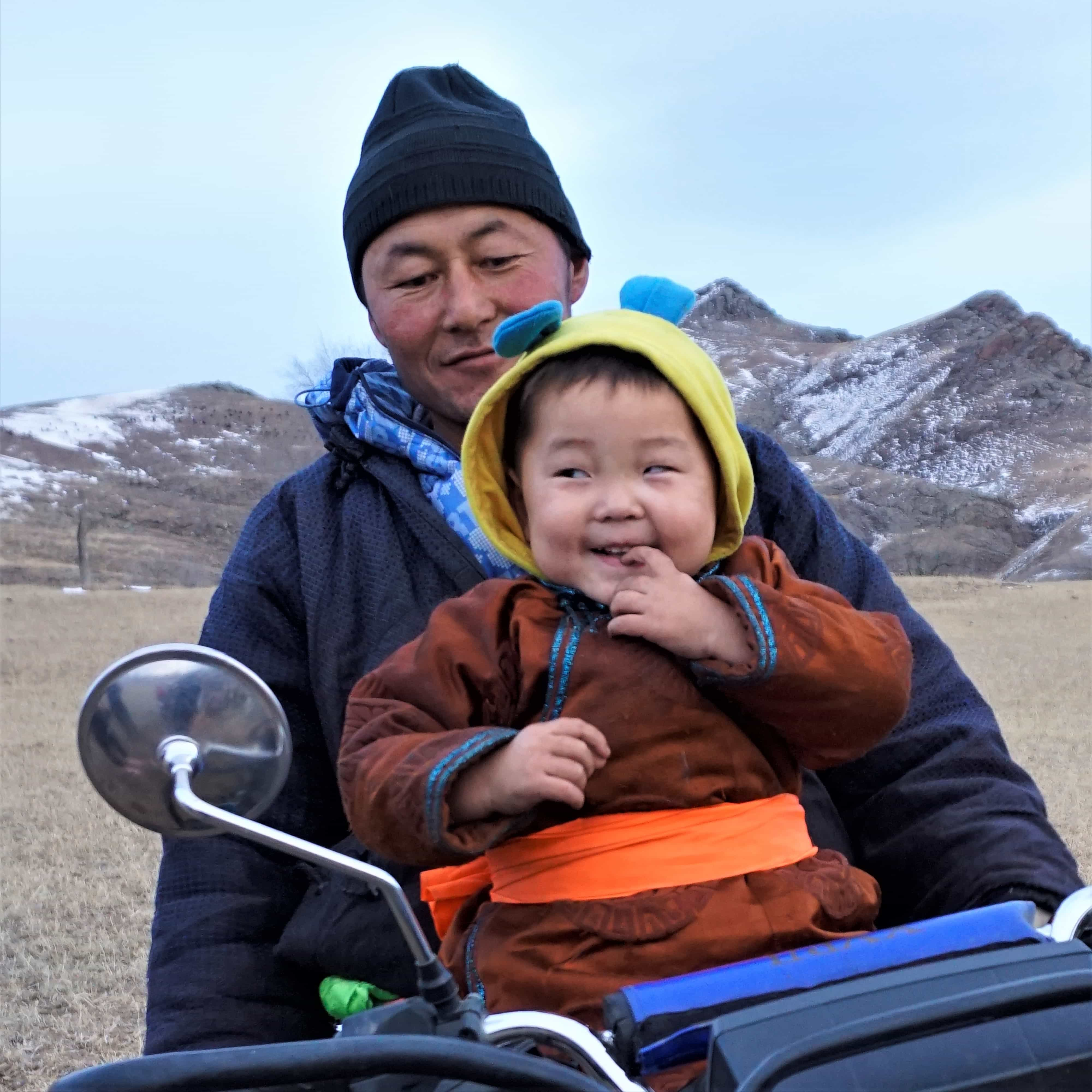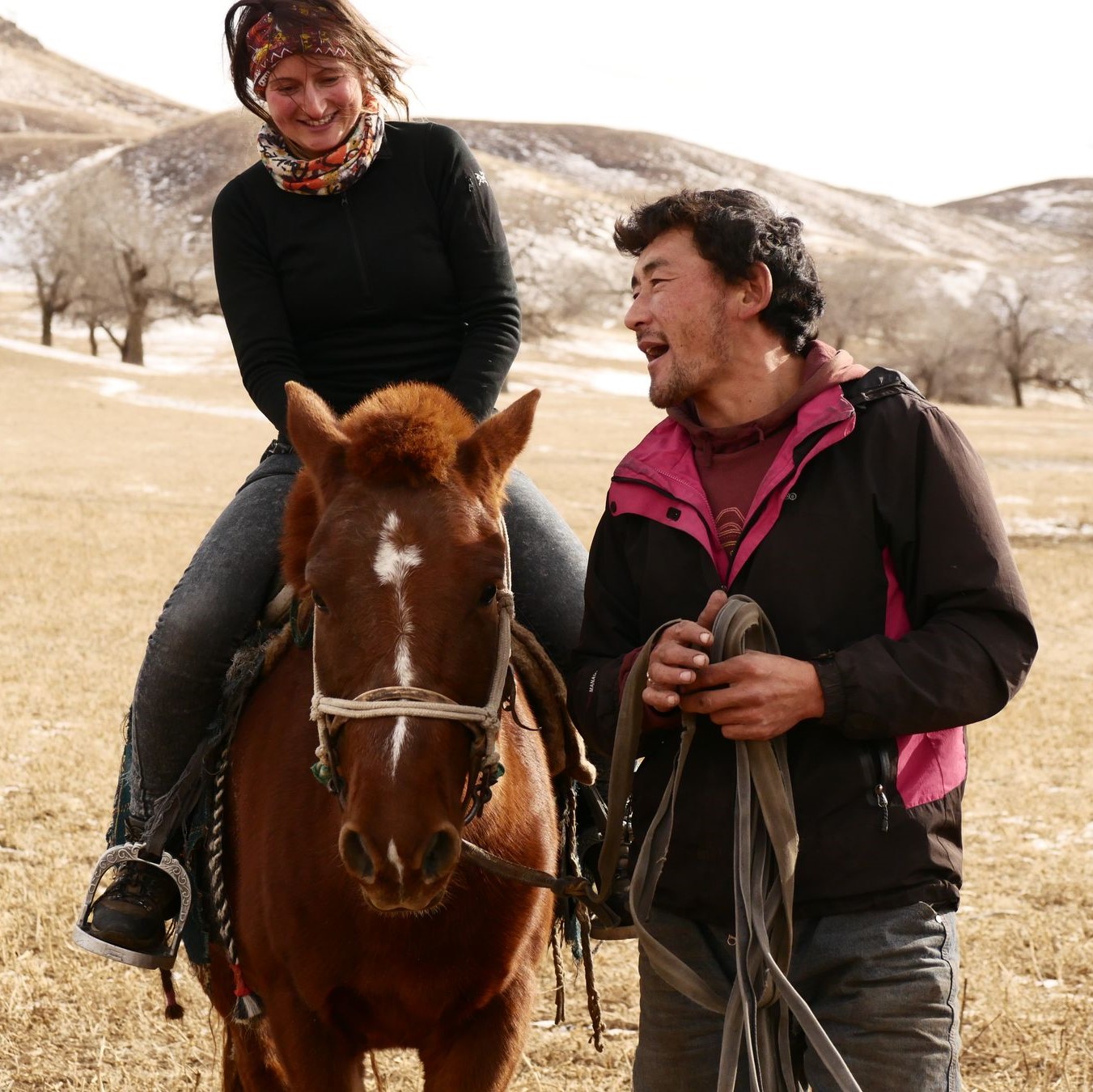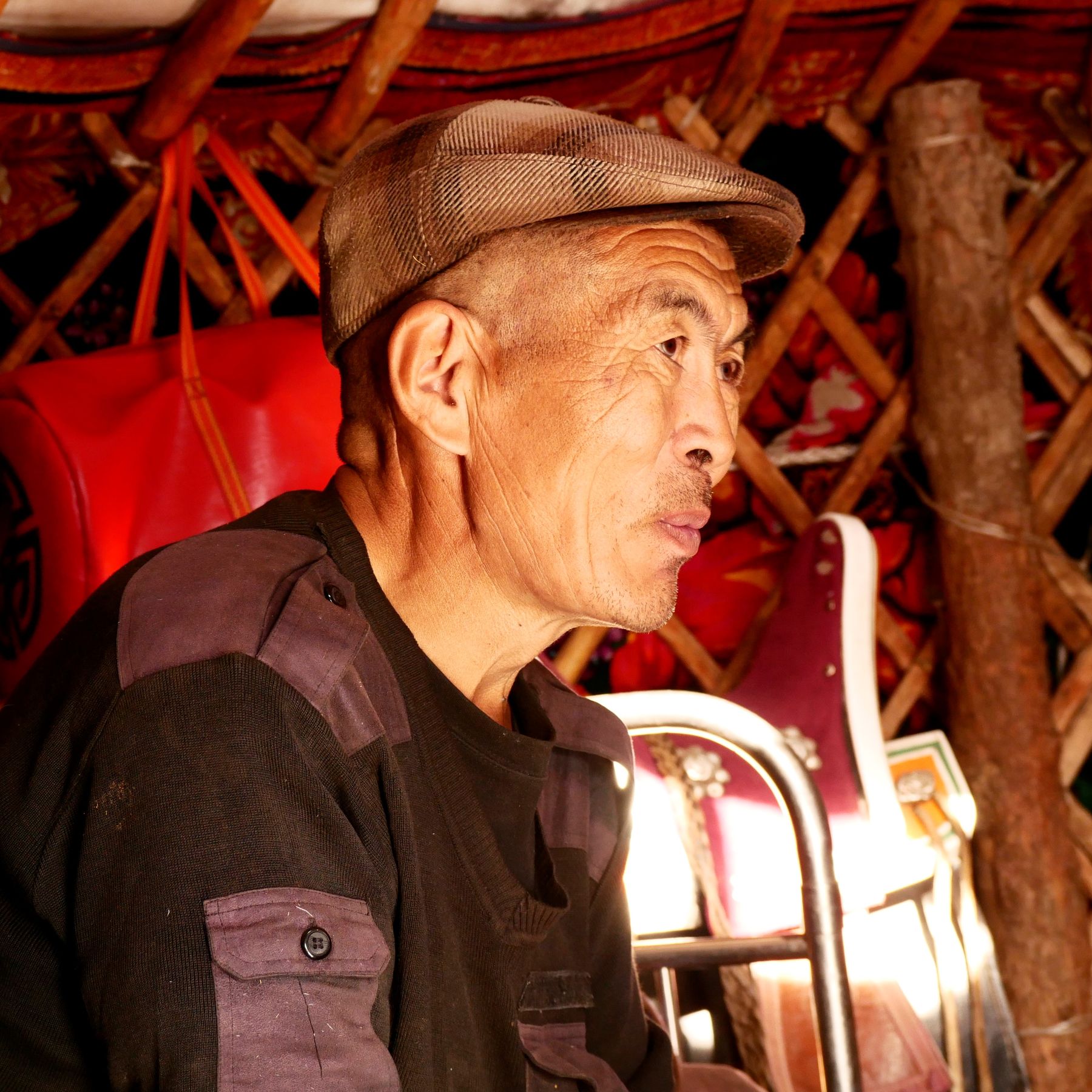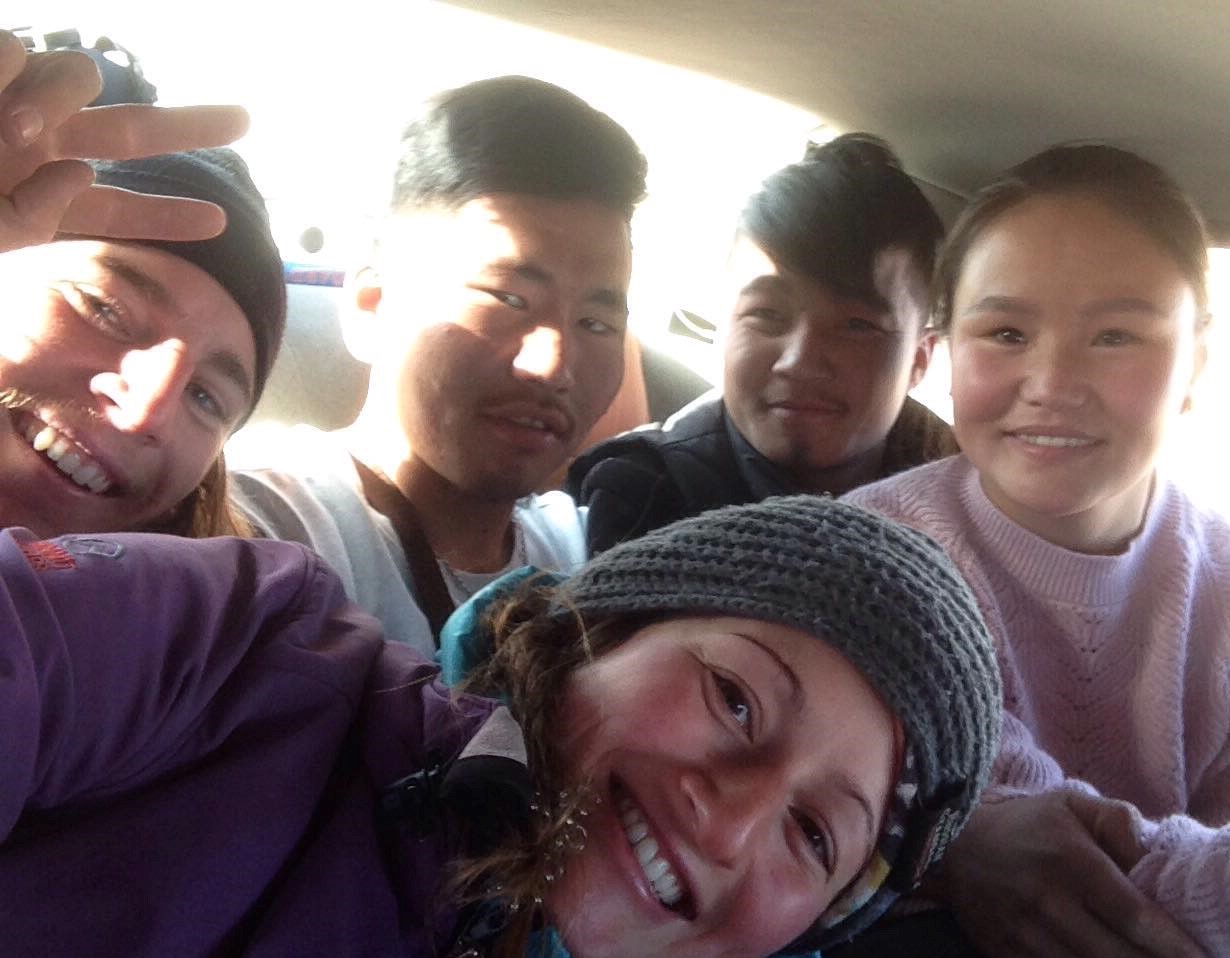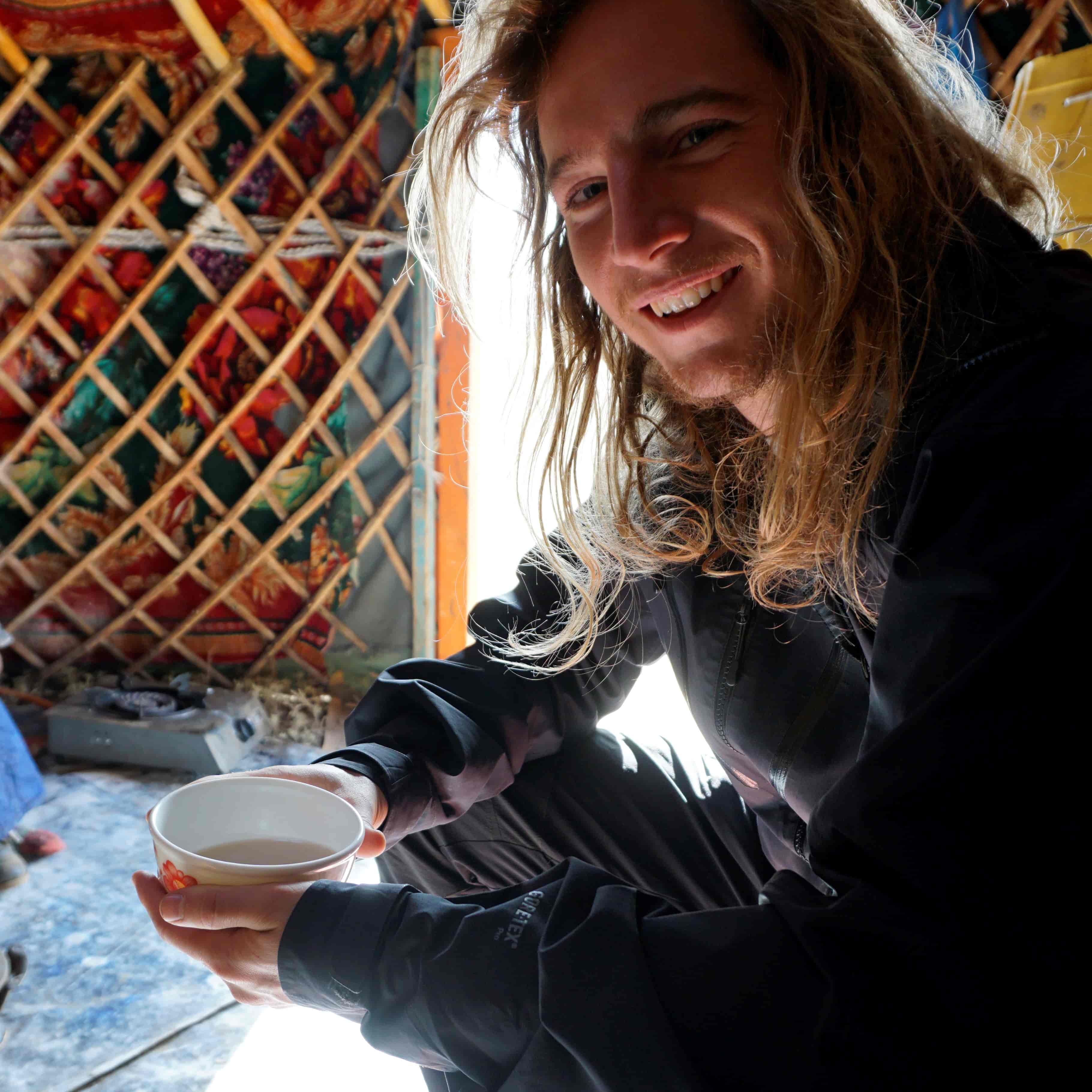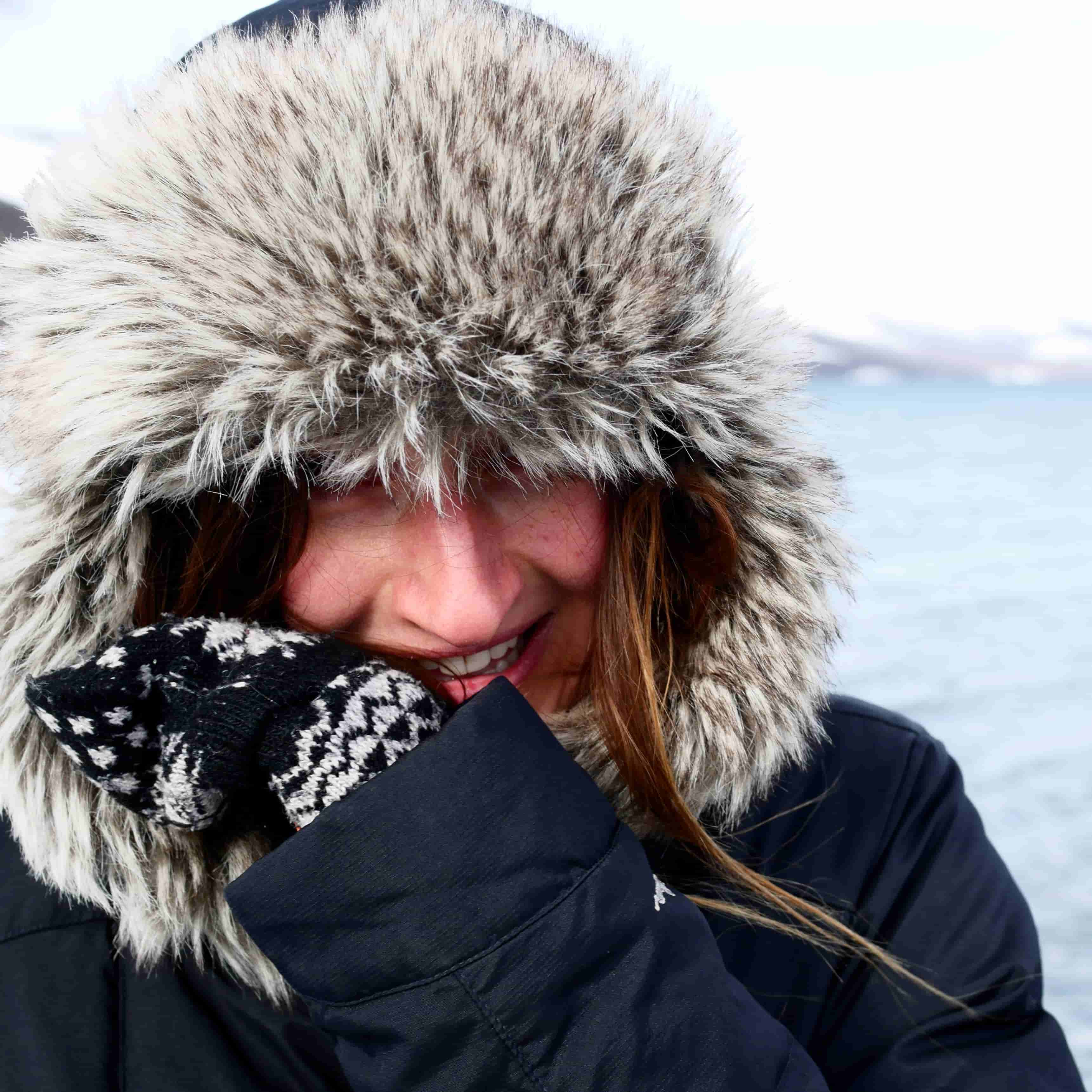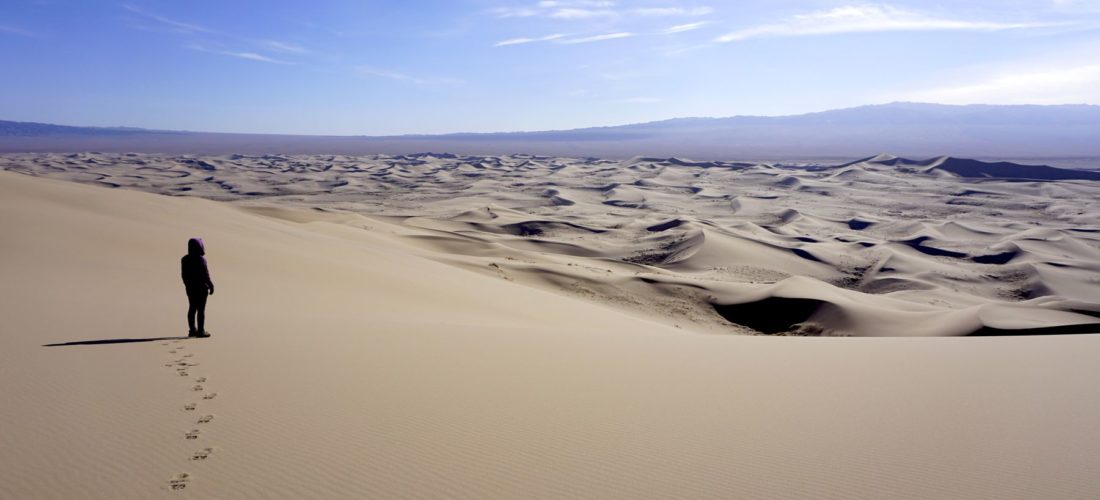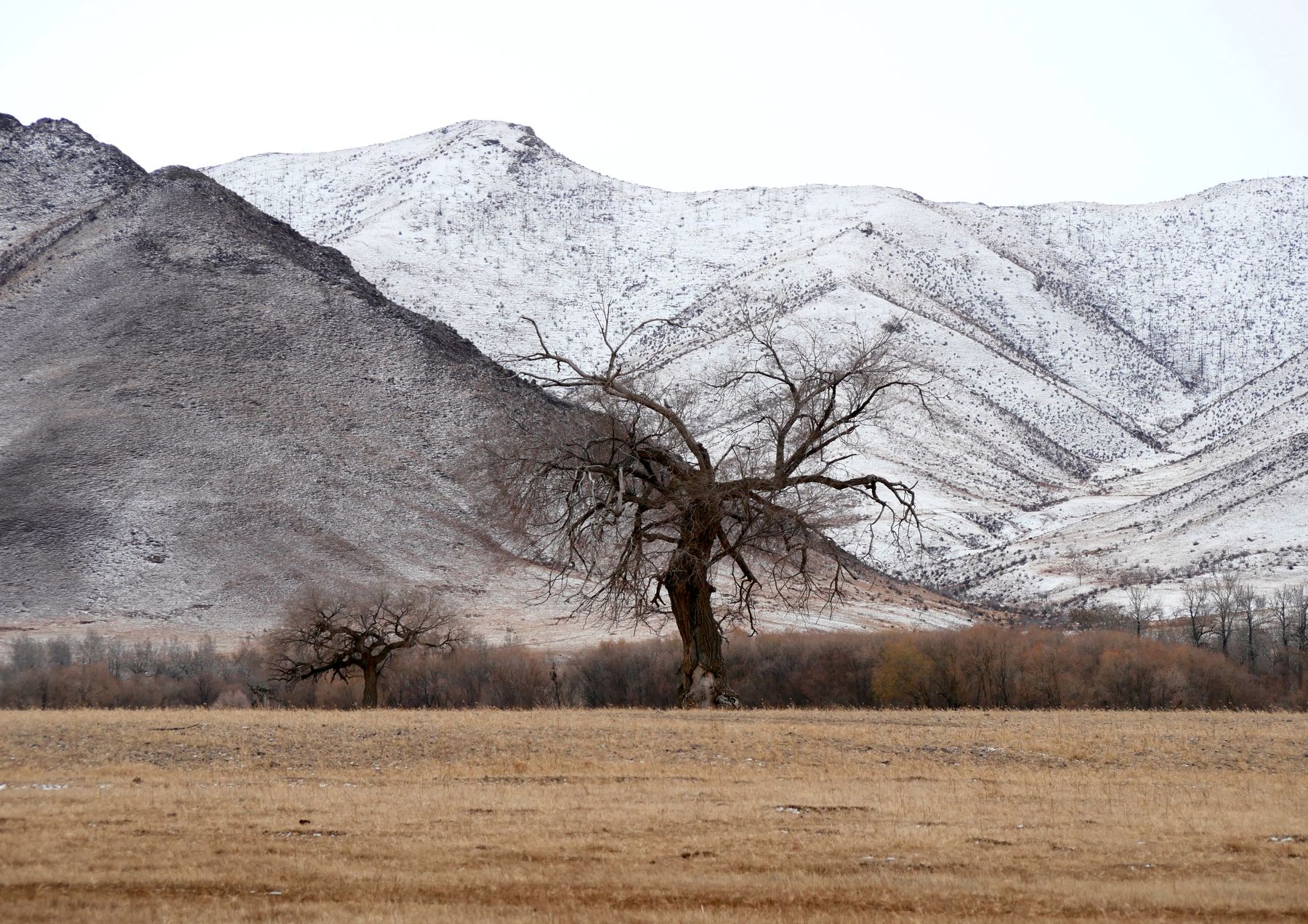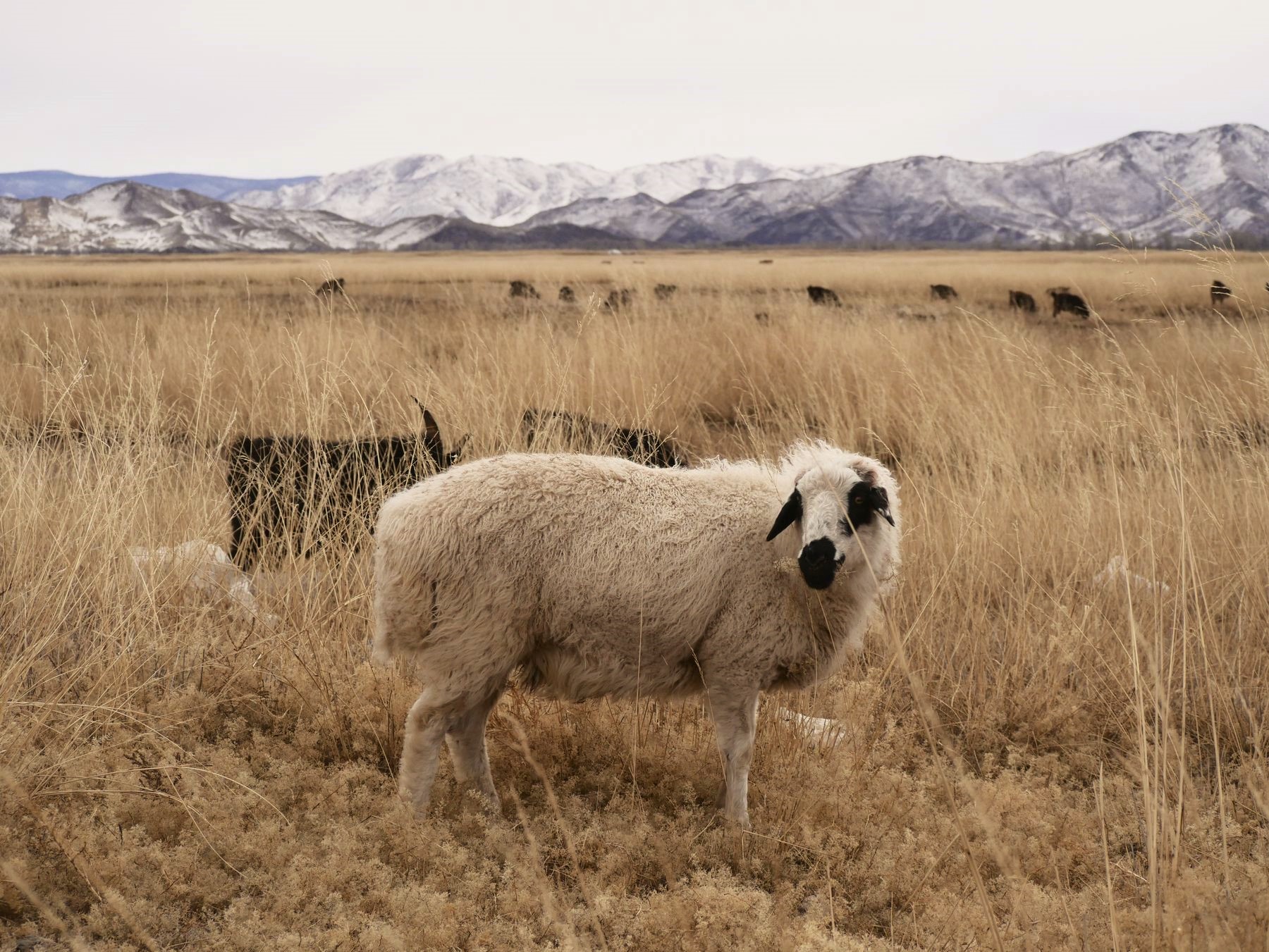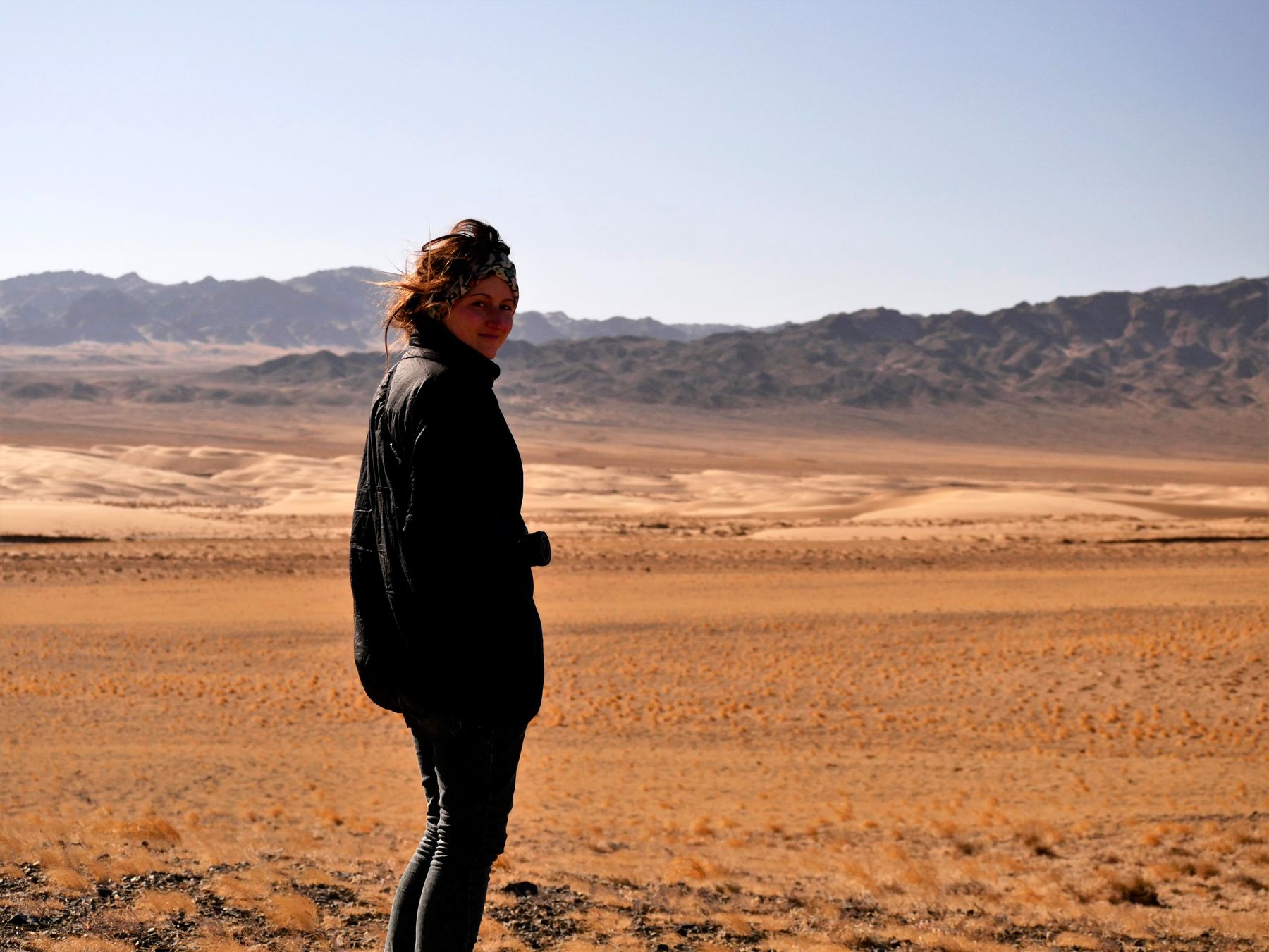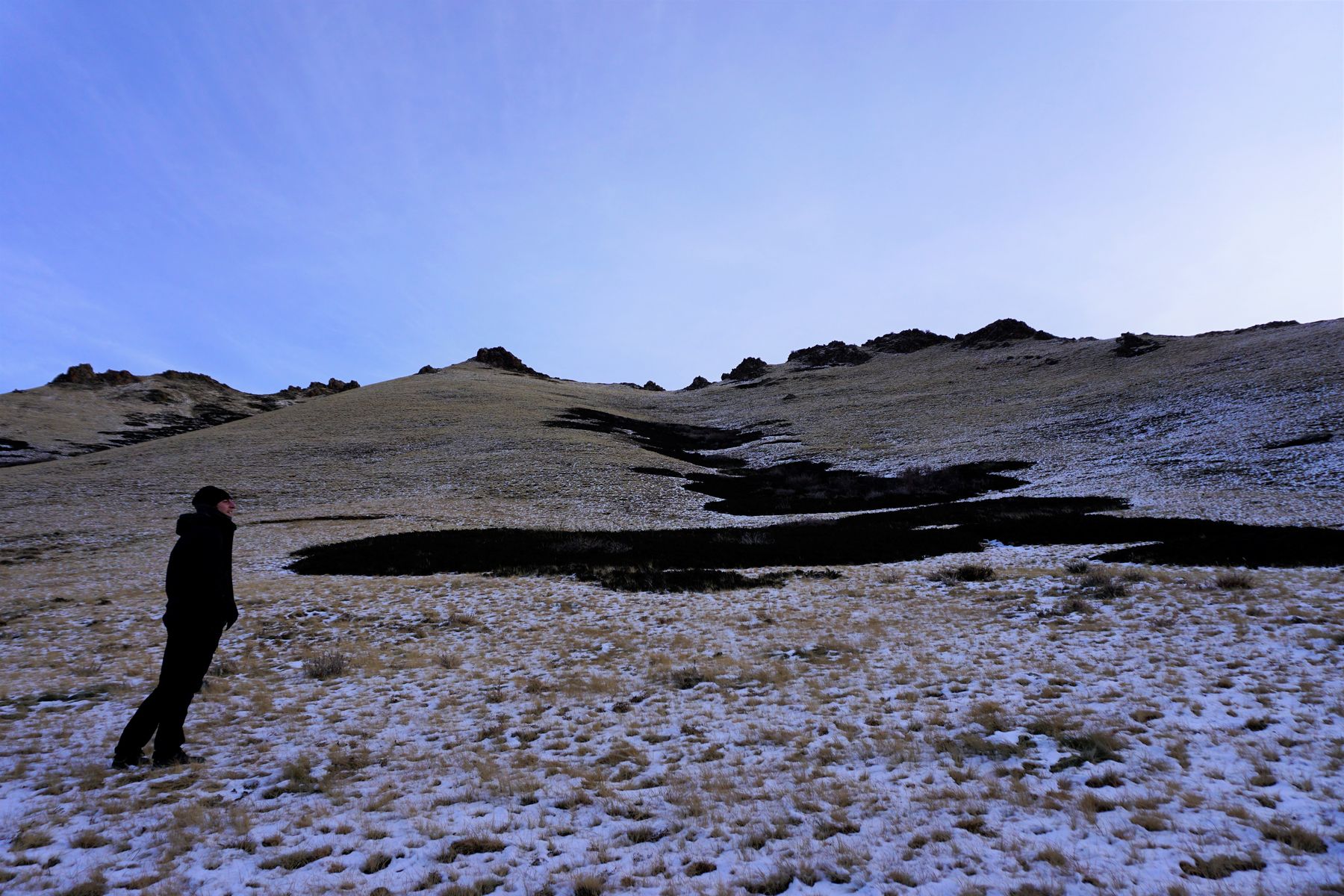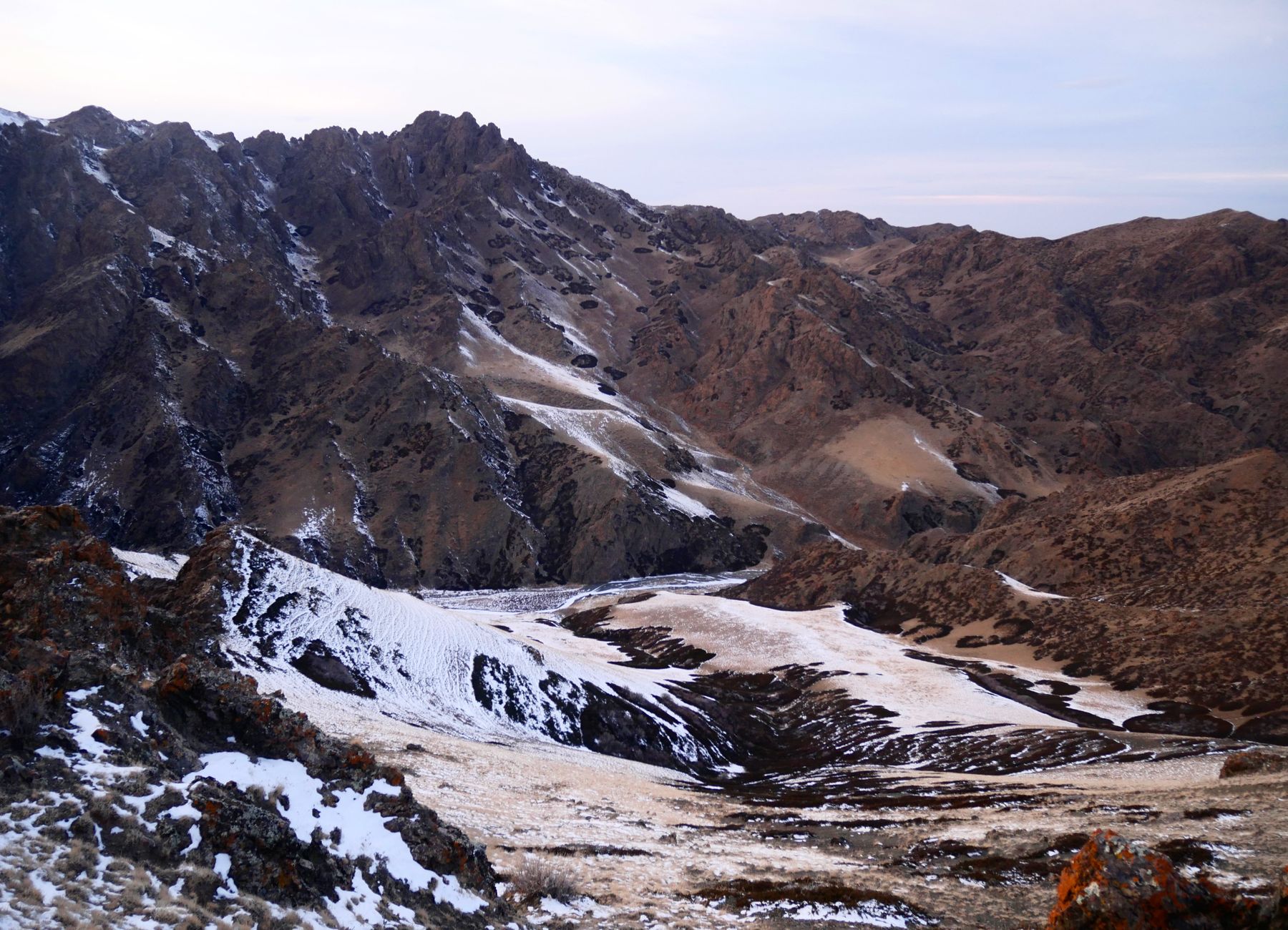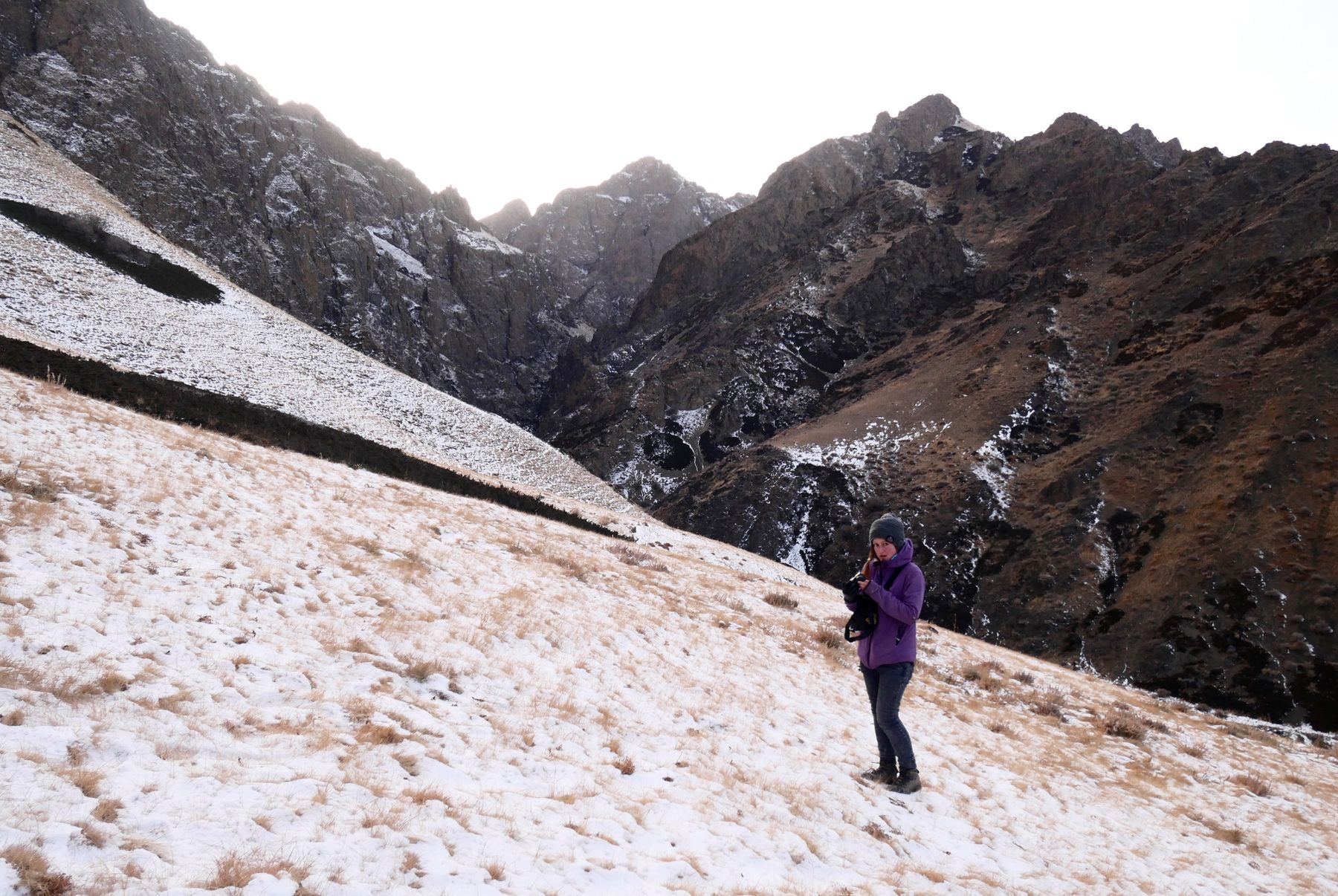
Eastern Indonesia, 2011

book, Uncategorized

I have about 115 word-doc pages of my book written now and I’m up to the year 2011, which means I only have about five more years to write about! That might take me a while though, since those five years were kinda crazy :D

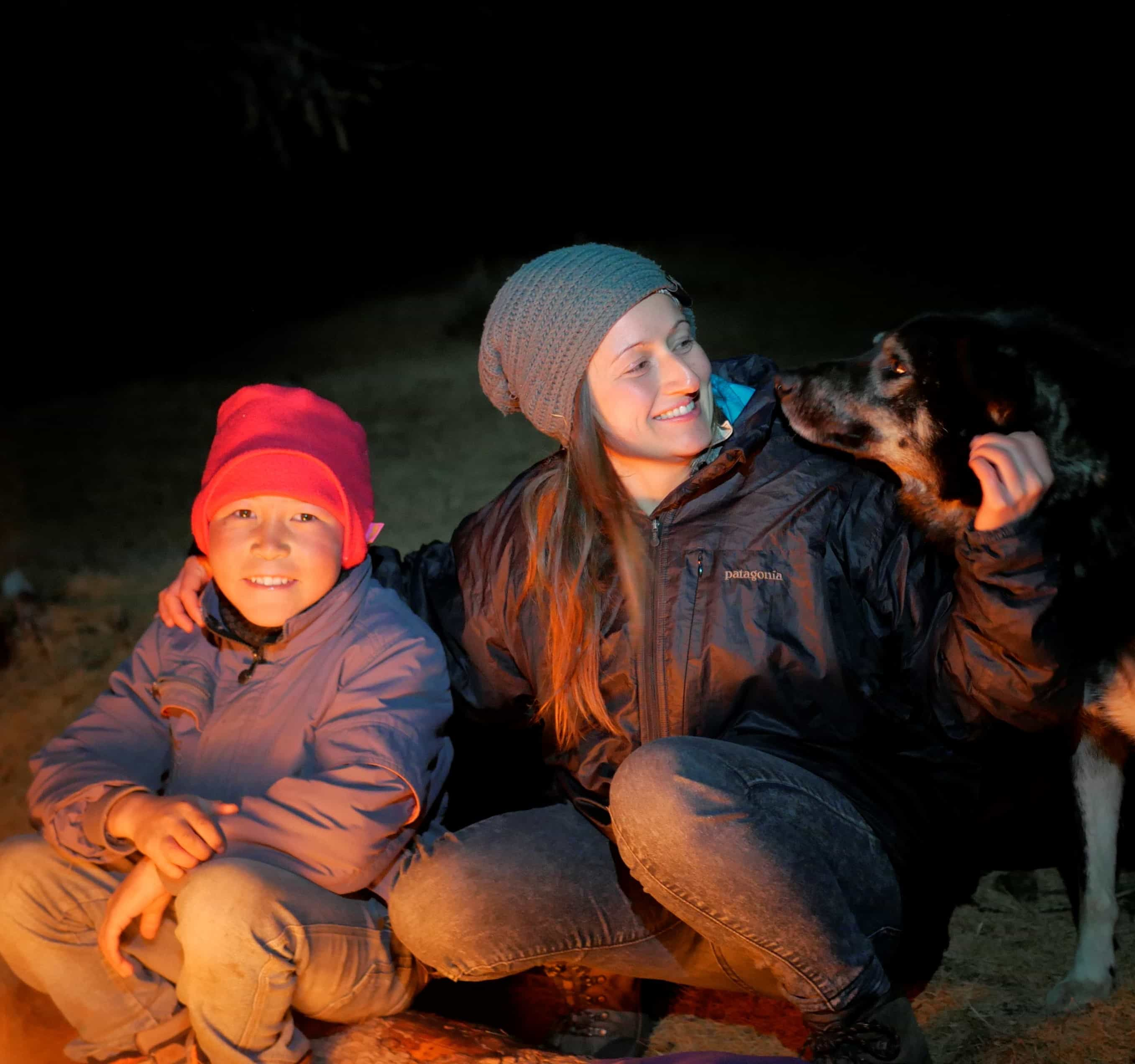
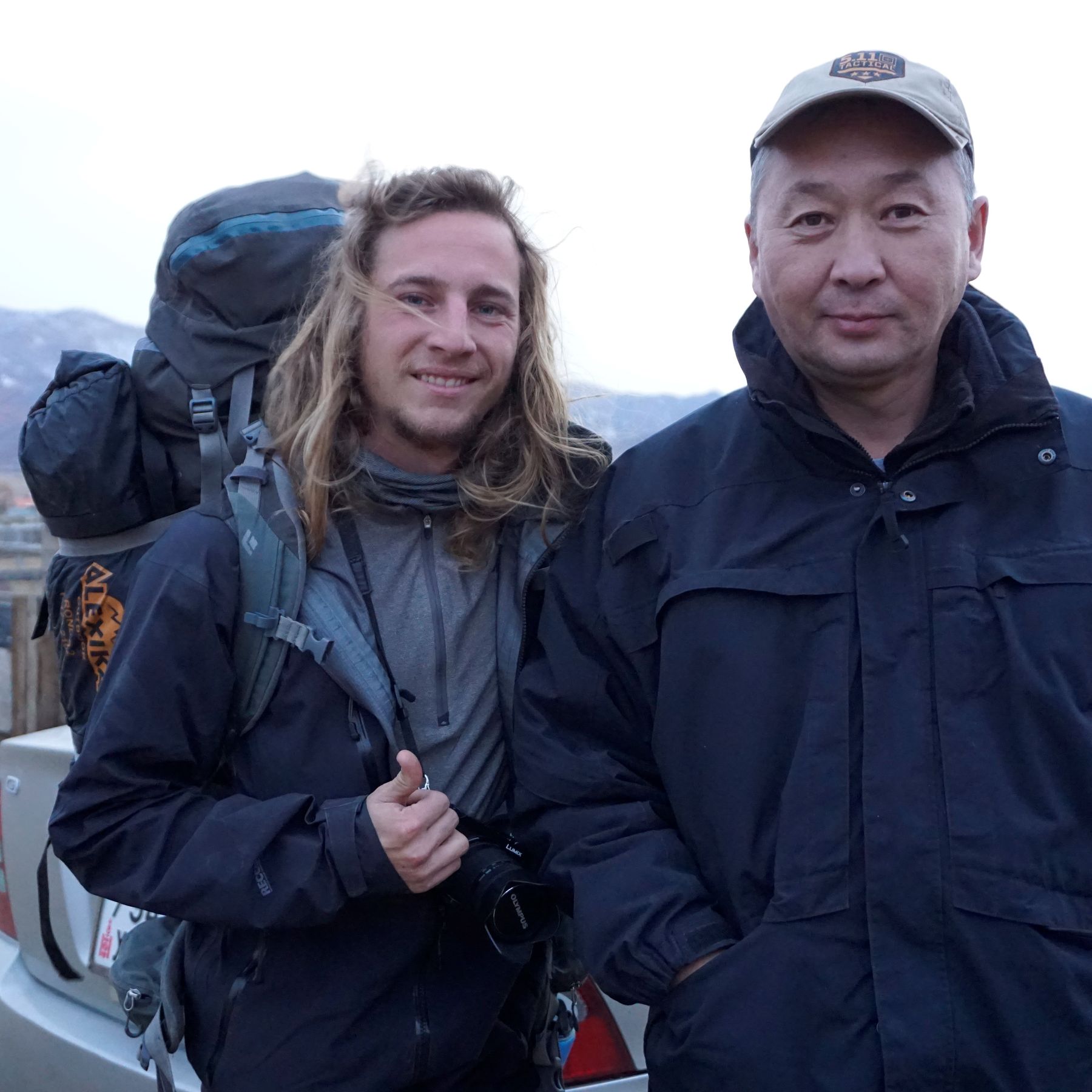
I’ll share one of my favorite adventures with you now. This one starts off after I quit university for the fourth time and traveled through Indonesia from Bali to Komodo National Park by myself at age 22-

*this font is what I wrote back in 2011

The default print is my narration of the story. Italics are my thoughts at the time. Hope it makes sense!
[… Chapter 13]

I decided to keep on going east, where there were no tourists. I wanted to catch a bus to Bajawa, which was the closest city to a number of interesting looking native villages. There weren’t many busses around, however, and I ended up catching a ride with a tour guide for the same price as a bus. It was that cheap only because the guide was going there anyway.

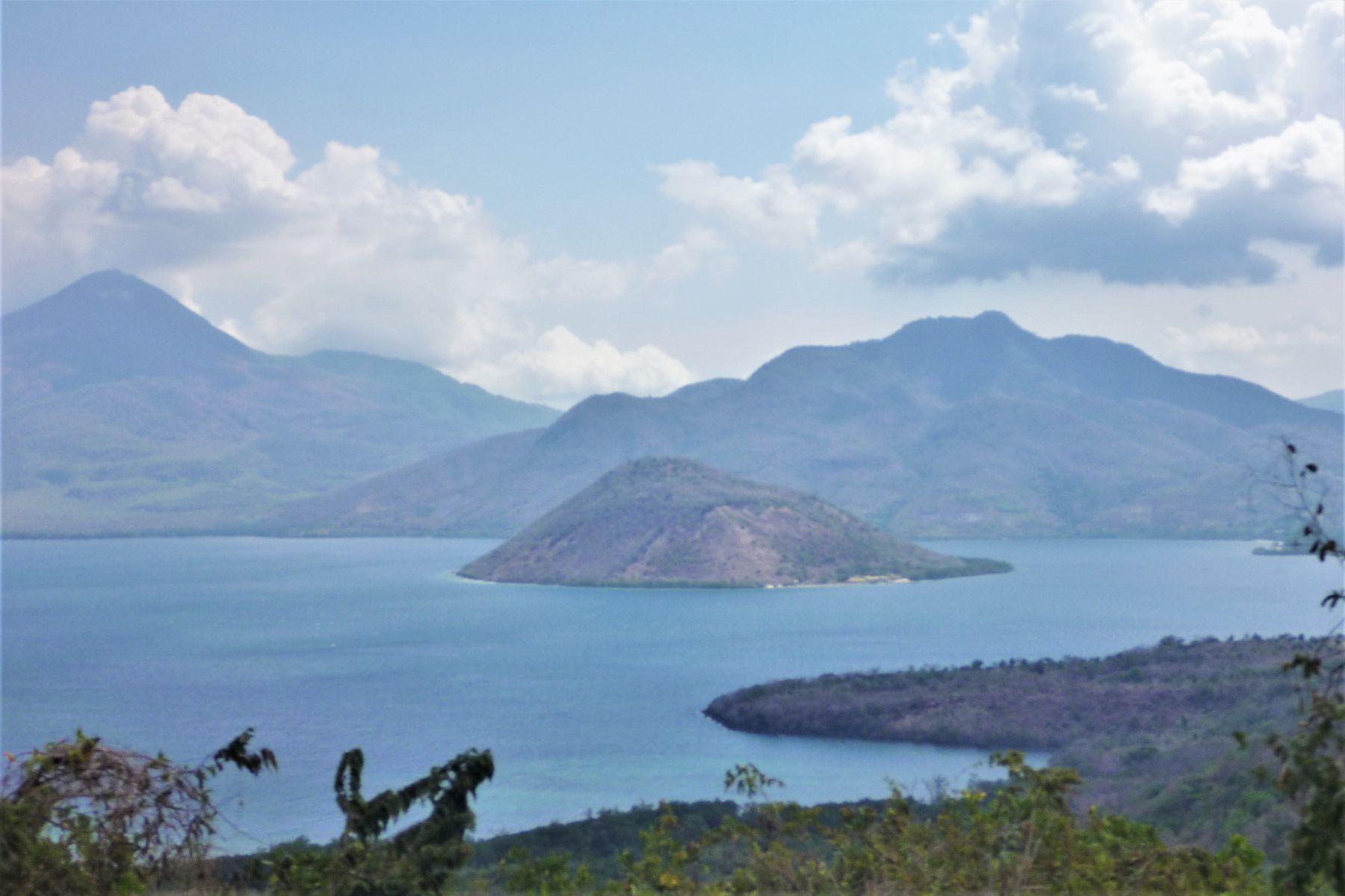
The drive from Labuan Bajo to Bajawa was incredible, it went through big lush green mountain passes, weaved around the side of the ocean and up and down colorful hills. It’s no coincidence that the Portuguese colonizers called this island “Flores.” The jungle was covered in flowers!

We stopped at the guide’s mother’s house, in a small village in the mountains on the way to Bajawa. She gave us some snacks and a fresh cup of coffee, then the guide explained some things to me,

“When I was kid, there was no road here. If you want go to Labuan Bajo, you walk for four days on this path. Now the path is road.

Things change too quickly here in Indonesia. Look at my mother, I gave her a cellphone so I can call her, but she don’t understand. I call her and it rings but she don’t know how pick it up. I explain but she don’t get it.

Environment is changing so quickly, but the people’s minds can’t keep up.”

I thought about this. I suppose that’s why there’s so much garbage everywhere you look. 30 years ago, the only garbage these people had were banana peels and coconut shells. It wasn’t a problem to eat a banana and throw the peel anywhere you want, but the people’s minds didn’t change when Western companies replaced those bananas with snickers bars and the peels with plastic.

After another four or five hour drive, we made it to Bajawa.

There, again, I could not escape the constant attention. Every 20 feet I walked in a public area someone would yell ‘bule’ (white skinned tourist) at me. The thing that bothered me the most was that I felt like I could not relate to anybody. I was always on the other side, always the ‘bule,’ never another human being. It seemed like everybody just wanted something from me, that I could not talk to another human being on a straight and honest level, and that nobody could be trusted.
I was angered by this and did not want to give my money away to anybody. Because of this, rather than paying for a tour or even a motorbike ride to the traditional villages, I walked. I walked for 20km and reached the village of Bena- where they asked me for money to enter the village…
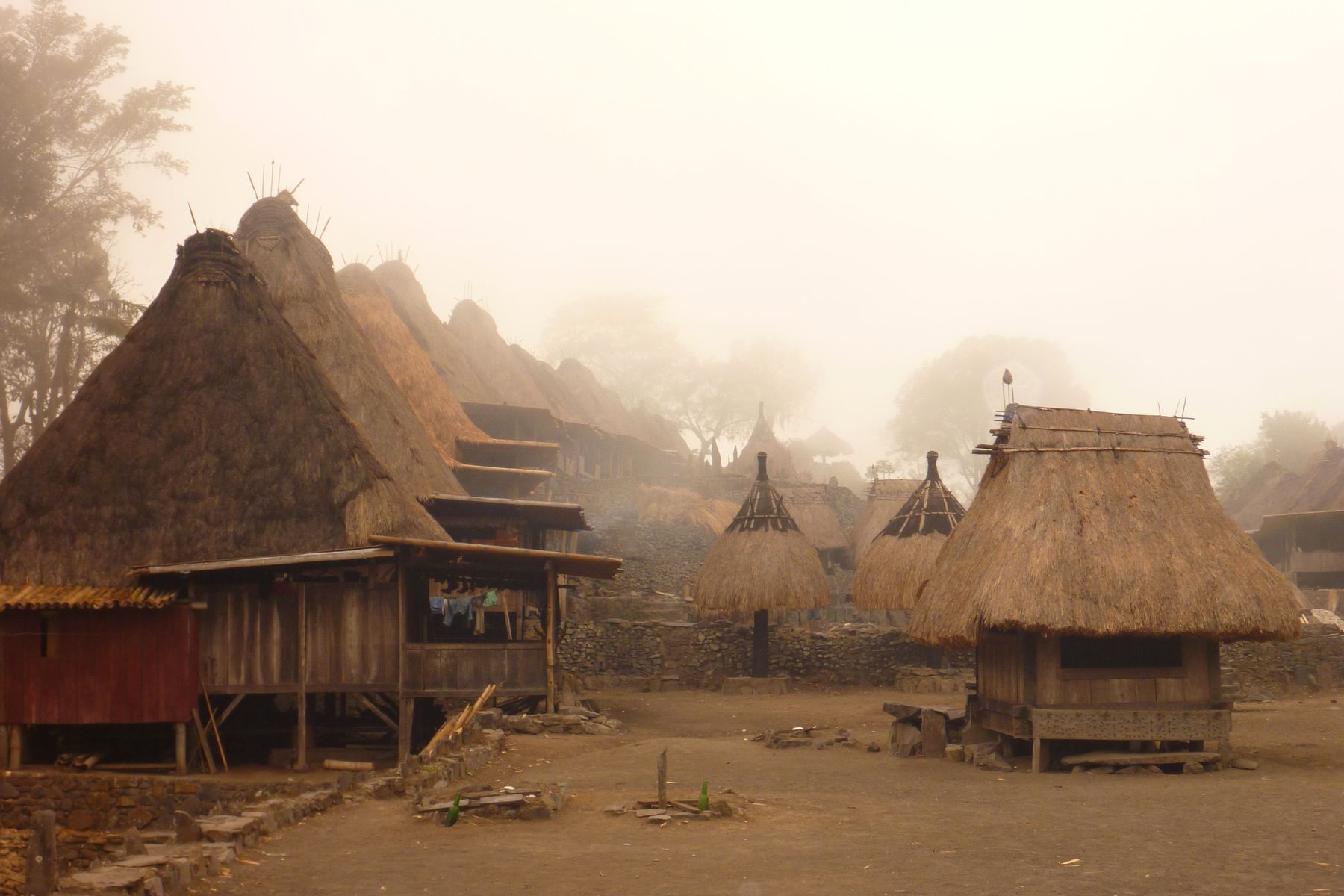
It was an interesting looking village. The houses had thatched roofs and there were graves in the front yard. There were also big stones and little thatched-roof shacks and umbrellas on their territory.
The next morning, I woke up feeling fed up. I decided that I should no longer venture further east to my next destination, Kelimutu (the volcano with three different color lakes), because it was too frustrating to deal with the people here.
I decided to spend one more day in Bajawa, visit one more traditional village or see the hot springs, then head back to Lubuanbajo and eventually back to Bali (from where I could fly).
However, I felt like it would be a shame to leave these traditional villages without learning much about the people and their ways. I read a small bit of information in my guide book and tried to find more on the internet but was quite unsuccessful. Then I decided that it may be worth it to pay for a tour as long as the guide was very knowledgeable. There were several one-day tours available and also an over-night tour where you can sleep in one of the traditional villages.
The over-night tour seemed ridiculous to me- paying over $100 to sleep in someone’s house is not what I would call a meaningful experience. If you are paying to be a guest, you are still very much on the other side, and still learning very little. Finding an intelligent, English-speaking guide for a one-day tour also seemed unlikely, I got the feeling that these ‘tours’ were actually more just expensive methods of transportation rather than enriching guides.
So I walked again. I walked until my feet ached and then flagged down a bemo (minivan). I asked where it was going, looked at my paper map and said “okay, take me there!”
I was dropped off at a vibrant market; walked around it for about 15 minutes and then bumped into a young girl who started speaking to me in English (this was surprising because most people around Bajawa don’t know a word of English). After about a one-minute conversation, she invited me to visit her village. At first, I was a bit skeptical, thinking that maybe she wanted something from me as well, but she seemed very nice so I decided to trust her.
This was (and still is) a truly amazing experience. Right when I had had it and was about to give up on Indonesia, I was accepted and brought into the other side.
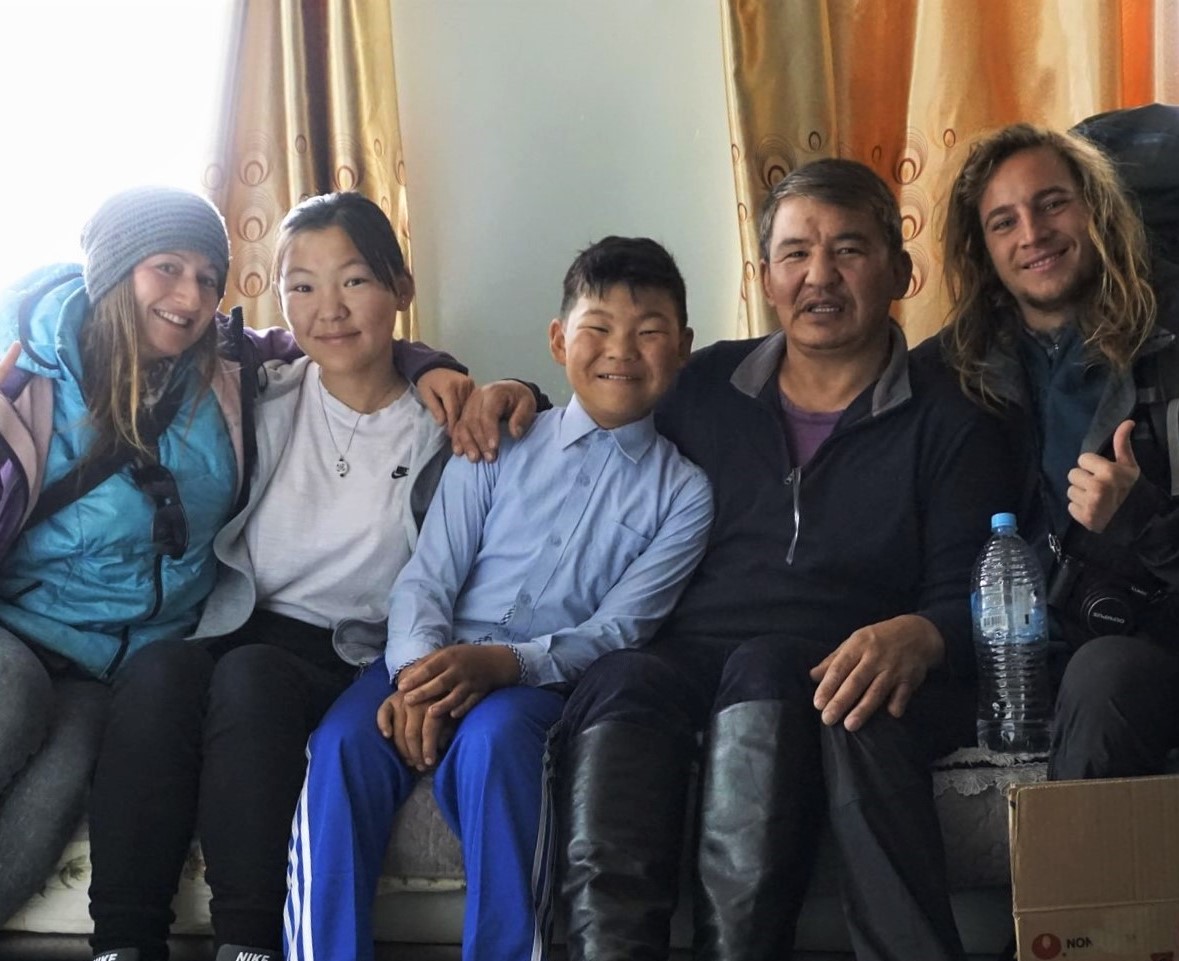
My friend’s name is Asry. She showed me her village, introduced me to her family, fed me and invited me to sleep in her house. Really funny and ironic isn’t it? Her and her family are the traditional Ngada people, from the same background as the people of Bena and Wogo, the villages people tour and pay big money to sleep in.
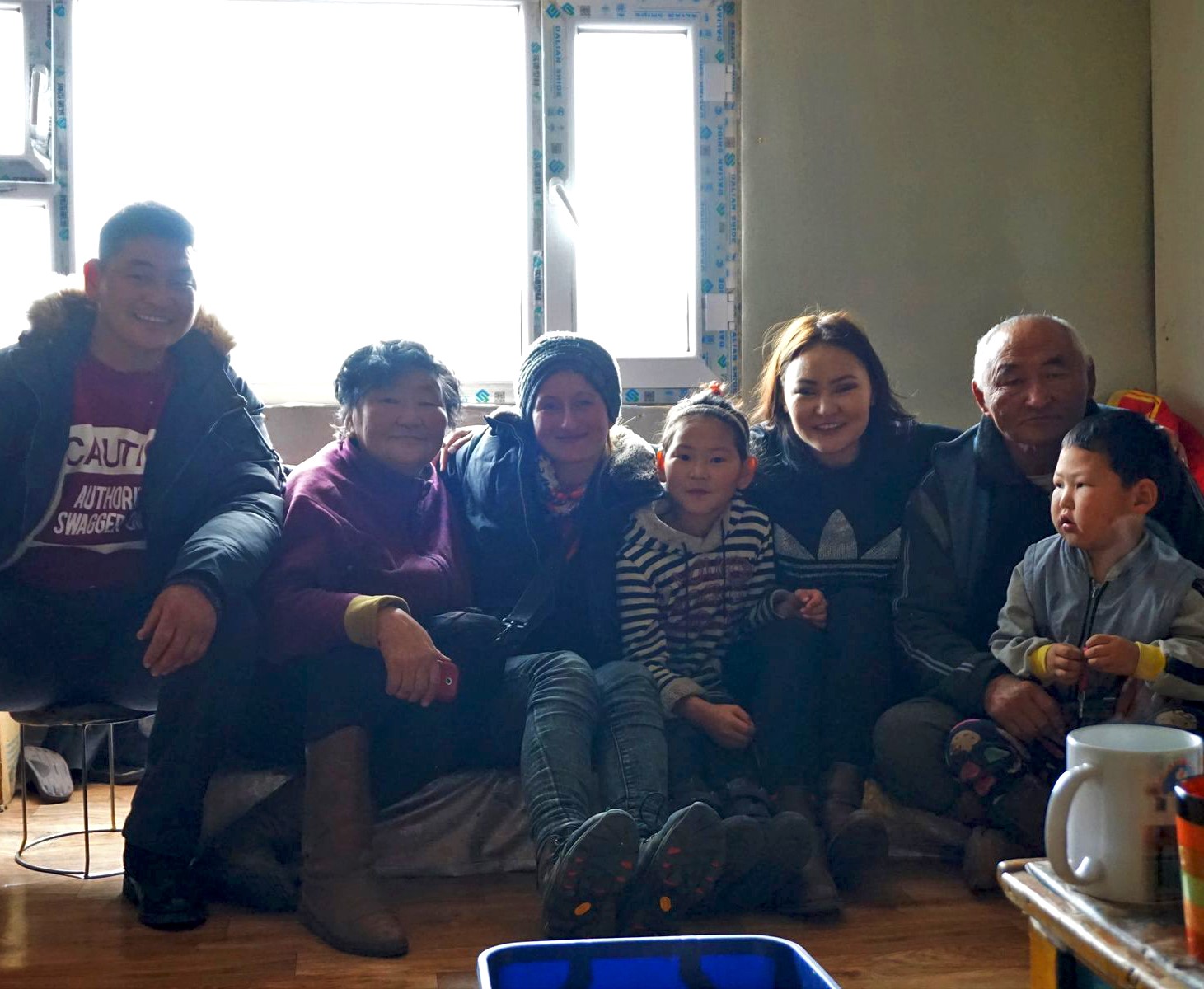
The entire family is very kind to me, they accept me and tell me that I am a part of their family. They feed me enormous amounts of food and ask for nothing in return.
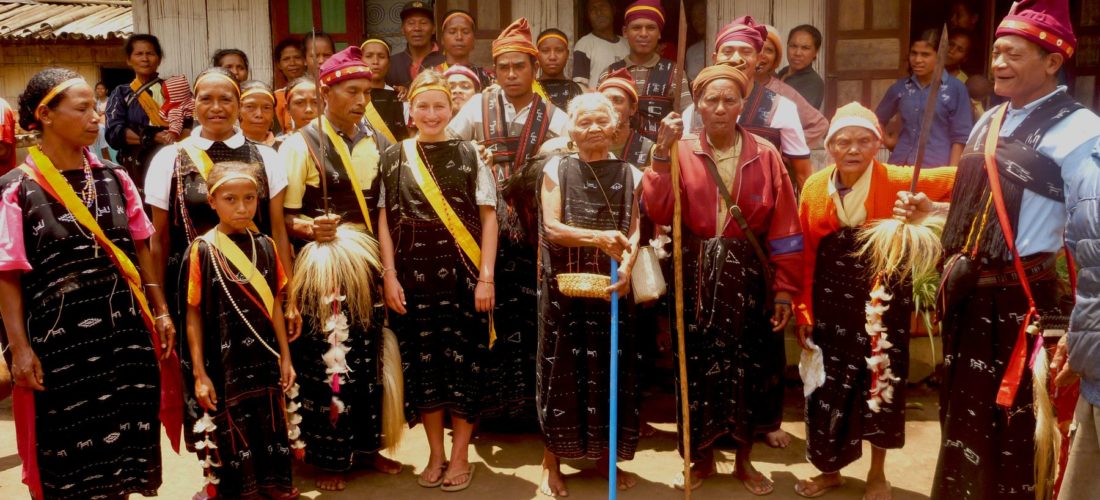
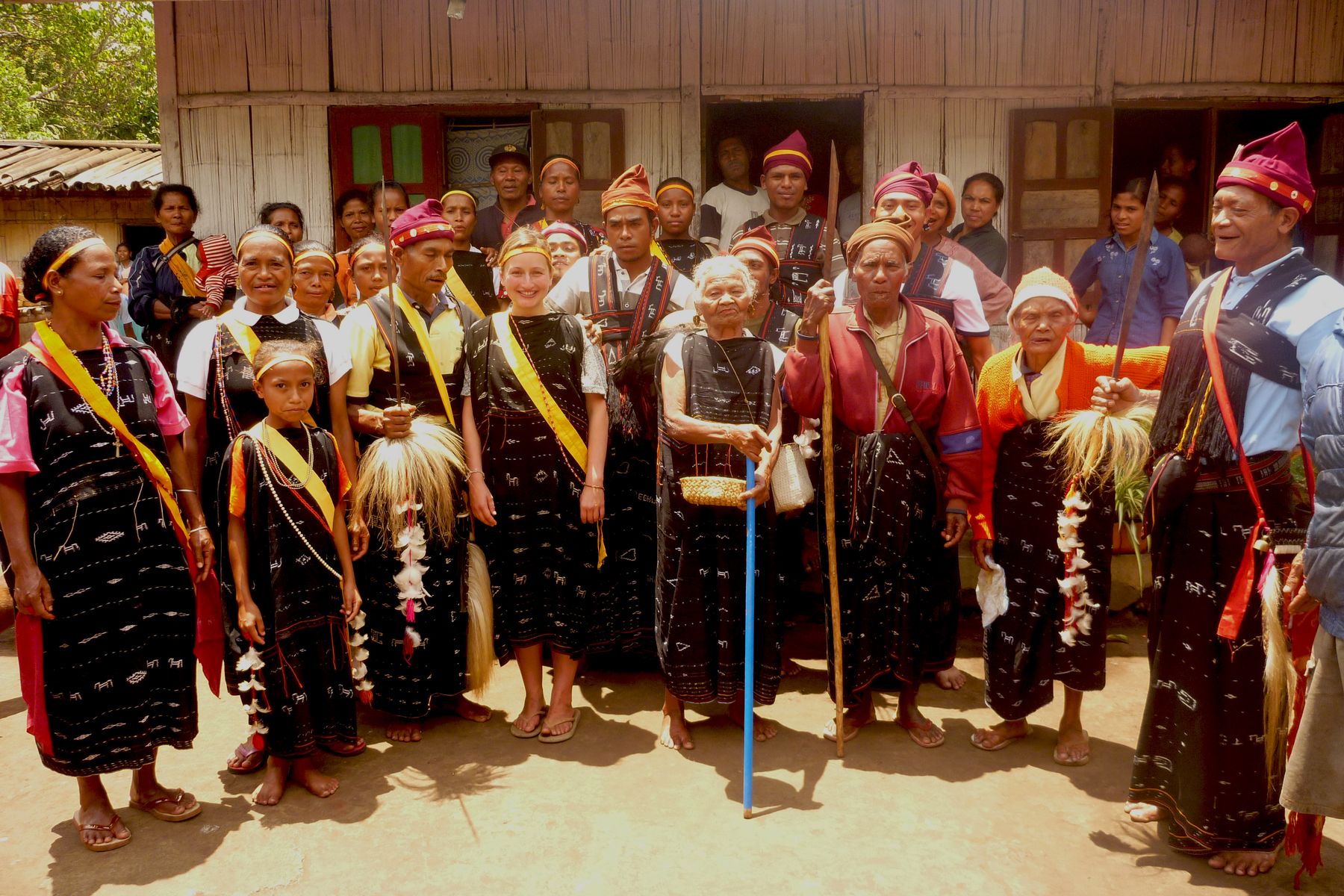
On my second day in Mala Nusa (their small village), I was invited to a huge family celebration. This was something I never expected. Asry’s family dressed me up in their traditional black cloth and told me to carry the gift for the party on my head- it was rice in a traditional basket. When we arrived, swarms of people surrounded me! There were about 200 people at this party and I think that most of them had never seen a white person before. They dressed me up even more, adding a yellow band, beads and a headband to my outfit. Then they crowded around and observed me, making comments about my nose and white skin. No one except Asry knew a word of English, but it was easy enough to understand what they were talking about.
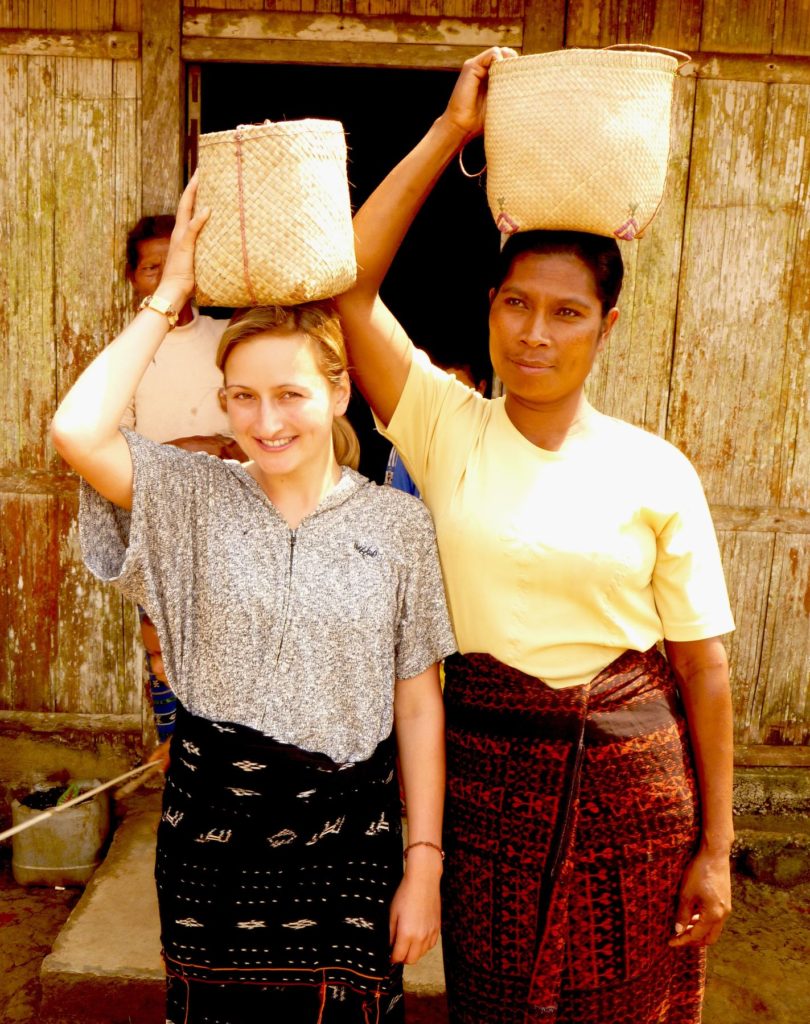
They gave me rice and grilled meat, then commented about the way I eat. They were surprised that I liked rice and that I could eat with my hands. It was a bit difficult to pick up rice, but I didn’t really have a choice, since there were no utensils at the party.
After they fed me, they sent me to not only watch the traditional ceremonial dance, but to participate in it! They shoved me into a circle of people in the middle of the ceremony and I tried my best to copy their dance moves. Luckily, it was an easy dance, just some foot shuffling and long hand motions.
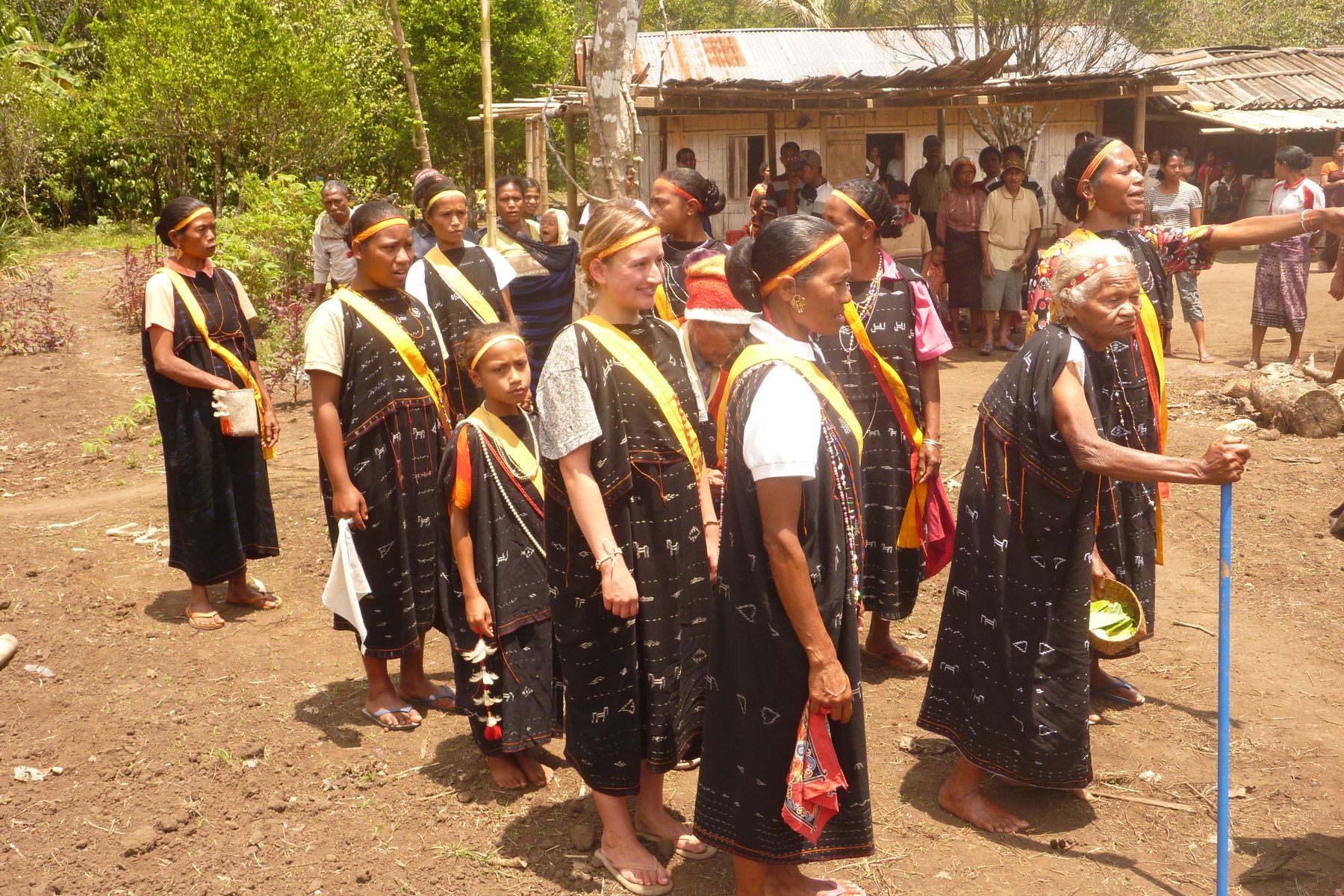
I snuck off the dancefloor somehow, then the drum circle got louder, as did the powerful yells to the ancestors, and the animal sacrificing began.
Asry led me to a small room in the middle of the big house that this party surrounded. The room had a small door and was elevated above all the other rooms in the house. Asry explained that this was the spiritual room, where the family prays to their ancestors. The door is small so that you give respect by bowing your head when you enter.
Next, I hear a scream and loud banging drums- a large pig was sacrificed outside. I looked out and saw its neck split open and blood dripping into a bucket.
Asry explained that this party was a celebration of the building of the new house we were sitting in. This house will be the “main house” of a small village, the place where family members meet, have celebrations and pray together. Animals are sacrificed on this day and their blood is smeared onto large sheets of metal which are then placed on top of this elevated spiritual room to create a special trapezoid-shaped roof. The blood of the sacrificed animals is an offering for their ancestors.
Asry left the spiritual room and I sat there with 10 very old people that gave me more rice and grilled meat.
‘I sure hope their ancestors don’t like human blood.’
I knew it was crazy to think that they might want to sacrifice me too, but I couldn’t fully get that thought out of my head, especially since I had only met Asry two days before this ceremony and everything seemed so wild! The banging drums, the black cloths, the yells, the dancing, the blood!
But at that point, I figured that if they did want to, it was already too late to do anything about it now, since I was god-knows-where and outnumbered by about 200 people.
I laughed about the fact that if anything like that did happen, nobody would ever find me!

Yeah, these were still the days before I had a smartphone.

The second animal I saw being sacrificed was a dog. The tribal leader gave it three smacks on the head and it fell dead and was hung from a rope tied to a large wooden pole. A few minutes later, they tied a second dog to this pole while the dead one still hung in the air. As you could imagine, the living dog was absolutely shitting itself.
I did not see whether the second dog was sacrificed or not. I saw it tied to the pole for several minutes, panicking and emitting so much fear that I could practically see it, then a man untied the chain and lead it away.
Asry’s family cooked and ate every part of every animal that was sacrificed, including the dog. During this celebration, 30kg of rice were cooked, everybody ate A LOT and each family unit took home a goody-bag of rice and meat in the same traditional basket they came in with.
Later, they put up the thatched-roof shacks and umbrella-like structures that I noticed in Bena. These structures are called ‘ngadhu’ and ‘bhaga,’ and they commemorate the male and female ancestors of each family unit.

No one attempted to sacrifice me during this party, so I ended up living in Asry’s village for over a week. I felt honored to be there and to have this experience.

Asry’s house was made out of bamboo. It didn’t have running water, a kitchen, much electricity or much furniture, but it was nice and cozy, especially in the mornings.

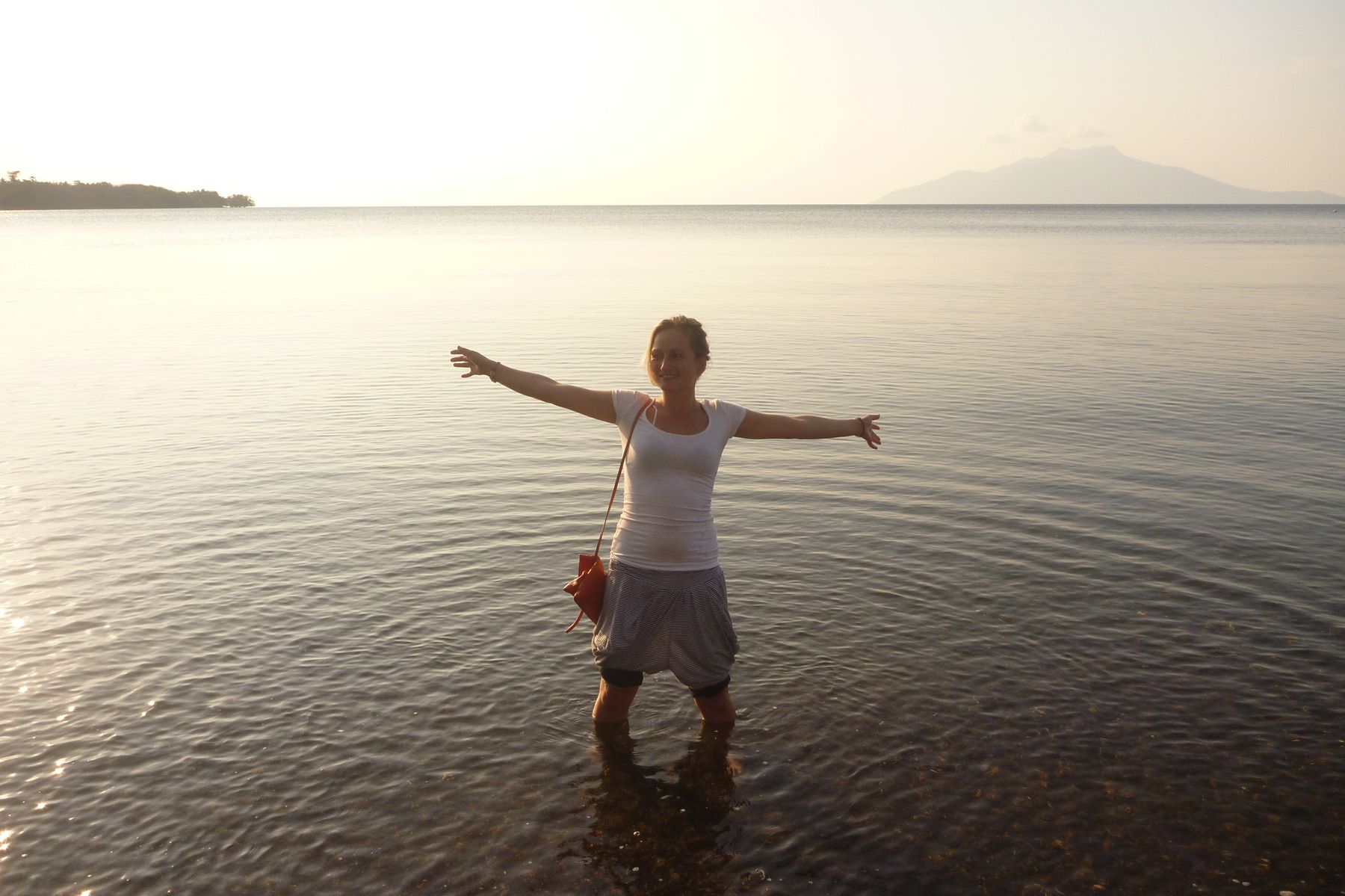
Each day I would wake up slowly as faint sunrays shined through the misty air. Sometimes it felt a bit damp and chilly in the morning, since her village was in the mountains. The smell of smoke, fire and coffee filled the air. I stretched out my arms, took a deep breath, then slowly made my way to the family room. There were always six or seven family members crowded around a fire inside the house in the morning. Somebody would always hand me a fresh cup of home-grown coffee, the best coffee I had ever had. Then I would sit quietly on a small stub of wood, sipping the coffee and getting lost in my thoughts and the crackling sound of the fire.
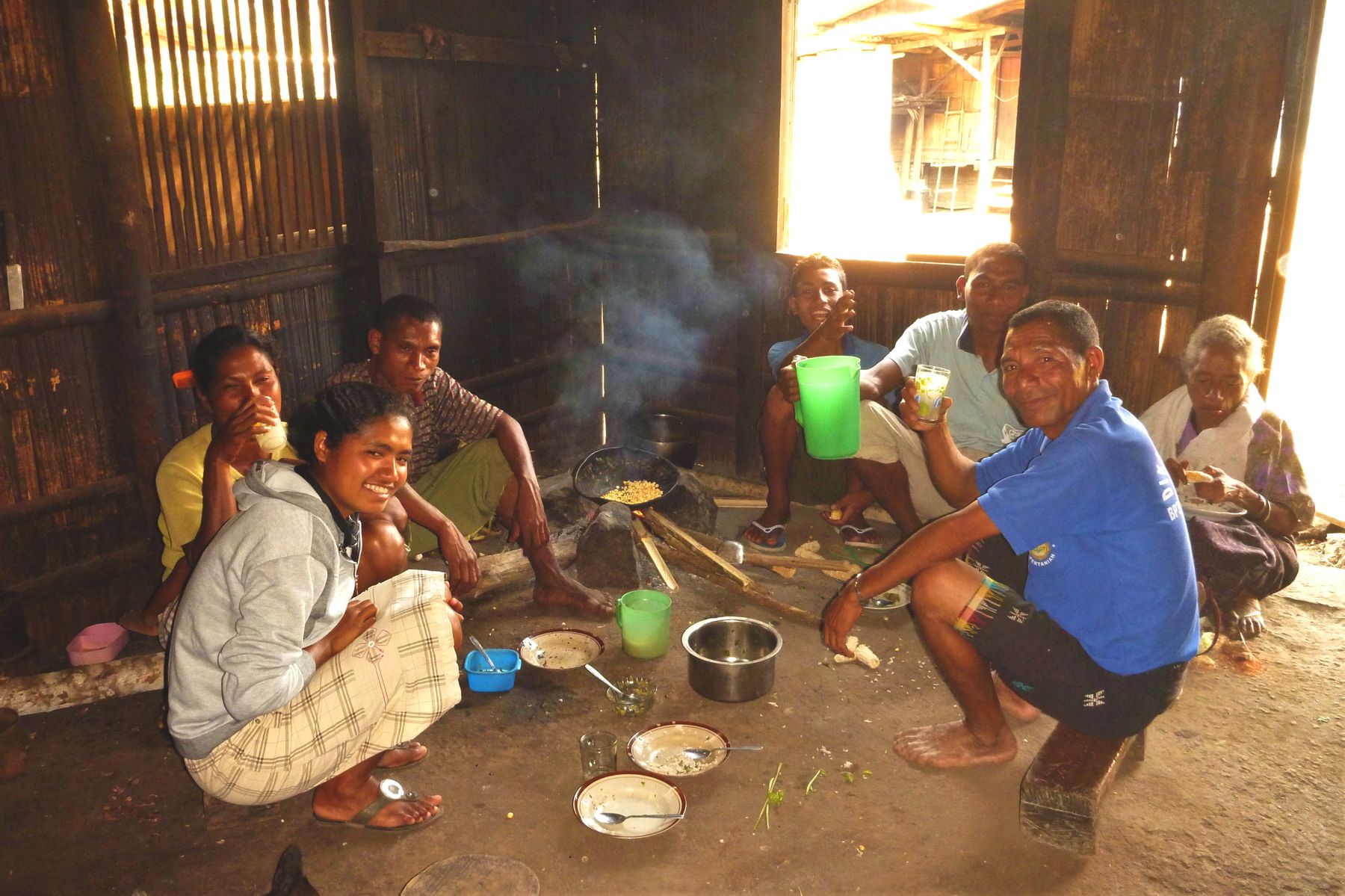
In the day, Asry and I walked around the village and met with more family members. They were all so nice and they fed me A LOT! They showed me their cows, their pigs, gardens, rice fields and coffee plantations. They showed me how they made their own knives, their own furniture, weaved clothes and crafted many other products.

Asry’s family also took me on a motorcycle trip to some hot springs. On the way, we stopped at a Virgin Mary shrine, where the family members prayed to a Mary covered in their traditional black cloth. This was always awkward. I assumed that the family would believe that I was evil if they knew that I didn’t believe in any religion, so I explained to Asry that I just had my own religion, but she translated this as, “Protestant.” I decided not to argue.

Almost everybody on the island of Flores, including all of the people involved in these tribal ceremonies, considered themselves to be Catholic. During the big celebration where Asry’s family sacrificed animals for their ancestors, they were also displaying pictures and cards of Jesus and the Virgin Mary.

Since I knew that the locals were Catholic (and not Muslim), I didn’t think too much about what to cover my body with in these hot springs. I brought a towel and a bikini, nothing else. And once I had nothing but my bikini on, I noticed that every woman in the springs was in pants and a T-shirt and that every man was staring at my body. It was awkward but a bit too late to turn back now, so I just went in while everybody stared at me as if I was naked. I was kind of used to getting stared at at that point anyway.

I decided to leave Asry’s village after her brother and cousin drove in on a cargo truck and invited us to go on a road trip with them. They were delivering heavy equipment between Bajawa, Maumere and Larantuka (the eastern end of Flores) and were happy to bring family and friends along.
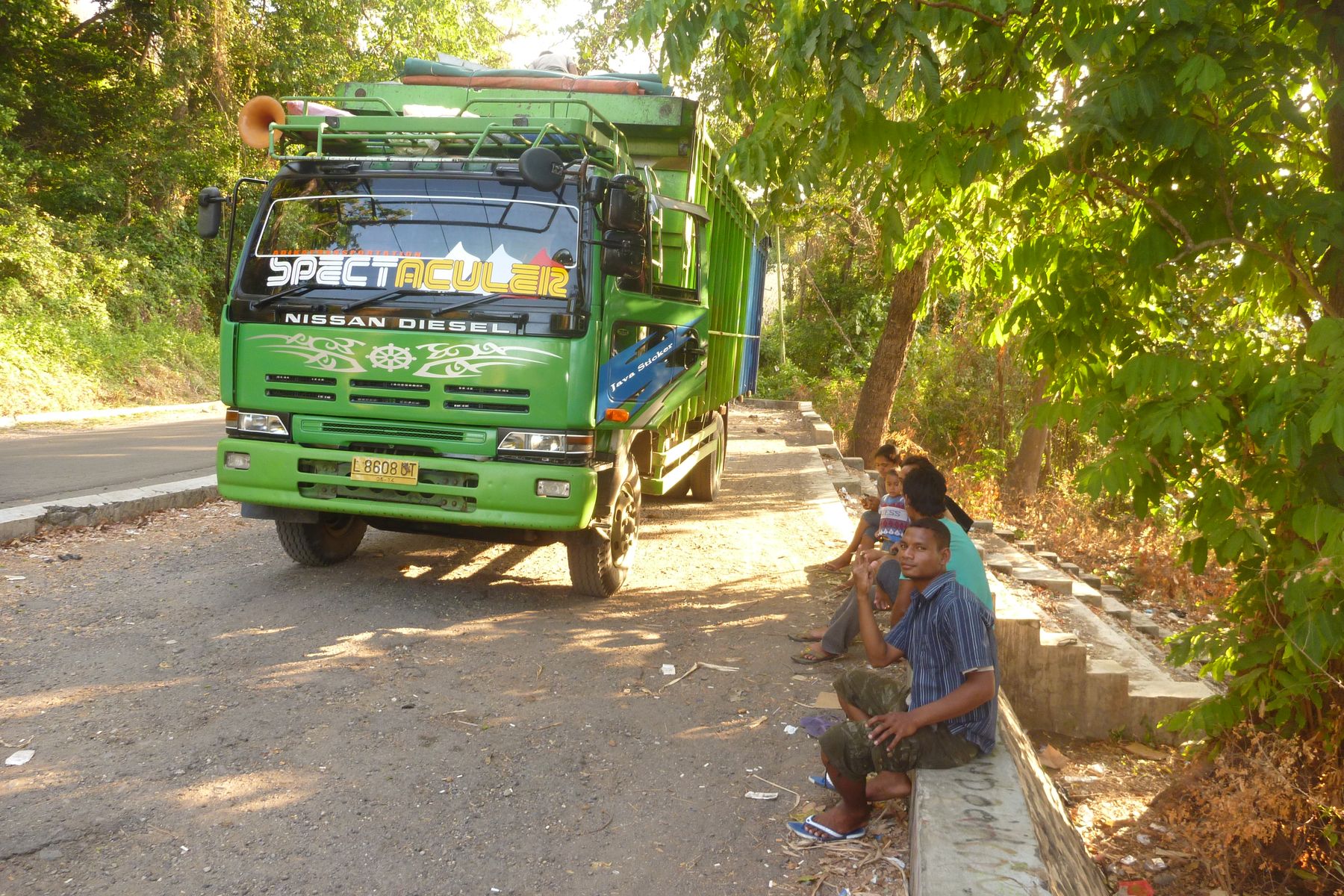
Seven of us squeezed into this giant truck- Asry, her brother, three of her cousins, me and for some reason, a five-year-old kid.
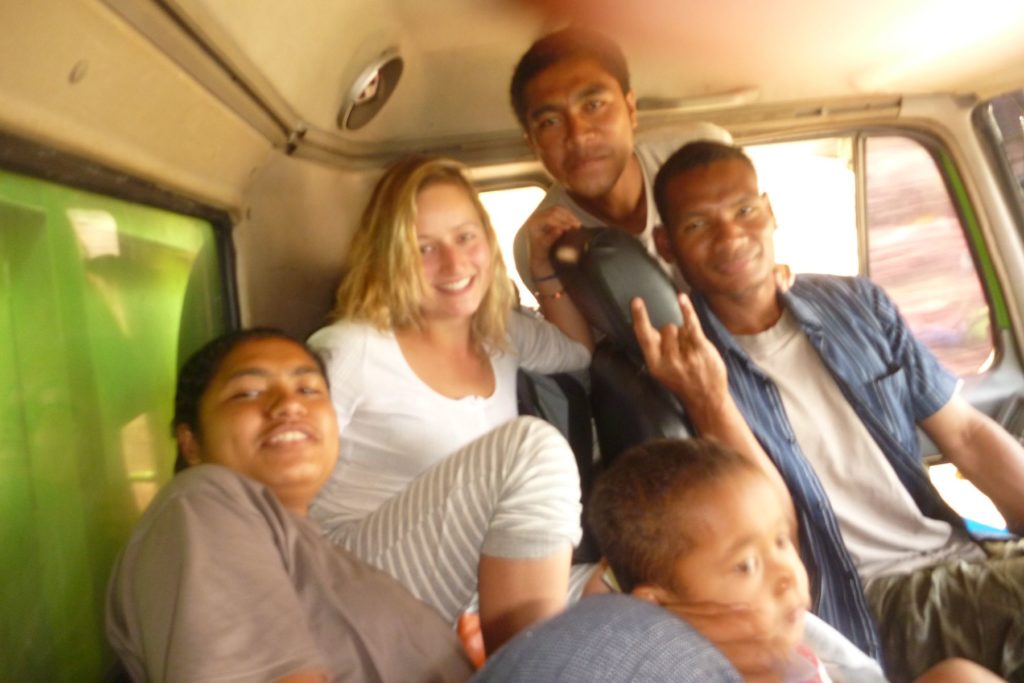
I don’t remember who’s kid he was, but I don’t think that he was the child of anybody in our truck. That didn’t seem to be so important to them though, since everyone in the family took care of all of the children. I would even get confused from time to time because Asry would sometimes refer to her uncles as her “father” and her aunts as her “mother,” even though her mother had died and her father was living with her. It was interesting to see a different perspective of the idea of a family and how to raise children.

According to the map, the drive between Bajawa and Larantuka is only about 400 kilometers, but since the road was not well maintained and weaved around like crazy, going up and down big mountains, the drive took several days.

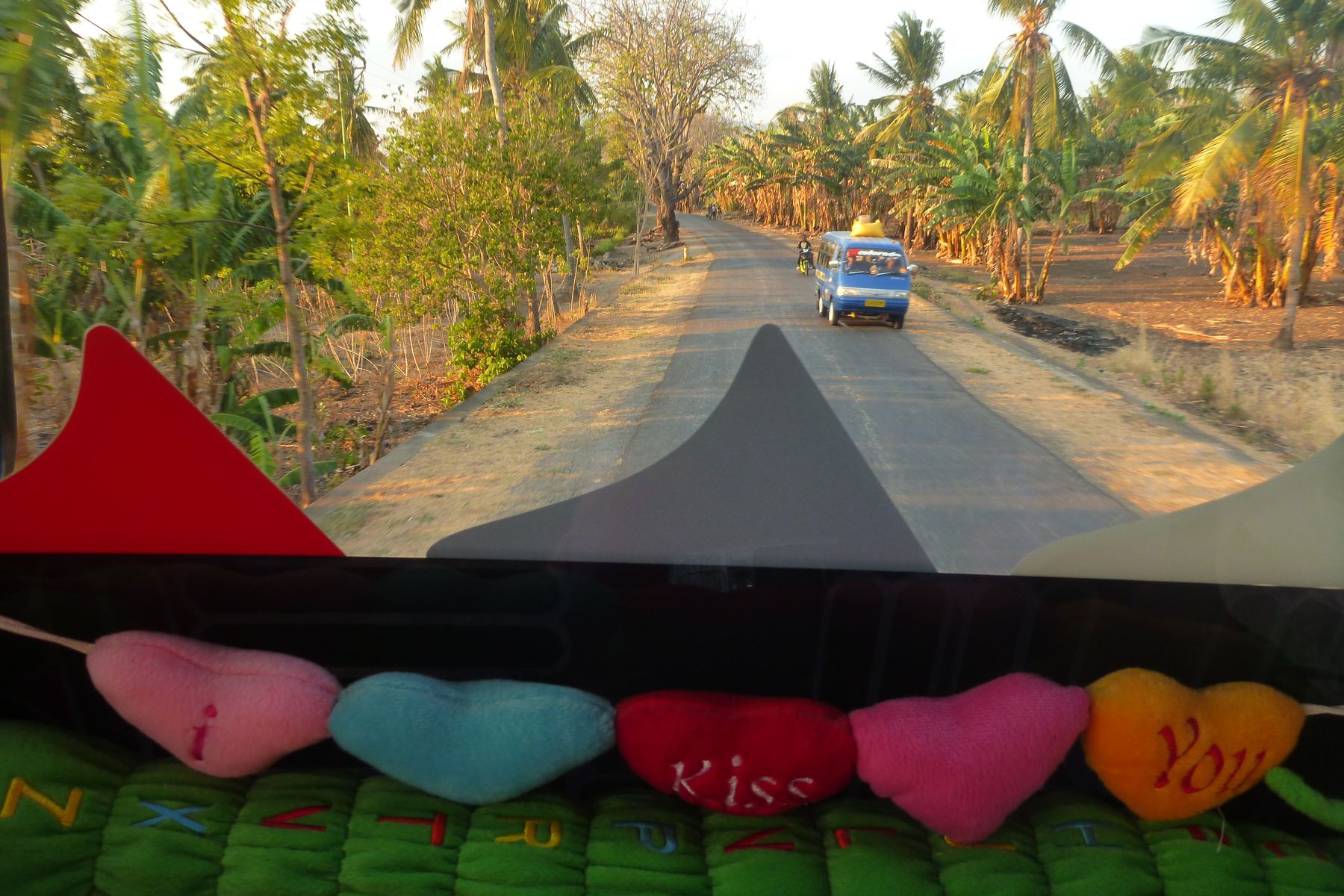
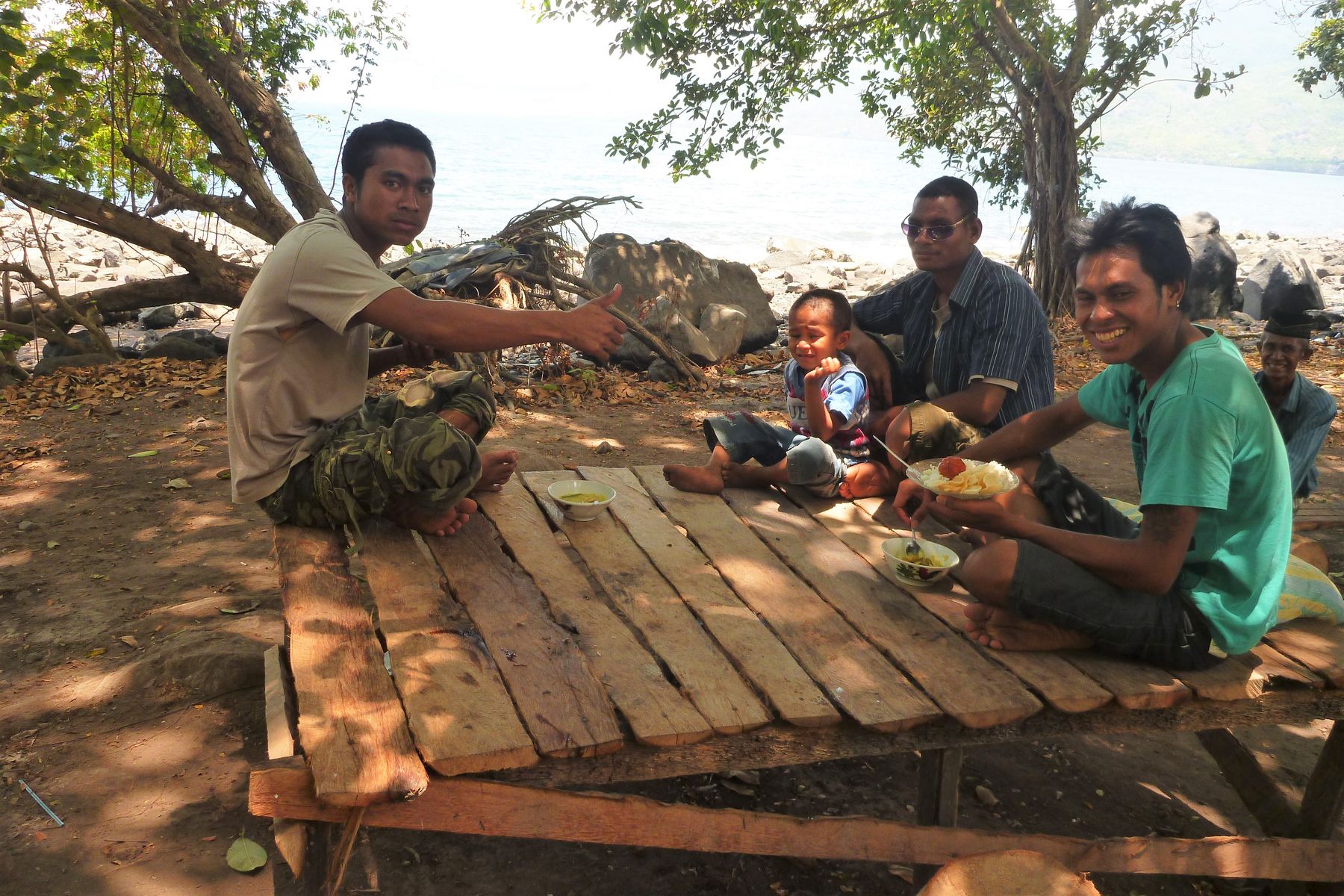
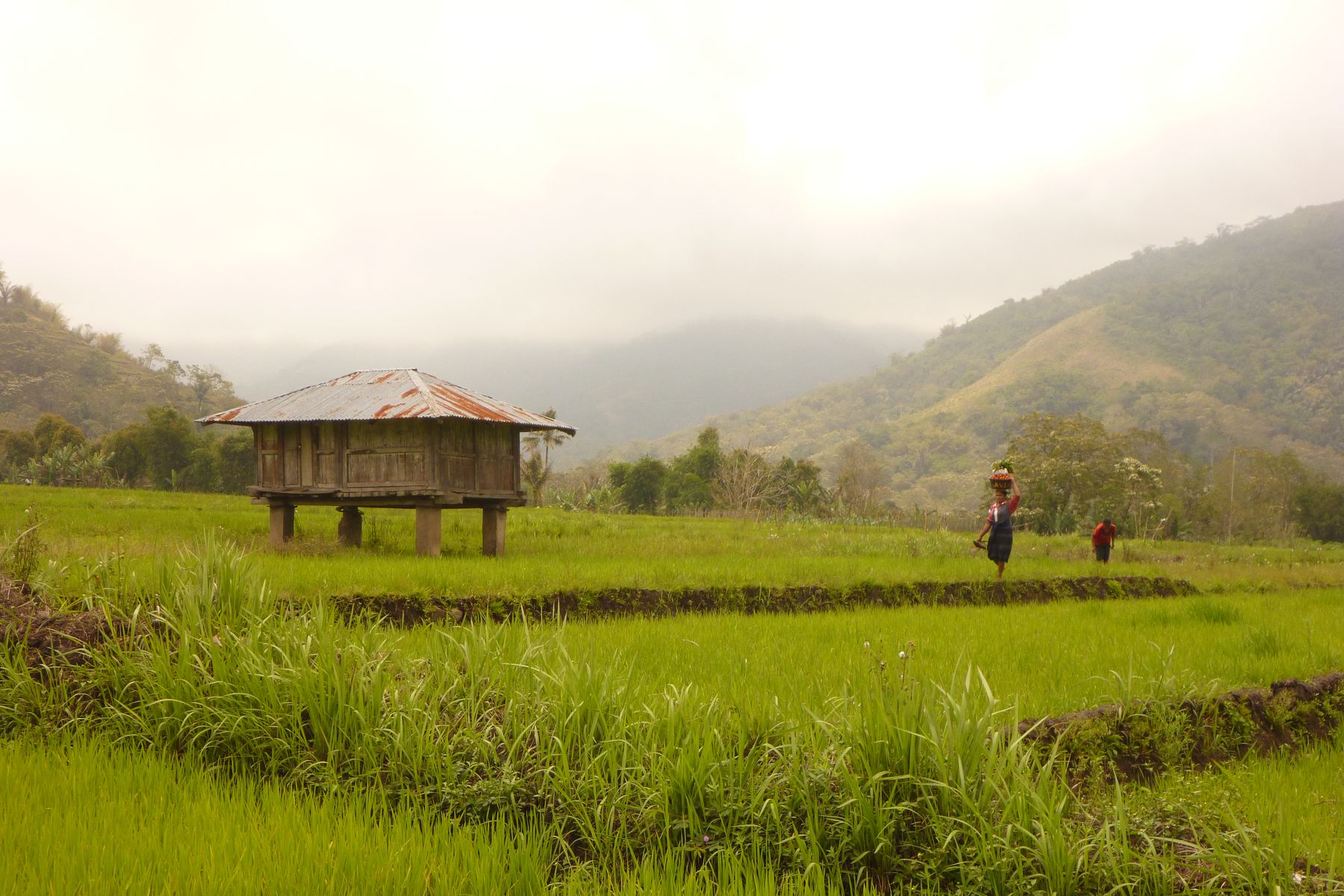
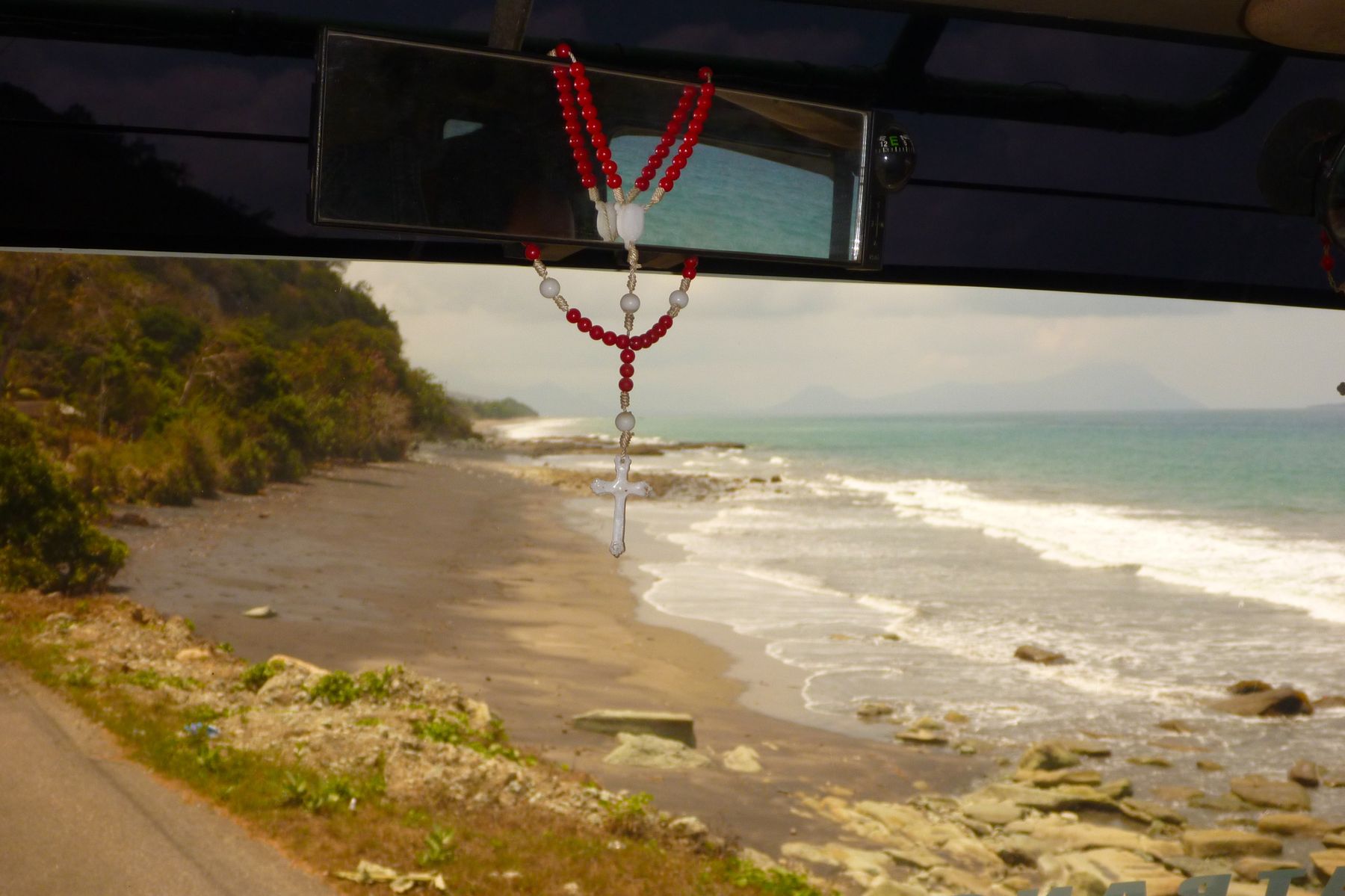
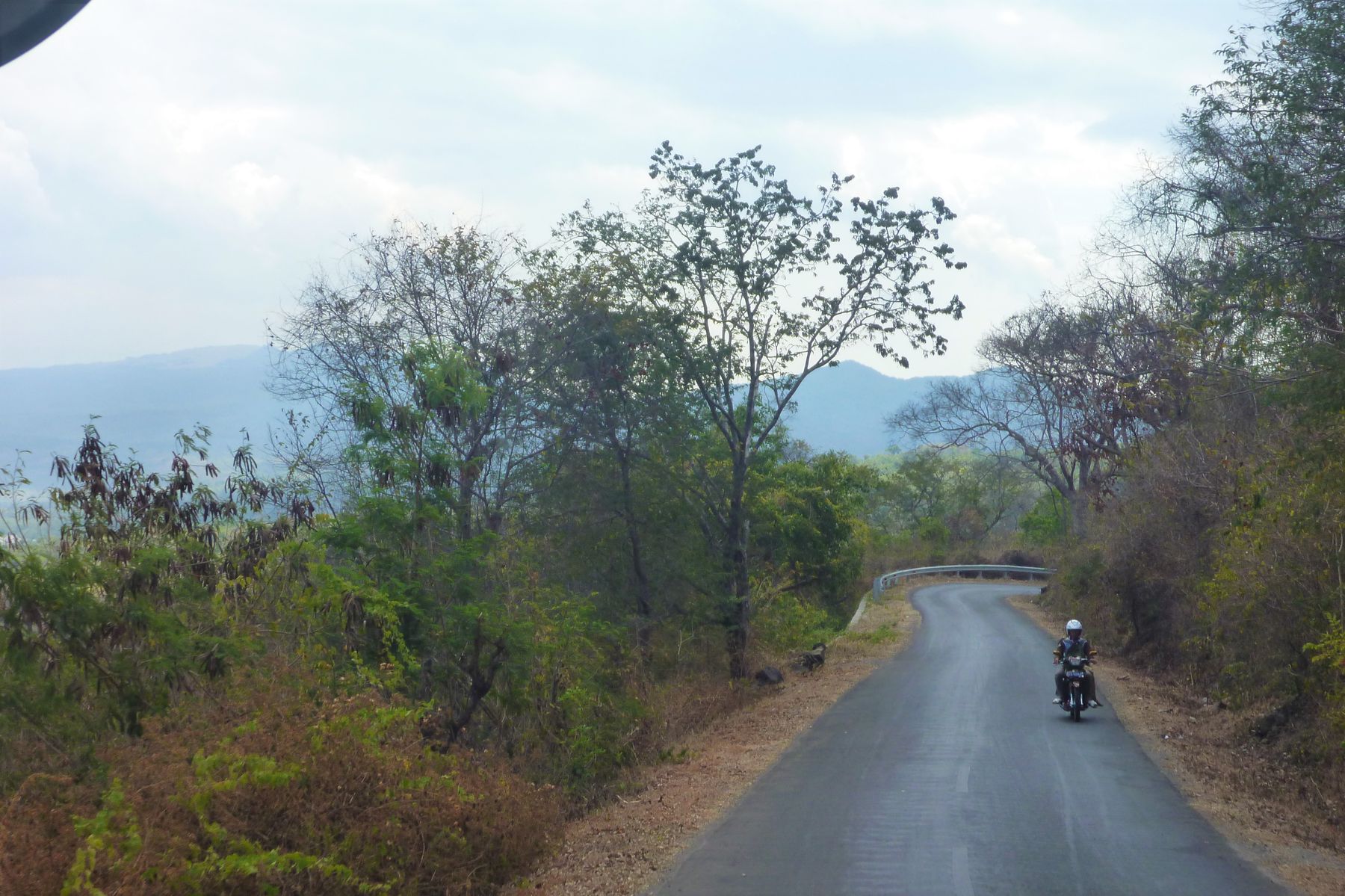
It was a beautiful drive, nevertheless, and Asry and I had front row seats in this big truck. We drove through flowery mountains, passed by black volcanic beaches, rice terraces and lush jungles. We took breaks by the ocean and stopped to eat rice and curry in local eateries.
I remember walking into a busy lunch shack in a small village somewhere far east; we sat down, had a look at the menu, and all of the sudden the entire place turned silent. I lifted my head and every single person in the lunch shack was staring at me.

Everywhere I went, I was greeted with excitement and curiosity. Since I was now with Asry and her family, people didn’t seem to attack me for money like before, now they wanted to give me stuff instead!

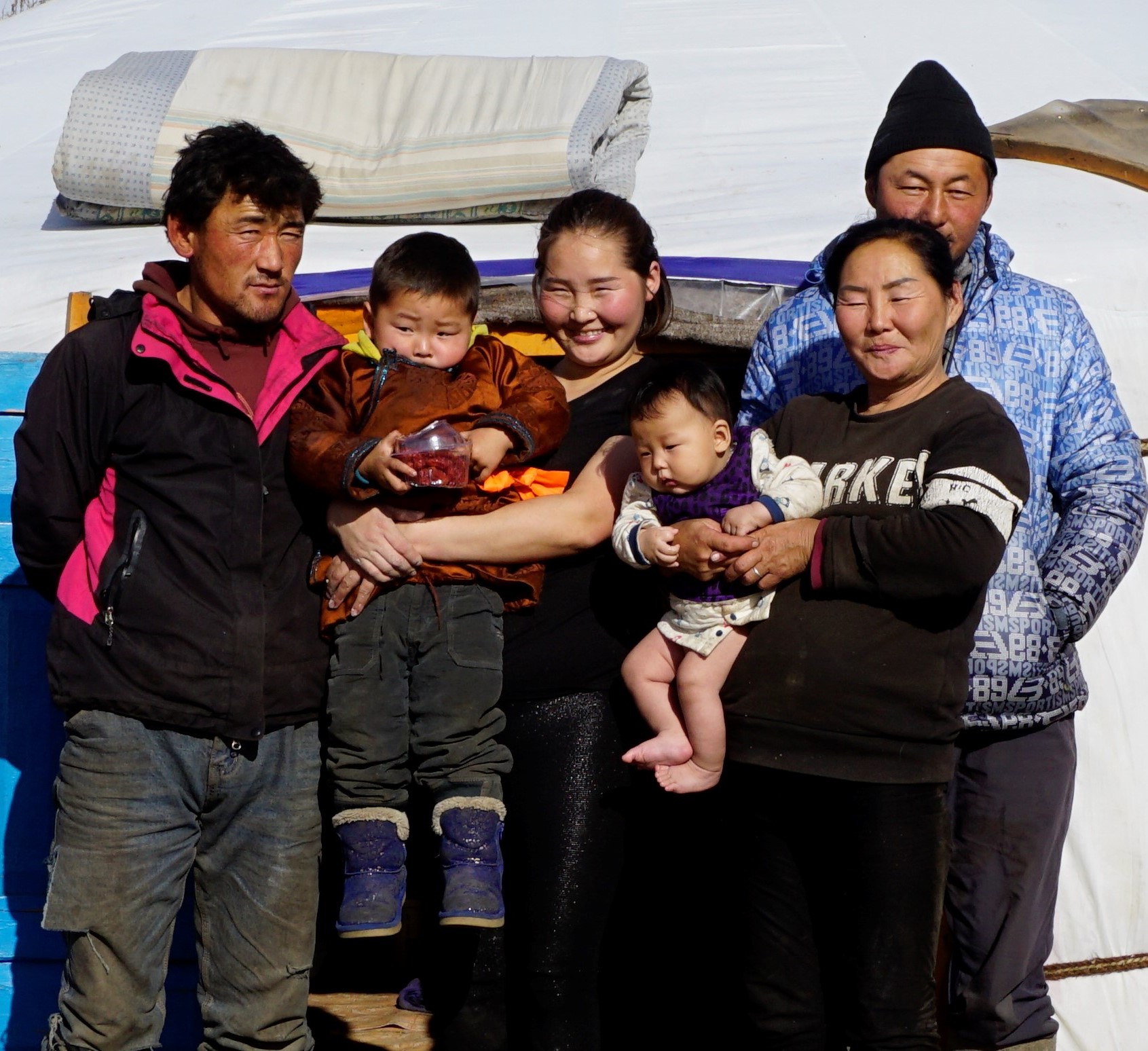
We slept in the houses of Asry’s aunts and uncles in other villages on Flores. Their family members took us in and fed us until we could barely move.

October 7, 2011
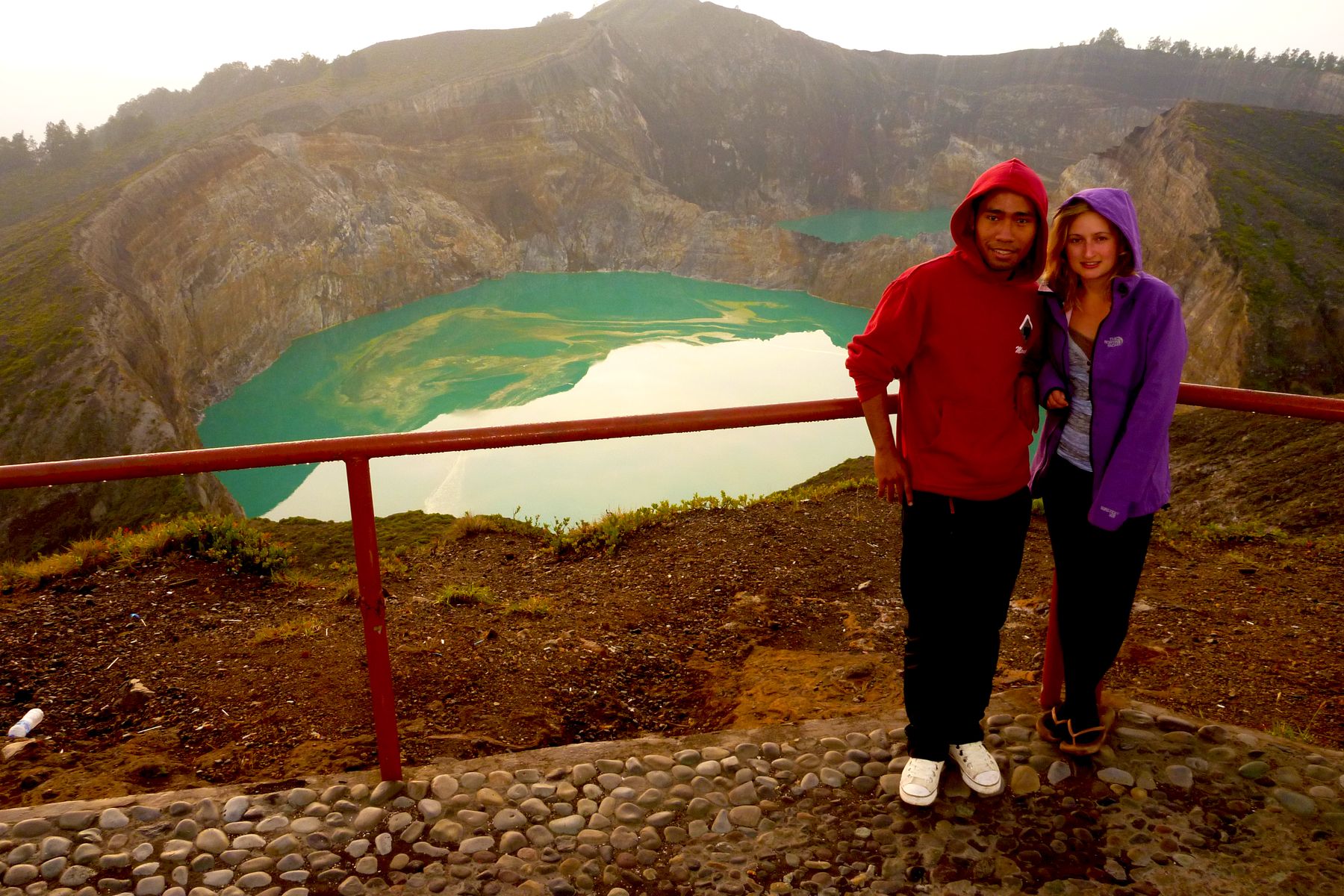
Now I am in Moni, a small village below Kelimutu, the volcano with the tri-colored lakes. Tomorrow I am meant to see this volcano (leaving at 4:20AM to watch the sun rise above it!).
I am not sure exactly what will happen next, but I feel that it is time to leave Indonesia and move on to new lands…Plus, my friend is calling me to join him on his yacht in New Zealand on a two-month sailing trip!! So as long as they let me back into Aotearoa, I shall soon be writing of grand adventures in open seas.
I hope that you can now understand that although I am not in university, I am learning more about international and global studies than I ever have.

Right, so all of that Caveot font about Indonesia was originally written for my mother’s birthday in October of 2011. Not sure if that was a good birthday gift, now that I think about it, I probably scared the shit out of her more than anything else. My poor mother…  

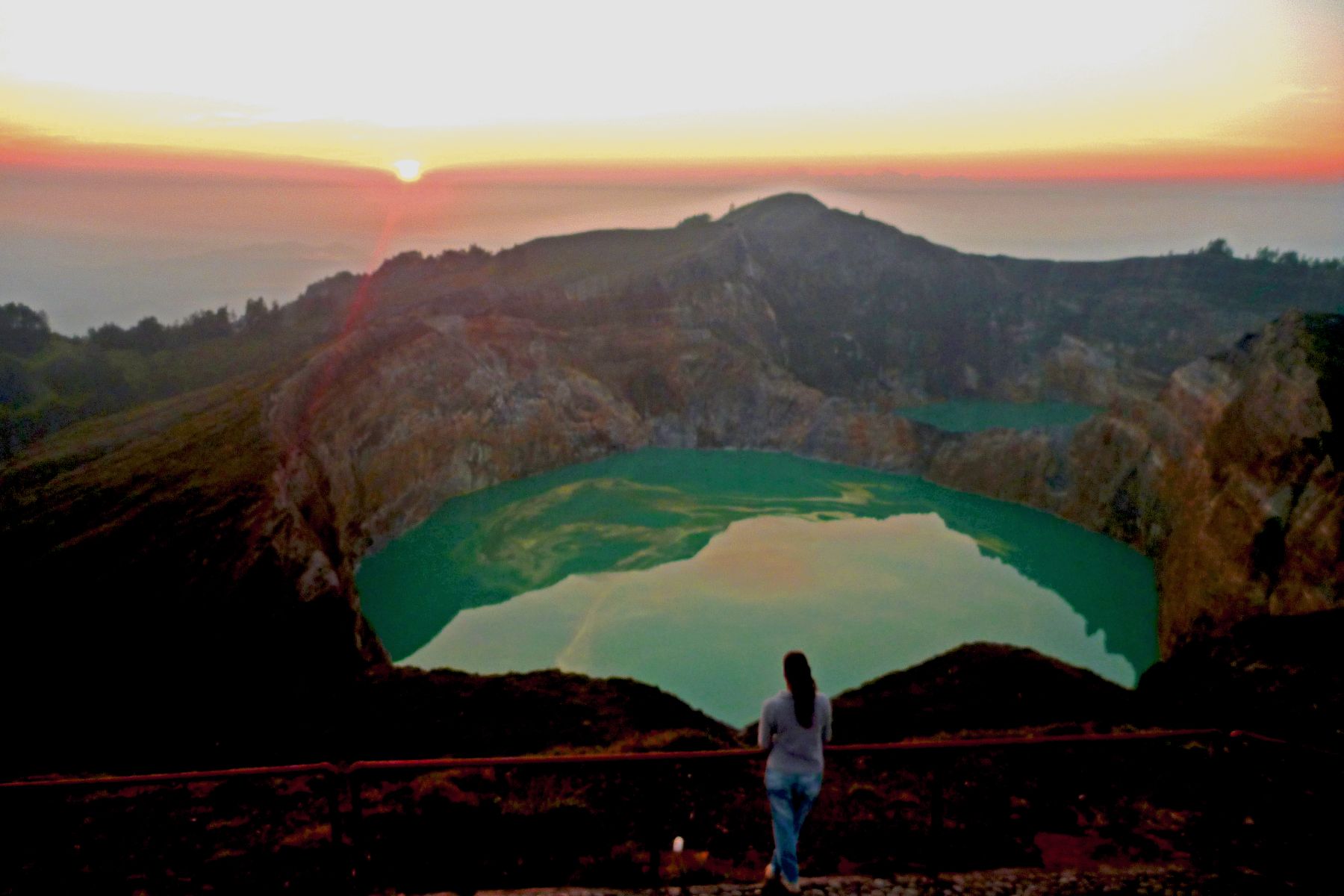
I did the short and easy hike up Kelimutu the next morning, watched the sunrise over the three different colored crater lakes (blue, green and black), then made my way all the way back to Bali. The trip back to Bali was much easier now that I knew a bit more Indonesian and I felt like I could communicate and relate to the local people better. I took buses back and made some stops along the way. I rented a motorbike in Mataram, Lombok, and drove around the south of the island by myself, then I took a ferry to Bali and flew out to my next adventure: a two-month long sailing trip around the North Island of New Zealand…
For the Love of Ice Bubbles

Uncategorized

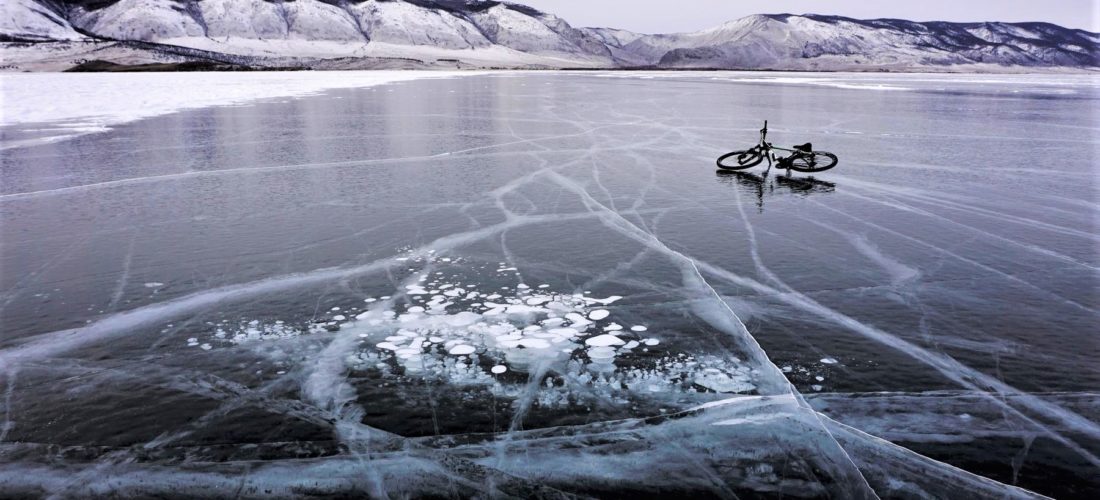
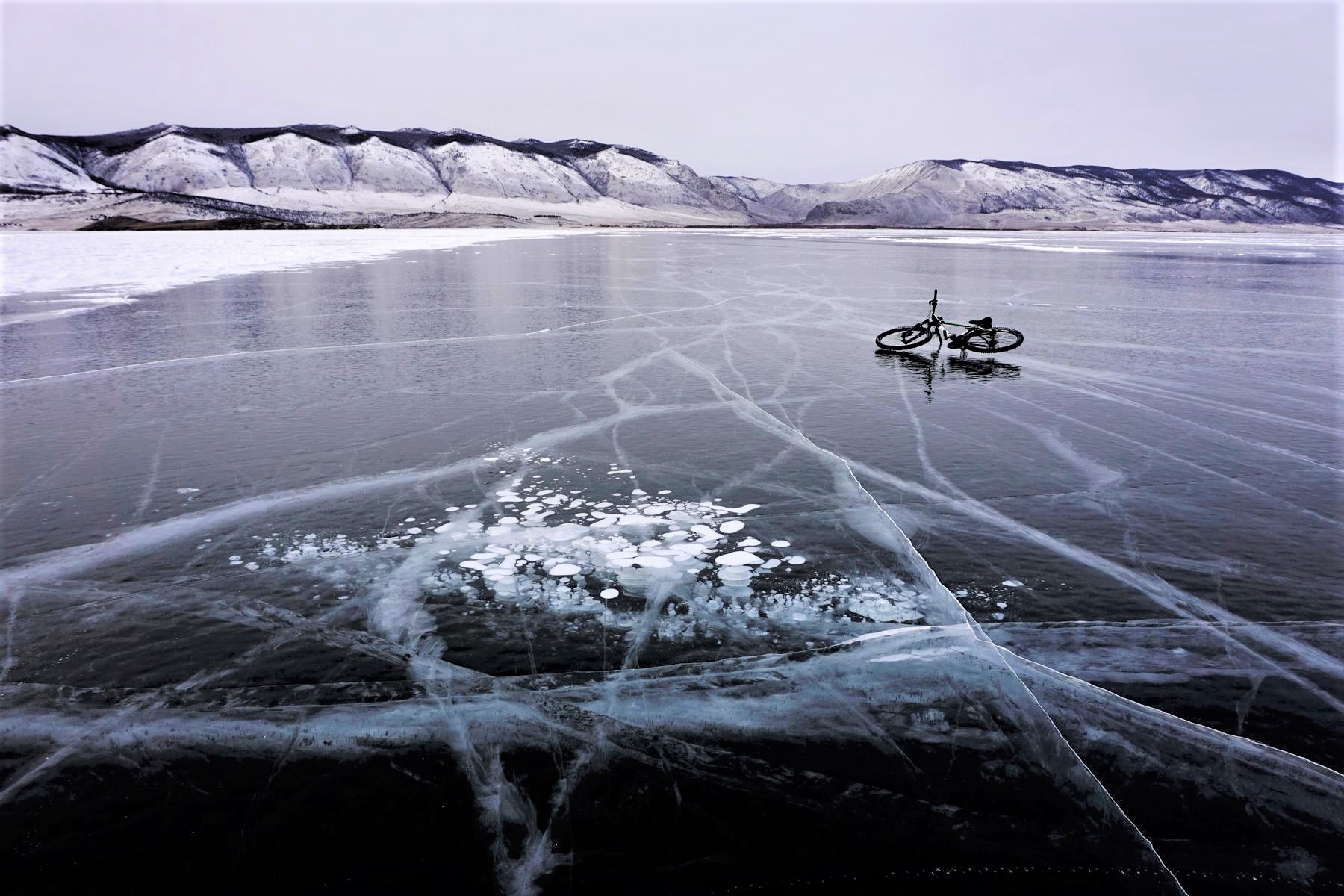
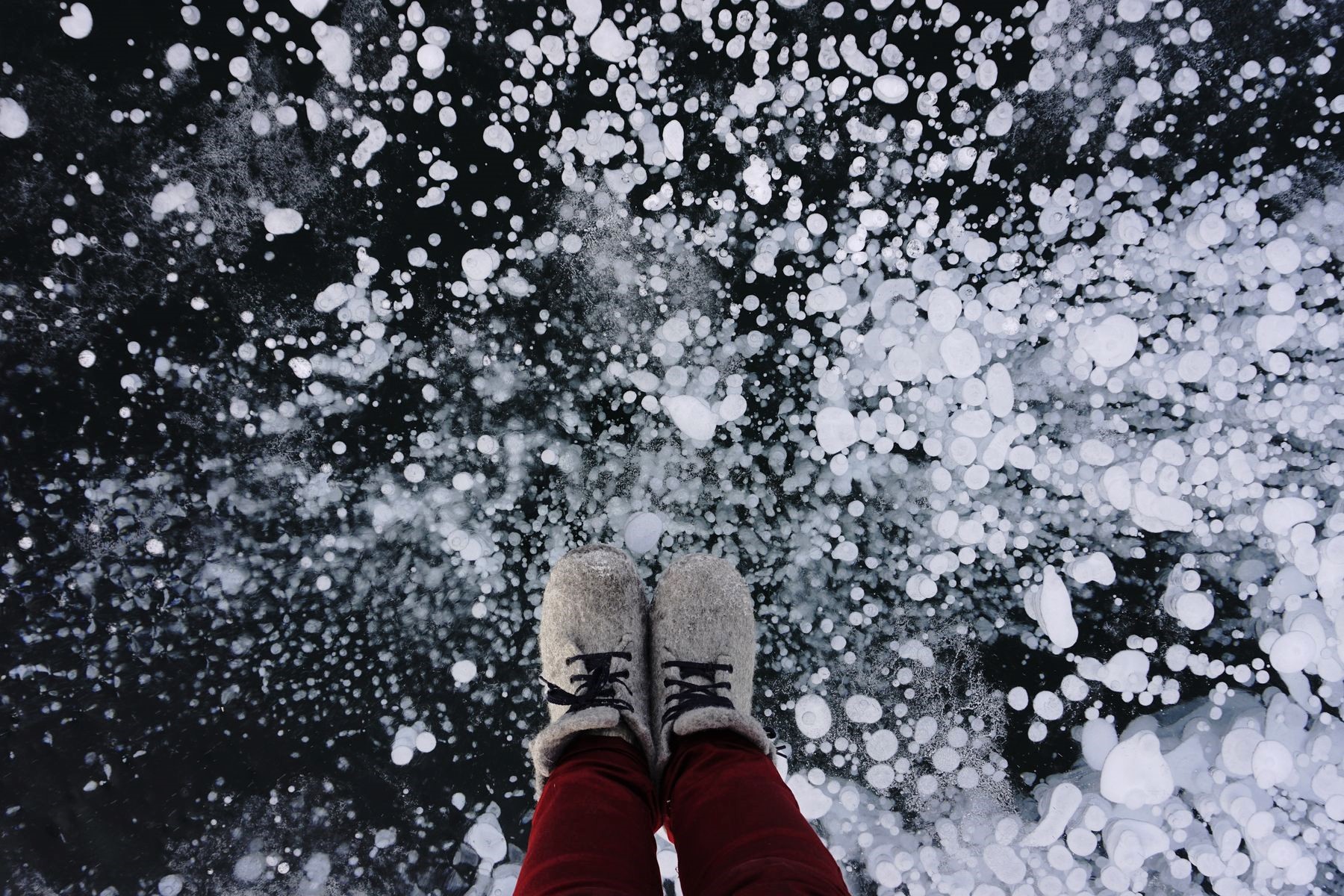
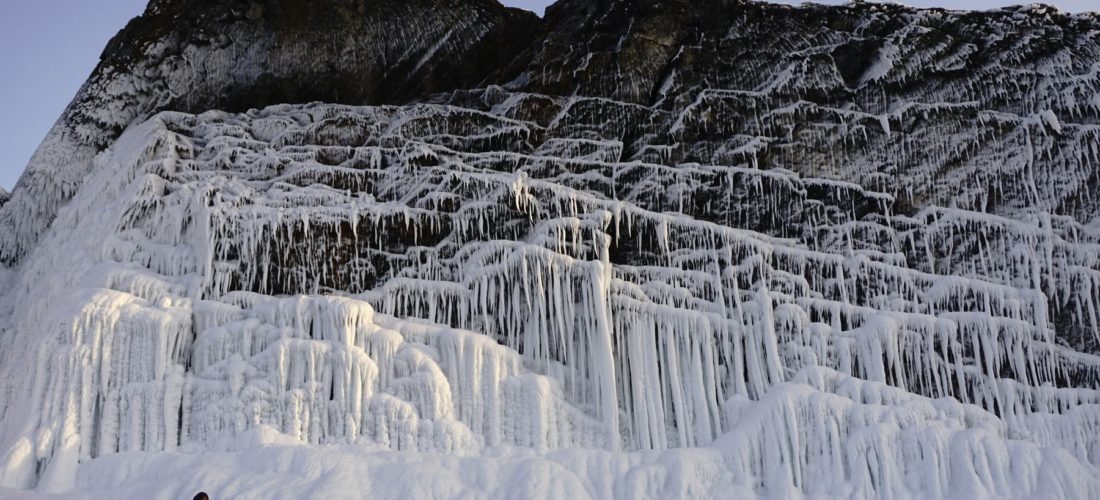
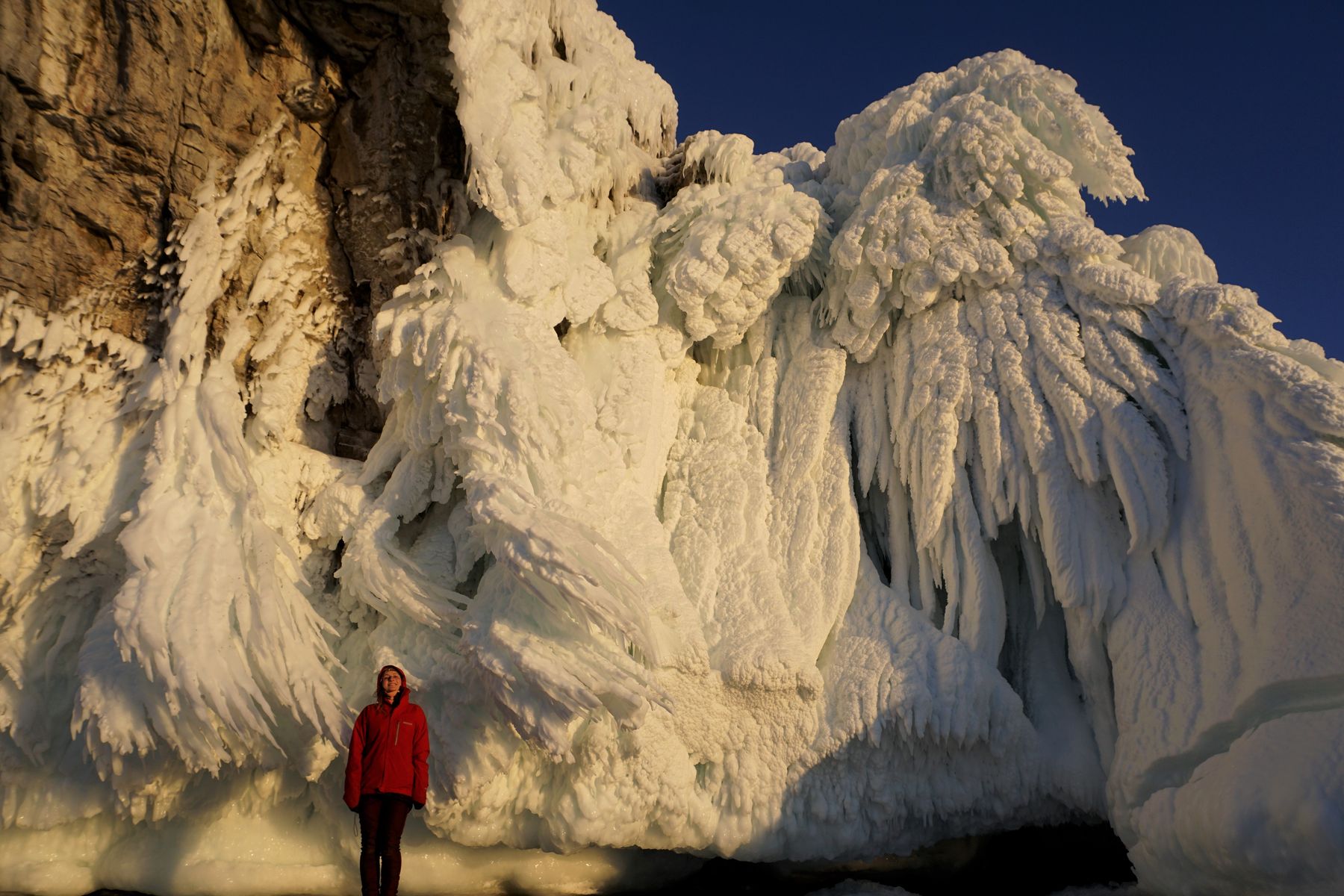
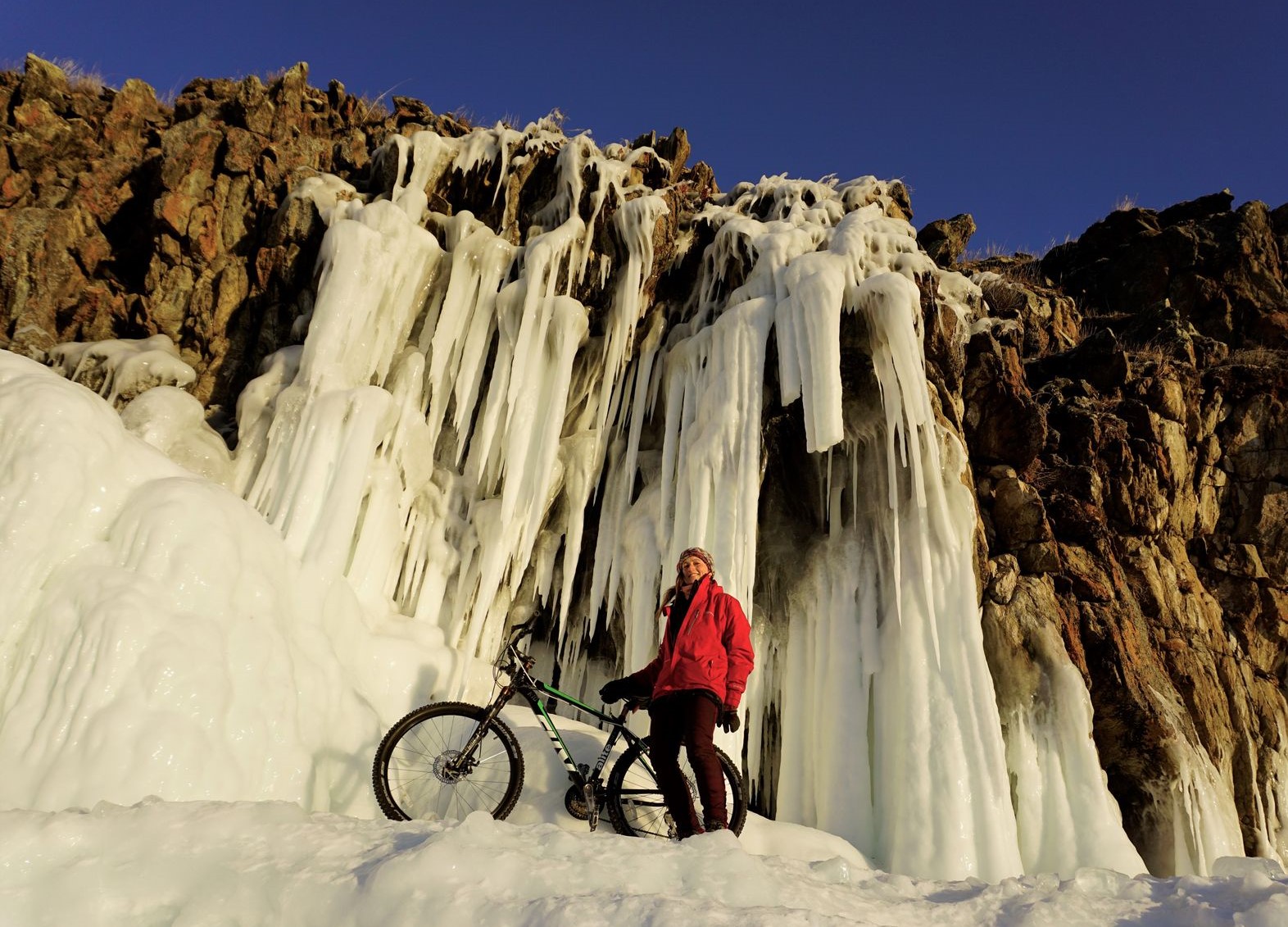
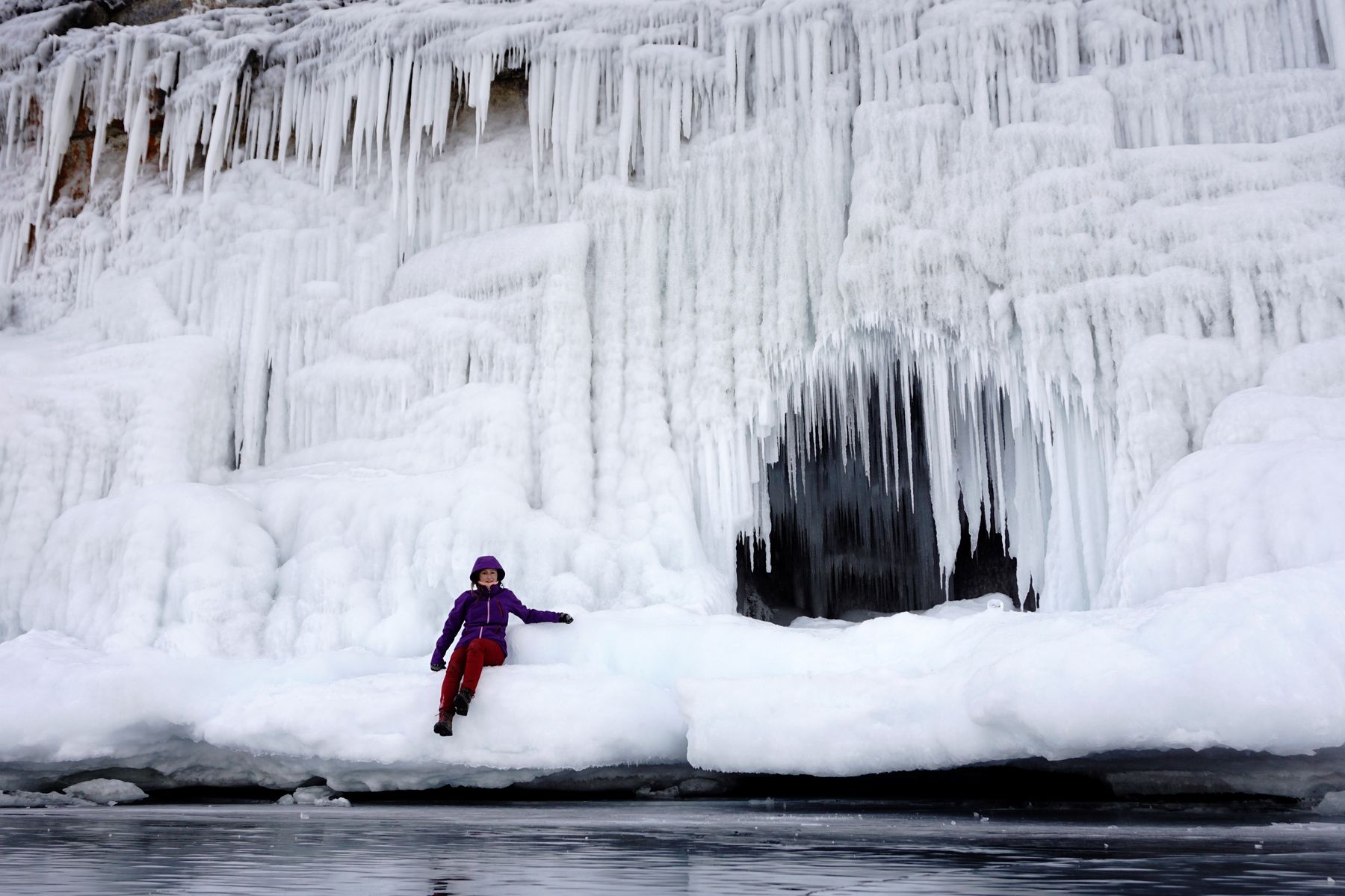
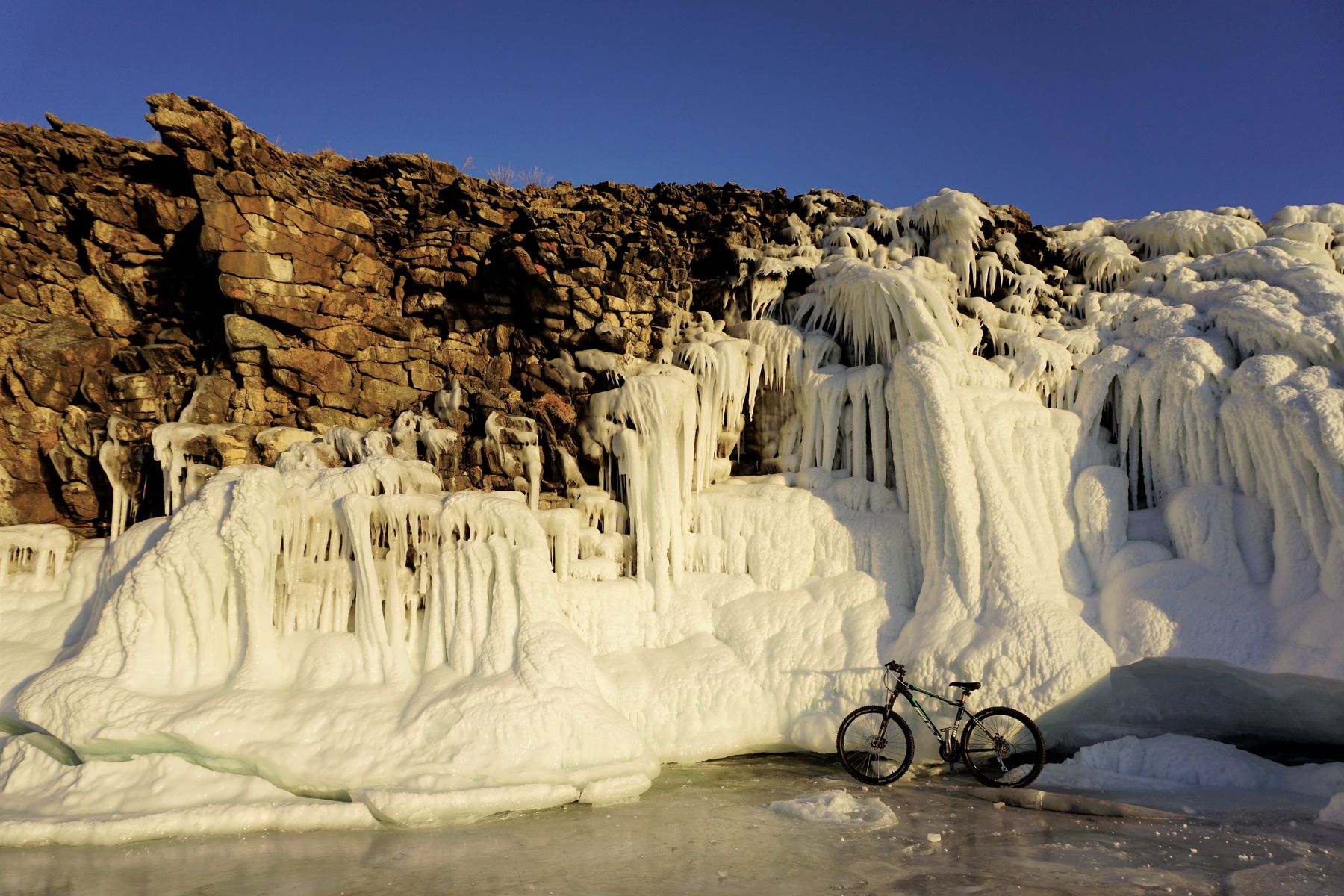
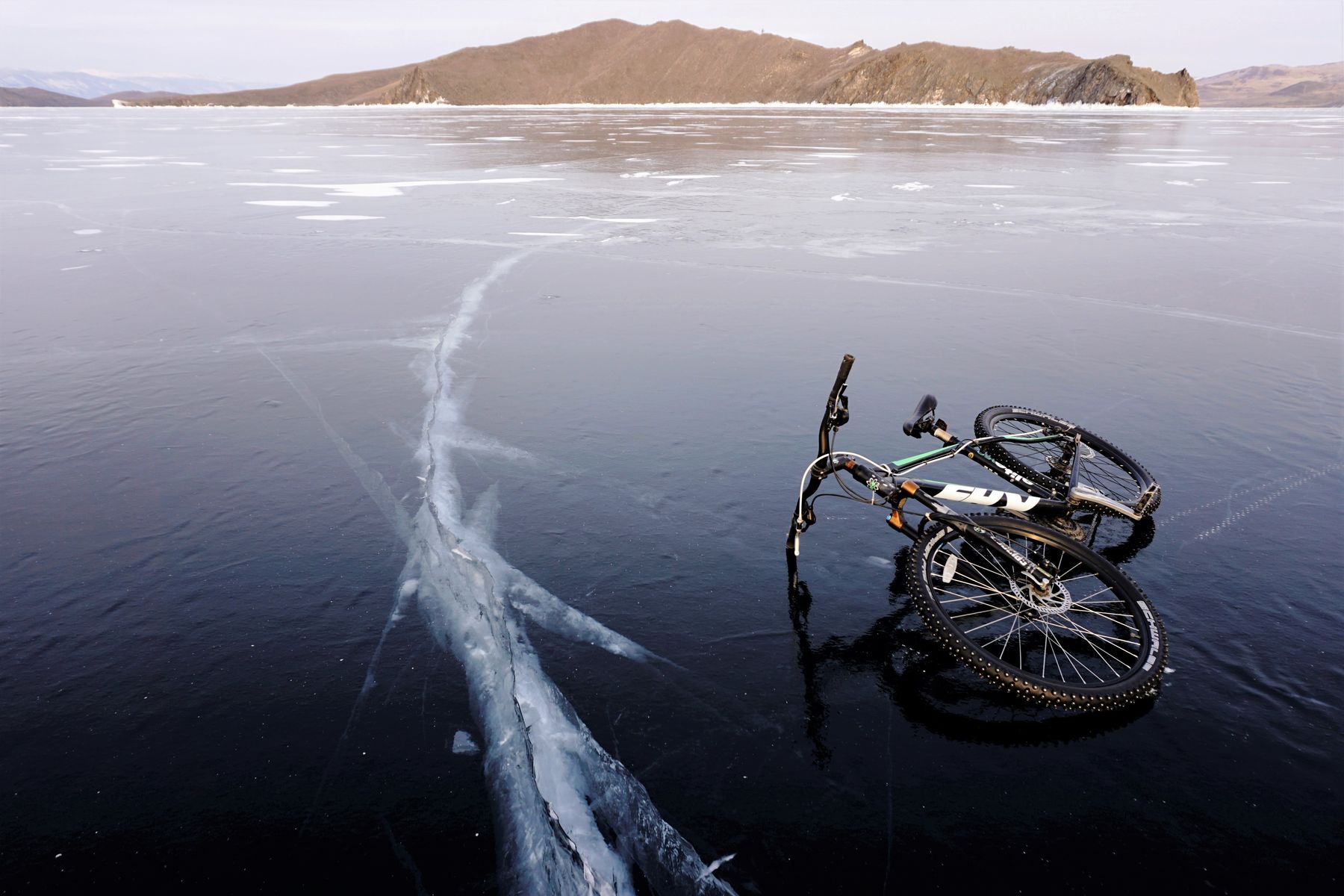
I accidentally rode my bike into a giant ice crack today. I realized I was in it only when I was about a foot deep in ice water…distracted by staring at an amazing ice cave. I kept peddling and didn’t fall into the lake. Whew. And my big fluffy winter boots are so thick that my feet didn’t even get wet :D But one of my breaks fell off and the other one froze. I’ve owned bikes with no breaks before but here it’s more of a challenge since there’s not so much friction between my boots and the ice that I’m riding on.

In other news, I’ve been head deep in my book. I’ve basically been doing nothing else but writing and bike riding as a break. I don’t even shower and I barely eat anything because I don’t want to waste time cooking, eating and cleaning it up. Today I had an onion sandwich :D Yea, raw onion on bread. Little bit of oil, salt and pepper. I don’t recommend it, to be honest.

It’s been a rough couple of day though. I’ve basically finished the first part of my book, which explains the past two or so years, and now I’ve gone back to write about my childhood and teenage years, which were fucking nuts. I cried a lot the past two days :) But after crying I always laughed at myself for crying, and then I felt good. It’s like therapy, I recommend this to everybody. Write a book about your life- it doesn’t matter if anybody reads it or not, just write it and you will learn so much about yourself. I used to think that it was just my teenage years that made me live this traveling lifestyle now, but no- it was everything.

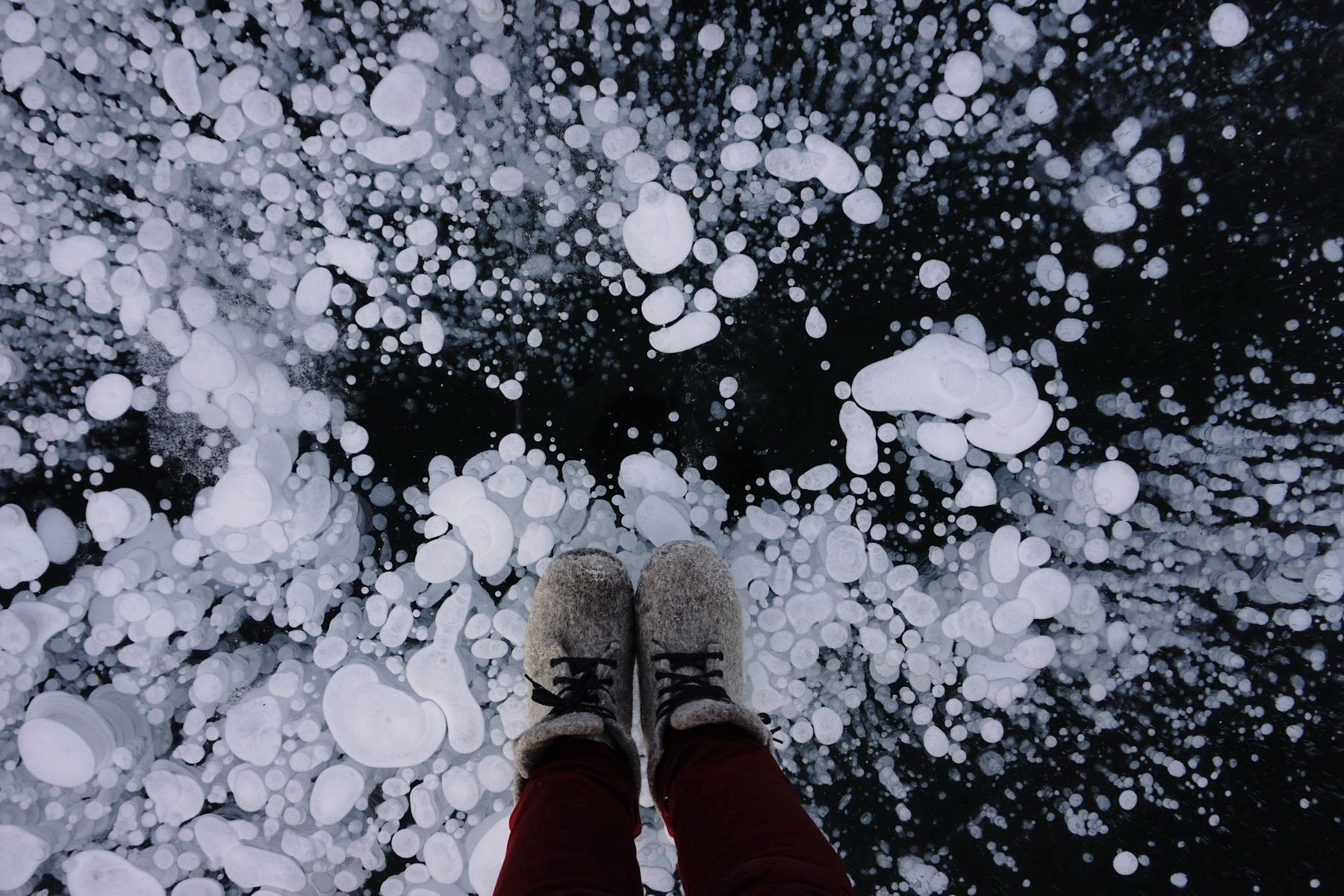
I feel really tired, both physically and emotionally. Drained, actually, is a better word. It feels good though, like I’m draining all the shit from my life- all the bad stuff, all the stuff I’ve left behind and thought I would never come face to face with again. I brought it all back up, and then I drained it into my book and out of my life. Now I can fill myself back up with good things, like my love for ice bubbles :).

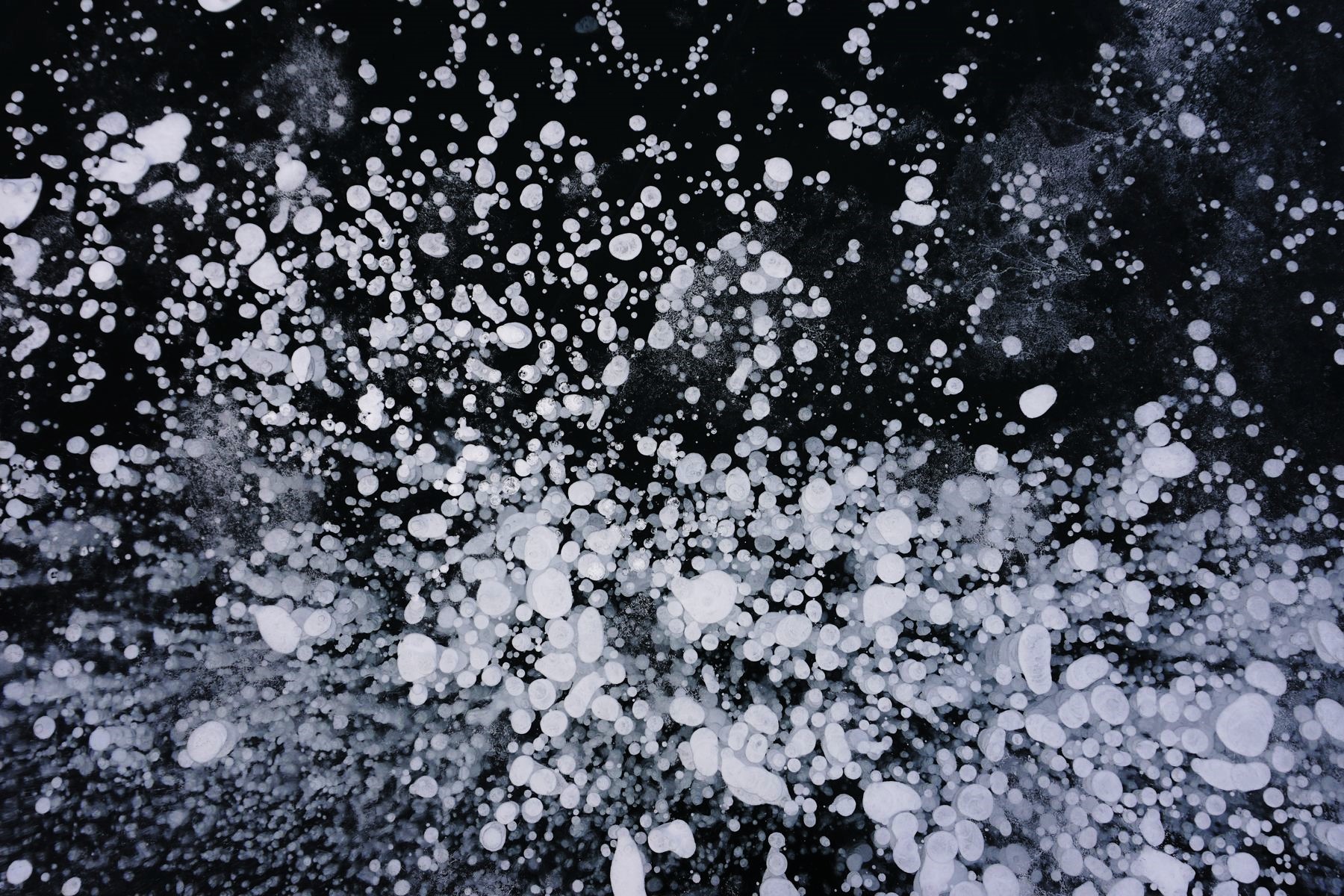
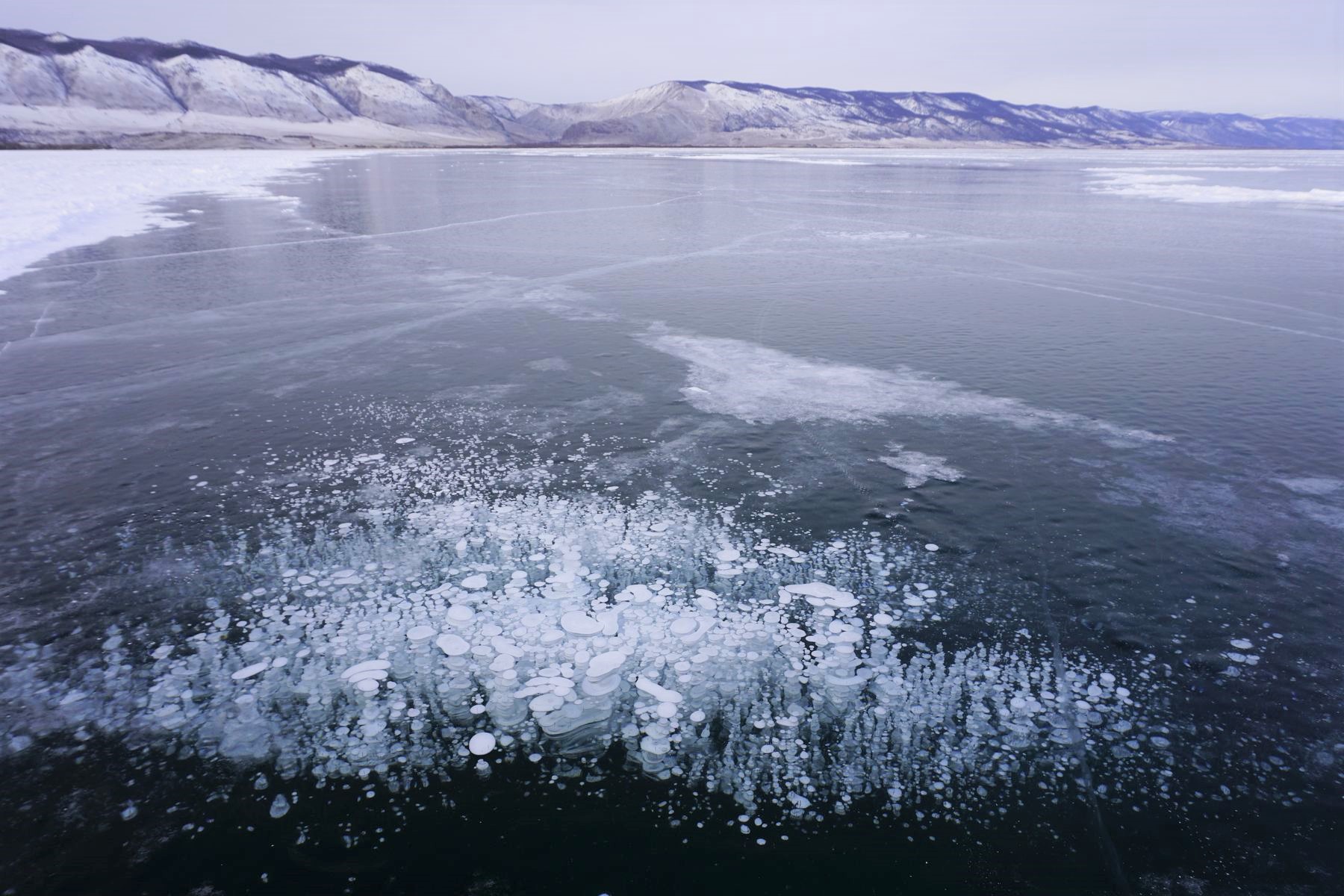
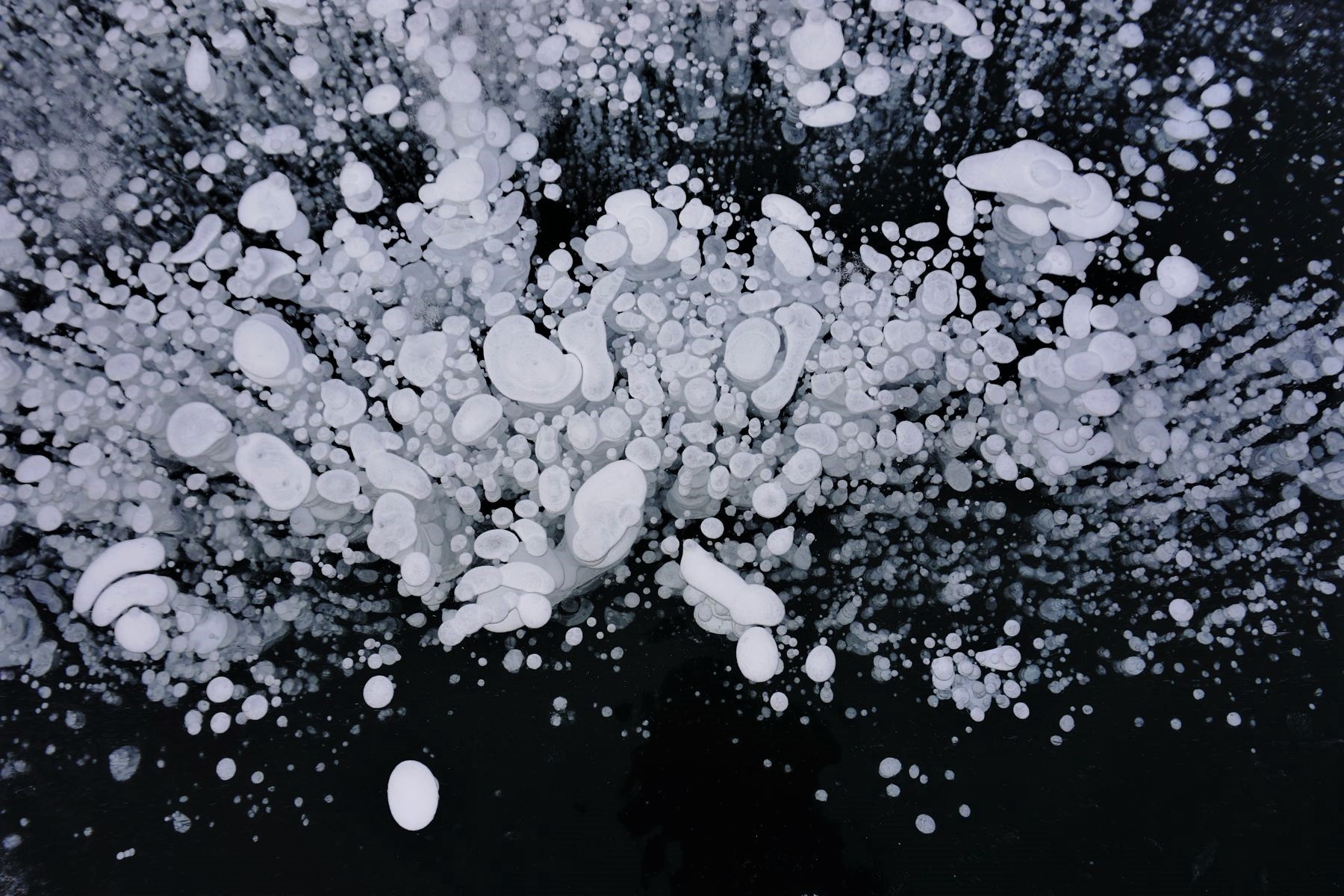
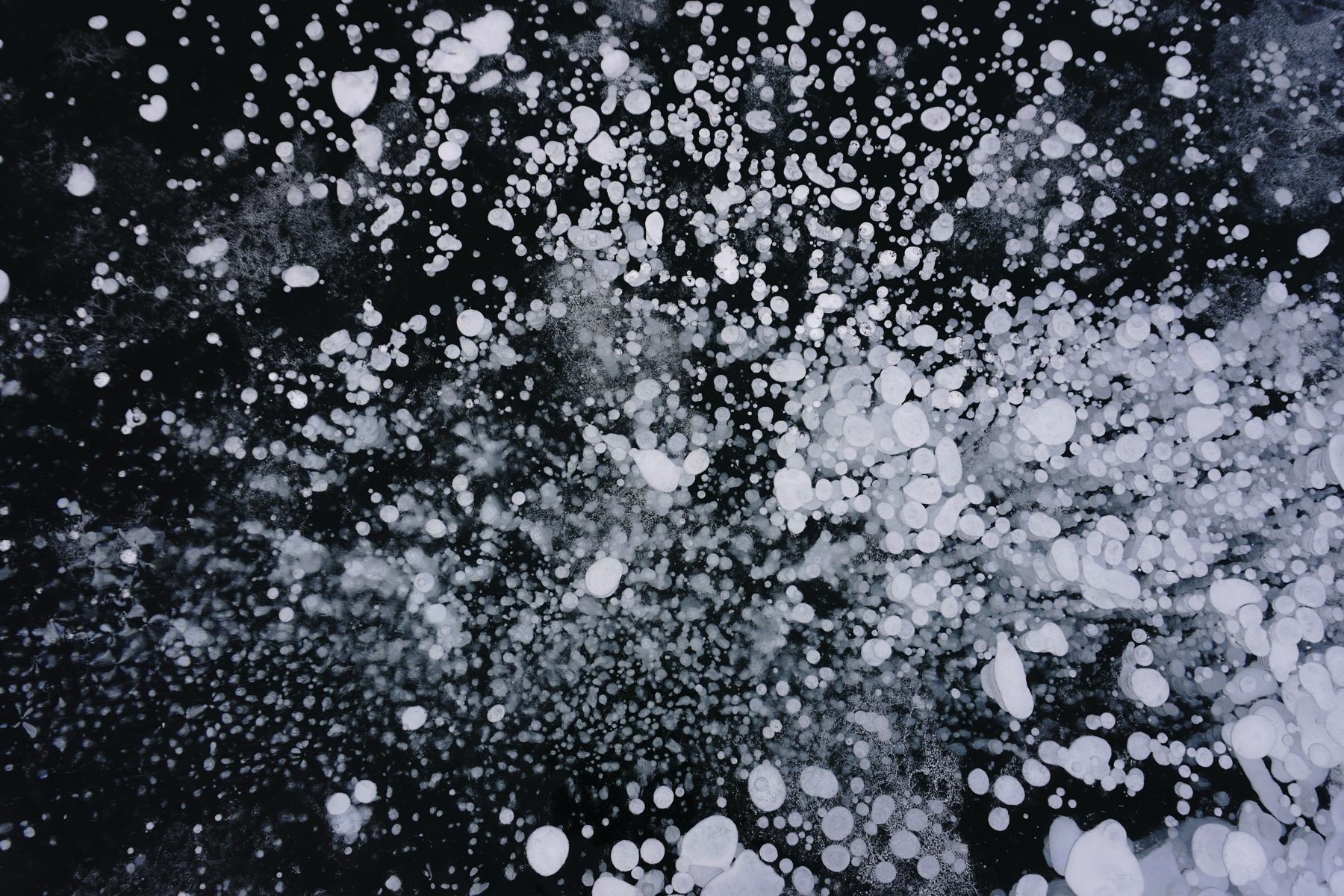
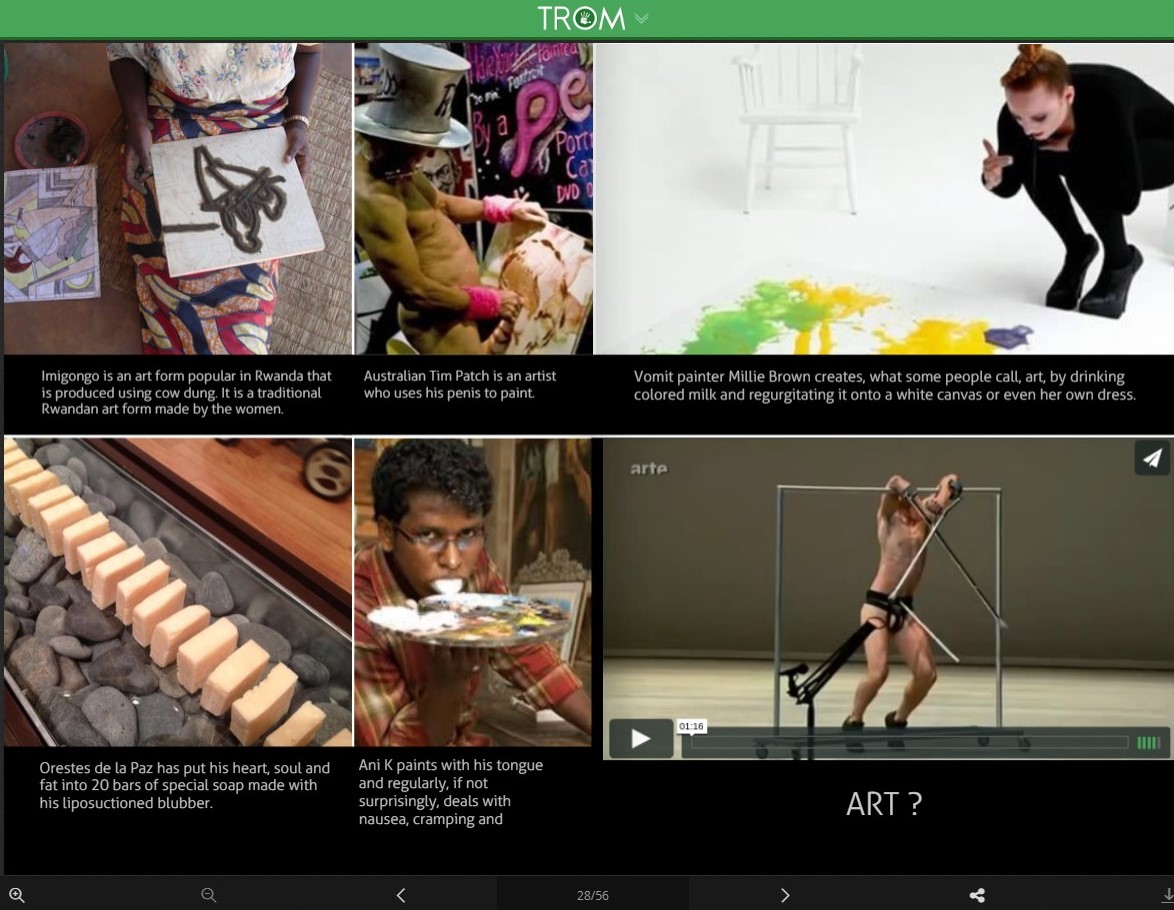
I believe that this is real art- the beauty of ice bubbles frozen in a crystal clear lake. Not this crap that they sell in art galleries for tens of thousands of dollars.

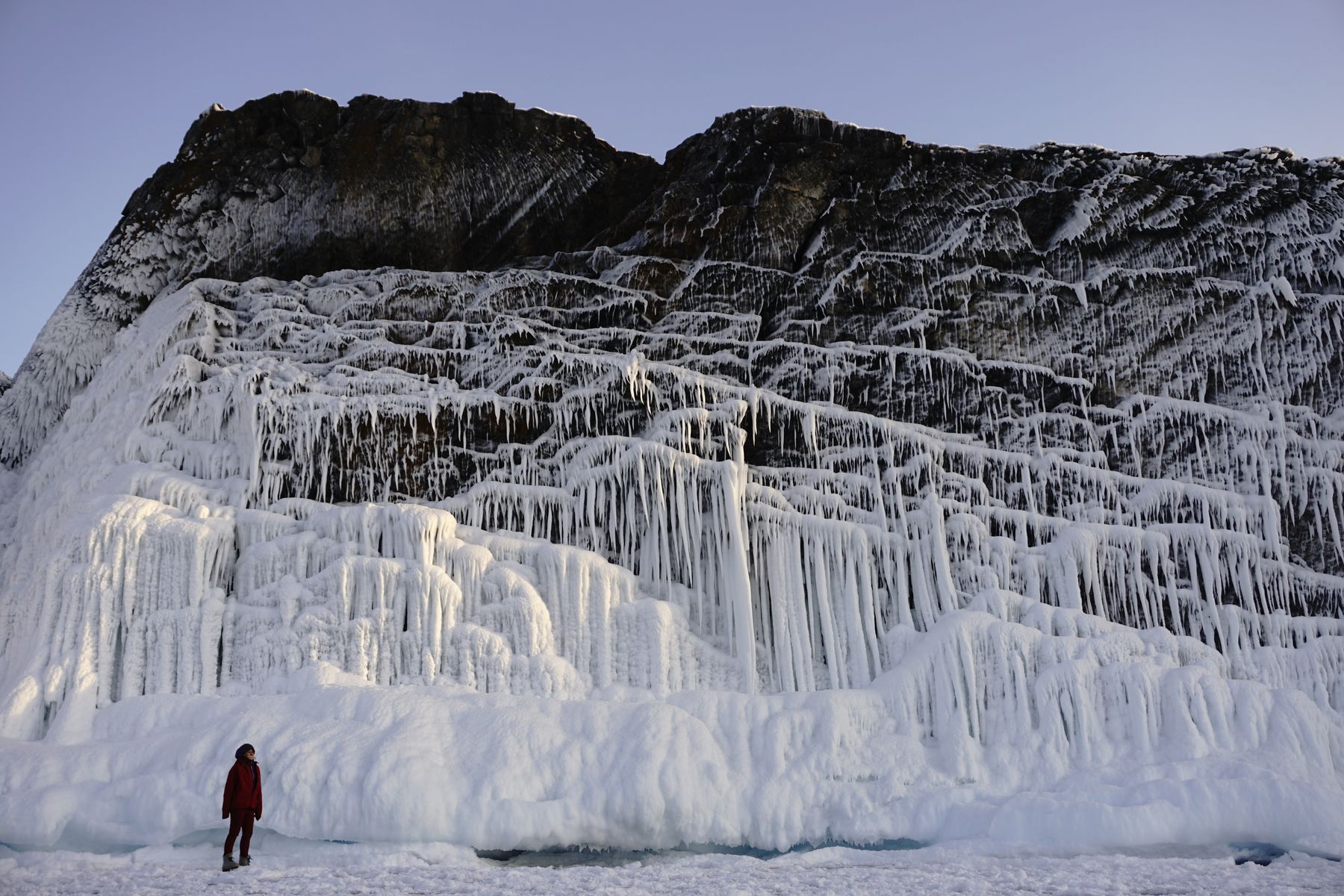
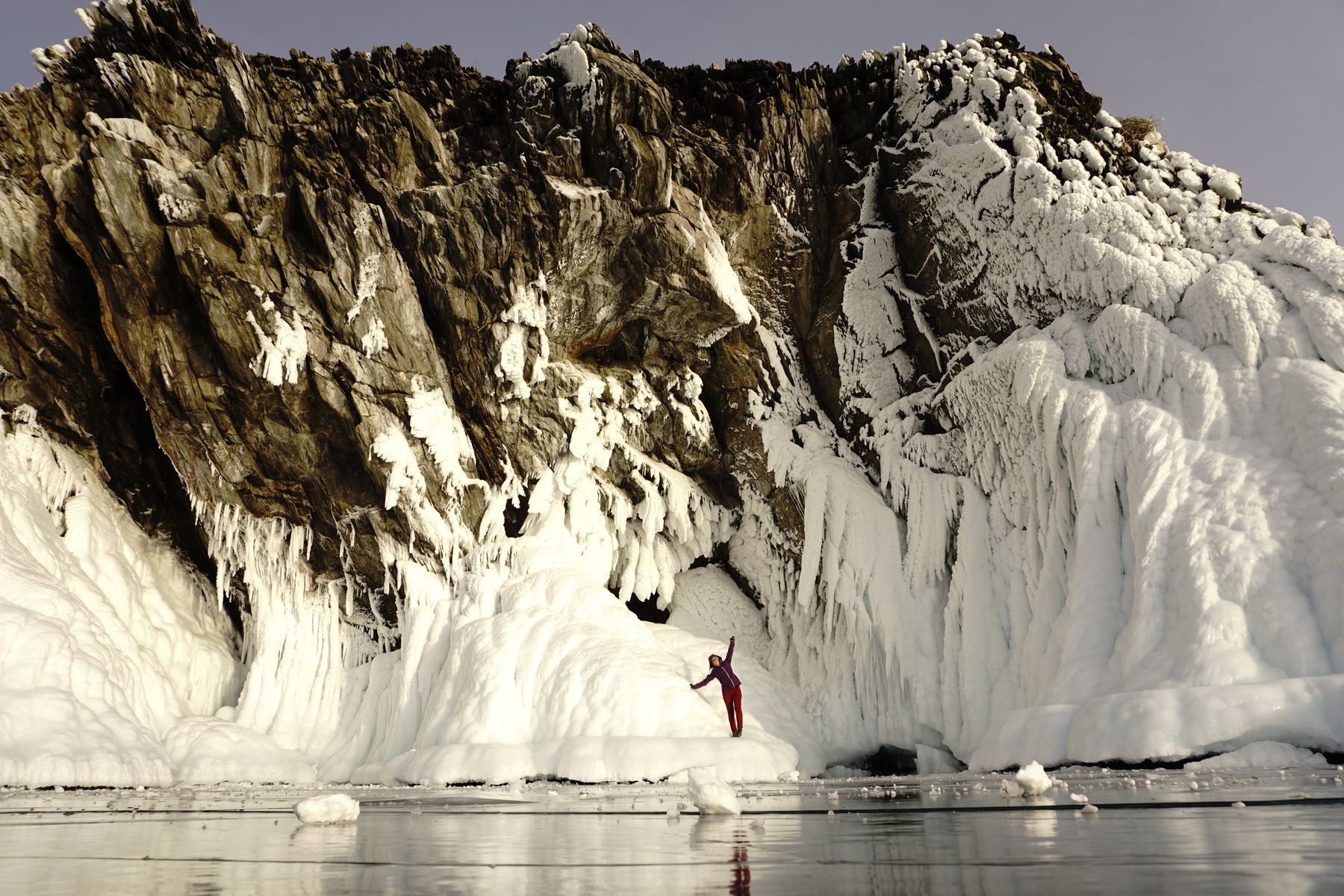
Lake Baikal- in winter

Uncategorized

Just a small update :)

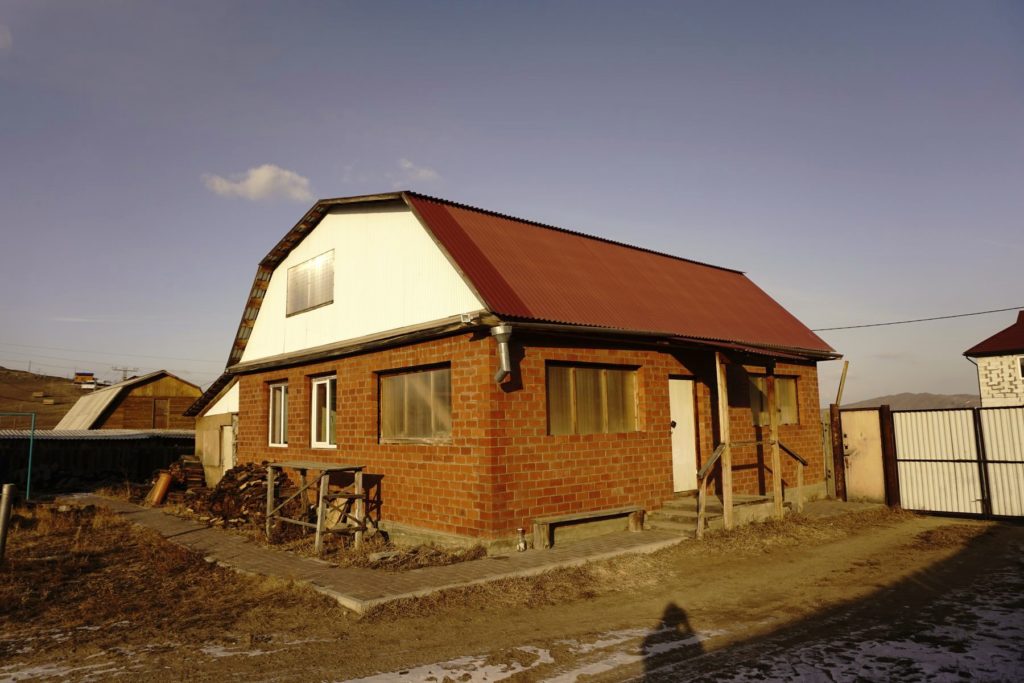
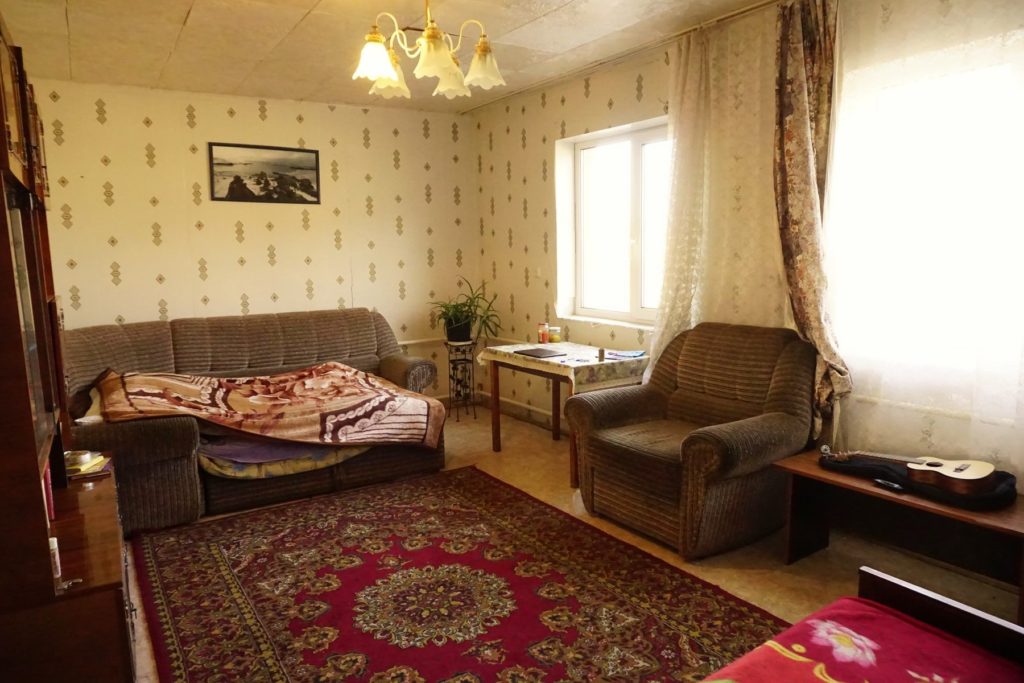
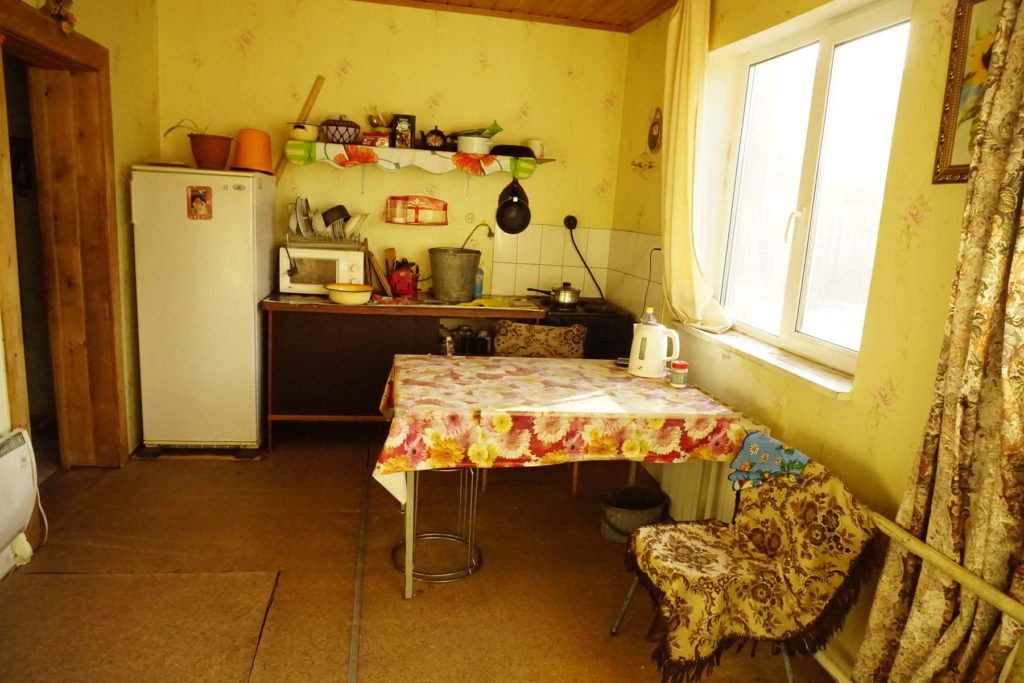
I moved into a little house in a village called Sakhyurta, located less than 2 km from Olkhon Island on Lake Baikal. I pay 300 rubles ($4.55) a day for rent here. I found this place by coming here in December and looking for a room. I asked anybody I saw in this village and eventually came to this house. You would normally only get a room for this price, not an entire house, but the landlady offered me this small house because it is the house of her mother, who happens to have a broken leg at the moment and is not living here. It’s a bit chilly sometimes and there’s no running water, but I realized that I actually save a lot of time by not having to shower and change clothes all the time. I don’t sweat much, since it’s cold outside, so it’s not a big deal. I will wash off in a banya once a week or so.

I’m going pretty good with my book so far. I’ve reorganized and edited the first parts. You can find the old drafts here: 1 2 3 4

I’ve finished writing about my next big adventures on Molokai, Lanai, Kauai and the East Coast of the US. I decided not to put them out as blogs yet because I want to concentrate on writing for now and blogs take too much time because photos take too much time. So I will deal with them later. I’m almost done with writing about my trip through Russia via the Trans-Siberian Railway, then from there I will take it back the beginning of my life and go on from there. Seems like a weird order but I think it will make sense when you read it. Don’t expect this book anytime soon though, because there is A LOT to write and I’m only planning on staying in this village for one more month.

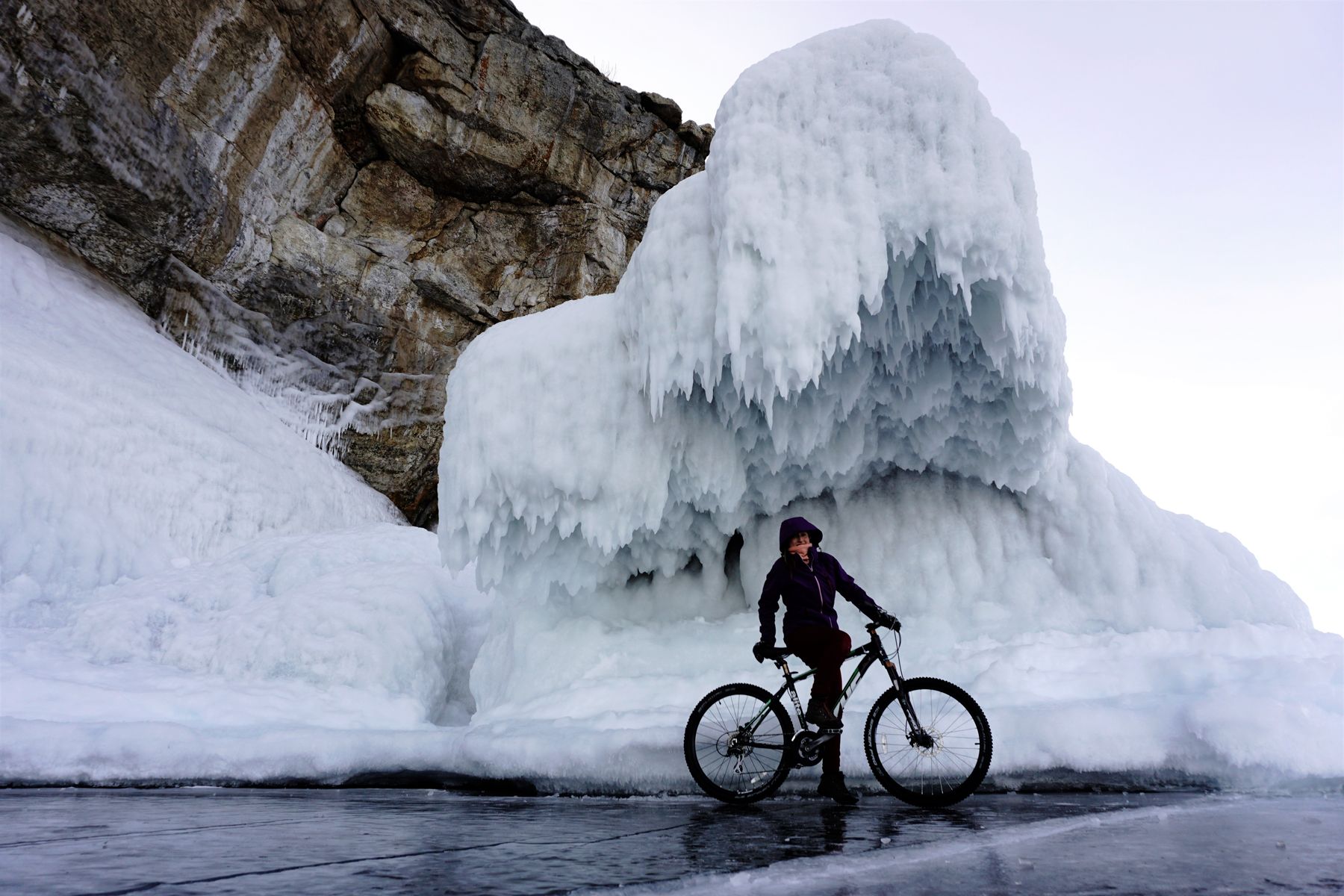
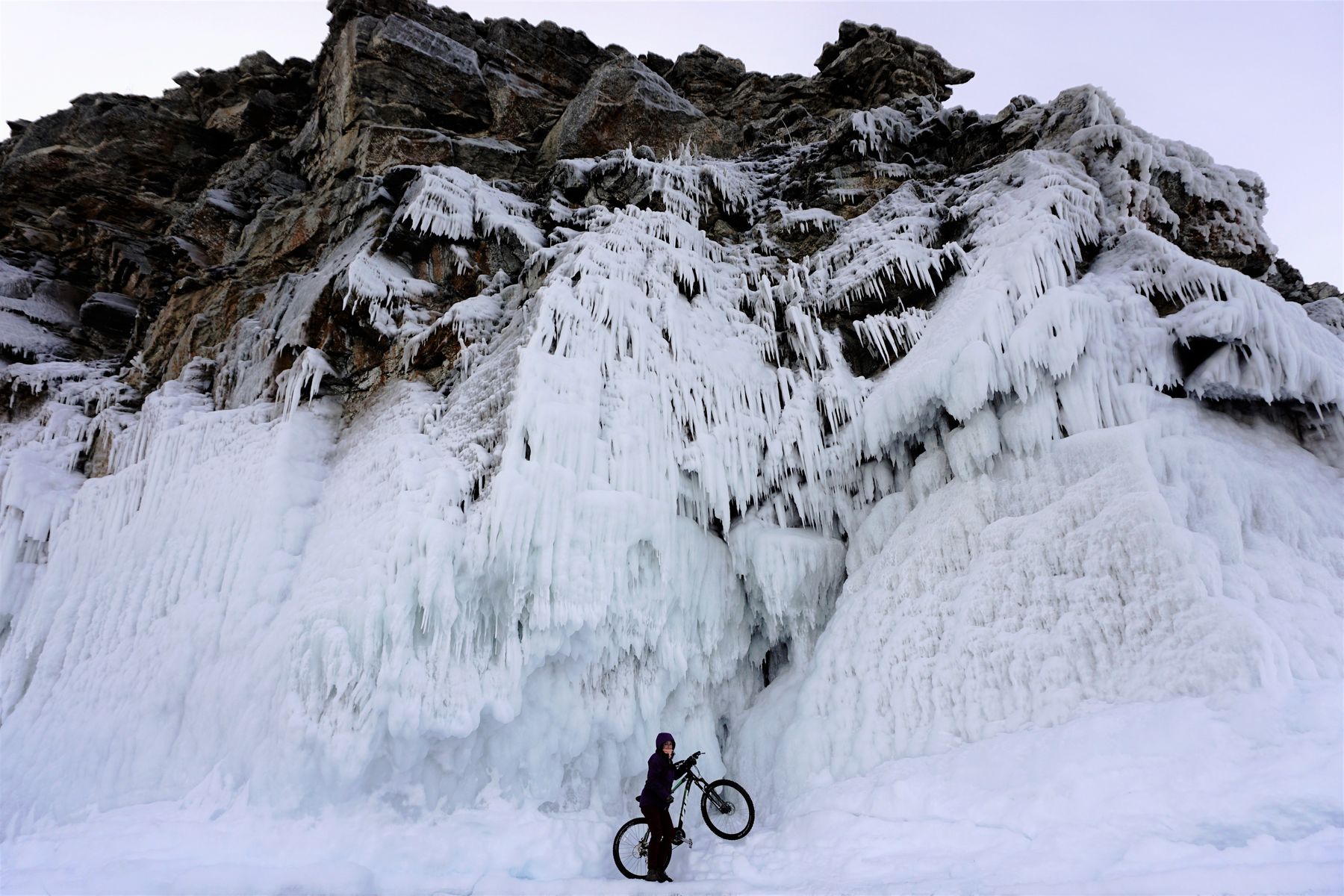
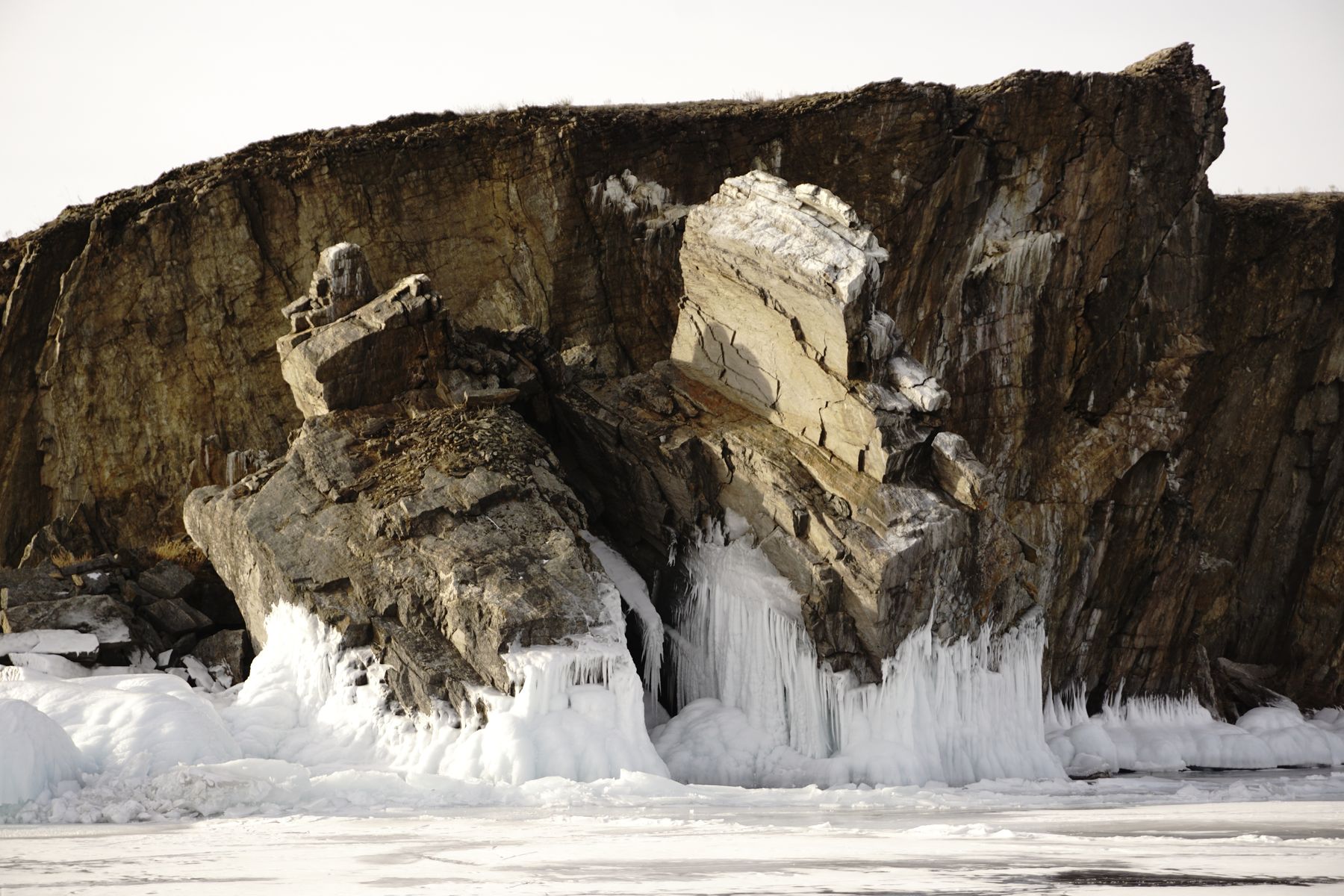
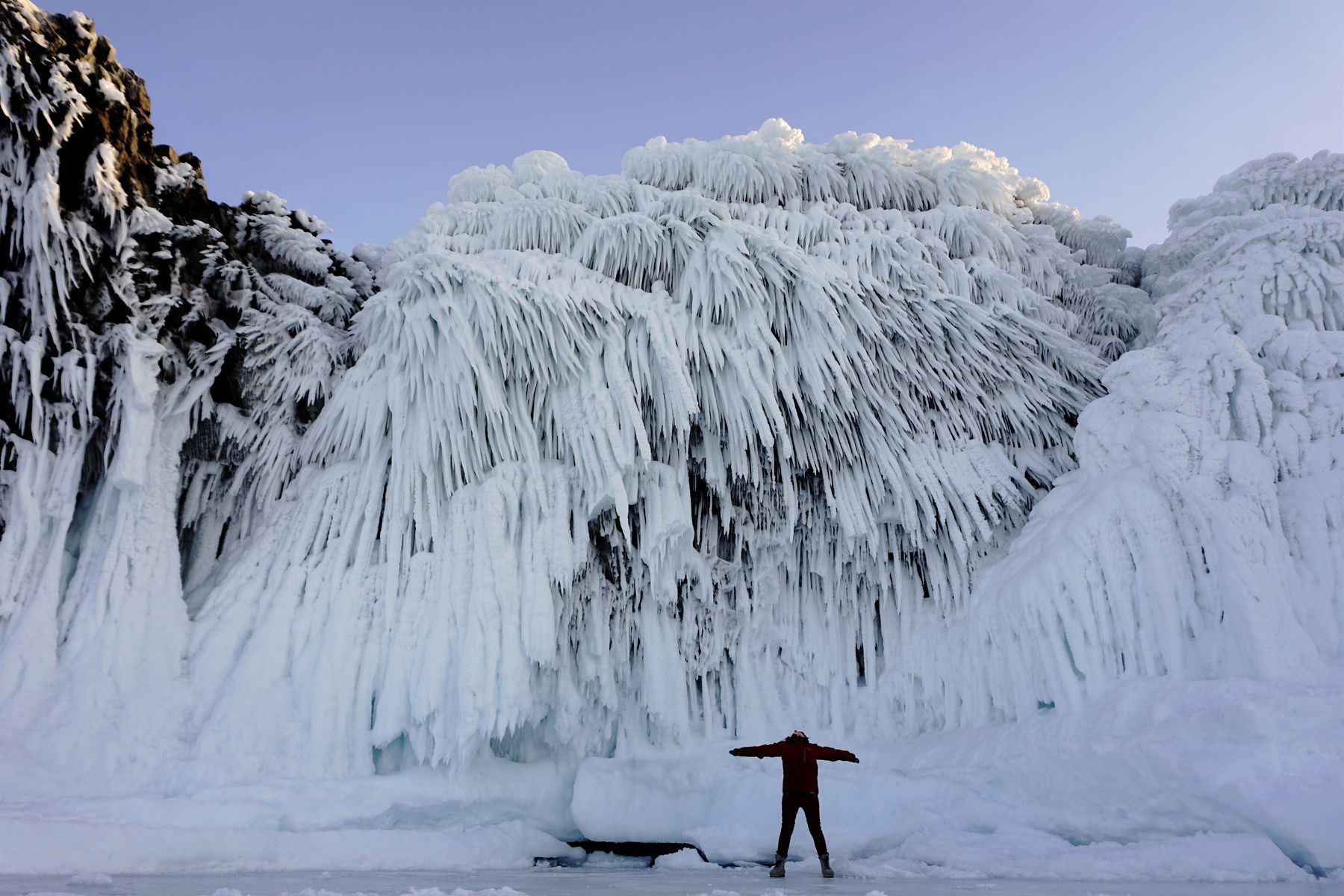
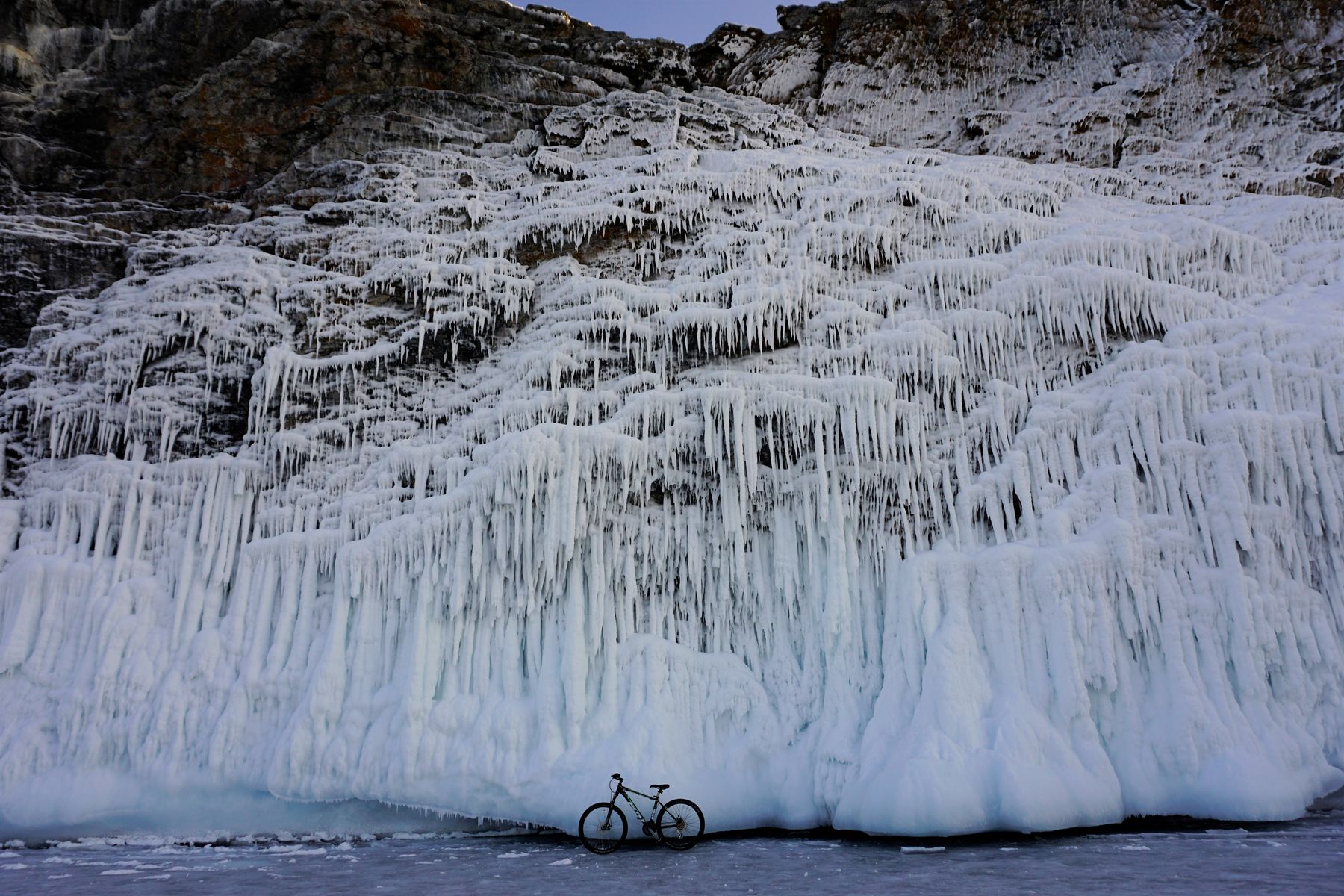
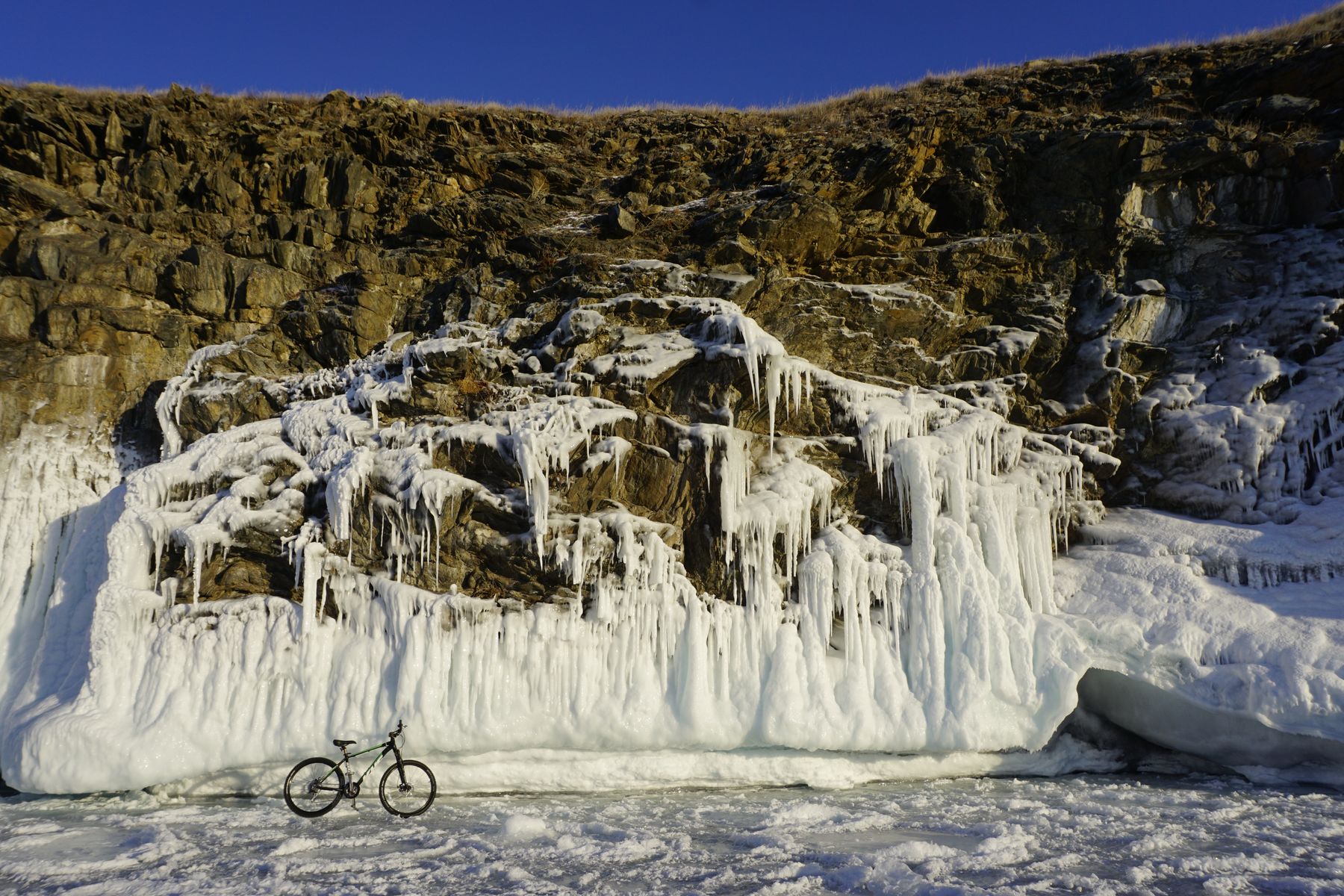
I also rented a bicycle with spiked tires for 350 rubles a day- and I think this is one of the coolest things that I have ever done in my life! :D Now, when I take a break from writing, I don’t just take a walk in the park, I ride a bicycle on top of Lake Baikal! :D

I’ve always loved riding a bicycle, but this is on a whole new level :D It is, by far, the best way to see Lake Baikal in winter.

Some photos came out nice, but I don’t think that I would ever be able to share the excitement and adrenaline that I feel when I’m riding this bike full speed on a piece of opaque ice and all of the sudden, it turns crystal clear and for a split second, I feel like I’m falling off the edge of a cliff or a 1.6km deep lake :D And then I glide smoothly along the glass, following shapes of endless ice cracks.

And then I stop the bike. And I’m alone. In the middle of the lake, no one in site. Hundreds of meters from land. Hundreds of meters of water beneath my feet. I stop and I listen. I feel the vibration. The lake cracks and howls. She plays drum n bass. I feel her. The boom! She’s my whomping playroom.

Last Days of Mongolia

Mongolia

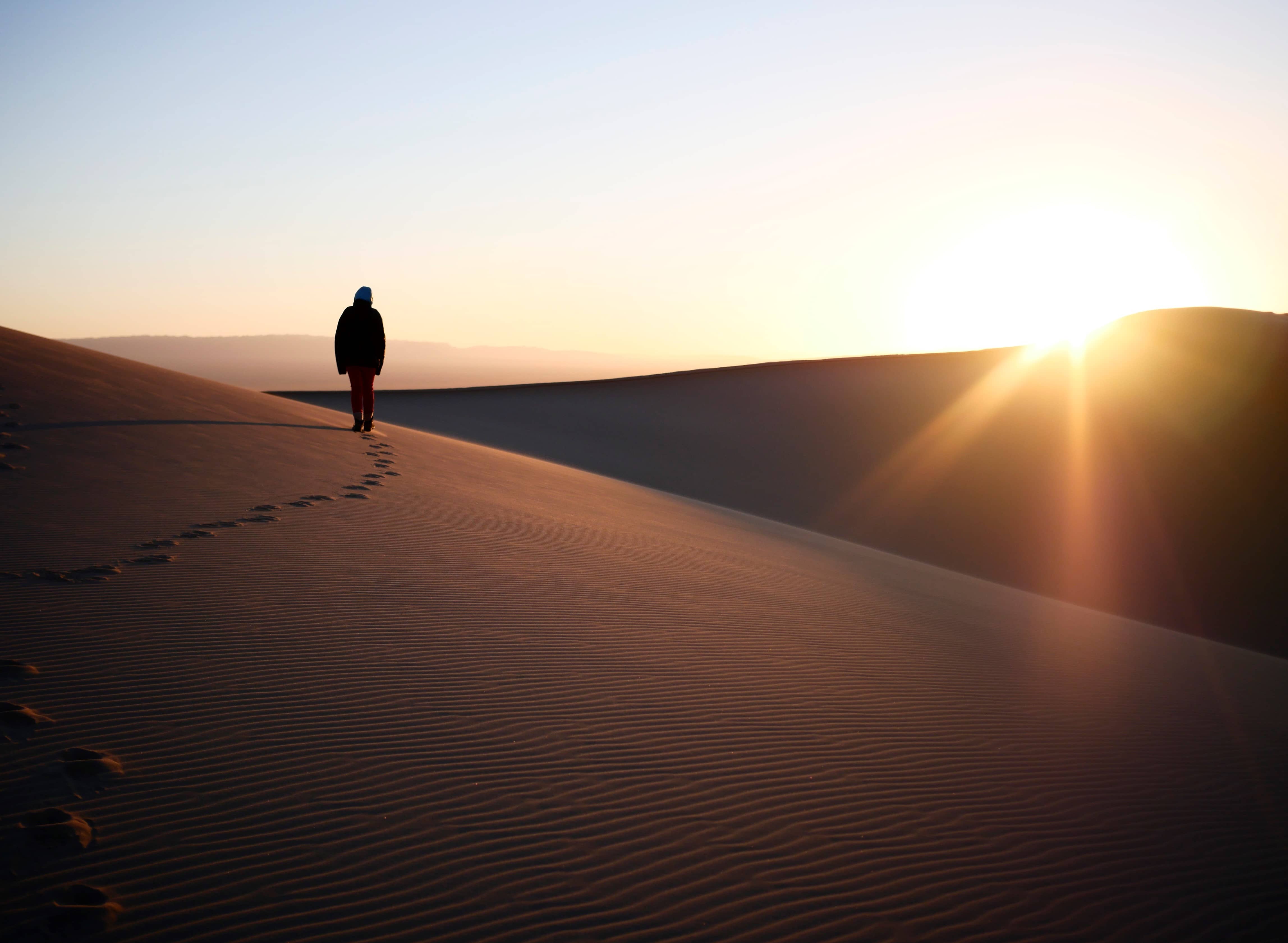
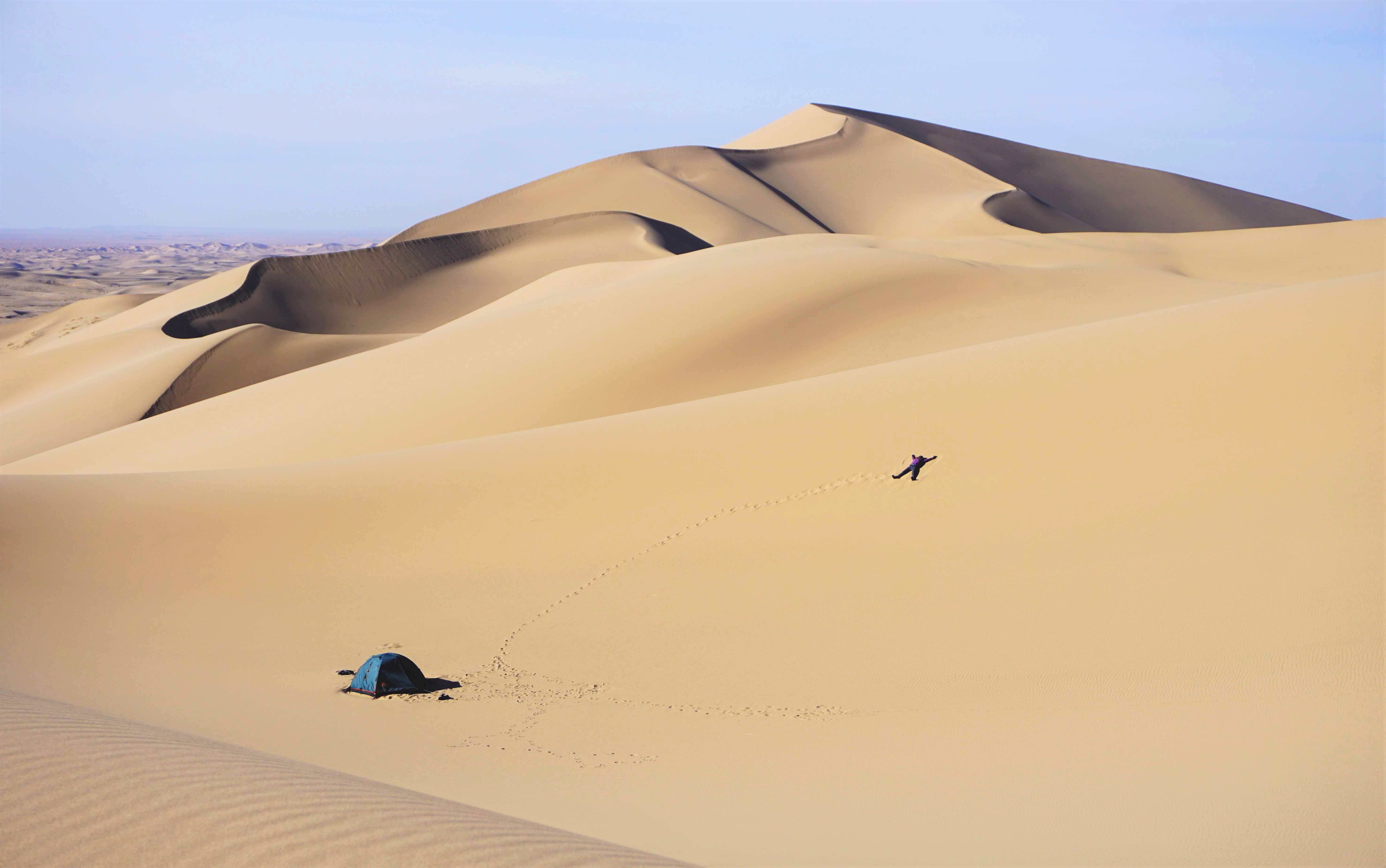
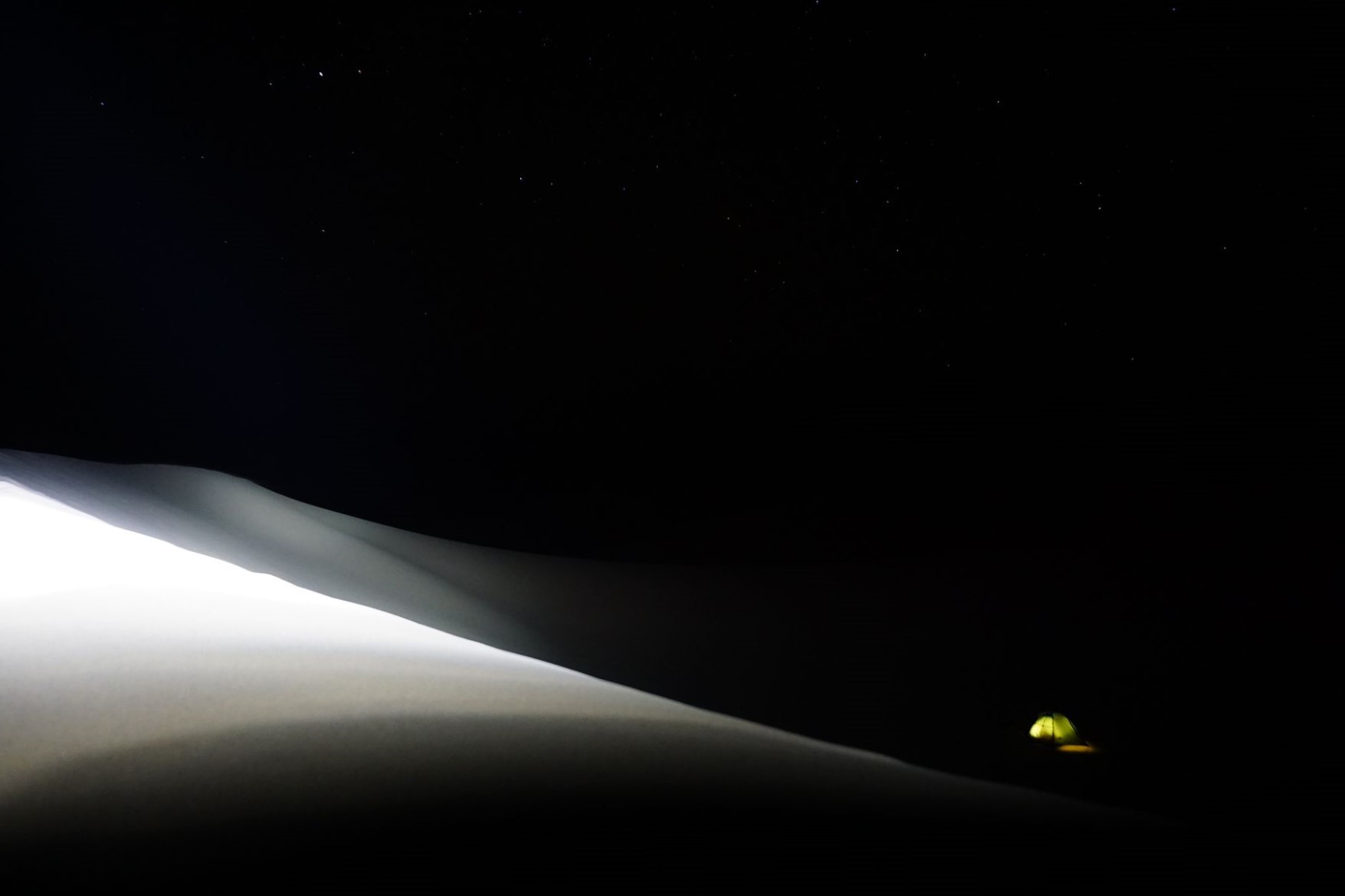
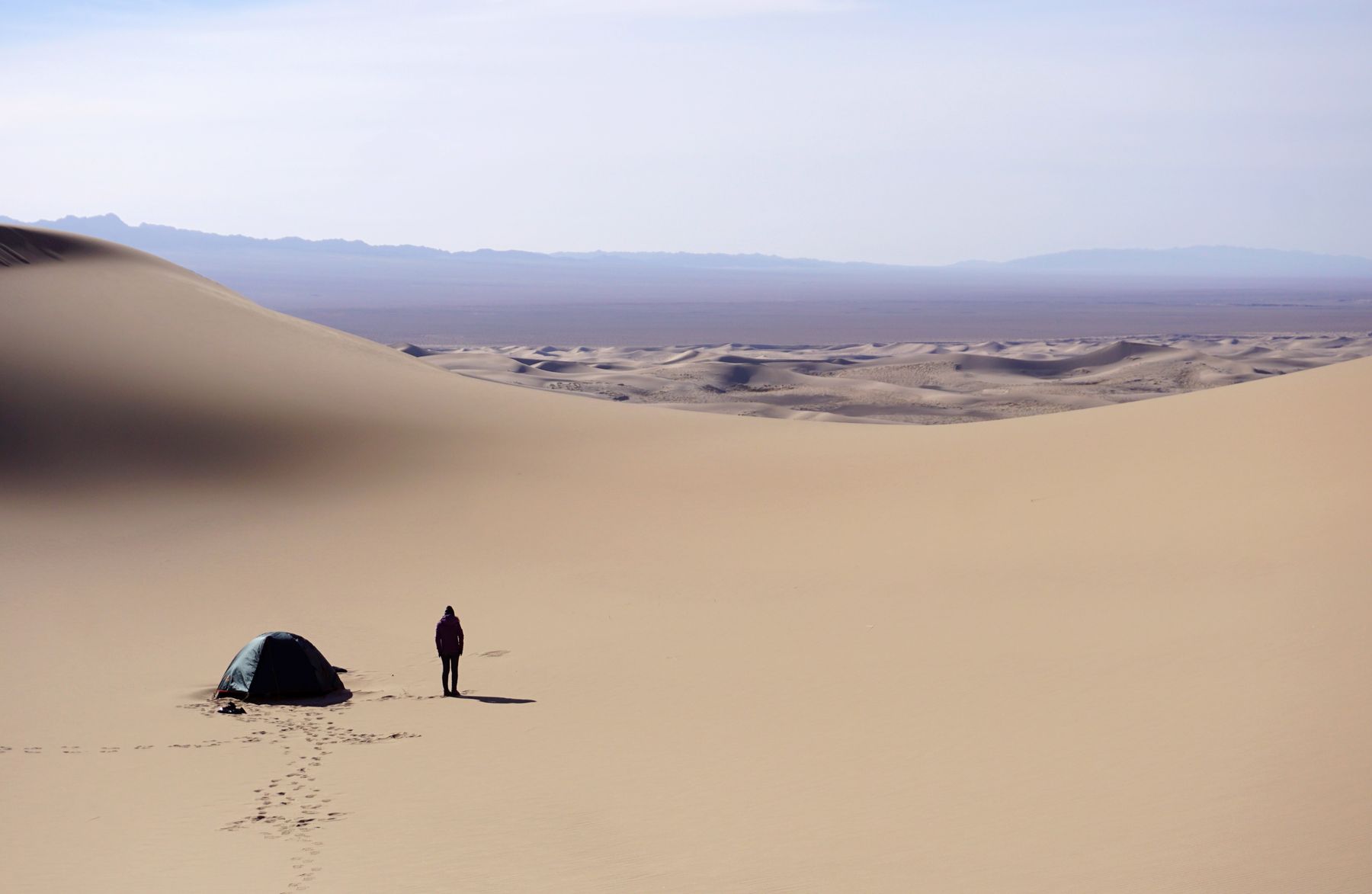
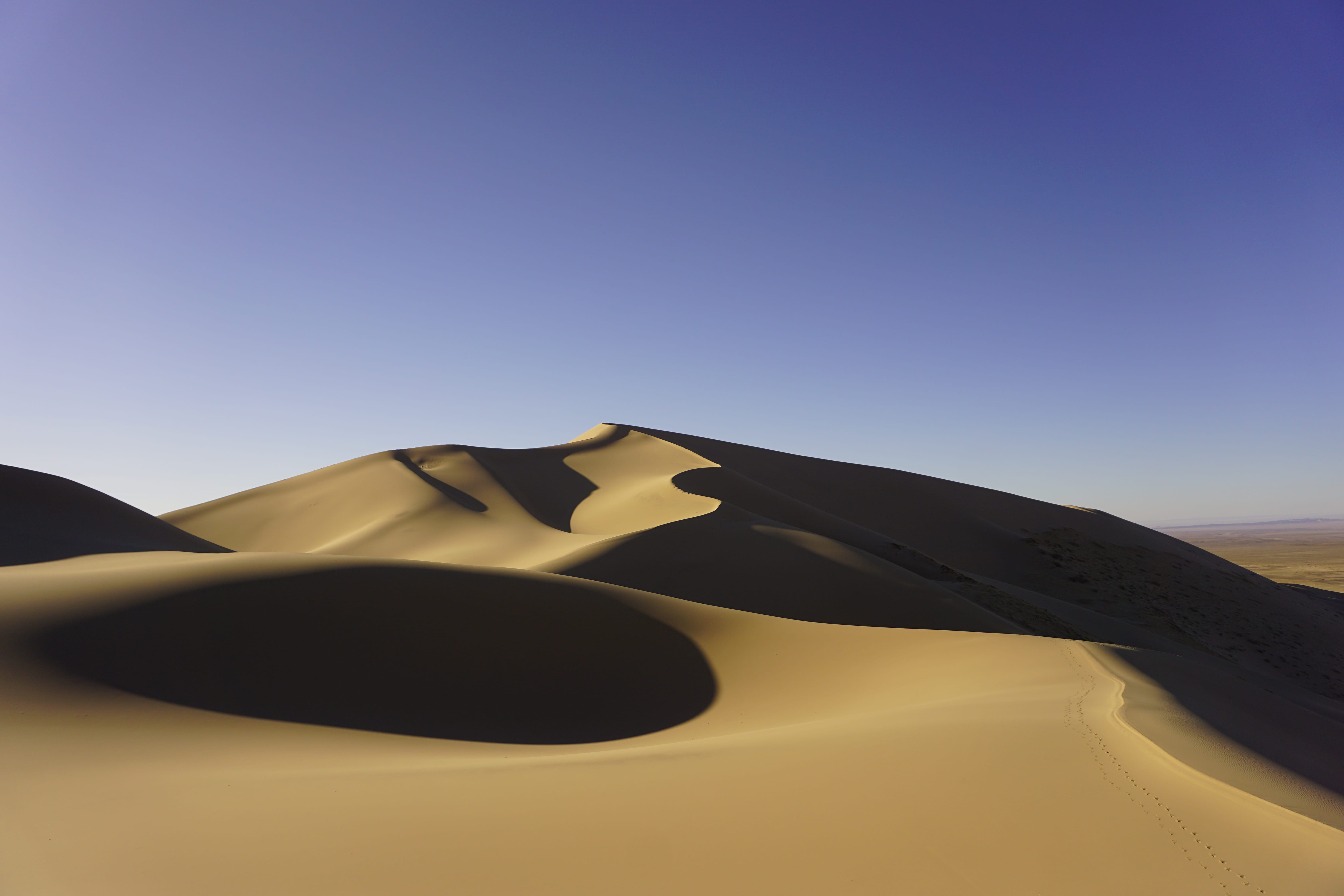
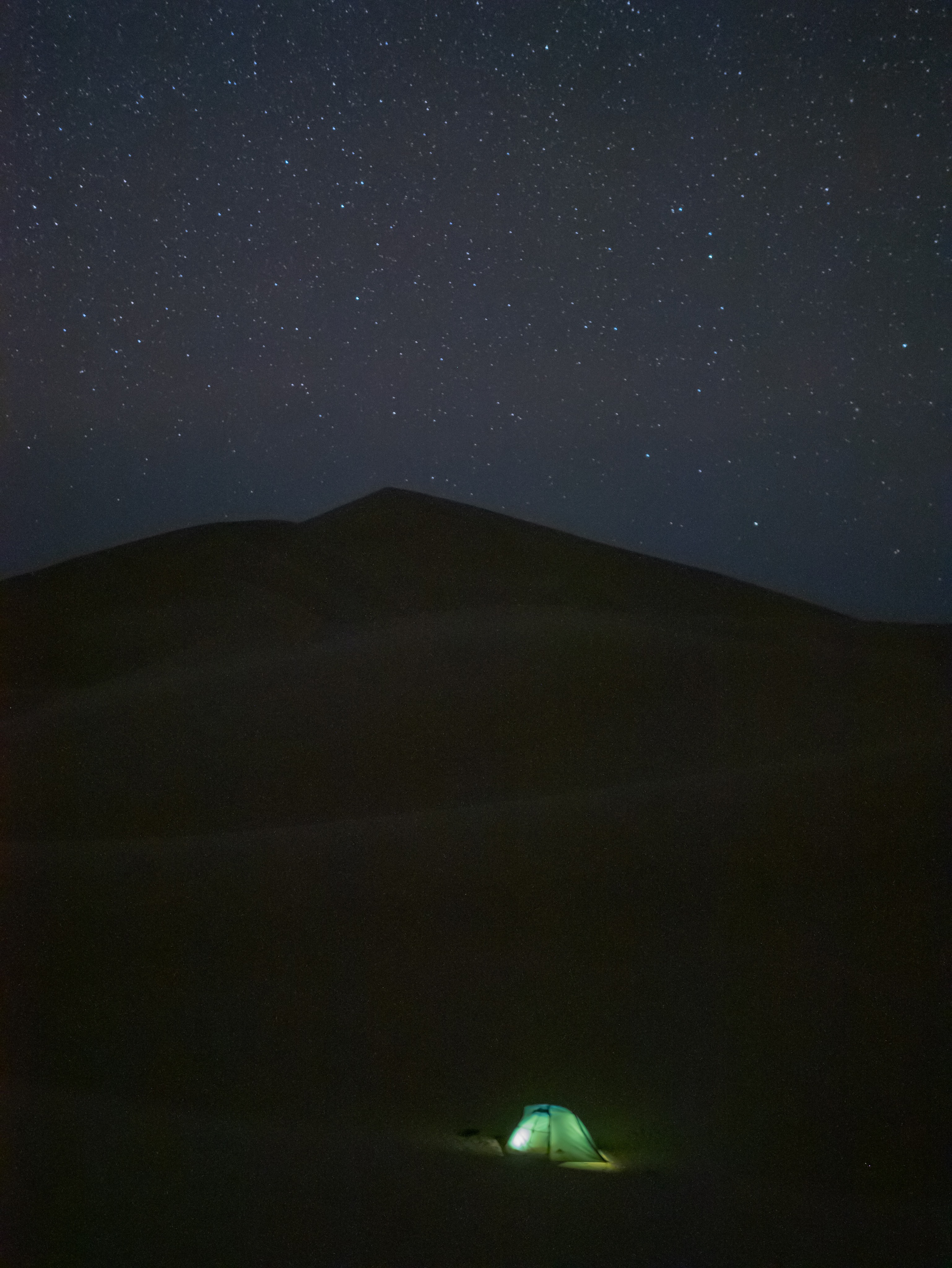
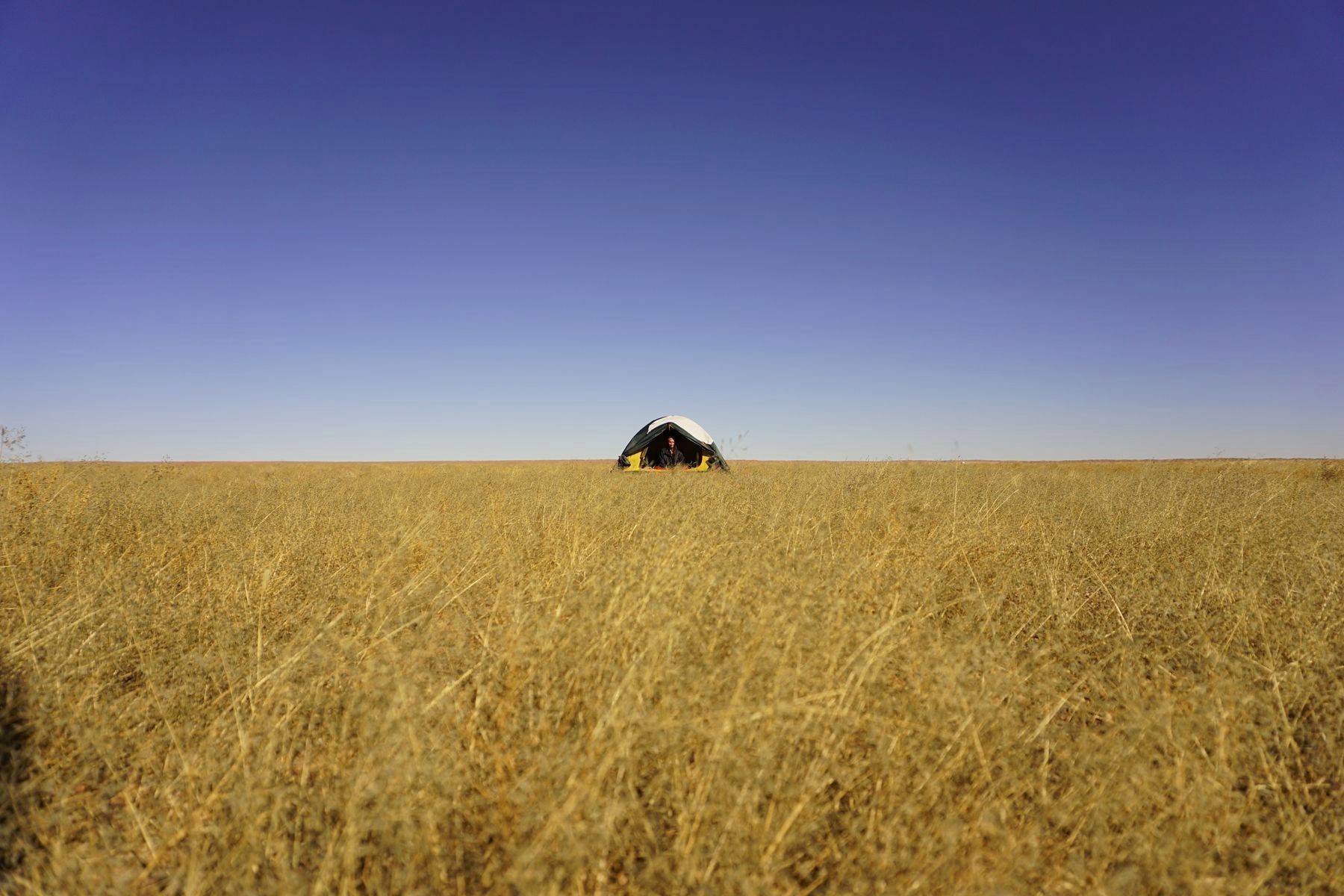
This was it. The last night camping in the freezing cold, last night photos of the Gobi Desert, last pot of buckwheat cooked on my camping stove.

Last cuddle under two puffy sleeping bags. Last morning sunlight through the thin tent walls. Last warmth, last hot cup of coffee.

Patrick Watson played on my little speaker for the last time as the sunrays warmed my face. Last kiss in the morning sunlight.

I listened to the wind and the piano, thought about where I was… somewhere in the Gobi Desert, and I felt like my life was just a fantasy, or a novel. But it was so real.
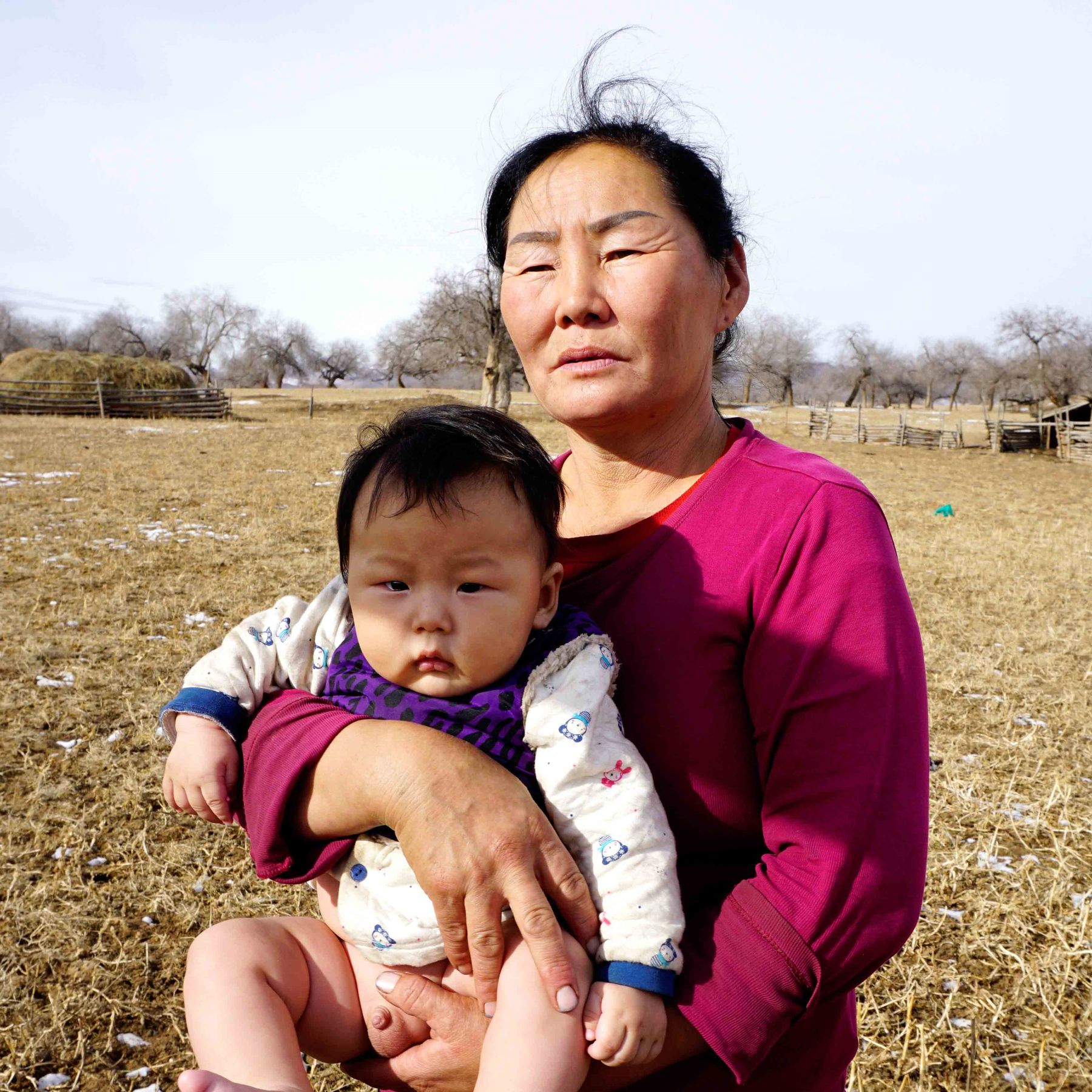
You see, it’s not just Mongolia. I’ve been living like this for almost 12 years, sometimes more intense, sometimes less, sometimes stopping to play the job game or to write a blog, sometimes backpacking for months, or years, living on a boat, in a car, a hammock, wherever. I wrote out the details of this past month just to give you an example of how you can travel with little money, but the best part of the experience is something that I could never describe or explain in words or pictures.

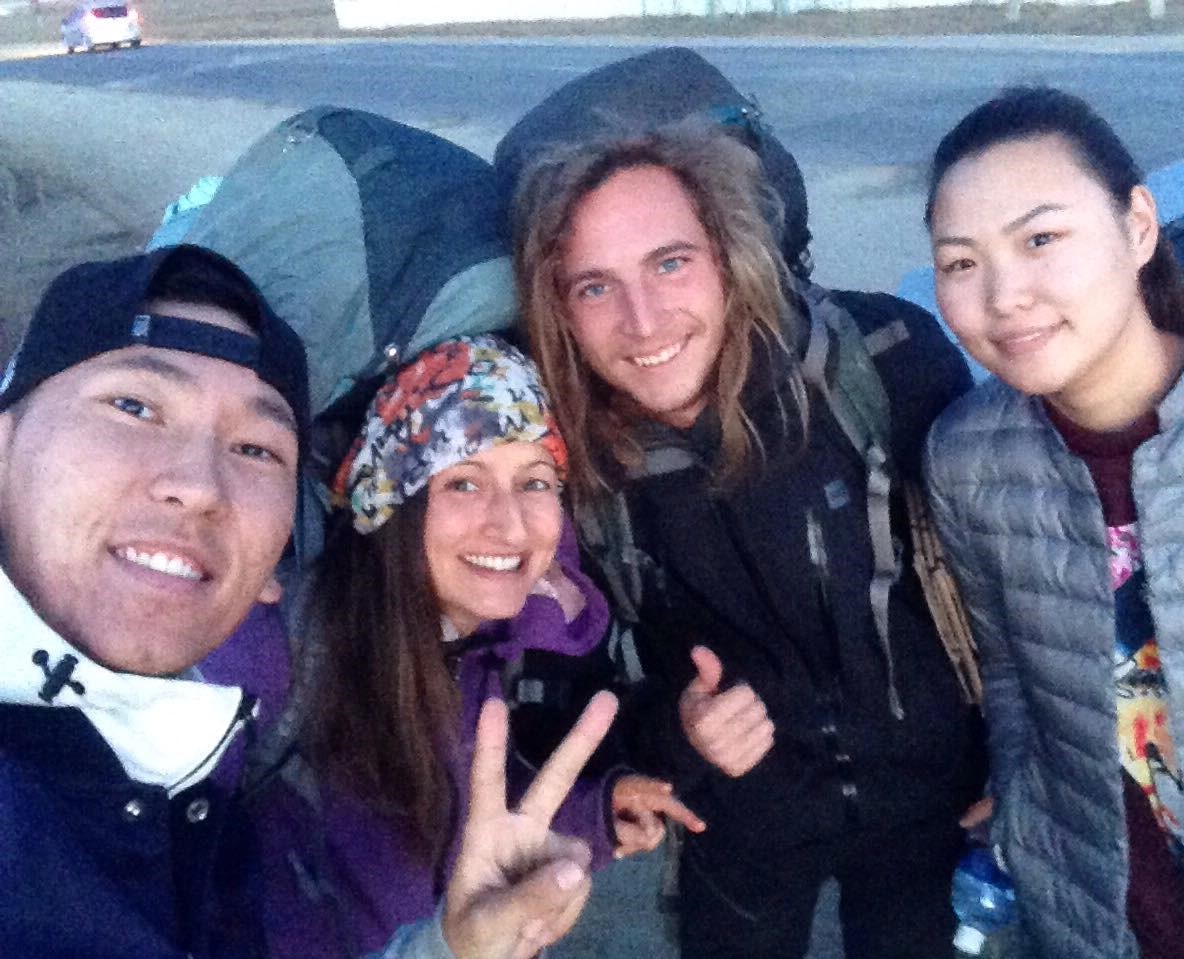
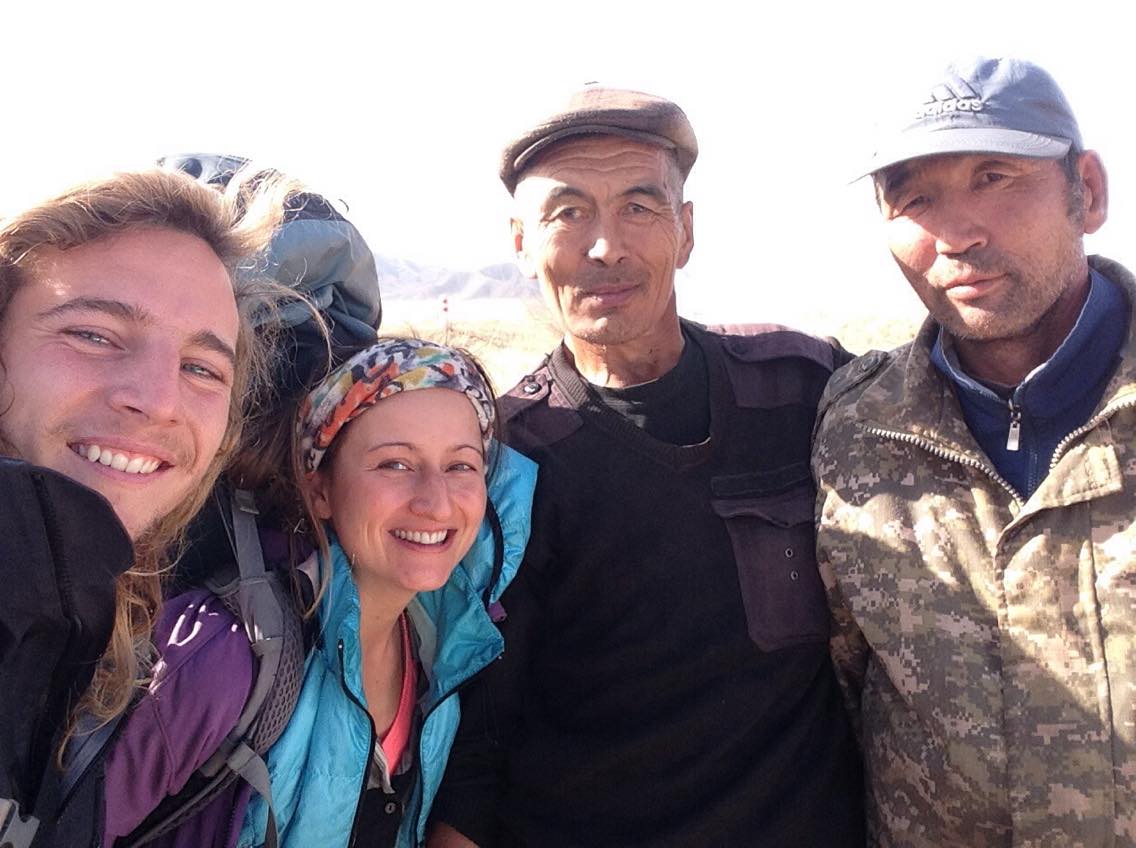
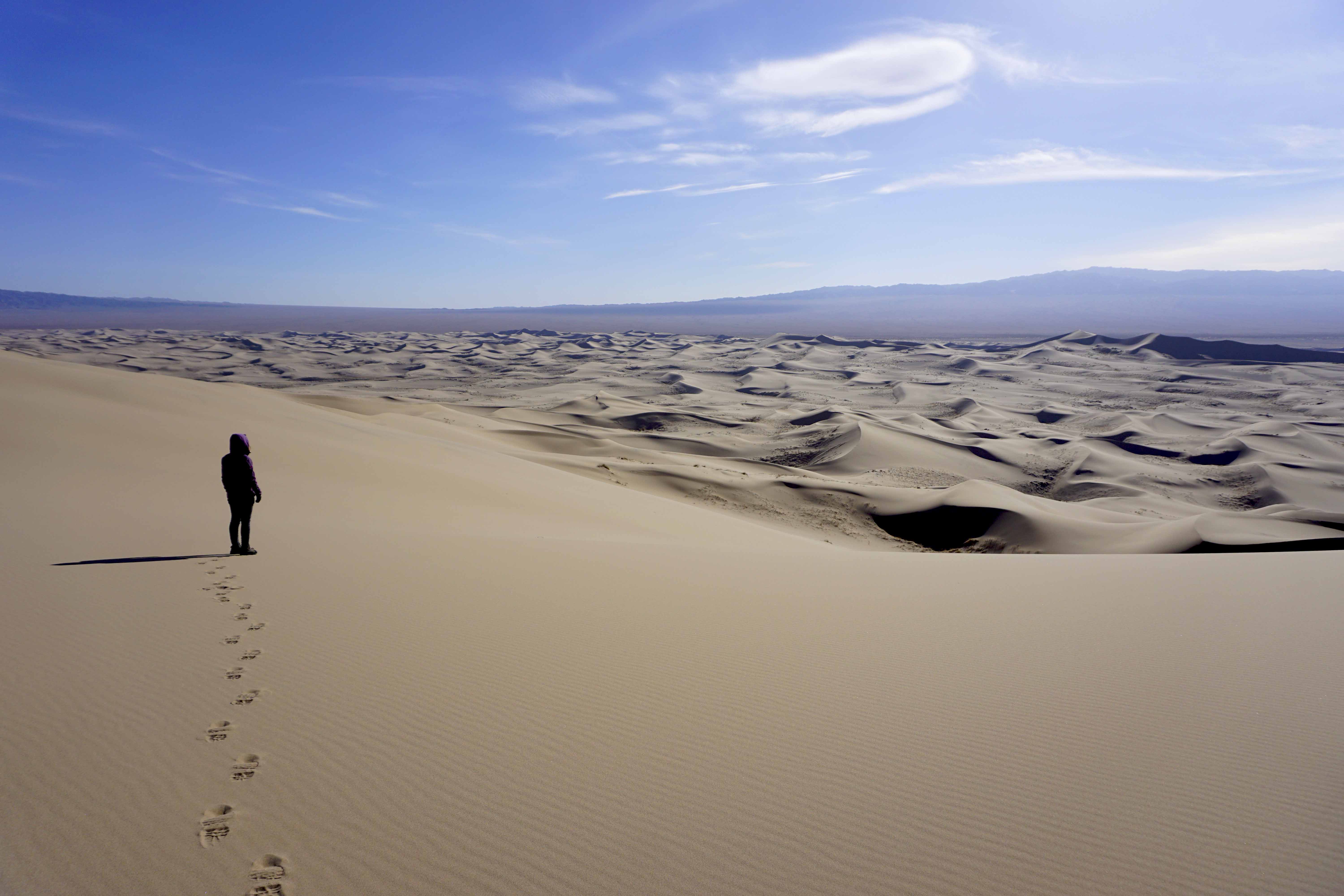
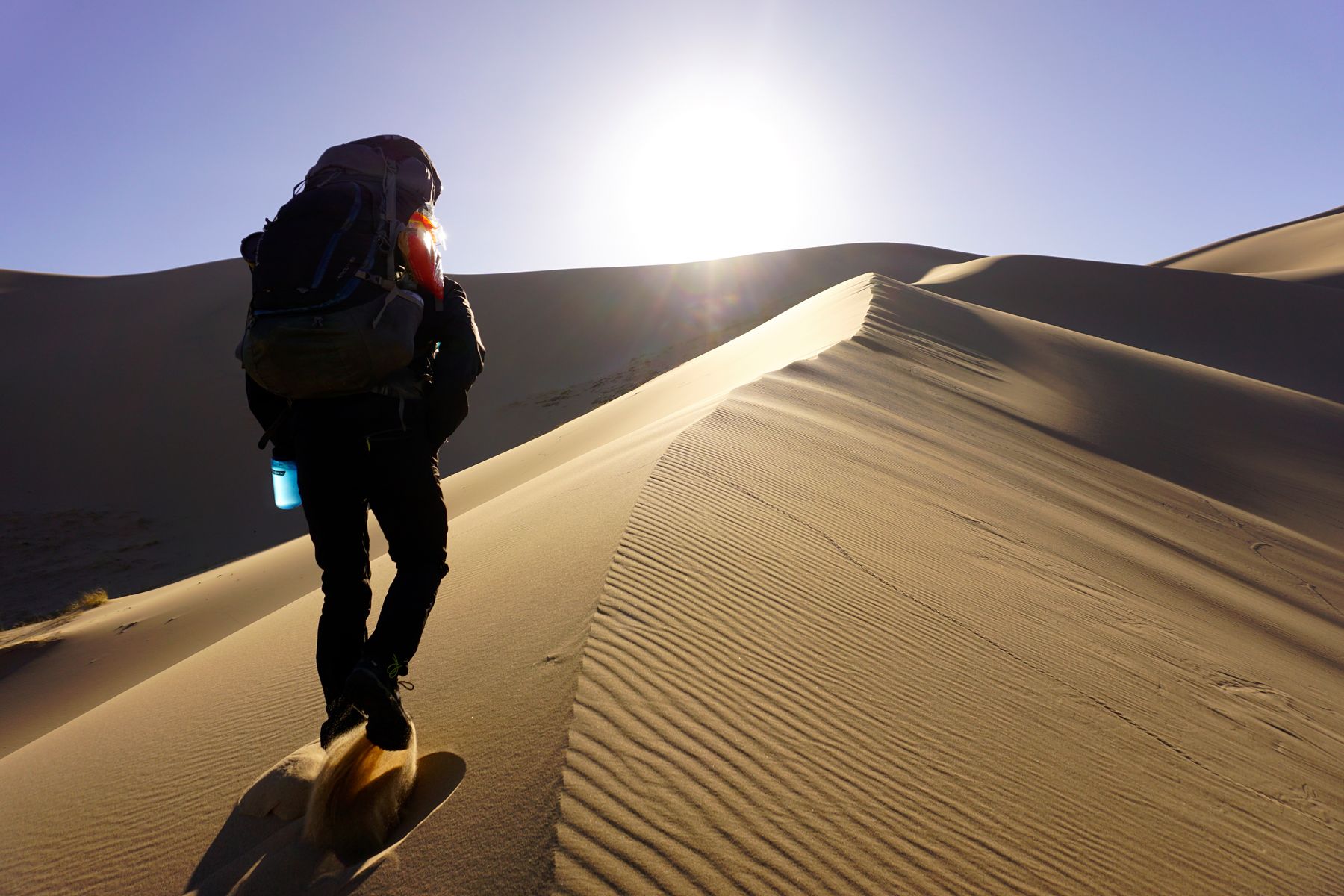
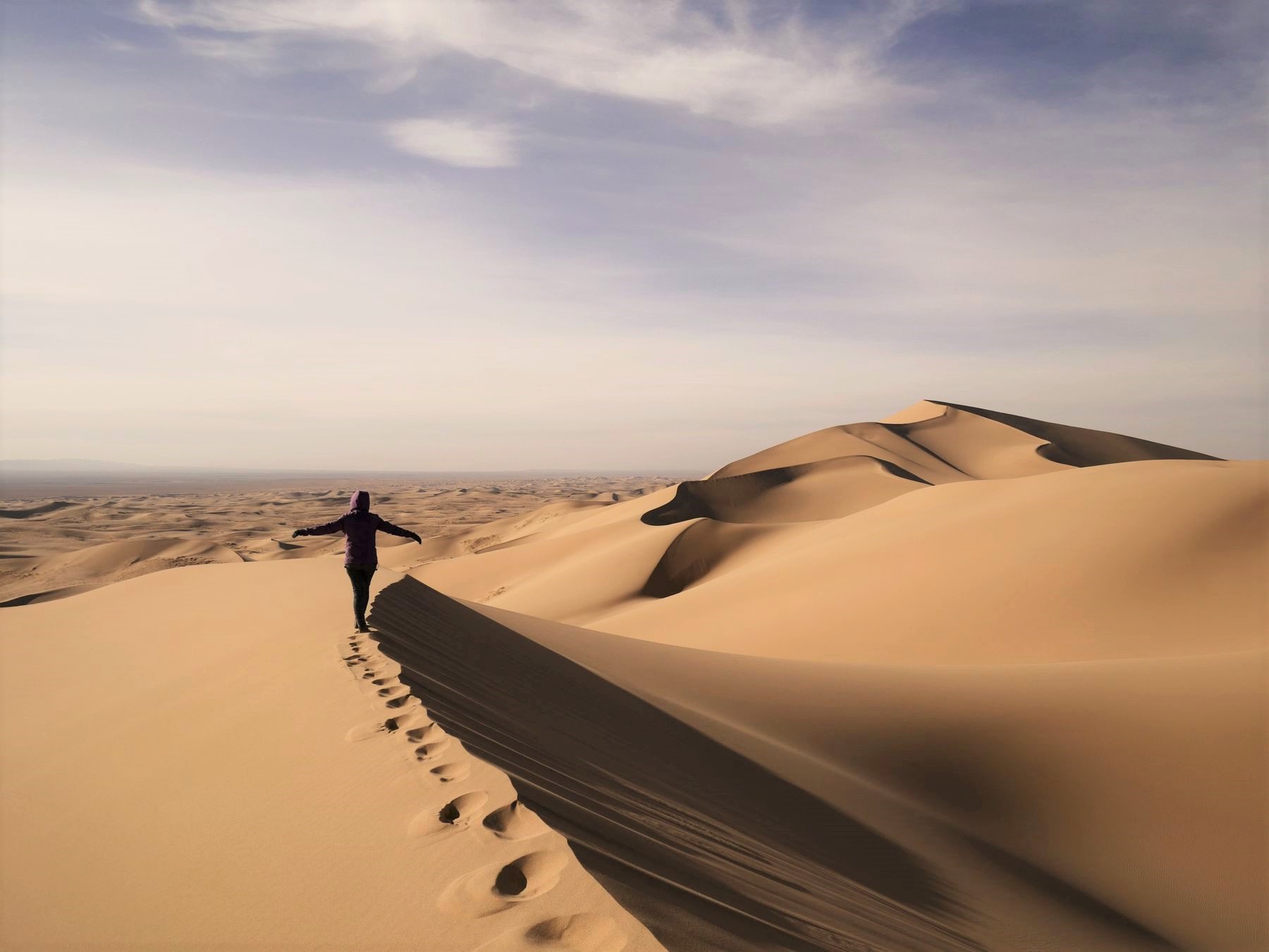
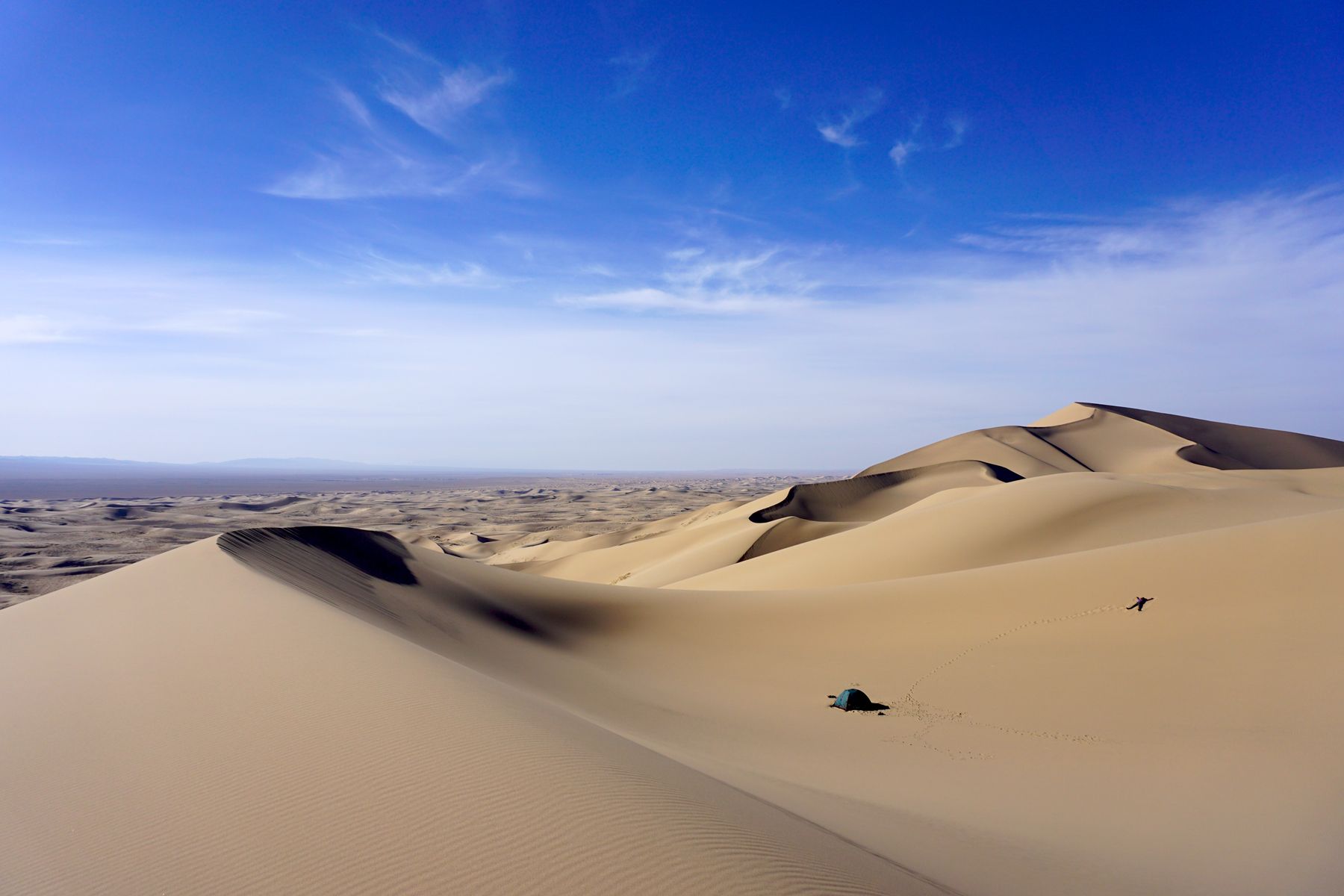
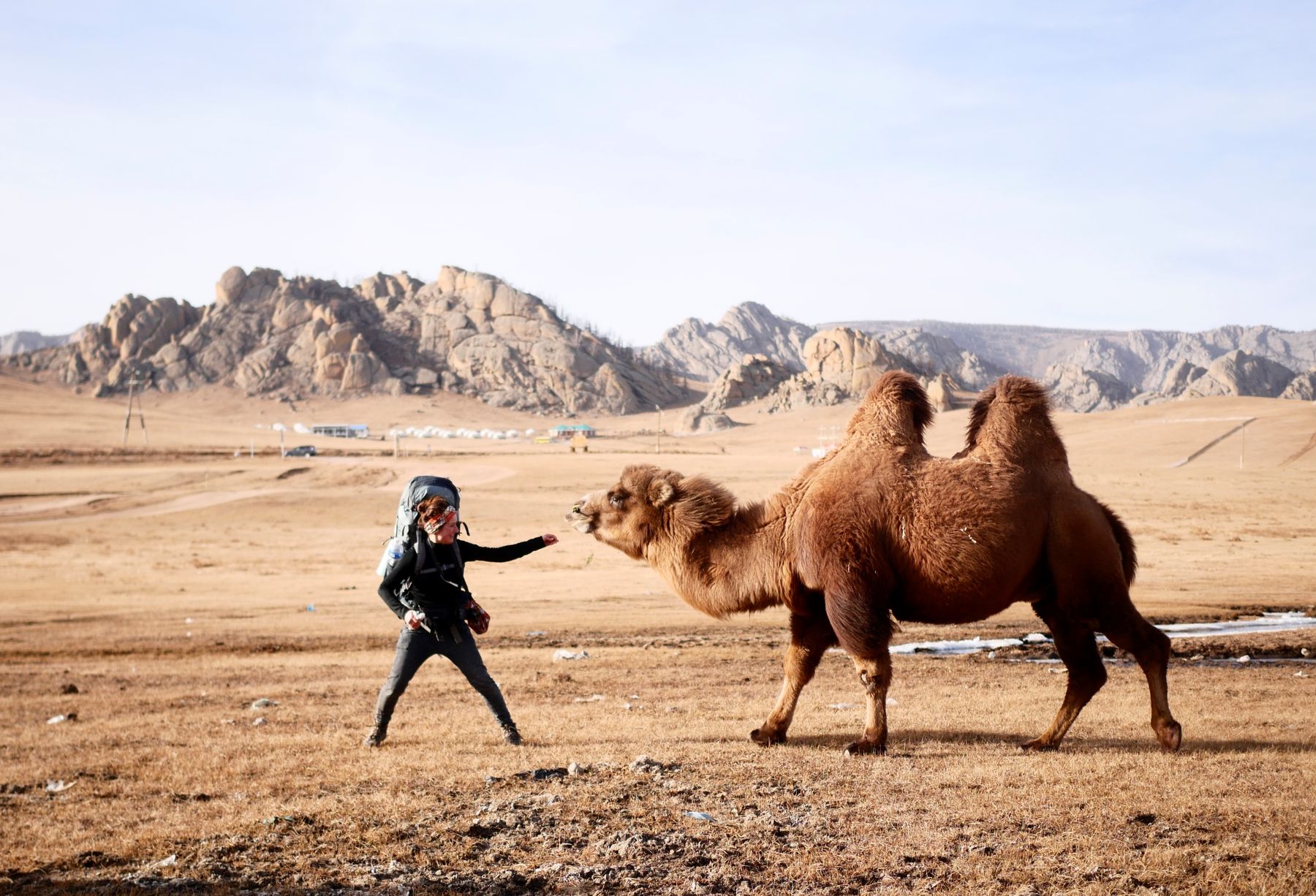
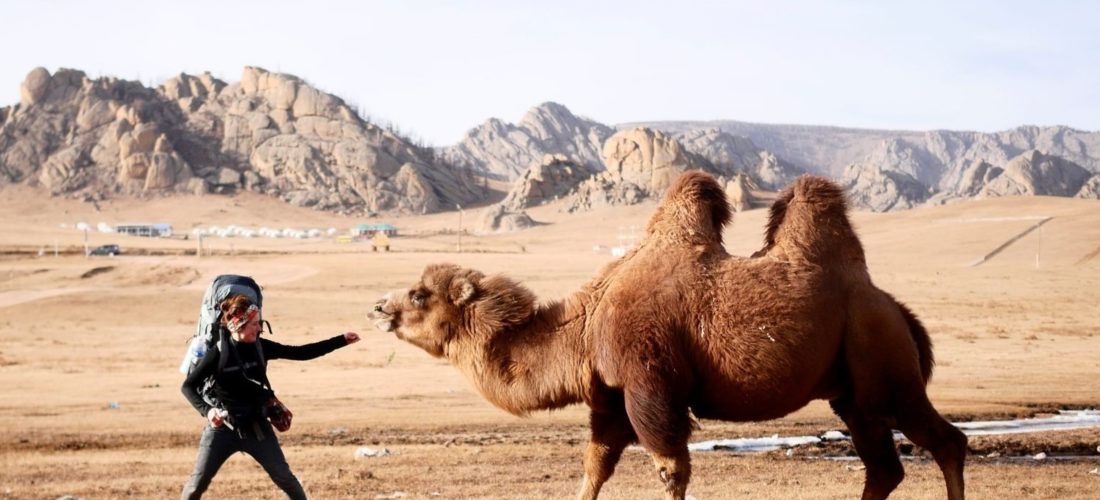
I looked back at this last adventure- meeting Felix, hitching from Russia to Ulaanbaatar, hitching to Lake Khuvsgul, getting invited to yurts, homes and apartments; adopting a kid and a dog for a night, camping in a snowstorm. Being taken into a family, riding a horse and a motorcycle, climbing a sacred mountain, sleeping in a family yurt. The dead sheep van, the overnight train, camping in Ulaanbaatar; hitching a ride to and from Gorkhi Terelj National Park, camping in the boulders, feeding camels, meeting friends. Hitching to the Gobi, camping in the Khongor Sand Dunes; the wind, the cold, the sand, the stars, the sunrise on the frozen lake. Seeing ice fields in the Yolin Am Canyon, Mukhar Shivert and White Stupa. All of this for roughly $300 :).

But you could never buy such an adventure because the best and most important part of it is priceless- it was Felix, it was Uncle, Buddy, Thunder, Javkhlan, Gorkhi Terelj driver friend, and everyone else whose name we can’t pronounce or remember :). It was every smile and every laugh, every deep conversation we had, every wordless act of kindness from a stranger. Every trade-free interaction made on a true human to human level, that made us not just think, but truly feel and understand that we are all one human family. That’s what money can never buy.

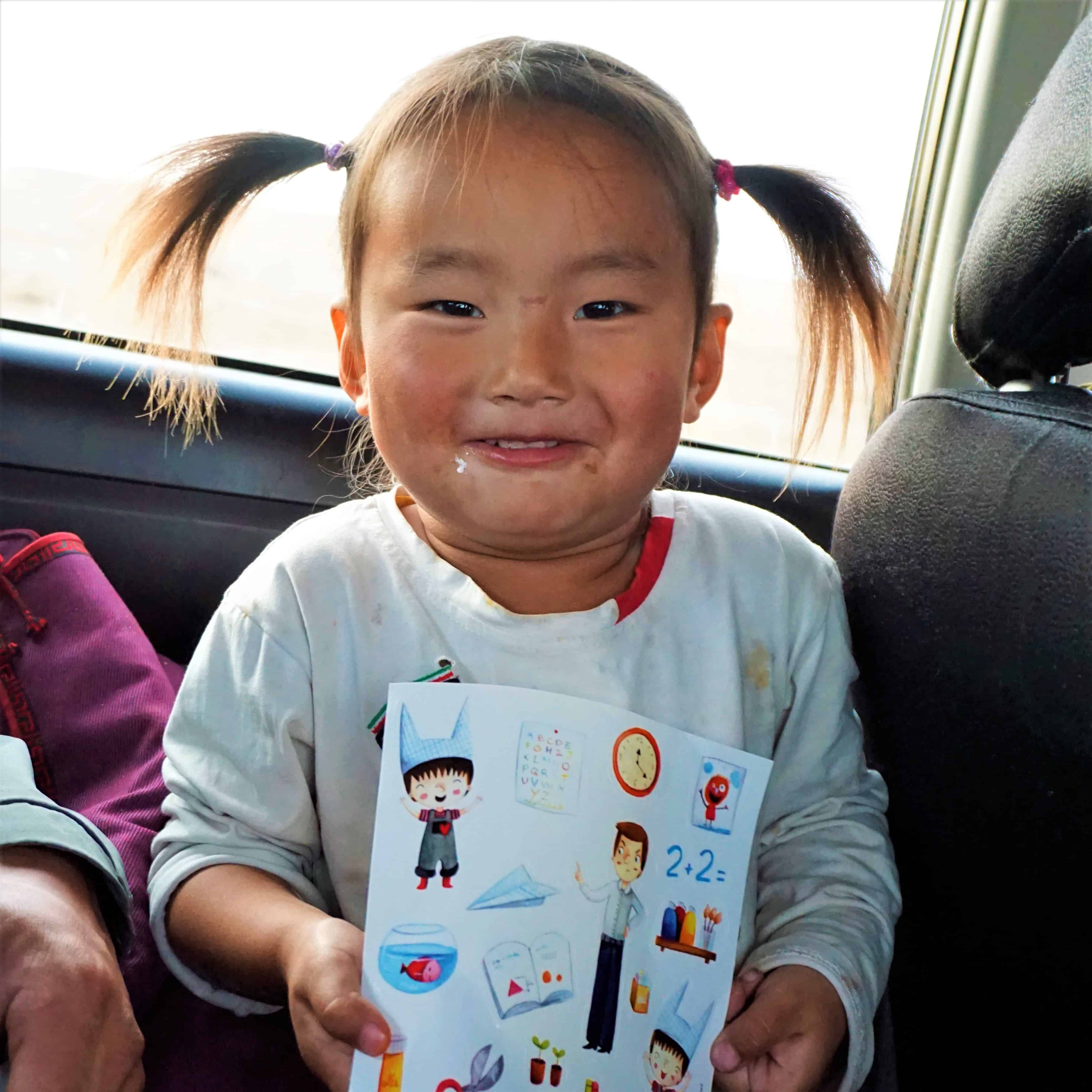
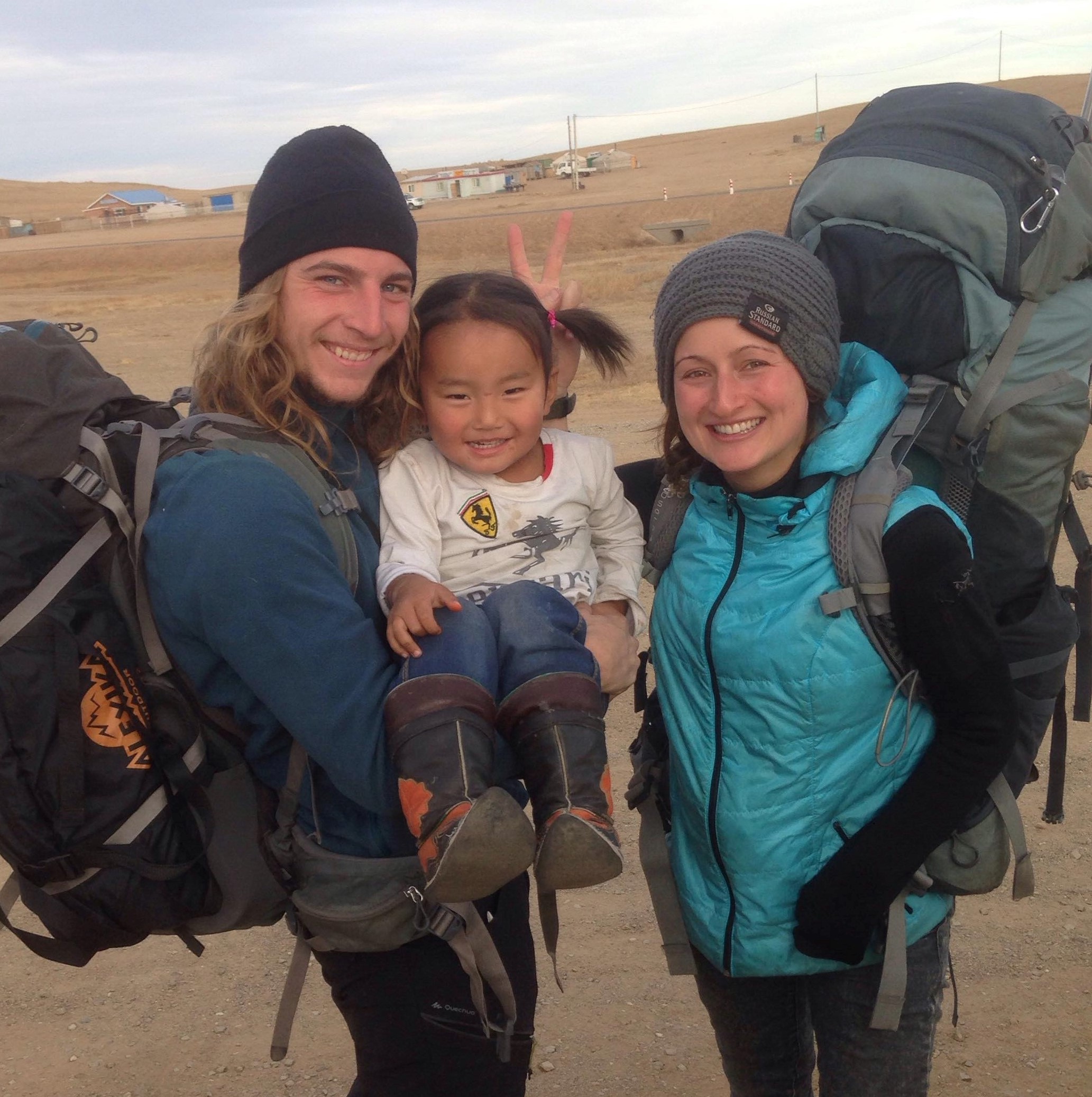
We packed up our tent for the last time, walked back onto the road by 2pm, and hitched a lift to Mandalgovi. We were picked up by a poor family with a 4-year-old girl. We gave her some stickers and she was so happy :).

We caught three more lifts, ran out of gas in the last ride but pushed the car to a petrol station and made it to Ulaanbaatar by 10pm. We took a local bus ($0.20) to a hostel ($8) and spent the night there. In the morning, I took off to the Dragon Bus Station. I took a bus from Ulaanbaatar to Altanbulag ($6.30), which is the town at the main border of Mongolia and Russia. I got out of the bus, walked to the border and then asked someone to give me a lift to Russia. You cannot cross the border by foot, so it is a standard procedure that drivers ask for money to bring people across. I paid 100 rubles (about $1.50).

I had no idea where I would sleep that night and this time I was alone, it was about -25°C outside, and it was dark by the time we crossed the border. Lucky for me, there were three ladies in this vehicle and one of them offered me accommodation just across the border for 150 rubles (less than $3). The accommodation was the floor of a grandma and grandpa’s old soviet apartment, but it was warm and they even gave me some sweet milk tea and a homemade pastry.

I slept well and left their apartment early in the morning; walked to a café, had breakfast ($2.50), then walked to the main highway to hitch a lift towards Irkutsk (560km away).

I walked down the road for almost two hours before someone stopped. A small truck pulled over and a nice little man gave me a lift all the way to the outskirts of Irkutsk. From there, I found a local bus to the city center and then walked to the apartment I was renting. I paid rent the next day and told the landlord that I’ll move out in one month.

Then I finished the climate change book, finished this blog, and told my friends I was leaving.

A wave of emotions ran through me, a bit of sadness. I sat and thought for a while.
It was something about the cold.

-35° in Irkutsk. About the same in Ulaanbaatar. Plus wind. Interesting fact, Fahrenheit and Celsius meet at -40°.

I thought about our winter camping experience. I got to feel the cold. The real, down-to-the-bone cold, the kind you can’t escape when all you have for shelter is a tent. It was harsh sometimes. But for me, it was all just play pretend. Sleep in a tent when it’s -20°, sure, but I have 3 warm jackets, 2 sleeping bags and a cute Canadian guy to keep me warm :). Too cold? Pay $4 to sleep in a yurt, no problem, then go back to your warm apartment.

But some people can’t pay $4 because they don’t have $4. I saw many homeless people in Ulaanbaatar and Irkutsk, searching for food in frozen trash bins, sleeping on the street, begging for money, in a place where it gets down to -40 degrees. I think it’s hard to understand how cold that is unless you feel it for yourself. And it’s hard to imagine what living in real poverty is like, but poverty in the world’s coldest cities is on a whole other level.

Ulaanbaatar hosts almost half of Mongolia’s population, about 20% of which has arrived in the last 3 decades. Many people have immigrated to Ulaanbaatar after natural disasters, like cold spells called dzud, wiped out their herd animals and destroyed their nomadic lifestyle. These cold spells kill millions of herd animals and have been getting more frequent in recent years. Once such a disaster occurs, the people have little choice but to pick up their yurt and move to Ulaanbaatar in search for work [Source].

Imagine growing up as a simple sheep herder, then having your herd and your lifestyle destroyed, being forced to move to an overcrowded, extremely polluted city ghetto, not being able to cope, or to find a job. You’re destroyed psychologically. There’s no social support, no help from the city dwellers. One day you find a bottle of vodka or some petrol to sniff. Escape, feel warmth, feel better. Next thing you know, you’re out on the street. No pity, no warmth, no food in the trash.

Next time you see such a person, remember that it could have been you. Had you been born in the wrong country, to the wrong family, had you stumbled upon the wrong situation.

Had you just been that unlucky.

Traveling is Cheap

Uncategorized

So here’s the total amount of money I spent traveling around Mongolia for one month* This includes everything: transportation from “home” (Irkutsk) to Mongolia and back to “home”**, all transportation within Mongolia (going from northern Mongolia to Ulaanbaatar, Lake Khuvsgul, Gorkhi Terelj National Park, to the Gobi Desert, many places in between and back to Ulaanbaatar and the north); all food, all accommodation, horse riding, motorcycle and quad riding, seeing beautiful mountains, hills, boulders and lakes, a trip to the Khongor Sand Dunes, the Yolin Am Canyon, Mukhart Shivert and White Stupa. Plus much more :)

Grand total= $323


Here’s the breakdown (in USD):

Transportation:
$38

    • We mostly hitchhiked, which is free, but we also paid for a bus, train, taxi, or a dead sheep van here or there. Clearly, public transportation is cheap in Mongolia. Read my blogs and do the math yourself if you don’t believe me! :P

Food/drinks/groceries:

$84

    • What’s in the magical bag of groceries that cost less than $10 almost every time and lasted for so many days? If you want to make your money last long, you can’t be too picky with what you eat. Don’t buy pesto if you’re not in Italy, don’t buy fresh tuna fish if you’re not by the ocean. Figure out what the locals eat and go with that. We bought things like noodles, rice, bread, onions, cabbage, garlic, and other random grains and vegetables that I don’t know the name of. Some Russian products, like buckwheat, are also cheap in Mongolia. Less than $1 for a kilo, which makes 5 hearty and healthy meals for 2 people (100grams of any grain per person per meal is plenty). We also bought things like oats, dried fruit and nuts for breakfast and hiking. You can go with cheap nuts like pumpkin or sunflower seeds instead of your expensive almonds and hazelnuts. When we bought food to cook in a hostel, we often went for beetroot, since it’s super healthy and super cheap, but is heavy and takes a while to cook (meaning a waste of your camping gas).
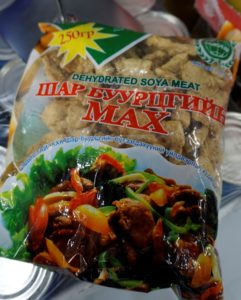
    • Basically, we looked for cheap and healthy (plus long-lasting and light when hitching/hiking). I often buy stuff that I’m completely unfamiliar with just because it seems to fit the category. For example, we randomly found a big bag of dehydrated soy meat for about 50 cents. It was perfect- very light, full of protein, quick to cook, could be added to almost any meal and it didn’t need to be refrigerated. We even soaked it in water one day, put it on a stick and BBQed it on a fire like chicken. Delicious!
    • We could have gone even cheaper if we wanted to, completely getting rid of anything unnecessary. Our bag of groceries sometimes included cookies or sweets, jams, juice, alcohol or spices. -None of that stuff was necessary and most of it is unhealthy but, what can I say, we had a lot of fun :D It’s up to you to figure out the right balance between funds, fun and necessities.

Accommodation:

$79

    • We paid for accommodation for 13 out of 30 nights. Accommodation ranged from 0 to 8 USD and included anything from camping to couchsurfing, to sleeping in family homes and yurts, in a train, Airbnb, hostels, motel-like yurts and cheap hotel rooms. You can see detailed examples in my previous blogs.

4WD Tour to the Gobi Desert:

$100

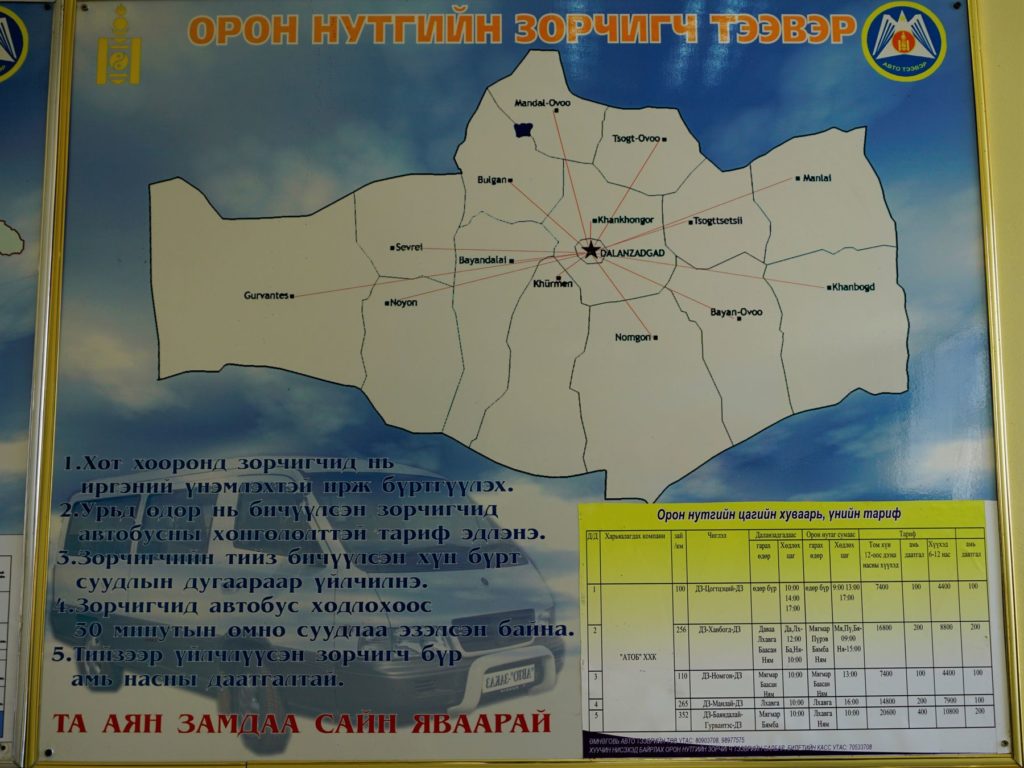
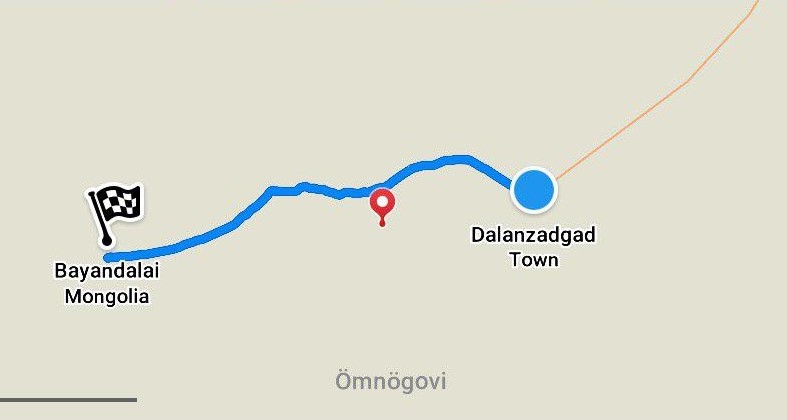
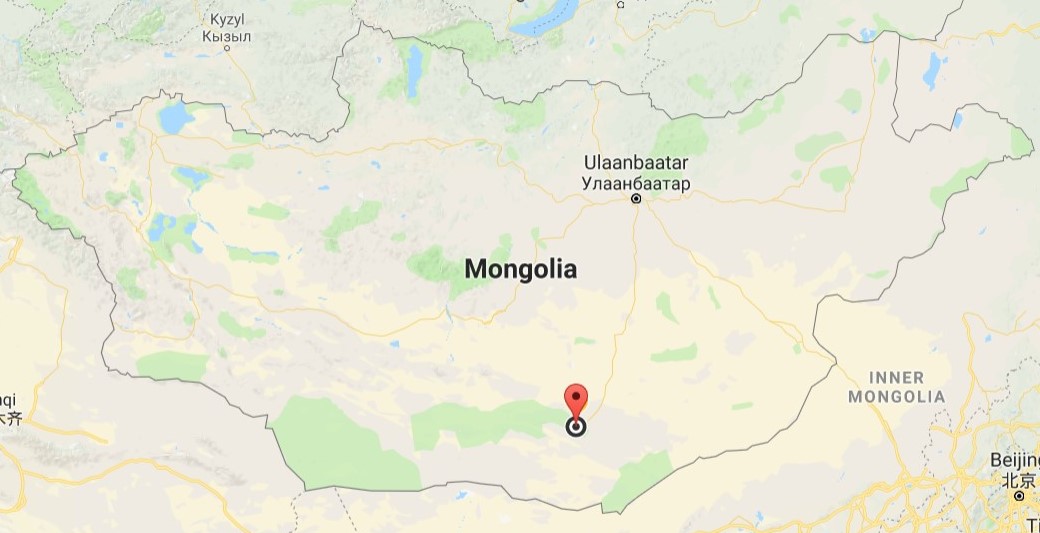
    • So we caved in and spent a third of our entire budget on a three day 4wd ride to the Khongor Sand Dunes in the Gobi Desert. It was worth it, but now that I know the situation better, I would prefer to try to hitch a lift to the dunes instead. I mentioned in this blog that we met a guy who managed to do that even in November. We also later found out that there are some buses that go further into the Gobi Desert to villages like Gurvantes, Servei, Noyon and Bulgan; so that could be another option for those who want to save some money and travel off the beaten path. I don’t have much information about those buses (besides the map below), but if you make it to the local Dalanzadgad bus station, I think you could figure it out ;).

Miscellaneous (shower, gas, souvenirs, speaker):

$22

    • There will always be some kind of extra stuff to buy. Here, again, it’s important to find that balance between funds, fun and necessities.

Total: $323

    • If we hadn’t paid for that Khongor Sand Dune tour, the total for the entire month would have been around $230.


Here are some of my favorite photos from the trip:

Day 26: White Stupa, Mongolia

Mongolia

Day 26: Our Mongolian adventure was coming to an end. My 30 day tourist visa was soon to expire so I had to get to the Russian-Mongolian border asap. I could have extended the visa in Ulaanbaatar, but I felt like I left too much unfinished business back in Irkutsk, Russia (where I was living). -Pay rent, finish proofreading my friend’s book on climate change, work on my blog, help out Syberia Top (the guys I hike with), TVP and TROM, if they needed anything. I also wanted to move out of my flat in Irkutsk and onto Olkhon Island on Lake Baikal to work on my book. So there was one part of me that wanted to drop everything and keep on adventuring- extend the visa or go further down to China with Felix, then Japan, Korea, wherever, but the other part of me was telling me that I should be a responsible adult :) and finish my unfinished business in Russia.

At this point, I still had $3,000 or so of savings left (from the last job I had, almost 2 years ago on Hawaii), and that was enough for me to live on Earth without a job for at least another 6 months, so my decisions about where to go or what to do were based purely on what I wanted to do, not on what would make money.

So, we planned two hitchhiking days to get from Dalanzadgad to Ulaanbaatar, which is about a 600km drive. We got so confident hitchhiking through Mongolia that we didn’t even get out onto the road until about 2pm, even though it got dark at about 6pm. We had flashlights and winter camping gear with us, so starting so late was not as stupid as it sounds… maybe just lazy :)
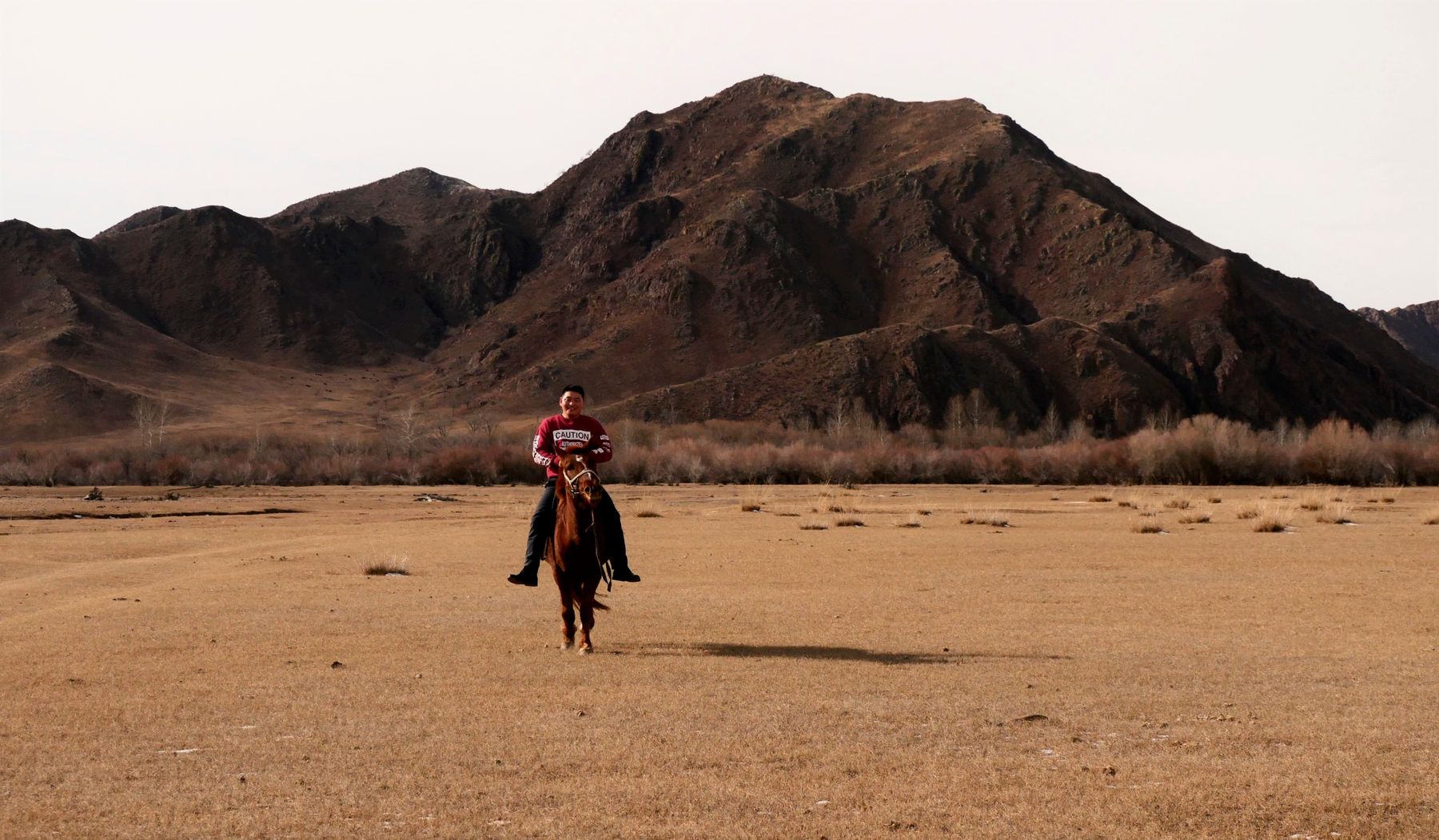
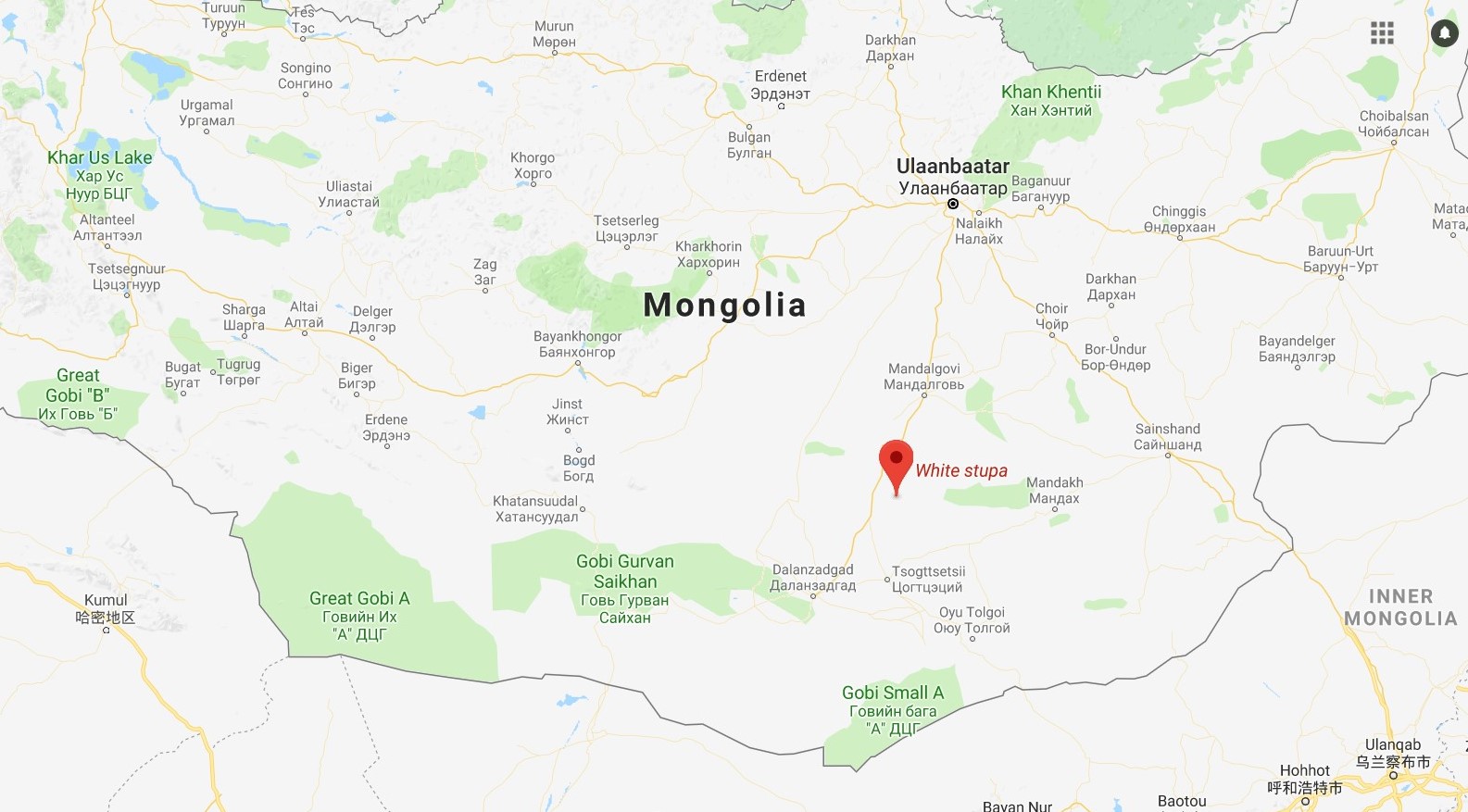
The first car that drove by stopped and offered us a lift. It was a couple from Ulaanbaatar who knew a tiny bit of English. They told us that they were heading to Mandalgovi, which is halfway between Dalanzadgad and Ulaanbaatar (basically, exactly where we wanted to go), but they were also planning to see a place called “White Stupa” on the way. They asked if we wanted to join them. As always, we had no idea what this place was or where it was located, but we were excited about another unexpected adventure, so we said yes.

After about an hour drive on the main road, we turned onto a dirt road going east. We drove for about an hour and a half before it was clear that we were lost. The couple had never been to White Stupa before and it was really difficult to navigate around these dirt roads. Every road looked exactly the same and, of course, there were no markers. Just imagine a massive field/desert- nothing but small grass and shrubs, and random dirt roads heading in every direction. Eventually, we ran into a yurt and another vehicle that helped us out with directions. After about 3 hours of driving, we finally found it-

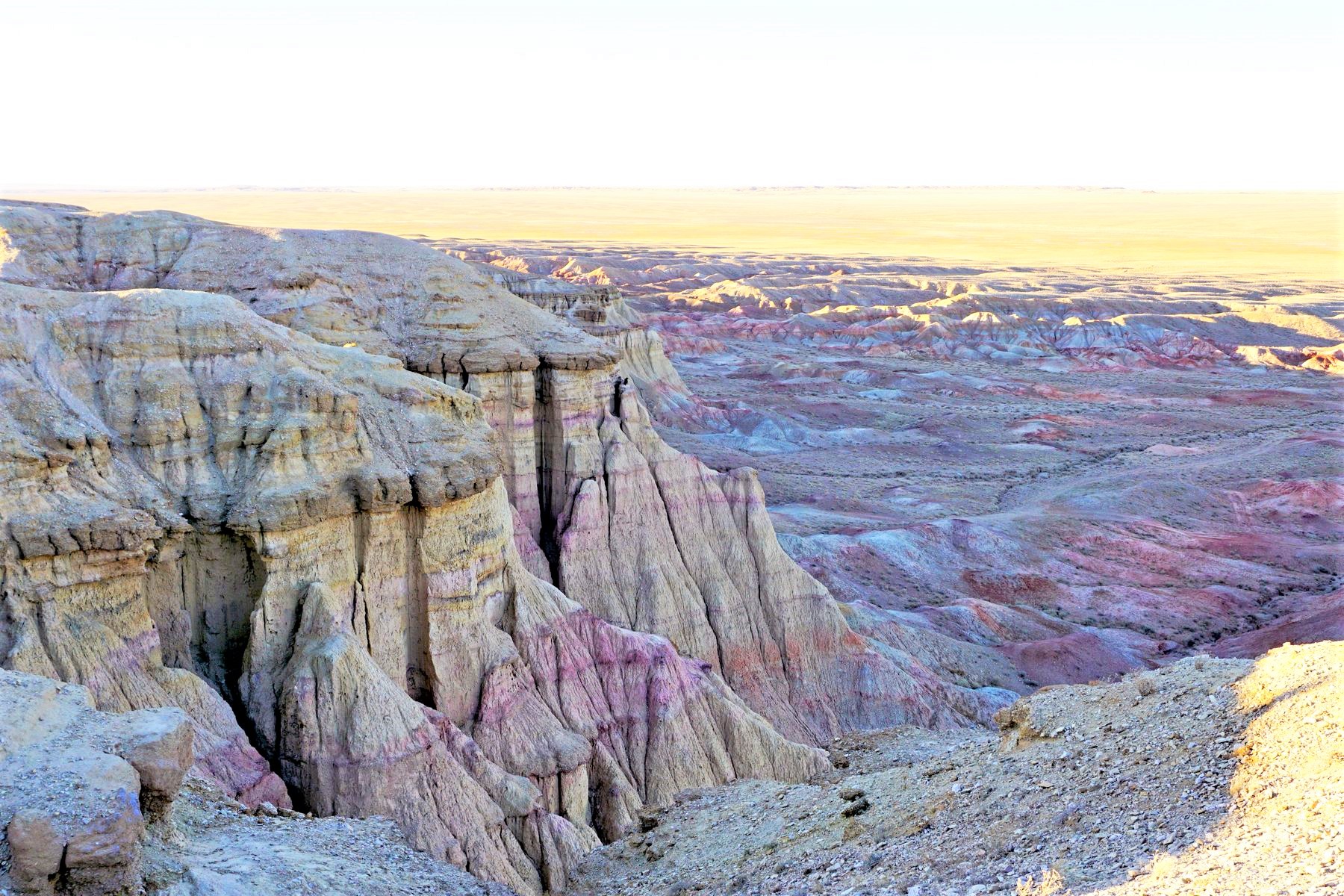
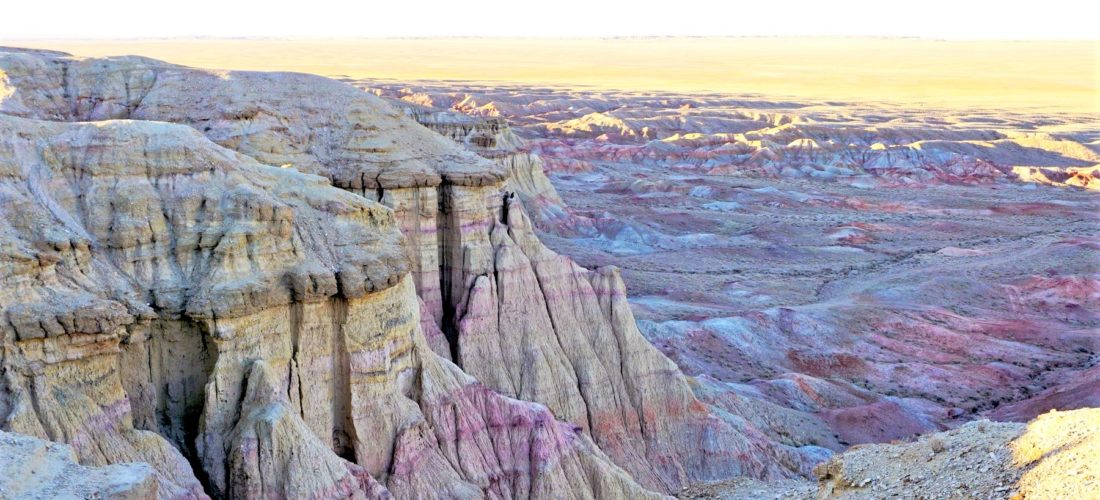
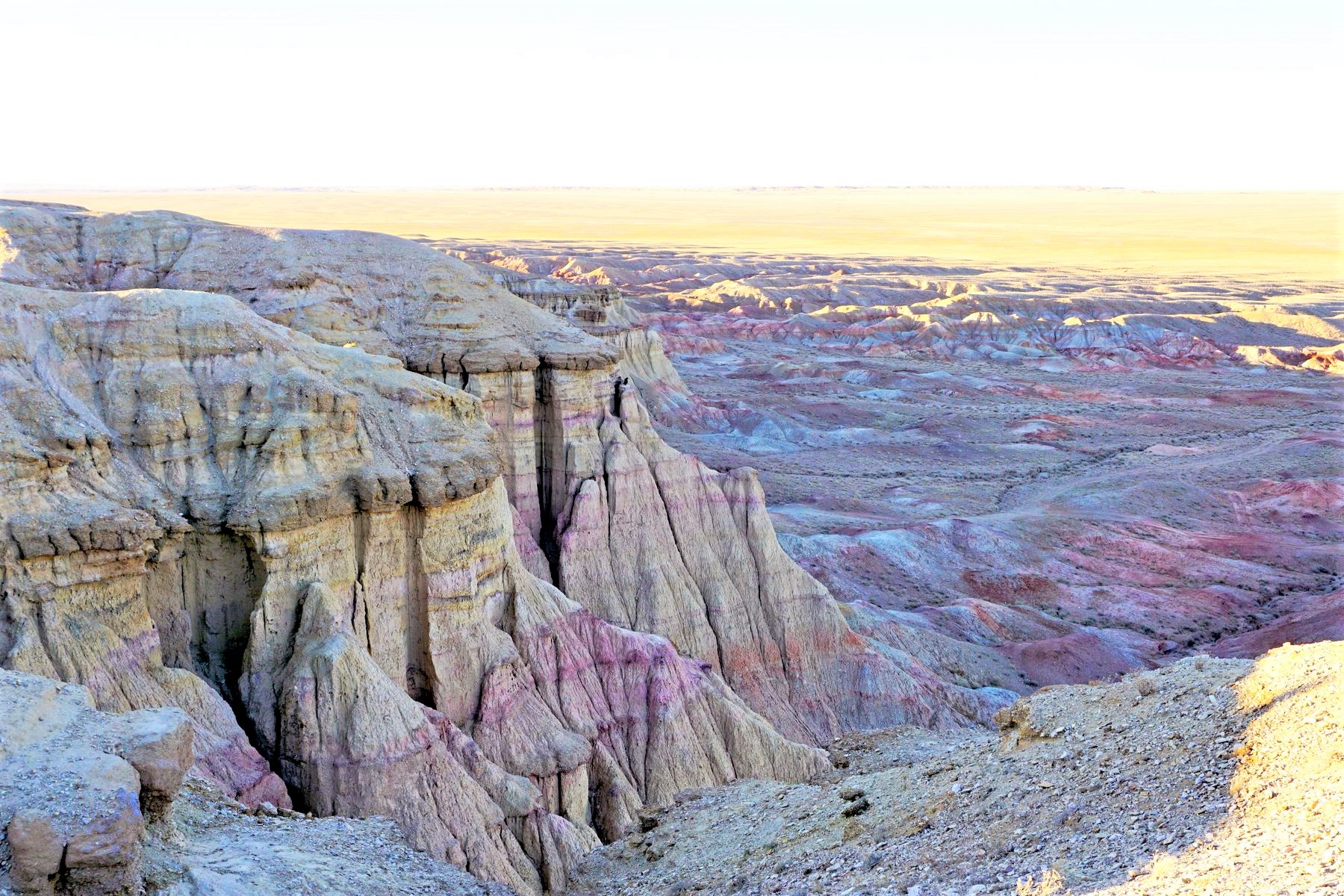
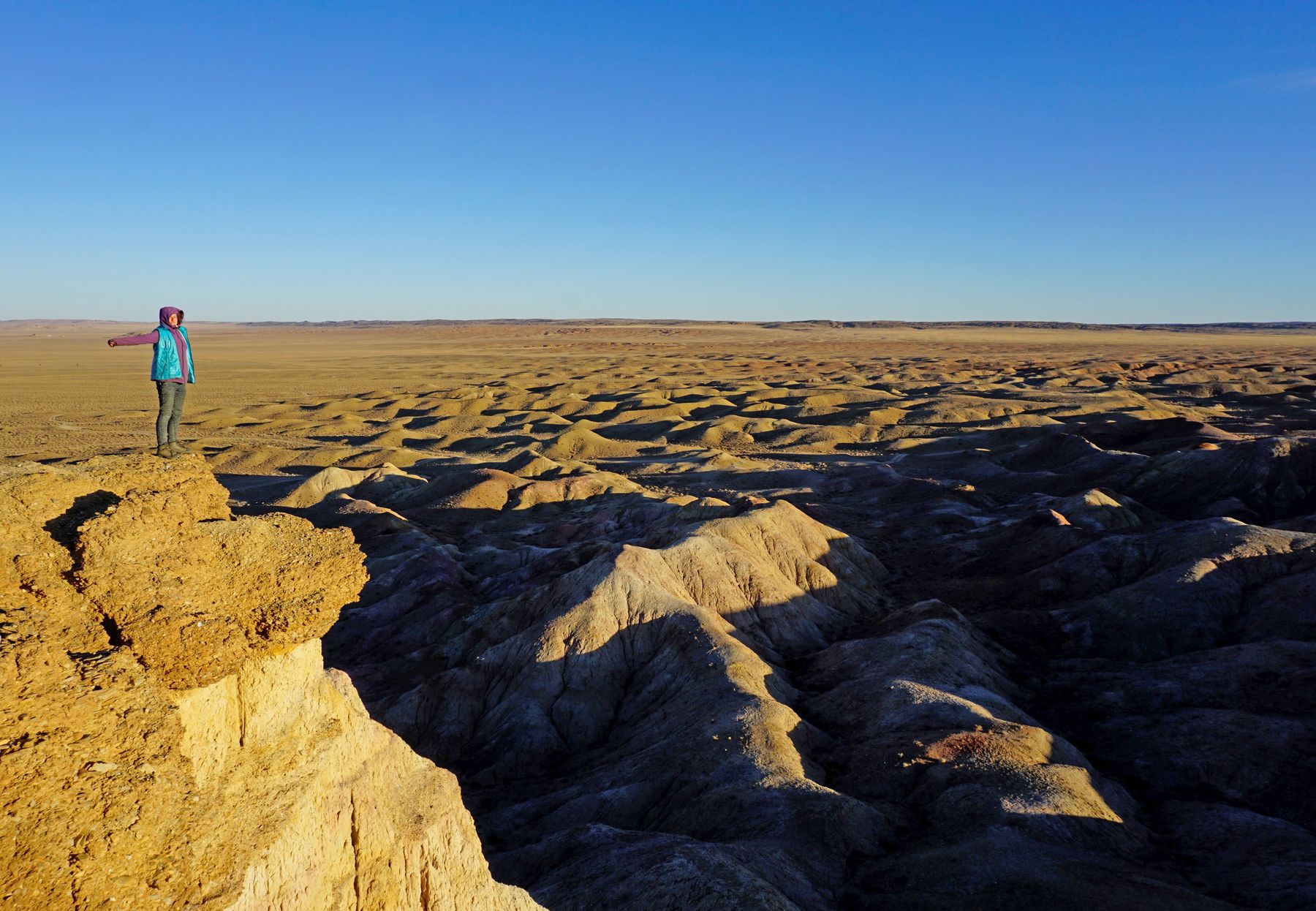
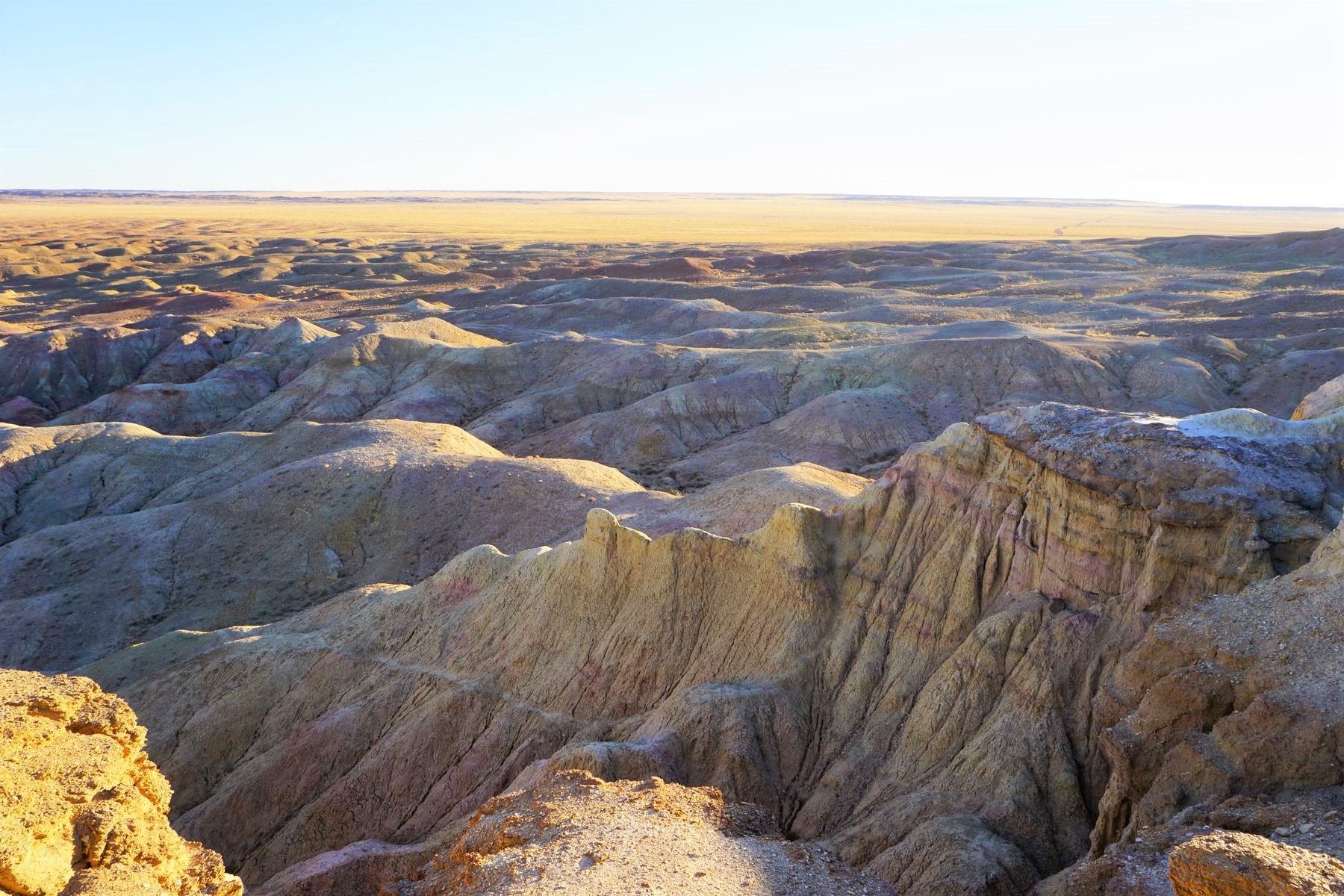
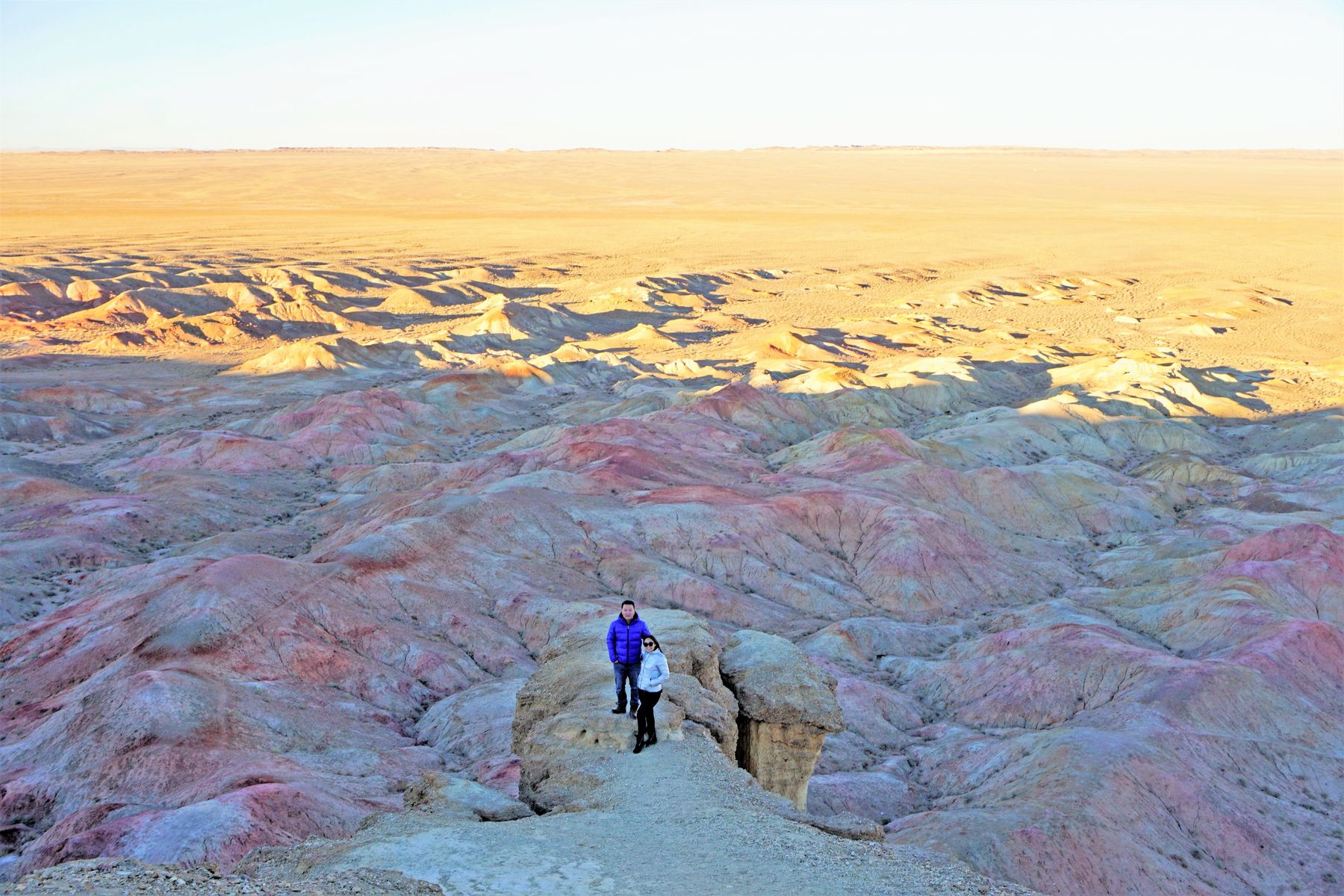
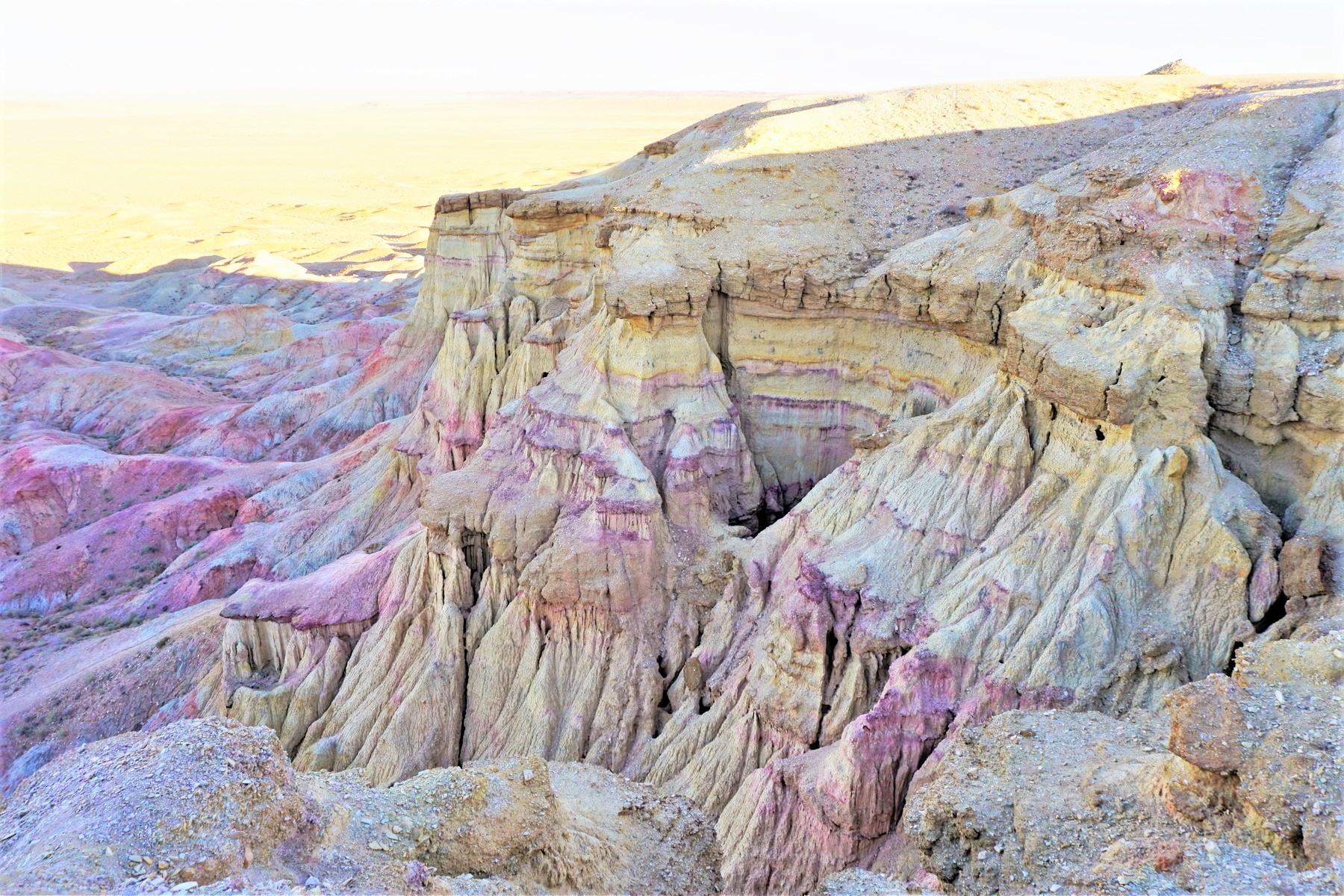
It was a pretty cool looking place. Not exactly white, more tan, pink and purple. But very interesting sedimentary rock formations clearly caused by water and weather erosion. The couple didn’t speak enough English to tell us about this place, but we assumed that this was another sacred place for the locals since there was an ovoo (shrine) there.

Later on, I found out that White Stupa is also known as Tsagaan Suvraga; it used to be a big sea and it is common to find sea fossils and shells in the area. The rock formations are millions of years old, 60 meters tall and 400 meters long. When it rains heavily, the rock walls look like a giant waterfall. There are also 2 caves nearby, called Khevtee and Bosoo agui (Lie and Stand Cave), where there are many bats.

Unfortunately, we didn’t get to see these caves on our free hitchhiking tour :) But we did get lunch! This couple even shared a meal and salty milk tea with us. They had fire-roasted marmot for lunch, which was quite fatty but delicious.

If you want to find White Stupa on your own, you can try following a GPS.

Don’t forget to bring lots of extra water and gas in case you get lost on these roads.
*If you ever do get lost or stranded driving around any desert, a word of advice I can give you is don’t leave your car. Don’t forget, it’s easy for a helicopter to spot a stranded car, not so easy to spot a little person. And always carry water!


After lunch, we drove back to the paved road and up towards Mandalgovi.

It got dark while we were in the car and we didn’t know where we would sleep that night. We didn’t want to go directly into Mandalgovi because we wanted to camp for the last time and we didn’t want to wander around a city in the dark. So we asked the couple to stop the car on the side of the road, in the middle of nowhere, before reaching Mandalgovi. They were a bit confused about this, but we tried to explain that we were camping. I’m not sure they really understood, but we just laughed and told them we would be alright.

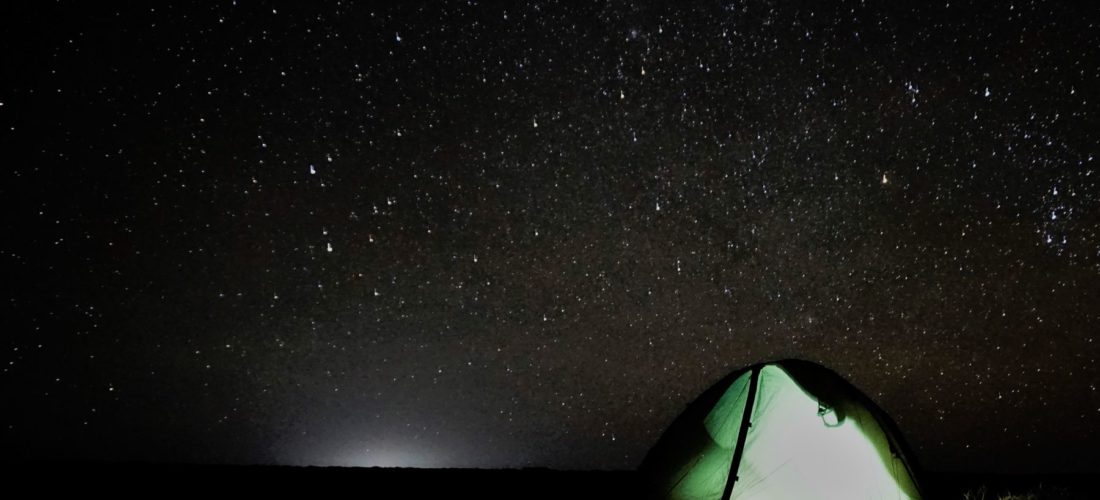
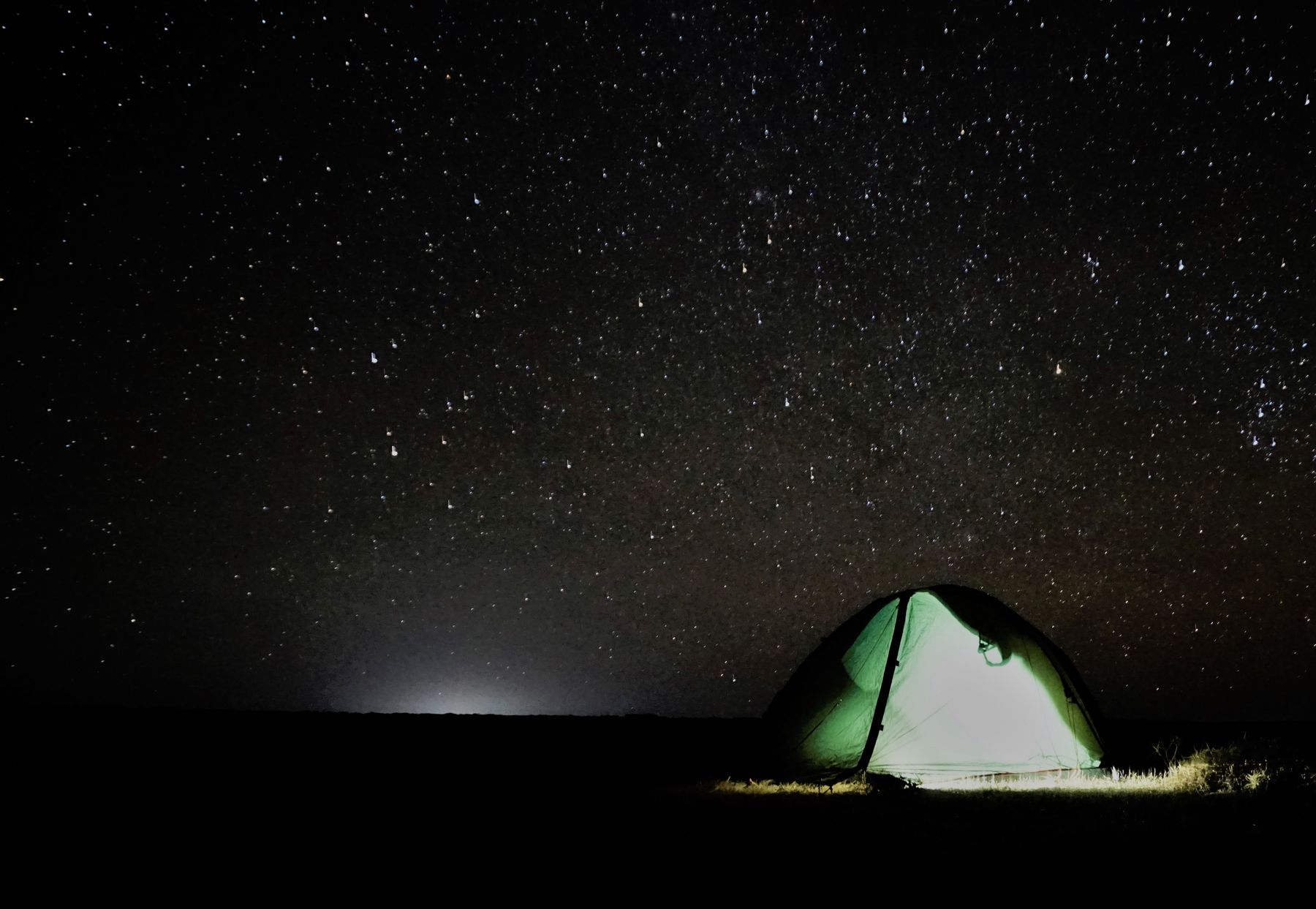
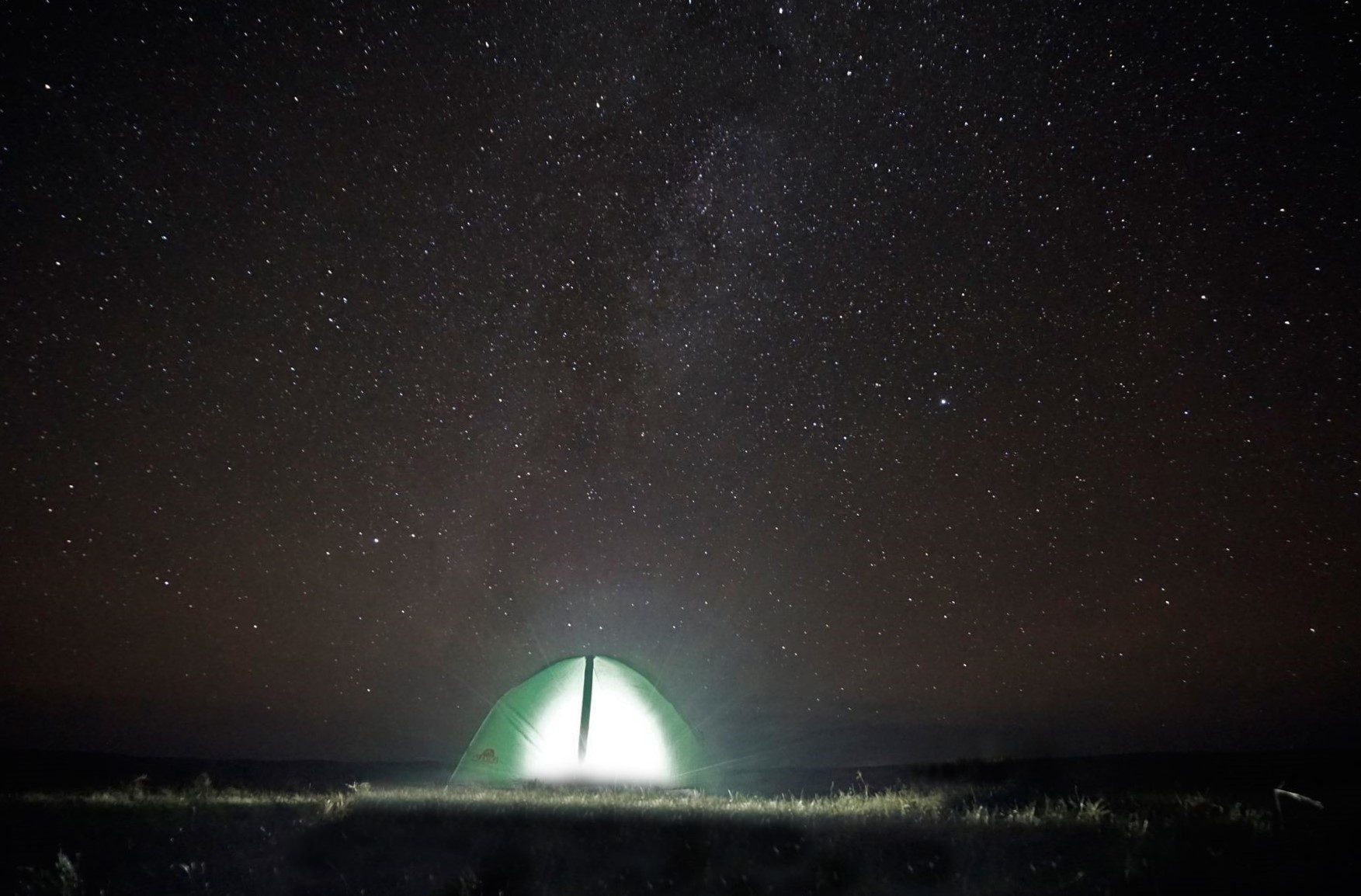
We walked off the road, about a kilometer into the desert and found a perfect flat spot for our tent. Pitched it, cooked dinner, admired the stars.

Total expenses of day 26:

$4- speaker (this was a long story that I won’t get into, but I had to pay $4 to get my own portable speaker back because I forgot it in a yurt in the desert).

$0.50- dehydrated soy meat (great camping product).

=$4.50


Total expenses so far of 26 days in Mongolia (including the price of getting to Mongolia):
$292

Day 25: Mukhar Shivert Canyon

Mongolia

The wind picked up and wrestled up the tent all night again, but in the morning, we woke up to this-

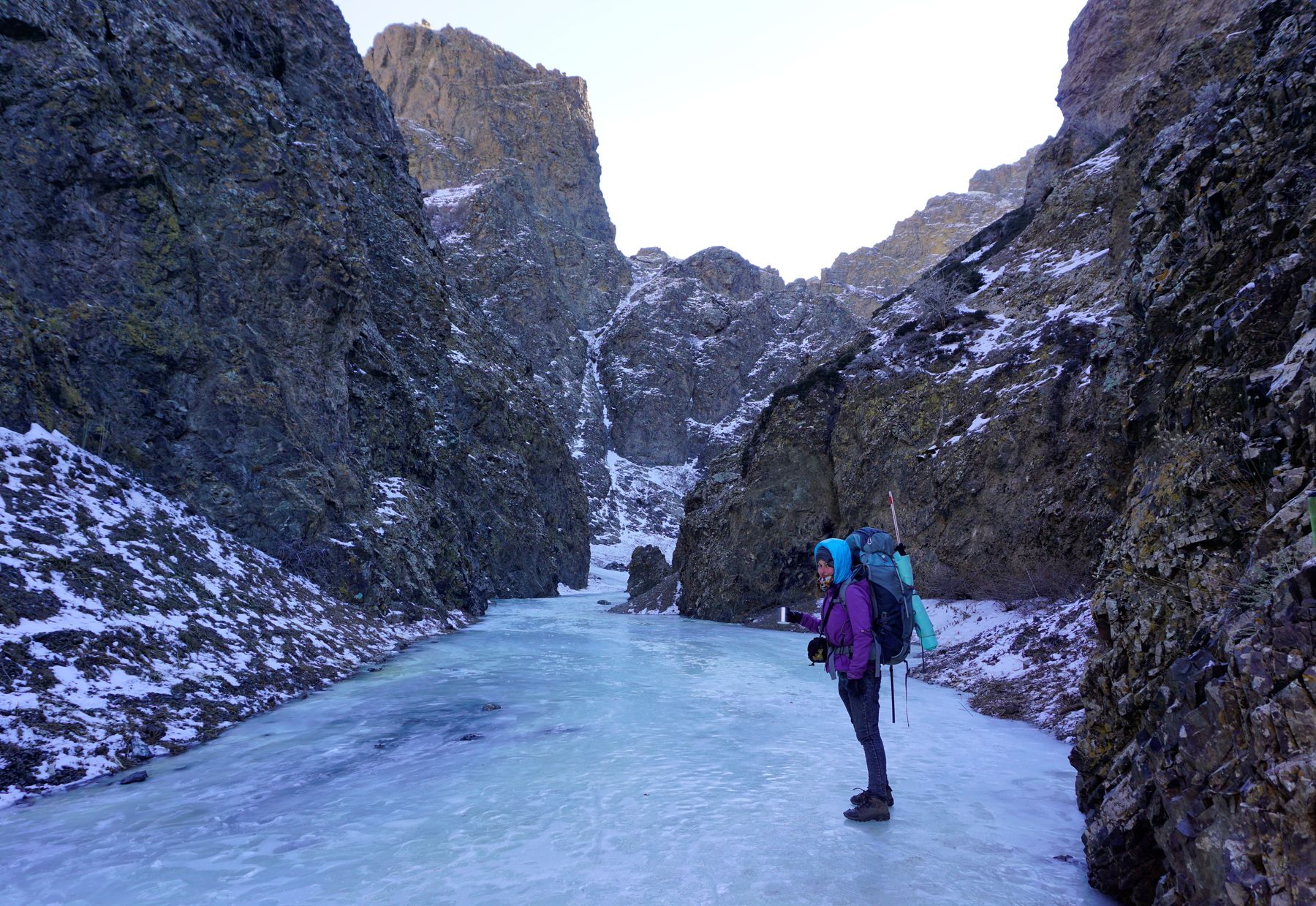
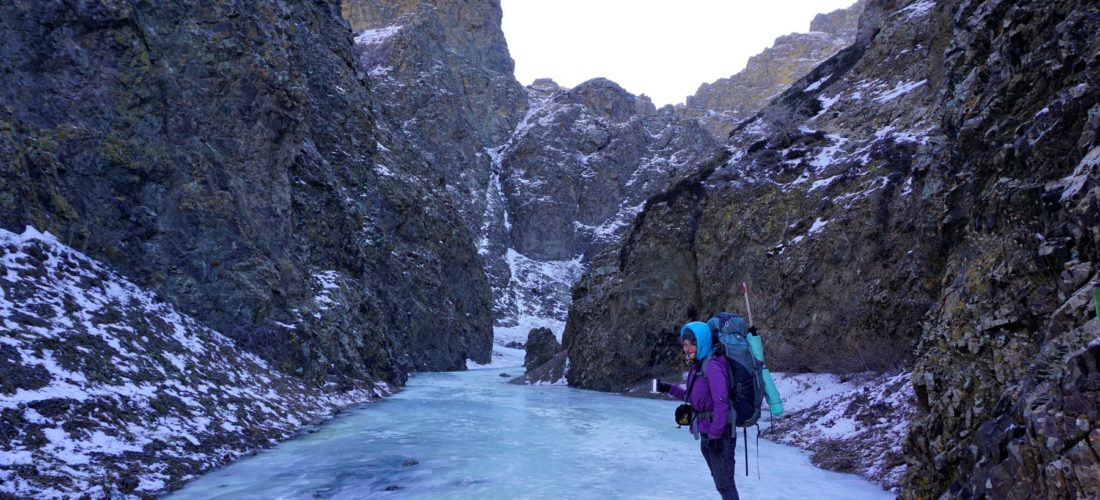
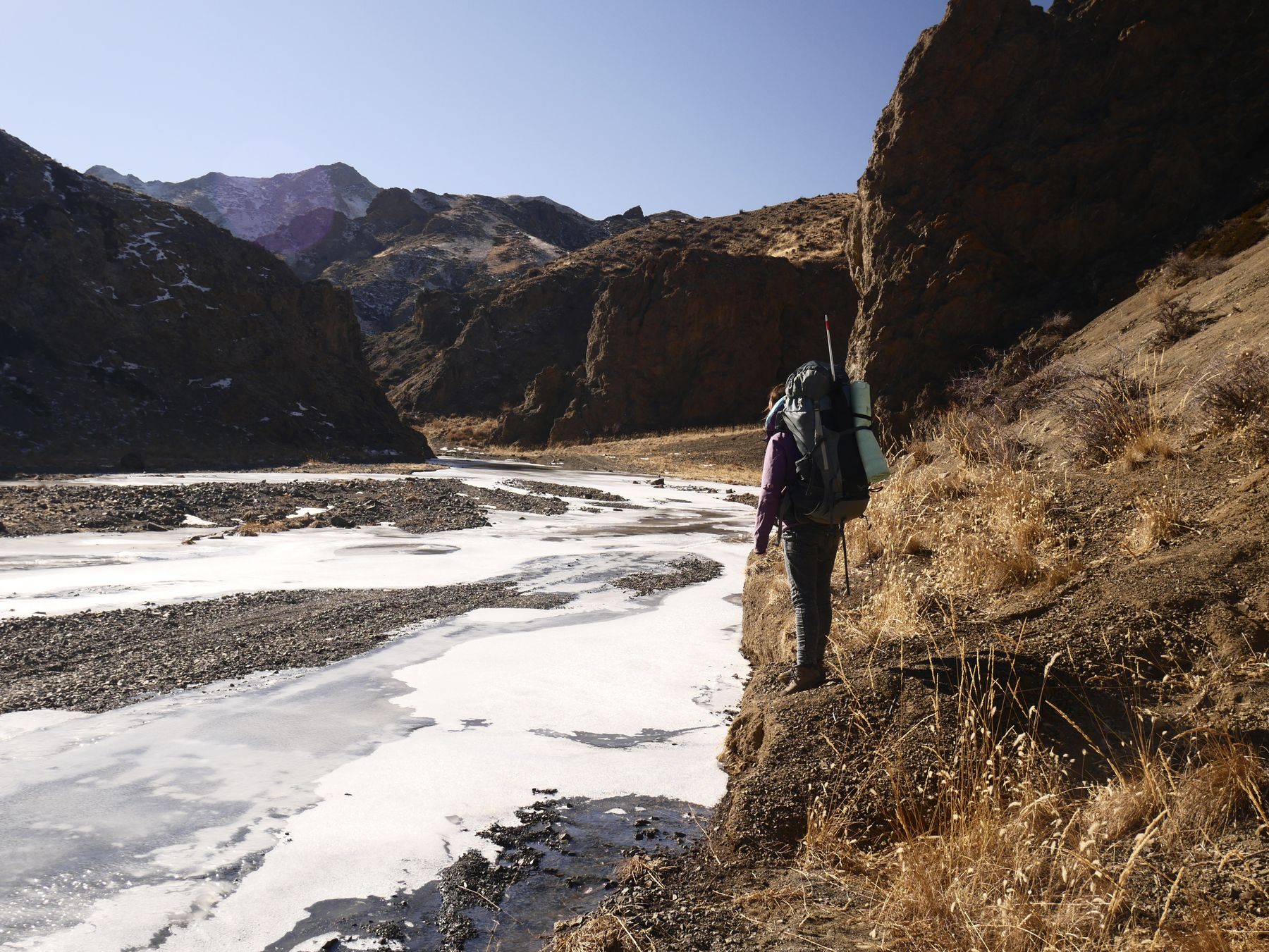
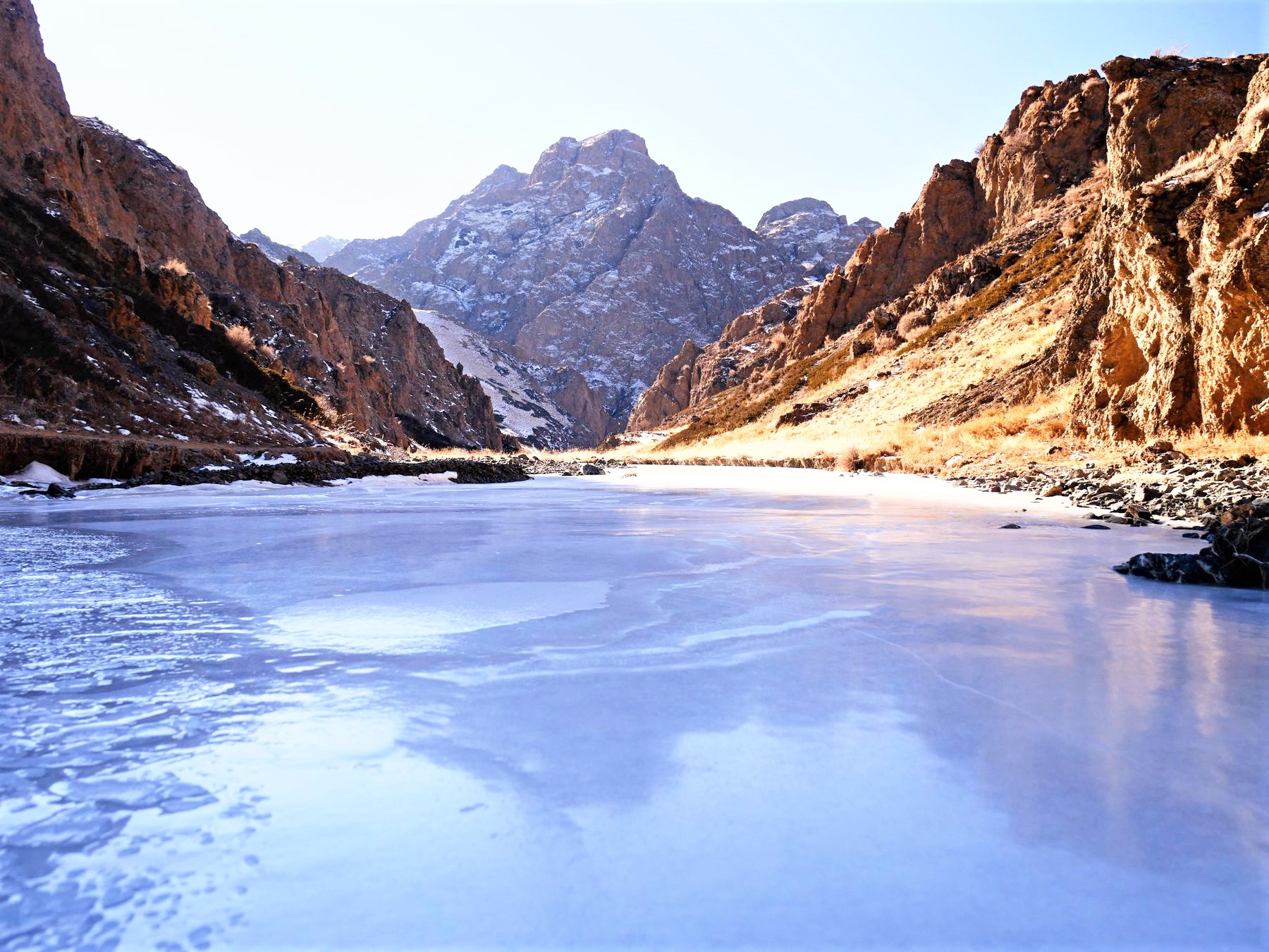
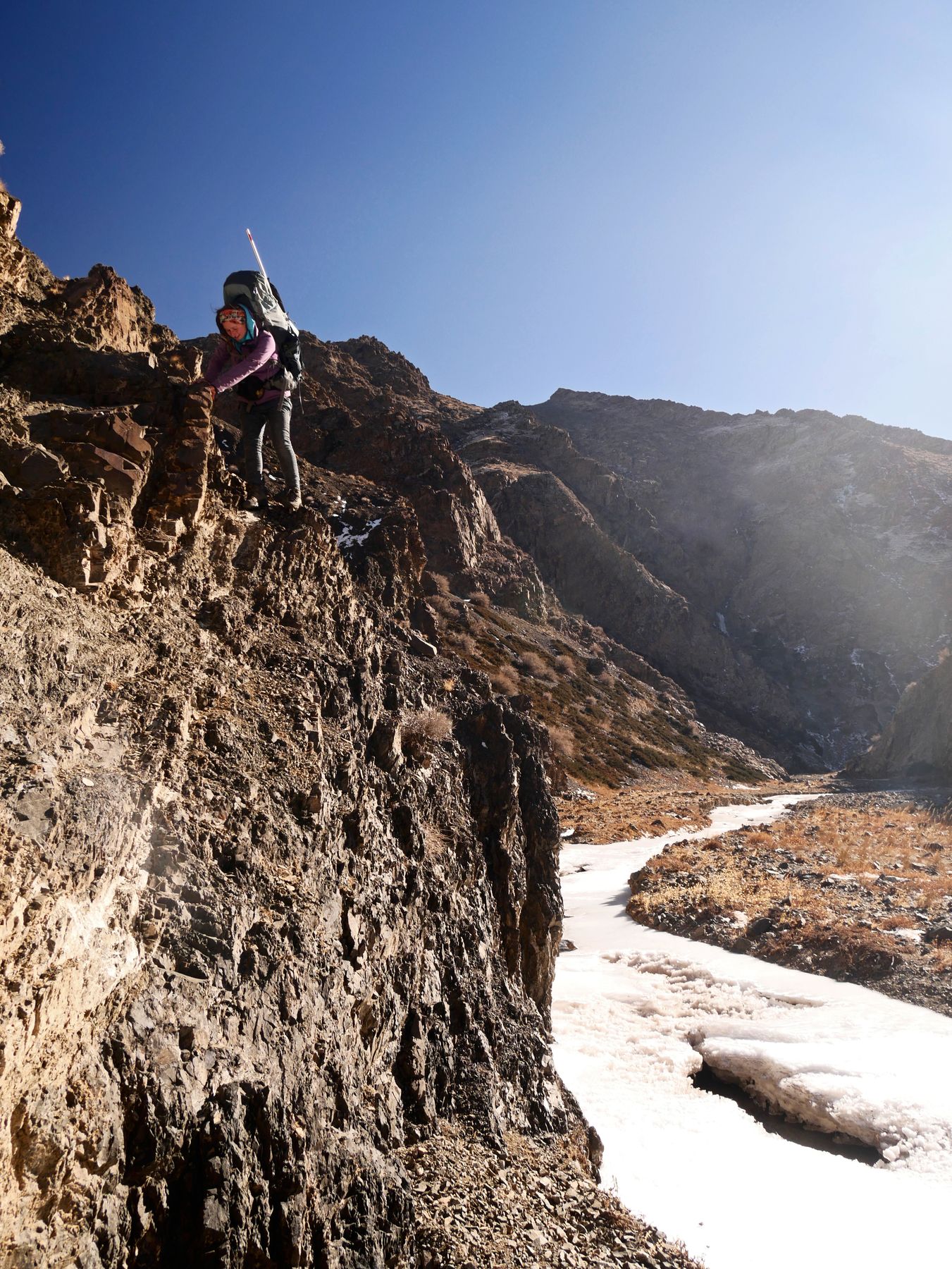
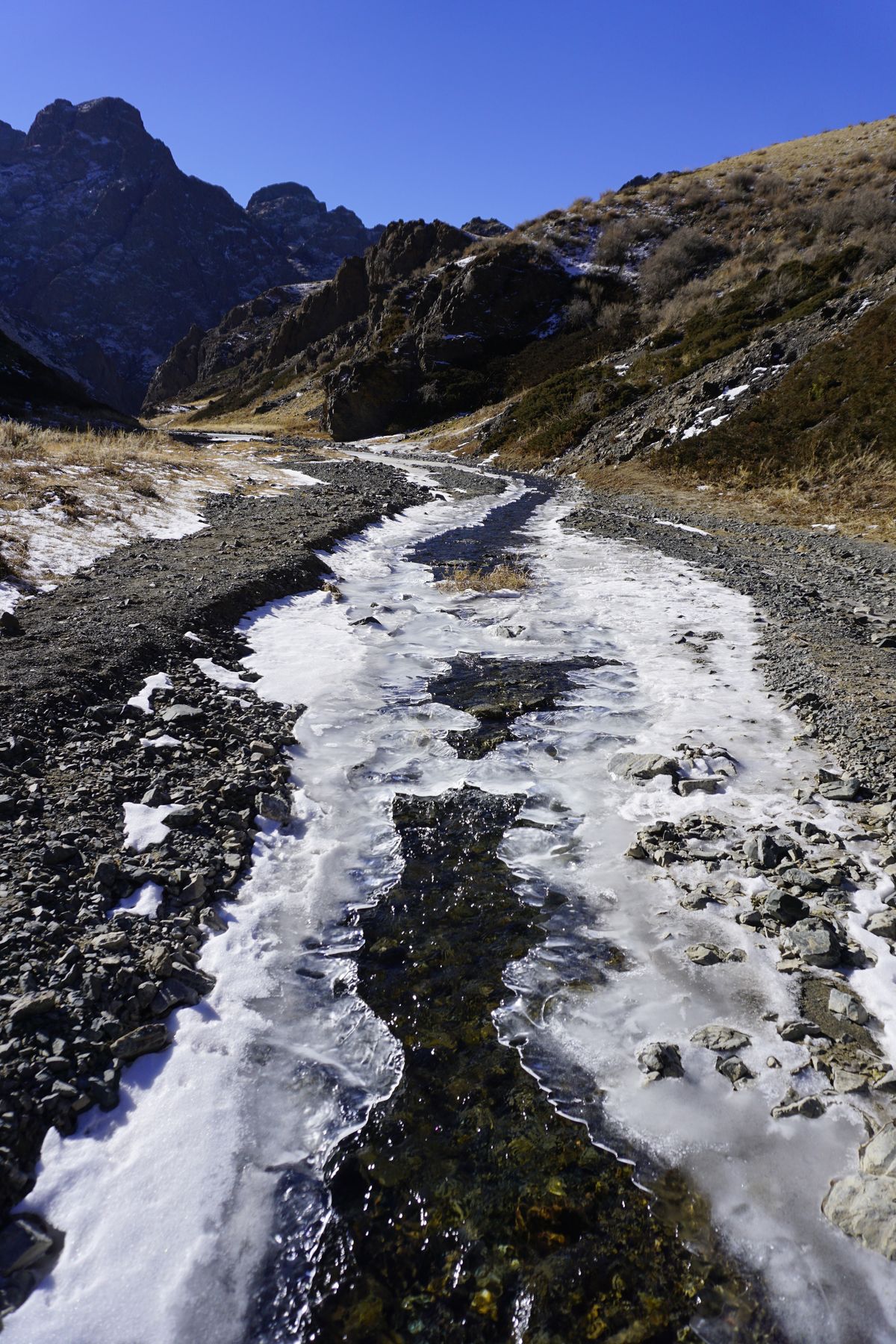
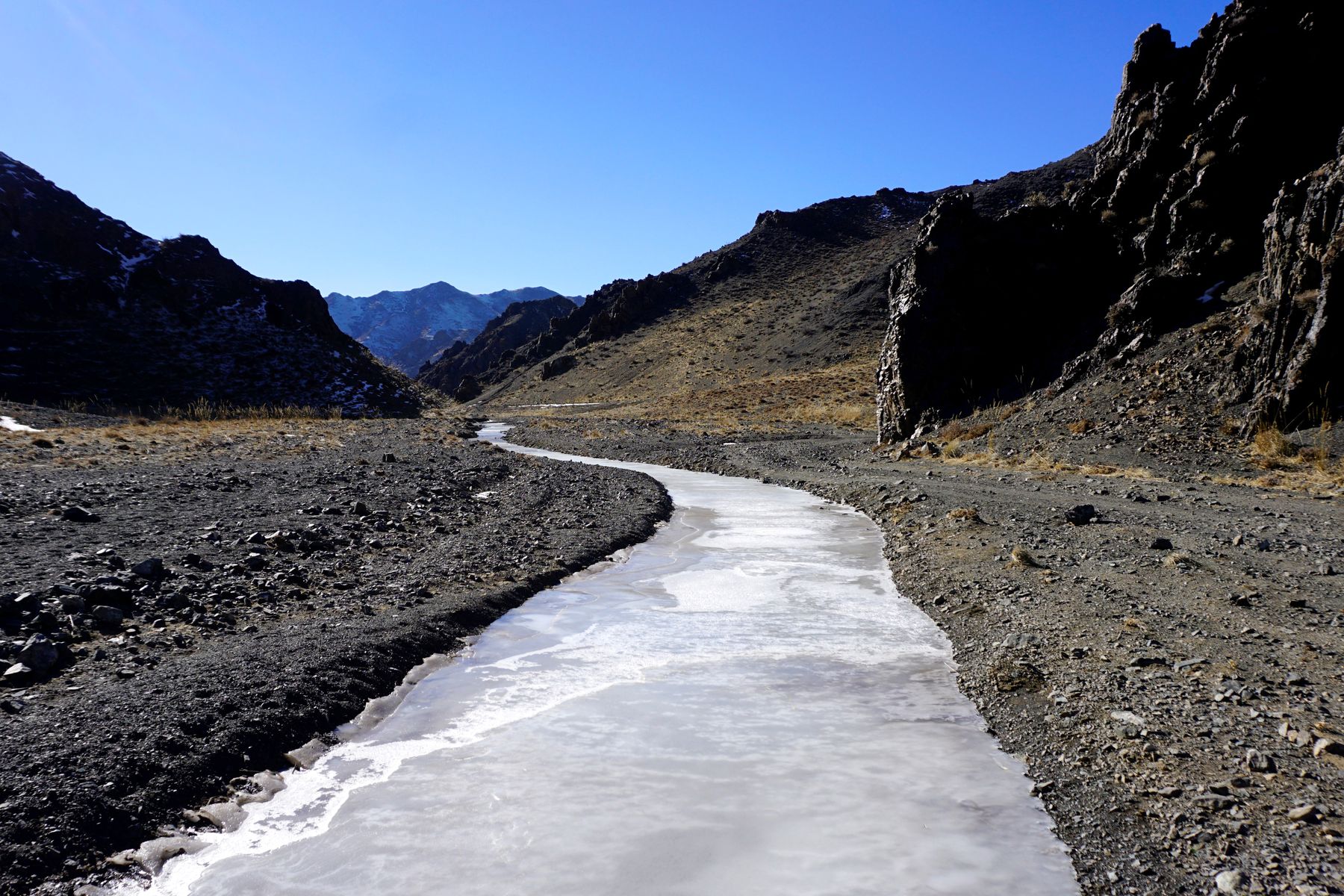
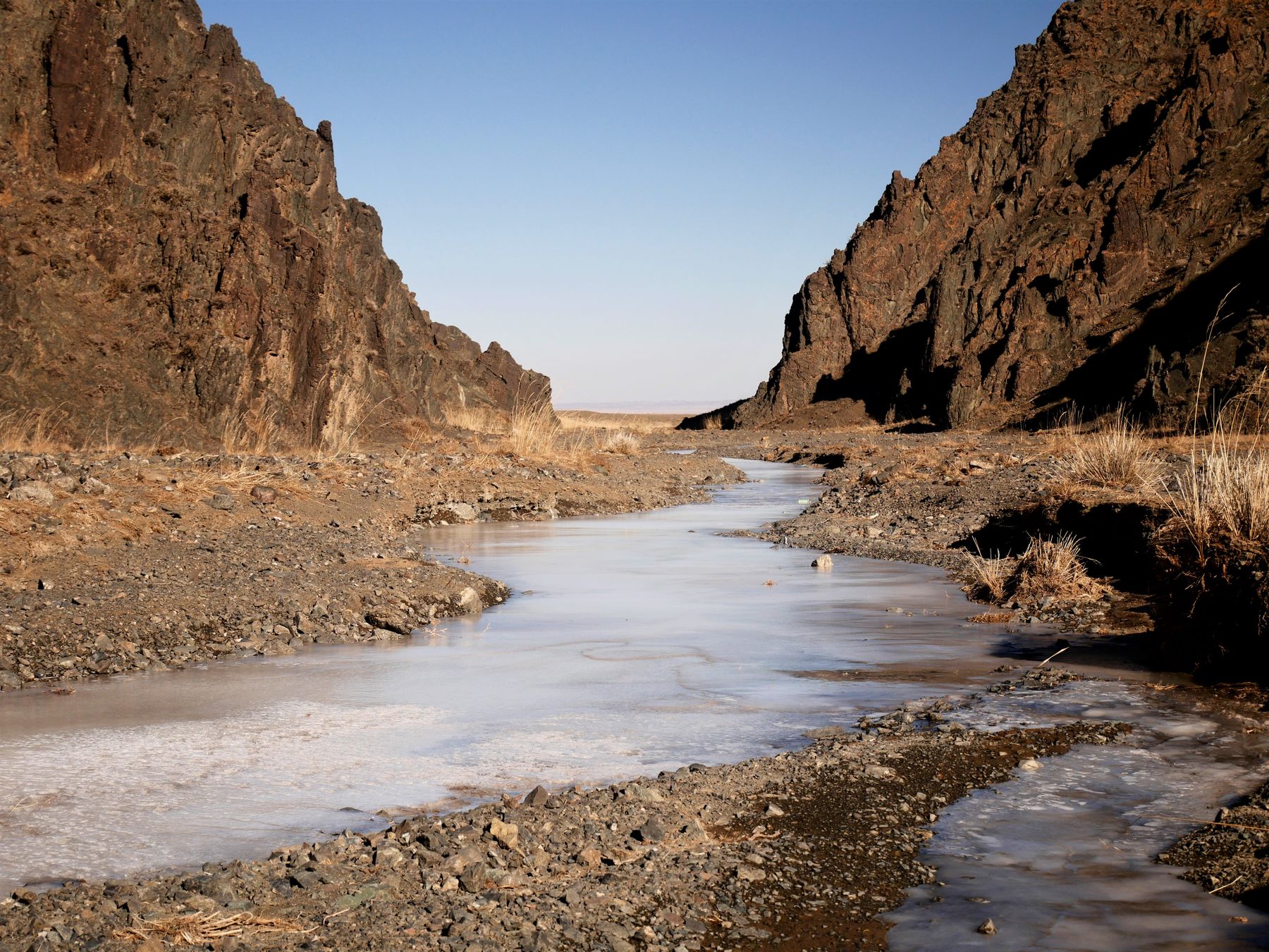
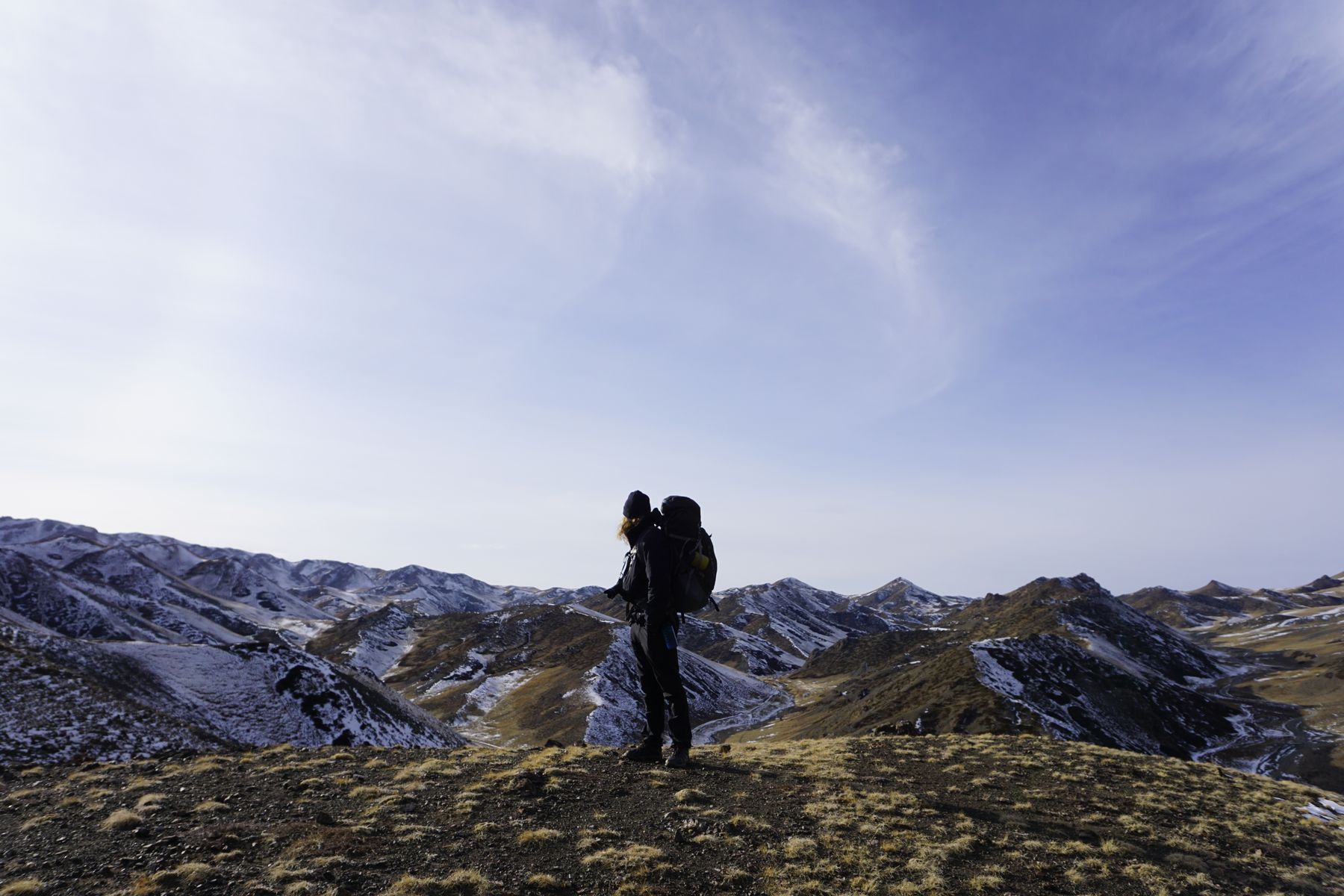
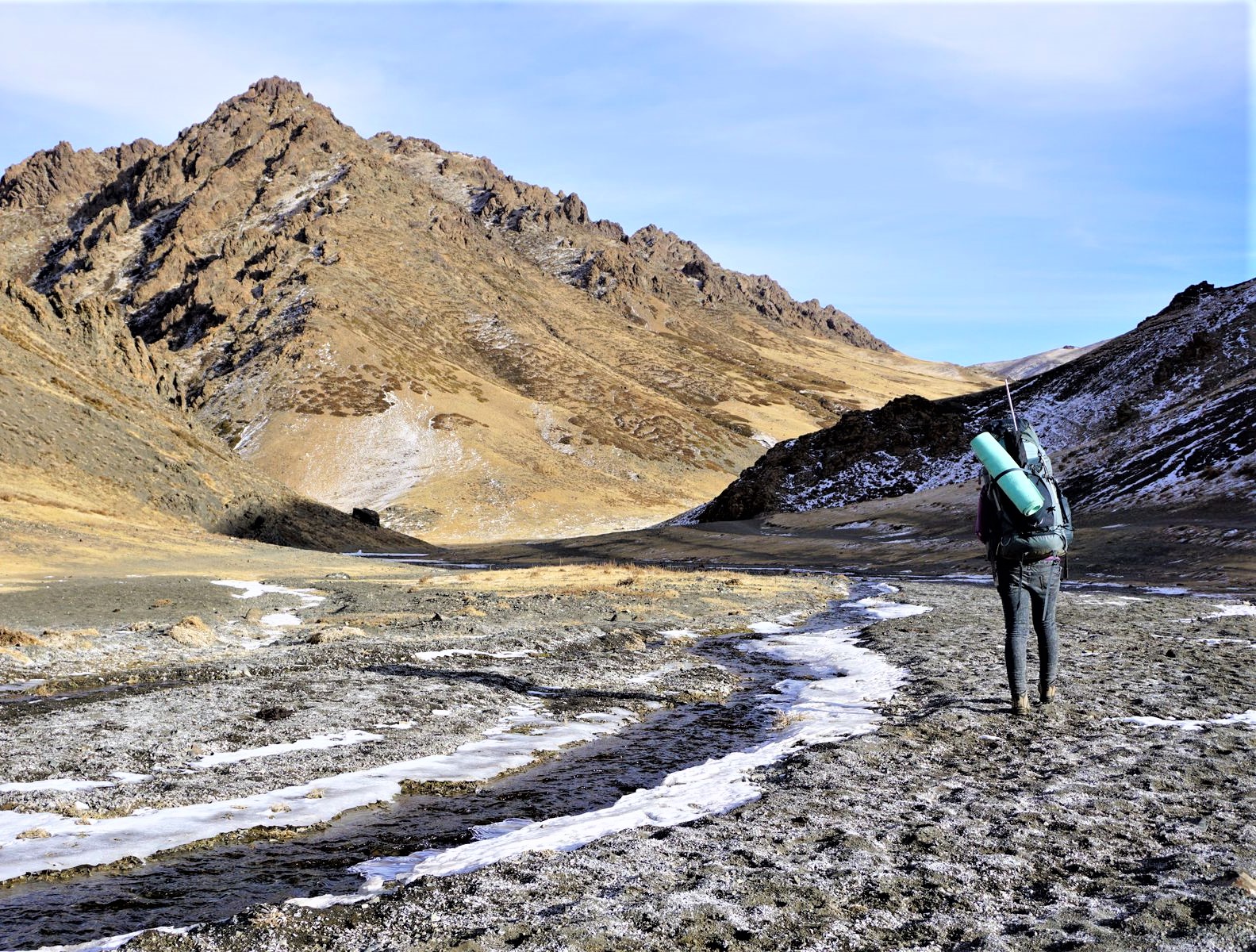
We cooked hot breakfast and got ready to hike through the rest of the canyon. It was a fantastic hike- more ice fields, streams and rocky walls. We spotted a wild ibex and some beautiful birds. The entire hike through the Yolin Am Canyon would be quite safe in a dry summer period or mid-winter, but in November there were a few places where we had to walk over precariously thin ice and climb some small rock walls to avoid exposed rivers.

We hiked 4-5 km through the canyon before we reached a dirt road that lead to an extremely windy valley. The wind was so strong that we could barely hear each other speak. According to the map, we needed to walk another 10km or so down this road to reach the main road that went back to Dalanzadgad. Lucky for us, there were a couple of cars in this valley and one of them stopped to give us a lift.

It was another family. They didn’t speak much English, but after about a 20 minute drive, we understood that they weren’t going back to the main road, but to another canyon.
“Cool!”, we thought, “another extra cherry on the pie” :)

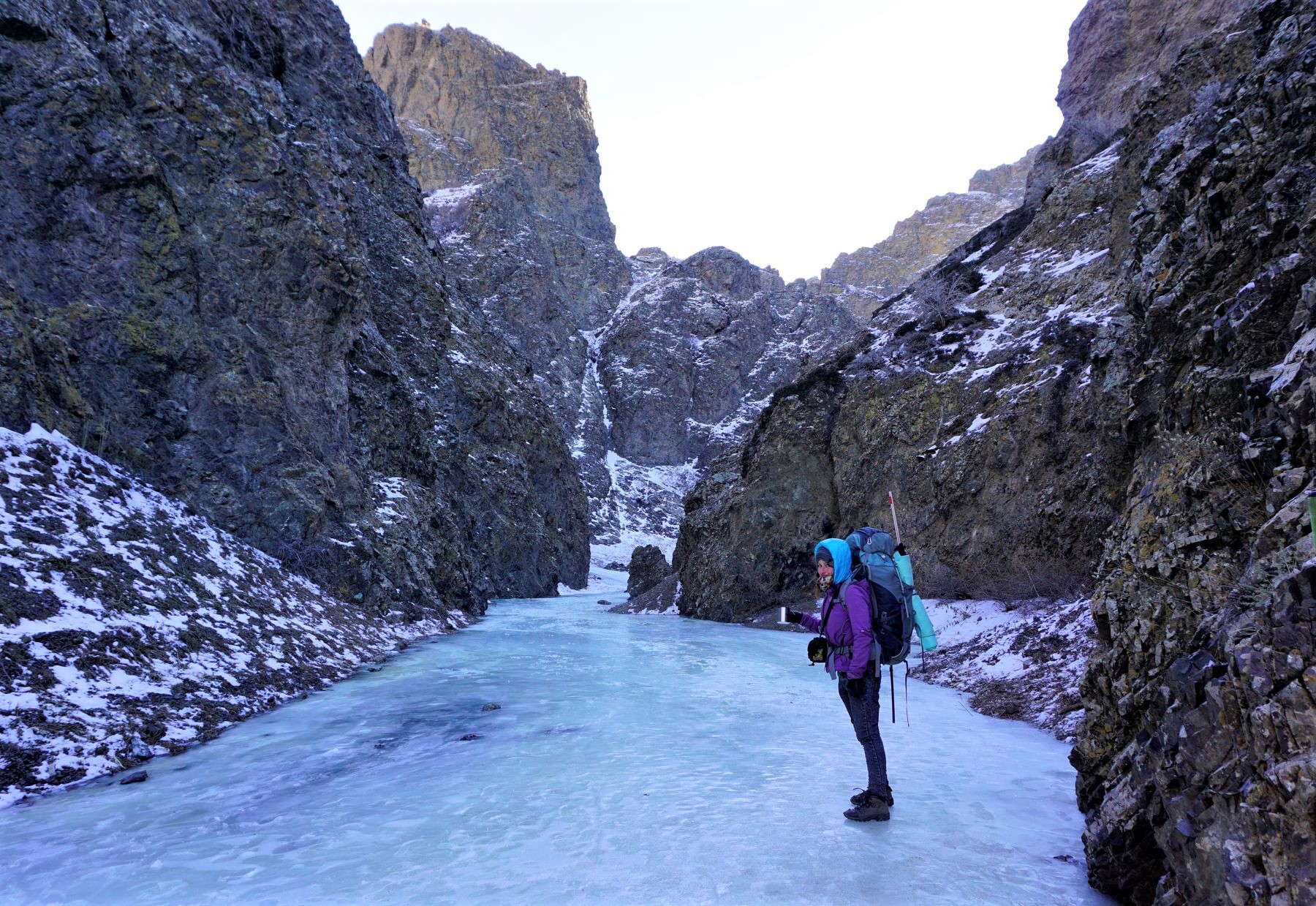
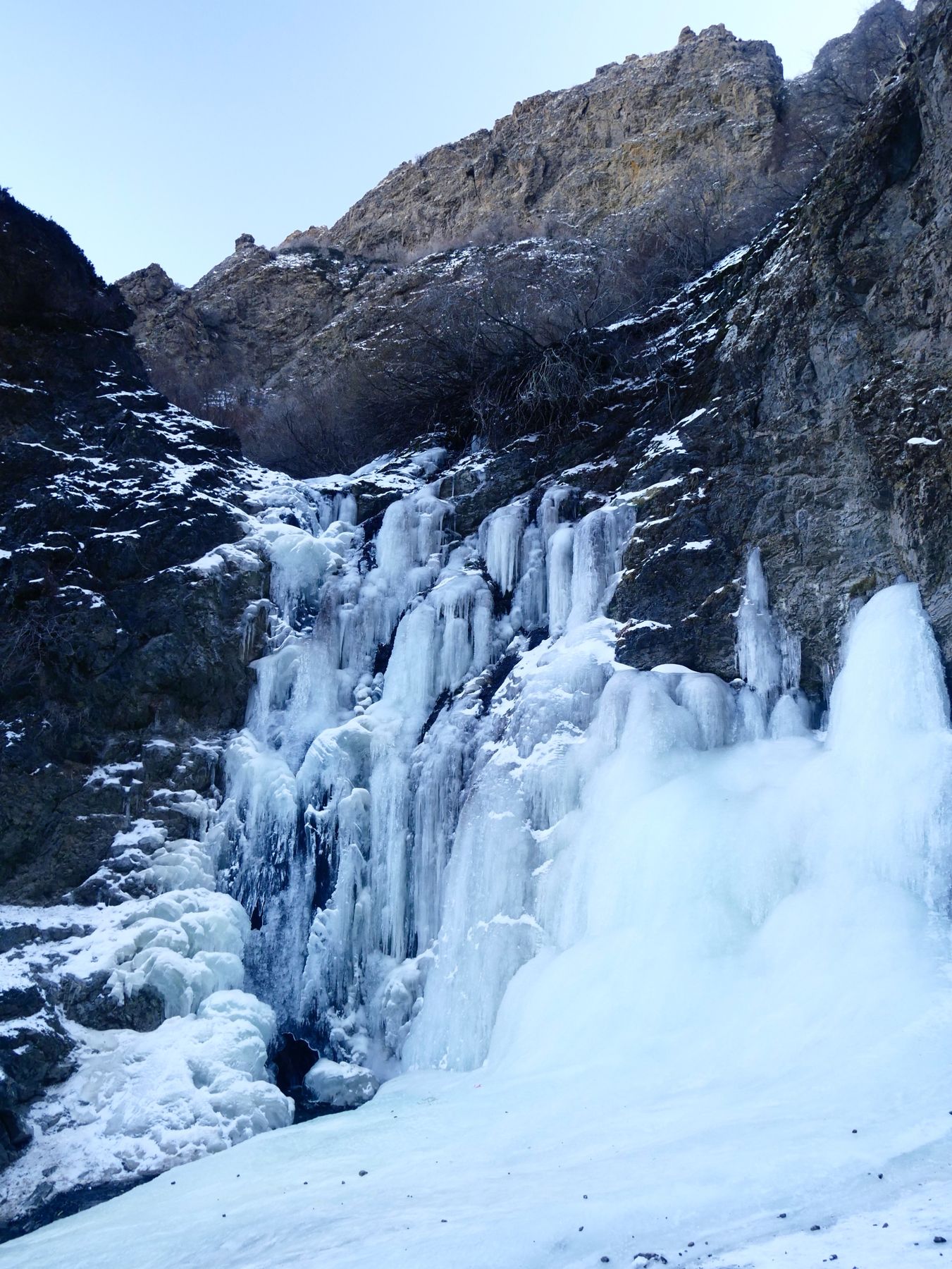
This other canyon was called “Mukhar Shivert”, it was much smaller than Yolin Am and had a dead end, but was a spectacular sight as well. It was like a big trench with tall vertical walls and a floorbed of slick, glassy blue ice. At the dead end, there was a big frozen waterfall.

We hadn’t heard about this canyon until we got there, and we probably wouldn’t have found out about it if we didn’t randomly hitchhike to it. I couldn’t even find it on any map. But if you want to check it out, it’s not that hard to find-

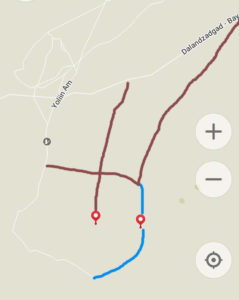
If you zoom into mapsme (which works offline), you can see the Yolin Am Canyon Trail from the end of the Yolin Am road (where the parking lot is). Follow that trail from the Yolin Am parking lot all the way through the canyon. After about 12 km, you will walk out of the canyon and onto a dirt road in a big open valley. There will be a fork in the road. You will need to make a left (going west), towards the Yolin Am road. When you reach another fork in the road, take it south to the dead end. At that dead end you will find a parking lot and a clear trail into the Mukhar Shivert Canyon. It seems that locals come here a lot on the weekends, so you probably won’t be alone.

Or, of course, you can go the other way around if you don’t want to go through the whole Yolin Am Trail. Just make sure you have some kind of GPS or compass so you don’t get lost on the dirt roads.

On this map, Mukhar Shivert is the marker to the left. The right marker is the Yolin Am Canyon. I’ve marked the Yolin Am trail in blue and the dirt roads in brown.
*There are more dirt roads than that and this map is not 100% accurate.

It took us about an hour and a half to walk through Mukhar Shivert Canyon, make lunch, and then get back out onto the dirt road again. There were plenty of families in Mukhar Shivert, so it wasn’t hard to hitch another lift back to Dalanzadgad. The first car on the road stopped and drove us all the way there :)

We spent one more night in Baatar’s yurt ($4) and got ready to hitch back to Ulaanbaatar the next day.

Total expenses of day 25:
$4 yurt
$2 food
$1 shower
$7.50 handmade local artwork (for my parents)
=$14.50

Total expenses so far of 25 days in Mongolia (including the price of getting to Mongolia):
$287.50

*Some photos taken by Felix

Day 24: Yolin Am Canyon

Mongolia

Day 24: We bought two big bottles of water ($1) and hit the road from Dalanzadgad to the Yolin Am Canyon. The canyon is located just south of the road that runs between Dalanzadgad and Bayandalai, and since we now knew that that road was paved and had plenty of traffic on it, we assumed that hitching to the canyon wouldn’t be too difficult. We had our winter camping gear and enough food and water for several more days, just in case we got stuck.

We had our thumbs out on the main road by about 1pm. A couple of cars stopped and were confused about what we were doing. They offered us a lift for a large sum of money. We declined the offer and kept on hitching. About 10 minutes later, we got the perfect lift- a local family was driving all the way to the canyon and offered us a free ride! We squeezed in the back seat with two little kids.

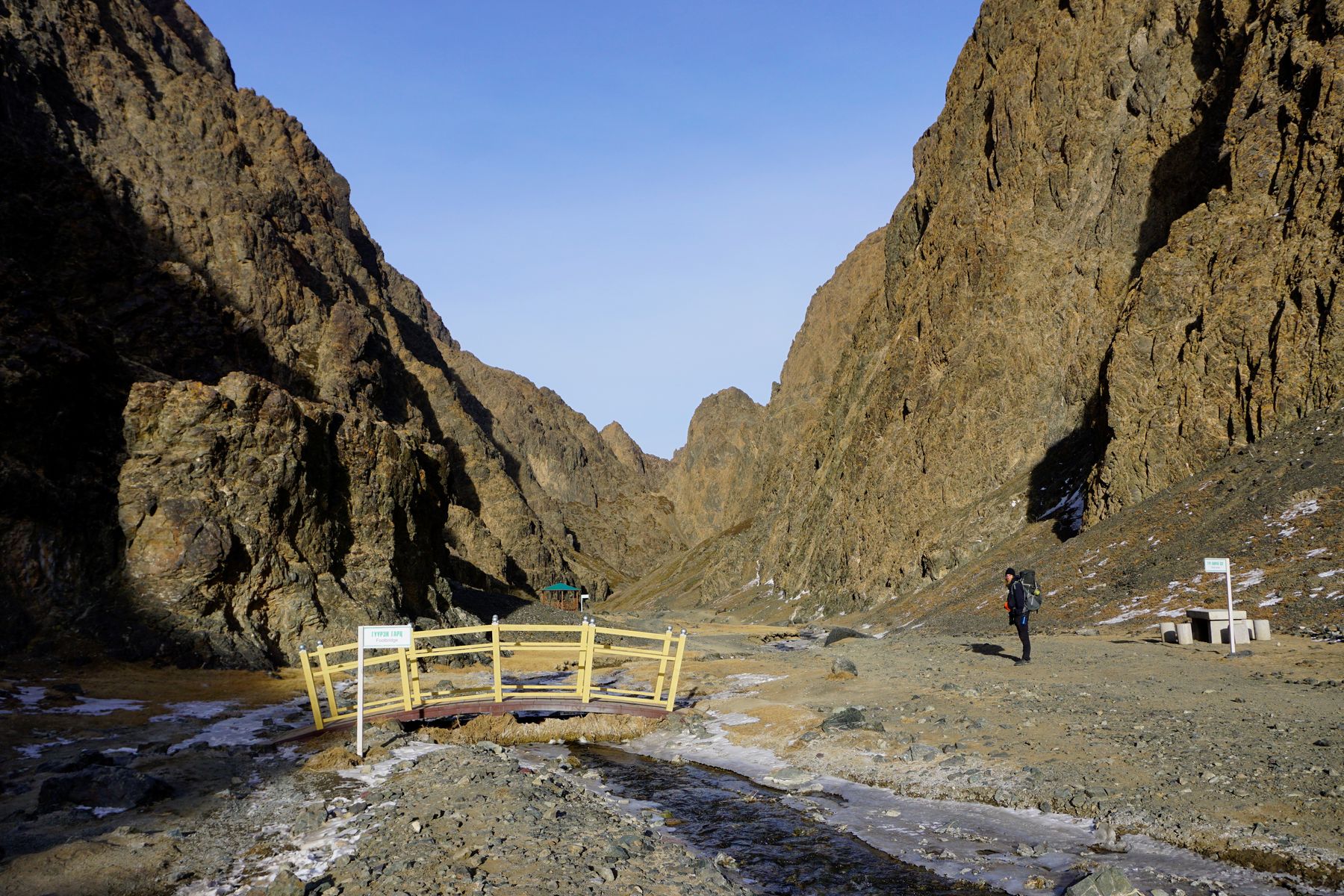
The drive to Yolin Am was spectacular. We drove into the mountains off the paved road and down into the canyon. The rock walls grew taller as road got narrower until eventually…we ran into a parking lot. There were a lot more people in Yolin Am than we expected, but they were basically all local families.

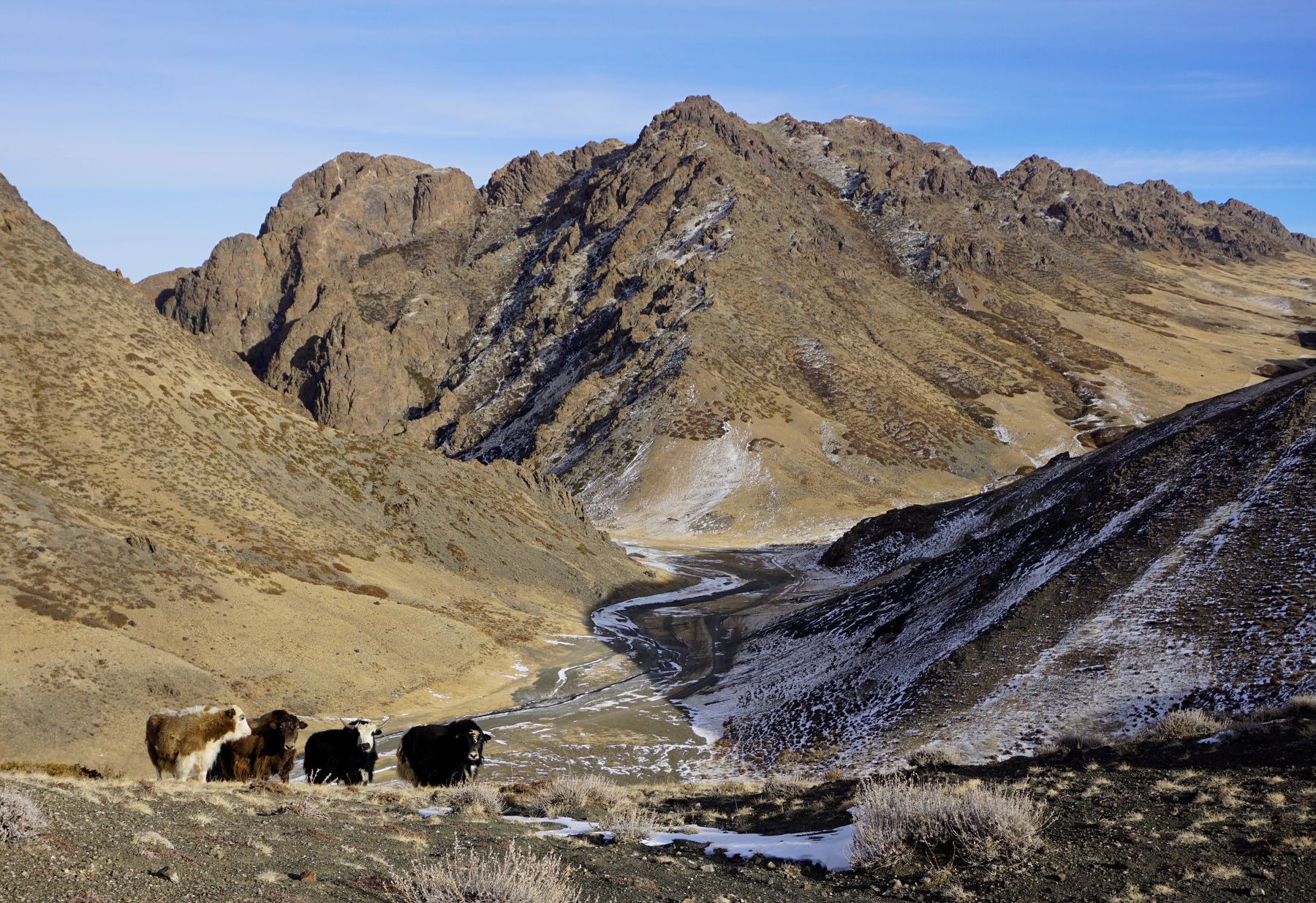
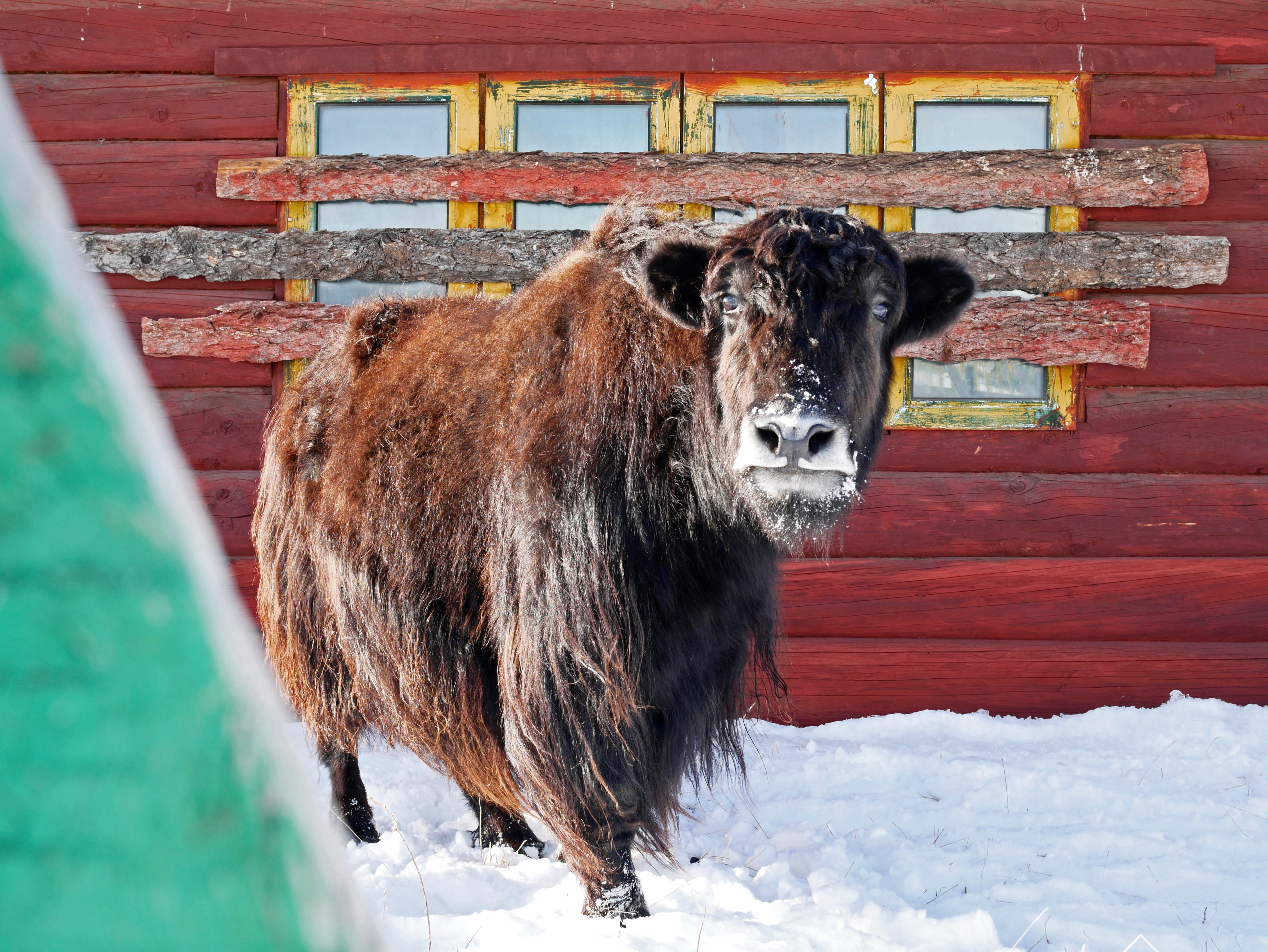
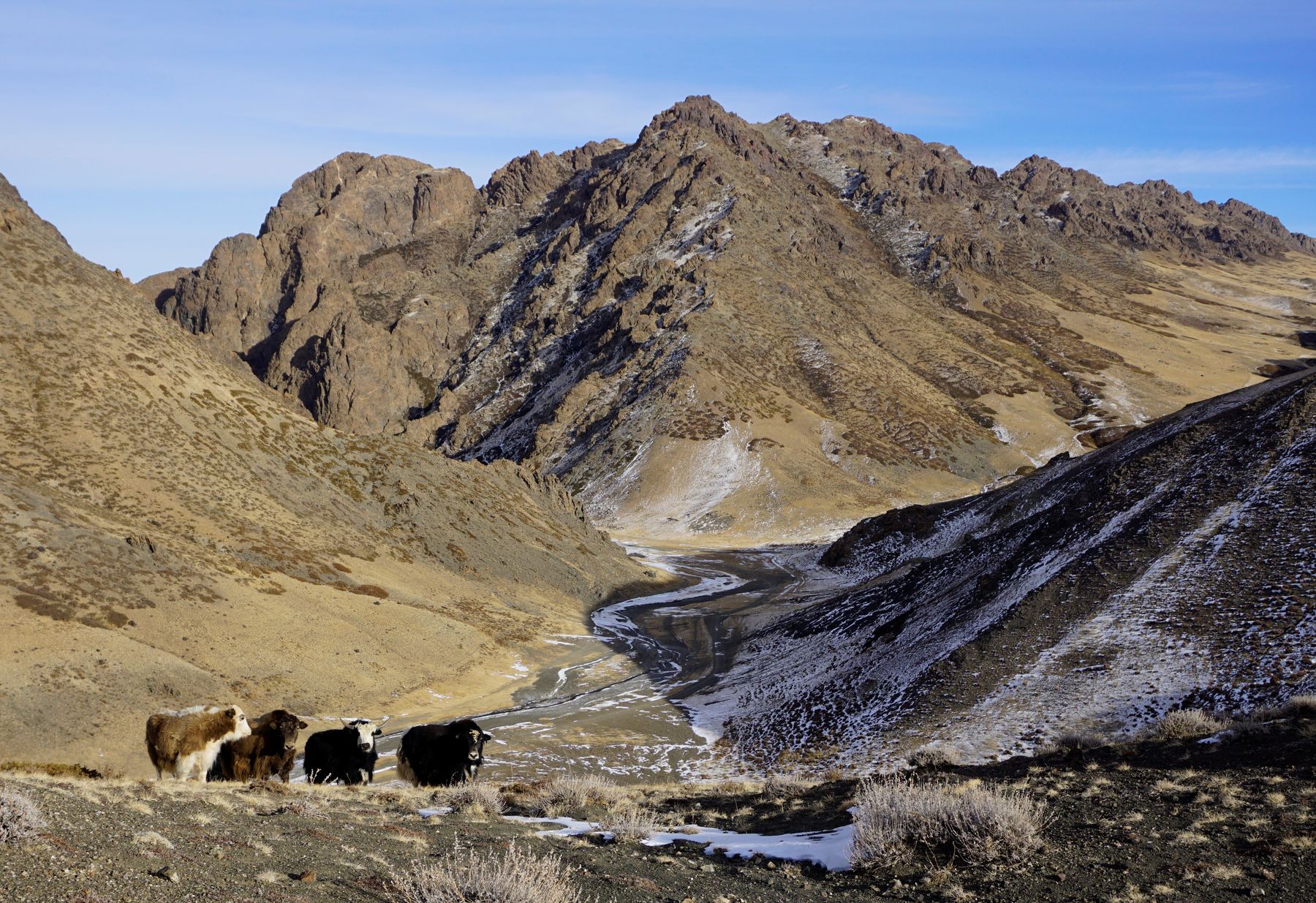
The first thing we did was climb a small hill at the entrance of the park, where we spotted some Mongolian yaks.

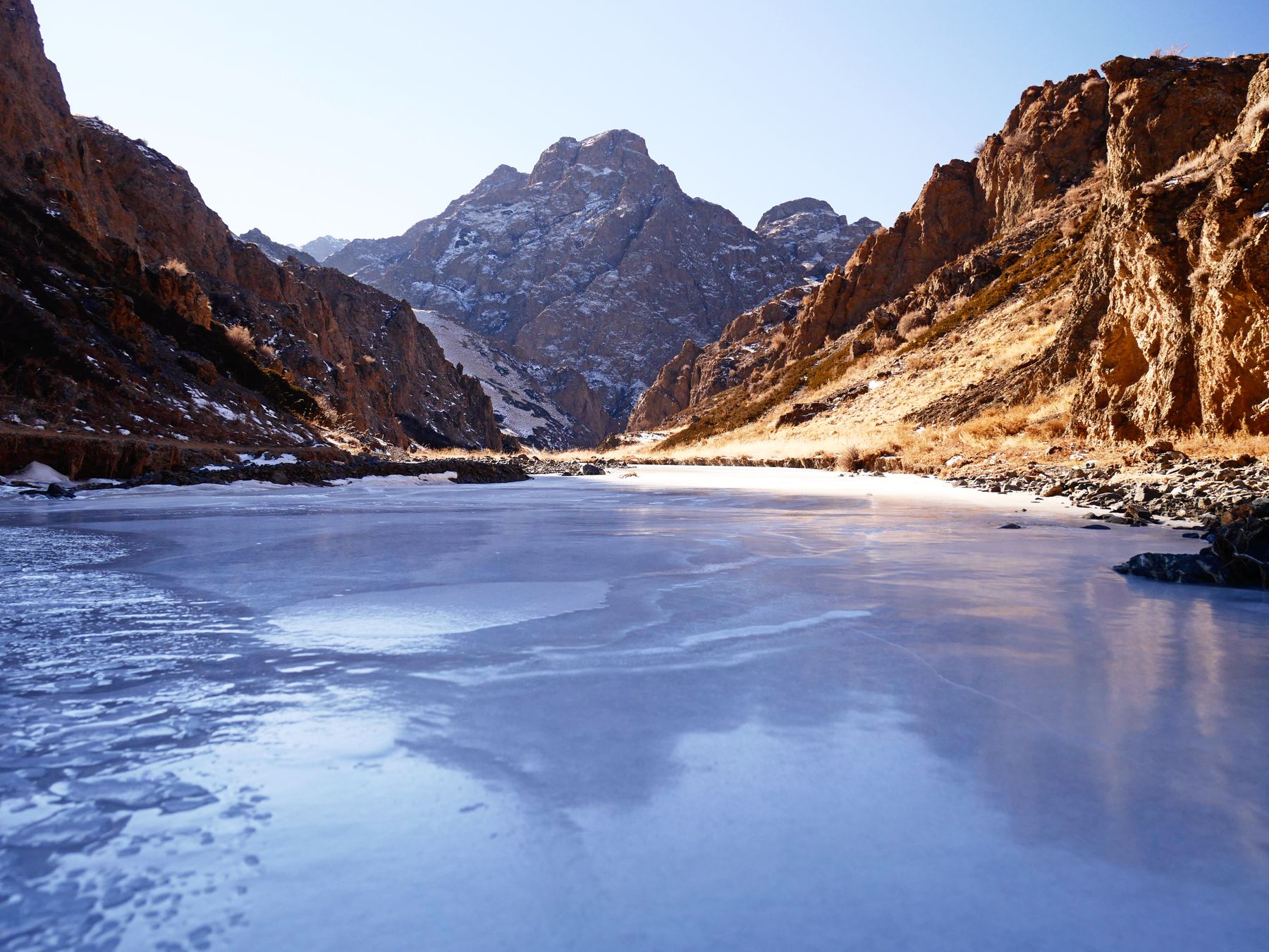
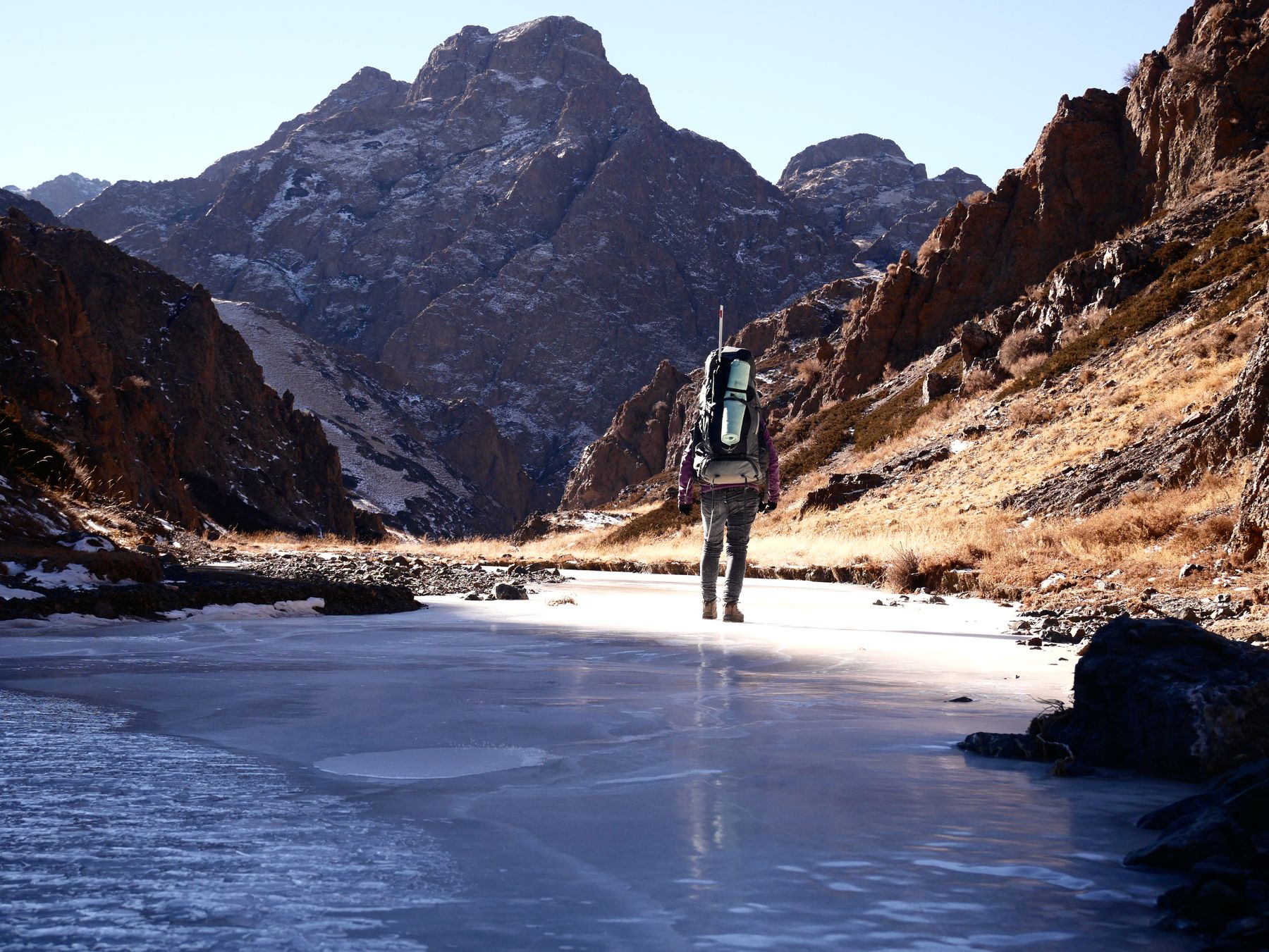
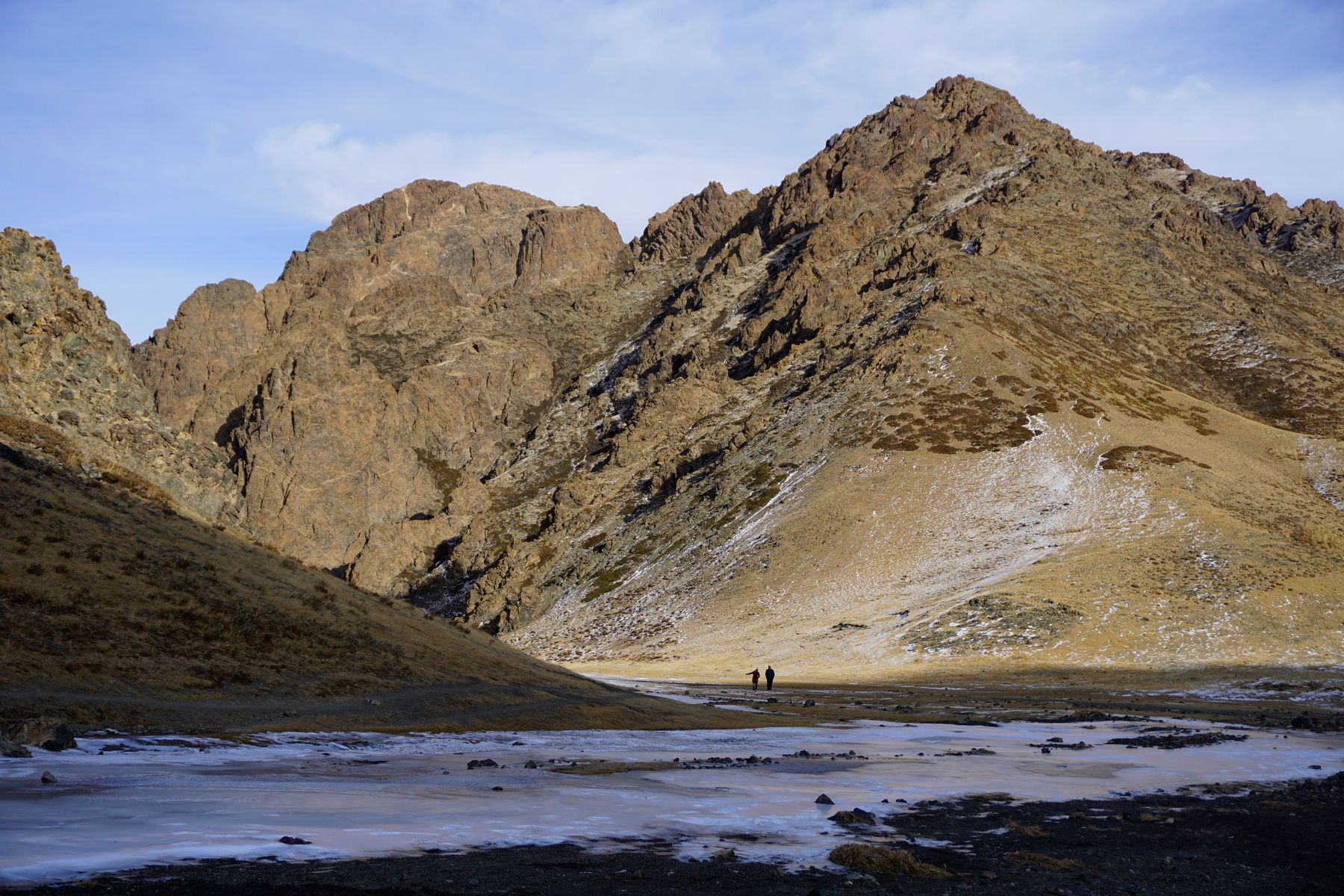
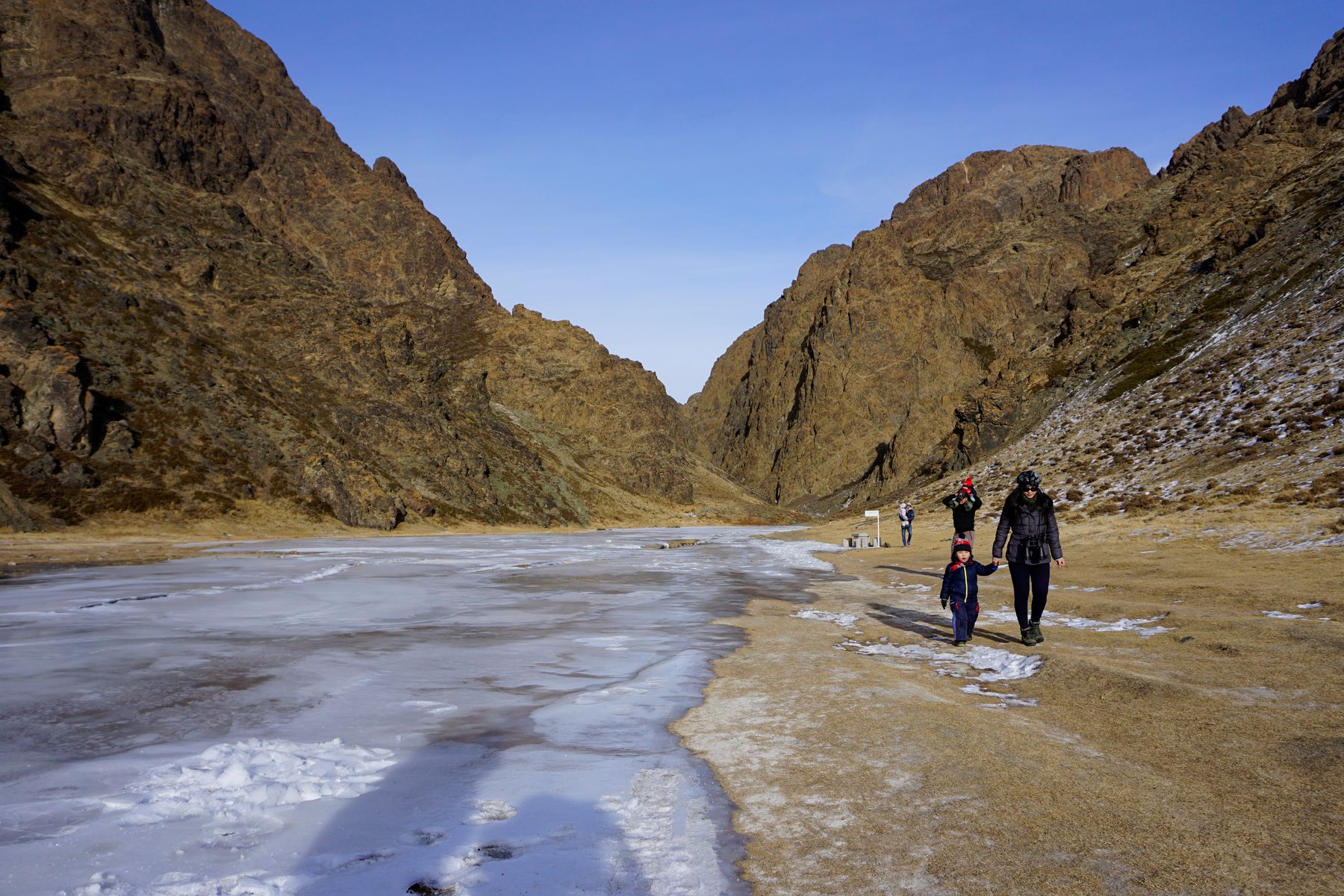
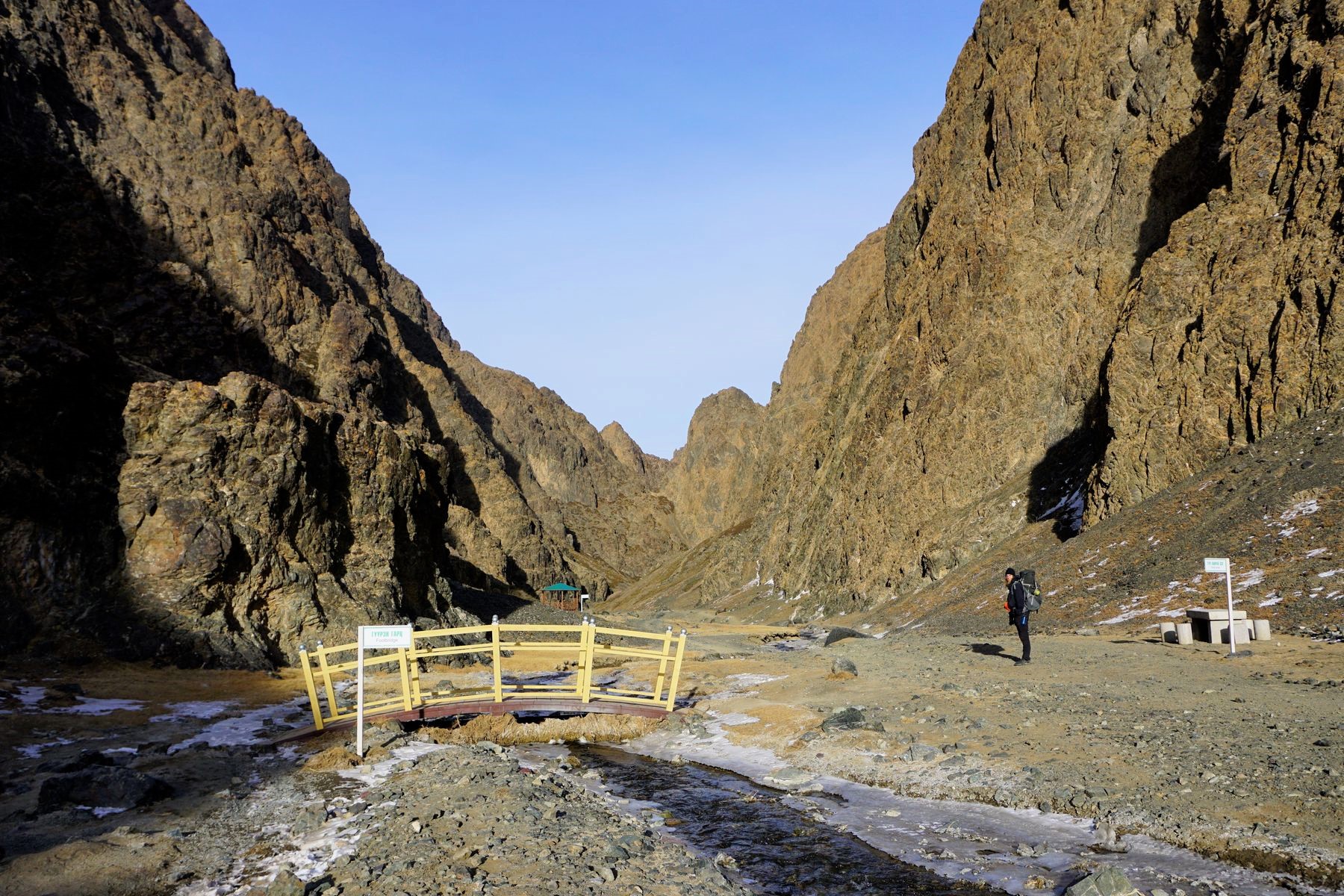
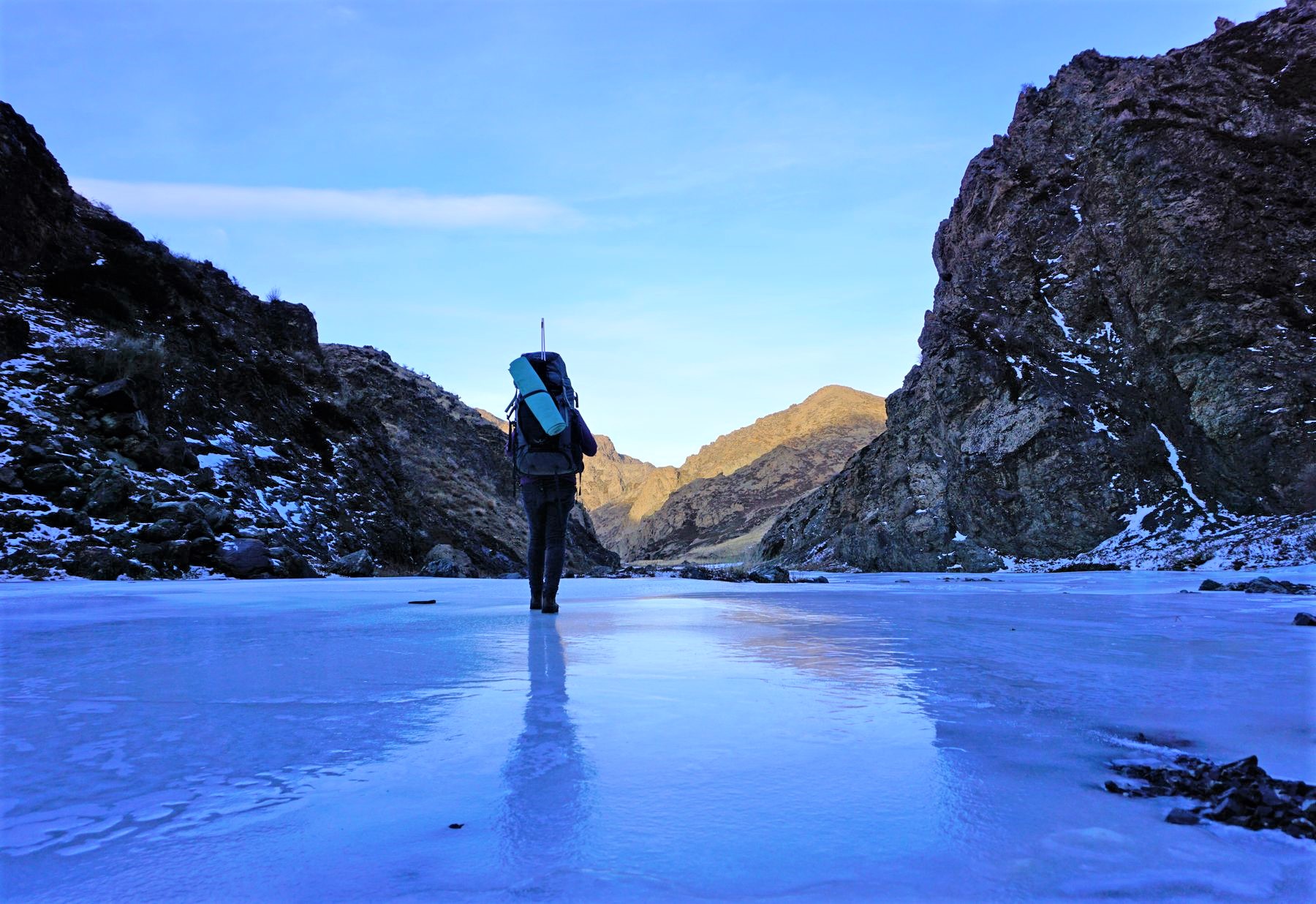
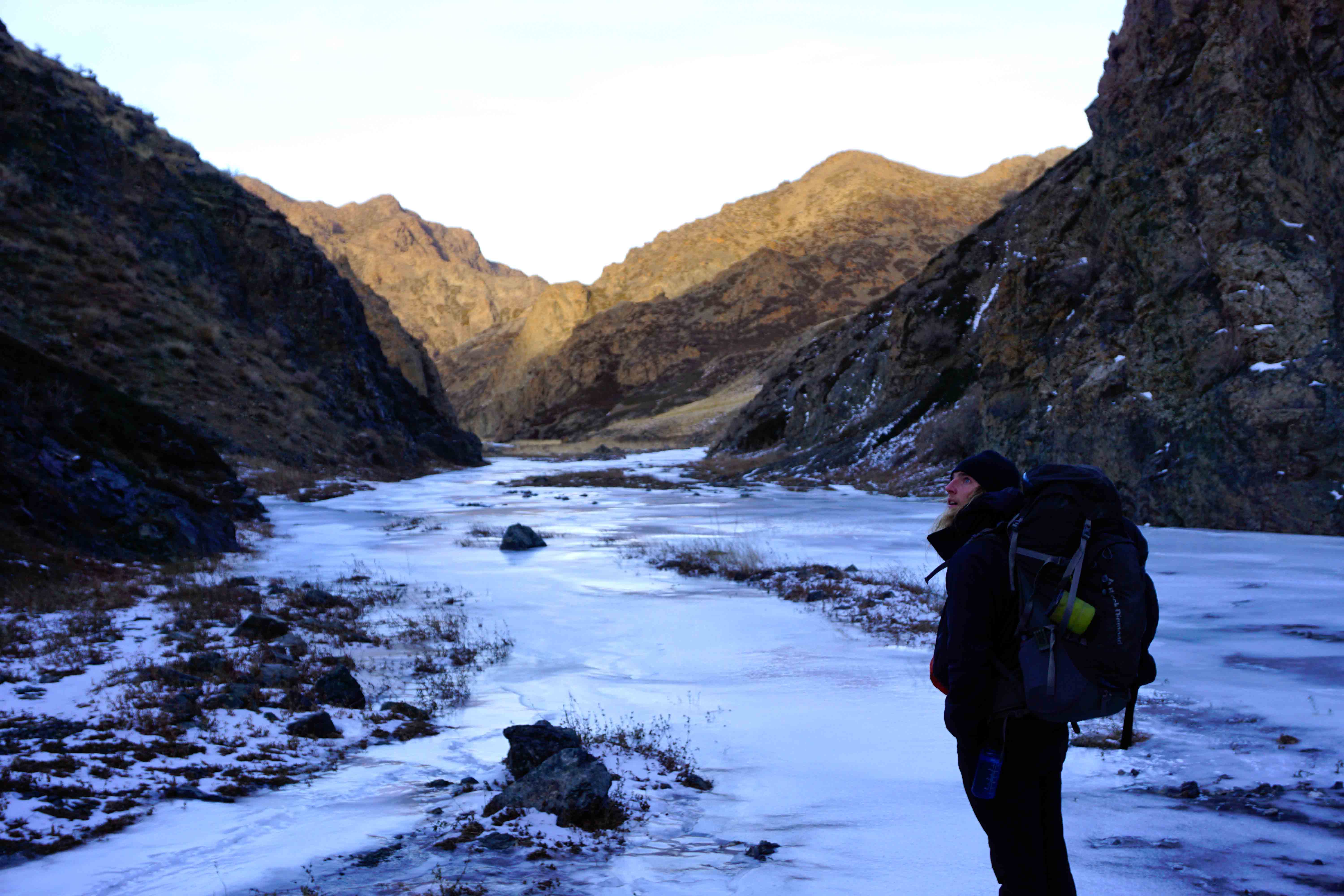
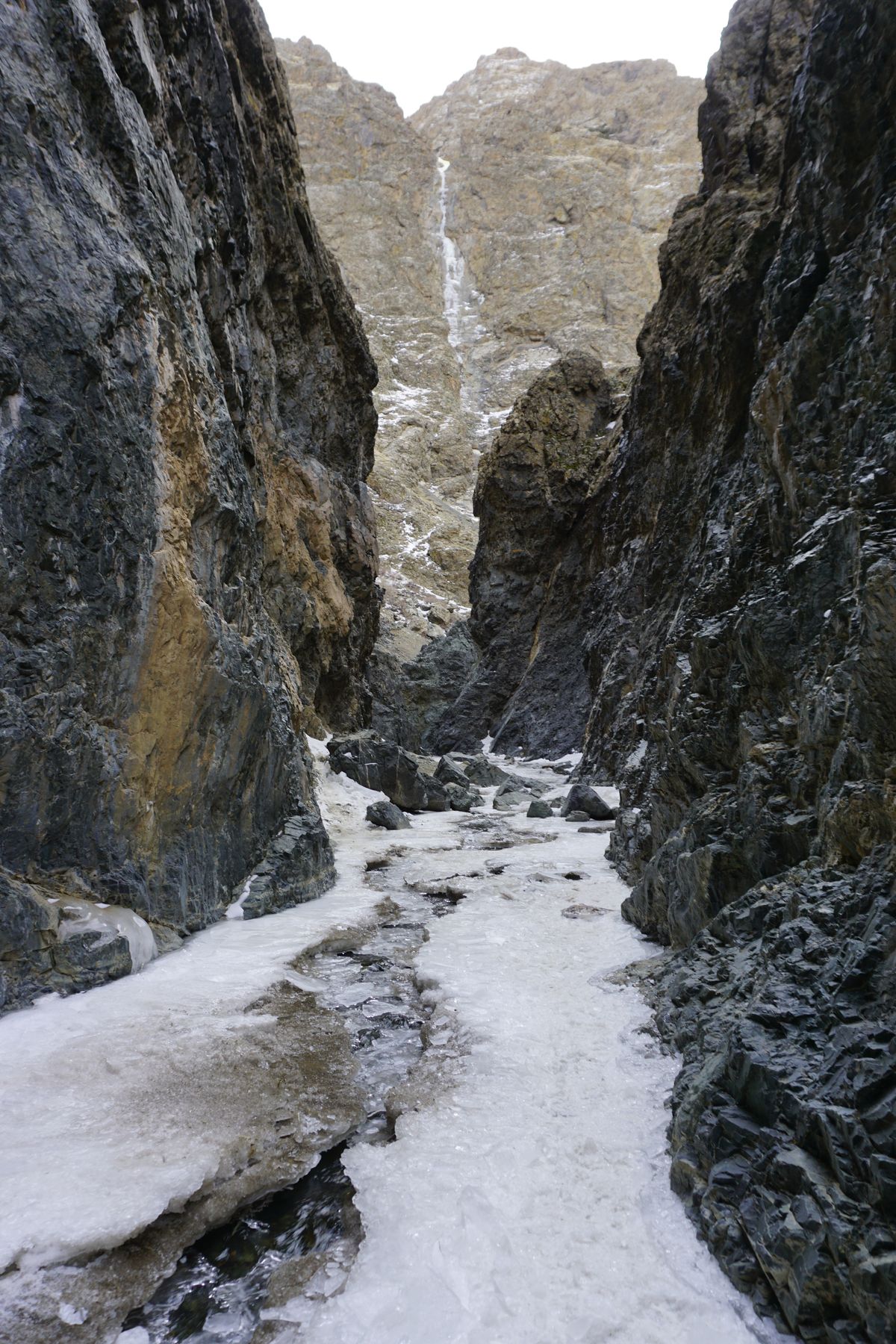
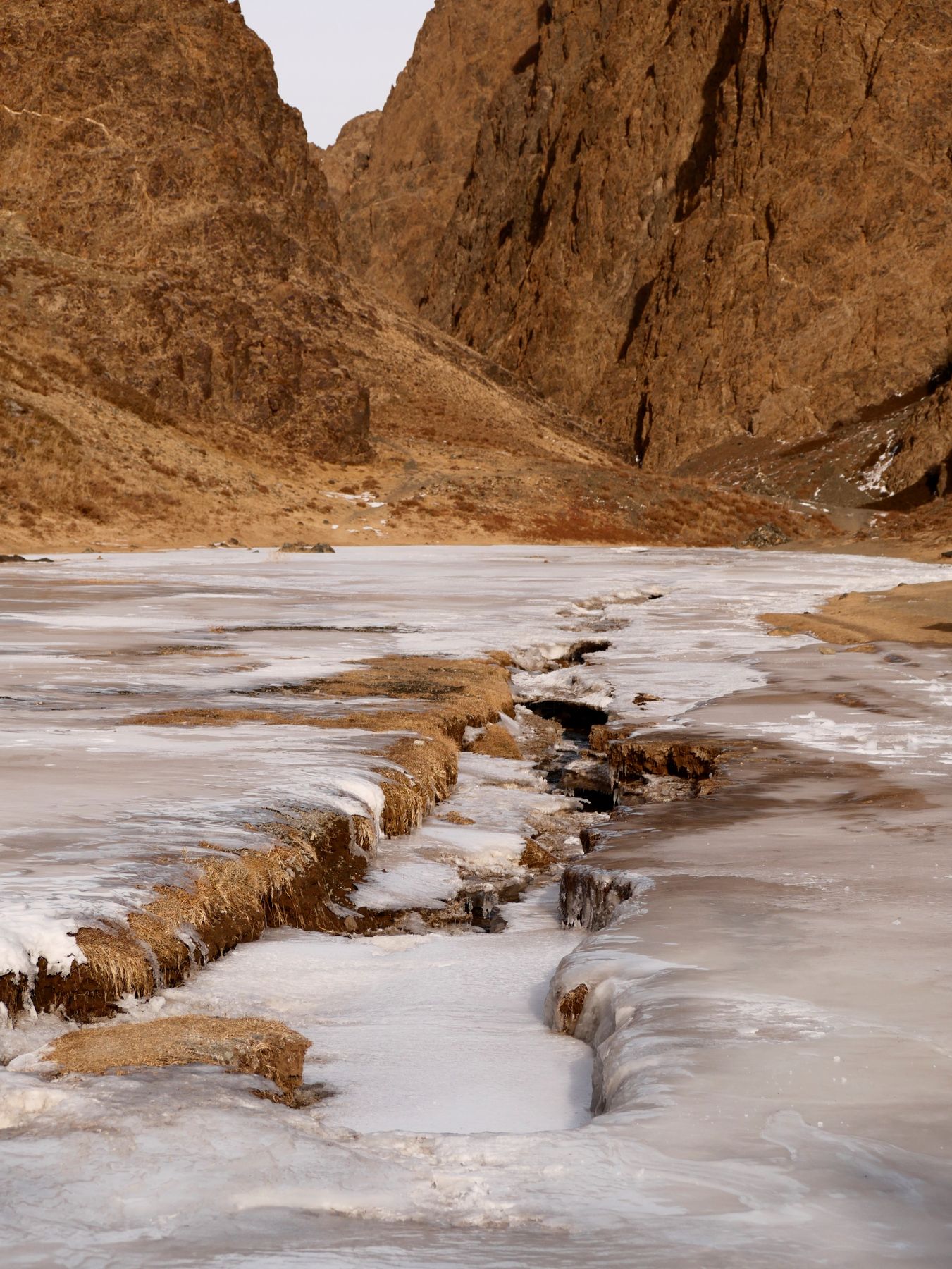
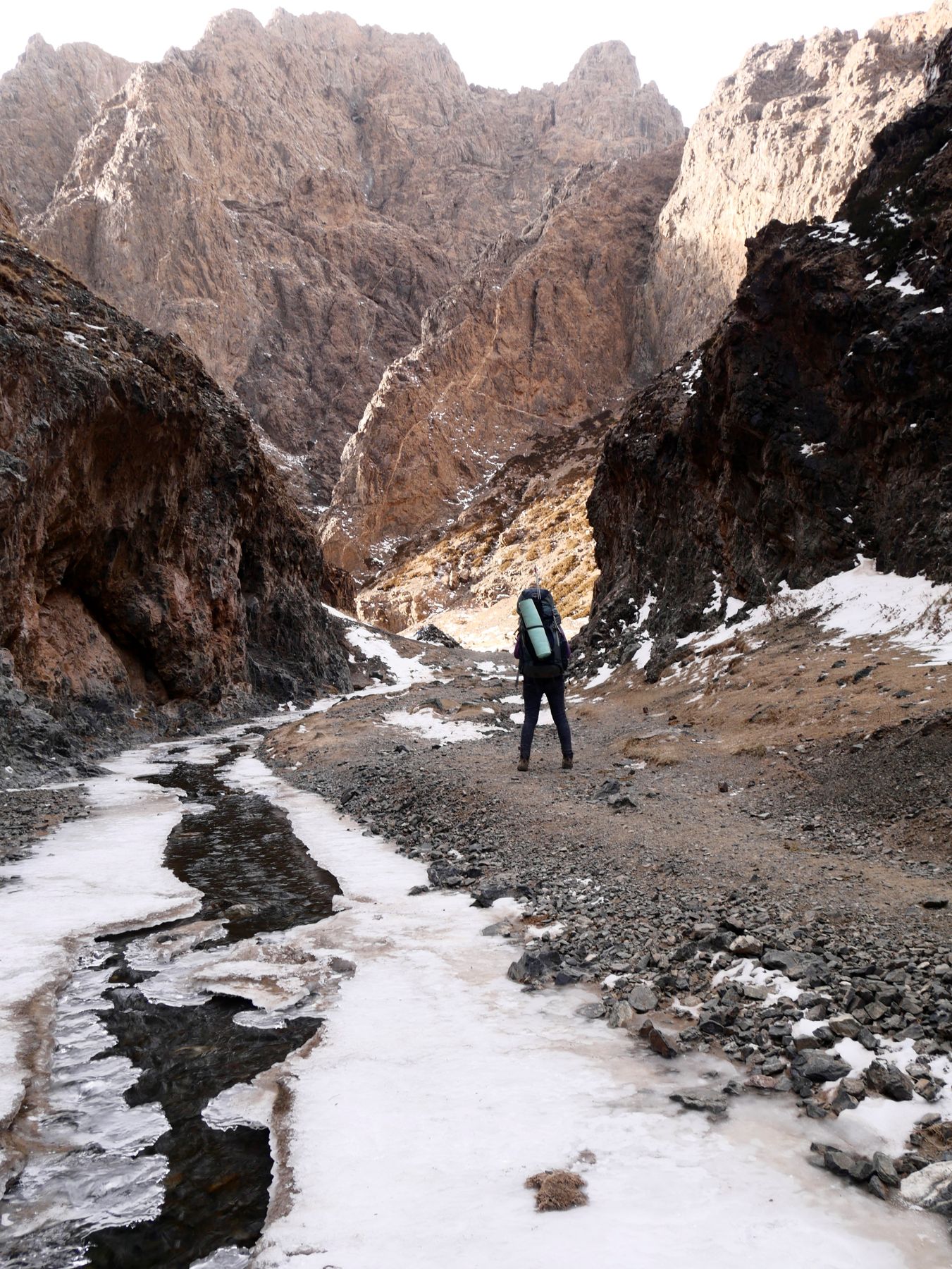
Then we slid back down the mountain and into the canyon. It was a fascinating sight- a flowing river quickly turned into smooth glassy ice shaded by brown eroded rock walls. A few small waterfalls stood still, frozen down the side of these ancient cliffs.

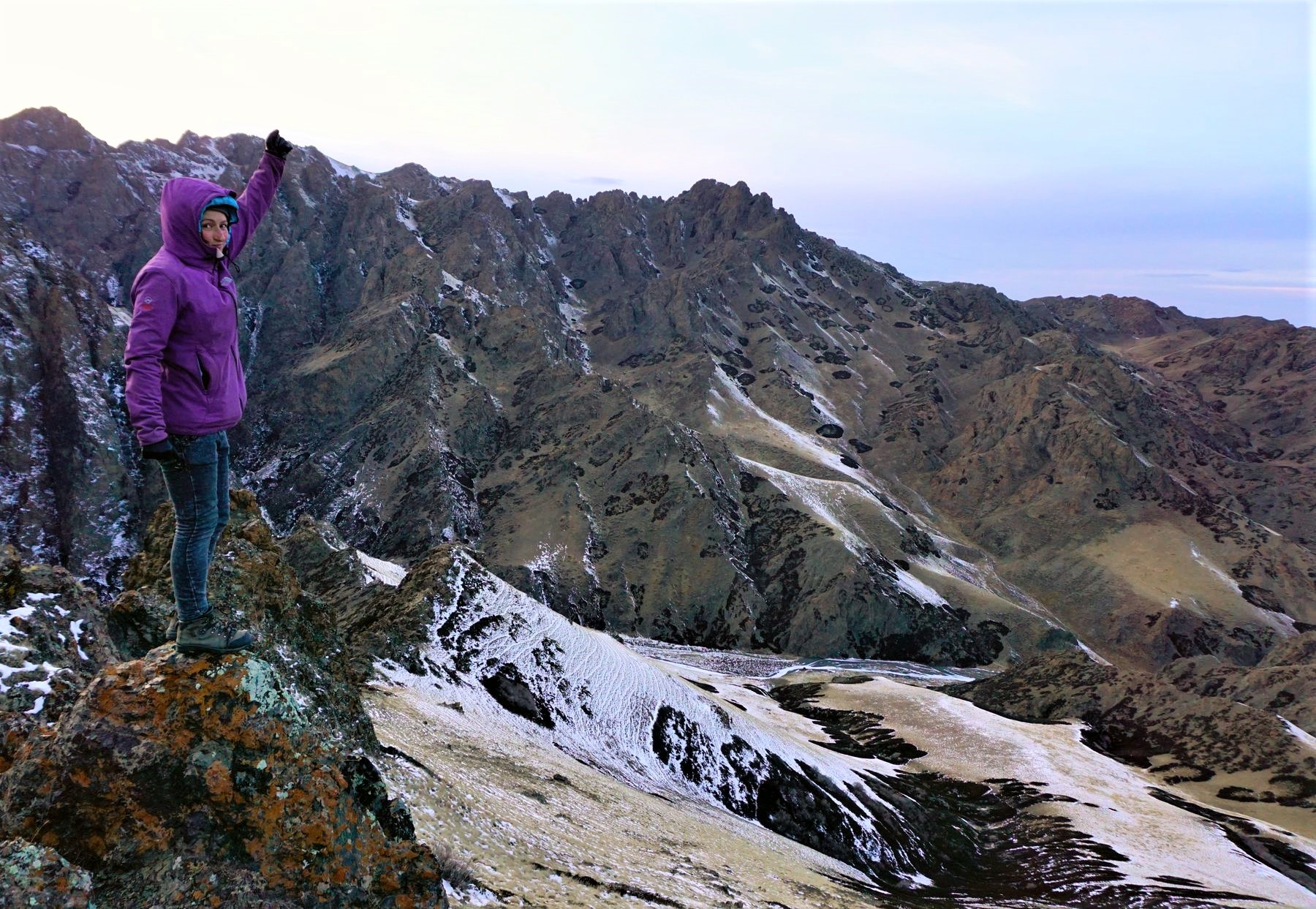
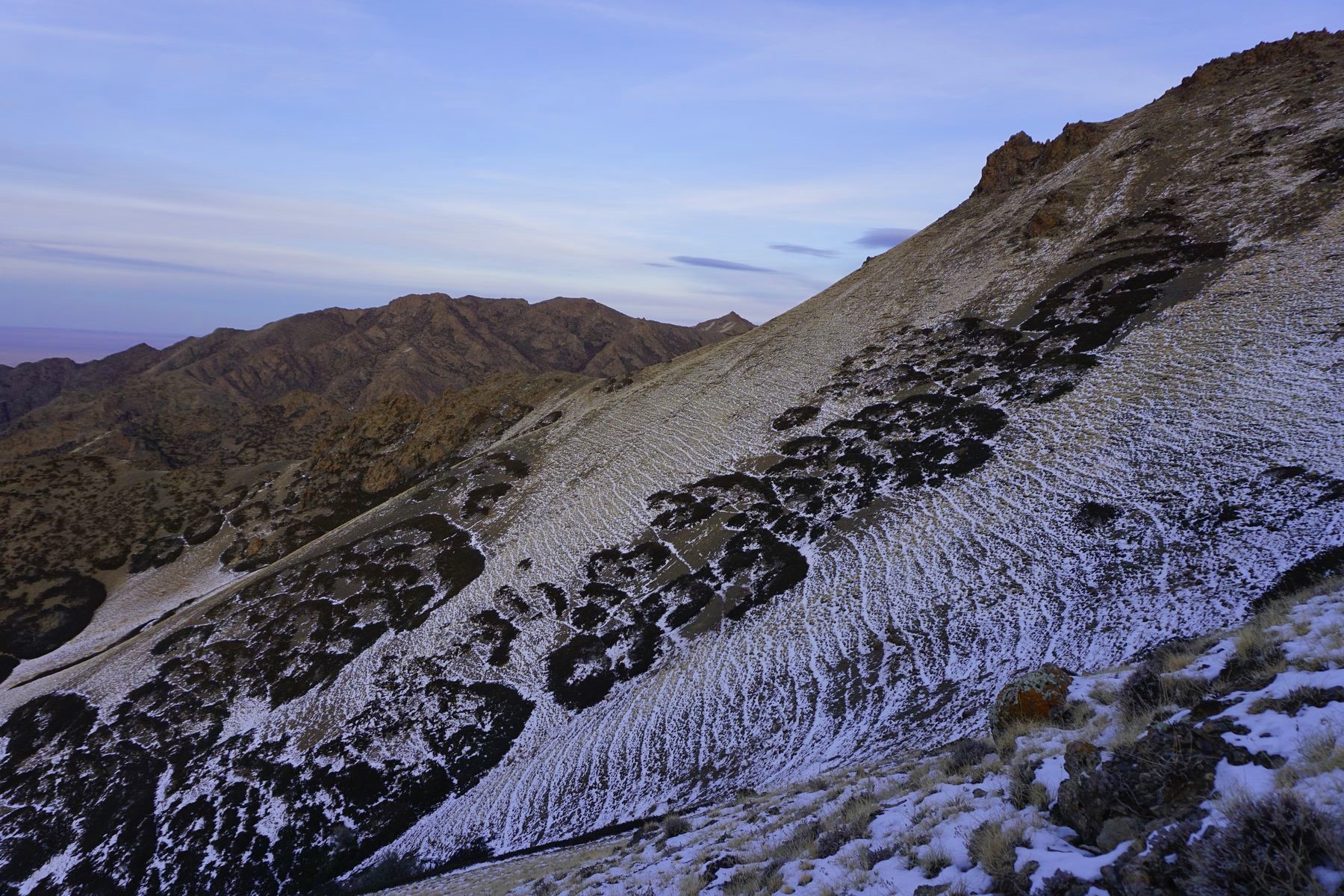
We lost sight of all other people after about a 20 minute walk into the canyon. The deeper we walked, the narrower the passageway got. Some of the trek was quite slippery and a bit sketchy since we didn’t know how thick the ice was and there was no choice but to slide over it. About 8 km into the canyon trail, we noticed another climbable mountain. Of course, we couldn’t resist checking out the view of Yolin Am from the top.​

The sun was going down as we were climbing back down the mountain and I started to think about those wolves again. Baatar told us that the face of a missing Chinese man was found in these mountains, the rest was eaten. And this place really looked like wolf territory. I felt safe with Felix close by, but pretty scared as soon as he walked 3 or 4 meters away from me. There’s no way a lone wolf would attack the two of us… but me, alone? Probably not… and who knows if that story is even true… But the thought is hard to get out of your head when you’re standing in a grey and black canyon, your flashlight barely works because of the cold, and your mind starts seeing moving shadows.

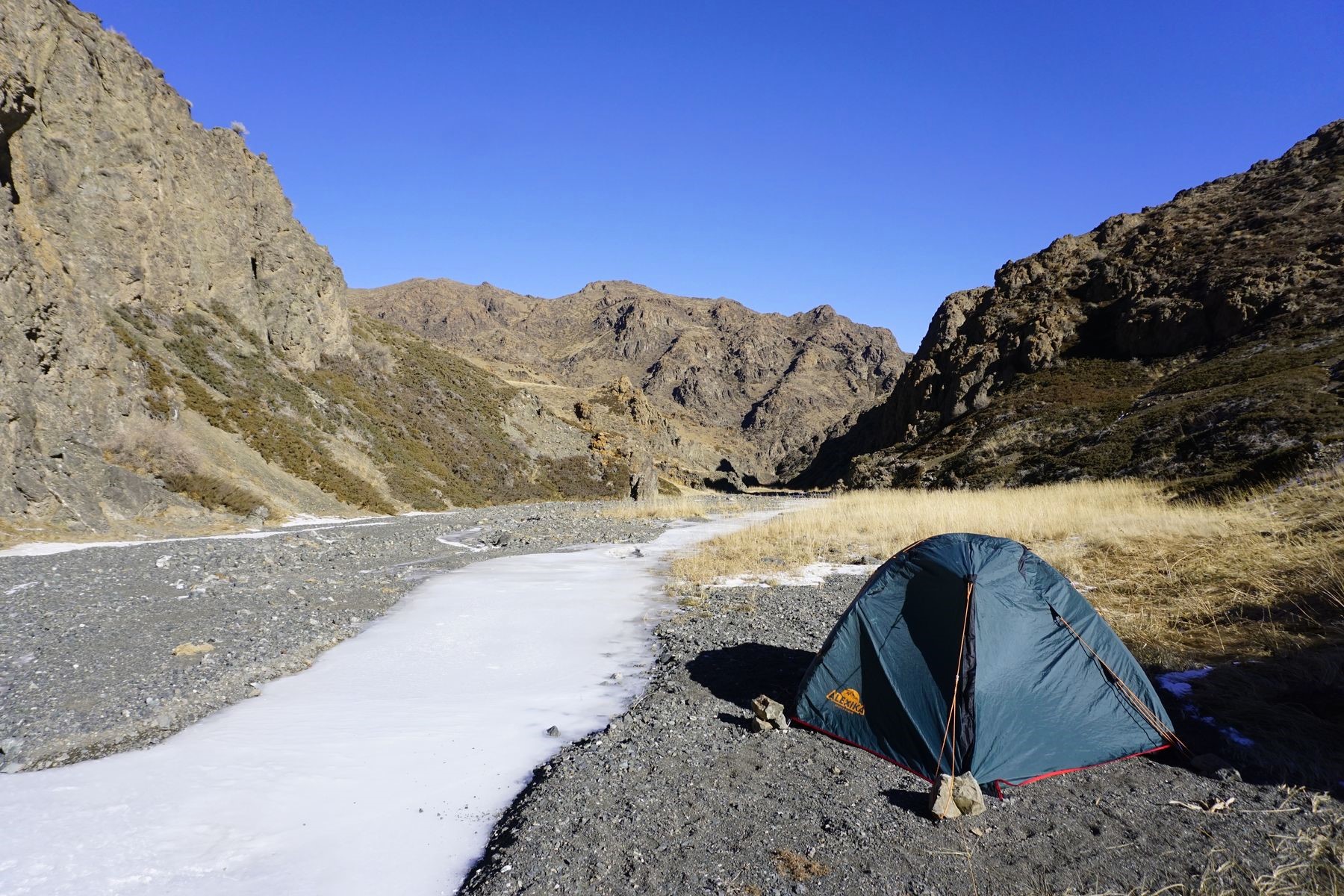
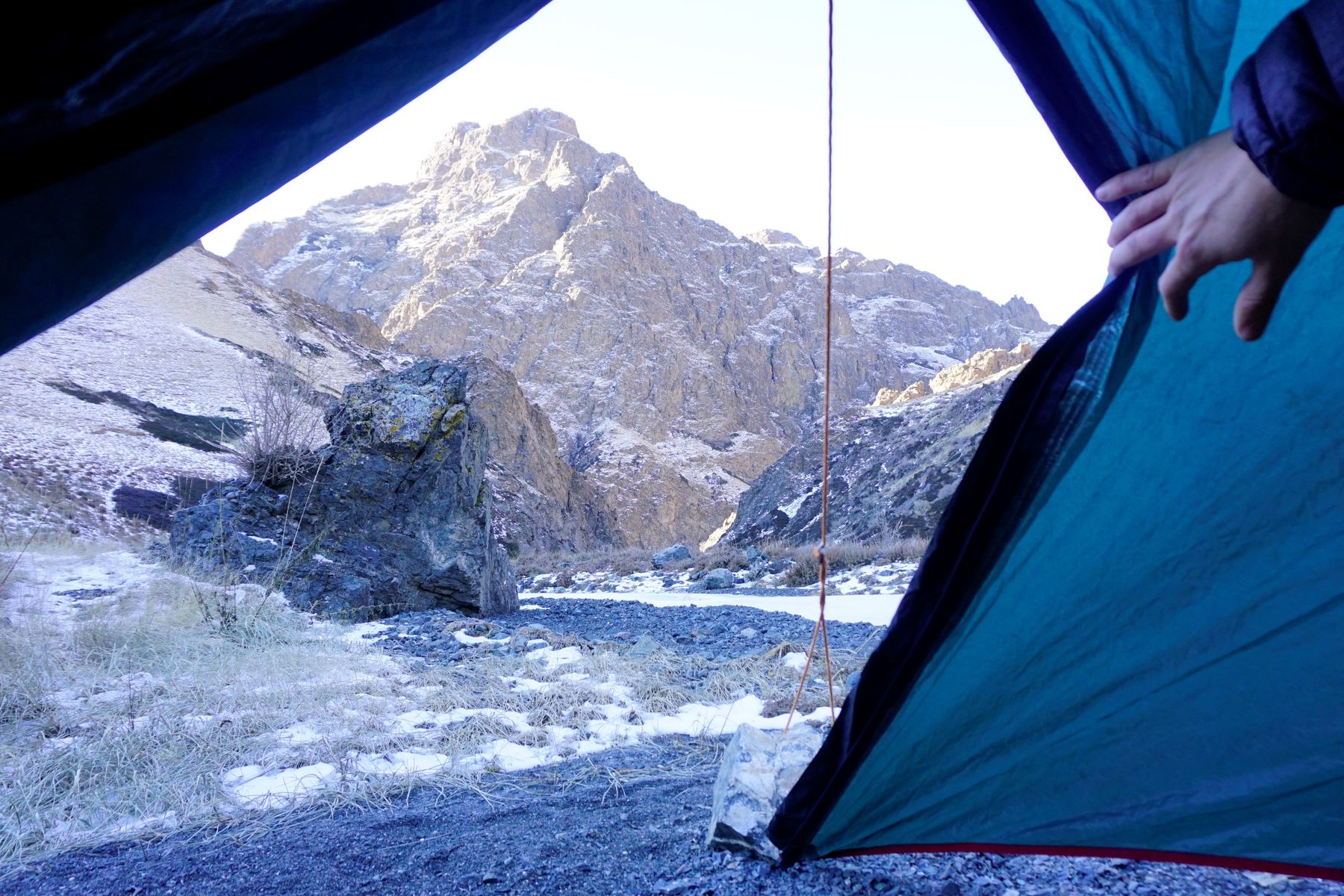
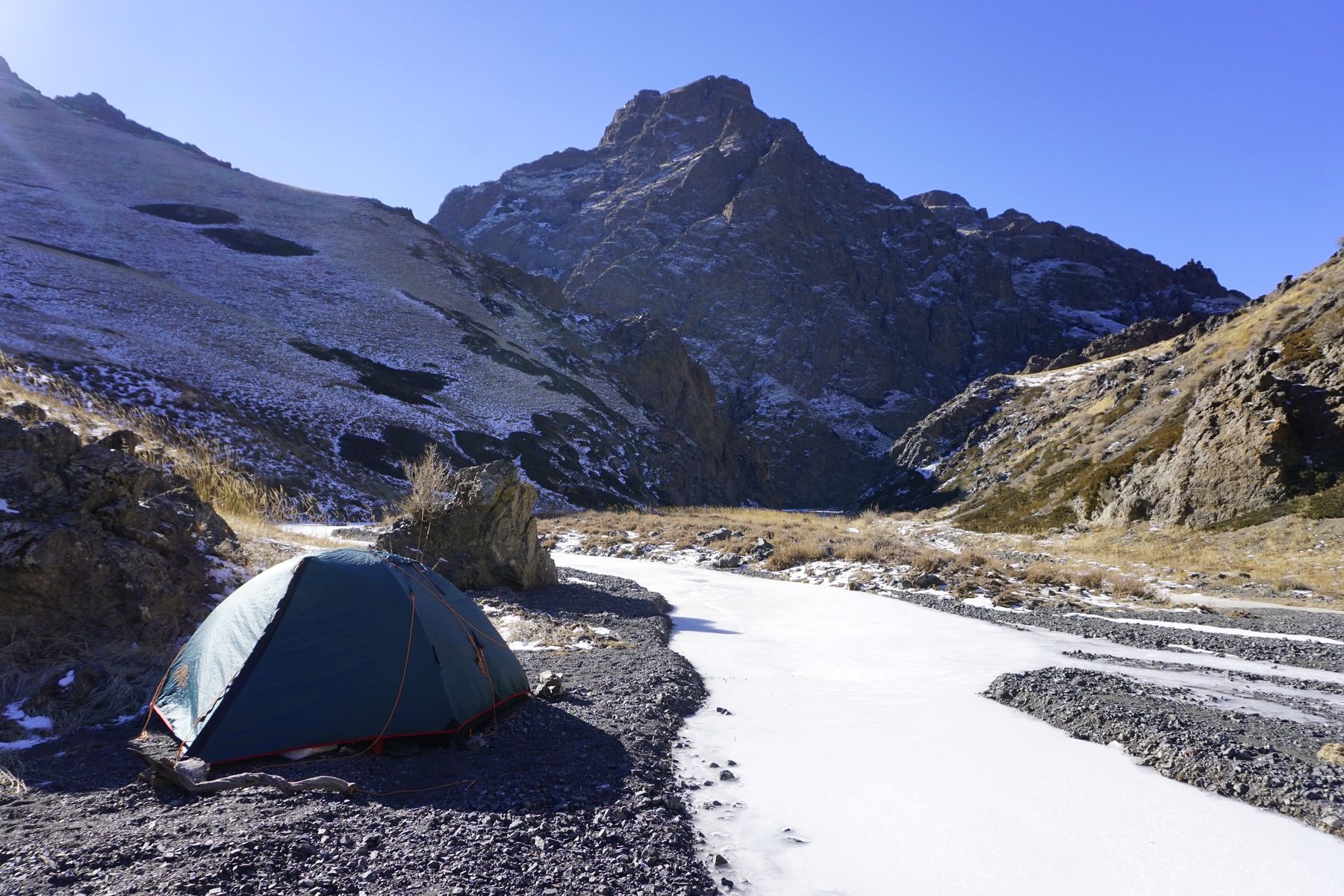
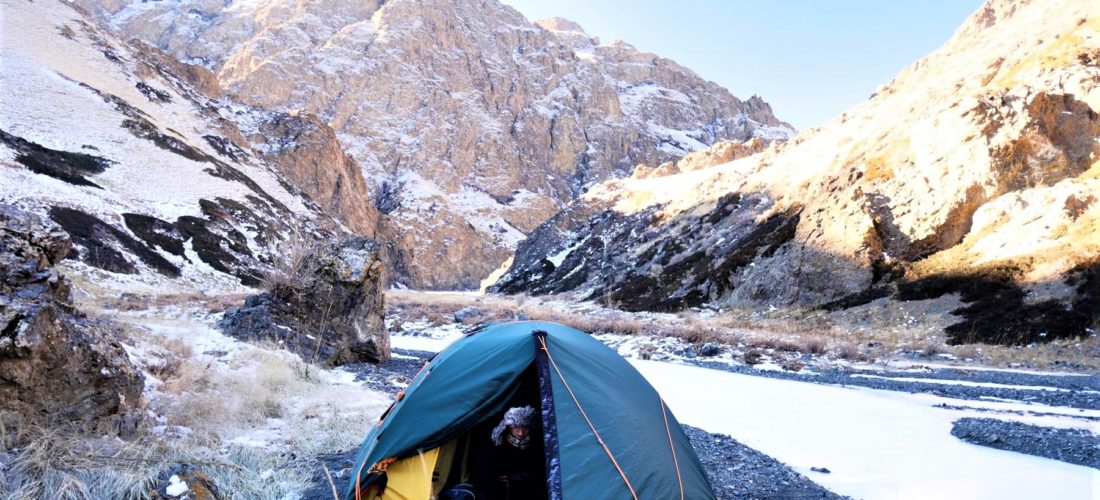
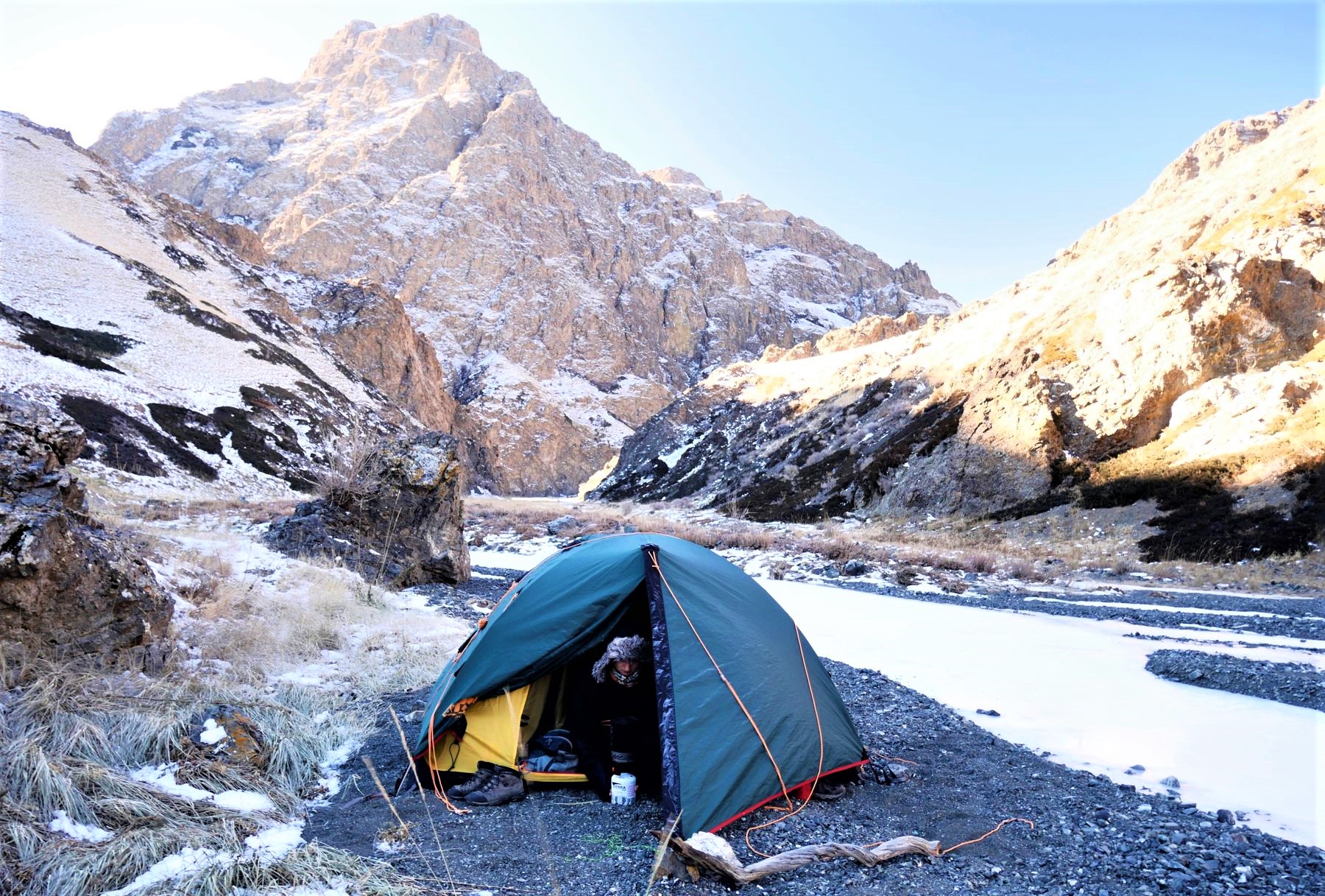
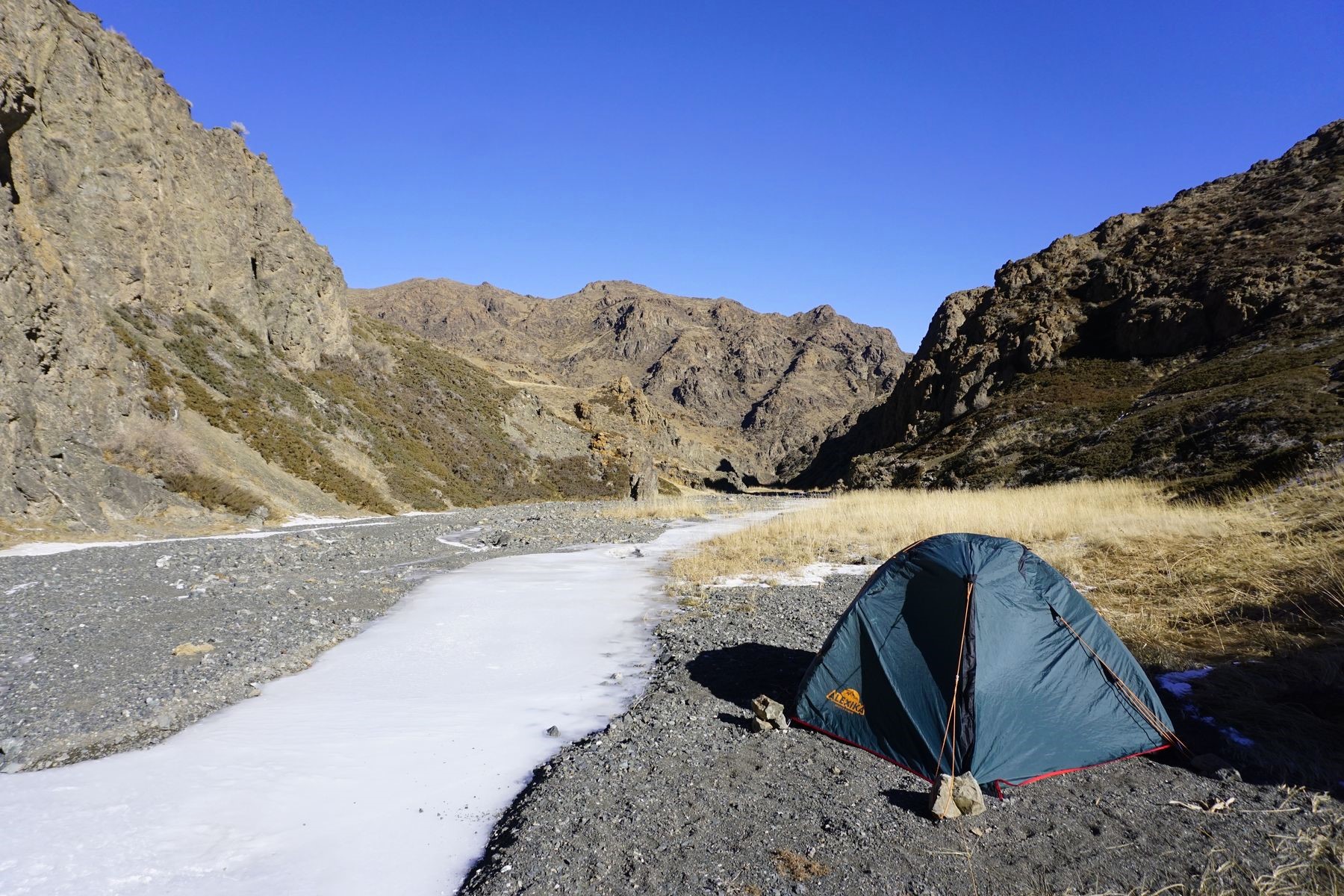
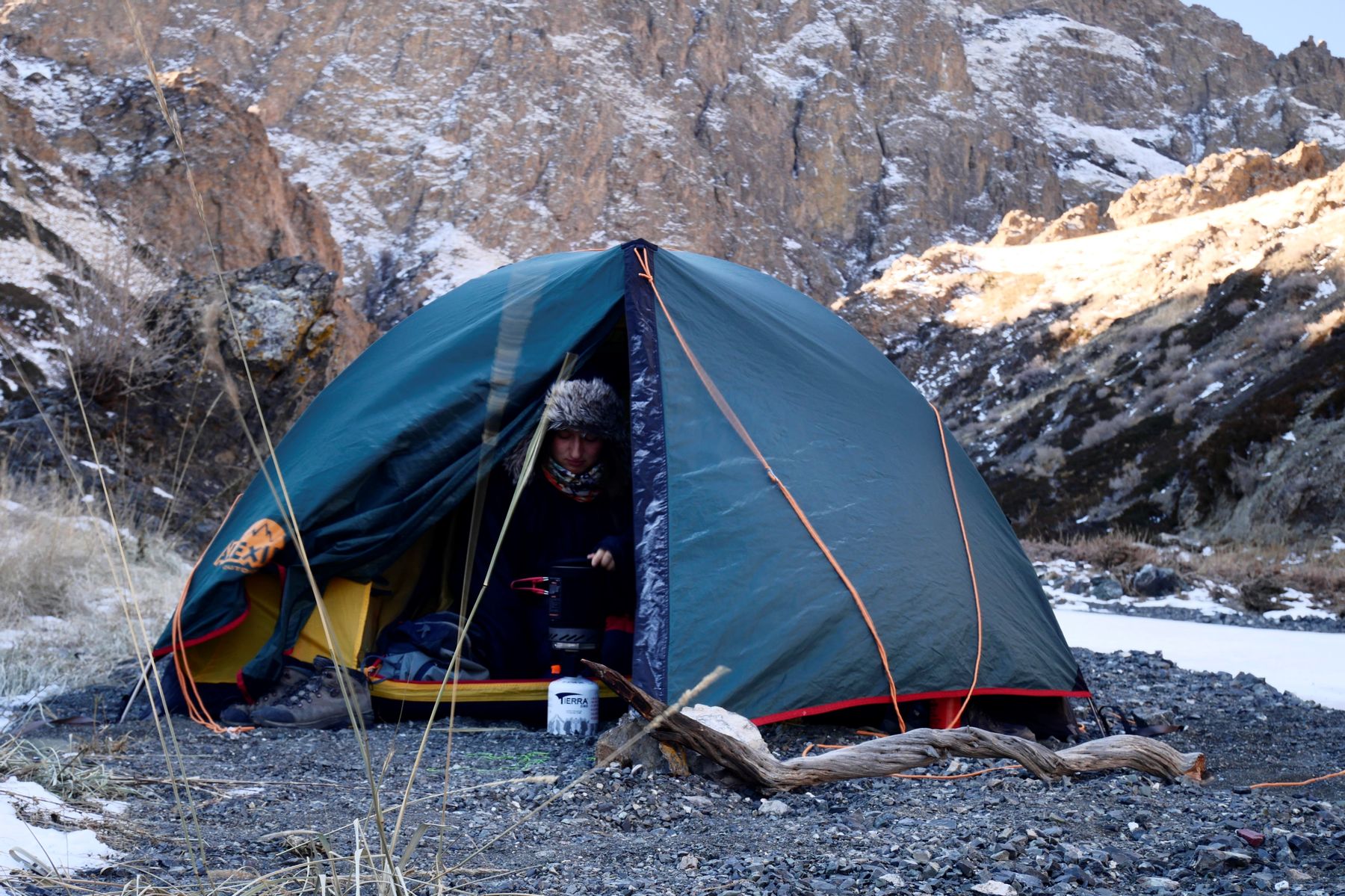
We decided to camp just below that mountain, where there was a big enough piece of flat ground next to the frozen river. This is what the spot looked like in the morning-

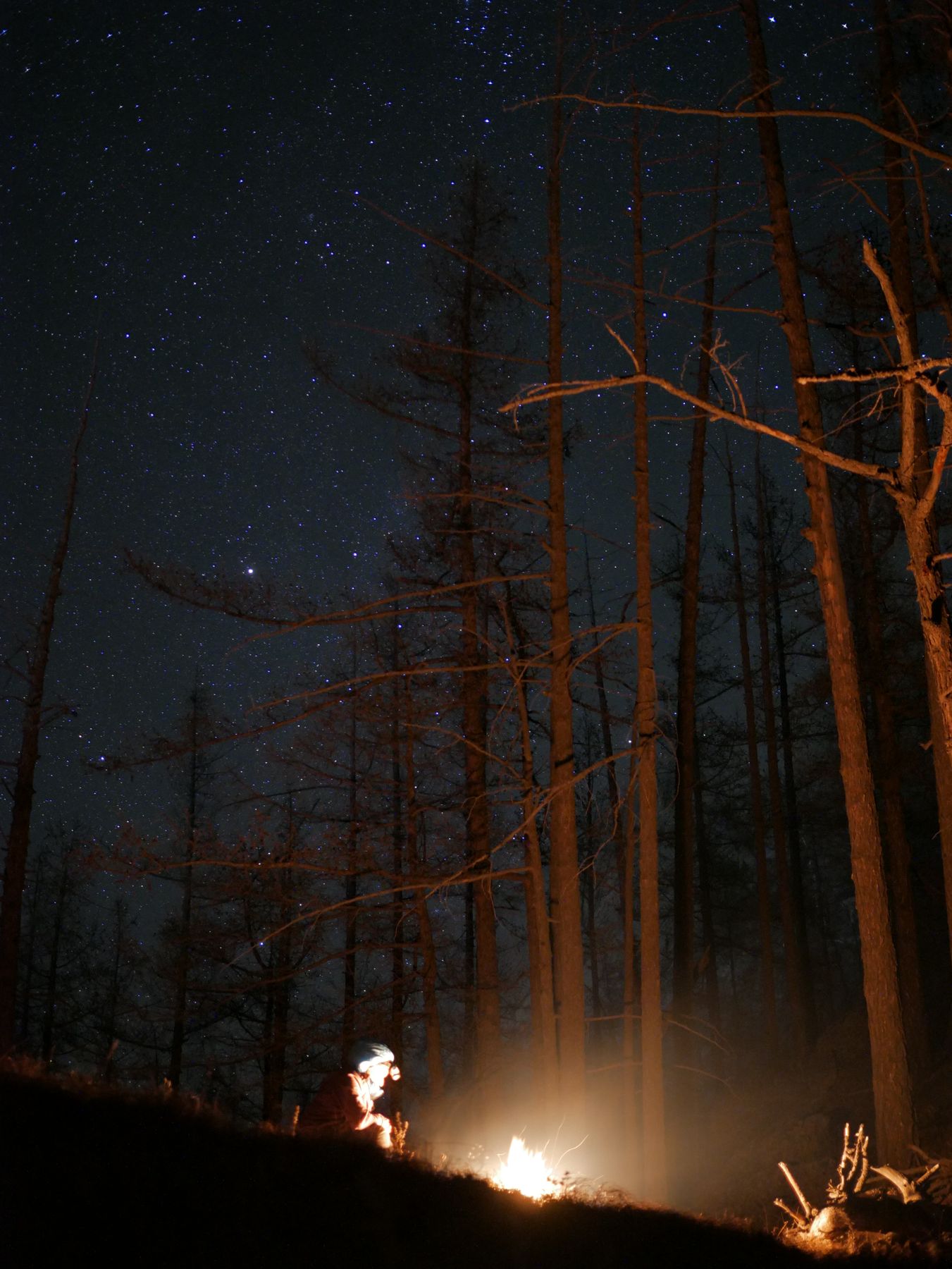
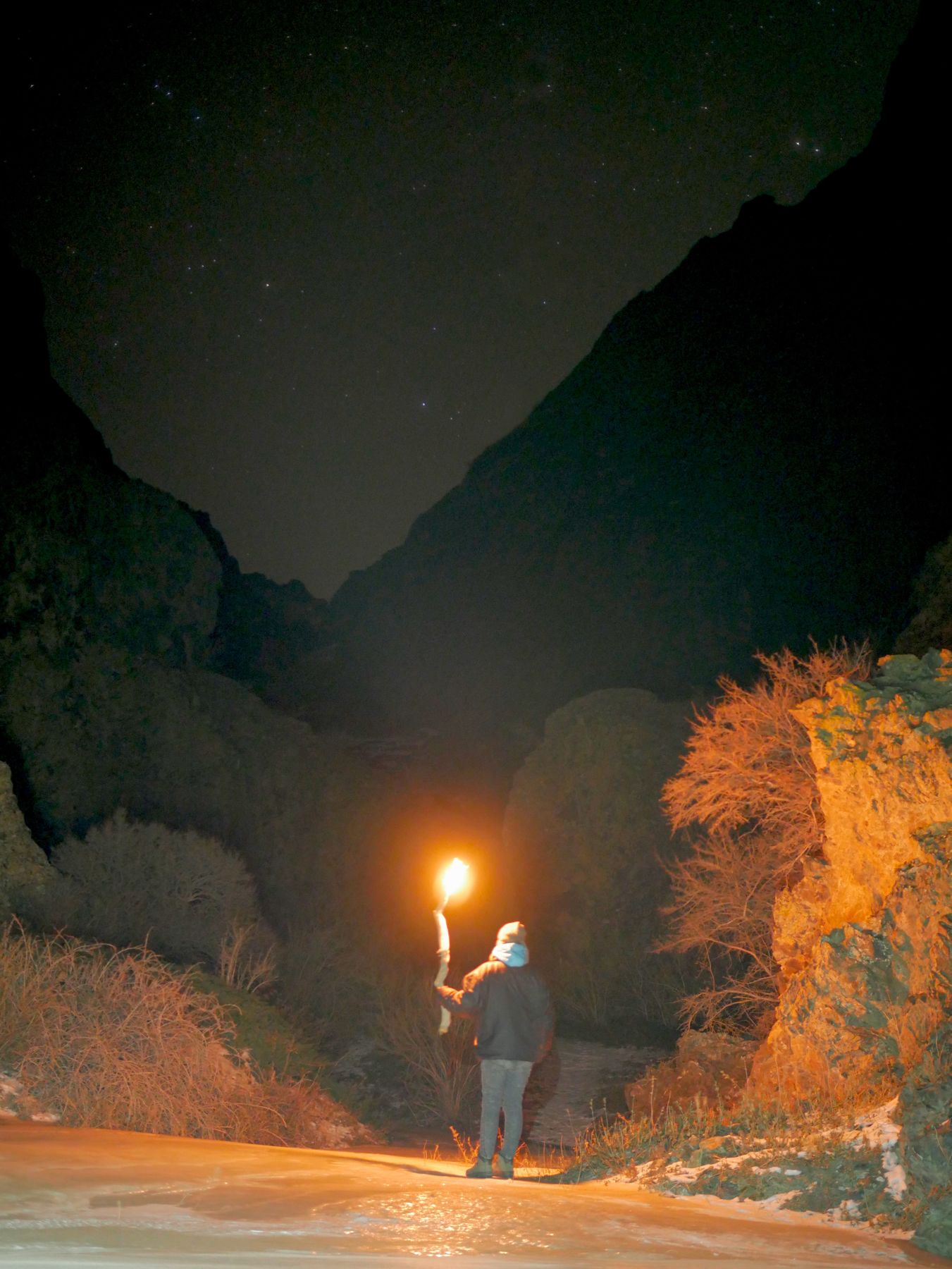
It got very cold at night, just as we expected, but Felix still wanted to take some night photos of the canyon. I was terrified of roaming around wolf territory in the middle of the night, but I wasn’t going to let him go alone. We put on every piece of clothing we had, grabbed a stick, some gasoline and a lighter (wolf-protection kit :D), and then wandered back into the narrow part of the canyon in pitch black.

My body shook and trembled as I slipped slowly down the river of ice. I think it was a combination of cold and fear. I stopped shaking when we lit the stick on fire. Fire has been protecting humans from other animals for hundreds of thousands of years- even before we, homo sapiens, were a species! And here it was, protecting me from wolves :) Fascinating! :D

Then Felix found a narrow gorge that he wanted to photo. He asked me to stand still in it, holding the firestick. I went into this rocky little gully, a good 5 meters away from Felix and the camera- stick on fire- all good. “Stay, don’t move, it’ll be a good shot. Wolves don’t hunt humans anyway. And I have fire!”

I stood still. 5 seconds… 10 seconds. The fire carved patterns… 15 seconds. Mysterious shapes and movements… 20 seconds. The canyon, the rocks, the creepy bushes, flickering fire… 22. Something moving! 23. There it was! A WOLF! 24. And the fire went OUT! It’s pitch black!

“DON’T MOVE!” yelled Felix.

The exposure was 30 seconds.
Fuck. 5,4,3,2,1. I ran away as soon as Felix gave me the go, grabbed a flashlight, looked around. No wolf, just a bush :).

Even though I was cold and terrified that night, I was also captivated by the entire situation. There was something about that canyon, perhaps all the emotions that ran through me, the adrenaline and the beauty of the ice and cold, that made me gain a much deeper love and appreciation for winter. Not just for the snow and snowboarding like before, but for everything- icicles and frozen flowers, the sound of water rushing beneath ice, every precious snowflake, every frozen stream. Winter is filled with unique and wild beauty.

Perhaps it was Felix too. Coming from Canada, he absolutely loved winter. He was happy to camp even in -30 degree weather. When he got cold, he would simply go for a run. Easy as that. He made me understand that there’s nothing scary or uncomfortable about winter camping (as long as you have the right gear). And he always had a smile on his face :).

That’s the thing about traveling- more than anything else, it’s about the people you meet. And the best thing that you can do is learn from these people; learn how to love the stuff that everybody else hates, like camping in -30 degrees :D

Total expenses of day 24:
$1 (water)

Total expenses so far of 24 days in Mongolia (including the price of getting to Mongolia):
$273.00

*Some photos taken by Felix

Days 22-23: Frozen Lake in the Gobi Desert

Mongolia

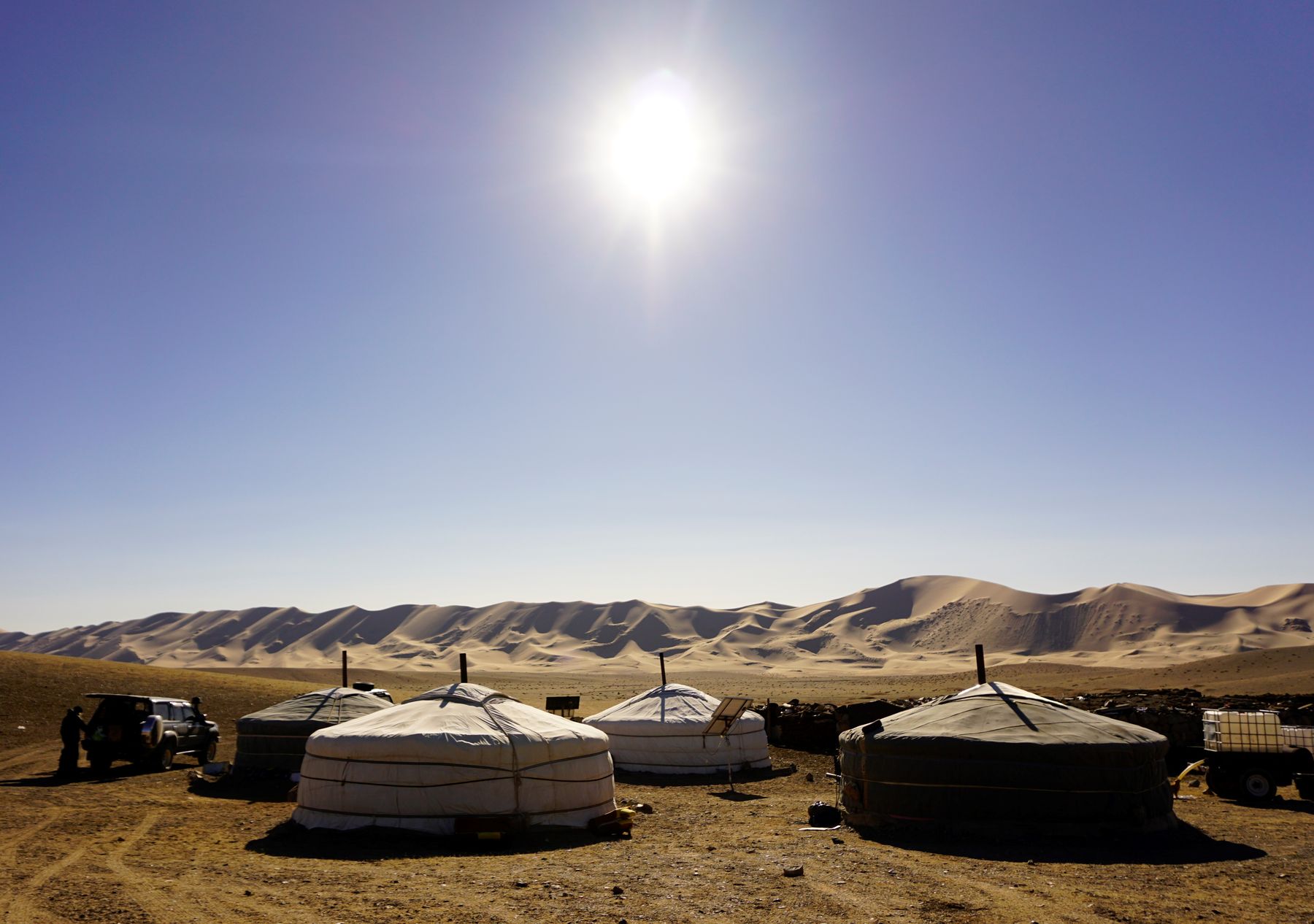
We found the Ger camp in the dark and asked for one of the yurts ($6). It was really cozy since the yurt was heated with a wood fire, and it felt so great to finally be out of the wind, cold and sand. There was so much sand everywhere! From our hair to our clothes, to our food bag, and every small crevice of everything!

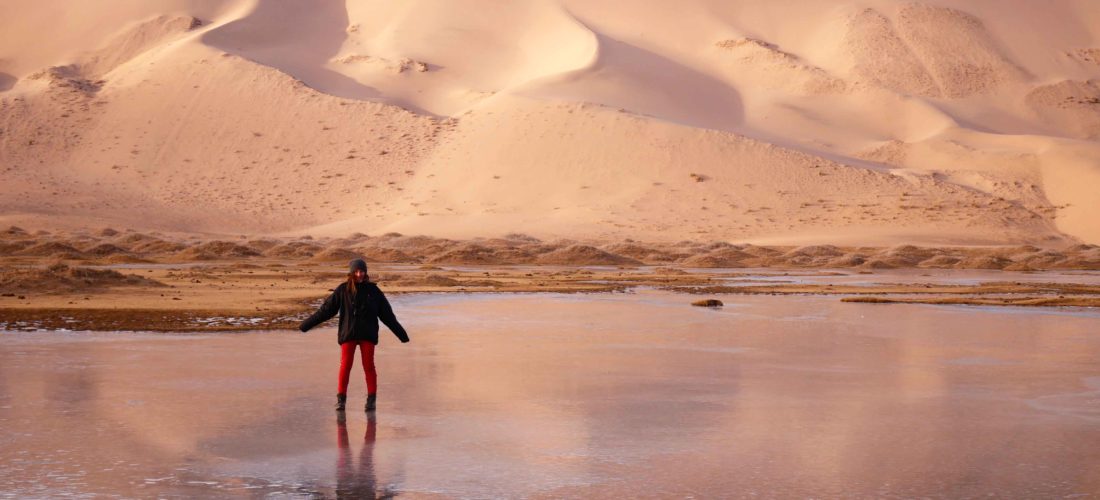
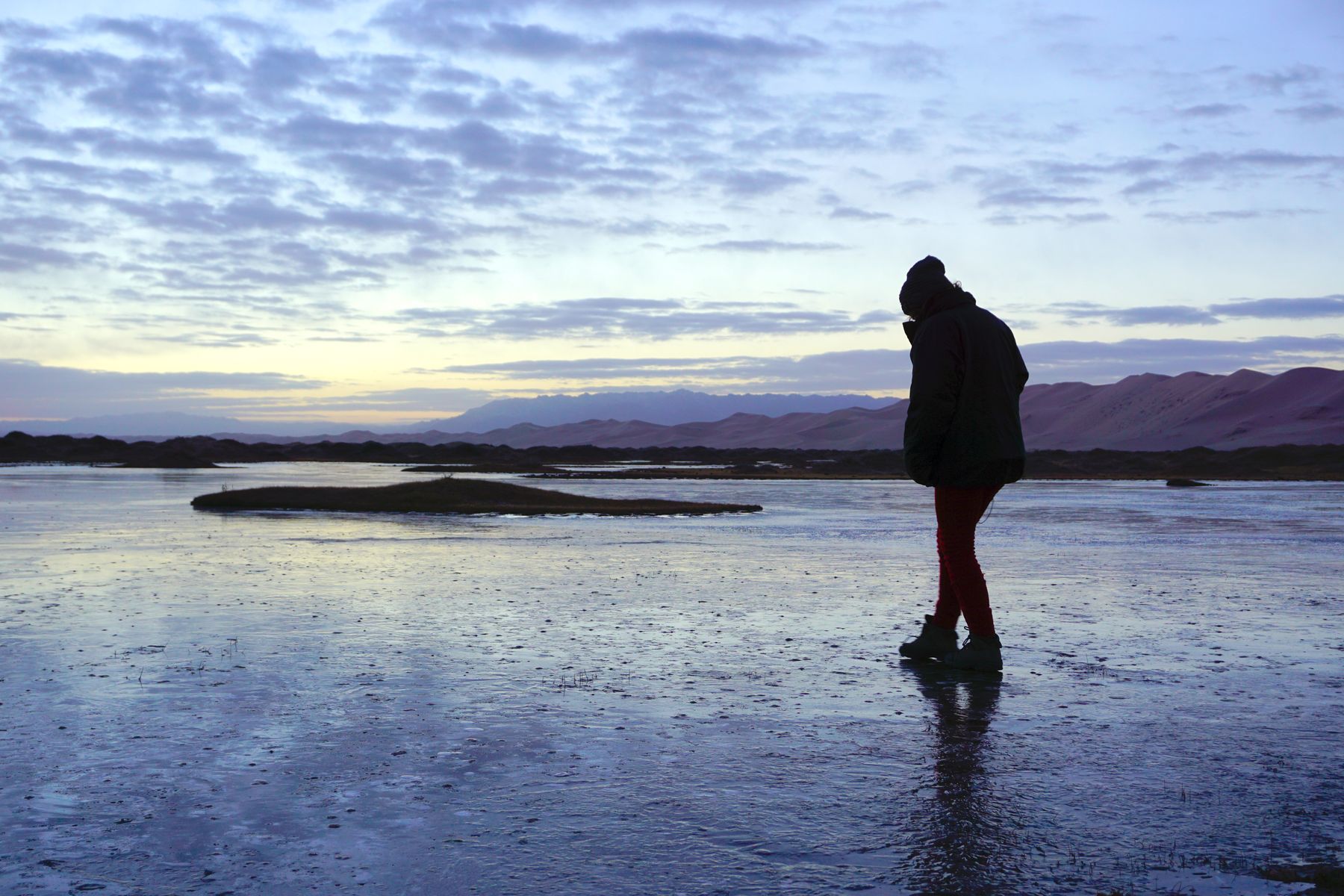
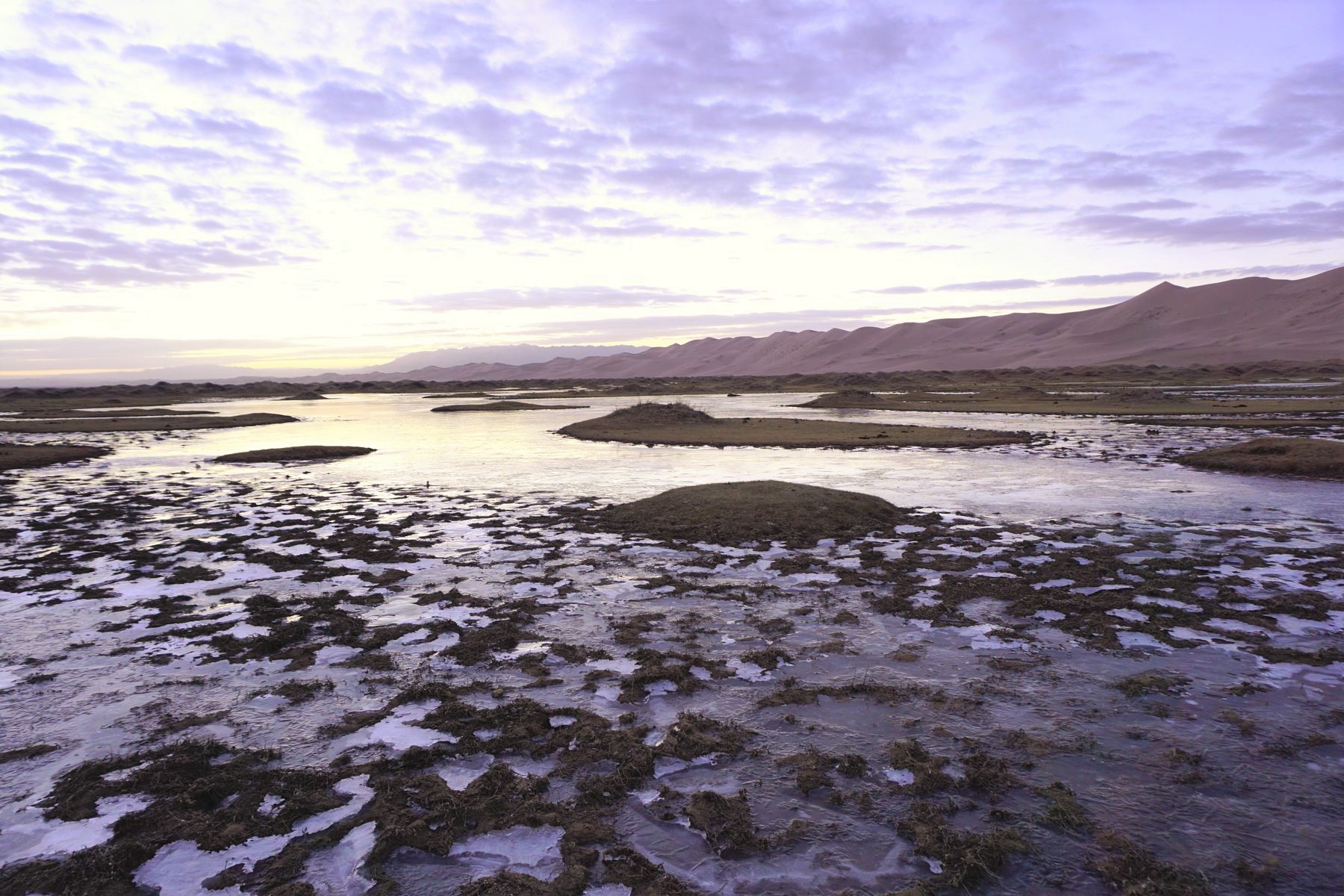
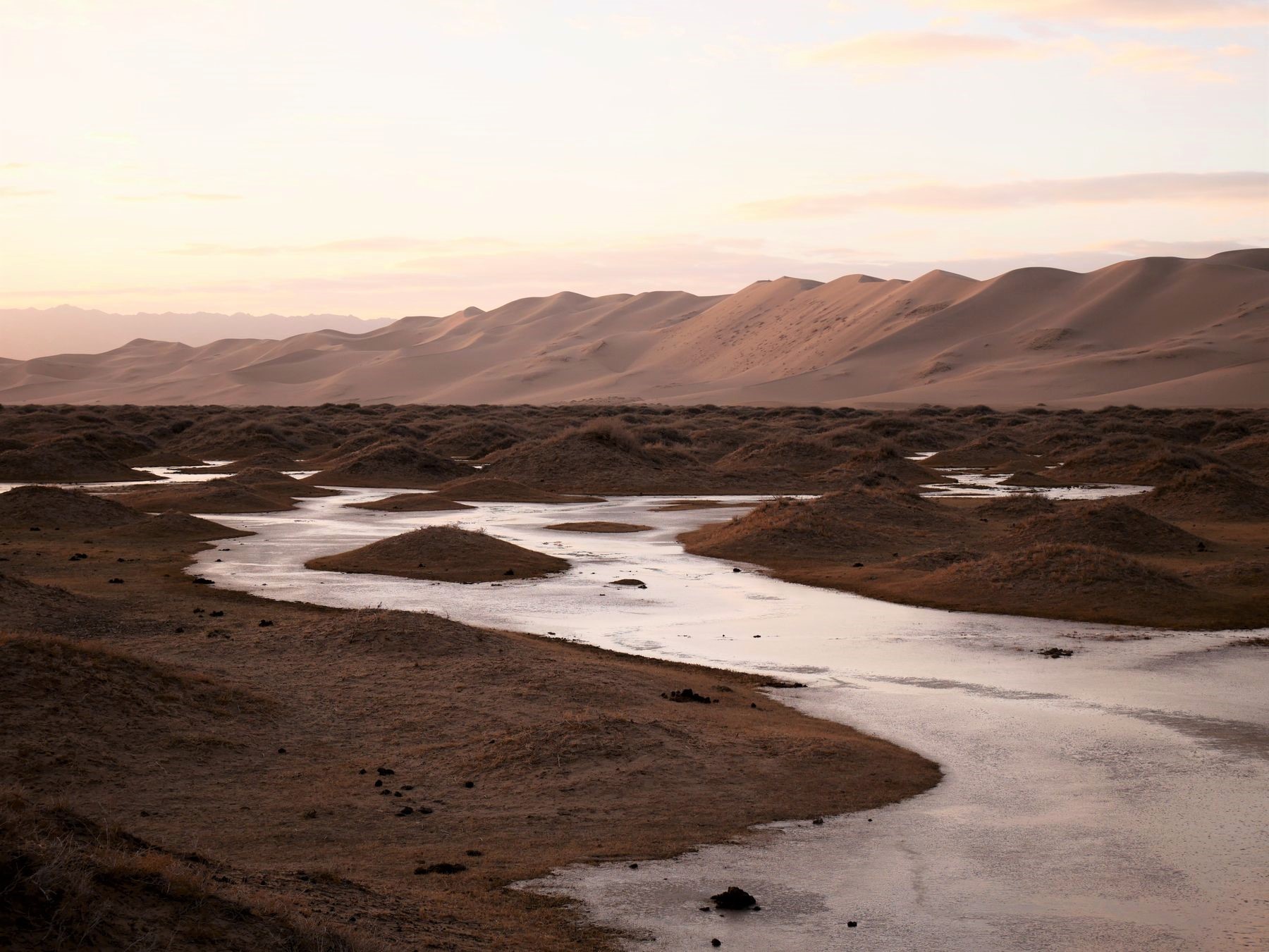
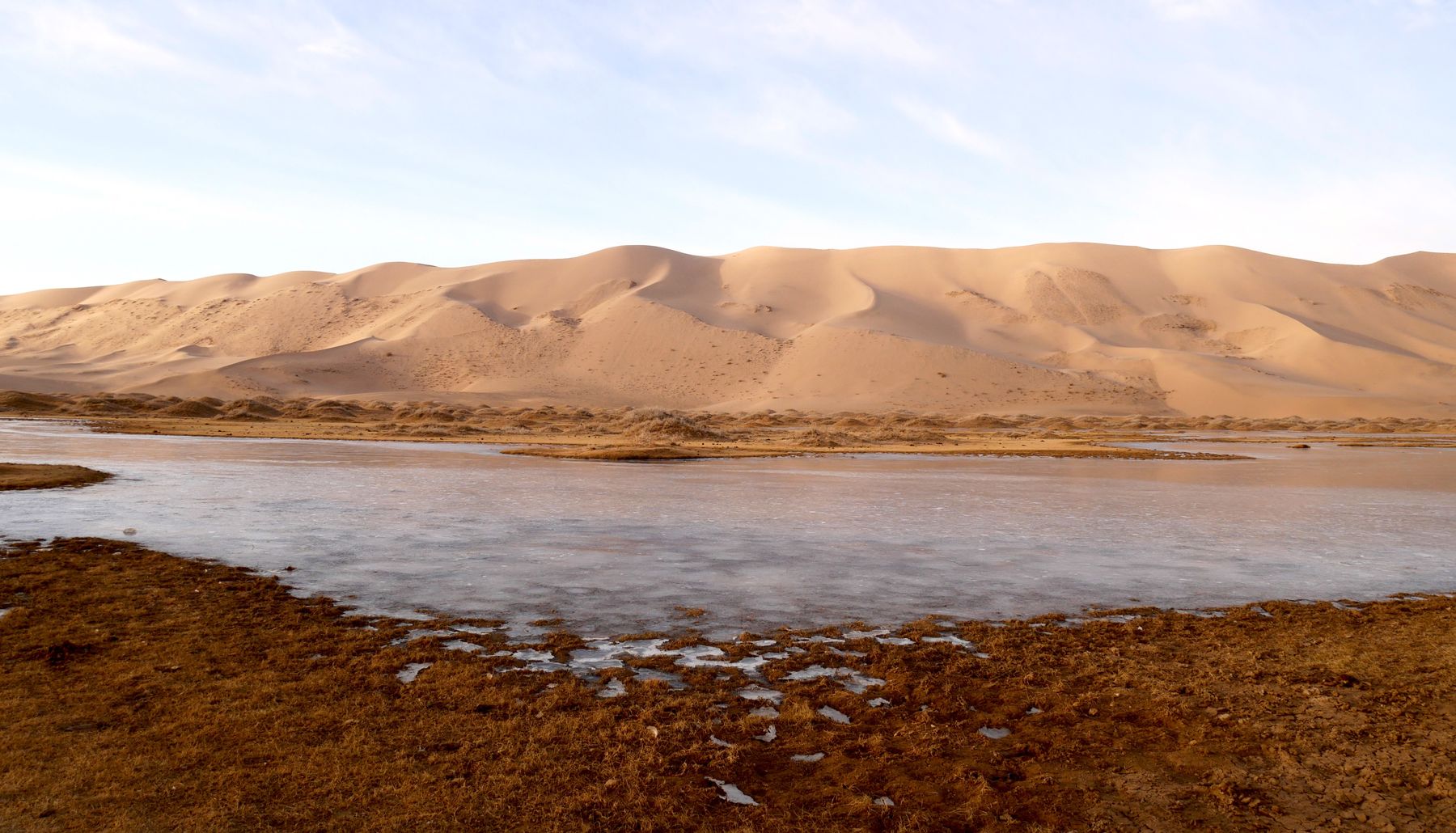
We changed clothes and tried to brush off as much sand as possible, then cooked dinner and warmed up by the fire. In the morning, we drove over to the frozen lake by the dunes to watch the sunrise.

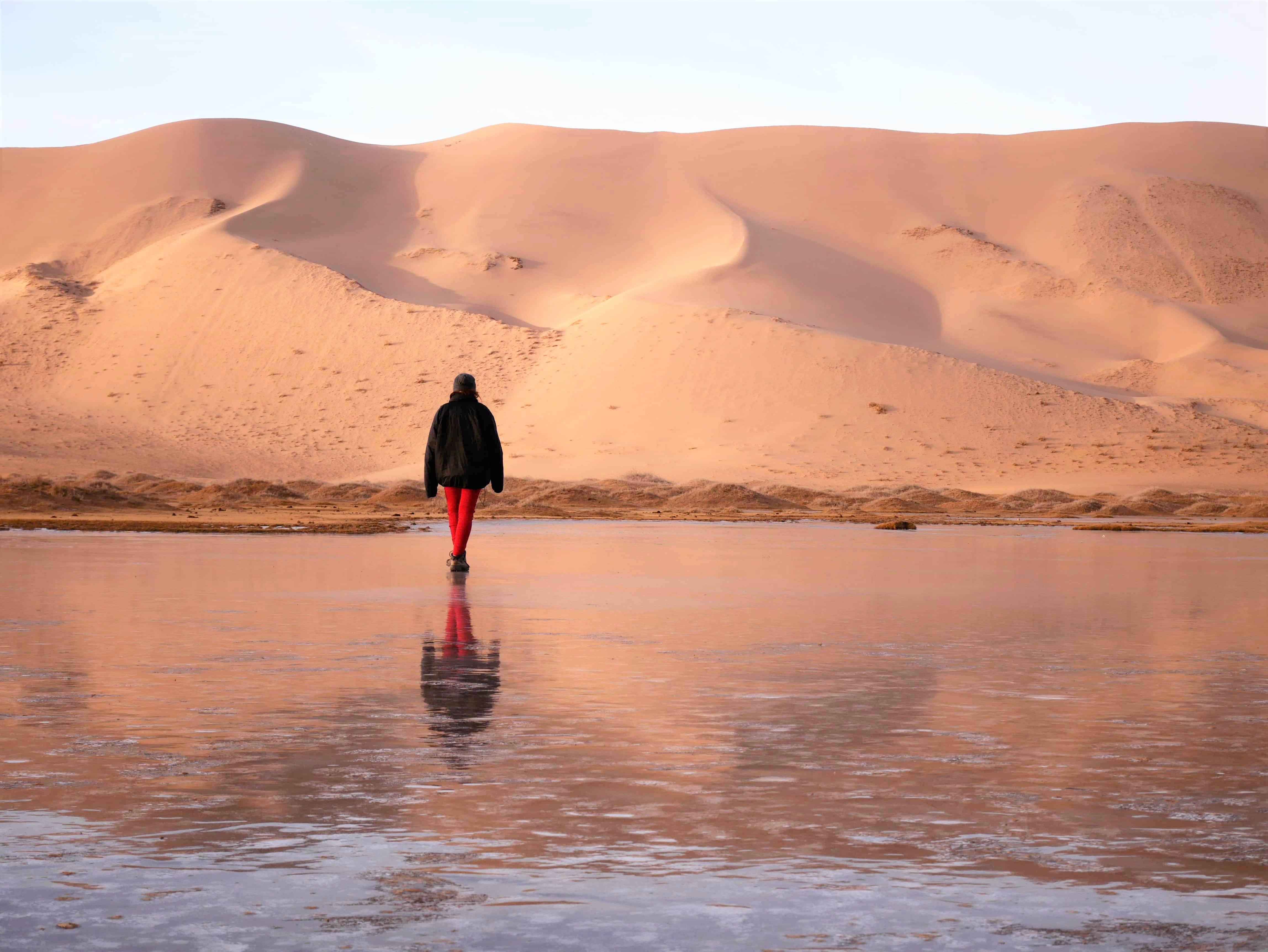
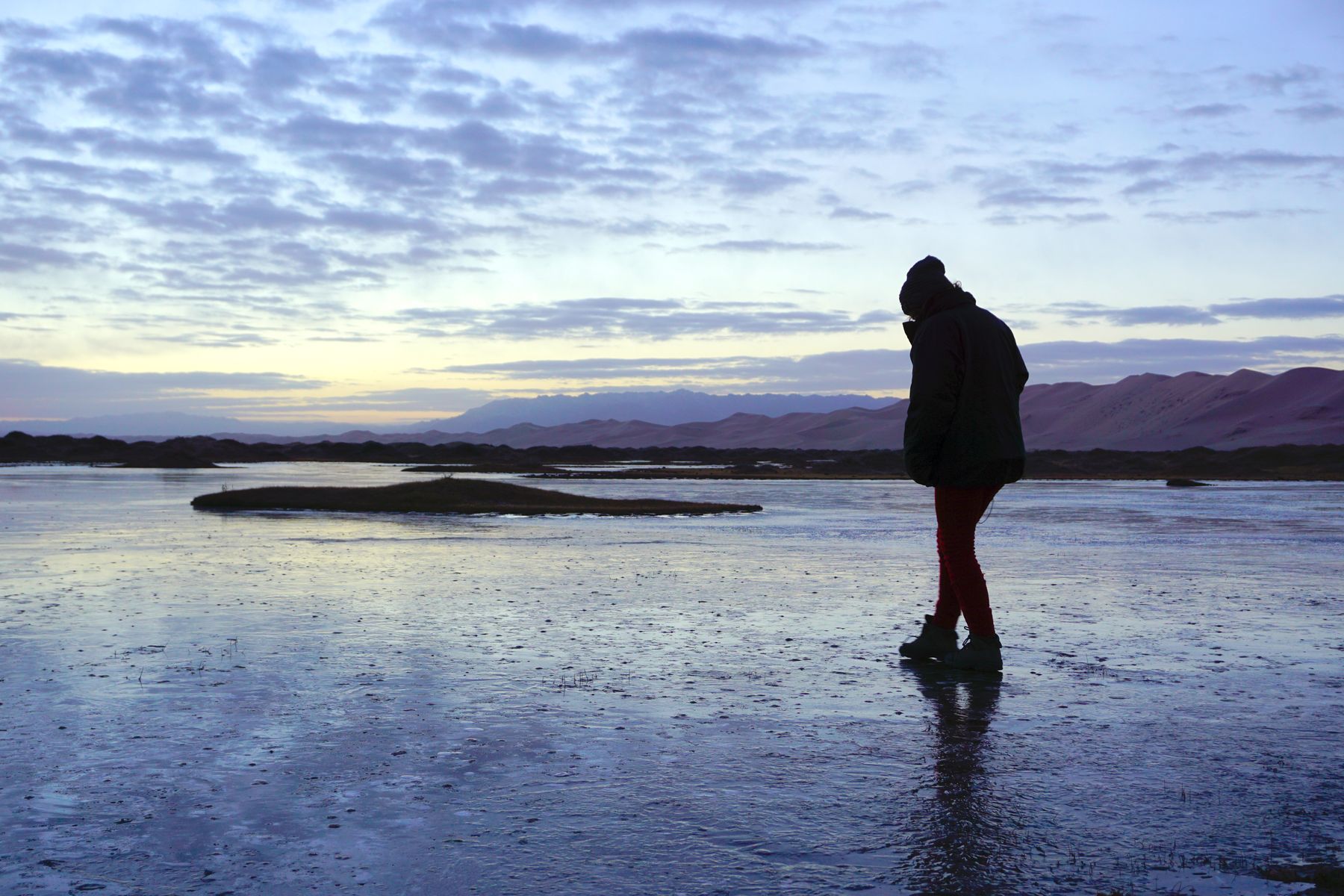
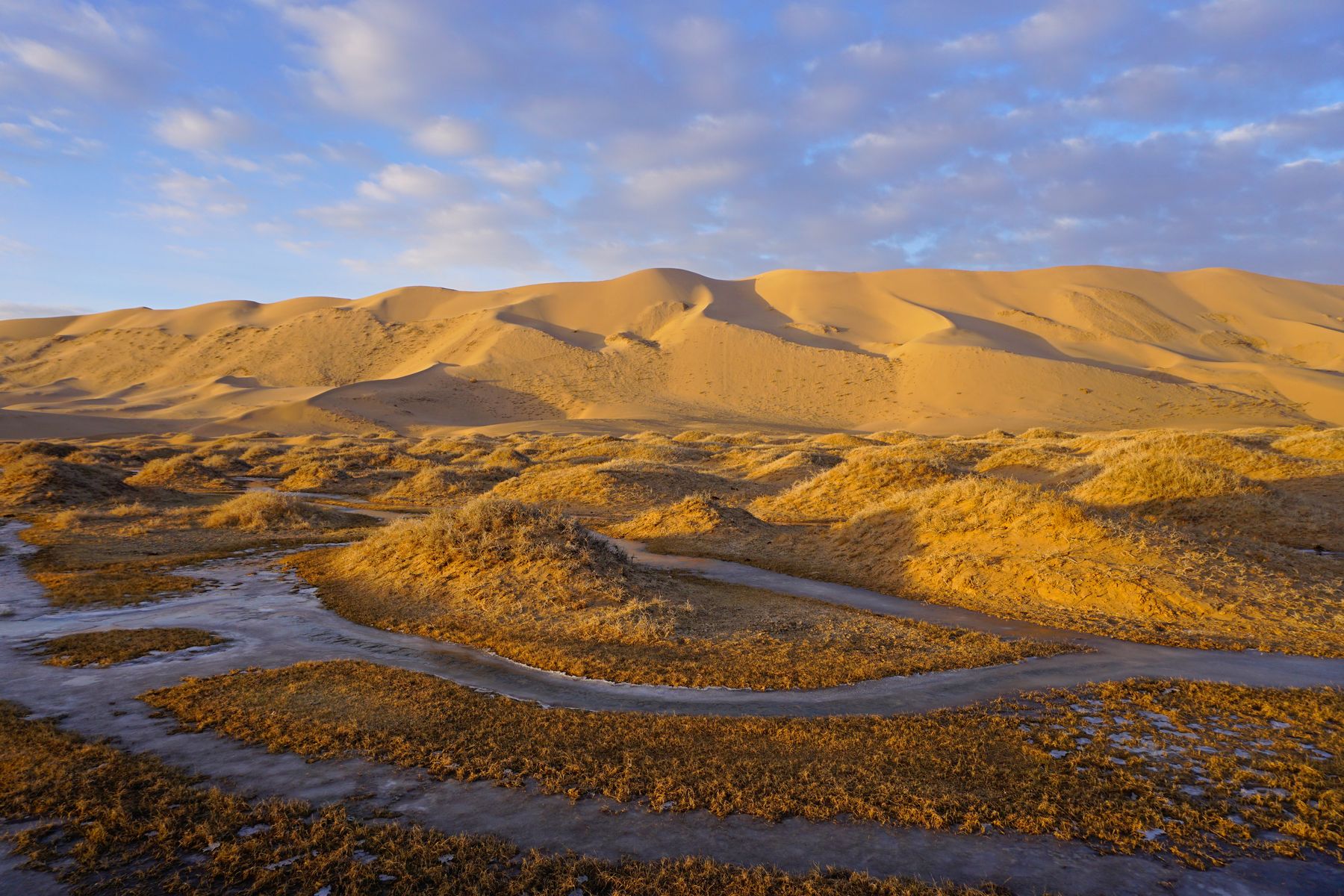
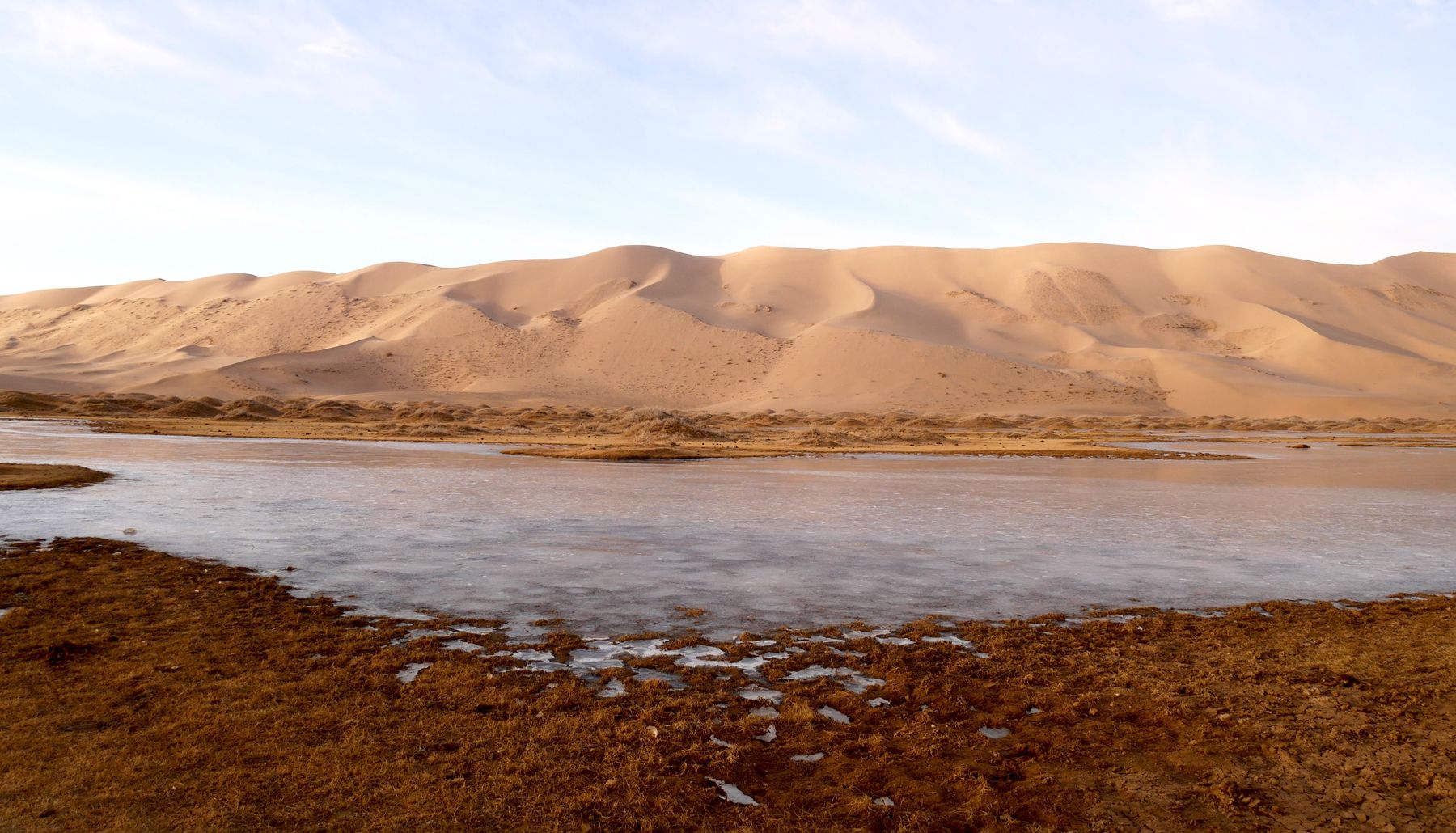
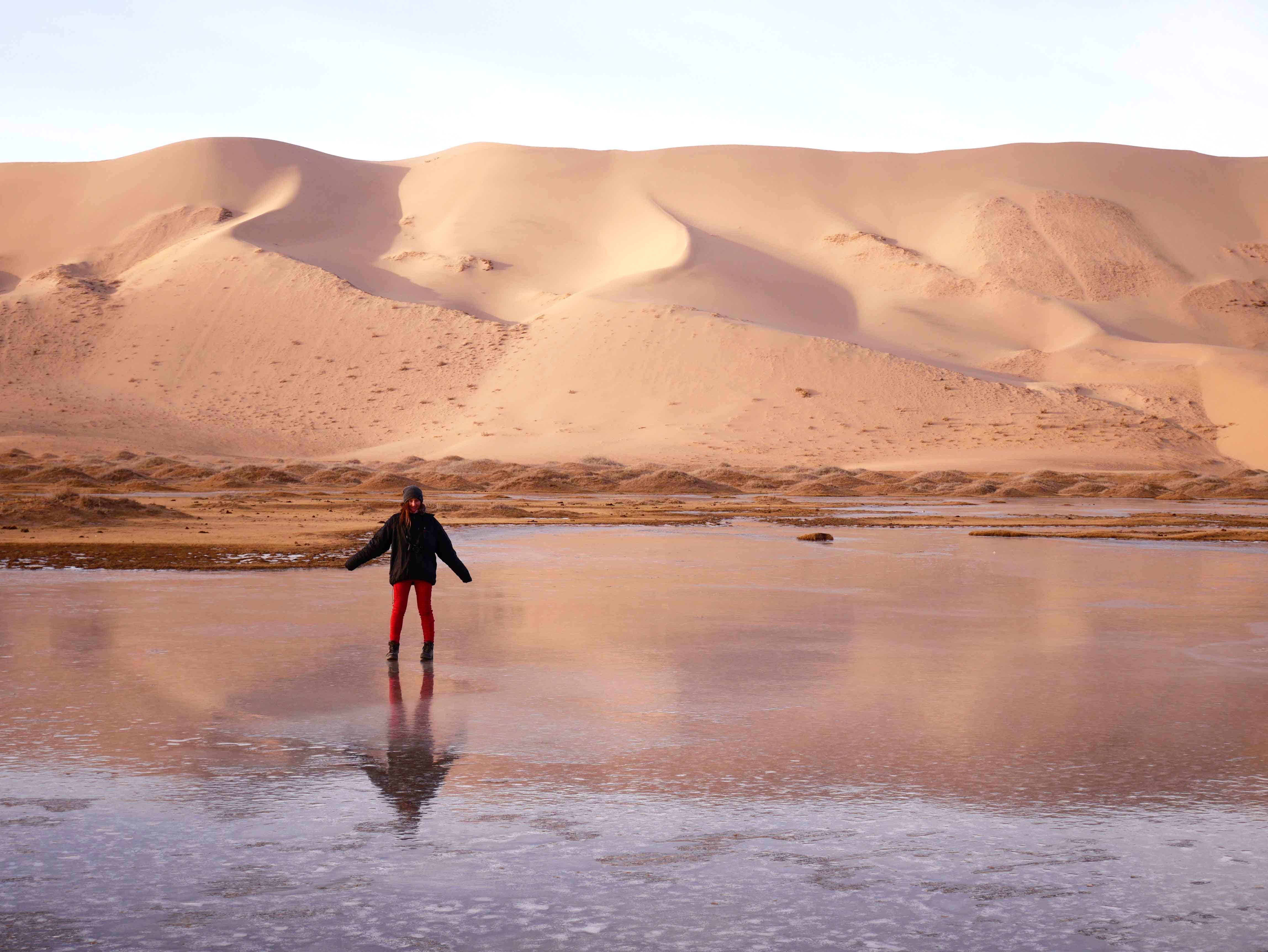
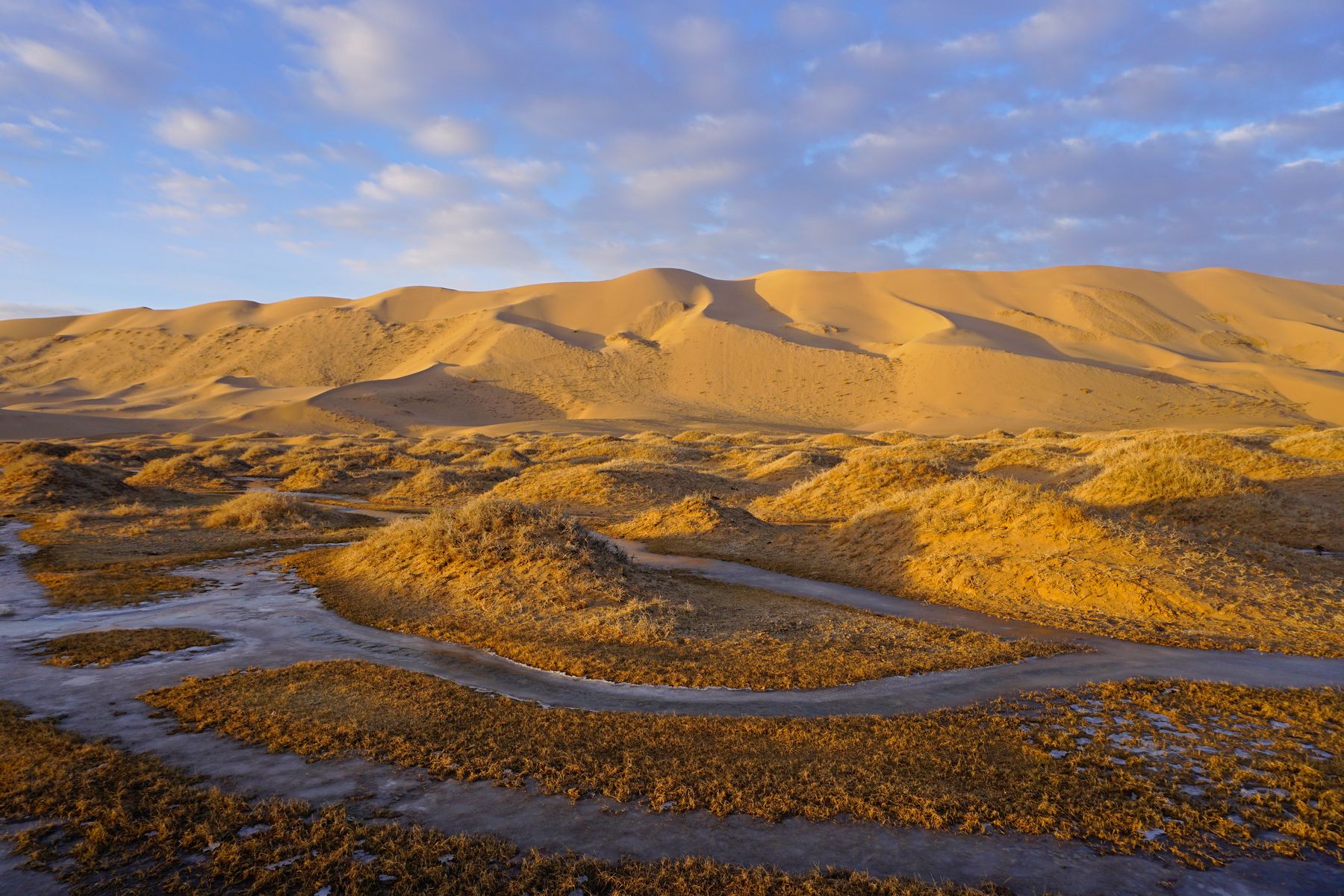
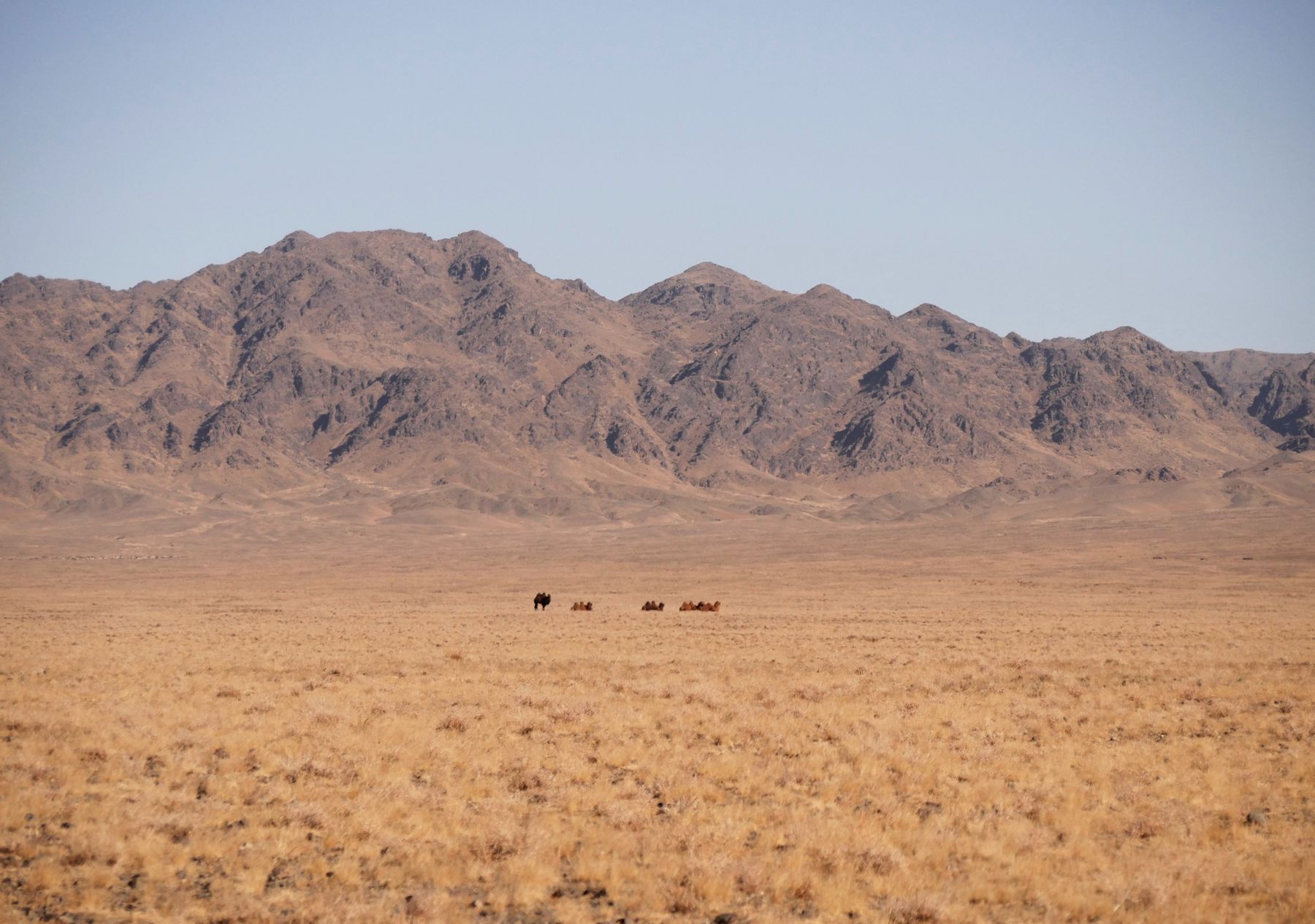
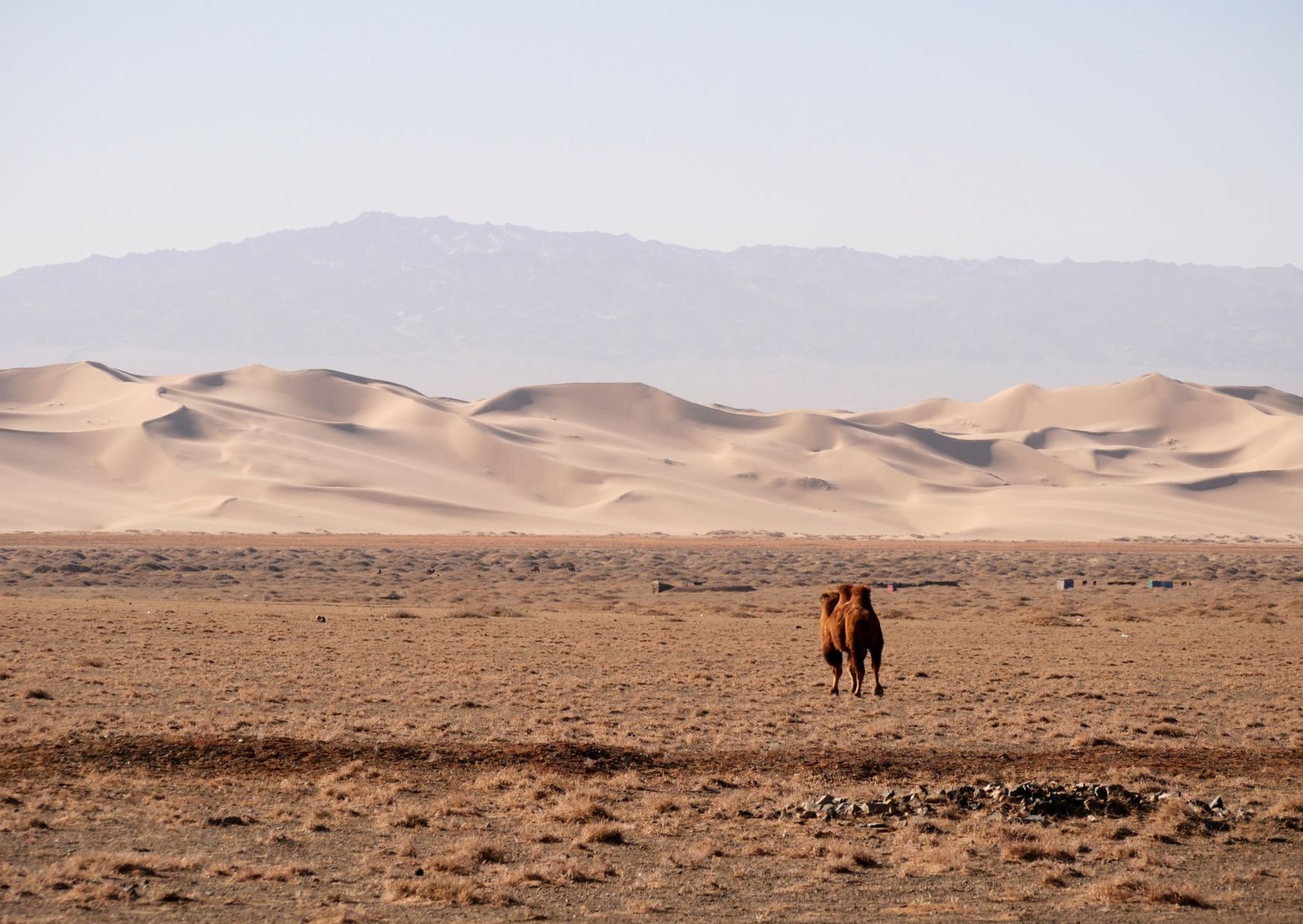
It’s truly incredible that even after almost 12 years of traveling, the Earth continues to surprise me with its beauty. A frozen lake in the desert and ice streams between mounds of grassy sandhills standing in front of 20 meter high sand dunes- who ever knew that that even existed? :D

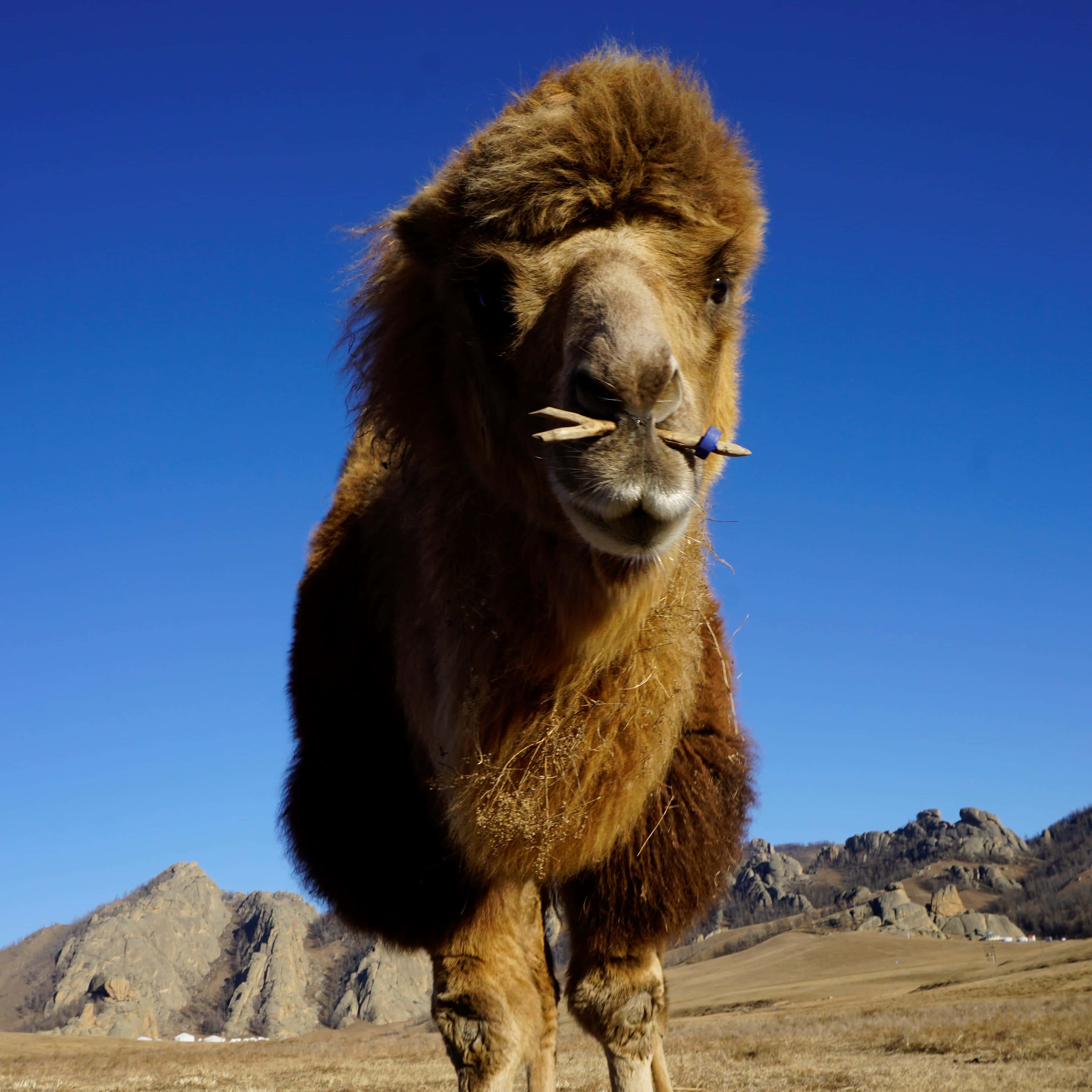
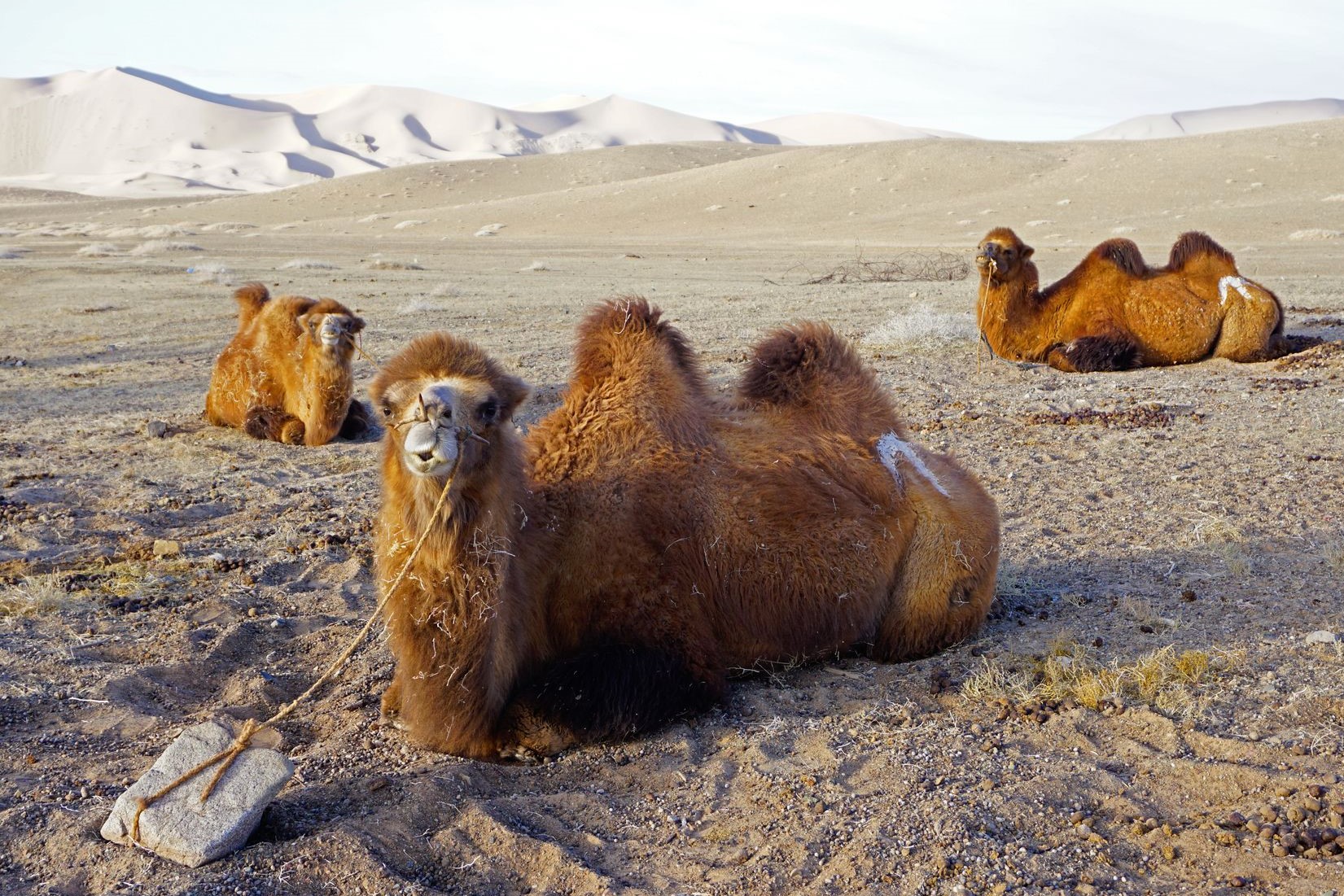
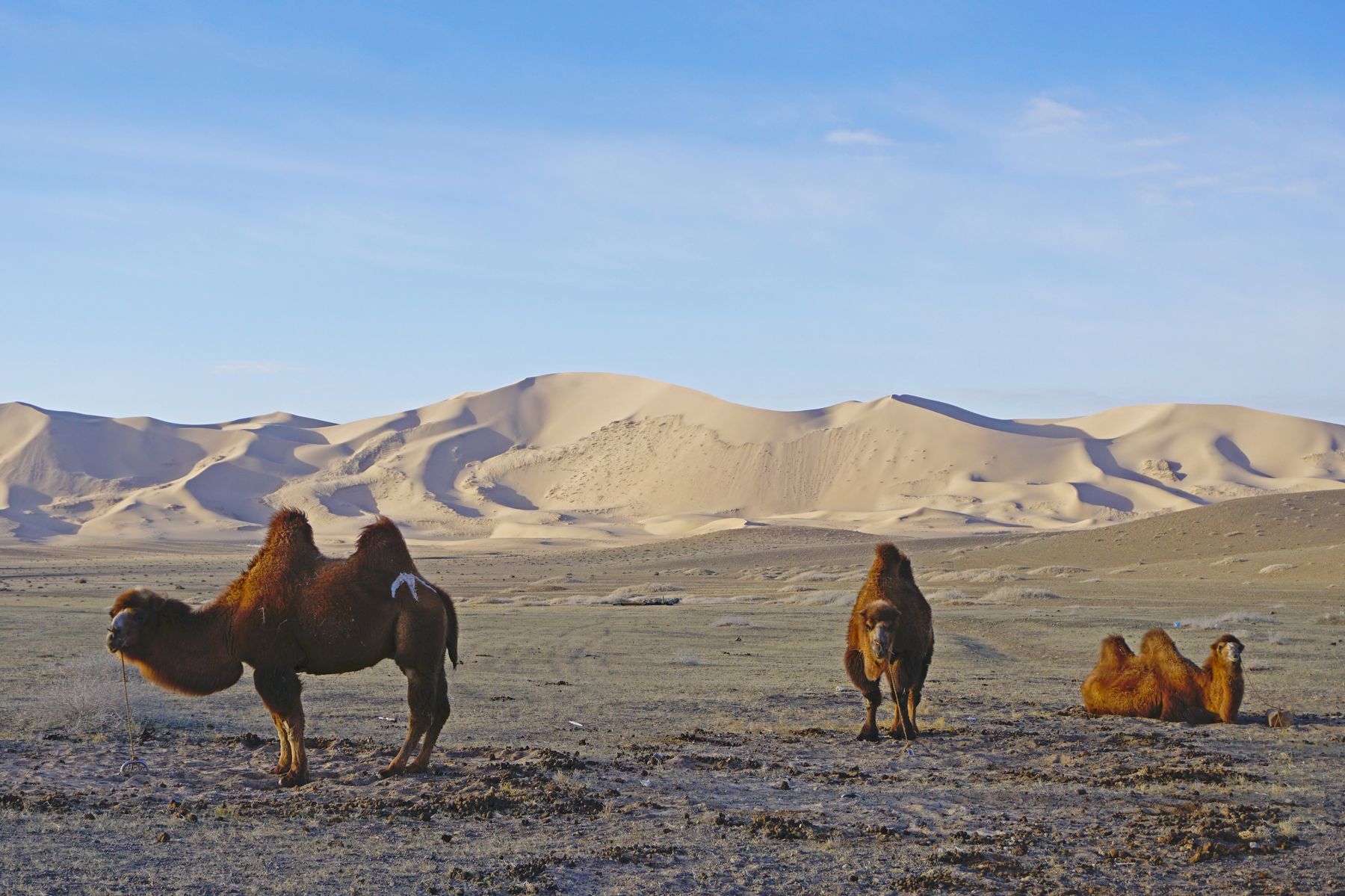
We drove back to the yurt after sunrise and noticed some unhappy camels.

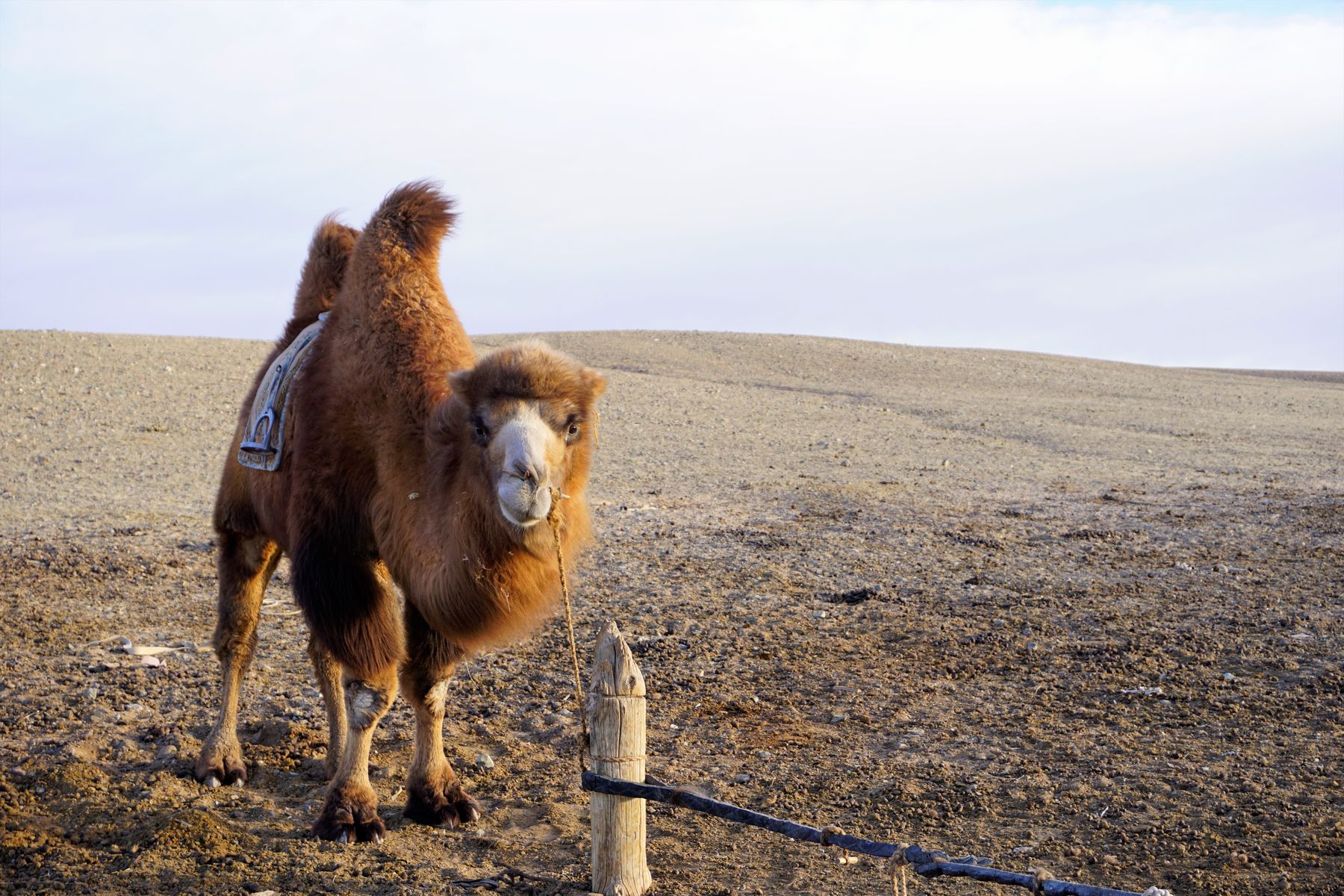
The ropes tied to their nose piercings were so short that they couldn’t lift their heads when they were standing up.

We also heard that one of the camels in the Ger camp was attacked and eaten by a wolf.
I wonder if that camel was tied up as well…

Of course, someone by the yurt came out and asked if we wanted to ride these camels. Neither Felix or I would ever want to contribute to the abuse or exploitation of animals, so we kindly said no, but I also thought about the reason that this situation exists in the first place..

Some camels are tied up and given the minimum that they need to live on, waiting for tourists to come around and ride them. This happens because it’s the easiest way for locals to make money. It’s all a part of the money game. And the problem is intensified by over-tourism, which is what inundates the Gobi Desert in the summertime. You can try to teach the locals all you want about why you should treat camels better, but the truth is, if you don’t remove the reason that abuse exists in the first place, you will have little chance of doing anything but patch work to improve the situation. This goes for all animals, forests, coral reef systems, and basically everything on Earth that’s suffering from human exploitation.

So, if you pay for a packaged deal, someone will most likely pick you up from Ulaanbaatar, drive you to the desert, show you all the most popular spots, and take you on a camel ride. You have no control over how the camel you paid to ride is being treated. If you say no to the camel ride, you still already pre-paid for the environment that keeps the camel pierced to a two foot rope.

…Then we hit the road back to Dalanzadgad.

We stayed in Baatar’s yurt one more night ($4), ate some khuushuur ($1), and found the public shower ($1). It was so nice to finally get the rest of the sand off our bodies :). We weren’t sure where we would go next; we thought about camping in the Yolin Am Canyon or the mountains by Dalanzadgad, but Baatar freaked us out a bit with all of his wolf stories. Apparently there are a lot of wolves in the Gobi.

Next thing you know, we hear a knock on our yurt and in comes a tall happy French guy named Bryan. We immediately bonded with our Mongolian travel stories and he invited us to the yurt next door.

In Bryan’s yurt there was also a Filipino guy who was riding a motorbike around Mongolia on his own- in November! Both Bryan and Zach were struggling a bit with the cold. Bryan slept alone in a tent, and sometimes had to stay up all night collecting horse poop to keep a fire going and not freeze to death. Zach would sometimes lose feeling in this hands while riding his bike in -20° or so. Both were really interesting people. Bryan actually managed to sort-of hitch through the desert. He met an Argentinian couple who had been traveling for six months on only $1,000, and they managed to bargain a cheap ride from from Bayandalai to the desert. I think they were dropped off there and then roamed around on their own for 10 or so days.

That’s the thing about traveling “off season”, you get to meet real travelers, not just tourists on vacation. Bryan started traveling when he was 15 and had some crazy stories. I can’t repeat them all but you can check out his site if you know French ;)

These guys also gave us some good advice about the canyon- they said, “DO IT!” :) They told us that it was very beautiful and that you should not be afraid of wolves because in Mongolia, there are only lone wolves, and a lone wolf would never attack a grown human, let alone two humans together.

So we packed up our stuff and got ready to hitch to the canyon in the morning.

—-

Total expenses of Days 22-23 in Mongolia: $12.00
$10- yurt (2 nights)
$1- shower
$1- khuushuur (meet dumpling)

*We cooked almost all of our meals on a camping stove

Total expenses so far of 23 days in Mongolia (including the price of getting to Mongolia):
$272.00